Movement Disorder Second Opinion: When Tremor or Parkinsonism Is Unclear

A second opinion is useful when tremor or parkinsonism is unclear, changing quickly, or not responding as expected to treatment. Parkinsonism describes a group of signs, not a single disease; Parkinson’s disease is only one possible cause.
Key Takeaways
- A second opinion is useful when tremor or parkinsonism is unclear, changing quickly, or not responding as expected to treatment.
- Parkinsonism describes a group of signs, not a single disease; Parkinson’s disease is only one possible cause.
- A detailed neurological examination, medication review, brain imaging, and selected laboratory or functional tests may help refine the diagnosis.
- Treatment depends on the cause and may include medication adjustments, rehabilitation, lifestyle strategies, injections, or carefully selected device-based therapies.
- Patients should seek prompt medical review for sudden new neurological symptoms, frequent falls, swallowing problems, or major changes in thinking or behavior.
Tremor, stiffness, slowness, and balance changes can have many causes, and the first diagnosis is not always straightforward. A movement disorder second opinion can help confirm the diagnosis, identify treatable contributors, and match treatment to the person’s symptoms and goals.
Overview
A movement disorder second opinion is a detailed reassessment by a neurologist, often one with additional expertise in tremor, Parkinson’s disease, dystonia, gait disorders, and related conditions. It is not about questioning a patient’s previous care; rather, it is a practical way to review the diagnosis, look for overlooked causes, and consider whether the treatment plan still fits the person’s current symptoms.
Tremor and parkinsonism can overlap. Parkinsonism means a pattern of movement findings that may include slowness of movement, stiffness, reduced arm swing, soft voice, smaller handwriting, shuffling gait, or balance difficulty. Parkinson’s disease is one cause, but similar features may occur with medication effects, vascular changes, atypical parkinsonian syndromes, essential tremor with additional features, normal pressure hydrocephalus, metabolic problems, and functional neurological disorder.
A second opinion is especially helpful when symptoms are mild, mixed, or unusual. The specialist may review the timeline, examine which body parts are affected, assess whether symptoms are present at rest or with action, and check for non-motor symptoms such as constipation, sleep behavior changes, mood changes, smell loss, dizziness on standing, or cognitive changes. This broader view often helps separate conditions that can look similar at first.
When a Second Opinion May Be Helpful
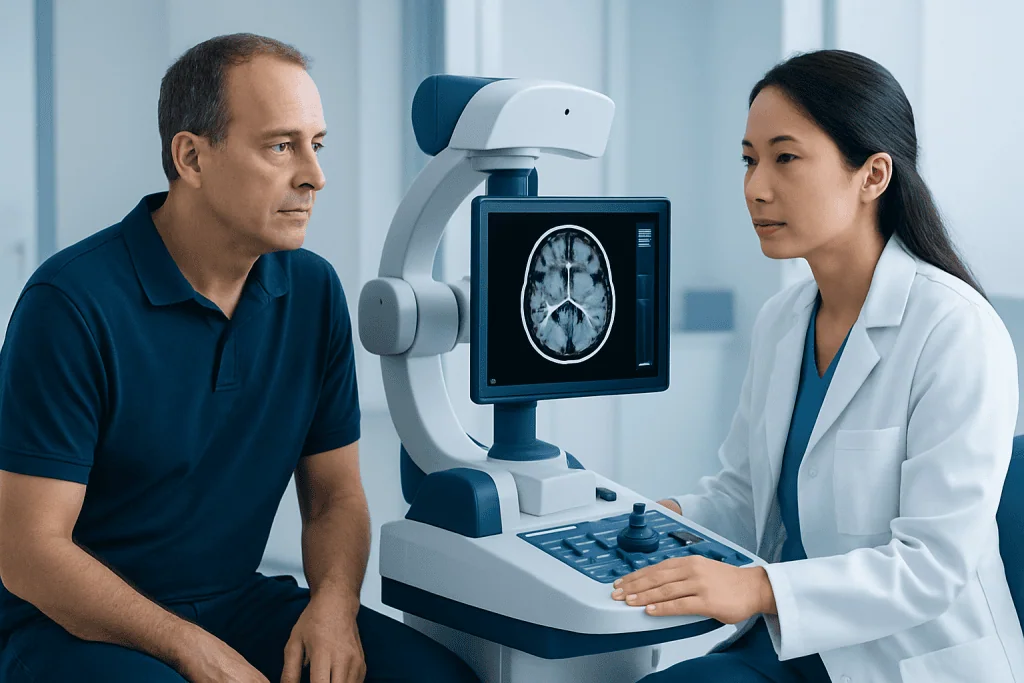
Many people seek a second opinion because they have received different explanations for the same symptoms, or because the diagnosis has remained uncertain after initial assessment. Others may have been told they have Parkinson’s disease but do not have a typical pattern, or they may have tremor that is not improving with standard treatment. These situations are common in neurology and can often be clarified with a careful, step-by-step review.
A second opinion may be useful when symptoms are one-sided but not clearly progressive, when tremor mainly occurs during writing or holding objects, when stiffness and slowness appear after starting a medication, or when walking and balance problems are more prominent than tremor. It can also help when a person has additional neurological symptoms, such as abnormal eye movements, early falls, significant memory changes, muscle jerks, involuntary twisting postures, or neuropathy symptoms.
Patients and families may also ask for reassessment before making major treatment decisions. For example, if advanced therapies are being discussed, the diagnosis should be as accurate as possible. A movement disorders specialist can explain which findings support Parkinson’s disease, which features suggest another condition, and what tests or observation over time may be needed.
Common Conditions That Can Mimic Each Other

Essential tremor and Parkinson’s disease are two of the most common reasons for referral. Essential tremor usually appears during action, such as holding a cup, eating, writing, or using tools. Parkinsonian tremor is often most noticeable at rest, although overlap can occur. Some patients have features of both, and tremor type can change with fatigue, anxiety, medication, caffeine, or other medical conditions.
Several other conditions may resemble Parkinson’s disease. Drug-induced parkinsonism can occur with some medicines used for nausea, dizziness, psychiatric conditions, or other indications. Vascular parkinsonism may be linked with small vessel changes in the brain and often affects walking more than the hands. Atypical parkinsonian syndromes may involve early balance difficulty, eye movement problems, speech and swallowing changes, or autonomic symptoms, and they require a tailored approach.
Other possibilities include dystonic tremor, cerebellar tremor, Wilson disease in younger patients, thyroid disease, vitamin deficiencies, neuropathy-related gait problems, functional tremor, and neurodegenerative conditions. In some families, inherited movement disorders may be considered. A specialist in movement disorders looks for the pattern of signs across the whole nervous system rather than focusing on tremor alone.
What the Specialist Reviews During the Visit
A high-quality second opinion begins with the story. The neurologist asks when symptoms started, how they changed, which side was affected first, what makes symptoms better or worse, and whether there are falls, swallowing problems, sleep changes, mood symptoms, constipation, urinary changes, or dizziness. Family history, toxin exposure, previous head injury, and occupational factors may also be relevant.
A medication review is essential. Some prescription and over-the-counter medicines can cause tremor, worsen tremor, or create parkinsonism-like symptoms. The specialist may look at antipsychotic medicines, anti-nausea drugs, certain mood stabilizers, stimulants, bronchodilators, thyroid medicines, and supplements. Patients should not stop prescribed medicines on their own; any change should be coordinated with the prescribing clinician.
The neurological examination often includes observation while sitting, standing, walking, writing, drawing spirals, tapping fingers, rising from a chair, turning, and maintaining balance. The doctor may assess tone, speed of movement, facial expression, speech, eye movements, reflexes, sensation, coordination, and posture. Sometimes the most informative part is seeing how symptoms appear during everyday actions rather than only while the patient is seated.
Tests That May Help Clarify Tremor or Parkinsonism
There is no single test that diagnoses every movement disorder. In many cases, the diagnosis is clinical, meaning it is based on the pattern of symptoms and examination findings. However, tests can be valuable when the presentation is unclear, when another condition is possible, or when treatment decisions depend on more certainty.
Brain MRI may help identify strokes, structural lesions, normal pressure hydrocephalus, inflammation, or patterns that support certain atypical conditions. Specialized neuroradiology review can be helpful when subtle findings need interpretation in the context of the examination. In selected patients, dopamine transporter imaging may support whether there is loss of dopaminergic nerve terminals, although it does not by itself distinguish Parkinson’s disease from all atypical parkinsonian syndromes.
Blood and urine tests may be used to check thyroid function, vitamin levels, liver and kidney function, copper metabolism in younger patients, autoimmune or infectious causes when appropriate, and medication levels in selected situations. Neurophysiology tests can sometimes characterize tremor frequency or evaluate neuropathy and muscle disease. Genetic testing may be discussed when symptoms, age at onset, or family history suggest an inherited condition, but it should usually be accompanied by genetic counseling.
Treatment Options After the Diagnosis Is Refined
Treatment depends on the most likely cause, the severity of symptoms, and what matters most to the patient. For Parkinson’s disease, medicines may be used to improve slowness, stiffness, tremor, and daily function. For essential tremor, different medication options, adaptive tools, occupational therapy strategies, and selected procedures may be considered. If symptoms are medication-induced, the safest plan may involve adjusting the triggering medicine in collaboration with the doctor who prescribed it.
Rehabilitation is often useful across diagnoses. Physiotherapy may address gait, balance, posture, strength, and fall prevention. Occupational therapy can suggest practical adaptations for writing, dressing, eating, computer use, and work tasks. Speech and swallowing therapy may support voice volume, communication, and safe swallowing when those symptoms are present.
For carefully selected patients with significant symptoms despite optimized medical treatment, device-based or procedural therapies may be discussed. These may include deep brain stimulation or other forms of neuromodulation, depending on the diagnosis, symptom pattern, age, general health, and goals. A second opinion can help determine whether a person is a potential candidate, whether further testing is needed, and what benefits and limitations should be considered.
Preparing for a Movement Disorder Second Opinion
Preparation helps the specialist make the most of the appointment. Patients are encouraged to bring previous neurology notes, imaging reports and discs when available, laboratory results, a medication and supplement list, and a written symptom timeline. It can also be helpful to note which treatments were tried, how long they were used, whether they helped, and whether side effects occurred.
Short videos recorded at home can be valuable, especially if symptoms fluctuate or appear during specific tasks. Examples include writing, holding a cup, walking down a hallway, turning, using utensils, or an episode of shaking that does not appear during the clinic visit. Videos should be safe to record and should not place the patient at risk of falling or injury.
Useful questions include: What diagnoses are most likely? What findings support or argue against Parkinson’s disease? Could any medicines be contributing? Are further tests needed, and what would they change? What treatment goals are realistic? For international patients, Acibadem International’s multidisciplinary specialists and JCI-accredited hospitals can diagnose and treat complex neurological conditions, including neurodegenerative diseases, with coordinated evaluation when appropriate.
When to See a Doctor Promptly
Most tremor and parkinsonism evaluations can be arranged as scheduled neurology visits, but certain symptoms deserve prompt medical attention. A person should seek urgent care for sudden weakness, facial drooping, trouble speaking, severe new headache, sudden loss of coordination, new seizures, or rapidly worsening confusion, because these may indicate conditions that need immediate assessment.
Prompt medical review is also advised for frequent falls, new swallowing difficulty, choking, unexplained weight loss, hallucinations, severe dizziness on standing, major changes in thinking or behavior, or rapid progression over weeks to a few months. These symptoms do not always mean a serious diagnosis, but they should be assessed so that treatable contributors and safety needs are not missed.
Patients already diagnosed with a movement disorder should contact their clinician if medicines stop working as expected, side effects become difficult, or daily activities are increasingly limited. Regular follow-up allows the diagnosis and treatment plan to be updated over time, which is important because movement disorders can evolve and become clearer with observation.
Frequently asked questions
Does needing a movement disorder second opinion mean the first diagnosis was wrong?
Not necessarily. Tremor and parkinsonism can be difficult to classify early, and some conditions only become clearer over time. A second opinion provides another structured review of the symptoms, examination findings, tests, and treatment response.
What is the difference between Parkinson’s disease and parkinsonism?
Parkinsonism is a group of signs such as slowness, stiffness, rest tremor, and gait changes. Parkinson’s disease is one cause of parkinsonism, but medicines, vascular brain changes, atypical parkinsonian syndromes, and other conditions can cause similar findings. The distinction matters because treatment and outlook can differ.
Can essential tremor be mistaken for Parkinson’s disease?
Yes, especially when symptoms are mild or mixed. Essential tremor is often more noticeable with action, while Parkinsonian tremor is often more noticeable at rest, but there can be overlap. A movement disorders specialist can assess tremor pattern, associated signs, and response to prior treatments.
Will an MRI or dopamine transporter scan give a definite diagnosis?
These tests can be helpful, but they do not replace a neurological examination. MRI may show structural or vascular causes, while dopamine transporter imaging may support whether the dopamine system is affected. Results must be interpreted together with the person’s symptoms, history, and examination.
Should a patient stop medications that might be causing tremor?
Patients should not stop prescribed medicines without medical advice. Some medicines need gradual adjustment, and stopping suddenly can be unsafe. A neurologist can work with the prescribing doctor to decide whether a change is appropriate.
What should patients bring to a second opinion appointment?
They should bring previous clinic notes, imaging reports and discs, laboratory results, a full medication and supplement list, and a timeline of symptoms. Short videos of tremor, walking, writing, or other symptoms can also help if they can be recorded safely. A family member or caregiver may provide useful observations.
References
- International Parkinson and Movement Disorder Society
- American Academy of Neurology
- National Institute of Neurological Disorders and Stroke
- Parkinson's Foundation
- European Academy of Neurology
This article is for general information only and is not a substitute for professional medical advice. Please consult a qualified doctor about your individual situation.
Tremor in Turkey — costs, top hospitals & a free quote
JCI-accredited · board-certified surgeons · reply within 24h
Add us as a Preferred Source to see more of our trusted health content across Google Search, AI Overviews and Discover.

Neurology
Diagnosis and treatment of disorders of the brain, spinal cord, nerves and muscles.
51 specialists in this unit