Neuromodulation for Movement Disorders: Who May Benefit When Medicines Fall Short

Neuromodulation can help selected people with movement disorders when medication no longer controls symptoms well. Deep brain stimulation is one of the best known neuromodulation treatments for tremor, Parkinson’s disease symptoms, and some forms of dystonia.
Key Takeaways
- Neuromodulation can help selected people with movement disorders when medication no longer controls symptoms well.
- Deep brain stimulation is one of the best known neuromodulation treatments for tremor, Parkinson’s disease symptoms, and some forms of dystonia.
- Careful evaluation by a multidisciplinary team is essential to decide who may benefit and which option is most suitable.
- These treatments usually improve symptoms and quality of life, but they do not cure the underlying neurological condition.
- Follow-up programming, rehabilitation, and ongoing medical care are important parts of successful treatment.
Neuromodulation for movement disorders refers to treatments that change abnormal nerve signals to improve symptoms such as tremor, stiffness, slowness, or involuntary movements. It may be considered when medicines are no longer effective enough, cause troublesome side effects, or do not provide steady symptom control.
Overview: what neuromodulation means
Neuromodulation for movement disorders describes therapies that change the activity of specific parts of the nervous system in a controlled way. The goal is to reduce symptoms caused by abnormal signaling in brain networks involved in movement. These symptoms may include tremor, slowness, rigidity, involuntary twisting, or sudden jerking movements.
The most established form is deep brain stimulation, often called DBS. In DBS, thin electrodes are placed in carefully selected brain areas and connected to a small device that sends electrical impulses. These impulses do not destroy brain tissue. Instead, they adjust signaling patterns to help movement become smoother and more controlled.
Neuromodulation is usually not the first treatment. Most people begin with medicines, physical therapy, and other supportive care. When symptoms remain disabling, fluctuate during the day, or medicine side effects become difficult to tolerate, a specialist may discuss whether neuromodulation treatment could be helpful.
Which movement disorders may benefit
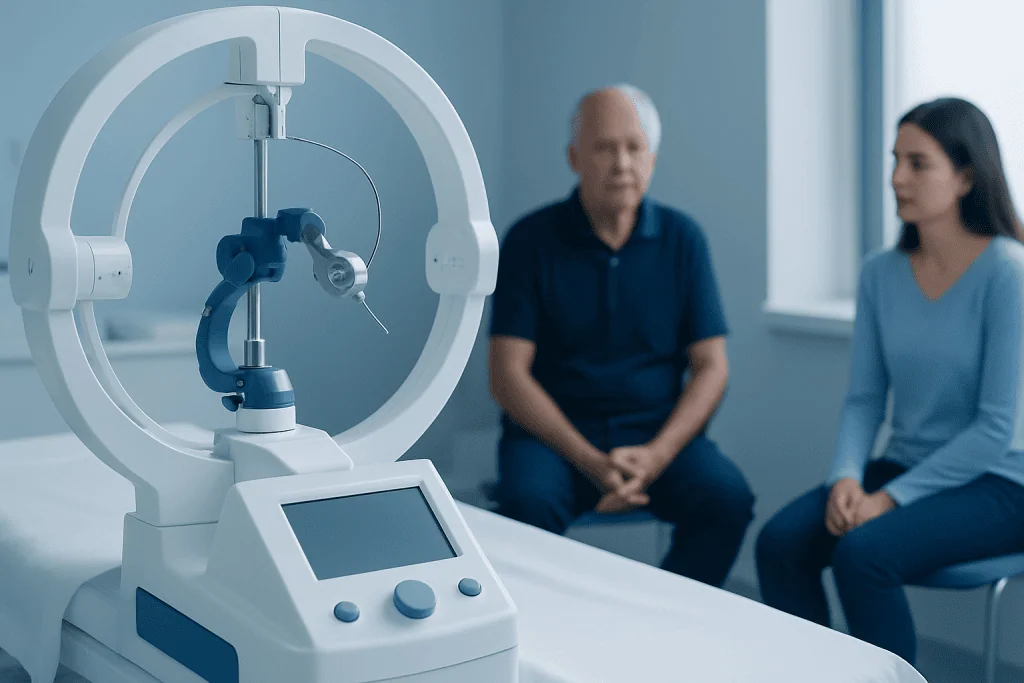
Neuromodulation is most often considered for certain movement disorders that do not respond well enough to medication alone. These include Parkinson’s disease, essential tremor, and selected forms of dystonia. In some cases, it may also be used for other less common movement disorders after expert assessment.
In Parkinson’s disease, neuromodulation may help reduce tremor, stiffness, slowness, and medication-related movement complications such as dyskinesia. It is especially useful when a person still responds to levodopa but the benefit becomes less predictable or wears off too quickly. It may allow more consistent symptom control throughout the day.
For essential tremor, the main aim is often to reduce tremor that affects daily tasks such as eating, drinking, writing, or dressing. For dystonia, treatment may lessen painful muscle contractions and improve posture or repetitive twisting movements. The pattern of symptoms, the exact diagnosis, and the degree of disability all affect whether neuromodulation is a reasonable option.
When medicines may no longer be enough

Medication can remain very effective for many people with movement disorders, sometimes for years. Still, there are situations in which medicines fall short. A person may need increasingly complex medication schedules, experience short-lived relief, or find that symptoms return before the next dose is due. Others may develop side effects such as sleepiness, confusion, nausea, or involuntary extra movements.
Neuromodulation may be discussed when symptoms interfere with independence, work, mobility, communication, or sleep despite careful medical treatment. The treatment is not meant for every person whose symptoms are progressing. Rather, it is considered when expected benefits are likely to outweigh the risks and when there is a clear symptom target that electrical stimulation may improve.
Some symptoms respond better than others. For example, tremor, rigidity, motor fluctuations, and certain types of dystonia often improve more than balance problems, speech changes, or cognitive decline. That is why a realistic discussion of goals is so important before treatment. The aim is symptom reduction and better quality of life, not a cure for the underlying disease.
Who may be a good candidate
A good candidate is usually someone with a confirmed movement disorder diagnosis, significant symptoms that remain bothersome despite optimized treatment, and overall health that allows a procedure and follow-up care. Response to levodopa can be an important clue in Parkinson’s disease, because symptoms that improve with medication often respond better to DBS as well.
Doctors also look at age, general medical condition, brain imaging, thinking and memory, mood, walking ability, and personal treatment goals. These factors help predict both safety and benefit. Evaluation often involves neurologists, neurosurgeons, imaging specialists, and sometimes therapists or psychologists working together in a movement disorders program.
Certain situations may make neuromodulation less suitable. Examples can include an unclear diagnosis, severe uncontrolled depression or anxiety, major memory problems, poor surgical fitness, or expectations that the treatment can reverse every symptom. Careful screening helps identify who is most likely to benefit and who may be better served by adjusting medicines, rehabilitation, or other forms of care.
How evaluation and diagnosis are done
Before neuromodulation is recommended, the diagnosis should be as precise as possible. The care team reviews the person’s symptom history, medication response, daily limitations, and progression over time. A detailed neurological examination is essential, and it may be repeated when medicines are working and when they are not, especially in Parkinson’s disease.
Testing often includes brain imaging such as MRI to look at brain structure and to support planning if DBS is being considered. Some centers also use advanced imaging and mapping techniques through services such as neuroradiology to guide safe and accurate treatment planning. Additional tests may be ordered to rule out conditions that can mimic a movement disorder.
Cognitive and emotional health matter too. A person may undergo memory and thinking assessment, and sometimes formal testing through neuropsychological evaluation. This helps the team understand strengths, identify possible risks, and make sure the chosen treatment fits the person’s medical needs and daily life.
Treatment options and what to expect
Deep brain stimulation is the most widely used neuromodulation approach for movement disorders. During this treatment, electrodes are implanted in specific brain targets and connected to a pulse generator placed under the skin, usually near the chest. After implantation, the device is programmed and adjusted over time to find settings that provide the best symptom control with the fewest side effects.
The exact brain target depends on the diagnosis and symptom pattern. In essential tremor, one target may be chosen to reduce tremor. In Parkinson’s disease, targets may be selected to improve motor fluctuations, tremor, stiffness, or dyskinesia. In dystonia, different targets can help reduce abnormal muscle contractions. Programming is gradual, and several visits may be needed before the full benefit becomes clear.
Benefits vary from person to person. Many patients notice less tremor or smoother movement, but medication may still be needed. Possible risks include bleeding, infection, temporary confusion, speech or balance changes, hardware problems, or stimulation-related side effects that may improve with reprogramming. Long-term follow-up is important because devices need monitoring, battery replacement or recharging, and occasional setting adjustments.
Other procedures may also be considered in selected cases, depending on the diagnosis, anatomy, and treatment goals. A specialist team can explain how neuromodulation compares with medication adjustment, focused lesion procedures, rehabilitation, or supportive therapies. The best choice is individualized rather than one-size-fits-all.
Recovery, self-care, and long-term follow-up
Recovery after neuromodulation is a process, not a single event. Even after the procedure is completed, symptom improvement usually depends on careful device programming and adjustment of medications over time. Many people continue physical, occupational, or speech therapy to make the most of gains in mobility, posture, hand control, or daily function.
Patients and families can help by keeping symptom notes, tracking when benefits or side effects occur, and attending follow-up visits consistently. It is useful to report changes in walking, mood, sleep, speech, swallowing, or memory, because these can affect programming choices and overall care. Good communication with the treatment team often leads to better day-to-day results.
Self-care also includes general brain and body health. Regular movement within safe limits, good sleep habits, balanced nutrition, hydration, and fall prevention can all support quality of life. Neuromodulation works best as part of a broader treatment plan, not as a replacement for routine neurological care.
When to see a doctor
A person should speak with a doctor if tremor, stiffness, slowness, or involuntary movements are becoming more disruptive despite treatment. It is also worth asking about specialist review if medication benefit wears off quickly, doses are becoming difficult to manage, or side effects are interfering with daily life. Early discussion can help identify whether further medication optimization or procedural treatment is appropriate.
Urgent medical attention is needed for sudden severe weakness, loss of speech, new facial drooping, loss of consciousness, or other symptoms that could suggest a neurological emergency rather than a chronic movement disorder. People who already have an implanted device should contact their team promptly if they develop signs of infection, sudden worsening after a recent procedure, or concerns about the device site or function.
For those exploring options after medicines fall short, a specialist evaluation can clarify the diagnosis and explain which treatments may be realistic and safe. Acibadem International’s multidisciplinary specialists in neurology and neurosurgery, working in JCI-accredited hospitals, diagnose and treat movement disorders for international patients, including advanced assessments and procedural care when appropriate.
Frequently asked questions
What is neuromodulation for movement disorders?
Neuromodulation is a treatment approach that changes abnormal nerve signaling to improve movement symptoms. In movement disorders, it is often used to help control tremor, stiffness, slowness, or involuntary muscle contractions when medication alone is not enough.
Is deep brain stimulation the same as a cure?
No. Deep brain stimulation can improve symptoms and quality of life in selected patients, but it does not cure the underlying neurological disease. Most people still need ongoing follow-up and, in many cases, continued medication.
Who may benefit most from neuromodulation?
People with a clearly diagnosed movement disorder, disabling symptoms, and incomplete relief from medicines may benefit most. Those with Parkinson’s disease, essential tremor, or some forms of dystonia are among the most common candidates, but suitability always depends on an individual evaluation.
What symptoms does neuromodulation usually help?
It often helps symptoms such as tremor, rigidity, slowness, motor fluctuations, and some involuntary movements. However, not every symptom improves equally, and problems such as balance difficulty, speech changes, or memory decline may respond less well.
What tests are needed before treatment?
Assessment usually includes a neurological examination, medication review, and brain imaging. Many patients also have cognitive and mood evaluation so the care team can judge safety, set realistic goals, and choose the best treatment plan.
Are there risks with neuromodulation?
Yes, like any procedure, it has risks. These can include infection, bleeding, temporary confusion, hardware problems, or stimulation-related side effects, although careful planning and follow-up help reduce these risks.
How long does it take to see results after deep brain stimulation?
Some people notice improvement relatively soon, but the full benefit often develops over several programming visits. It can take time to adjust the device settings and medications to achieve the best balance between symptom control and side effects.
References
- National Institute of Neurological Disorders and Stroke
- National Institute for Health and Care Excellence
- International Parkinson and Movement Disorder Society
- American Academy of Neurology
- National Health Service
This article is for general information only and is not a substitute for professional medical advice. Please consult a qualified doctor about your individual situation.
Movement Disorders in Turkey — costs, top hospitals & a free quote
JCI-accredited · board-certified surgeons · reply within 24h
Add us as a Preferred Source to see more of our trusted health content across Google Search, AI Overviews and Discover.

Neurology
Diagnosis and treatment of disorders of the brain, spinal cord, nerves and muscles.
51 specialists in this unit