

Non-Surgical Butt Lift: Options, Results, and Limits

A non-surgical butt lift can improve contour, projection, or skin firmness, but results are usually modest. Common approaches include injectable fillers, biostimulatory injectables, energy-based skin tightening, and muscle-toning devices.
Key Takeaways
- A non-surgical butt lift can improve contour, projection, or skin firmness, but results are usually modest.
- Common approaches include injectable fillers, biostimulatory injectables, energy-based skin tightening, and muscle-toning devices.
- Results are temporary and often require repeat treatments to maintain the effect.
- These treatments do not remove significant loose skin or create the same volume as fat transfer or surgery.
- A qualified specialist should assess anatomy, skin quality, goals, and safety before treatment.
A non-surgical butt lift uses nonoperative techniques to improve the shape and contour of the buttocks without incisions or general anesthesia. These options may offer subtle enhancement and shorter recovery, but they have clear limits compared with surgical procedures.
Overview: What a Non-Surgical Butt Lift Can and Cannot Do
A non-surgical butt lift is a broad term for treatments designed to improve the appearance of the buttocks without traditional surgery. Depending on the method used, the goal may be to add mild volume, improve contour, tighten the skin, or enhance muscle tone. These treatments are often chosen by people who want a less invasive option, little downtime, or who are not ready for an operation.
It is important to understand that “non-surgical” does not mean “equivalent to surgery.” A non-surgical butt lift may create a smoother outline or a slightly fuller look, but it does not usually provide the same degree of lift, projection, or reshaping as surgical procedures such as fat transfer to the buttocks or a surgical buttock lift. People with marked skin laxity, major volume loss, or significant asymmetry may not get the result they want from nonoperative treatment alone.
The best candidate is someone with realistic expectations who wants a subtle change rather than a dramatic transformation. A consultation with an experienced aesthetic specialist helps clarify whether a non-surgical approach is appropriate or whether other body contouring treatments may better match the person’s goals.
Available Non-Surgical Butt Lift Options
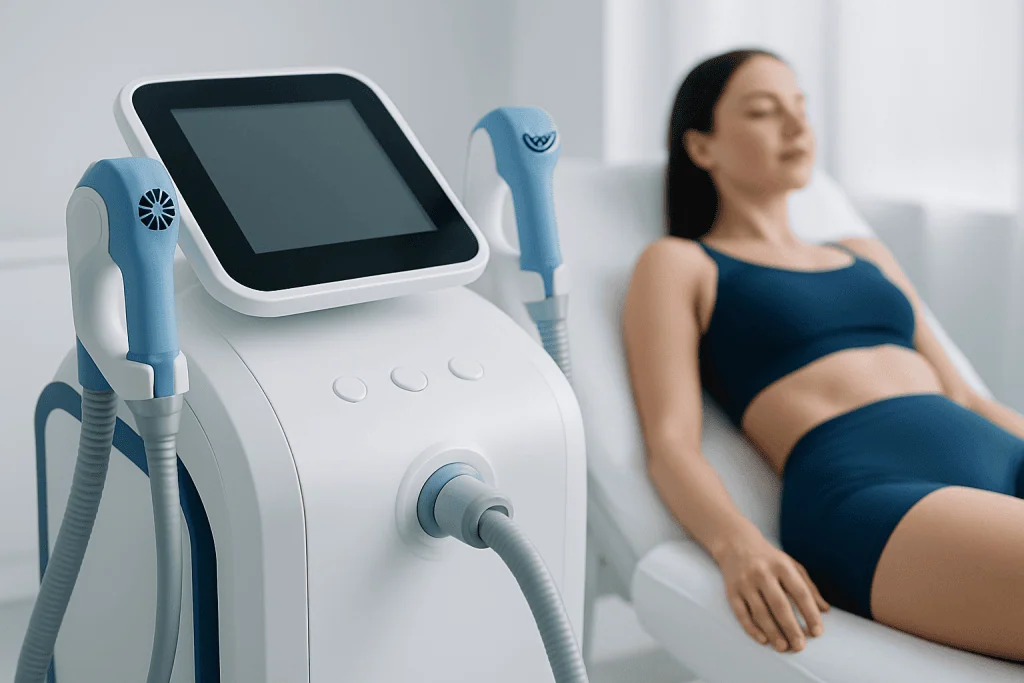
Several methods may be used for non-surgical buttock enhancement. Injectable fillers can add small amounts of volume and improve contour. In some settings, biostimulatory injectables are used to encourage the body to produce more collagen over time, which can gradually improve firmness and shape. Because product choice, technique, and safety vary, these treatments should only be performed by qualified medical professionals.
Energy-based treatments, such as radiofrequency, ultrasound-based technologies, or other skin-tightening devices, aim to stimulate collagen and improve mild skin laxity. These options do not create major volume, but they may help the buttock area look a little firmer or more lifted. Muscle-stimulation devices are another option; they work by triggering repeated muscle contractions, which may improve muscle tone and give a somewhat rounder appearance in selected patients.
Some people also ask about vacuum therapy or external shaping devices. These may create a temporary swelling or lifting effect, but they generally do not produce lasting structural change. When discussing options, patients should ask what the treatment is meant to improve: volume, firmness, cellulite, contour, or muscle tone. Clear goals make it easier to choose the right method and avoid disappointment.
Who May Be a Good Candidate

Good candidates are usually adults in stable general health who want mild to moderate enhancement and understand the temporary nature of most non-surgical treatments. Skin quality matters. A person with relatively good skin elasticity and only small contour concerns often responds better than someone with major sagging or a large amount of excess tissue.
These treatments may be considered after weight loss, aging-related volume changes, or naturally flatter buttock shape, but expectations need to stay realistic. For example, if the main concern is extra fat in nearby areas rather than the buttocks themselves, an overall body-shaping plan may be more useful than focusing only on the buttock area. In some cases, a specialist may discuss alternatives such as liposuction or other contouring methods if they better address the person’s anatomy.
Not everyone is a suitable candidate. Pregnancy, active skin infection, uncontrolled medical conditions, bleeding disorders, allergy to certain filler ingredients, or a history of problematic scarring such as keloid scars may affect treatment choices. A careful consultation, including medical history and examination, is an important part of safe planning.
Expected Results and How Long They Last
Results from a non-surgical butt lift vary depending on the technique, the starting anatomy, and the number of sessions performed. Injectable treatments may provide a noticeable but usually modest increase in fullness or better contour. Energy-based treatments often lead to gradual improvements rather than immediate dramatic changes, and muscle-toning devices may require a series of sessions before changes become visible.
In general, the effect is temporary. Some fillers are naturally broken down by the body over time, and collagen-stimulating treatments may fade gradually as aging continues. Maintenance sessions are often needed. Even when treatment works well, the result tends to be less dramatic and less durable than surgical options.
It is also helpful to know what these treatments cannot do. A non-surgical butt lift does not usually remove substantial loose skin, correct major drooping, or recreate the projection possible with fat grafting or implants. Looking at before-and-after images from patients with similar body types can help set realistic expectations.
Safety, Risks, and Limits
Although non-surgical options avoid incisions, they are still medical procedures and carry risks. Possible side effects include bruising, swelling, tenderness, temporary asymmetry, lumps, redness, or discomfort. Injectable treatments can also carry more serious complications if the product is placed incorrectly, if infection occurs, or if a nonapproved substance is used. For this reason, treatment should be performed in an appropriate medical setting by a clinician with specific training in buttock anatomy.
One of the most important safety points is that not all fillers or injected substances are suitable for the buttocks. Patients should ask exactly what product is being used, whether it is approved or commonly accepted for the intended purpose, and what follow-up care is included. Unregulated injections offered outside medical settings can be dangerous.
There are also practical limits. If skin laxity is significant, if there is a large change desired, or if the buttocks have changed after major weight loss or scarring from conditions such as burns, non-surgical treatment may not be enough. In those situations, a surgeon may recommend an operation or a staged treatment plan instead of promising unrealistic results.
Consultation, Procedure, and Recovery
Before treatment, the specialist usually reviews the person’s goals, medical history, medications, allergies, and previous procedures. The buttock area is examined for volume, symmetry, skin quality, and the relationship to the hips, lower back, and thighs. Photographs may be taken for planning and comparison. This is also the time to discuss expected benefits, risks, cost, likely maintenance, and whether the treatment can reasonably achieve the desired change.
The procedure itself depends on the method selected. Injectable treatments are often done in an outpatient setting and may involve skin marking, cleansing, and local numbing. Energy-based or muscle-toning sessions are generally shorter and may be repeated over several visits. Most people can return to many normal activities soon after treatment, although temporary swelling, soreness, or bruising is common.
Recovery instructions vary, but patients are often advised to avoid pressure on the treated area for a period of time, follow hygiene instructions carefully, and attend follow-up appointments. Final results may not be immediate, especially with collagen-stimulating or skin-tightening methods. Patience is important, as gradual improvement is common.
How Non-Surgical and Surgical Butt Lift Options Compare
Choosing between non-surgical and surgical enhancement depends mainly on the desired degree of change. Non-surgical treatments may suit people who want subtle contour improvement, mild firmness, and little downtime. Surgical options are generally better for those seeking more visible volume, more pronounced lift, or correction of significant sagging.
For example, fat transfer can use the patient’s own fat to reshape the buttocks more noticeably, while a surgical lift can remove excess skin and reposition tissue. These procedures are more invasive and involve longer recovery, but they can offer stronger and longer-lasting structural change. Non-surgical options may sometimes be used as a step before surgery or as a maintenance strategy after surgery, depending on the case.
A balanced consultation should include discussion of benefits and trade-offs rather than promoting one method for everyone. Near the end of the decision process, some patients may seek care at centers with both surgical and nonsurgical expertise. Acibadem International’s multidisciplinary specialists and JCI-accredited hospitals diagnose and treat aesthetic concerns for international patients, helping match the approach to the individual rather than to a trend.
When to Seek Medical Advice
Anyone considering a non-surgical butt lift should seek advice from a qualified dermatologist, plastic surgeon, or aesthetic physician with relevant training. A professional assessment is especially important if there is a history of previous buttock injections, unexplained lumps, skin changes, prior trauma, or concerns about asymmetry. Expert guidance helps reduce avoidable risk and improves the chance of a suitable treatment plan.
After treatment, medical review is important if severe pain, increasing redness, fever, drainage, skin discoloration, marked swelling, or sudden changes in sensation occur. These symptoms do not always mean a serious complication, but they should be assessed promptly. Patients should also contact the clinic if the result looks very uneven or if they are unsure how to follow aftercare instructions.
Because aesthetic procedures are elective, there is usually time to ask questions, compare options, and make an informed decision. A careful, safety-focused approach is the best way to decide whether a non-surgical butt lift is likely to meet a person’s goals.
Frequently asked questions
Is a non-surgical butt lift permanent?
No. Most non-surgical butt lift treatments are temporary because fillers break down over time and collagen or muscle effects gradually lessen. Many people need maintenance sessions to keep the result.
How much lift can be achieved without surgery?
The change is usually subtle to moderate, not dramatic. Non-surgical methods may improve contour, firmness, or mild projection, but they do not usually create the same lift or volume as surgery.
Are non-surgical butt lift treatments safe?
They can be safe when performed by a qualified medical professional using appropriate products and techniques. However, they still carry risks such as bruising, swelling, asymmetry, infection, or more serious complications from improper injections.
What is the recovery like after a non-surgical butt lift?
Recovery is usually shorter than with surgery. Many people return to routine activities quickly, but mild soreness, swelling, or bruising can occur and aftercare instructions should be followed closely.
Who is not a good candidate for a non-surgical butt lift?
People with major skin sagging, very large volume goals, certain medical conditions, active infection, or a history that makes injections risky may not be good candidates. In these cases, a doctor may recommend another approach.
How do non-surgical butt lift treatments compare with a Brazilian butt lift?
A Brazilian butt lift uses the patient’s own fat to create more noticeable shaping and volume, so the effect is often greater than with non-surgical options. Non-surgical methods usually involve less downtime, but the results are more limited and temporary.
References
- American Society of Plastic Surgeons
- International Society of Aesthetic Plastic Surgery
- U.S. Food and Drug Administration
- American Academy of Dermatology
- National Health Service
This article is for general information only and is not a substitute for professional medical advice. Please consult a qualified doctor about your individual situation.
Explore treatments in Turkey — costs, top hospitals & a free quote
JCI-accredited · board-certified surgeons · reply within 24h
Add us as a Preferred Source to see more of our trusted health content across Google Search, AI Overviews and Discover.

Related Treatments
Related Conditions
More from the Health Library



Related Specialists

Assoc. Prof. Dr. Erdem Güven (m)
Aesthetic Plastic & Reconstructive Surgery
Prof. Dr. Şükrü Yazar
Aesthetic Plastic & Reconstructive Surgery
Prof. Dr. Hakan Ağır
Aesthetic Plastic & Reconstructive Surgery
Prof. Dr. Bülent Saçak
Aesthetic Plastic & Reconstructive Surgery