Numbness and Burning Feet: When Nerve Symptoms Need Neuromuscular Testing

Burning or numb feet may come from nerve problems, but circulation, skin disorders, and vitamin deficiencies can also play a role. Symptoms that are persistent, progressive, painful, or affect balance should be medically evaluated.
Key Takeaways
- Burning or numb feet may come from nerve problems, but circulation, skin disorders, and vitamin deficiencies can also play a role.
- Symptoms that are persistent, progressive, painful, or affect balance should be medically evaluated.
- Neuromuscular testing, such as nerve conduction studies and electromyography, can help locate and characterize nerve damage.
- Treatment depends on the cause and may include controlling underlying conditions, relieving pressure on nerves, medications, physical therapy, and foot care.
- Urgent evaluation is needed if foot symptoms appear suddenly, spread quickly, or occur with weakness, severe back pain, or bowel or bladder changes.
Burning, tingling, or numb feet are common symptoms with many possible causes, including nerve compression, peripheral neuropathy, metabolic conditions, and circulation problems. Neuromuscular testing can help identify whether nerves or muscles are involved and guide the next steps in care.
Overview
Burning feet describes a sensation of heat, tingling, prickling, or discomfort in one or both feet. Some people also notice numbness, pins and needles, stabbing pain, or a feeling that socks are bunched up under the toes. These symptoms can come and go, but they may also become more noticeable at night or after standing and walking.
One common explanation is irritation or damage involving the peripheral nerves, especially the small nerves in the feet. This is often called peripheral neuropathy. However, burning feet are not caused by nerve conditions alone. Problems affecting blood flow, the skin, the joints, or the spine can sometimes produce similar symptoms.
Because there are many possible causes, a careful medical evaluation is important when symptoms last, worsen, or begin to affect sleep, balance, mobility, or daily life. In some situations, a neurologist may recommend neurophysiology testing to understand whether the symptoms are linked to nerve or muscle dysfunction.
Common Symptoms
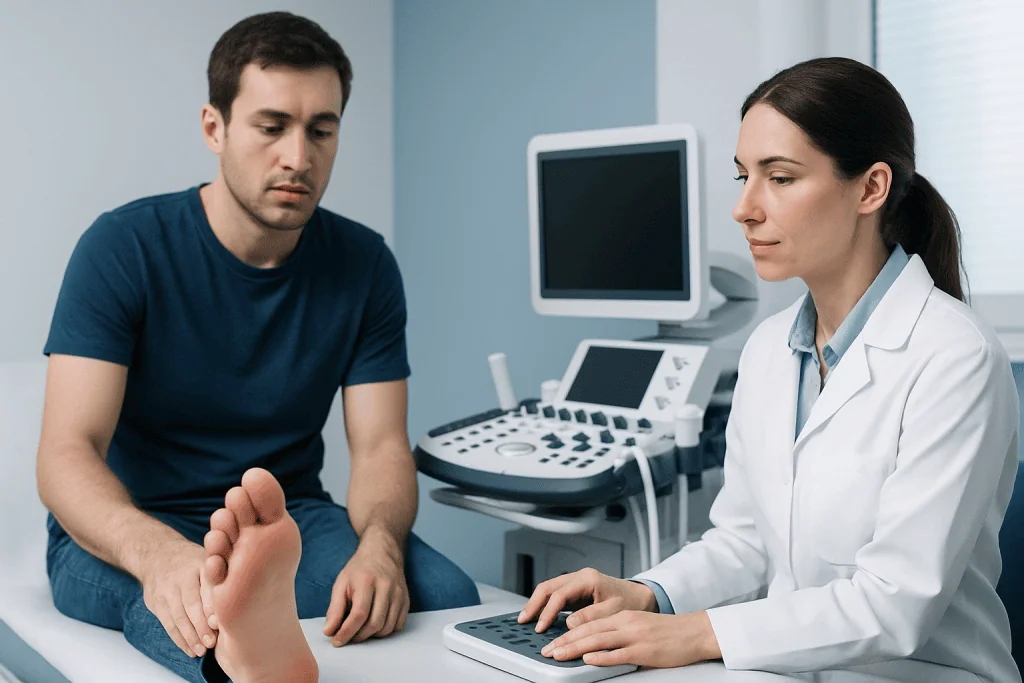
Burning feet can feel different from person to person. Some describe warmth or heat in the soles, while others report electric-shock sensations, tingling, itching, or deep aching. Numbness may affect only the toes at first and later spread across the foot or up the leg. Symptoms may involve both feet symmetrically, but they can also begin on one side.
Other symptoms sometimes occur alongside burning or numbness. These may include sensitivity to touch, reduced ability to feel temperature, cramps, weakness, unsteadiness while walking, or pain that worsens at night. In more advanced nerve conditions, the feet may feel both painful and oddly less sensitive at the same time.
Not every case is neurological. Redness, swelling, skin scaling, or itching may suggest a dermatologic or inflammatory cause. Cold feet, color changes, or pain with walking may point more toward a circulation problem. A doctor considers the full pattern of symptoms rather than a single complaint.
- Burning, tingling, or pins and needles
- Numbness in the toes or soles
- Sharp, stabbing, or electric-like pain
- Increased symptoms at night
- Balance problems or foot weakness
- Reduced sensation to touch or temperature
Causes and Risk Factors
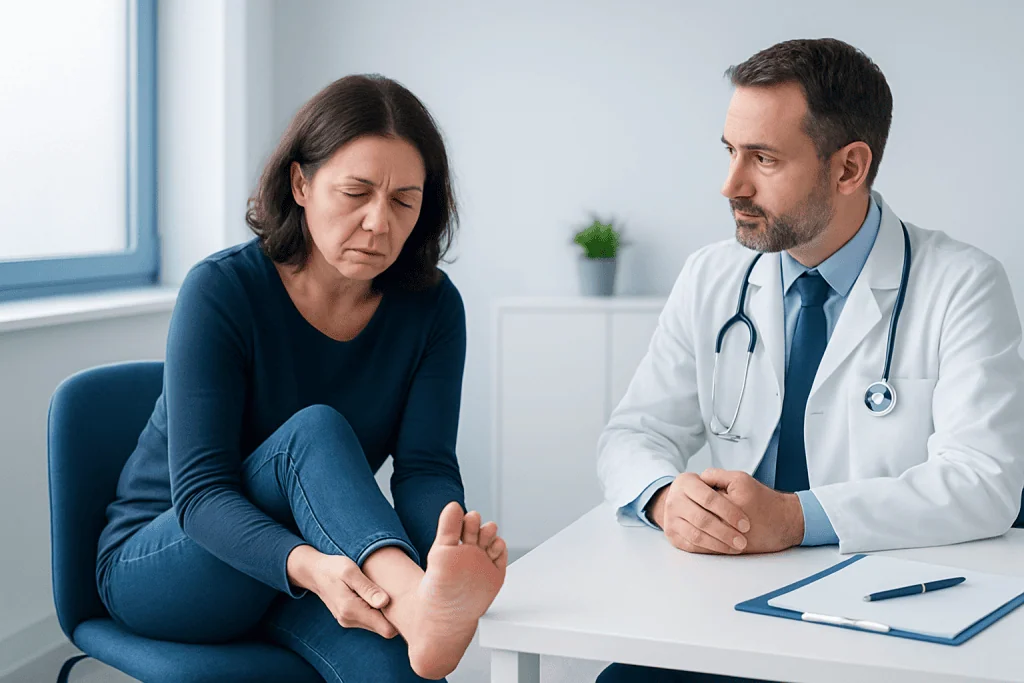
Peripheral neuropathy is one of the most frequent causes of burning feet. It may be related to diabetes, prediabetes, alcohol use, vitamin deficiencies, thyroid disease, kidney disease, autoimmune disorders, certain infections, inherited nerve conditions, or side effects of some medications. Nerve compression from the lower back, ankle, or foot can also lead to numbness or burning sensations.
Mechanical and structural causes are also possible. Poorly fitting shoes, repetitive pressure, prolonged standing, and some foot deformities can irritate nerves. Lumbar spine problems may cause symptoms that radiate into the feet, especially if a spinal nerve root is affected. In rare cases, spinal cord disorders such as syringomyelia or complications after a spinal cord injury may contribute to unusual sensory symptoms.
Several non-neurological conditions can mimic nerve pain. Athlete’s foot and other skin disorders may cause burning and itching. Reduced circulation, inflammation, or vascular disease can sometimes create discomfort or temperature changes in the feet. Risk factors that make nerve-related symptoms more likely include older age, diabetes, obesity, heavy alcohol intake, exposure to toxins, kidney disease, autoimmune disease, and a family history of neuropathy.
When symptoms progress quickly or come with new weakness, doctors may also consider acute inflammatory nerve disorders such as Guillain-Barre syndrome. Although this is much less common than chronic neuropathy, rapid change in symptoms always deserves prompt assessment.
When Neuromuscular Testing May Be Needed
Neuromuscular testing is often recommended when the cause of burning or numb feet is not clear from the history, examination, and basic blood tests. It is especially helpful when symptoms have lasted for weeks to months, are getting worse, involve weakness, or could be coming from different levels of the nervous system, such as the peripheral nerves, nerve roots, or muscles.
The most commonly used tests are nerve conduction studies and electromyography, often called EMG. A nerve conduction study measures how quickly and effectively electrical signals travel through a nerve. EMG evaluates the electrical activity of muscles and can show whether symptoms are related to nerve injury, muscle disease, or nerve root compression. These tests are usually performed as part of a neuromuscular disorders evaluation.
Neuromuscular testing can help answer practical questions: Is there a peripheral neuropathy? Is one nerve trapped or compressed? Is there evidence of a problem coming from the spine? Is weakness due to a muscle disorder instead of a nerve problem? While these tests do not detect every condition, they often provide valuable direction for diagnosis and treatment.
Some people with burning feet have symptoms mainly from very small sensory nerve fibers, and standard nerve conduction studies may be normal in those cases. A neurologist may then recommend additional assessment based on the clinical picture, including specialized testing, imaging, or laboratory evaluation.
How Doctors Diagnose the Cause
Diagnosis begins with a detailed conversation about the symptoms. A doctor asks when the burning started, whether it affects one or both feet, what makes it better or worse, and whether there is associated weakness, back pain, balance trouble, skin change, or medical conditions such as diabetes. Medication use, alcohol intake, occupational exposures, and family history may also offer important clues.
The physical examination usually includes checking reflexes, strength, balance, walking, and sensation to light touch, vibration, and temperature. The doctor may examine the skin, joints, pulses, and the shape of the feet to rule out other causes. Depending on the findings, blood tests may be ordered to look for diabetes, vitamin B12 deficiency, thyroid disease, inflammation, kidney problems, or other metabolic causes.
If the pattern suggests nerve or spinal involvement, tests may include nerve conduction studies and EMG as well as targeted imaging. In selected cases, advanced neuroradiology imaging may help evaluate the spine or brain when symptoms are atypical, asymmetric, or accompanied by other neurological signs. The goal is not simply to label the symptom, but to identify the reason behind it.
Treatment Options
Treatment depends on the underlying cause. If burning feet are linked to diabetes or prediabetes, improving blood sugar control is often a key part of care. If a vitamin deficiency, thyroid disorder, kidney disease, or medication side effect is involved, addressing that issue may reduce symptoms or help prevent progression. When a compressed nerve or spine problem is identified, treatment may focus on relieving pressure and improving movement.
Symptom relief is also important. Doctors may recommend medications used for neuropathic pain, along with physical therapy, stretching, footwear changes, or treatment of associated sleep disturbance. If balance or weakness is present, rehabilitation can help reduce fall risk and improve confidence with walking.
Good foot care matters, especially when numbness reduces normal sensation. Checking the feet regularly, wearing well-fitting shoes, avoiding extreme heat, and treating skin problems early can lower the risk of injury. A person should not start supplements or medications without professional guidance, because treatment needs to match the cause.
For older adults with several contributing factors, coordinated evaluation may be particularly helpful. In complex cases, multidisciplinary teams such as geriatric neurology services or specialists in neurology, endocrinology, rehabilitation, and foot care may be involved.
Prevention and Self-care
Not every cause of burning feet can be prevented, but several practical steps may lower risk or help keep symptoms from worsening. Managing diabetes, blood pressure, and cholesterol supports both nerve and vascular health. Limiting alcohol, eating a balanced diet, and treating vitamin deficiencies when present are also sensible measures.
Footwear can make a meaningful difference. Shoes should fit comfortably without squeezing the toes or creating pressure points. People who stand for long periods may benefit from supportive shoes and scheduled breaks. Daily foot inspection is important for anyone with numbness, because small cuts or blisters may go unnoticed.
Regular physical activity can support circulation, strength, and balance. Gentle exercise, smoking cessation, and weight management may help overall nerve and metabolic health. If symptoms have already begun, self-care should complement, not replace, medical evaluation.
Near the end of the diagnostic process, some patients seek care at centers with coordinated neurological services. Acibadem International offers diagnosis and treatment for international patients through multidisciplinary specialists in JCI-accredited hospitals when neuromuscular symptoms require further assessment.
When to See a Doctor
Medical advice should be sought if burning or numb feet persist, recur frequently, disturb sleep, or begin to interfere with walking, exercise, work, or daily activities. Evaluation is also important if symptoms are spreading upward, becoming more painful, or are associated with weakness, frequent tripping, or loss of balance.
Prompt or urgent assessment is needed when symptoms start suddenly, progress rapidly, or occur with severe back pain, new leg weakness, fever, or loss of bowel or bladder control. Immediate care is also important if there are signs of poor circulation, such as marked coldness, color change, or a non-healing wound, or if neurological symptoms occur with facial drooping or speech difficulty, which can suggest emergencies such as stroke.
Early evaluation may help identify reversible causes before nerve damage becomes more established. A qualified doctor can determine whether the next step is blood testing, foot and vascular assessment, imaging, or neuromuscular testing.
Frequently asked questions
What causes burning feet at night?
Burning feet that feel worse at night are often linked to peripheral nerve irritation or damage. Common causes include diabetes-related neuropathy, vitamin deficiencies, alcohol-related nerve injury, nerve compression, or some medications. Nighttime symptoms can feel stronger because there are fewer distractions and the nerves may be more sensitive at rest.
Does burning feet always mean neuropathy?
No. Neuropathy is a common cause, but it is not the only one. Burning feet can also be related to skin conditions, circulation problems, inflammation, poorly fitting shoes, or problems affecting the spine.
What is neuromuscular testing for foot numbness?
Neuromuscular testing usually refers to nerve conduction studies and electromyography, or EMG. These tests help doctors see how well nerves carry signals and whether muscles are receiving normal nerve input. They can help distinguish peripheral neuropathy from nerve compression, muscle disease, or nerve root problems.
Is an EMG painful?
Most people find EMG and nerve conduction studies uncomfortable rather than severely painful. The sensation varies from person to person, but the test is generally brief and well tolerated. The doctor or technologist usually explains each step to help the patient feel prepared.
Can burning feet be related to diabetes even before diagnosis?
Yes. Some people develop neuropathy with prediabetes or before diabetes has been formally diagnosed. That is one reason doctors often check blood sugar and related metabolic markers when evaluating numbness or burning in the feet.
When is burning feet an emergency?
Emergency care is needed if symptoms start suddenly, spread quickly, or occur with new weakness, trouble walking, severe back pain, bowel or bladder changes, or signs of poor blood flow. Urgent assessment is also important if neurological symptoms occur with facial drooping, confusion, or speech problems. These patterns may signal a serious neurological or vascular condition.
References
- National Institute of Neurological Disorders and Stroke
- National Institute of Diabetes and Digestive and Kidney Diseases
- American Academy of Neurology
- Mayo Clinic
- National Health Service
This article is for general information only and is not a substitute for professional medical advice. Please consult a qualified doctor about your individual situation.
Explore treatments in Turkey — costs, top hospitals & a free quote
JCI-accredited · board-certified surgeons · reply within 24h
Add us as a Preferred Source to see more of our trusted health content across Google Search, AI Overviews and Discover.

Neurology
Diagnosis and treatment of disorders of the brain, spinal cord, nerves and muscles.
51 specialists in this unit