Open vs Minimally Invasive IVF: What Changes for Patients?

Standard IVF usually uses minimally invasive egg retrieval rather than open surgery. The main IVF steps in the laboratory stay the same regardless of surgical approach.
Key Takeaways
- Standard IVF usually uses minimally invasive egg retrieval rather than open surgery.
- The main IVF steps in the laboratory stay the same regardless of surgical approach.
- Open surgery is uncommon and is generally used only when another pelvic problem also needs treatment.
- Recovery, discomfort, hospital stay, and return to daily life are usually easier with minimally invasive techniques.
- The best approach depends on ovarian access, pelvic anatomy, prior surgeries, and the overall cause of infertility.
- A personalized plan from a fertility specialist helps balance safety, success, and comfort.
Open vs minimally invasive IVF refers to different ways fertility specialists may access the ovaries or reproductive organs during treatment. For most patients today, IVF is performed with minimally invasive methods, while open surgery is reserved for selected situations involving anatomy, scarring, or other pelvic conditions.
Overview: What “open” and “minimally invasive” mean in IVF
When patients hear the phrase “open vs minimally invasive IVF,” it can sound as though there are two completely separate forms of in vitro fertilization. In practice, the laboratory part of IVF is the same: the ovaries are stimulated, eggs are collected, eggs and sperm are brought together in the lab, and embryos may be transferred to the uterus. What changes is how doctors access the reproductive organs when a procedure is needed.
In modern fertility care, most IVF cycles are minimally invasive. Eggs are usually collected through a transvaginal ultrasound-guided needle procedure, which does not require abdominal incisions. In some cases, laparoscopy or hysteroscopy may be used to diagnose or treat conditions that affect fertility before or during treatment. Open surgery, also called laparotomy, involves a larger abdominal incision and is used much less often today.
For patients, the difference is mainly about the treatment experience rather than the concept of IVF itself. Minimally invasive approaches usually mean less pain, shorter recovery, smaller scars, and a faster return to normal activities. Open surgery may still have an important role when a person has significant scar tissue, complex pelvic anatomy, or another condition that cannot be managed safely with less invasive methods.
Because fertility treatment is highly individualized, the right approach depends on the person’s medical history, pelvic anatomy, and infertility diagnosis. A specialist may recommend standard IVF treatment, or combine IVF with another procedure if there are barriers to egg retrieval, fertilization, or embryo transfer.
How the patient journey changes
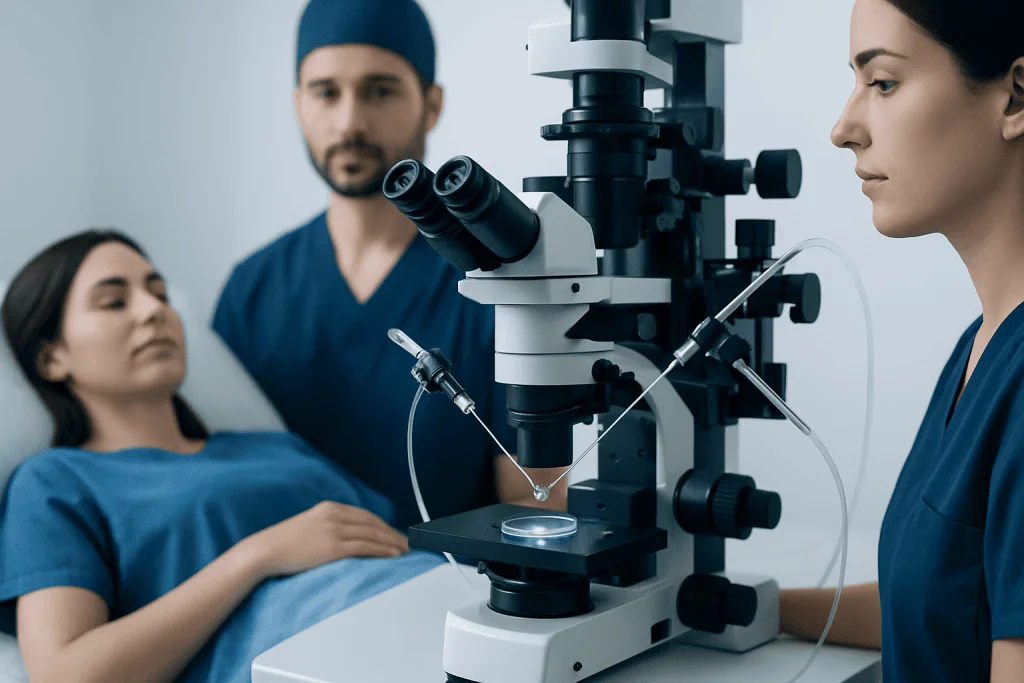
From a patient perspective, minimally invasive IVF usually feels more like a planned outpatient procedure than a major operation. Ovarian stimulation still involves hormone medications and ultrasound monitoring, but the egg retrieval itself is generally performed under sedation or anesthesia through the vagina using ultrasound guidance. There are no abdominal cuts, and most patients go home the same day.
Open surgery changes the experience more substantially. If a person needs laparotomy to remove severe adhesions, treat a large pelvic mass, or reach ovaries that cannot be accessed safely in the usual way, the procedure involves a hospital-based surgical recovery. The patient may need more time off work, more pain control, and a longer healing period before moving to the next stage of fertility treatment.
Minimally invasive surgery can also include laparoscopy, which uses small abdominal incisions and a camera, or hysteroscopy, which passes a thin instrument through the cervix into the uterus. These techniques may be used to manage issues such as endometrial or structural problems before IVF. For example, a doctor may investigate scar tissue, fibroids, or lesions that interfere with implantation or access.
Emotional preparation can differ as well. Patients undergoing standard IVF often focus on medication schedules, monitoring visits, embryo development, and pregnancy testing. When surgery is added, there may also be concerns about anesthesia, postoperative healing, and timing. Clear counseling helps patients understand which parts are routine IVF and which parts are related to a separate surgical need.
When minimally invasive IVF is usually preferred
Minimally invasive approaches are preferred in most IVF cycles because they are effective and generally well tolerated. Transvaginal egg retrieval has become the standard method in many fertility centers. It allows doctors to collect eggs directly from the follicles with ultrasound guidance while avoiding the greater trauma of an open abdominal procedure.
Laparoscopy may be recommended when there is a reason to inspect or treat the pelvis, such as suspected endometriosis, adhesions from prior infections or surgeries, or uncertainty about the location and accessibility of the ovaries. Even then, laparoscopy is often used as a separate fertility-preserving step rather than as a replacement for standard egg retrieval. Many patients with ovarian cysts or mild pelvic abnormalities can still proceed with conventional IVF planning after evaluation.
Minimally invasive techniques may also help address problems inside the uterus. Hysteroscopy can be used to assess or treat findings such as endometrial polyps, scar tissue, or a uterine shape issue. Correcting these concerns before embryo transfer may improve the uterine environment, although the exact benefit varies by condition and individual history.
For male-factor infertility or prior fertilization problems, the key difference may not be the surgical route at all, but the laboratory method used once eggs are collected. In those situations, a specialist may discuss ICSI as part of the IVF cycle, while still using standard minimally invasive egg retrieval for the female partner.
When open surgery may still be considered
Open surgery is uncommon in fertility treatment, but it has not disappeared entirely. A specialist may consider it when severe pelvic adhesions, distorted anatomy, or very large masses make minimally invasive access unsafe or ineffective. In these cases, the goal is not to make IVF more advanced, but to create safer conditions for treatment or to address a major gynecologic problem that stands in the way.
Examples may include extensive scar tissue after abdominal operations, severe endometriosis, complex ovarian masses, or ovaries positioned where transvaginal retrieval is not feasible. Some patients also have congenital uterine or pelvic differences that require a more tailored plan. If doctors suspect an infection-related cause of scarring, they may also evaluate for a history of pelvic inflammatory disease as part of the workup.
Open surgery can also be chosen if a patient needs another major abdominal operation for medical reasons and the fertility plan must be coordinated around that. Even in those cases, specialists usually aim to preserve ovarian tissue, protect future fertility, and avoid unnecessary delay. The exact timing of IVF after surgery depends on healing, pathology results, and the patient’s reproductive goals.
Patients often worry that needing open surgery means lower chances of success. That is not automatically true. Success depends on many factors, including age, ovarian reserve, sperm quality, embryo quality, and the underlying reason for infertility. The purpose of surgery is to improve safety or treat a condition, not to predict the final outcome by itself.
Diagnosis and planning before choosing an approach
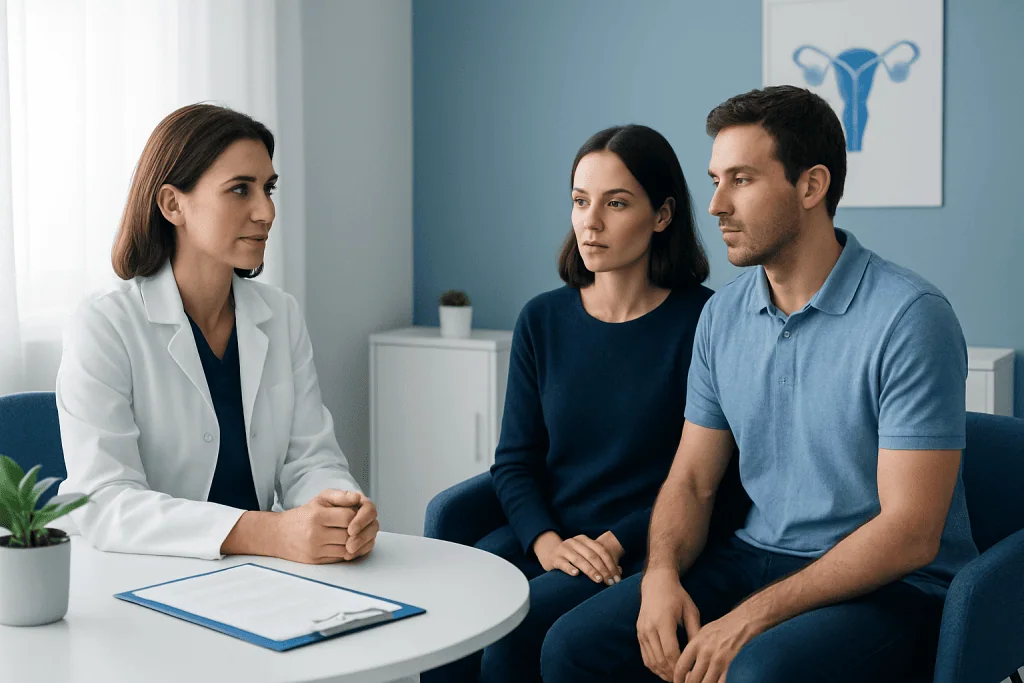
Before recommending open or minimally invasive management, fertility specialists perform a careful evaluation. This usually includes a medical history, pelvic ultrasound, hormone testing, and semen analysis. Depending on symptoms and prior findings, the doctor may also suggest additional imaging or an office procedure to look at the uterus more closely.
Planning focuses on practical questions: Can the ovaries be reached safely by standard ultrasound-guided retrieval? Is there a uterine problem that could interfere with implantation? Has the patient had prior surgeries, endometriosis, infection, or severe pain? Does the infertility picture point mainly to ovulation, tubal, uterine, male-factor, or unexplained causes? Some people are already being treated for female infertility or broader infertility concerns before this decision arises.
Doctors also assess ovarian reserve and expected response to stimulation. If the ovaries appear difficult to access, the team may discuss alternatives, such as adjusting the retrieval plan, using a different procedural setting, or treating a pelvic issue first. The choice is rarely made based on one finding alone. Instead, it reflects a combination of safety, feasibility, and the patient’s priorities.
Shared decision-making is especially important. Some patients prioritize the least invasive option and quickest recovery, while others are more focused on correcting a structural issue before trying to conceive. A clear conversation about likely benefits, risks, recovery time, and effect on treatment timing helps patients feel more confident about the plan.
Recovery, risks, and treatment outcomes
Recovery after minimally invasive IVF procedures is usually brief. After standard egg retrieval, mild cramping, spotting, bloating, or fatigue can occur for a short time. Most patients recover within a day or two, although activity instructions vary depending on the number of follicles retrieved and the person’s overall response to treatment.
Minimally invasive surgery such as laparoscopy or hysteroscopy may involve a somewhat longer recovery, but this is still typically shorter than after open surgery. Patients may have temporary abdominal soreness, shoulder tip discomfort from gas used during laparoscopy, or light bleeding after hysteroscopy. The fertility team explains when medications, monitoring, or embryo transfer can safely resume.
Open surgery generally involves more postoperative pain, more activity restrictions, and a longer healing period. As with any abdominal operation, there are potential risks such as bleeding, infection, adhesion formation, injury to nearby organs, or anesthesia-related complications. These risks are discussed in the context of the expected benefit, and surgery is usually recommended only when the likely advantages justify the added burden.
Importantly, a more invasive procedure does not necessarily improve IVF success on its own. Outcomes depend on the diagnosis and how effectively the chosen strategy addresses it. For some people, avoiding unnecessary surgery helps preserve time and reduces physical stress. For others, treating a structural problem first may make the IVF pathway more practical or safer.
Questions to ask and when to seek specialist advice
Patients benefit from asking exactly why a surgical approach is being recommended and whether it is part of IVF itself or a separate step to improve treatment conditions. Helpful questions include whether the ovaries can be reached by standard retrieval, whether a uterine issue needs correction before embryo transfer, how long recovery may take, and whether surgery is expected to change the timing of treatment. Understanding the reason behind the recommendation often reduces anxiety.
It is also reasonable to ask about alternatives. In some cases, a minimally invasive procedure may be enough instead of open surgery. In others, treatment may be staged, with surgery first and IVF later. If the fertility problem has multiple causes, the team may discuss options beyond conventional IVF, such as insemination in selected situations, although this depends on age, diagnosis, and previous treatment history.
Specialist advice is important if a patient has prior abdominal or pelvic surgery, severe menstrual pain, known endometriosis, repeated failed embryo transfer, suspected uterine abnormalities, or imaging that suggests inaccessible ovaries. An early consultation can clarify whether standard IVF is likely to be straightforward or whether extra planning is needed.
For international patients who need coordinated fertility and gynecologic care, Acibadem International’s multidisciplinary specialists in JCI-accredited hospitals diagnose and treat complex reproductive conditions while tailoring IVF planning to the individual. The most suitable approach is always one that matches the patient’s anatomy, fertility goals, and overall health.
Frequently asked questions
Is IVF usually an open surgery?
No. In most cases, IVF is not an open surgery. Egg retrieval is usually done with a transvaginal ultrasound-guided needle procedure, which is minimally invasive and typically performed as an outpatient treatment.
What is the main difference between open and minimally invasive IVF for patients?
The main difference is how the reproductive organs are accessed when a procedure is needed. Minimally invasive methods usually involve less pain, smaller or no incisions, shorter recovery, and a faster return to daily activities.
Does open surgery improve IVF success rates?
Not by itself. Open surgery is usually considered only when there is a separate medical reason, such as severe scarring or a complex pelvic condition, that needs treatment to make fertility care safer or more feasible.
Can someone still have standard IVF after laparoscopic surgery?
Yes, many people can. Laparoscopy is often used to diagnose or treat a pelvic problem, and standard IVF can then proceed once recovery is complete and the fertility team decides the timing is appropriate.
Will minimally invasive IVF hurt less?
For most patients, yes. Standard egg retrieval and other minimally invasive procedures generally cause less postoperative discomfort than open abdominal surgery, although some cramping, bloating, or spotting can still happen for a short time.
Who might need a more invasive surgical approach during fertility treatment?
Patients with severe pelvic adhesions, very large masses, difficult ovarian access, or complex anatomy may need a more invasive plan. The decision is individualized and based on safety, anatomy, and the underlying fertility diagnosis.
This article is for general information only and is not a substitute for professional medical advice. Please consult a qualified doctor about your individual situation.
Minimally Invasive in Turkey — costs, top hospitals & a free quote
JCI-accredited · board-certified surgeons · reply within 24h
Add us as a Preferred Source to see more of our trusted health content across Google Search, AI Overviews and Discover.

Robotic Surgery
Robot-assisted procedures across urology, gynecology and general surgery for greater precision and faster recovery.
Related Treatments
Related Conditions
More from the Health Library

IVF With Donor Sperm: Who May Benefit and How Treatment Is Planned

IVF and Thyroid Health: TSH Targets, Antibodies, and Treatment Planning

Ovarian Stimulation in IVF: Medications, Monitoring, and Safety

IVF for Endometriosis: When It Helps and What to Expect

IVF Injections: Side Effects, Injection Tips, and When to Call

Unexplained Infertility and IVF: When Treatment May Be Recommended
Gynecology & Obstetrics Specialists at Acibadem
Assoc. Prof. Dr. Cevat Rıfat Cündübey
Gynecology & Obstetrics
Dr. Cevdet Hekimoğlu
Gynecology & Obstetrics
Dr. Ceyda Perçinoğlu
Gynecology & Obstetrics
Dr. Cihan Deniz Keleş
Gynecology & Obstetrics