Parasomnias vs Night Seizures: How Sleep Neurology Finds the Cause

Parasomnias are sleep-related behaviors such as sleepwalking, night terrors or dream enactment, while night seizures are epileptic events that occur during sleep. Clues such as timing in the night, stereotyped movements, awareness afterward, triggers and family history help guide the diagnosis.
Key Takeaways
- Parasomnias are sleep-related behaviors such as sleepwalking, night terrors or dream enactment, while night seizures are epileptic events that occur during sleep.
- Clues such as timing in the night, stereotyped movements, awareness afterward, triggers and family history help guide the diagnosis.
- Video polysomnography with EEG is often the most useful test when the cause is unclear or events are frequent, unusual or potentially unsafe.
- Treatment depends on the cause and may include sleep hygiene, safety measures, treating sleep apnea, medication changes or anti-seizure therapy.
- Families can help by keeping a sleep diary and recording events safely, which gives clinicians valuable diagnostic information.
Parasomnias and night seizures can both cause unusual movements, sounds or behaviors during sleep, but their causes and treatments are different. Sleep neurology helps distinguish them through a careful history, targeted testing and, when needed, overnight video EEG monitoring.
Overview: Why Parasomnias and Night Seizures Are Confused
Parasomnias vs night seizures is a common and important question in sleep neurology because both can happen suddenly during sleep and may include movements, vocal sounds, confusion or wandering. To a bed partner or parent, the event may look dramatic, yet the person often has little or no memory of it in the morning. The key point is that similar-looking nighttime behaviors can come from different brain processes.
Parasomnias are disorders of arousal or dream-related behaviors. They include non-REM parasomnias such as sleepwalking, confusional arousals and sleep terrors, and REM-related parasomnias such as REM sleep behavior disorder, where a person may act out dreams. Night seizures, also called nocturnal seizures, are epileptic seizures that occur during sleep or around waking.
Because the treatment pathways differ, clinicians avoid making assumptions from one event alone. A sleep neurologist looks for patterns: when the event occurs, how long it lasts, whether the behavior is similar every time, how the person feels afterward and whether there are daytime neurological symptoms. In many cases, a structured evaluation in neurological sleep medicine can clarify the cause and reduce uncertainty for patients and families.
Symptoms and Clues That Help Tell Them Apart
Parasomnias often occur during transitions between sleep stages. Non-REM parasomnias usually appear in the first third of the night, when deep sleep is more common. A person may sit up, look frightened, walk, speak, resist comforting or seem awake but confused. The event may last several minutes, and the person typically has limited recall.
REM sleep behavior disorder more often occurs in the second half of the night, when REM sleep is longer. The person may move in response to vivid dreams, talk, shout, kick or reach out. Unlike normal REM sleep, the usual muscle relaxation is reduced, allowing dream enactment. This condition is more common in older adults and should be assessed carefully, especially if it is new.
Night seizures tend to be brief, repetitive and stereotyped, meaning the behavior looks very similar each time. They may include sudden stiffening, jerking, unusual postures, rhythmic movements, abrupt sitting up, vocalization, chewing movements, or a sudden fearful expression. Some people wake confused, have tongue biting, urinary incontinence, muscle soreness or a headache, but these signs are not present in every case.
There is overlap, so no single sign proves the diagnosis. Useful clues include:
- Events that are very brief, frequent and nearly identical may suggest seizures.
- Events that involve wandering, partial responsiveness and prolonged confusion may suggest a non-REM parasomnia.
- Dream enactment with remembered vivid dreams may suggest REM sleep behavior disorder.
- Events occurring from naps, at many different times of night or with daytime spells may raise suspicion for epilepsy.
Causes and Risk Factors

Parasomnias can be influenced by sleep deprivation, irregular sleep schedules, stress, fever, alcohol use, certain medications and other sleep disorders. Obstructive sleep apnea and restless legs syndrome can fragment sleep and trigger partial arousals, making parasomnias more likely in susceptible people. In children, non-REM parasomnias are often related to brain maturation and may improve with age.
Some parasomnias run in families, especially sleepwalking and sleep terrors. In adults, new or worsening parasomnia-like behaviors deserve a more careful review, because they may be related to medications, untreated sleep apnea, neurological conditions, psychiatric stressors or REM sleep behavior disorder. The goal is not only to name the event but also to identify treatable contributors.
Night seizures occur when abnormal electrical activity in the brain produces a seizure during sleep. Some forms of epilepsy have a strong tendency to occur at night, particularly seizures arising from the frontal lobe, although other brain regions may also be involved. A person may have seizures only during sleep, which can delay recognition if no one witnesses the events.
Risk factors for nocturnal seizures include a personal history of epilepsy, prior brain injury, stroke, brain infections, developmental brain differences, family history of epilepsy, or unexplained daytime episodes such as brief lapses, unusual sensations or sudden confusion. Sleep deprivation can also lower the seizure threshold in people who are vulnerable.
How Sleep Neurology Finds the Cause
The diagnostic process begins with a detailed history from both the patient and a witness when possible. The clinician may ask when events started, how often they occur, what time of night they happen, whether the person can be awakened, what movements are seen, how long recovery takes and whether there are daytime symptoms. A home video, recorded safely without intervening unnecessarily, can be very helpful.
A sleep diary can show patterns such as insufficient sleep, shift work, alcohol use, stress or medication changes. Doctors may also review current medicines, medical conditions and family history. In children, the evaluation may include developmental history and school-day sleep patterns; in older adults, it may include questions about memory, movement, balance and dream enactment.
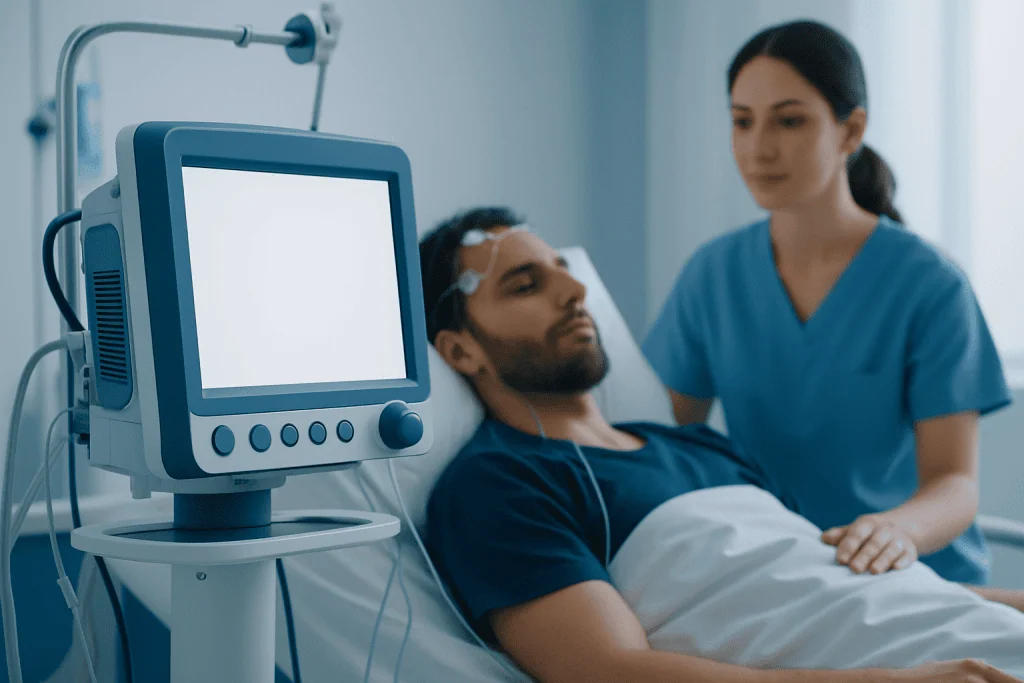
Testing depends on the story. A standard EEG may detect epileptic activity, but a normal EEG does not always exclude seizures because abnormal activity may not appear during a short recording. Overnight video polysomnography records sleep stages, breathing, oxygen levels, muscle tone, heart rhythm, body movements and video. When combined with extended EEG channels, it can capture both the behavior and the brain’s electrical activity during the event.
In more complex cases, specialists in neurophysiology may recommend prolonged video EEG monitoring, ambulatory EEG or additional imaging if epilepsy is strongly suspected. The aim is to match the clinical story with objective data rather than rely on appearance alone.
Treatment Options Depend on the Diagnosis
Treatment for parasomnias usually begins with practical sleep measures and safety. Regular sleep timing, adequate sleep duration, limiting alcohol, managing stress and treating sleep fragmentation can reduce events. If sleep apnea is present, treating it may significantly improve arousals and nighttime behaviors. Medication review is important because some medicines can worsen vivid dreams, movements or confusion during sleep.
Safety steps may include securing windows and doors, removing sharp objects near the bed, lowering the bed height, padding corners, using a bed alarm in selected cases, and avoiding sleeping in a top bunk. For children, gentle reassurance and a calm return to bed are usually preferred over trying to fully wake the child during an event. Scheduled awakenings may help some children with predictable sleep terrors or sleepwalking.
REM sleep behavior disorder may require additional measures to prevent injury and to assess possible neurological associations. Treatment can include environmental safety, addressing contributing medications or sleep apnea, and carefully selected medicines when needed. Medication decisions should always be individualized, especially in older adults or people with balance problems, memory concerns or other health conditions.
If the diagnosis is nocturnal epilepsy, treatment may include anti-seizure medication, sleep regularity, avoidance of known triggers and follow-up to confirm seizure control and medication tolerability. Some patients need further evaluation for focal epilepsy if seizures remain difficult to control. The plan is tailored to seizure type, age, general health, lifestyle and test results.
Prevention, Self-Care and What Families Can Do
While not every nighttime event can be prevented, many triggers can be reduced. A consistent sleep schedule is one of the most useful steps for both parasomnias and epilepsy, because sleep deprivation can worsen both. A quiet bedtime routine, limited late caffeine, reduced evening alcohol and good management of stress can support more stable sleep.
Families and bed partners can help by observing without panic and recording details after the event. Important notes include the time, duration, behaviors, breathing changes, responsiveness, injuries, recovery time and whether there was memory of the event. A brief phone video can be useful if it is safe to record, but safety should always come first.
During a suspected parasomnia, it is usually best to guide the person away from danger with a calm voice rather than restrain them. During a suspected seizure, the person should be protected from injury, placed on their side if possible, and objects should not be placed in the mouth. Emergency care is needed if a seizure lasts longer than advised by a doctor, repeats without recovery, causes injury, occurs in water, or is the person’s first seizure-like event.
Parents should discuss frequent or unusual nighttime events in children with a qualified clinician. Many childhood parasomnias are benign, but repeated stereotyped episodes, daytime spells, developmental concerns or injury risk may require assessment by pediatric sleep or neurology specialists, including neuropediatrics when appropriate.
When to See a Doctor
Medical evaluation is recommended when nighttime events are new, frequent, injurious, increasing, or difficult to explain. It is also important to seek care if events are very brief and repetitive, occur several times in one night, involve stiffening or rhythmic jerking, happen during naps, or are followed by prolonged confusion, severe sleepiness or daytime episodes.
Adults with new dream enactment, especially if it includes kicking, punching, falling out of bed or injuries to a bed partner, should be assessed. People with known epilepsy should report any change in nighttime events, morning confusion, unexplained injuries or loss of seizure control. A timely review can help adjust the care plan and improve sleep safety.
Patients should bring a medication list, sleep diary, witness description and any videos to the appointment. At Acibadem International, multidisciplinary specialists in JCI-accredited hospitals evaluate and treat sleep-related neurological conditions for international patients, including complex cases that require coordinated sleep, neurology and diagnostic testing.
Frequently asked questions
Can parasomnias look exactly like seizures?
Yes, they can look very similar, especially when there are sudden movements, shouting or confusion. This is why clinicians look for patterns over time and may use video sleep studies with EEG. A single description is often not enough to make a confident diagnosis.
Does a normal EEG rule out night seizures?
No. A routine EEG can be helpful, but it may be normal if abnormal electrical activity is not captured during the test. If suspicion remains, a doctor may recommend longer EEG monitoring or overnight video EEG combined with a sleep study.
Are night terrors the same as nightmares?
No. Night terrors usually occur from deep non-REM sleep, often with intense fear, confusion and little memory afterward. Nightmares occur during REM sleep and are more likely to be remembered as a frightening dream after waking.
Should someone be woken during a parasomnia?
In many cases, it is better to calmly guide the person away from danger rather than forcefully wake them. Trying to fully wake someone during sleepwalking or a sleep terror may increase confusion. Safety measures in the bedroom are often the most important first step.
What should a family do during a suspected night seizure?
The person should be protected from injury and turned onto the side if possible. Do not put anything in the mouth and do not restrain movements. Seek urgent help if it is a first seizure-like event, lasts unusually long, repeats without recovery, causes injury or occurs in a risky setting such as water.
Can children outgrow parasomnias?
Many children with sleepwalking, confusional arousals or sleep terrors improve as they grow older. However, frequent, injurious or highly stereotyped events should be discussed with a doctor. Evaluation is especially important if there are daytime spells, developmental concerns or a family history of epilepsy.
References
- American Academy of Sleep Medicine
- International League Against Epilepsy
- National Institute of Neurological Disorders and Stroke
- Epilepsy Foundation
- European Academy of Neurology
This article is for general information only and is not a substitute for professional medical advice. Please consult a qualified doctor about your individual situation.
Sleep Neurology in Turkey — costs, top hospitals & a free quote
JCI-accredited · board-certified surgeons · reply within 24h
Add us as a Preferred Source to see more of our trusted health content across Google Search, AI Overviews and Discover.

Neurology
Diagnosis and treatment of disorders of the brain, spinal cord, nerves and muscles.
51 specialists in this unit