Poor Egg Quality in IVF: What It Means and What Can Help

Egg quality refers to how well an egg can mature, fertilize, and support early embryo development. Age is one of the strongest influences on egg quality, but hormone disorders, ovarian conditions, and lifestyle factors may also play a role.
Key Takeaways
- Egg quality refers to how well an egg can mature, fertilize, and support early embryo development.
- Age is one of the strongest influences on egg quality, but hormone disorders, ovarian conditions, and lifestyle factors may also play a role.
- Poor egg quality cannot be diagnosed by symptoms alone and is usually suspected during fertility testing or IVF.
- Treatment focuses on identifying underlying causes, optimizing general health, and choosing the most suitable fertility approach.
- A lower egg quality does not always mean pregnancy is impossible; outcomes vary from person to person.
Poor egg quality in IVF means that some eggs may be less able to mature, fertilize, or grow into healthy embryos. While it can affect treatment outcomes, careful evaluation and individualized fertility care can help clarify the cause and guide the next steps.
Overview: What Poor Egg Quality in IVF Means
Poor egg quality in IVF refers to eggs that are less likely to mature properly, fertilize normally, or develop into strong embryos. In fertility treatment, egg quality is just as important as the number of eggs collected. A person may produce several eggs during an IVF cycle, yet not all of them may be capable of leading to a healthy embryo.
Doctors usually do not judge egg quality from one feature alone. Instead, they look at the bigger picture: age, hormone levels, ovarian reserve testing, how eggs respond to stimulation, whether fertilization occurs, and how embryos grow over several days in the laboratory. In many cases, poor egg quality becomes a concern only after fertility investigations or an IVF cycle provides more information.
It is also important to separate egg quality from ovarian reserve. Ovarian reserve describes how many eggs may remain in the ovaries, while egg quality describes how likely those eggs are to function well. A person can have a reduced number of eggs, lower-quality eggs, or both. This is one reason why fertility assessment often needs to be individualized.
For many patients, this topic can feel discouraging, but poor egg quality does not always mean treatment will fail. Fertility specialists can use the findings from testing and prior cycles to plan IVF treatment more precisely and discuss realistic options for the next step.
Possible Signs and How It Appears During IVF
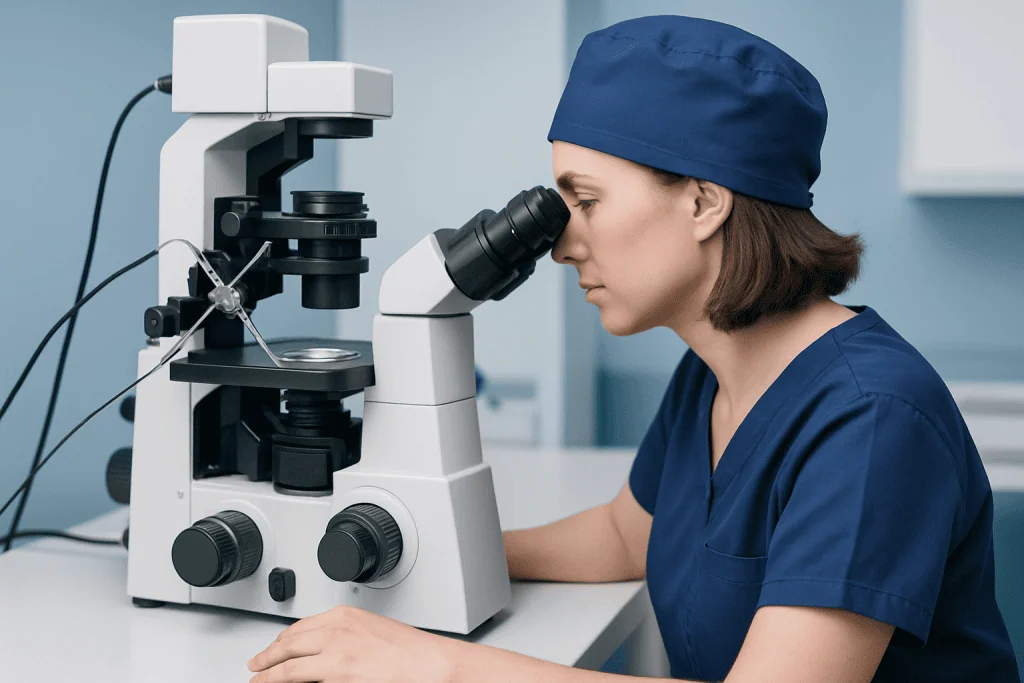
Poor egg quality usually does not cause obvious day-to-day symptoms. Most people feel well and have no physical signs that clearly point to the problem. Menstrual cycles may be regular or irregular, depending on whether another condition is present, but egg quality itself cannot be confirmed from symptoms alone.
Instead, it often becomes apparent during fertility testing or treatment. During an IVF cycle, doctors may notice that fewer eggs reach maturity than expected, fertilization rates are lower, or embryos stop developing early. In some cases, embryos may appear fragmented or develop more slowly than hoped, although laboratory appearance is only one part of the assessment.
Some patients seek evaluation after repeated unsuccessful attempts to conceive, lower embryo quality in previous cycles, or a history of repeated implantation failure or recurrent pregnancy loss. These situations do not always mean egg quality is the only cause, but they can prompt a more detailed review.
- Difficulty becoming pregnant despite regular attempts
- Lower fertilization rates in IVF
- Few mature eggs collected during egg retrieval
- Embryos that develop poorly or stop growing early
- Repeated unsuccessful IVF cycles without another clear explanation
Causes and Risk Factors

Age is one of the main factors linked to egg quality. As the ovaries age, eggs are more likely to have changes that affect fertilization and chromosome balance. This is a natural biological process and is one reason fertility gradually declines over time, especially in the later reproductive years.
However, age is not the only factor. Certain hormonal and ovarian conditions can also affect egg development. These may include diminished ovarian reserve, premature ovarian insufficiency, endometriosis, and some metabolic or endocrine disorders. In some patients, polycystic ovary syndrome may affect ovulation patterns and egg maturation, although egg quality in PCOS can vary widely from person to person.
Lifestyle and environmental influences may also contribute. Smoking is strongly associated with reduced fertility and can affect both ovarian reserve and egg health. Other factors that may matter include significant obesity, being underweight, chronic stress, poor sleep, uncontrolled medical conditions, and possible exposure to environmental toxins. These influences do not guarantee poor egg quality, but they may affect reproductive health overall.
Sometimes no single cause is found. Fertility is complex, and poor outcomes in IVF can reflect a combination of egg-related, sperm-related, uterine, and embryo factors. That is why an evaluation for female infertility often considers the whole reproductive picture rather than one isolated result.
How Doctors Evaluate Egg Quality
There is no single test that can directly measure egg quality before fertilization. Instead, doctors estimate the likelihood of egg quality concerns by combining age, medical history, ultrasound findings, hormone tests, and previous treatment results. Blood tests may include anti-Müllerian hormone (AMH), follicle-stimulating hormone (FSH), estradiol, thyroid testing, and other hormones when needed.
An ultrasound scan can count antral follicles, which helps estimate ovarian reserve. This does not reveal the exact quality of each egg, but it helps the fertility team understand how the ovaries may respond to medication. A review of menstrual history, previous pregnancies, surgeries, family history of early menopause, and conditions such as ovarian cysts may also be relevant.
In IVF, the clearest practical information often comes from the cycle itself. Specialists assess how the ovaries respond to stimulation, how many eggs are collected, how many are mature, whether fertilization occurs, and how embryos develop. When needed, sperm factors are also carefully reviewed because fertilization and embryo quality depend on both egg and sperm health.
Because the causes of infertility can overlap, the evaluation may include uterine assessment, ovulation review, and general health screening. A fertility specialist may also recommend lifestyle changes or further tests if there is concern about hormonal imbalance, autoimmune issues, or inherited conditions affecting reproductive function.
Treatment Options and What Can Help
Treatment for poor egg quality focuses on improving the conditions around egg development, identifying treatable causes, and choosing the most appropriate fertility method. If a hormonal problem is present, such as thyroid disease or ovulation dysfunction, managing that condition may support better reproductive outcomes. When lifestyle factors such as smoking, alcohol use, obesity, or poor sleep are relevant, doctors may recommend changes before another cycle begins.
In IVF, specialists may adjust the stimulation protocol based on age, ovarian reserve, and response in prior cycles. This can include changes in medication timing, dose, or monitoring. Some patients may benefit from laboratory techniques such as ICSI, especially when fertilization has been low in an earlier cycle or when there are sperm-related concerns as well.
It is important to understand that no supplement, diet, or wellness trend can guarantee better egg quality. Some doctors may discuss supportive measures on an individual basis, but these should be approached carefully and under medical guidance. Evidence can be mixed, and what is appropriate for one patient may not suit another.
When repeated cycles suggest significant egg-related issues, the fertility team may discuss broader options within infertility treatment, including revised IVF strategies, embryo testing in selected cases, or the use of donor eggs where legally and personally appropriate. Decisions are highly individual and should take into account age, test results, treatment goals, and emotional readiness.
Prevention and Self-care Before IVF
Not all causes of poor egg quality can be prevented, especially those related to age or inherited factors. Still, healthy habits may support overall reproductive health and place the body in the best possible condition for treatment. Planning ahead for fertility evaluation can also help avoid delays when time is an important factor.
Useful self-care steps include stopping smoking, limiting alcohol, maintaining a balanced diet, aiming for a healthy weight, staying physically active, and managing chronic conditions such as diabetes or thyroid disease. Good sleep and stress management are also worth attention. These steps may not reverse underlying egg changes, but they can improve general health and treatment readiness.
Patients should speak with their doctor before starting vitamins, herbal products, or over-the-counter fertility supplements. Some products are heavily marketed despite limited evidence, and others may interact with medications. A clinician can help decide what is safe and reasonable in the context of IVF.
- Attend preconception and fertility appointments early
- Follow medication instructions carefully during IVF
- Ask about individualized nutrition and exercise advice
- Review all supplements and medications with the fertility team
- Seek emotional support if treatment becomes stressful or overwhelming
When to See a Doctor and Getting Specialist Support
A person should consider medical advice if pregnancy has not occurred after a period of regular unprotected intercourse, especially if they are older, have irregular periods, have known gynecologic conditions, or have had prior unsuccessful fertility treatment. Early evaluation can be particularly helpful when there is concern about ovarian reserve or a history suggesting reduced fertility potential.
It is also sensible to return to a fertility specialist after an IVF cycle with a low number of mature eggs, poor fertilization, or limited embryo development. These results do not always reflect a permanent problem, but they do provide valuable information that can guide the next cycle. A review with a specialist can help clarify whether protocol changes, further testing, or a different treatment path may be appropriate.
Emotional support matters as well. Concerns about egg quality can bring uncertainty, guilt, or frustration, but fertility challenges are medical issues and should be approached with accurate information and compassionate care. Counseling or support groups may help some patients cope during treatment.
Near the end of the care journey, patients may value a center that brings together reproductive endocrinology, embryology, imaging, and gynecology. Acibadem International’s multidisciplinary specialists and JCI-accredited hospitals diagnose and treat fertility conditions for international patients, offering coordinated evaluation when egg quality concerns are part of a broader fertility picture.
Frequently asked questions
Can poor egg quality be improved?
Sometimes the factors around egg development can be optimized, especially if there are treatable issues such as smoking, uncontrolled hormones, or certain lifestyle factors. However, age-related changes in egg quality cannot usually be fully reversed, so treatment often focuses on improving overall fertility conditions and choosing the best IVF strategy.
Does poor egg quality mean IVF will not work?
No. Poor egg quality can reduce the chance of successful fertilization or embryo development, but it does not automatically mean IVF will fail. Many outcomes depend on age, sperm quality, the treatment plan, and how embryos develop in the laboratory.
Is egg quality the same as ovarian reserve?
No. Ovarian reserve refers to the estimated number of remaining eggs, while egg quality refers to how well those eggs function. A person may have low reserve, reduced quality, or both, and each situation can affect fertility differently.
How do doctors know if egg quality is poor?
There is no single direct test that measures egg quality before fertilization. Doctors usually estimate it using age, hormone tests, ultrasound findings, and especially the results of IVF, such as the number of mature eggs, fertilization rates, and embryo development.
Are supplements guaranteed to improve egg quality?
No supplement can guarantee better egg quality. Some may be discussed in individual cases, but evidence is often limited or mixed, so it is important to speak with a fertility specialist before starting any product.
Can younger women have poor egg quality too?
Yes. Although age is a major factor, younger women can also experience egg quality problems due to ovarian conditions, hormonal disorders, genetic factors, or unexplained causes. A specialist evaluation can help identify whether another issue may be involved.
References
- American Society for Reproductive Medicine
- European Society of Human Reproduction and Embryology
- Centers for Disease Control and Prevention
- National Institute for Health and Care Excellence
- World Health Organization
This article is for general information only and is not a substitute for professional medical advice. Please consult a qualified doctor about your individual situation.
IVF & fertility treatment in Turkey — success rates and costs
JCI-accredited · board-certified surgeons · reply within 24h
Add us as a Preferred Source to see more of our trusted health content across Google Search, AI Overviews and Discover.
Check your numbers in seconds
BMI, calories, due date, blood pressure and 30+ more clinical calculators — free, instant, doctor-reviewed ranges.

Related Treatments
Related Conditions
More from the Health Library



Related Specialists

Prof. Dr. Mehmet Cihat Ünlü
Gynecology & Obstetrics
Prof. Dr. Mete Güngör
Gynecology & Obstetrics
Prof. Dr. Bülent Tıraş
Gynecology & Obstetrics
Prof. Dr. Tansu Küçük
Gynecology & Obstetrics