Tremor vs Parkinsonism: When Movement Symptoms Need Specialist Evaluation

Tremor is a symptom, while parkinsonism is a group of movement features that may include tremor, slowness, stiffness, and balance changes. Essential tremor often appears during action or posture, while Parkinson-related tremor more often occurs at rest.
Key Takeaways
- Tremor is a symptom, while parkinsonism is a group of movement features that may include tremor, slowness, stiffness, and balance changes.
- Essential tremor often appears during action or posture, while Parkinson-related tremor more often occurs at rest.
- A detailed history and neurological examination are the most important parts of diagnosis.
- Several medicines, metabolic problems, stroke, and other neurological conditions can cause tremor or parkinsonian features.
- Treatment depends on the cause and may include medication review, rehabilitation, symptom-targeted therapy, and specialist care.
- New, rapidly worsening, or one-sided movement symptoms should be assessed by a qualified doctor.
Tremor and parkinsonism can look similar, but they are not the same. Careful specialist evaluation helps distinguish common causes, identify warning signs, and guide treatment that matches the underlying movement disorder.
Overview: Tremor and Parkinsonism Are Not the Same
People often use the words tremor and Parkinson’s interchangeably, but they describe different things. A tremor is an involuntary rhythmic shaking movement that can affect the hands, head, voice, legs, or other body parts. Parkinsonism is a broader clinical syndrome that refers to a group of movement features, especially slowness of movement, muscle stiffness, resting tremor, and problems with balance or walking.
This difference matters because the possible causes, tests, and treatments are not identical. Some people have a tremor without parkinsonism, such as those with essential tremor. Others have parkinsonism with little or no tremor. A specialist in movement disorders can look at the full pattern of symptoms rather than focusing on shaking alone.
Parkinsonism may be caused by Parkinson’s disease, but it can also happen due to medications, vascular changes in the brain, atypical neurodegenerative disorders, or other neurological illnesses. Tremor also has many causes, including enhanced physiologic tremor, thyroid problems, anxiety, certain medicines, and neurological conditions.
Because movement symptoms can overlap, a careful evaluation is the best way to understand what is happening. Clear diagnosis can reduce uncertainty, help set realistic expectations, and support early treatment when it is needed.
Symptoms: How the Movement Pattern Can Differ
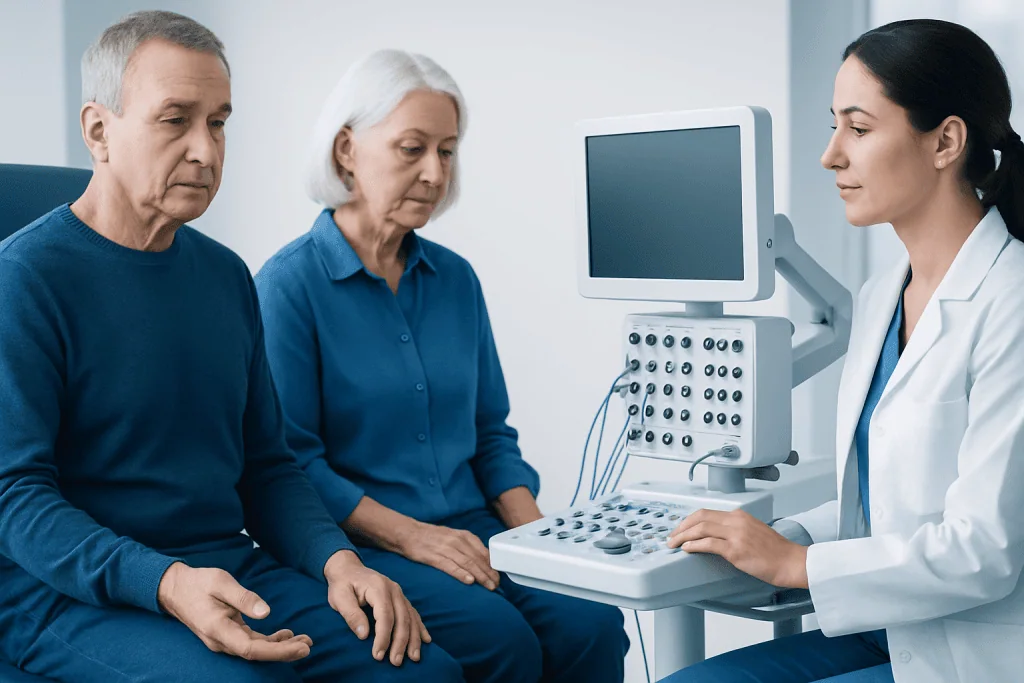
The timing and appearance of a tremor often give important clues. Essential tremor usually becomes more noticeable when the hands are being used, such as holding a cup, writing, or eating. It may also appear when a person holds the arms outstretched. By contrast, a Parkinson-related tremor often happens most clearly when the affected body part is at rest and may lessen with purposeful movement.
Parkinsonism usually involves more than shaking. Common features include bradykinesia, meaning overall slowness and reduced spontaneous movement; rigidity, which feels like stiffness in the limbs or trunk; and postural instability, which can lead to imbalance or falls. A person may notice a softer voice, smaller handwriting, decreased arm swing, reduced facial expression, or difficulty turning in bed.
Tremor itself can vary widely. It may affect one side first or both sides together. It can involve the hands, jaw, chin, head, or voice. Some forms are fine and fast, while others are slower and more obvious. In some conditions, tremor appears only in certain positions or during specific tasks.
Not every symptom points to Parkinson’s disease. For example, abnormal postures can suggest dystonia, and sudden weakness or speech changes may raise concern for stroke. That is why the whole neurological picture is more useful than any single symptom by itself.
Causes and Risk Factors

There are many reasons a person may develop tremor or parkinsonian features. Essential tremor is one of the most common tremor disorders and often runs in families. Parkinson’s disease becomes more common with age, though it can develop earlier. Some people also have mixed features that do not fit neatly into one category at the start.
Medications are an important and sometimes overlooked cause. Certain antipsychotic drugs, anti-nausea medicines, valproate, lithium, and some other medications can trigger tremor or drug-induced parkinsonism. Caffeine, alcohol withdrawal, sleep deprivation, and stress can also make an underlying tremor more visible.
Other medical conditions may contribute. Overactive thyroid disease, low blood sugar, liver or kidney problems, and some vitamin deficiencies can affect movement. Brain vascular disease may lead to vascular parkinsonism, especially in older adults with gait difficulty and lower-body symptoms. Specialists in vascular neurology may be involved when blood vessel-related causes are suspected.
Less commonly, parkinsonism can be part of broader neurodegenerative diseases or other neurological disorders. Because causes range from relatively benign to more complex, an accurate diagnosis should not be based on internet comparison alone. Individual history and examination remain essential.
Diagnosis: What a Specialist Evaluation Involves
Diagnosis begins with a detailed conversation. The clinician asks when symptoms started, whether they are getting worse, which body parts are affected, and whether the tremor occurs at rest, with posture, or during activity. Family history, medication use, alcohol and caffeine intake, sleep quality, and other neurological symptoms can provide valuable clues.
The neurological examination is central. The doctor observes gait, posture, facial expression, arm swing, muscle tone, finger tapping, handwriting, balance, speech, and eye movements. Simple bedside tasks may help distinguish action tremor from resting tremor and reveal bradykinesia or rigidity that the patient may not have recognized.
Laboratory tests may be used to look for contributing medical causes, such as thyroid dysfunction or metabolic problems. Brain imaging is not needed for every person, but it may be recommended if symptoms are unusual, appear suddenly, progress rapidly, or are accompanied by other neurological signs. Advanced testing through neurophysiology or imaging assessment with neuroradiology may sometimes help clarify the diagnosis.
In many cases, diagnosis becomes clearer over time. Early Parkinson’s disease, essential tremor, and atypical parkinsonian disorders can overlap during the first stages. Follow-up visits are therefore important, especially if symptoms change or treatment response is not typical.
Treatment Options: Management Depends on the Cause
Treatment is guided by the underlying diagnosis and by how much the symptoms affect daily life. If tremor is mild and does not interfere with eating, dressing, writing, or work, a doctor may recommend observation and practical coping strategies. When symptoms are troublesome, treatment may include medications aimed at the specific tremor type or parkinsonian syndrome.
For Parkinson’s disease and some other causes of parkinsonism, medicines that improve dopamine-related signaling can reduce stiffness, slowness, and sometimes tremor. For essential tremor, other symptom-targeted medications may be considered. If a medicine is causing the problem, the safest option may be adjustment or substitution under medical supervision rather than adding another drug.
Rehabilitation can be very helpful. Physical therapy may improve gait, posture, balance, and fall prevention. Occupational therapy can support handwriting, utensil use, and dressing. Speech therapy may help with a softer voice or swallowing changes. Some people with more complex or medication-resistant symptoms may be assessed in specialized tremor or movement disorder programs, and selected cases may be considered for neuromodulation therapies.
Treatment plans should be individualized. Age, daily activities, other medical conditions, and personal goals all influence decisions. Near the end of the care pathway, some international patients may seek evaluation at centers such as Acibadem International, where multidisciplinary specialists in JCI-accredited hospitals diagnose and treat movement disorders.
Prevention and Self-care
Not all tremor or parkinsonism can be prevented, but some practical steps may reduce symptom burden or help avoid worsening. Reviewing medications regularly with a doctor or pharmacist is important, especially after any new prescription. Avoiding sudden changes to prescribed medications is equally important, because withdrawal or abrupt discontinuation can also cause problems.
Lifestyle habits can influence how noticeable a tremor becomes. Good sleep, stress management, regular exercise, and limiting excess caffeine may help some people. Balanced nutrition and staying hydrated support overall neurological health. If alcohol seems to temporarily affect symptoms, this should still be discussed with a doctor rather than used as self-treatment.
Home safety matters when balance or slowness is present. Supportive footwear, adequate lighting, removal of loose rugs, and handrails on stairs or in bathrooms can lower fall risk. Assistive devices, weighted utensils, or writing adaptations may make daily tasks easier for some people.
Self-observation can also be useful. Keeping a short symptom diary about when tremor appears, what worsens it, and whether one side is more affected can help a specialist identify patterns. This information is often more reliable than trying to judge the diagnosis from isolated online videos or descriptions.
When to See a Doctor
A doctor should assess new or persistent tremor, especially if it is getting worse, interfering with daily activities, or appearing together with slowness, stiffness, imbalance, or changes in walking. Evaluation is also important if symptoms begin after starting a new medication, because drug-related movement disorders may improve when recognized early.
Urgent medical attention is needed if shaking or movement changes occur suddenly along with weakness, numbness, facial droop, severe headache, confusion, speech difficulty, or vision loss. These features can point to a medical emergency rather than a chronic movement disorder.
People who are uncertain whether they have tremor, parkinsonism, or another neurological issue should not feel they need to decide on their own. Specialist evaluation can clarify the diagnosis, explain what to watch for, and create a plan that fits the person’s symptoms and stage of illness.
Follow-up matters even after the first visit. Movement disorders can evolve over time, and repeated assessment may reveal a clearer pattern than the earliest symptoms alone. Reassessment is especially valuable if treatment is not working as expected or new symptoms appear.
Frequently asked questions
What is the main difference between tremor and parkinsonism?
A tremor is a symptom, meaning an involuntary rhythmic shaking movement. Parkinsonism is a syndrome that includes several movement features, especially slowness, stiffness, and sometimes resting tremor and balance problems.
Does every tremor mean Parkinson's disease?
No. Many people with tremor do not have Parkinson's disease. Tremor can be caused by essential tremor, medications, thyroid problems, anxiety, metabolic conditions, and other neurological disorders.
Can Parkinson's disease occur without a visible tremor?
Yes. Some people with Parkinson's disease have little or no tremor, especially early on. Slowness, stiffness, reduced arm swing, and changes in gait may be more noticeable than shaking.
How do doctors tell essential tremor from Parkinson-related tremor?
Doctors look at when the tremor happens, which body parts are involved, and whether there are other signs such as rigidity or bradykinesia. Essential tremor is often more obvious during action or posture, while Parkinson-related tremor is often more noticeable at rest.
What tests are usually needed?
The most important diagnostic tool is a neurological history and examination. Blood tests or brain imaging may be added when symptoms are unusual, sudden, rapidly progressive, or suggest another medical cause.
Can medication cause parkinsonism or tremor?
Yes. Some medicines can trigger tremor or drug-induced parkinsonism, particularly certain antipsychotic and anti-nausea drugs. A doctor should review all prescription, over-the-counter, and herbal products before any changes are made.
References
- World Health Organization
- National Institute of Neurological Disorders and Stroke
- Parkinson's Foundation
- National Institute on Aging
- International Parkinson and Movement Disorder Society
This article is for general information only and is not a substitute for professional medical advice. Please consult a qualified doctor about your individual situation.
Tremor in Turkey — costs, top hospitals & a free quote
JCI-accredited · board-certified surgeons · reply within 24h
Add us as a Preferred Source to see more of our trusted health content across Google Search, AI Overviews and Discover.

Neurology
Diagnosis and treatment of disorders of the brain, spinal cord, nerves and muscles.
51 specialists in this unit