What Does a Neurologist Do During a Consultation?

A neurologist assesses symptoms affecting the brain, spinal cord, nerves, and muscles. The consultation usually includes questions about symptoms, medical history, medicines, and family history.
Key Takeaways
- A neurologist assesses symptoms affecting the brain, spinal cord, nerves, and muscles.
- The consultation usually includes questions about symptoms, medical history, medicines, and family history.
- A neurological examination checks strength, sensation, reflexes, coordination, balance, speech, and memory.
- Not every patient needs scans or specialized tests; the neurologist recommends them only when helpful.
- The visit often ends with an explanation of likely causes and a plan for treatment, monitoring, or further testing.
A neurologist consultation is a focused medical visit that evaluates symptoms related to the brain, spinal cord, nerves, and muscles. It usually includes a detailed history, a neurological examination, and, when needed, tests to help identify the cause and guide treatment.
Overview: what a neurologist consultation is for
A neurologist is a doctor who diagnoses and manages conditions that affect the nervous system. This includes the brain, spinal cord, peripheral nerves, and muscles. People may be referred to a neurologist for symptoms such as headaches, dizziness, weakness, numbness, tremor, memory changes, seizures, sleep-related neurological symptoms, or difficulty with balance and coordination.
The main purpose of a neurologist consultation is to understand what symptoms are happening, where in the nervous system the problem may be located, and what the most likely causes are. The visit is often both investigative and reassuring. Many neurological symptoms can have more than one possible explanation, so the neurologist uses careful questioning and examination to narrow the possibilities.
In some cases, the consultation leads to a clear diagnosis at the first visit. In others, the neurologist may recommend blood tests, brain or spine imaging, nerve studies, or follow-up monitoring before making a final diagnosis. The overall goal is to create a safe, sensible plan that fits the patient’s symptoms and medical needs.
What happens before and at the start of the visit
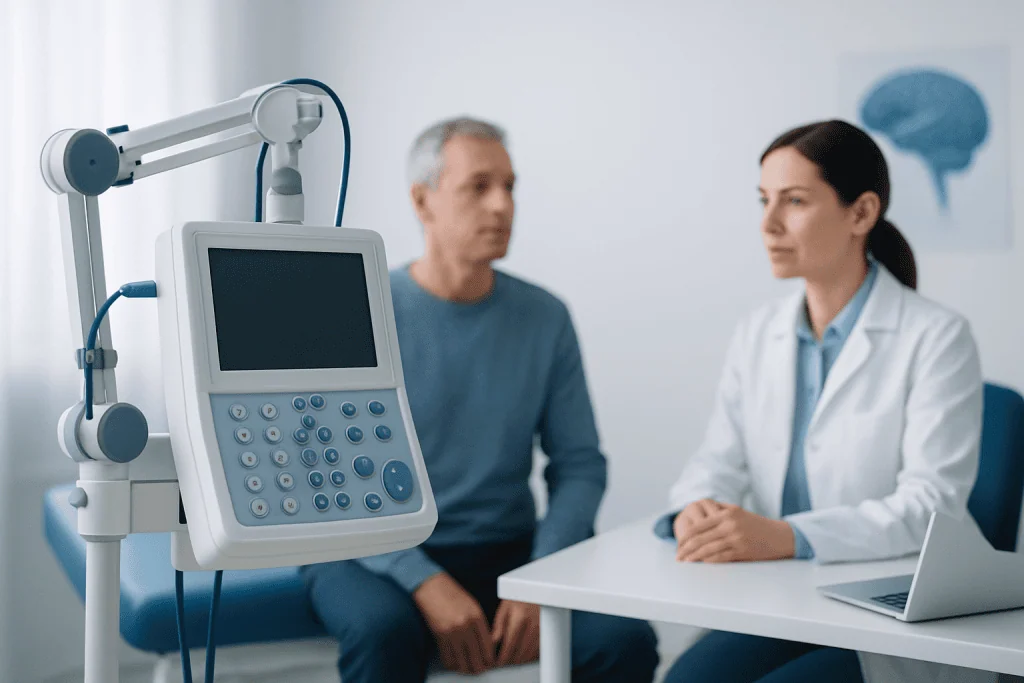
At the beginning of the consultation, the neurologist usually reviews the reason for referral and asks the patient to describe symptoms in their own words. Details matter. The doctor may ask when the problem started, whether it came on suddenly or gradually, how often it happens, how long episodes last, and whether anything makes it better or worse.
The neurologist also asks about past medical conditions, previous injuries, operations, infections, and current medications, including vitamins or supplements. Family history is especially important in neurology because some conditions, such as certain tremor, muscle, or memory disorders, can run in families. Lifestyle factors such as sleep, alcohol use, stress, and work exposures may also be discussed if they could affect symptoms.
It is often helpful for the patient to bring a list of medications, previous scan reports, and notes about symptoms. If episodes involve memory loss, fainting, or seizures, a family member or friend may be asked to share what they observed. This information can be very useful when building a clear clinical picture.
The questions a neurologist usually asks

The history is one of the most important parts of a neurology appointment. A neurologist often asks highly specific questions because the pattern of symptoms can provide strong clues. For example, headache symptoms may be explored in terms of location, severity, nausea, sensitivity to light, and warning signs, while dizziness may be separated into spinning sensation, imbalance, or lightheadedness.
If the concern is weakness or numbness, the doctor may ask which body parts are affected, whether one or both sides are involved, and whether there are associated symptoms such as pain, double vision, bladder changes, or trouble speaking. Problems with memory or attention may lead to questions about daily functioning, mood, sleep quality, and whether symptoms are progressive or intermittent.
These questions do not necessarily mean the doctor suspects a serious illness. Rather, they help identify whether symptoms may relate to common conditions such as migraine, peripheral nerve irritation, inner-ear balance problems, sleep disorders, medication side effects, or other neurological issues. For example, a consultation may help distinguish migraine from cluster headache or evaluate whether facial weakness could be related to Bell palsy.
The neurological examination
After discussing symptoms and history, the neurologist usually performs a neurological examination. This is a structured physical exam designed to assess how the nervous system is working. It is generally painless, although some parts may feel briefly uncomfortable, such as testing reflexes or certain movements.
The exam may include an assessment of mental status, speech, and memory; testing of cranial nerves, which help control eye movements, facial sensation, hearing, swallowing, and tongue movement; and checks of muscle strength, tone, and coordination. The doctor may ask the patient to follow a finger with their eyes, smile, lift the arms, push or pull against resistance, touch their nose, or walk across the room.
Sensation is also often tested using light touch, vibration, or pinprick in selected areas. Reflexes may be checked with a small tendon hammer. Balance and gait can provide important information, so the neurologist may ask the patient to stand with feet together, walk heel-to-toe, or turn quickly. Together, these findings help locate whether a problem is most likely in the brain, spinal cord, nerves, neuromuscular junction, or muscles.
Tests a neurologist may recommend
Not every consultation ends with testing. In some situations, the history and examination are enough to identify a likely cause and begin treatment. When tests are needed, the neurologist chooses them based on the specific symptom pattern rather than ordering everything routinely.
Common tests may include blood work to look for vitamin deficiencies, inflammation, infection, thyroid problems, or metabolic causes. Imaging such as MRI or CT can help assess the brain or spine when symptoms suggest a structural problem, inflammation, bleeding, or signs of a condition such as stroke. Specialized imaging may be coordinated through services such as neuroradiology when detailed nervous system imaging is required.
Other tests may include EEG for possible seizures, nerve conduction studies and electromyography for nerve or muscle symptoms, lumbar puncture in selected cases, sleep testing for suspected neurological sleep disorders, or cognitive assessment when memory concerns are present. Depending on symptoms, the neurologist may also involve related subspecialties such as neurophysiology, neurological sleep medicine, or neuropsychological assessment.
How diagnosis and treatment planning work
At the end of the visit, the neurologist usually explains the main possibilities in clear terms. Sometimes there is a confirmed diagnosis, and sometimes there is a shortlist of likely causes that need further testing or observation. This step is important because neurological symptoms can overlap, and careful follow-up may be the safest way to reach the right conclusion.
Treatment planning depends on the problem being investigated. Some patients may be advised on lifestyle measures, symptom diaries, sleep improvement, hydration, stress management, or medication review. Others may need prescription treatment, rehabilitation, referral to another specialist, or urgent hospital-based care if warning signs are present.
For common issues such as recurrent headaches, treatment may involve a structured approach through services such as headache medicine. If symptoms suggest conditions affecting movement, memory, or peripheral nerves, the neurologist may discuss monitoring over time and whether specialist care in movement disorders, neuromuscular disease, or neuroimmunology would be helpful.
How to prepare for a neurology appointment
Good preparation can make the consultation more productive. Patients are usually encouraged to bring identification, referral letters, a medication list, and any previous scans, lab results, or hospital discharge summaries. If symptoms are occasional, a written timeline can be especially useful. Notes may include when symptoms started, how often they happen, how long they last, and what is happening just before or during an episode.
It can also help to write down key questions in advance. Examples include whether symptoms could be related to a known condition, what tests are needed, what warning signs to watch for, and when follow-up is recommended. If there are communication or memory concerns, bringing a trusted relative or friend may support understanding and recall after the visit.
Patients should generally wear comfortable clothing, especially if they may need a physical examination of walking, limbs, or spine movement. In some cases, it is important to avoid driving to the appointment, such as after recent fainting, seizures, or sudden visual symptoms, unless a doctor has said it is safe.
When to seek prompt medical attention
Many neurological consultations are routine and planned in advance, but some symptoms need urgent medical attention rather than a standard office visit. Sudden weakness on one side, trouble speaking, new facial droop, sudden severe confusion, loss of vision, a seizure lasting several minutes, or a sudden extremely severe headache should be treated as emergencies.
Other reasons to seek prompt assessment include rapidly worsening numbness or weakness, a severe head injury, new loss of bladder or bowel control with back symptoms, fever with neck stiffness and confusion, or sudden dizziness with difficulty walking and other neurological signs. These symptoms do not always mean a serious condition, but they should be evaluated without delay.
For patients seeking specialist neurological care, Acibadem International’s multidisciplinary specialists in JCI-accredited hospitals diagnose and treat a wide range of neurological conditions for international patients. Even so, urgent warning signs should always be assessed as quickly as possible in an emergency setting rather than waiting for a routine consultation.
Frequently asked questions
Does a neurologist treat only brain conditions?
No. A neurologist evaluates the entire nervous system, including the brain, spinal cord, peripheral nerves, and muscles. This is why symptoms such as numbness, weakness, tremor, balance problems, and some sleep-related issues may also be assessed by a neurologist.
Will a neurologist always order an MRI or brain scan?
Not always. Imaging is recommended when it is likely to help answer a specific clinical question, but some patients do not need scans after the first consultation. The decision depends on the symptoms, medical history, and examination findings.
Is the neurological examination painful?
Most parts of the neurological examination are not painful. The doctor may test reflexes, balance, sensation, eye movements, and muscle strength, which can feel unusual but are usually well tolerated. If any maneuver is uncomfortable, the patient can tell the doctor.
What should a patient bring to a neurologist consultation?
It is helpful to bring a list of medications, previous test results, scan reports, referral notes, and a summary of symptoms. A symptom diary can be very useful, especially for headaches, dizziness, fainting episodes, or seizures. If memory or communication is affected, bringing a family member or friend may also help.
Can a neurologist diagnose symptoms in one visit?
Sometimes, yes. In other cases, the neurologist may need additional tests or follow-up visits before confirming the diagnosis. Neurological symptoms can overlap, so a careful step-by-step approach is often the most accurate.
When should someone seek emergency care instead of waiting for a neurology appointment?
Emergency care is important for sudden weakness, trouble speaking, new facial droop, seizures, severe confusion, sudden vision loss, or a sudden very severe headache. These symptoms need immediate assessment because quick treatment can be important. Routine consultation is not the right setting for urgent neurological warning signs.
References
- National Institute of Neurological Disorders and Stroke
- American Academy of Neurology
- NHS
- MedlinePlus
- Mayo Clinic
This article is for general information only and is not a substitute for professional medical advice. Please consult a qualified doctor about your individual situation.
Joint and spine care in Turkey — expert assessment & treatment
JCI-accredited · board-certified surgeons · reply within 24h
Add us as a Preferred Source to see more of our trusted health content across Google Search, AI Overviews and Discover.

Neurology
Diagnosis and treatment of disorders of the brain, spinal cord, nerves and muscles.
51 specialists in this unit