Chalazion Treatment
Chalazion treatment manages a blocked eyelid oil gland causing a persistent lump, using warm compresses, medication, steroid injection, or minor surgical removal when needed.
Quick answer
A chalazion is a firm, usually painless lump in the eyelid caused by a blocked meibomian (oil) gland. Treatment starts with warm compresses and lid hygiene to soften the trapped oil. If the lump hardens or persists, an ophthalmologist may offer a steroid injection or a brief drainage procedure called incision and curettage, usually performed through the inside of the eyelid under local anaesthetic.
Chalazion: When an Eyelid Lump Does Not Go Away
A chalazion is a firm, usually painless lump in the upper or lower eyelid, caused by a blocked meibomian gland, one of the small oil-producing glands that keep the tear film stable. Chalazion treatment works to release or calm the blocked gland, settle the inflammation around it, and restore normal eyelid comfort and appearance. It ranges from warm compresses performed at home to a brief drainage procedure carried out by an ophthalmologist.
A chalazion can seem minor at first: a small, firm swelling in the eyelid, often without significant pain. Many people assume it will disappear in a few days. Sometimes it does. But when the lump persists, grows, presses on the eye, affects appearance or keeps returning, it becomes a genuine source of discomfort and worry, partly because the eyelid is a delicate, visible structure, and even a small swelling feels prominent when it sits so close to the eye itself.
The questions patients ask about a chalazion are consistent. Is the lump an infection? Can it damage vision? Does it need surgery? Could it be something more serious? Each has an honest answer. A chalazion is usually inflammatory rather than infectious. It rarely threatens vision, although a large one can press on the cornea and blur it temporarily. Most do not need surgery, and the great majority are benign, though a lump that behaves unusually deserves proper specialist assessment rather than reassurance by default.
At Acibadem, chalazion care begins with an ophthalmology evaluation to confirm the diagnosis and identify any underlying eyelid condition, such as blepharitis, meibomian gland dysfunction, rosacea or recurrent lid inflammation. The aim is a clear diagnosis, an appropriate treatment plan and practical guidance for recovery, while avoiding procedures whenever conservative care is likely to work.
What is a chalazion?
A chalazion is a localised swelling caused by blockage and inflammation of a meibomian gland, one of the oil-producing glands that run through the firm plate of tissue inside each eyelid. These glands normally release oil into the tear film, where it slows evaporation and keeps the surface of the eye comfortable. When a gland opening becomes blocked, oil collects inside the eyelid instead of flowing out. The trapped oil irritates the surrounding tissue, which reacts by walling it off, and over time that reaction forms a round, firm lump. The upper eyelid is affected more often than the lower one, simply because it contains more meibomian glands, and it is possible, though less common, for several glands to block at once, producing multiple lumps or swelling across a wider stretch of the lid.
That mechanism explains most of what a chalazion does. It explains why the lump is often painless once established: it is a contained inflammatory reaction, not an active infection. It explains why warmth helps: heat softens the thickened oil and can let it drain through the natural opening. And it explains why a long-standing chalazion becomes stubborn: the longer the reaction continues, the more organised and firm the lump becomes.
What is the main cause of a chalazion?
The main cause of a chalazion is obstruction of a meibomian gland, usually because the oil it produces has become too thick to flow freely. Anything that changes the quality of that oil or inflames the eyelid margin raises the risk: chronic blepharitis, meibomian gland dysfunction, dry eye disease, acne rosacea, seborrhoeic dermatitis, allergies and frequent eye rubbing are the common culprits. Old or heavily applied eye makeup and poor contact lens hygiene can contribute by irritating the lid margin. A chalazion is therefore rarely a random event. In many patients it signals an eyelid environment that favours blockage, which is why good treatment looks beyond the single lump to the glands around it.
Chalazion or Stye: How to Tell Them Apart
A chalazion is different from a stye, although the two are often confused, even by people who have had both. The distinction matters because it changes the treatment logic: one is chiefly inflammatory, the other chiefly infectious.
What is the difference between a stye and a chalazion?
A stye, also called a hordeolum, is an acute infection of an eyelid gland; a chalazion is a chronic inflammatory lump without active infection. A stye tends to appear quickly, sits at or near the lash line, and is red, tender and painful. A chalazion develops more slowly, often sits deeper within the lid, and is typically firm and painless once established. A stye may form a visible head and discharge; a chalazion usually does not. Adding to the confusion, an untreated stye can evolve into a chalazion once the infection settles and only the blocked, inflamed gland remains.
In real life, the distinction is not always obvious, especially in the first days, when a chalazion can be tender and a stye can be mild. An ophthalmologist can examine the eyelid under magnification and determine whether the condition is a chalazion, a stye, a cyst, generalised lid inflammation or another type of lesion. That examination is more reliable than any rule of thumb.
Stye on eyelid, eye stye, chalazion disease: what the terms mean
The phrases stye on eyelid, eye stye and stye eye all describe the same thing, an acute infected gland at the lid margin, while chalazion disease and stye disease are informal names people use for the chronic and acute forms of a blocked eyelid gland. None of these is a separate condition. Whatever term you started with, the clinically useful question is the same: is this lump an acute infection that needs anti-infective treatment, or a chronic inflammatory blockage that needs warmth, time or a minor procedure? Because a stye is an infection, a spreading one occasionally needs broader care; severe eyelid infections such as preseptal cellulitis are managed quite differently, sometimes with input from an infectious diseases team. That level of escalation is uncommon, but it illustrates why the label matters more than it first appears.
Symptoms: Who May Need Chalazion Treatment
Many patients first notice a chalazion while washing the face, applying makeup, inserting contact lenses or looking in the mirror. It may begin as a small area of eyelid tenderness that then becomes a more defined lump. In some cases there is no pain at all. The swelling may sit on the inner surface of the eyelid, near the lash line, or deeper within the lid, and its location influences both how visible it is and which treatment suits it best.
Common symptoms and concerns include:
- A firm bump on the upper or lower eyelid
- Localised swelling, redness or heaviness of the eyelid
- Mild tenderness, especially in the early phase
- A feeling of pressure on the eye
- Blurred vision if the lump presses on the cornea and changes its shape
- Watery eyes or irritation from associated eyelid inflammation
- Cosmetic concern, particularly when the lump is visible in social or professional settings
- Recurrent eyelid lumps, sometimes affecting both eyes
How is a chalazion diagnosed?
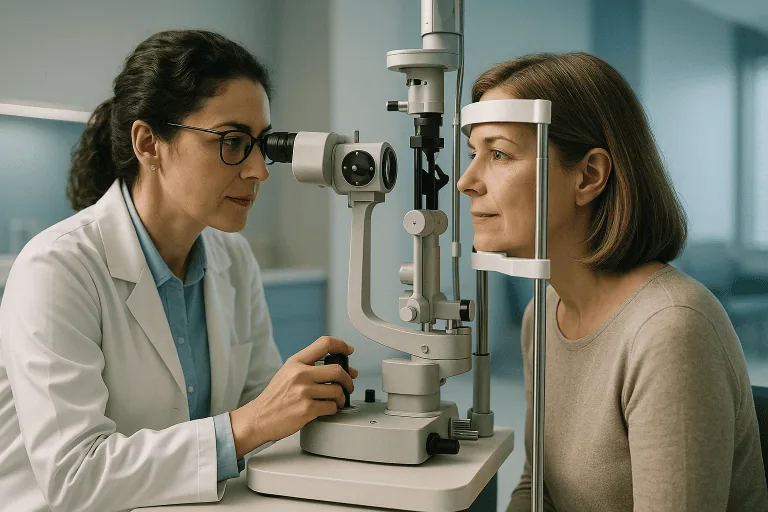
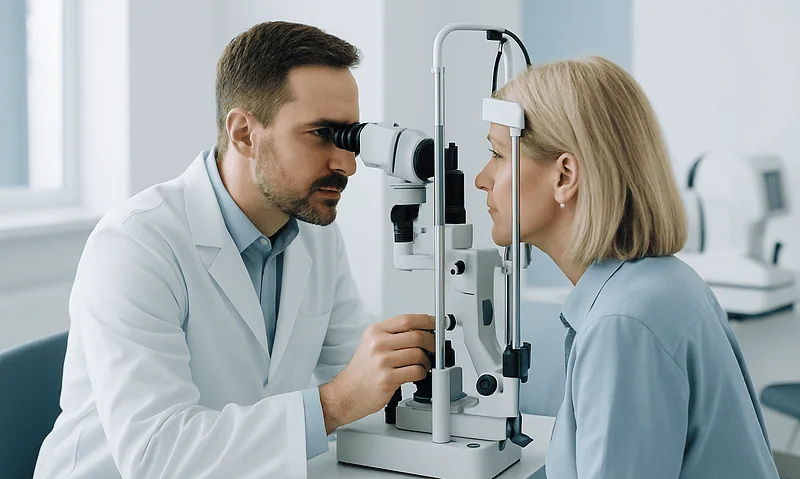
A chalazion is diagnosed by clinical examination, no scan or blood test is usually needed. The ophthalmologist evaluates the eyelid skin, the lid margin, the eyelashes, the tear film, the openings of the meibomian glands and the inner surface of the eyelid. A slit-lamp microscope allows detailed, magnified examination of the eye and lid structures. Vision may be checked, especially when the chalazion is large or located on the upper lid, where it can press against the cornea.
Additional evaluation is reserved for swelling that is unusual, severe, recurrent, associated with other symptoms or not responding as expected. For children, the examination may also cover eye rubbing, allergies and visual development, because a large chalazion can sometimes induce temporary astigmatism or blurring, and clear vision matters for a developing visual system in a way it does not for adults.
Medical treatment becomes relevant when a chalazion persists beyond several weeks, becomes large, disturbs vision, recurs frequently or fails to improve with properly performed warm compresses. It also matters when the diagnosis is uncertain, when there is significant eyelid redness or pain, or when an upcoming event, travel schedule or professional commitment makes prolonged swelling difficult to live with.
Conditions and Indications Addressed by Chalazion Treatment
Chalazion treatment addresses the visible eyelid lump, but it also looks for the reason the blockage occurred. In many patients, a chalazion is not an isolated event. It may be linked to chronic meibomian gland dysfunction, blepharitis, dry eye disease, acne rosacea, seborrhoeic dermatitis, allergies or habitual eye rubbing. Identifying and managing these factors reduces the likelihood of the next lump.
Chalazion care may be recommended for:
- Persistent chalazion: a lump that remains despite home care and time.
- Large chalazion: a swelling that is cosmetically noticeable, uncomfortable or pressing on the eye.
- Recurrent chalazion: repeated lumps on one or both eyelids, often linked to underlying lid inflammation.
- Chalazion affecting vision: a lesion causing blurred vision, astigmatism or a pressure sensation.
- Inflamed chalazion: a lesion with redness, tenderness or surrounding lid inflammation that may need medical treatment.
- Chalazion in children: especially if large, recurrent or potentially affecting visual development.
- Uncertain eyelid lesion: a lump that does not behave like a typical chalazion and needs specialist evaluation.
Not every chalazion requires a procedure. Small, early lesions often improve with conservative measures alone. Once the lump has become organised and firm, however, warm compresses lose much of their effect, and the ophthalmologist may discuss injection or minor surgical drainage based on the lesion’s characteristics and your preferences.
Diagnosis also means excluding look-alikes. Persistent or unusual eyelid swelling has other causes: cysts, benign growths, and uncommon eyelid tumours that can mimic a recurrent chalazion. Generalised lid changes linked to systemic conditions, such as the puffiness and lid changes sometimes seen with Graves disease and other forms of thyroid diseaselook quite different on examination, but patients understandably worry until the lid has been looked at properly. This is why a lump that recurs in the same place, causes eyelash loss, distorts the lid margin, bleeds or ulcerates is examined more closely, and why tissue removed during surgery may be sent for pathology in selected cases, particularly in older adults.
How to Get Rid of a Chalazion: Treatment Options
How to get rid of a chalazion depends on its age, size, firmness and location, and on whether the surrounding eyelid is inflamed. Treatment follows a stepwise logic: conservative care first, medication when inflammation or associated eyelid disease is present, then steroid injection or minor surgery for lumps that have become organised and will not shift. Skipping steps is sometimes justified: a large, months-old chalazion pressing on the cornea rarely responds to compresses alone, but most plans start simply.
Initial assessment and preparation
The first step is a focused ophthalmology consultation. The doctor asks when the swelling began, whether it has changed in size, whether there is pain or discharge, and whether similar lumps have occurred before. The relevant history includes skin conditions, dry eye symptoms, contact lens use, eye makeup habits, medication, allergies, immune status and any prior eye surgery.
The eye and eyelid are examined under magnification. The doctor may gently turn the eyelid outward to inspect the inner surface, where many chalazia are most visible. If there are signs of blepharitis or meibomian gland dysfunction, the plan will usually include longer-term eyelid care alongside treatment of the current lump.
One instruction applies to everyone: do not squeeze the chalazion. Squeezing worsens inflammation, spreads irritation into surrounding tissue and can damage delicate eyelid structures. If a procedure is planned, you may be asked to avoid eye makeup and contact lenses around the treatment period. Anyone taking blood-thinning medication should mention it beforehand; any adjustment to medication is a decision for the treating doctor, never something to change on your own.
How do you get rid of a chalazion at home?
You get rid of most early chalazia with warm compresses, gentle massage and lid hygiene, performed consistently over days to weeks. The warmth softens the thickened oil inside the blocked gland and can allow it to drain through the natural opening. A sensible home routine looks like this:
- Warm the compress. Use a clean flannel soaked in warm water, or a purpose-made warming eye mask. It should be comfortably warm, never hot, eyelid skin is thin and burns easily.
- Hold it against the closed eyelid for several minutes at a time, several times a day, re-warming it as it cools so the heat actually reaches the gland.
- Massage gently after warming. With a clean fingertip, apply light, controlled pressure towards the eyelid margin. Technique matters: aggressive massage makes the swelling worse, not better.
- Clean the lid margin with physician-recommended products if there is crusting, blepharitis or oily secretion along the lashes.
- Leave the lump alone between sessions. No squeezing, no rubbing, no attempts to pop it.
Conservative care works best when started early and done consistently; improvement typically takes days to weeks rather than hours. Increasing pain, spreading redness or a change in vision points away from a routine chalazion: these features suggest infection or another diagnosis rather than a simple blocked gland.
When medication helps
A chalazion itself is inflammatory rather than infectious, so antibiotics are not routinely needed for every patient. Medication earns its place when there is associated blepharitis, bacterial overgrowth along the lid margin, rosacea-related inflammation or suspicion of an infected stye. Depending on the findings, the ophthalmologist may prescribe topical ointment, drops, oral medication or anti-inflammatory treatment.
Expectations should be realistic here. Medication can settle surrounding inflammation and improve comfort, but it rarely dissolves a firm, established chalazion on its own. For patients with recurrent lesions, long-term management of eyelid gland health matters more than treating each lump as it appears.
Steroid injection
For selected chalazia, a corticosteroid injection may be offered. A small amount of anti-inflammatory medication is placed into or near the chalazion to dampen the inflammatory reaction. It suits lesions that are not too large, lesions in locations where surgical drainage is less desirable, and patients who prefer a non-incisional approach.
The eyelid is cleaned, and local anaesthetic may be used for comfort. The injection itself is brief. Afterwards, mild swelling or bruising is possible, and the chalazion usually shrinks gradually rather than immediately. Some lesions need more than one treatment, and some still end up needing surgical drainage if they do not respond.
Steroid injection is not suitable for everyone. The ophthalmologist weighs skin pigmentation, lesion location, prior response, infection risk and diagnostic certainty. Possible side effects include temporary skin lightening, fat atrophy, raised eye pressure in susceptible individuals and incomplete resolution, although serious complications are uncommon when the injection is used appropriately.
Incision and curettage: minor surgical removal
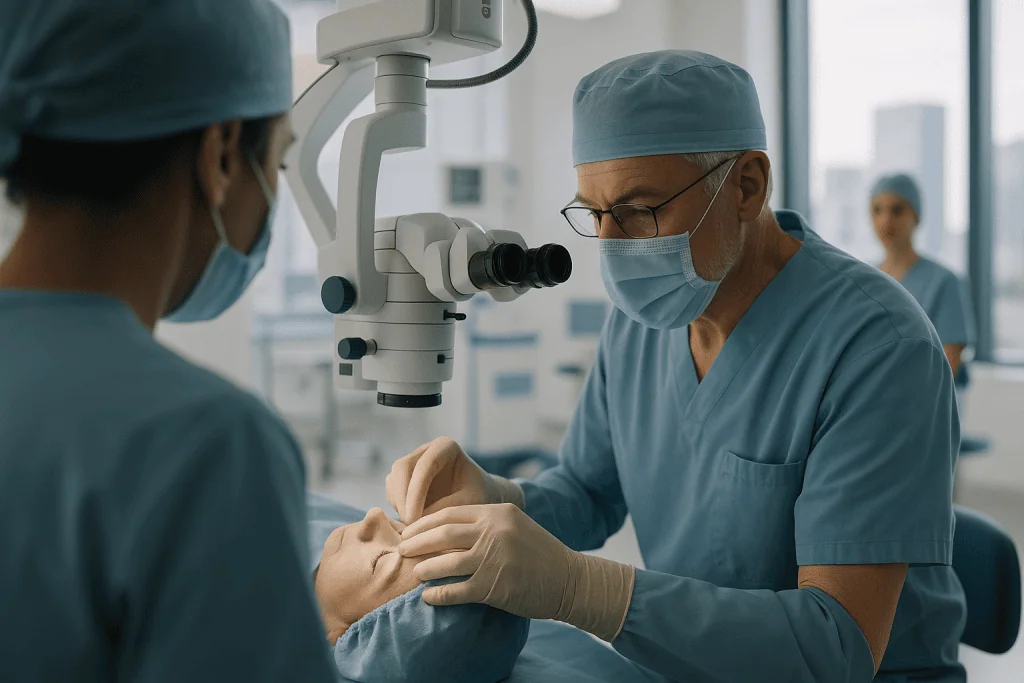
When a chalazion is persistent, large, firm or genuinely bothersome, incision and curettage is the most direct treatment. It is a minor procedure performed by an ophthalmologist, typically under local anaesthetic for adults. Children and very anxious patients may need a different anaesthesia plan, depending on age, cooperation and clinical circumstances.
The steps are straightforward:
- The eyelid is cleaned and numbed with local anaesthetic.
- A small clamp stabilises the lid and limits bleeding.
- In most cases the incision is made on the inner surface of the eyelid, so there is no visible cut on the skin.
- The blocked inflammatory material is removed with fine instruments and the area is cleaned.
- Medication may be applied; stitches are usually unnecessary when the incision is internal.
The procedure itself is brief once preparation and anaesthesia are complete, though the full visit takes longer because of check-in, examination, consent, preparation and post-procedure instructions. An eye pad may be worn for a short period afterwards, and driving immediately is unwise if vision is temporarily blurred or the eye is covered. If the lesion is atypical or has recurred in the same spot, the removed tissue may be sent for pathology to rule out less common eyelid tumours that can mimic a chalazion.
Technology and clinical tools used
Chalazion treatment relies on precise clinical examination and careful eyelid technique rather than large-scale surgical technology. The important tools are slit-lamp microscopy, magnified eyelid assessment, sterile microsurgical instruments, controlled local anaesthesia and good illumination. Together they let the ophthalmologist distinguish a chalazion from other eyelid lesions, choose the safest treatment route and work accurately on the small structures of the lid.
When chalazia are recurrent or atypical, the diagnostic pathway may include pathology review of removed tissue. In patients with significant ocular surface symptoms, tear film and gland evaluation may guide long-term treatment. The purpose of technology here is not complexity for its own sake but precision: confirming the diagnosis, protecting the eye and tailoring treatment to the patient’s anatomy and risk factors.
How Long Does a Chalazion Last?
A chalazion typically lasts from a few weeks to several months. Small, early lesions often settle within weeks of consistent warm compresses; larger, firmer lesions can persist for months and may never fully flatten without treatment. Duration depends less on the calendar than on the state of the lump: soft, recent blockages drain more easily, while long-standing lesions become walled off and static. After injection or drainage, the swelling itself usually resolves over days to weeks, though bruising can briefly make the lid look worse before it looks better.
Will a hardened chalazion go away on its own?
A hardened chalazion can go away on its own, but it usually does so slowly, and some never fully disappear without treatment. Once the lump has organised into firm tissue, warm compresses lose most of their effect because there is little fluid oil left to soften and release. This is the stage at which steroid injection or incision and curettage becomes the more realistic option, not because the lesion is dangerous, but because waiting is unlikely to change it.
Is it okay if a chalazion is left untreated?
In most cases, yes: a chalazion left untreated is usually harmless and may resolve by itself over time. There are sensible exceptions. A large lesion can press on the cornea and distort vision for as long as it remains. In children, persistent pressure on the eye deserves attention because clear vision supports normal visual development. A lump that keeps returning in the same place, or one that changes the lid margin, causes eyelash loss, bleeds or ulcerates, does not fit the pattern of an ordinary chalazion and needs proper examination rather than patience. And a lesion that never improves leaves the diagnosis unconfirmed, which is itself a reason for assessment.
Recovery Timeline After Chalazion Treatment
Recovery varies from patient to patient, but the following timeline describes what many people can expect after medical treatment, steroid injection or minor surgical drainage.
| Time period | What patients can expect |
|---|---|
| Day 1 | After a procedure: mild swelling, bruising, tearing or blurred vision from ointment. Discomfort is usually limited. Instructions on eye padding, medication and activity apply from the start. |
| First week | Swelling and bruising typically begin to settle. Eye makeup, contact lenses, swimming and eye rubbing are usually off-limits until the physician clears them. |
| First month | The eyelid contour continues to settle. With injection or conservative care, the lump shrinks gradually. Follow-up may assess healing and recurrence prevention. |
| Longer term | Patients prone to chalazia often continue lid hygiene, warm compress routines, dry eye care or treatment for blepharitis or rosacea to reduce future episodes. |
Most people return to desk work or normal light activity quickly, although visible swelling may influence social plans for a few days. Prescribed ointment or drops should be used exactly as directed, and follow-up may be scheduled to check healing and adjust the lid-care routine.
Benefits of Chalazion Treatment
The benefits depend on the severity of the lump and the method used, but the goals are consistent: restore eyelid comfort, function and appearance, and address the recurrence risk behind the lump.
| Benefit | What it means for you |
|---|---|
| Reduction of eyelid swelling | The lump gradually shrinks or is removed, improving eyelid contour and reducing heaviness. |
| Improved comfort | Tenderness, pressure, irritation and constant awareness of the eyelid decrease as inflammation settles. |
| Clearer vision when pressure is present | If the chalazion presses on the eye surface, treatment can reduce distortion-related blurring. |
| Better eyelid health | Assessment can identify blepharitis, meibomian gland dysfunction or rosacea that would otherwise drive recurrence. |
| Cosmetic improvement | Visible swelling, asymmetry and redness improve, which matters in daily social and professional life. |
| Diagnostic reassurance | Specialist examination confirms whether the lump is a typical chalazion or needs further evaluation. |
Why Acting Early Matters
A chalazion is rarely an emergency, but early attention makes treatment easier. In the early phase, the blocked oil is still soft enough to respond to warmth, gentle massage and lid care. As time passes, the lesion becomes organised and firm, and conservative treatment loses its leverage.
Delay also prolongs irritation and cosmetic concern. A large chalazion may press on the cornea, causing temporary blurring or astigmatism. In children, persistent pressure on the eye deserves particular attention because clear vision underpins normal visual development. Recurrent chalazia may point to an underlying eyelid condition that responds better to a preventive plan than to repeated treatment of individual lumps.
The third reason is diagnostic confidence. Most eyelid lumps are benign, but not every persistent lump is a chalazion. A lesion that recurs in the same location, changes the eyelid margin, causes eyelash loss, bleeds, ulcerates or fails to improve as expected warrants examination by an ophthalmologist. Early evaluation separates routine inflammation from the rare conditions that need different management, and it does so before months of uncertainty accumulate.
Factors That Influence Outcomes
A good result depends on more than removing or shrinking the lump. The underlying eyelid environment matters. Patients with chronic blepharitis, thick meibomian gland secretions, oily skin, rosacea, allergies or dry eye are more likely to develop new chalazia unless those factors are managed alongside the lesion itself.
The duration of the chalazion influences its response. Early lesions respond better to conservative care; long-standing ones may have formed a firm capsule that only injection or drainage will address. Size and location matter too: a small internal chalazion behaves differently from a large upper-lid lesion pressing on the cornea, and the treatment route changes accordingly.
Technique and diagnosis are central. Careful examination avoids treating the wrong condition. When a procedure is needed, precise eyelid handling reduces tissue trauma and supports smoother healing. When a lesion appears atypical, pathology evaluation protects the patient from a missed diagnosis.
Patient participation carries real weight. Warm compresses only work when performed correctly and consistently. Prescribed medication should be used as directed. Eye makeup habits, older cosmetic products and contact lens routines may all need review.
Finally, realistic expectations help. A chalazion does not disappear overnight, even after appropriate treatment. Bruising after drainage can temporarily make the eyelid look more swollen before it improves. Some patients need additional treatment if the lesion is multiloculated, very chronic or tied to persistent gland disease.
Preventing Recurrent Chalazia
Prevention targets the eyelid environment rather than the lump. Once one chalazion has formed, the glands that produced it remain prone to blockage, so the habits that keep oil flowing matter long after the swelling has gone.
- Continue a regular warm compress routine if your ophthalmologist recommends it, even when the lid looks normal.
- Clean the lid margins daily with recommended products if you have blepharitis or crusting along the lashes.
- Replace old eye makeup regularly, avoid sharing it, and remove it fully before sleep.
- Follow strict contact lens hygiene: clean hands, fresh solution, and lenses replaced on schedule.
- Have skin conditions such as rosacea or seborrhoeic dermatitis managed, since both inflame the lid margin.
- Address dry eye symptoms, which often travel together with meibomian gland dysfunction.
- Break the habit of rubbing your eyes, which irritates the glands and spreads inflammation.
None of these measures makes recurrence impossible, but together they change the conditions that allow chalazia to form. For patients who have had several lumps, this ongoing lid care is usually more valuable than any single treatment.
Chalazion Care at Acibadem
Acibadem’s ophthalmology teams treat chalazion within the broader context of eye health, not only as a cosmetic eyelid lump. The pathway is deliberately stepwise. A typical chalazion may need only examination, conservative treatment and clear instructions. A persistent or recurrent lesion may be treated with injection or drainage. An atypical eyelid lesion may need biopsy and pathology review. This grading of care exists to avoid both undertreatment and unnecessary intervention.
Where the underlying picture is broader, care can involve related specialties: dermatology for rosacea or chronic skin inflammation, paediatrics for children with recurrent lesions or vision concerns, pathology for lesions that do not behave typically. Examination uses slit-lamp microscopy and microsurgical instruments suited to delicate eyelid work, with the emphasis on accuracy and on preserving normal eyelid function.
Chalazion treatment is almost always an outpatient matter. A first visit typically covers examination, diagnosis and either a treatment plan or, where appropriate, the procedure itself; a follow-up visit checks healing and refines the lid-care routine. Previous eye records, a list of current medication and photographs showing how the lump has changed over time all give the examining ophthalmologist useful context, particularly when a lesion has recurred or been treated before.
Not every patient needs the same plan. A patient with a small, early lesion may leave with instructions and lid-care advice. Someone with a visible lump present for months may be offered drainage during the visit. A child with recurrent chalazia may need a prevention plan and vision monitoring. An older adult with a lesion recurring in the same place needs a more cautious diagnostic strategy. The plan follows the lesion, not a template.
Making Sense of Your Options
A persistent eyelid lump is uncomfortable, visible and frustrating, but most chalazia respond well to the right combination of time, warmth and targeted treatment. The useful questions are practical ones: is this actually a chalazion; is it early enough for conservative care to work; would injection or drainage be more efficient; and is there an underlying eyelid condition, blepharitis, gland dysfunction, rosacea, that should be treated to stop the cycle of recurrence? Once careful examination has answered those questions, the treatment itself is usually the simple part. What separates a good outcome from a frustrating one is rarely the procedure; it is the accuracy of the diagnosis, the state of the glands around the lump, and the consistency of the care that follows.
Preparation
- An ophthalmologist examines the eyelid to confirm chalazion and rule out other eyelid conditions. Tell your doctor about medications, allergies, bleeding disorders, or previous eye surgery. You may be asked to stop blood-thinning medicines if medically appropriate and to avoid eye makeup or contact lenses on the day of treatment.
Aftercare
- Use prescribed antibiotic or anti-inflammatory eye drops or ointment as directed. Mild swelling, bruising, or discomfort usually improves within a few days; avoid rubbing the eye, makeup, and contact lenses until cleared. Attend follow-up if symptoms persist, recur, or vision changes occur.
Frequently Asked Questions
What affects the cost of chalazion treatment?
The main factors are the treatment method needed, the size and persistence of the chalazion, whether there is associated eyelid inflammation, the specialist and facility setting, and whether follow-up, medication, pathology, or international patient services are included.
How can I get a personalised quote for chalazion treatment in Turkey?
You can request a free consultation and share photos, symptoms, previous treatments, and any medical history. An ophthalmology team can then advise whether an examination, medication, injection, or minor procedure may be appropriate and prepare a personalised quote.
Is chalazion surgery always necessary?
No. Many chalazia are first managed with warm compresses, eyelid hygiene, and sometimes medication. Minor surgical removal is considered when the lump persists, causes discomfort, affects vision, or does not respond to conservative care.
Does an international package usually include everything?
Package content varies by hospital and patient need. It may include consultation, eye examination, procedure planning, treatment, and follow-up coordination, but medication, pathology, or additional visits may be handled separately depending on the case.
Why might the quote change after the ophthalmology examination?
The final plan may change if the specialist finds multiple lesions, signs of infection or blepharitis, an atypical eyelid lump, or a need for biopsy or additional follow-up. A confirmed quote is usually based on the clinical examination and chosen treatment.
Medically reviewed by the Acıbadem International Medical Board August 31, 2026
See our medical review board →
Update history
- PublishedJune 8, 2026
- Medical review approvedAugust 31, 2026
- Last content updateSeptember 8, 2026
Trusted care for international patients
From the Acibadem Blog
What Chalazion Removal Involves: Numbing, the Incision Inside the Eyelid and the Patch
A chalazion removal procedure is a short outpatient operation for a blocked oil gland in the eyelid. The lid is numbed with a local…

Warm Compresses, Injection or Minor Surgery: How Chalazion Treatment Steps Up
Chalazion treatment usually begins with warm compresses and gentle eyelid cleaning for several weeks, because most of these blocked-gland lumps soften and drain on…

Chalazion Surgery Recovery: Bruising, Ointment and When Makeup and Contacts Return
Chalazion surgery recovery is usually brief. Most people wear a pad over the eye for a few hours, use a prescribed antibiotic eye ointment…