Gynaecomastia Treatment
Gynaecomastia treatment, or male breast reduction, removes excess glandular tissue and fat to create a flatter, more masculine chest contour.

Quick answer
Gynaecomastia treatment, or male breast reduction, corrects enlargement of the male chest by removing excess glandular tissue, fat, and sometimes skin to create a flatter chest contour. At Acibadem in Turkey, treatment begins with specialist assessment to confirm the cause and is performed with surgical techniques such as liposuction, tissue excision, or a combination, depending on the chest anatomy.
When an Enlarged Male Chest Affects How You Feel in Your Body
Gynaecomastia can be physically uncomfortable, emotionally difficult and surprisingly isolating. Many men and adolescent boys describe the same pattern: avoiding fitted shirts, changing posture to hide the chest, feeling anxious at the gym or pool, or worrying that others will notice. For some, the concern is mainly cosmetic. For others, breast enlargement is accompanied by tenderness, swelling, sensitivity around the nipple or a feeling of heaviness across the chest.
It is also common to feel uncertain about what is actually causing the change. Is it fat? Is it breast gland tissue? Is it related to hormones, medication, weight change, previous anabolic steroid use or an underlying medical condition? These questions matter, because the most appropriate treatment depends on the type and cause of chest enlargement.
Gynaecomastia treatment, often called male breast reduction, is designed to remove excess glandular breast tissue and fat to create a flatter, more proportionate and more masculine chest contour. In carefully selected patients, surgery can produce a visible and long-lasting improvement. Just as important, a proper medical evaluation helps identify whether the breast enlargement is true gynaecomastia, pseudogynaecomastia related mainly to fat, or a symptom of another condition that should be investigated before any procedure is planned.
For international patients, choosing where to be treated involves more than selecting a surgical technique. It means understanding the diagnosis, the likely recovery, the safety standards of the hospital, the experience of the surgical team and the support available before and after travel. At Acibadem, gynaecomastia care is approached with attention to both medical detail and the personal concerns that often bring patients to seek treatment.
What Is Gynaecomastia Treatment?
Gynaecomastia treatment refers to the medical and surgical management of enlarged male breast tissue. The term gynaecomastia describes a benign enlargement of glandular breast tissue in males. It can affect one side or both sides, and it may appear as a small firm disc beneath the nipple or as a more noticeable breast-like contour.
Male breast reduction is the surgical treatment used when glandular tissue, fat or excess skin creates a chest shape that the patient wishes to correct and when non-surgical measures are not expected to provide adequate improvement. The operation may involve liposuction, direct excision of glandular tissue, skin tightening, or a combination of these methods. The goal is not to create an artificial appearance, but to restore a chest contour that fits the patient’s body frame, skin quality and personal goals.
In some patients, particularly adolescents or men with recent-onset breast enlargement, observation or medical evaluation may be appropriate before surgery. Gynaecomastia related to puberty may improve over time. Enlargement caused by medications, hormone changes, weight gain or certain health conditions may require treatment of the underlying cause. For persistent gynaecomastia, especially when glandular tissue has been present for a long period, surgery is often the most effective way to change the contour of the chest.
A careful distinction is made between true gynaecomastia and pseudogynaecomastia. True gynaecomastia includes glandular breast tissue. Pseudogynaecomastia is mainly due to fat accumulation in the chest, often associated with weight changes. Many patients have a mixed pattern, with both glandular tissue and fat. This distinction guides the surgical plan. Liposuction alone may be suitable for predominantly fatty enlargement, while firm glandular tissue often needs direct removal through a small incision around the areola.
Who May Need Gynaecomastia Treatment?
Men seek gynaecomastia treatment for many reasons. Some notice breast enlargement during adolescence that never fully resolves. Others develop changes later in life after weight fluctuation, hormonal shifts, use of certain medications or supplements, or changes in fitness routines. The condition can affect athletes, men of average weight and men living with obesity. It is not simply a matter of being out of shape, and it is not always correctable through exercise.
Typical symptoms and concerns include a rounded or enlarged chest, puffiness around the nipple, a firm lump beneath the areola, asymmetry between the two sides, tenderness, sensitivity when clothing rubs against the nipple, or embarrassment in social and athletic settings. Some patients report that even after losing weight and building muscle, the chest remains prominent because dense glandular tissue does not respond to diet or exercise.
Diagnosis begins with a medical history and physical examination. The doctor will ask when the enlargement began, whether it is changing, whether pain or nipple discharge is present, and whether there are relevant medications, supplements, anabolic steroid use, alcohol intake, recreational drug exposure, thyroid disease, liver disease, kidney disease or testicular symptoms. The examination assesses skin quality, the amount of fatty tissue, the presence of firm glandular tissue, nipple position, asymmetry and overall chest shape.
Additional tests may be recommended when the cause is unclear or when the findings are unusual. These may include blood tests to assess hormone levels, liver and kidney function or thyroid function. Breast ultrasound or mammography may be used in selected patients to evaluate a lump, asymmetry, pain or other features that require clarification. In rare cases, biopsy may be necessary to rule out other breast conditions. Imaging and laboratory evaluation are not required for every patient, but they are important when clinical signs suggest a possible underlying problem.
Good candidates for male breast reduction are generally in stable health, have realistic expectations, are at or near a stable weight, and have persistent chest enlargement that is unlikely to improve with observation or lifestyle measures alone. Smoking, uncontrolled medical conditions, active substance use or significant weight instability can affect surgical planning and recovery. Younger patients may be advised to wait if the breast tissue is still developing, unless the enlargement is severe, long-standing or causing significant distress.
Conditions and Indications Treated With Male Breast Reduction
Male breast reduction addresses several patterns of chest enlargement. The most common indication is persistent true gynaecomastia, where glandular tissue beneath the nipple creates fullness, projection or a breast-like shape. Surgery is also used for mixed gynaecomastia, where glandular tissue and fat are both present. In these cases, combining direct excision with liposuction can help produce a smoother contour.
Pseudogynaecomastia, caused predominantly by excess fat in the chest, may also be improved with surgical contouring when weight is stable and the chest remains disproportionate. For some patients, lifestyle changes and weight management are recommended first. If excess skin is present after major weight loss, the surgical plan may need to include skin removal and repositioning of the nipple-areola complex to create a more natural chest shape.
Gynaecomastia may be related to puberty, aging, hormone imbalance, medications, anabolic steroids, some prostate treatments, certain psychiatric medications, drugs affecting hormone pathways, liver or kidney disease, thyroid disorders, testicular conditions or genetic syndromes. Surgery can correct the chest contour, but when a medical cause is active, that cause should be addressed to reduce the risk of recurrence and to protect overall health.
The procedure may also be considered when the enlarged chest causes pain, tenderness, chafing, posture changes, difficulty exercising comfortably or significant emotional distress. In many cases, the decision is deeply personal. A medically appropriate plan respects both the physical findings and the patient’s experience of living with the condition.
How Gynaecomastia Treatment Is Performed
Gynaecomastia treatment starts before the operating room. A detailed consultation is used to understand the patient’s goals and to determine the safest and most effective approach. The surgeon evaluates the amount of glandular tissue, fat and skin, the position and size of the areola, chest muscle definition, body proportions and asymmetry. Medical photographs may be taken for planning and documentation. For international patients, much of the initial discussion may begin remotely, with a review of photographs, medical history and any prior test results, followed by in-person assessment after arrival.
Preparation may include blood tests, imaging if indicated, anesthesia evaluation and review of medications. Patients may be advised to stop smoking well before surgery, avoid certain blood-thinning medications or supplements, and arrange a recovery period that does not involve strenuous exercise or heavy lifting. If there is concern about hormones or another underlying condition, consultation with an endocrinologist or another specialist may be recommended before proceeding.
The procedure is usually performed under general anesthesia or, in selected smaller cases, local anesthesia with sedation. The choice depends on the extent of tissue removal, patient comfort, health status and surgeon preference. The duration varies according to complexity. A straightforward liposuction-assisted case may be shorter, while cases involving dense gland removal, skin reduction or correction of significant asymmetry take longer.
When excess fat is a major component, liposuction is often used. Small incisions are made in discreet areas, such as along the chest fold or near the areola. A thin cannula is inserted to loosen and remove fat while shaping the chest. Liposuction can help blend the treated area into the surrounding chest and upper abdomen, reducing the risk of an abrupt contour change.
When firm glandular tissue is present, direct excision is commonly performed through an incision placed along the lower border of the areola. This location helps the scar blend with the natural color transition between areolar and chest skin. The surgeon carefully removes the dense glandular tissue while preserving an appropriate layer beneath the nipple to avoid a hollow or over-resected appearance. If both fat and gland are present, liposuction and excision are combined for a more balanced result.
In patients with significant excess skin, the operation may involve skin tightening or removal. This is more common after major weight loss or in severe gynaecomastia. In such cases, the incisions may be longer and the nipple-areola complex may need to be repositioned. The trade-off is a more extensive scar in exchange for a flatter and more appropriately shaped chest. The surgeon discusses these decisions in detail before surgery, including scar location, expected visibility and how the chest may change as swelling resolves.
Modern diagnostic and surgical pathways help refine planning and improve safety. High-quality imaging may be used when breast tissue requires evaluation. Laboratory testing can identify hormone or metabolic concerns. In the operating room, careful anesthesia monitoring, precise tissue handling, controlled fluid management and meticulous attention to symmetry all contribute to a safer procedure. Surgical instruments, liposuction systems, energy-assisted technologies in selected cases and standardized sterilization protocols are used to remove tissue while minimizing trauma to surrounding structures.
At the end of surgery, the incisions are closed carefully. Drains may be placed in some cases, especially when more extensive tissue removal is performed, but they are not always necessary. A compression garment is applied to support the chest, limit swelling and help the skin conform to the new contour. Patients are monitored after anesthesia and may go home the same day or stay overnight depending on the procedure, medical status and travel plan.
Recovery begins immediately after surgery. Mild to moderate discomfort, tightness, swelling and bruising are expected. Pain is usually managed with prescribed medication and improves gradually. Patients are encouraged to walk early to support circulation, but upper-body exertion is restricted. The compression garment is typically worn as instructed for several weeks. Office work and light daily activities may resume relatively soon, while gym exercise, chest training and heavy lifting require a longer pause.
Results appear in stages. The chest looks flatter soon after surgery, but swelling can temporarily obscure the final shape. Bruising fades over days to weeks. Firmness under the skin and minor asymmetry during healing are common and usually improve with time. Scars mature gradually and may continue to soften and fade for many months. The final contour depends on tissue quality, skin elasticity, surgical technique, adherence to recovery instructions and weight stability.
Why Acting Early Can Matter
Gynaecomastia is often benign, and not every patient needs urgent treatment. However, timely evaluation is important when breast enlargement is new, one-sided, painful, rapidly increasing, associated with nipple discharge, accompanied by a hard fixed lump, or linked to changes in the testicles, weight, energy level or hormone-related symptoms. These features do not necessarily mean a serious condition is present, but they should be assessed by a physician.
Early medical review can identify reversible causes. If a medication, supplement, hormone imbalance or underlying disease is contributing to breast enlargement, addressing it early may prevent progression. In adolescents, early evaluation can distinguish typical pubertal gynaecomastia from less common conditions that require treatment. In adults, it can help determine whether observation, medical management, weight stabilization or surgery is most appropriate.
Delaying evaluation may allow glandular tissue to become more fibrous and persistent. Long-standing gynaecomastia is less likely to resolve without surgery. Delay can also prolong emotional distress, avoidance of physical activity or unhealthy behaviors aimed at hiding the chest. For men who are already appropriate candidates for surgery, a planned and well-timed procedure may allow recovery to be coordinated around work, travel, sports and family responsibilities.
Benefits of Gynaecomastia Treatment
For suitable patients, male breast reduction can provide several practical and emotional benefits beyond the visible change in chest shape.
| Benefit | What It Means for You |
|---|---|
| Flatter chest contour | Excess glandular tissue and fat are reduced to create a chest shape that is more proportionate to the rest of the body. |
| Improved clothing fit | Many patients feel more comfortable wearing fitted shirts, athletic clothing or swimwear after healing is complete. |
| Reduction in tenderness or chafing | When enlarged tissue causes sensitivity, rubbing or discomfort, removing the excess tissue may relieve these symptoms. |
| More balanced body proportions | Chest contouring can improve symmetry and help the upper body look more aligned with the shoulders, abdomen and overall frame. |
| Long-lasting correction when causes are controlled | Removed glandular tissue does not usually return, although weight gain, hormones, medications or steroid use can influence future changes. |
| Greater comfort in daily life | Patients often describe feeling less self-conscious in situations such as exercise, travel, social events and warm-weather activities. |
Recovery Timeline After Male Breast Reduction
Recovery varies by surgical extent, skin quality, personal healing and the type of work or exercise a patient plans to return to, but the general pattern is predictable.
| Time Period | What Patients Can Expect |
|---|---|
| Day 1 | You will wake with a compression garment in place. Swelling, tightness and mild to moderate discomfort are expected. Walking is encouraged, but arm movement should be gentle. |
| First Week | Bruising and swelling are usually most noticeable. Many patients can return to desk-based work within several days if they feel well and do not need strong pain medication. |
| First Month | The chest begins to settle. Compression is continued as directed. Light cardio may be resumed when approved, but heavy lifting and chest workouts are still restricted. |
| Six to Twelve Weeks | Most patients gradually return to more demanding exercise. Residual swelling and firmness may still be present, especially around the areola or areas of gland removal. |
| Longer Term | Scars mature and the final contour becomes clearer over several months. Maintaining a stable weight and avoiding hormone-disrupting substances help preserve the result. |
What Influences a Good Outcome?
A good result in gynaecomastia surgery depends on more than the removal of tissue. It begins with accurate diagnosis. If the chest enlargement is mostly fat, the approach differs from firm glandular gynaecomastia. If there is significant skin excess, liposuction alone may not be enough. If a hormone imbalance or medication is driving the problem, surgery without medical management may increase the risk of recurrence.
Skin elasticity is an important factor. Younger patients and those with mild to moderate enlargement often have skin that contracts well after tissue removal. Patients with large breasts, stretch marks, major weight loss or reduced skin tone may need skin excision to avoid loose or folded skin. The surgeon must balance tissue removal with preservation of natural contour. Removing too little can leave residual fullness; removing too much can create depressions, nipple irregularities or an unnatural chest.
Symmetry is another key consideration. Most people naturally have some difference between the two sides of the chest. Gynaecomastia may make that difference more visible. During surgery, the goal is improvement and balance, not mathematical perfection. The chest also changes with posture, muscle contraction, swelling and lighting, so final assessment is made only after healing has progressed.
Patient health and habits strongly influence recovery. Smoking can impair blood flow and wound healing. Poorly controlled diabetes, clotting disorders or certain medications can increase risk. Weight instability can change the chest after surgery. Anabolic steroid use or non-prescribed hormone use may trigger recurrence or other health problems. Following post-operative instructions, wearing compression as directed, attending follow-up visits and returning to activity gradually all support a smoother recovery.
Expectations should be clear and realistic. Male breast reduction can flatten the chest and improve contour, but it does not replace weight management, bodybuilding or treatment of underlying endocrine disease. Scars are permanent, though they are planned to be as discreet as possible and usually fade with time. Temporary numbness, swelling, firmness or sensitivity changes may occur. Revision surgery is uncommon but may be considered if significant residual tissue, contour irregularity or asymmetry persists after complete healing.
Why International Patients Choose Acibadem for Gynaecomastia Treatment
International patients considering gynaecomastia treatment abroad often want three things: a careful diagnosis, a safe surgical environment and clear guidance through the logistics of care. Acibadem brings these elements together within a hospital-based healthcare group experienced in serving patients from different countries, cultures and medical backgrounds.
Care is planned around a medical evaluation rather than a one-size-fits-all procedure. Depending on the patient’s presentation, the team may include plastic and reconstructive surgeons, endocrinologists, radiologists, anesthesiologists and other specialists. When a case suggests hormonal, metabolic or systemic causes, further evaluation can be coordinated before surgery. This multidisciplinary approach is especially important for patients who have one-sided enlargement, pain, recurrent gynaecomastia, a complex medical history or prior unsuccessful treatment.
Acibadem hospitals are JCI-accredited, reflecting an institutional focus on patient safety, infection prevention, clinical governance and quality processes. For a surgical procedure that may appear straightforward from the outside, the hospital setting matters. Anesthesia assessment, sterile operating rooms, recovery monitoring, emergency preparedness and standardized protocols all contribute to safer care. Patients benefit from treatment in an environment designed not only for cosmetic outcomes, but also for medical reliability.
Technology supports diagnosis, planning and execution. When imaging is needed, modern radiology helps clarify whether breast tissue, fat or another finding is present. Laboratory testing can support endocrine or general medical assessment. During surgery, refined liposuction systems, precise surgical instruments, careful anesthesia monitoring and structured recovery protocols help the team perform tissue removal while protecting surrounding structures. The technology is not the treatment by itself; it is part of a broader clinical pathway guided by experienced physicians.
For patients traveling from the United States or other countries, communication and coordination are central to the experience. Acibadem International provides support in more than 20 languages, helping patients organize appointments, medical record transfer, treatment scheduling and follow-up instructions. International patient teams can assist with practical details related to travel planning, hospital admission and communication with clinical departments. This is particularly valuable for patients who want a second opinion before deciding whether surgery is appropriate.
Personalized planning is a major part of gynaecomastia care. A patient with mild puffiness around the nipple needs a different solution from a patient who has significant enlargement after major weight loss. A man who uses medications that affect hormones requires different counseling from an adolescent whose breast tissue may still be evolving. A patient traveling internationally needs a recovery plan that takes flight timing, follow-up and activity restrictions into account. At Acibadem, treatment recommendations are developed after assessing these medical and personal factors together.
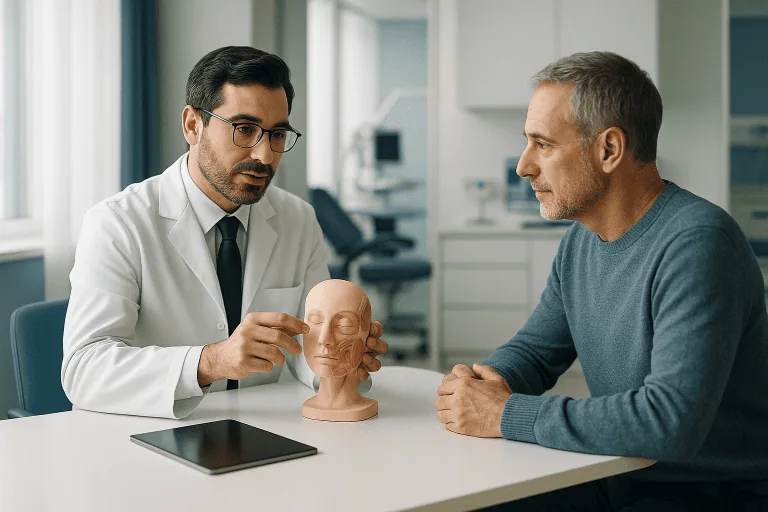
The decision to have male breast reduction is often private and sensitive. Patients may have postponed consultation for years because of embarrassment or uncertainty. A respectful clinical environment can make the process easier. The goal is to provide clear information, careful examination, appropriate treatment options and realistic expectations so that each patient can make an informed decision.
Taking the Next Step
Gynaecomastia is common, but the right treatment is individual. Some patients need reassurance and monitoring. Some need medical testing or treatment of an underlying cause. Others are good candidates for male breast reduction surgery to remove glandular tissue and fat and create a flatter, more confident chest contour.
If you are considering treatment, the most useful next step is a specialist evaluation. A consultation can clarify whether your chest enlargement is true gynaecomastia, fat-related enlargement or a mixed pattern; whether additional tests are needed; and what kind of result is realistic for your body type. For international patients, a second opinion can also help you understand timing, travel considerations and recovery before making arrangements.
Acibadem offers evaluation and treatment planning for patients seeking gynaecomastia care in Turkey, with experienced physicians, multidisciplinary support when needed, JCI-accredited hospitals and international patient services designed to help coordinate care across borders. If you would like to learn more, you may request a consultation or share your medical information for review.
This information is general and educational. It is not a substitute for professional medical advice, diagnosis or treatment from a qualified healthcare provider.
Preparation
- Before surgery, the plastic surgeon evaluates breast tissue, skin quality, medications, and possible hormonal or medical causes. Blood tests or imaging may be requested when needed. Patients are usually advised to stop smoking, avoid blood-thinning medicines, and fast before anesthesia.
Aftercare
- A compression garment is typically worn to reduce swelling and support the new chest contour. Mild bruising, tightness, and discomfort are expected and managed with prescribed medication. Strenuous exercise and heavy lifting should be avoided until the surgeon confirms healing is adequate.
Frequently Asked Questions
What affects the cost of gynaecomastia surgery?
The final cost depends on the type of tissue being treated, whether liposuction, gland excision, or skin reduction is needed, the surgeon and hospital setting, anaesthesia, tests, garments, and follow-up care. Travel and accommodation can also affect the overall budget for international patients.
How can I get a personalised quote for male breast reduction in Turkey?
A personalised quote usually requires medical history, photographs, information about medicines and previous procedures, and a specialist review. Acibadem International can arrange a free consultation to assess your needs and explain what is included in your treatment plan.
Does a package usually include everything I need?
Package inclusions vary by hospital and patient needs. A package may include consultation, pre-operative tests, surgery, anaesthesia, hospital services, compression garment, transfers, interpreter support, and follow-up, but this should always be confirmed in writing before travel.
Will insurance cover gynaecomastia treatment?
Coverage depends on the insurer, the medical indication, and the policy terms. Many cases are treated as cosmetic, while some may require medical documentation if pain, functional symptoms, or an underlying condition is present. Patients should check directly with their insurer.
Is the cheapest option the best choice?
Cost should be considered alongside surgeon experience, hospital accreditation, safety standards, anaesthesia care, aftercare, and clear communication. A lower quote may not include all medical or travel-related items, so it is important to compare the full package and not only the headline fee.
Can the price change after the consultation?
Yes. The treatment plan and quote may change if the specialist finds that additional techniques, tests, or safety precautions are needed. A clear examination and pre-operative assessment help create a more accurate plan.
Medically reviewed by the Acıbadem International Medical Board June 20, 2026
See our medical review board →
Update history
- PublishedJune 8, 2026
- Medical review approvedJune 20, 2026
- Last content updateSeptember 8, 2026
References1
- Gynaecomastia in men nhs.uk
Trusted care for international patients
From the Acibadem Blog

Gynaecomastia Treatment as an International Patient: Stay Length, Garments and Flying Home
After gynaecomastia surgery abroad, most surgical teams ask patients to remain nearby for at least one to two weeks so wounds, drains and early…

Male Breast Reduction (Gynaecomastia Treatment) Recovery: Day One to Week Six Milestones
Male breast reduction recovery time typically runs in stages: most people go home the same day or the next, take about a week off…
Doctors Performing This Treatment



Aesthetic Plastic & Reconstructive Surgery
Prof. Mehmet Veli Karaaltın, MD


Aesthetic Plastic & Reconstructive Surgery
Assoc. Prof. Erdem Güven, MD

Aesthetic Plastic & Reconstructive Surgery
Assoc. Prof. Ahmet Küçükçelebi, MD

Aesthetic Plastic & Reconstructive Surgery
Assoc. Prof. Mehmet Altıparmak, MD

Aesthetic Plastic & Reconstructive Surgery