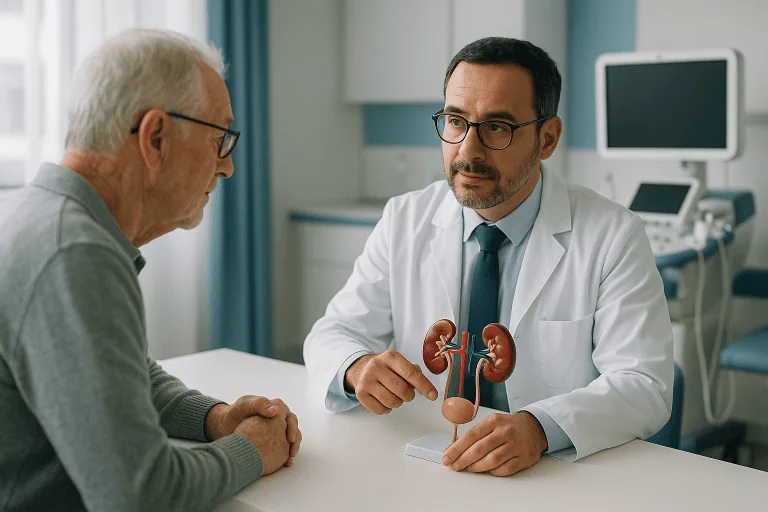
Minimally Invasive Urology
Minimally invasive urology uses endoscopic, laparoscopic or robotic techniques to treat urinary and male reproductive conditions through small incisions, aiming for less pain, shorter hospitalization and faster recovery.

Quick answer
Minimally invasive urology treats disorders of the urinary tract and male reproductive system using endoscopic, laparoscopic, or robotic techniques performed through natural channels or small incisions. At Acibadem in Turkey, care is planned according to the condition and may include diagnostic evaluation followed by image-guided, tissue-sparing surgery designed to support less pain, shorter hospital stay, and faster recovery.
Minimally Invasive Urology: Care Designed Around Precision, Recovery and Quality of Life
When a urologic condition begins to affect urination, sexual health, kidney function, fertility, comfort or cancer-related decisions, patients often face more than a medical diagnosis. They may be worried about pain, scarring, time away from work, the possibility of major surgery, or how treatment could affect continence, sexual function or long-term health. For international patients considering care abroad, there is an additional layer of concern: understanding the diagnosis, evaluating surgical options, and choosing a medical team that can coordinate care clearly across languages and borders.
Minimally invasive urology has changed how many urinary and male reproductive conditions are treated. Instead of relying on large incisions, many procedures can now be performed through natural urinary passages, very small incisions, or robotic-assisted surgical access. The goal is not simply to make surgery “smaller.” The goal is to treat the underlying condition accurately while reducing tissue trauma, supporting faster recovery and preserving important functions whenever medically possible.
For some patients, minimally invasive urologic treatment may mean removing a kidney stone through a small endoscope. For others, it may mean robotic-assisted prostate surgery, laparoscopic kidney surgery, endoscopic treatment for an enlarged prostate, or reconstructive treatment for a blockage in the urinary tract. In cancer care, minimally invasive techniques may be part of a carefully planned strategy that balances tumor control with kidney preservation, continence, sexual function and overall health.
At Acibadem, patients are evaluated through a structured diagnostic and treatment pathway. Urologists work with radiology, pathology, medical oncology, radiation oncology, nephrology, anesthesiology and other specialties when needed. This multidisciplinary approach is particularly important for complex cases, second opinions, cancer diagnoses, recurrent stone disease, and patients who have had previous surgery or conflicting medical advice.
What Is Minimally Invasive Urology?
Minimally invasive urology refers to a group of diagnostic and surgical techniques used to treat conditions of the kidneys, ureters, bladder, prostate, urethra, testes and male reproductive system with less disruption to surrounding tissues than traditional open surgery. These techniques include endoscopic, laparoscopic and robotic-assisted approaches.
Endoscopic urology uses very thin instruments equipped with a camera and working channels. These instruments can often be passed through the urethra, bladder or ureter, allowing the physician to diagnose or treat a condition without an external incision. Examples include cystoscopy, ureteroscopy for kidney stones, transurethral prostate procedures, and endoscopic treatment of urethral strictures or bladder tumors.
Laparoscopic urology involves small incisions in the abdomen or flank. Through these incisions, the surgeon inserts a camera and fine surgical instruments to perform procedures involving the kidney, adrenal gland, ureter or pelvic organs. Laparoscopy may be used for kidney removal, partial kidney removal in selected cases, repair of urinary tract obstruction, adrenal surgery or treatment of certain congenital or acquired urologic problems.
Robotic-assisted urology is a form of minimally invasive surgery in which the surgeon operates from a console, controlling articulated instruments that move with high precision inside the body. The robotic platform provides enhanced visualization and instrument dexterity. It may be used for procedures such as radical prostatectomy, partial nephrectomy, pyeloplasty, cystectomy in selected patients, and reconstructive urologic operations.
These methods are chosen based on the diagnosis, anatomy, disease stage, patient health, previous surgeries and treatment goals. Minimally invasive treatment is not automatically the right approach for every patient. In some situations, open surgery, radiation therapy, medication, active surveillance or a combined treatment plan may be more appropriate. A responsible urologic evaluation considers both the technical feasibility of a procedure and what outcome matters most for the patient’s long-term health.
Who May Need Minimally Invasive Urology?
Patients may be referred for minimally invasive urologic evaluation because of symptoms, abnormal imaging, cancer screening results, recurrent infections, urinary obstruction or persistent pain. Others seek a second opinion after being told they need open surgery or after receiving different recommendations from different physicians.
Common symptoms that may lead to evaluation include blood in the urine, flank pain, kidney stone attacks, difficulty urinating, weak urinary stream, frequent urination, waking at night to urinate, urinary retention, recurrent urinary tract infections, pelvic pain, urinary leakage, testicular discomfort, infertility concerns or changes in sexual function. In prostate conditions, some patients have no symptoms but are evaluated because of an elevated prostate-specific antigen test or abnormal prostate imaging. In kidney tumors, the first sign is often an incidental finding on ultrasound, CT or MRI performed for another reason.
Diagnosis usually begins with a detailed medical history, physical examination and laboratory tests. Urine analysis, urine culture, kidney function tests, prostate-specific antigen testing and other blood tests may be used depending on the concern. Imaging may include ultrasound, computed tomography, magnetic resonance imaging, functional kidney studies or specialized urinary tract imaging. In some cases, cystoscopy or ureteroscopy allows direct visualization of the bladder, urethra or ureter. For suspected cancer, biopsy and expert pathology review may be necessary.
International patients often arrive with previous scans, laboratory results, operative notes or pathology reports. At Acibadem, these records can be reviewed as part of a second opinion or treatment planning process. When needed, additional imaging or diagnostic procedures are organized to clarify the diagnosis before treatment begins. This is especially important when deciding whether a minimally invasive approach can safely achieve the intended medical result.
Conditions and Indications Treated With Minimally Invasive Urologic Techniques
Minimally invasive urology can be used across a wide range of benign and cancer-related conditions. The appropriate technique depends on the organ involved, disease severity, patient anatomy and overall medical condition.
Kidney stone disease is one of the most common reasons for endoscopic urologic treatment. Depending on stone size, location and composition, treatment may include ureteroscopy with laser fragmentation, percutaneous stone removal through a small tract, or other stone-directed procedures. The aim is to clear the stone burden, relieve obstruction, control infection risk and reduce the chance of recurrence through metabolic evaluation and prevention planning.
Benign prostatic enlargement may be treated with endoscopic procedures that remove, vaporize or reshape prostate tissue obstructing urine flow. These treatments may help men who have persistent urinary symptoms, repeated urinary retention, bladder stones, recurrent infections or kidney effects from chronic obstruction. The choice of technique depends on prostate size, anatomy, medication history, bleeding risk and personal priorities such as ejaculation preservation when medically feasible.
Urologic cancers are also frequently evaluated for minimally invasive options. Prostate cancer may be treated with robotic-assisted radical prostatectomy in selected patients, often after review of biopsy findings, imaging and risk category. Kidney tumors may be treated with partial or total nephrectomy using laparoscopic or robotic-assisted techniques when appropriate. Bladder tumors are commonly diagnosed and treated initially through transurethral endoscopic resection. In more advanced bladder cancer, minimally invasive approaches may be considered for selected surgical candidates as part of a broader cancer treatment plan.
Other indications include ureteropelvic junction obstruction, ureteral strictures, adrenal tumors, certain congenital urinary tract abnormalities, varicocele in selected men, testicular conditions requiring limited access surgery, urethral stricture assessment and some reconstructive operations. Minimally invasive methods may also be used to evaluate unexplained urinary bleeding, remove stents, treat bladder stones or manage complications from previous procedures.
Because the field is broad, the most important first step is matching the diagnosis with the safest and most effective treatment pathway. A minimally invasive operation is valuable only when it is the right operation for the right patient at the right time.
How Minimally Invasive Urologic Treatment Is Performed
The treatment pathway begins before the operating room. Preparation includes confirmation of the diagnosis, assessment of kidney function, review of medications, evaluation of anesthesia risk and discussion of realistic expectations. Patients taking blood thinners, diabetes medications or immune-suppressing drugs may need individualized instructions. If infection is suspected, urine culture and antibiotics may be required before surgery. For cancer procedures, imaging and pathology are reviewed carefully, and cases may be discussed in specialist boards to align surgery with evidence-based treatment protocols.
For international patients, preparation also involves travel planning. The care team may request medical records before arrival, including imaging files rather than only written reports. This allows the urologist to assess anatomy, disease extent and whether further tests are needed. The international patient services team can support appointment coordination, translation, hospital admission steps and follow-up scheduling.
On the day of treatment, the type of anesthesia depends on the procedure. Some diagnostic endoscopic procedures may be performed with local or light sedation, while stone surgery, prostate procedures, laparoscopic surgery and robotic-assisted surgery usually require regional or general anesthesia. The anesthesiology team evaluates safety, airway considerations, heart and lung conditions, previous anesthesia reactions and postoperative pain control needs.
In endoscopic procedures, the surgeon inserts a narrow instrument through the urethra or through a small access route into the urinary tract. A miniature camera transmits magnified images to a monitor. Fine instruments, laser energy, graspers, baskets or resection loops may be used to remove tissue, fragment stones, treat strictures or control bleeding. In stone surgery, laser energy can break stones into fragments that are removed or allowed to pass depending on size and location. A temporary ureteral stent may be placed to reduce swelling and support urine drainage while the ureter heals.
In laparoscopic surgery, the surgeon makes several small incisions to introduce a camera and surgical instruments. The abdomen is gently inflated with gas to create working space. The surgeon operates while viewing magnified images on a screen. Tissue is dissected, repaired or removed through controlled movements. Specimens, such as a kidney tumor or adrenal gland, are removed through a protected small incision. The incisions are then closed, often with absorbable sutures beneath the skin.
In robotic-assisted surgery, small ports are placed for a camera and specialized instruments. The surgeon controls the instruments from a console, translating hand movements into precise internal motion. Three-dimensional magnified visualization can help in delicate dissection around nerves, vessels and urinary structures. In prostate surgery, this may support careful work around the urinary sphincter and neurovascular structures when cancer anatomy allows. In partial kidney surgery, it may help remove the tumor while preserving as much healthy kidney tissue as possible in suitable cases.
The technologies used in minimally invasive urology are selected to improve visualization, precision and safety. High-definition endoscopic imaging helps the surgeon see small structures clearly. Advanced imaging studies help map stones, tumors or obstructions before surgery. Laser systems may fragment stones or treat selected prostate and soft tissue conditions. Energy devices can seal small vessels and reduce bleeding. Robotic and laparoscopic instruments allow controlled movement through small openings. Intraoperative ultrasound or real-time imaging may be used in certain kidney or stone procedures to guide decision-making.
Procedure duration varies widely. A diagnostic cystoscopy may take only a short time, while complex reconstructive or cancer surgery can take several hours. Hospital stay also depends on the procedure and the patient’s condition. Many endoscopic treatments are performed as day procedures or with a short overnight stay. Laparoscopic and robotic-assisted operations often require one or several nights in the hospital, particularly when major organs are involved or careful monitoring is needed.
After surgery, recovery begins with pain control, hydration, gradual walking and monitoring of urination. Patients may have a urinary catheter, drain, stent or dressing depending on the operation. Mild burning during urination, temporary blood in the urine, bladder spasms or flank discomfort can occur after endoscopic procedures. After laparoscopic or robotic-assisted surgery, patients may feel incision tenderness, abdominal bloating or shoulder discomfort related to the gas used during surgery. These effects usually improve as healing progresses.
Before discharge, patients receive instructions about medications, wound care, catheter or stent management, physical activity, warning signs and follow-up. Pathology results, when relevant, are reviewed after tissue analysis is complete. For cancer patients, the next steps may include surveillance, additional imaging, laboratory monitoring, medication, radiation therapy or medical oncology consultation depending on the diagnosis and risk profile.
Why Acting Early Matters
Urologic symptoms are sometimes delayed because patients hope they will resolve on their own or feel uncomfortable discussing urinary or sexual health concerns. While some mild symptoms are not urgent, persistent or recurrent problems deserve evaluation. Early diagnosis can prevent avoidable complications and may expand treatment options.
Untreated urinary obstruction can strain the bladder and kidneys over time. Recurrent urinary retention may lead to infections, bladder stones or kidney function changes. Kidney stones that block urine flow can cause severe pain and, when combined with infection, may become a medical emergency. Repeated infections may signal an underlying anatomical or functional problem that needs correction rather than repeated antibiotic courses alone.
In cancer care, timing is especially important. Not every prostate or kidney tumor requires immediate surgery; some low-risk conditions can be monitored carefully. However, delay without proper evaluation may allow a tumor to progress or may reduce the chance of organ-sparing treatment. A structured assessment helps determine whether active surveillance, minimally invasive surgery, radiation therapy, systemic therapy or another approach is most appropriate.
Early action does not always mean immediate operation. It means receiving the right evaluation, understanding the risk level, and making a timely decision with qualified specialists. For international patients, this can be particularly valuable when local recommendations differ or when the patient is weighing whether to travel for treatment.
Benefits of Minimally Invasive Urologic Treatment
The potential advantages of minimally invasive urology depend on the procedure and diagnosis, but several benefits are commonly important to patients.
| Benefit | What It Means for You |
|---|---|
| Smaller incisions or natural-channel access | Many procedures can be performed through the urethra or through small incisions, which may reduce visible scarring and tissue disruption. |
| Less postoperative discomfort | Reduced tissue trauma may support more manageable pain control and earlier movement after surgery. |
| Shorter hospital stay in suitable cases | Some endoscopic procedures are outpatient treatments, while many laparoscopic and robotic operations require a shorter admission than traditional open surgery. |
| Faster return to daily activities | Many patients resume light activities sooner, although heavy lifting, travel and sexual activity require physician guidance. |
| Improved surgical visualization | Magnified imaging can help the surgeon work carefully around delicate urinary, vascular and nerve structures. |
| Potential preservation of function | In selected procedures, minimally invasive techniques may support goals such as kidney preservation, urinary control or sexual function, depending on disease anatomy and baseline health. |
Recovery Timeline After Minimally Invasive Urologic Procedures
Recovery varies by procedure, anesthesia, age, medical history and whether a catheter, stent or drain is needed, but the following timeline gives a general sense of what many patients can expect.
| Time Period | What Patients Can Expect |
|---|---|
| Day 1 | Monitoring after anesthesia, pain control, hydration and early walking. Some patients go home the same day; others remain in the hospital for observation. |
| First Week | Mild urinary burning, temporary blood in the urine, incision tenderness or fatigue may occur. Patients should follow instructions about medications, catheter care, stents and activity limits. |
| First Month | Energy and mobility usually improve. Many patients return to desk work or light routines, while strenuous activity, heavy lifting and long travel may still be restricted after major surgery. |
| Longer Term | Follow-up may include imaging, urine tests, kidney function monitoring, prostate-specific antigen testing, pathology review, stone prevention planning or cancer surveillance depending on the condition treated. |
What Influences Outcomes and a Good Result?
A good result in minimally invasive urology is not defined only by a smaller incision. It is measured by whether the underlying condition is treated appropriately, complications are minimized, function is preserved where possible, and the patient understands the follow-up plan. Several factors influence these outcomes.
The first factor is the accuracy of diagnosis. A kidney stone, prostate obstruction, ureteral narrowing or cancer diagnosis each requires a different strategy. High-quality imaging, careful interpretation of laboratory findings and, when relevant, expert pathology review help ensure that treatment is directed at the true cause of the problem.
The second factor is patient selection. Minimally invasive surgery may not be the safest choice for every patient. Prior abdominal surgery, severe obesity, complex anatomy, extensive tumor involvement, active infection, bleeding risk or significant heart and lung disease may affect the surgical approach. In some cases, a staged plan is safer than a single procedure. In others, non-surgical management or a combined treatment strategy may be recommended.
The third factor is surgeon experience with the specific procedure. Urology includes highly specialized operations, and experience matters not only for technical performance but also for judgment. A skilled minimally invasive urologist understands when to proceed, when to modify the plan and when a different approach is in the patient’s best interest.
The fourth factor is perioperative care. Anesthesia planning, infection prevention, blood clot prevention, pain control, nursing care and early mobilization all affect recovery. Patients with diabetes, kidney disease, heart disease, sleep apnea or immune conditions may require additional coordination before and after surgery.
The fifth factor is follow-up. For stone disease, long-term success often depends on identifying metabolic causes and adjusting hydration, diet or medication. For prostate enlargement, symptom monitoring and bladder recovery may take time. For cancer, surveillance is essential, even after apparently complete treatment. A minimally invasive operation is only one part of a broader care pathway.
Patient participation also matters. Following instructions about medications, hydration, activity, catheter care and warning signs helps reduce preventable complications. Patients should contact their care team promptly if they develop fever, worsening pain, inability to urinate, heavy bleeding, shortness of breath, leg swelling or other concerning symptoms after treatment.
Why International Patients Choose Acibadem for Minimally Invasive Urology
For international patients, choosing where to receive urologic care involves both medical and practical considerations. Patients want confidence that their diagnosis will be reviewed thoroughly, that treatment recommendations will be evidence-based, and that communication will be clear before, during and after travel. Acibadem’s approach to minimally invasive urology is built around these needs.
Acibadem hospitals are JCI-accredited, reflecting established systems for patient safety, clinical quality and hospital processes. Within urology, patients have access to experienced physicians who evaluate benign and cancer-related conditions using modern diagnostic pathways. When a case is complex, care may involve multidisciplinary boards or specialist review with radiology, pathology, oncology, nephrology and anesthesiology. This is particularly important for prostate cancer, kidney tumors, bladder cancer, recurrent stone disease and patients with multiple medical conditions.
Treatment plans are personalized rather than selected by technique alone. A patient with a kidney tumor, for example, may need a discussion about partial nephrectomy, radical nephrectomy, surveillance or other options depending on tumor size, location, kidney function and overall health. A man with prostate cancer may need review of biopsy grade, imaging, urinary function, sexual function and life expectancy before choosing surgery, radiation therapy or active surveillance. A patient with stones may need both stone removal and prevention planning to reduce the likelihood of recurrence.
Advanced technology supports this decision-making and treatment process. High-resolution imaging helps define anatomy before surgery. Endoscopic systems allow access to the urinary tract with minimal or no external incisions. Laser platforms may be used to fragment stones or treat selected tissue conditions. Laparoscopic and robotic-assisted surgical systems support precise dissection through small incisions. These tools are valuable because they help physicians tailor treatment, not because technology replaces clinical judgment.
International patient services are also an important part of the experience. Acibadem International supports patients in more than 20 languages, helping with medical record review, appointment planning, interpretation, hospital admission coordination and communication with clinical teams. For patients traveling from the United States or other countries, this support can make the process more organized, especially when multiple consultations or diagnostic tests are needed within a limited travel window.
Continuity of care is emphasized. Before patients return home, the medical team provides follow-up instructions, medication guidance and information about when to seek urgent care. When appropriate, documentation can be shared with the patient’s local physician. For cancer or chronic conditions, the care plan may include future imaging, laboratory tests or remote communication to support ongoing monitoring.
Many patients who seek care abroad are not looking for the most aggressive treatment; they are looking for a carefully reasoned recommendation. They may want a second opinion before prostate surgery, a kidney-preserving option, a minimally invasive alternative to open surgery, or a coordinated plan for a condition that has recurred. The Acibadem model is designed to support these decisions with specialist evaluation, multidisciplinary input and attentive international coordination.
Taking the Next Step
Minimally invasive urology offers effective treatment options for many urinary and male reproductive conditions, from kidney stones and prostate enlargement to complex reconstructive needs and selected urologic cancers. The right approach depends on your diagnosis, anatomy, general health and personal priorities. For some patients, treatment may be brief and outpatient. For others, it may involve advanced imaging, multidisciplinary review, major minimally invasive surgery and structured follow-up.
If you are comparing recommendations, considering treatment abroad, or seeking a second opinion, a detailed review of your medical records can help clarify your options. Sharing your imaging, laboratory results, pathology reports and previous treatment history allows the urology team to assess whether a minimally invasive approach is appropriate and what recovery may involve.
Acibadem’s urology teams and international patient services can help you understand the next steps, from diagnostic confirmation to treatment planning and follow-up after returning home. A consultation can provide a clearer view of what is medically necessary, what alternatives exist, and what timeline is realistic for your condition.
This information is general and is not a substitute for professional medical advice. Diagnosis and treatment decisions should be made in consultation with a qualified physician who can evaluate your individual medical situation.
Preparation
- Before treatment, the urologist reviews medical history, imaging, blood and urine tests, and anesthesia suitability. Blood thinners or certain medications may need to be adjusted. Patients are usually asked to fast before surgery and follow specific instructions for bowel or urinary preparation when needed.
Aftercare
- After the procedure, pain control, hydration, wound care, and urinary catheter instructions are explained before discharge. Patients should avoid heavy lifting and strenuous activity until cleared by the urologist. Follow-up visits monitor healing, pathology results if applicable, and urinary function.
Frequently Asked Questions
What affects the cost of minimally invasive urology?
The final cost depends on the diagnosis, procedure type, surgeon and hospital factors, technology used, anesthesia, tests, length of stay and any devices or materials needed. A specialist review is required before a reliable quote can be prepared.
How can I get a personalised quote?
You can request a free consultation and share your medical reports, imaging, laboratory results and current medications. The medical team can then review your case and prepare a personalised treatment plan and quote.
Does a package usually include all hospital costs?
Packages may include consultation, standard preoperative tests, surgery, anesthesia, hospital stay and routine inpatient medicines, but inclusions vary by case. Items such as advanced imaging, unexpected treatment, extra hospitalization or post-discharge needs should be clarified before travel.
Is robotic urology always more expensive than other minimally invasive options?
Robotic-assisted surgery may involve additional equipment and operating room resources, which can affect cost. However, it is not suitable or necessary for every condition, and the best option should be chosen by a urology specialist.
Are travel and interpreter services included?
International patient services may help coordinate appointments, interpreter support, transfers and medical documentation. The exact services included in a package should be confirmed during the quote process.
Is this information medical or financial advice?
No. This is general educational information and not a substitute for medical or financial advice. A free consultation with a specialist team is recommended for a personalised assessment and cost estimate.
Medically reviewed by the Acıbadem International Medical Board June 20, 2026
See our medical review board →
Update history
- PublishedJune 8, 2026
- Medical review approvedJune 20, 2026
- Last content updateJune 8, 2026
Trusted care for international patients
From the Acibadem Blog

Which Technique Fits Which Condition in Minimally Invasive Urology? Endoscopic to Robotic
In minimally invasive urology, the condition and the organ usually decide the technique. Endoscopic procedures work through the natural urinary channel, so they suit…

Recovery After Minimally Invasive Urology: Same-Day Discharge, Catheters and Lifting Limits
Recovery after minimally invasive urology is usually measured in days to a few weeks, not months. Many scope procedures allow same-day discharge, catheters and…