Ovarian Cyst Treatment
Ovarian cyst treatment evaluates and manages fluid-filled sacs on the ovary, using observation, medication, or minimally invasive surgery depending on symptoms, cyst type, size, and fertility goals.
Quick answer
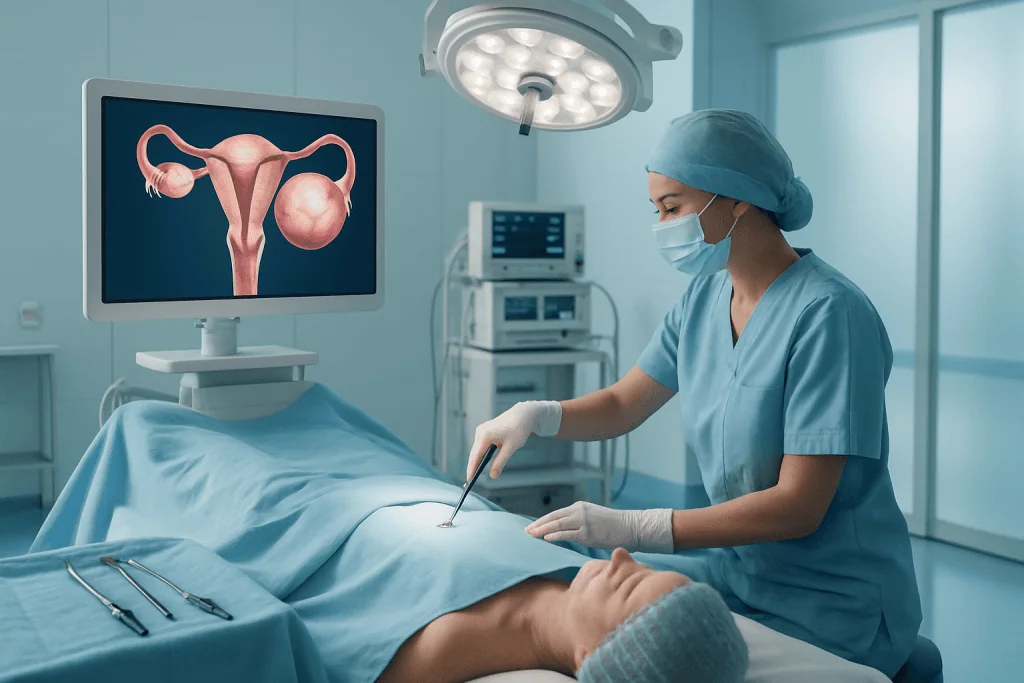
An ovarian cyst is a fluid-filled sac that forms in or on an ovary. Most are linked to normal ovulation and resolve without treatment. Management ranges from monitoring with repeat ultrasound and symptom-relieving medication to keyhole (laparoscopic) surgery, which removes persistent, large, painful or suspicious cysts while preserving healthy ovarian tissue wherever possible.
Ovarian Cyst: Understanding the Diagnosis Before Deciding on Treatment
An ovarian cyst is a fluid-filled sac that forms in or on an ovary. Most develop as a normal part of the menstrual cycle, cause few or no symptoms and disappear on their own within weeks or months. A smaller number persist, grow, cause pain or show features that need closer investigation. Treatment therefore spans a spectrum: careful monitoring with repeat ultrasound, medication to manage symptoms, and surgery for cysts that are large, persistent, complicated or suspicious in appearance.
The diagnosis often arrives unexpectedly. Many patients learn they have an ovarian cyst during a routine pelvic ultrasound, a fertility work-up or an emergency visit for pain, and the questions that follow are practical and emotional at the same time. Is this dangerous? Could it affect fertility? Do I need surgery? How quickly should I act?
Cysts of the ovary are common during the reproductive years and are often related to ovulation itself. But not every cyst behaves the same way. Some are simple and functional, meaning they develop as part of the menstrual cycle and tend to resolve. Others are associated with endometriosis, benign tumours, infection or pregnancy-related conditions, and a small minority are linked to ovarian cancer. The right treatment depends on the cyst’s appearance on imaging, its size, your symptoms, your age and menopausal status, your hormone profile, your fertility plans, and whether there are any signs of complication.
It helps to understand from the start that ovarian cyst treatment is not a single procedure. It is a structured approach to evaluation and management. In many cases, treatment means observation with repeat imaging at a defined interval. In others, it involves medication to control symptoms or reduce the chance of new functional cysts. When surgery is needed, minimally invasive techniques are usually preferred, with the goal of removing the cyst while preserving as much healthy ovarian tissue as possible, particularly for patients who want children in the future.
At a specialist gynaecology centre, the aim is never simply to “remove a cyst”. It is to establish what type of cyst it is, whether it is safe to monitor, whether it poses a risk to the ovary, and how any treatment would affect fertility, hormonal function, comfort and long-term health.
How serious is an ovarian cyst?
Most ovarian cysts are benign and never threaten your health. Seriousness is judged case by case, on the cyst’s type, size and ultrasound appearance, on whether it is growing, on your menopausal status, and on whether a complication such as torsion or rupture has developed. Functional cysts in a premenopausal patient are usually harmless and self-limiting. A complex cyst, one with solid areas, thick walls or internal septations, deserves more careful evaluation, and any new cyst found after menopause is assessed with extra attention, because the balance of risk changes at that life stage. A cyst is a finding, not a verdict: the assessment that follows is what determines how seriously it needs to be taken.
What Ovarian Cyst Treatment Involves
Ovarian cyst treatment refers to the medical evaluation, monitoring and management of cysts that develop on the ovaries. Treatment may be conservative, medical or surgical, and the decision is individualised after a gynaecologist reviews your symptoms, ultrasound findings, laboratory results, medical history and personal goals. No single pathway suits every patient, and the right plan for you may look very different from the right plan for someone with a cyst of the same size.
Observation is often appropriate for simple cysts that appear benign, especially in premenopausal patients. Functional cysts frequently disappear over one or more menstrual cycles, so your physician may recommend a repeat ultrasound after a defined interval to confirm that the cyst has shrunk or resolved. Observation is active medical management, not neglect. It requires accurate imaging, appropriate timing between scans, and clear guidance about which symptoms would change the plan. Done well, it spares patients an operation they never needed.
Medication may be used to manage pain, regulate menstrual cycles or reduce the likelihood of new functional cysts in selected patients. It is worth being precise here, because expectations are often wrong: hormonal contraceptives do not usually make an existing cyst disappear faster, but in some patients they may help prevent ovulation-related cysts from recurring. Whether any hormonal treatment suits you is a decision for your treating doctor, made in the context of your health history and fertility plans. Pain-relief medication may be prescribed when symptoms are mild and the cyst has no concerning features.
Surgical treatment may be recommended when a cyst is large, persistent, painful, complex in appearance, growing over time, associated with torsion or rupture, or concerning for malignancy. The most common approach is laparoscopic, minimally invasive, surgery. Through small incisions, the surgeon uses a camera and fine instruments to remove the cyst, repair the ovary where possible, and send the tissue for pathology. In specific situations an ovary may need to be removed, particularly if it is severely damaged, if the patient is postmenopausal, or if cancer is suspected. When imaging or laboratory findings suggest a higher risk of malignancy, treatment planning involves gynaecological oncology expertise from the start rather than after the fact.
The best treatment is the one that addresses the cyst safely while respecting the patient’s life stage. A teenager with a functional cyst, a patient with endometriosis hoping to conceive, a pregnant patient with a persistent adnexal mass and a postmenopausal patient with a complex cyst all require different clinical pathways, and a centre that treats them identically is not treating them well.
What helps an ovarian cyst go away?
For functional cysts, the honest answer is time. Many shrink and resolve over one or more menstrual cycles without any intervention, which is exactly why observation is a legitimate first-line strategy. No tablet, supplement or diet reliably dissolves an established cyst, and claims to the contrary should be treated with scepticism. Hormonal medication may reduce the formation of new functional cysts in selected patients, but it does not remove the one already there. Warmth and simple pain relief can ease discomfort while a cyst resolves, but they treat the symptom, not the sac. A cyst that persists across follow-up scans, a dermoid, a cystadenoma or an endometrioma, for example, will not disappear on its own, and surgery is the only reliable way to remove it.
Ovarian Cyst Symptoms and When Evaluation Makes Sense
Ovarian cyst symptoms range from nothing at all to sudden, severe pelvic pain. Many cysts are found incidentally and cause no discomfort whatsoever. Others produce symptoms that come and go with the menstrual cycle, and some announce themselves abruptly when a complication occurs. A medical assessment is worthwhile when symptoms are persistent, intense, recurrent, or accompanied by signs that suggest bleeding, infection, torsion or another urgent condition.
Typical symptoms that lead patients to seek evaluation include:
- Pelvic pain on one side, which may be dull and constant or sharp and intermittent
- Bloating, or a feeling of pressure or heaviness in the lower abdomen
- Pain during intercourse
- Menstrual irregularity, or pain before and during menstruation
- Urinary frequency or difficulty emptying the bladder
- Constipation or a change in bowel habit
- Nausea, or unexplained enlargement of the abdomen
None of these symptoms is unique to ovarian cysts, which is part of what makes self-diagnosis unreliable. Urinary frequency and pelvic pressure overlap with bladder conditions such as female cystitis, and chronic pelvic pain has a long list of possible causes, including interstitial cystitis, bowel conditions and musculoskeletal problems. Careful assessment separates these possibilities rather than assuming the cyst on the scan explains everything.
What does an ovarian cyst feel like?
Very often, it feels like nothing. A small cyst on ovary tissue usually cannot be felt at all, which is why so many are discovered by chance. When a cyst does cause sensation, patients most commonly describe a dull, one-sided ache low in the pelvis, a sense of fullness or heaviness, or pressure on the bladder or bowel. Pain from an endometrioma often tracks the menstrual cycle, worsening around a period. A sharp, sudden, one-sided pain, sometimes with nausea or faintness, is a different pattern and suggests a complication such as rupture or torsion rather than the cyst simply existing. The ovary itself sits deep in the pelvis, so what patients feel is rarely the cyst directly; it is the stretch, pressure or irritation the cyst creates around it.
What are the early warning signs of an ovarian cyst?
Frequently there are none, and that is not a failure of vigilance: it reflects how quietly most cysts behave. When early signs do appear, they tend to be subtle: a persistent one-sided pelvic ache, bloating that does not settle, a change in the menstrual pattern, discomfort during intercourse, or new pressure on the bladder. After menopause, new pelvic pain, persistent abdominal swelling, early fullness when eating or unexplained weight loss deserve careful assessment; these findings do not automatically mean cancer, but they justify proper investigation rather than watchful waiting at home.
How an ovarian cyst is diagnosed
Diagnosis usually begins with a detailed medical history and pelvic examination, followed by imaging. Transvaginal ultrasound is the main diagnostic tool for most ovarian cysts because it shows the cyst’s size, structure, wall thickness, internal fluid, septations, solid areas and blood-flow patterns: the features that separate a simple functional cyst from something that needs more attention. Abdominal ultrasound may also be used, particularly when the cyst is large or when a transvaginal scan is not appropriate.
Additional tests depend on the situation. A pregnancy test is important in reproductive-age patients, because an ectopic pregnancy can mimic cyst symptoms. Blood tests may include a complete blood count, inflammatory markers, hormone levels, or tumour markers such as CA-125 in selected cases. CA-125 deserves a plain explanation, because it causes a great deal of unnecessary alarm: it is not a screening test for all ovarian cysts, and it can be raised by benign conditions including endometriosis, fibroids, pelvic inflammatory disease and menstruation itself. Its value is interpreted alongside imaging, age, menopausal status and clinical findings, never in isolation. When a mass is complex, magnetic resonance imaging can clarify the anatomy, support surgical planning and help decide whether assessment for ovarian cancer should be part of the pathway.
Patients who may need treatment rather than simple reassurance include those with cysts that persist on follow-up, cysts that are growing, cysts causing significant symptoms, cysts with complex ultrasound characteristics, cysts associated with endometriosis, cysts that may interfere with fertility treatment, and cysts detected after menopause. Patients with a family history of ovarian or breast cancer, a known hereditary cancer syndrome or previous gynaecological cancer may need more specialised evaluation from the outset.
Types of Ovarian Cysts and the Conditions Treatment Addresses
Ovarian cyst treatment covers several distinct types of cysts and cyst-like ovarian masses. Identifying the likely type is essential, because the treatment decisions vary considerably, what is right for a follicular cyst would be wrong for a dermoid.
- Functional cysts: follicular cysts and corpus luteum cysts related to ovulation. They are common, usually benign and often resolve without surgery over one or more cycles.
- Haemorrhagic cysts: cysts in which internal bleeding has developed. Many resolve on their own, but painful or persistent cases may require monitoring or intervention.
- Endometriomas: sometimes called “chocolate cysts”, these are associated with endometriosis. They can cause pain, inflammation, adhesions and fertility challenges, and they do not resolve spontaneously.
- Dermoid cysts: also known as mature cystic teratomas, these benign tumours may contain tissue such as fat or hair. They grow slowly and can increase the risk of ovarian torsion.
- Cystadenomas: benign ovarian tumours, serous or mucinous, that can become large and cause pressure symptoms. Surgical removal may be advised depending on size and features.
- Polycystic ovaries: in polycystic ovary syndrome, the ovaries contain many small follicles. Treatment focuses on hormonal balance, metabolic health, cycle regulation and fertility goals, not on removing individual follicles, which would achieve nothing.
- Ovarian cysts in pregnancy: many are benign and simply monitored, but persistent, large or suspicious cysts require careful timing and planning to protect both mother and baby.
- Postmenopausal ovarian cysts: these need particular attention because the risk profile differs after menopause. Simple small cysts may still be monitored, but complex cysts usually need more detailed assessment.
- Suspicious ovarian masses: when imaging or laboratory findings raise concern for malignancy, management should involve gynaecological oncology and appropriate surgical staging where needed.
Because the word “cyst” describes such a wide range of findings, the treatment plan must rest on the cyst’s behaviour and characteristics, not on the label alone. This is where experienced imaging review, gynaecological assessment and, when appropriate, multidisciplinary discussion earn their keep.
What causes ovarian cysts?
The major cause of ovarian cysts is ovulation itself. Each month, a follicle grows on the ovary to release an egg; if the follicle fails to open, or reseals and fills with fluid afterwards, a functional cyst forms. The corpus luteum, the structure left behind after ovulation, can also fill with fluid or blood. Because these cysts are a by-product of a normal process, they cannot meaningfully be prevented, and having them says nothing negative about your health. Other causes include endometriosis, in which tissue similar to the uterine lining grows on the ovary and forms an endometrioma; abnormal but benign cell growth, which produces dermoid cysts and cystadenomas; pregnancy, during which a cyst that supported the early pregnancy sometimes persists; and severe pelvic infection, which can spread to the ovaries and create cyst-like collections. Fertility treatment that stimulates ovulation can also make functional cysts more likely during a treatment cycle. Lifestyle plays little role, ovarian cysts are not caused by anything you did or failed to do.
How Ovarian Cyst Treatment Is Performed
The process begins with a clear diagnostic pathway. Before recommending observation, medication or surgery, your physician reviews the cyst’s appearance, your symptoms, your reproductive plans and any risk factors. Existing records, ultrasound reports, MRI images, blood results, prior surgical notes and pathology reports where available, add real value here, because they show how the cyst has behaved over time and whether additional diagnostics will be needed before a decision can be made.
Preparation and evaluation
Your evaluation may include a consultation with a gynaecologist, a pelvic examination, ultrasound imaging and blood tests. If surgery is being considered, preoperative assessment typically covers an anaesthesia review, an evaluation of general health, a review of your regular medicines by the treating team, and instructions about fasting and practical preparation. Patients with fertility goals may also benefit from a conversation about ovarian reserve, future pregnancy planning, and whether fertility preservation should be discussed before any operation.
Preparation also means setting expectations honestly. If a cyst appears benign and small, observation may be recommended even when you feel anxious and would prefer it removed. If a cyst is complex or large, surgery may be advised even when your symptoms are minimal. The recommendation follows the risk, not only the discomfort, and a good surgeon will explain why.
Observation and medical management
When observation is chosen, the physician schedules follow-up imaging to establish whether the cyst is shrinking, stable or growing. You will receive clear guidance from your care team about the symptoms that should change the plan. Medication may be used in parallel to control pain or regulate cycles, and for patients with recurrent functional cysts, hormonal suppression may be considered by the treating doctor where it is medically appropriate and consistent with fertility plans.
Endometriosis-related cysts deserve their own paragraph, because the decision-making is genuinely nuanced. Medication can help manage pain and suppress disease activity, but it will not remove an established endometrioma. Surgery can relieve symptoms and remove disease, yet operating on the ovary can also reduce ovarian reserve: the very thing a patient hoping to conceive wants to protect. That is why the decision weighs fertility goals, ovarian reserve testing, cyst size, pain severity and prior surgical history together, rather than defaulting to “operate” or “wait”.
Minimally invasive surgery
If surgery is recommended, laparoscopy is the usual approach for benign-appearing cysts. The operation is performed under general anaesthesia and follows a broadly consistent sequence:
- The surgeon makes small incisions in the abdomen and introduces a narrow camera, viewing the pelvis on a high-resolution monitor.
- Fine instruments separate the cyst from the surrounding ovarian tissue, with energy-based devices used for precise bleeding control.
- The cyst is removed using careful specimen-retrieval techniques designed to limit spillage where that is clinically important.
- The ovary is repaired and reconstructed where feasible, and the removed tissue is sent for pathology.
The preferred fertility-sparing operation is usually an ovarian cystectomy, which removes the cyst while preserving the ovary. In some situations an oophorectomy, removal of the ovary, is safer or more appropriate: when the ovary is largely replaced by the cyst, when blood supply has been lost after torsion, when the patient is postmenopausal, or when there is concern for malignancy. If cancer is suspected, the surgical plan may expand to include staging procedures, and the involvement of a gynaecological oncologist becomes essential rather than optional.
Modern gynaecological surgery combines imaging, laparoscopic visualisation and careful tissue handling with one consistent purpose: remove the cyst completely when removal is needed, protect healthy ovarian tissue where possible, limit trauma to support recovery, and obtain a reliable pathology diagnosis at the end of it.
When open surgery may be needed
Open surgery through a larger incision is less common for routine benign cysts, but it may be recommended for very large cysts, extensive adhesions, suspected cancer, or situations where safe removal cannot be achieved laparoscopically. The choice of approach is not a measure of surgical quality. It is a safety decision based on anatomy, risk and the objective of the operation, and a surgeon who converts to an open approach when needed is exercising judgement, not admitting defeat.
How long does surgery take, and what happens immediately afterwards?
Laparoscopic ovarian cyst surgery often takes one to two hours, though the time varies with cyst size, adhesions, endometriosis, prior operations and whether additional procedures are performed. Many patients go home the same day or after an overnight stay; open surgery usually means a longer hospital stay and a longer recovery.
After surgery, you are monitored as the anaesthesia wears off. Mild abdominal discomfort, shoulder-tip pain from the gas used during laparoscopy, bloating, light vaginal bleeding and fatigue are common in the first days, and pain is usually managed with prescribed medication. Walking is encouraged early, to reduce the risk of blood clots and help the bowel recover. Your care team explains wound care, bathing, activity limits, medication use and when normal activities can safely resume.
Pathology results are a core part of treatment, not an afterthought. Even when a cyst looks benign, tissue analysis confirms the diagnosis and guides further care. If the result shows endometriosis, a borderline tumour or a malignancy, additional consultation and planning follow, which is one more reason to have surgery performed somewhere the pathology pathway is organised from the start.
Ovarian Torsion, Rupture and Why Timing Matters
Not every ovarian cyst needs urgent treatment, but timely evaluation matters. An unassessed cyst can grow, cause increasing pain, or raise the risk of complications. A larger cyst is more likely to twist the ovary: a condition called ovarian torsion. Torsion interrupts the blood supply to the ovary, and doctors treat it as an emergency because delayed treatment can threaten the ovary’s function. It is one of the clearest arguments for evaluating a known cyst on a sensible timetable rather than indefinitely postponing it.
What size of ovarian cyst is dangerous?
There is no single size at which a cyst becomes dangerous, and size alone is a poor measure of risk. Clinicians weigh size together with the cyst’s appearance, its growth over time, your symptoms and your menopausal status. As a general pattern, larger cysts attract closer attention because they are more prone to torsion and more likely to press on the bladder and bowel, but a small cyst with solid components after menopause can matter far more than a large simple cyst in a young patient. Growth is often more telling than size itself: a cyst that enlarges between scans changes the conversation, whatever its starting measurement. This is why follow-up imaging at defined intervals, rather than a one-off scan, underpins safe monitoring.
What to expect after an ovarian cyst ruptures
When a cyst in the ovary ruptures, the fluid it contained spills into the pelvis. The typical experience is sudden, sharp, one-sided pelvic pain, sometimes with light vaginal spotting, nausea or a brief feeling of faintness. What happens next depends on what the cyst contained and whether bleeding continues. Many ruptures are managed conservatively, rest, pain relief and short-term medical observation, and the pain eases over the following days as the fluid is reabsorbed. Some ruptures, particularly of haemorrhagic cysts with ongoing internal bleeding, require hospital observation or surgery to control the bleeding. A follow-up ultrasound is often arranged to confirm that the ovary has settled and that nothing suspicious remains. A rupture is painful and frightening, but in most cases it does not damage the ovary or affect future fertility.
Beyond these acute events, persistent cysts can press on the bladder or bowel, worsening bloating, urinary symptoms, constipation and discomfort during daily activities and intimacy: a slow erosion of quality of life that patients often normalise for far too long. Early evaluation is particularly important after menopause, when the risk profile changes, and for anyone with a complex cyst, raised tumour markers, a family history of ovarian cancer, or symptoms such as unexplained weight loss, persistent abdominal swelling or early fullness when eating. These findings do not automatically mean cancer; they mean the assessment should be precise.
For patients planning pregnancy or fertility treatment, timing carries an extra dimension. A cyst may interfere with ovarian stimulation, complicate access for egg retrieval, or muddy the interpretation of symptoms during treatment. At the same time, unnecessary surgery can reduce ovarian reserve. Acting early buys time for a balanced decision instead of a rushed response to pain or complication, and balance, not speed, is what protects fertility.
Benefits of Ovarian Cyst Treatment
The benefits depend on the diagnosis and the method chosen, but appropriate care can reduce symptoms, clarify risk and protect future health.
| Benefit | What It Means for You |
|---|---|
| Accurate diagnosis | Imaging, laboratory testing and pathology where needed distinguish functional cysts from endometriomas, benign tumours and suspicious masses. |
| Relief of pain and pressure | Treatment can reduce pelvic pain, bloating, urinary pressure, painful intercourse and the activity limits a symptomatic cyst imposes. |
| Lower risk of complications | Managing persistent or large cysts may reduce the risk of torsion, rupture, emergency surgery or progressive symptoms. |
| Fertility-conscious planning | When pregnancy is a goal, the plan can prioritise preserving ovarian tissue and avoiding unnecessary intervention. |
| Clearer long-term follow-up | After treatment, you and your physician can plan monitoring, hormonal management, endometriosis care or oncology referral if indicated. |
Recovery Timeline After Ovarian Cyst Treatment
Recovery depends on whether you are monitored, treated with medication or undergo surgery. After minimally invasive surgery, many patients can plan around the following general pattern, individual recoveries vary, and your own team’s advice takes precedence.
| Time Period | What Patients Can Expect |
|---|---|
| Day 1 | Tiredness with mild to moderate abdominal discomfort, bloating or shoulder pain from the laparoscopy gas. Walking short distances is usually encouraged. |
| First week | Pain typically improves. Patients resume light daily activities, avoid heavy lifting and follow wound-care instructions. Some return to desk-based work if they feel well. |
| First month | Energy and mobility continue to improve. Follow-up may include pathology review, ultrasound planning, medication adjustment by the treating doctor, or discussion of fertility and endometriosis management. |
| Longer term | Most patients return to their normal routines. Ongoing care may be recommended for recurrent cysts, endometriosis, hormonal conditions or postmenopausal monitoring. |
Factors That Influence Outcomes and a Good Result
A good outcome in ovarian cyst treatment is not defined only by removing the cyst. It includes an accurate diagnosis, symptom improvement, ovarian preservation where appropriate, the avoidance of unnecessary surgery, safe management of any suspicious finding, and a follow-up plan that fits your life. Several factors shape how that outcome is reached.
The first is the type of cyst. Functional cysts often resolve on their own, while dermoid cysts, cystadenomas and endometriomas do not tend to disappear spontaneously. Endometriomas can recur, especially when the underlying endometriosis remains active, which is why their management extends beyond the operation itself. Complex or suspicious cysts require a more cautious pathway from the first scan onwards.
The second is age and menopausal status. In premenopausal patients, many cysts are benign and ovulation-related. In postmenopausal patients, physicians assess ovarian cysts more carefully because the balance of risk shifts. That does not mean every postmenopausal cyst is cancerous, most are not, but it does mean the evaluation should be thorough and the follow-up disciplined.
The third is fertility goals. If you hope to become pregnant, the surgeon will usually prioritise cystectomy and the preservation of ovarian tissue when it is medically safe to do so. The team may review ovarian reserve testing, prior fertility history and whether assisted reproduction is planned, so the surgical decision serves the pregnancy plan rather than complicating it. For patients who do not want future pregnancy, the priorities can differ, particularly when a cyst is recurrent or the ovary is no longer functioning normally.
The fourth is surgical complexity. Prior abdominal surgery, pelvic infection, severe endometriosis, dense adhesions, obesity, very large cysts and suspected malignancy all make an operation more demanding. In these cases, careful preoperative planning and the right specialist mix are what keep a complex case routine rather than eventful.
The fifth is pathology and follow-up. Final pathology confirms the diagnosis, and a benign functional cyst, a dermoid, an endometrioma, a borderline tumour and a malignant tumour each require a different follow-up plan. Patients do best with clear written instructions, a proper pathology review and a defined plan for any future surveillance or additional treatment.
Finally, your own participation matters. Following the guidance on activity, medication use, wound care and follow-up appointments supports recovery in a way no surgical technique can replace. Your team should also explain how the results and recommendations will reach the physician who provides your ongoing care, so follow-up continues without gaps.
Ovarian Cyst Care at Acibadem
Choosing where to have an ovarian cyst evaluated and treated involves more than picking a hospital name. It means trusting a medical team to interpret the diagnosis accurately, recommend the right level of treatment, including no treatment, when observation is the safer answer, and coordinate every step of care into one coherent plan.
Acibadem hospitals provide ovarian cyst evaluation and treatment through gynaecology teams experienced in both conservative management and minimally invasive surgery, with care organised around evidence-based practice and individualised decision-making. When findings are complex, cases can be reviewed with the relevant specialists: gynaecological oncology, radiology, reproductive medicine, pathology and anaesthesiology among them. This multidisciplinary structure matters for ovarian cysts precisely because the diagnosis changes the plan: a simple cyst may need observation, an endometrioma needs fertility-conscious planning, a postmenopausal complex cyst needs oncology input, and a very large cyst needs advanced surgical preparation. Aligning the right specialists early protects patients from both undertreatment and unnecessary procedures.
Diagnostic pathways support the decision rather than decorate it: quality ultrasound, cross-sectional imaging where indicated, laboratory testing, anaesthesia evaluation and pathology review all feed into one coherent plan. In surgery, minimally invasive gynaecological techniques keep incisions small, support recovery and allow careful handling of ovarian tissue. The specific technology varies with the diagnosis and the hospital location, but the purpose is consistent: precise visualisation, controlled dissection, safe tissue removal and a reliable diagnosis at the end.
Personalised planning sits at the centre of this. Some patients arrive expecting surgery and learn that monitoring is safer. Others arrive after months of recurring pain and discover that a minimally invasive operation is appropriate. Some need a fertility consultation before deciding anything; others need oncology assessment because of what the imaging or their menopausal status suggests. A responsible treatment plan explains not only what is recommended, but why, and what the alternatives are.
Moving Forward With Clarity
An ovarian cyst diagnosis creates uncertainty, but uncertainty does not have to produce rushed decisions. With careful evaluation, many cysts can be monitored safely and never need an operation. When treatment is needed, modern gynaecological care can usually address the cyst with attention to comfort, ovarian function, fertility goals and long-term health. The most valuable step is not the fastest one: it is obtaining a precise diagnosis and a plan that genuinely matches your situation.
Whether your cyst turns out to be a functional finding that resolves on its own, an endometrioma that reshapes your fertility planning, or a complex mass that needs specialist surgery, the sequence is the same: accurate imaging, honest interpretation, a proportionate plan and disciplined follow-up. That sequence, more than any single procedure, is what a good outcome looks like.
Preparation
- Before ovarian cyst surgery, patients usually have a pelvic examination, ultrasound, blood tests, and anesthesia assessment. Your doctor may advise stopping certain medications and fasting for several hours before the procedure. Pregnancy status, fertility plans, and cancer risk factors are reviewed to plan the safest approach.
Aftercare
- After laparoscopic ovarian cyst removal, patients are encouraged to walk early and avoid heavy lifting until cleared by the doctor. Mild pelvic discomfort, bloating, or spotting may occur for a few days. Follow-up visits review pathology results, healing, menstrual changes, and any need for further treatment.
Frequently Asked Questions
What affects the cost of ovarian cyst treatment?
Cost depends on the cyst type, symptoms, imaging requirements, blood tests, whether surgery is needed, the surgical approach, anaesthesia, pathology, hospital stay, surgeon experience, and follow-up plan. A personalised quote is only possible after specialist assessment.
How can I get a personalised quote from Acibadem?
You can request a free consultation by sharing your medical history, recent ultrasound or imaging reports, laboratory results, symptoms, and any previous treatment details. The international patient team can then guide you on the likely pathway and provide a personalised estimate.
Is laparoscopic surgery always required for an ovarian cyst?
No. Some cysts can be monitored or managed with medication, while others may need surgery. The decision depends on symptoms, cyst appearance, fertility goals, medical history, and specialist evaluation.
What is typically included in an international patient package?
Packages may include gynaecology consultation, imaging, laboratory tests, surgery if needed, anaesthesia, hospital stay, pathology, interpreter support, and follow-up planning. Inclusions vary, so the written quote should be reviewed carefully.
Will treatment choice affect future fertility?
It can. Many treatment plans aim to preserve ovarian tissue when medically appropriate, especially in patients who wish to conceive. Fertility goals should be discussed before choosing observation, medication, cystectomy, or ovary removal.
Medically reviewed by the Acıbadem International Medical Board August 31, 2026
See our medical review board →
Update history
- PublishedJune 8, 2026
- Medical review approvedAugust 31, 2026
- Last content updateSeptember 8, 2026
References3
- Ovarian cysts nhs.uk
- Ovarian Cysts medlineplus.gov
- Ovarian Cysts my.clevelandclinic.org
Trusted care for international patients
From the Acibadem Blog

Sudden Severe Pelvic Pain With an Ovarian Cyst: Rupture, Torsion and When to Seek Urgent Care
Sudden, severe pelvic pain in someone known to have an ovarian cyst can signal either rupture, where the cyst leaks fluid or blood, or…

Can Ovarian Cysts Be Cancerous, Cause Bleeding or Affect Fertility?
Most ovarian cysts are not cancerous. The majority are functional cysts that form during a normal menstrual cycle and usually disappear on their own…

Ovarian Cyst Surgery Recovery: Bloating, Spotting and When Lifting and Exercise Resume
Ovarian cyst surgery recovery usually takes about one to two weeks after keyhole (laparoscopic) removal and several weeks after open surgery, though individual timelines…
What Size of Ovarian Cyst Is Dangerous? Centimetres, Millimetres and What They Mean
There is no single size at which an ovarian cyst becomes dangerous. Most cysts are small, fluid-filled and disappear on their own within a…

How Fast Ovarian Cysts Grow: Typical Timelines, Warning Signs and When to Treat
Most ovarian cysts are functional cysts that form during a normal menstrual cycle, reach roughly 2 to 5 centimeters, and shrink or disappear within…

Cystectomy vs Oophorectomy: Removing the Cyst or the Ovary and How Surgeons Decide
A cystectomy removes only the cyst and leaves the ovary in place; an oophorectomy removes the whole ovary, sometimes with the fallopian tube. Surgeons…