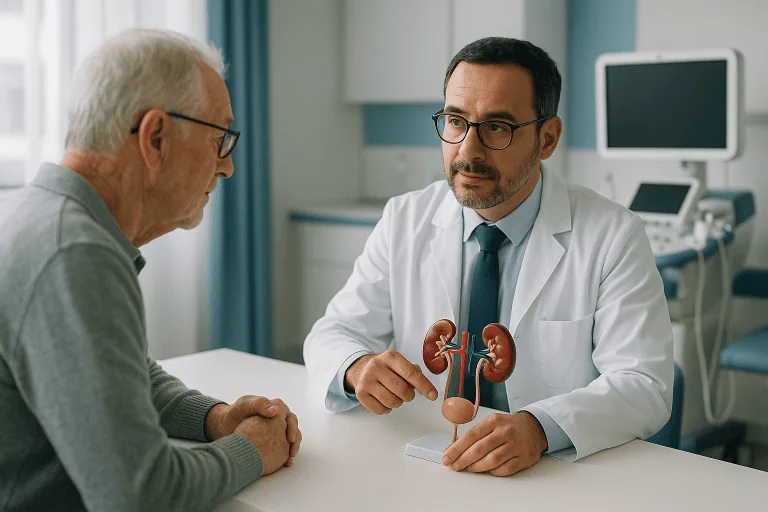
Prostate Diseases Treatment
Prostate diseases include benign enlargement, inflammation, and prostate cancer, causing urinary or sexual symptoms. Acibadem provides diagnosis and personalized treatment through urology, oncology, imaging, and robotic surgery teams.
Quick answer
Prostate diseases are conditions affecting the prostate gland, chiefly benign enlargement (BPH), prostatitis and prostate cancer. Evaluation typically involves a history, examination, PSA blood testing, urine tests and, where needed, MRI and biopsy. Treatment ranges from monitoring and medication to endoscopic procedures, surgery, radiotherapy or systemic therapy, chosen according to the specific diagnosis, its severity and the patient's health and priorities.
What Are Prostate Diseases?
Prostate diseases are the conditions that affect the prostate gland, most commonly benign prostatic hyperplasia (BPH), prostatitis and prostate cancer. Each has a different cause, a different natural course and a different treatment pathway, which is why “prostate diseases” is best understood as a group of diagnoses rather than one single problem. Treatment ranges from careful monitoring and medication through to endoscopic procedures, robotic surgery, radiotherapy and systemic cancer therapy. The right choice depends on which disease is present, how it is behaving, and how it is affecting your urinary function, sexual function and general health. Getting that first question answered precisely, which prostate disease is this?, is the foundation of everything that follows.
The prostate is a small gland located below the bladder and around the urethra, the tube that carries urine out of the body. Because of this position, even non-cancerous prostate conditions can cause significant urinary symptoms: the gland does not need to be diseased in a dangerous way to interfere with the flow of urine. These conditions may develop slowly and quietly over years, or they may appear suddenly with pain, fever or an alarming test result. The same symptom, a weak stream, for instance, or blood in the urine, can have several possible causes, some benign and some serious. Accurate diagnosis therefore comes before any discussion of treatment, not after it.
Timing matters because prostate diseases are usually more manageable when identified early. Benign enlargement can be treated before the bladder is damaged by years of straining against obstruction. Inflammation and infection can be controlled before complications develop. Prostate cancer detected at an earlier stage generally allows a wider range of options, from structured monitoring of selected low-risk disease through to treatment aimed at removing or controlling the cancer when that is appropriate.
Is the prostate a disease?
No: the prostate is a normal gland, not a disease. Every man has one. It sits at the base of the bladder and produces part of the fluid that makes up semen. The confusion is understandable: the word “prostate” is heard so often in the context of illness that some people assume the gland itself is the problem. It is not. What can become a problem is what happens to the gland over time. It can enlarge (benign prostatic hyperplasia), it can become inflamed or infected (prostatitis), and it can develop cancer. A healthy prostate causes no symptoms and needs no treatment at all.
Benign prostatic hyperplasia (BPH)
Benign prostatic hyperplasia, often called BPH or benign prostate enlargement, is a non-cancerous growth of prostate tissue. As the gland enlarges, it can narrow the urethra and make it harder to pass urine. BPH is common with ageing, and it is not prostate cancer, having one does not mean you have, or will develop, the other. It can nonetheless cause genuinely disruptive symptoms: frequency, urgency, a weak or interrupted stream, straining, and waking several times at night to urinate. In advanced cases, long-standing obstruction can lead to urinary retention, bladder stones, recurrent infections or strain on the kidneys. “Benign” describes the tissue under the microscope; it should not be read as “harmless” when obstruction has been left untreated for years.
Prostatitis
Prostatitis is inflammation of the prostate. It may be caused by bacterial infection, but in many men no clear infectious cause is found. Acute bacterial prostatitis tends to arrive suddenly, fever, chills, pelvic pain, painful urination and a general sense of being unwell, and is treated as an urgent condition in clinical practice. Chronic prostatitis and chronic pelvic pain syndrome behave quite differently: symptoms fluctuate over months, may include pelvic, genital, urinary or ejaculatory discomfort, and can wear away at sleep, work and intimate life. Distinguishing infectious inflammation from non-infectious inflammation is one of the most important steps in getting prostatitis treatment right, because the two respond to entirely different approaches.
Prostate cancer
Prostate cancer develops when abnormal cells in the prostate grow in an uncontrolled way. Some prostate cancers grow slowly and may be monitored carefully for years; others are more aggressive and need timely treatment. Modern prostate cancer care rests on risk assessment: PSA level, physical examination, imaging, biopsy findings, tumour grade, cancer stage, and your age, general health and preferences all feed into the decision. This is why two men who both hear the words “prostate cancer” may receive entirely different recommendations, one is advised to monitor the disease under a structured surveillance protocol, the other to proceed to surgery or radiotherapy. A detailed overview of diagnosis and treatment is available on our prostate cancer page.
When Prostate Symptoms Begin to Affect Daily Life
Prostate concerns can be difficult to talk about, yet they are among the most common health issues men face as they age. Frequent urination, waking at night to use the bathroom, a weak urinary stream, pelvic discomfort, blood in the urine, changes in sexual function, or an unexpected PSA result can all create understandable anxiety. For some men, the main issue is quality of life: planning every journey around toilet access, broken sleep, the quiet embarrassment of urgency. For others, it is the fear of prostate cancer, or uncertainty about whether treatment they have been offered is truly necessary.
It helps to separate two questions that often get tangled together. The first is: what is causing these symptoms? The second is: does it need treatment now? They do not always have the same answer. A very large prostate can cause few symptoms; a modestly enlarged one can cause many. A raised PSA can come from a benign cause; a significant cancer can be present in a gland that feels normal. Careful evaluation answers both questions before anything irreversible is done, and sometimes the honest answer is that monitoring, not intervention, is the right course.
Many men arrive at a urology clinic having already been told elsewhere that they need surgery or cancer treatment, and simply want a clearer explanation of why, and what the alternatives are. That is a legitimate reason for evaluation in its own right. A sound prostate pathway makes the reasoning behind each recommendation explicit, so you can weigh the options rather than accept a conclusion you do not fully understand.
Who May Need Evaluation for Prostate Disease?
Men may need prostate evaluation because of symptoms, abnormal screening results, family history, or findings discovered incidentally during tests for another health issue. Some arrive with a known diagnosis and are seeking a second opinion. Others have never had a prostate assessment and are prompted by new urinary changes, a blood test arranged by their family doctor, or a relative’s diagnosis. There is no single typical presentation, which is why the evaluation itself is kept broad at the start and narrowed as the picture becomes clear.
Common urinary symptoms include frequent urination, urgency, difficulty starting urination, a weak or interrupted stream, straining, dribbling after urination, a feeling that the bladder is not empty, and waking several times at night to urinate. These symptoms are often related to BPH, but they can also occur with infection, inflammation, bladder disorders, urethral narrowing, neurological conditions or cancer. Blood in the urine or semen, unexplained pelvic or back pain, fever alongside urinary symptoms, and a sudden inability to urinate are treated as urgent findings in urology, because they can signal infection, obstruction or, less commonly, malignancy, and each has consequences if left unexplained.
Sexual symptoms can also be part of the picture. Some men experience painful ejaculation, erectile changes, reduced ejaculation volume, or anxiety about sexual function after being told they may need prostate treatment. These concerns deserve direct, unembarrassed discussion. A well-planned prostate pathway considers urinary control, sexual function, fertility where relevant, and your overall health goals, not just the gland itself. Silence around these topics leads to worse decisions, not better ones.
The first assessment is usually straightforward: a detailed medical history, a physical examination, and simple blood and urine tests. From there, imaging and functional tests are added only where they will actually change the plan. The full diagnostic toolkit is described in the next section, but the principle throughout is the same, test with a purpose, and let the results direct the treatment rather than the other way round.
Conditions and Indications Addressed
Prostate care at Acibadem covers the main benign, inflammatory and malignant diseases of the prostate. The pathway is tailored according to diagnosis, disease severity, age, general health, urinary function, sexual function and personal priorities.
- Benign prostatic hyperplasia: an enlarged prostate causing mild, moderate or severe urinary symptoms; recurrent urinary retention; bladder stones; recurrent urinary tract infections; blood in the urine related to prostate enlargement; or kidney effects due to long-standing obstruction.
- Acute bacterial prostatitis: sudden prostate infection that may cause fever, chills, painful urination, pelvic pain and general illness. This condition may require urgent antibiotics and, in some cases, hospital care.
- Chronic prostatitis or chronic pelvic pain syndrome: persistent pelvic, genital, urinary or ejaculatory discomfort that may fluctuate over time and requires individualised, often staged, management.
- Elevated PSA or an abnormal prostate examination: findings that require careful interpretation, repeat testing, imaging and sometimes biopsy to distinguish benign causes from cancer.
- Localised prostate cancer: cancer confined to the prostate or nearby tissues, where options may include active surveillance, surgery, radiotherapy or other selected treatments.
- Locally advanced prostate cancer: cancer that has extended beyond the prostate but may still be managed with combined treatments, radiotherapy, hormone therapy, surgery in selected cases, or systemic treatment.
- Metastatic prostate cancer: cancer that has spread to lymph nodes, bones or other organs, typically managed with systemic therapy, symptom control and carefully coordinated oncology care.
- Follow-up after previous prostate treatment: monitoring after surgery, radiotherapy, medication therapy or prior biopsy, including evaluation of a rising PSA or persistent symptoms.
How Prostate Diseases Are Diagnosed
Because these conditions vary so widely, the first step is not to assume a treatment but to define the problem precisely. A man with BPH may need medication or a procedure to improve flow. A man with chronic pelvic pain may need infection assessment and pain-focused care. A man with prostate cancer may need a multidisciplinary cancer plan rather than an immediate operation. The diagnostic process exists to move you from uncertainty to a clear, medically sound plan.
Medical history and digital rectal examination
The medical history and digital rectal examination remain the starting point of every prostate assessment. The physician reviews your symptoms in detail, often using structured symptom scores, along with your medical and family history, prior infections, urinary habits, sexual function and current medications. The digital rectal examination allows the doctor to assess prostate size, texture and tenderness directly. It takes moments, and it can meaningfully change what happens next: a tender gland points towards inflammation, a smoothly enlarged one towards BPH, and a firm or irregular area towards the need for further investigation.
PSA testing and laboratory tests
Prostate-specific antigen, or PSA, is a protein produced by prostate tissue and measured with a simple blood test. It is a useful signal but not a verdict: PSA can rise for reasons other than cancer, including benign enlargement, inflammation, infection and recent procedures. That is why a single raised result is interpreted in context, sometimes repeated, sometimes followed with imaging, rather than acted on immediately. Alongside PSA, blood tests may assess kidney function and infection markers where indicated, and urine tests can detect infection or blood. Together these results begin to separate the benign explanations from the ones that need pursuing.
Multiparametric prostate MRI
Multiparametric prostate MRI provides detailed images of the prostate and the tissues around it, and has become central to modern prostate cancer assessment. It can help identify areas within the gland that appear suspicious, support the decision about whether a biopsy is needed at all, and guide where the biopsy needles should sample. MRI findings require expert interpretation, the scan does not diagnose cancer by itself, but used well, it reduces both missed disease and unnecessary sampling of glands that look reassuring throughout.
Prostate biopsy and pathology review
A prostate biopsy takes small tissue samples from the gland so that pathology specialists can determine whether cancer is present and, if so, its pattern and grade. Imaging guidance can improve sampling accuracy, particularly when MRI has identified a specific target. The pathology report is what turns suspicion into a diagnosis: it establishes the tumour grade and, together with PSA and imaging, the risk category that shapes every subsequent treatment discussion. After a biopsy, temporary blood in the urine or semen and mild discomfort are common while the tissue settles.
Urinary function tests
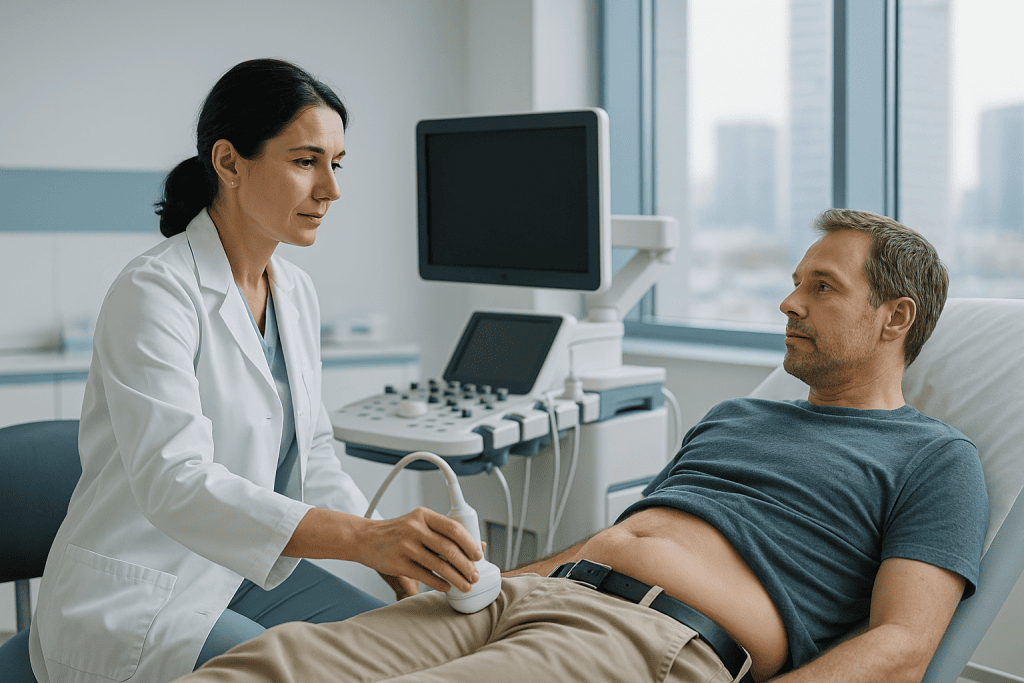
Urinary function tests measure how well the bladder actually empties, which matters as much as how the prostate looks. Non-invasive flow measurement records the strength and pattern of the urinary stream; ultrasound can measure how much urine remains in the bladder after voiding and assess the kidneys for signs of back-pressure. In selected cases, cystoscopy, a thin camera passed along the urethra, allows the doctor to inspect the urinary channel, the prostate passage and the bladder from the inside, and urodynamic studies can clarify whether symptoms come from obstruction, from the bladder muscle itself, or from both.
The value of this structured pathway is that it protects you from both undertreatment and overtreatment. Not every elevated PSA means cancer. Not every prostate cancer requires immediate aggressive treatment. Conversely, some cancers need timely intervention even when symptoms are entirely absent. Precision at the diagnostic stage is what makes the treatment stage rational.
How Prostate Disease Treatment Is Planned and Performed
Once the diagnosis is clear, the physician explains the available options and the reasoning behind each one. For most patients the pathway follows a recognisable sequence, even though the content of each step differs by disease:
- Step 1: Consultation: symptoms, history and previous results are reviewed in detail.
- Step 2: Testing: blood, urine, imaging and functional tests are selected according to the clinical question.
- Step 3: Diagnosis: the findings are drawn together into a named condition and, for cancer, a risk category.
- Step 4: Planning: options are explained, compared and matched to your health and priorities.
- Step 5: Treatment: medication, a procedure, surgery, radiotherapy or a monitoring protocol begins.
- Step 6: Follow-up: response is checked and the plan adjusted, including over the longer term.
Initial consultation and review of records
The pathway usually begins with a urology consultation, and earlier results add essential context: prior PSA values, imaging, biopsy reports, medication lists, surgery records and pathology slides where available. Old results give context that a single new test cannot: a PSA that has been stable for years means something different from one that has climbed steadily. The consultation is also the right moment to raise concerns that may feel personal, including continence, erection quality, fertility and expectations after treatment. Where the case warrants it, findings are reviewed together with radiology, pathology, medical oncology, radiation oncology, nuclear medicine, anaesthesiology or cardiology, so that the plan reflects more than one specialist perspective.
Treatment for benign prostatic hyperplasia
Treatment for benign prostatic hyperplasia is matched to how much the symptoms bother you and how much the obstruction threatens the bladder and kidneys. Milder symptoms may respond to lifestyle adjustment and medication. When a procedure is needed, most approaches are performed through the urethra, without an external incision: a small camera and instruments are passed along the urinary channel to remove, vaporise or reshape the tissue blocking flow. Endoscopic resection, laser-based techniques and other surgical methods each suit different situations; the choice depends on prostate size and anatomy, symptom severity, bleeding risk, use of blood-thinning medication and your general health. Some men go home the same day or after a short stay, usually with a catheter for a period while the channel heals; others need longer observation. Very large glands may occasionally need a different surgical route altogether, which is precisely why sizing the prostate before choosing the operation matters.
Can an enlarged prostate cause Peyronie’s disease?
No: an enlarged prostate does not cause Peyronie’s disease. BPH is an overgrowth of prostate tissue at the bladder outlet; Peyronie’s disease is scar tissue forming within the wall of the penis, which can cause curvature, pain or difficulty with erections. The two conditions arise through separate mechanisms in separate structures. They can certainly coexist, simply because both become more common with age, and some men understandably wonder whether one triggered the other when they appear around the same time. They did not. Each condition is assessed and treated on its own terms, and having one does not mean the other will follow.
Can kidney disease cause an enlarged prostate?
No, kidney disease does not cause the prostate to enlarge. The relationship usually runs in the opposite direction: long-standing obstruction from an enlarged prostate raises pressure in the bladder and, over time, can strain the kidneys, sometimes causing the drainage system to swell (hydronephrosis) and kidney function to decline. This is one of the main reasons severe or long-ignored BPH is taken seriously even though the tissue itself is benign. Kidney conditions that arise independently, such as glomerular diseases or tubulointerstitial diseasesare evaluated and managed by nephrology, but they do not make prostate tissue grow. When a man has both kidney impairment and urinary symptoms, part of the diagnostic work is establishing which came first.
Treatment for prostatitis
Treatment for prostatitis depends entirely on whether infection is present. Acute bacterial prostatitis is treated with appropriate antibiotics and supportive care, and in some cases requires hospital admission; complicated or unusual infections may also involve the infectious diseases team. Chronic prostatitis and chronic pelvic pain syndrome call for a broader, more patient plan. There is rarely a single fix: management may combine medication, pelvic floor assessment, pain-focused strategies, urinary symptom control, and attention to stress, sleep and lifestyle triggers. Progress tends to come through a staged approach with adjustment along the way, and honest expectation-setting at the start prevents the cycle of repeated, ineffective treatments that many men with chronic pelvic pain have already been through.
Can Crohn’s disease cause prostatitis?
Not usually: Crohn’s disease is not a common cause of prostatitis, and most men with prostatitis do not have inflammatory bowel disease. There are, however, genuine points of overlap worth understanding. Crohn’s disease affecting the lower bowel and pelvis can occasionally involve neighbouring structures, for example through fistulae or pelvic inflammation, and can produce pelvic pain that resembles chronic prostatitis. The two conditions can also simply coexist in the same patient without one causing the other. When a man carries both diagnoses, urology and gastroenterology assess the pelvis together, because treating the wrong source of pain helps no one. When pelvic symptoms sit alongside active bowel disease, that history is an important part of the urological assessment from the outset.
Treatment for prostate cancer
Treatment for prostate cancer is planned around risk, not reflex. Some low-risk cancers are best managed with active surveillance: scheduled PSA testing, examinations, MRI and repeat biopsy when appropriate, with treatment held in reserve. When treatment is recommended, radical prostatectomy removes the prostate gland and seminal vesicles, with nearby lymph nodes sampled or removed when indicated; robotic-assisted surgery may be used in appropriate cases, allowing the surgeon to operate through small incisions with magnified three-dimensional vision and wristed instruments, genuinely useful in the deep, confined space of the pelvis. Radiotherapy, when chosen, is planned with imaging to target the prostate and relevant tissues while limiting exposure to the bladder and rectum, and may be combined with hormone therapy in certain risk groups. More advanced disease is managed by medical oncology with hormonal agents, chemotherapy, bone-protective treatment or targeted approaches selected according to tumour biology. Throughout, nerve-sparing techniques are considered when they are safe from a cancer standpoint, but cancer control remains the priority, and a trustworthy surgeon will say so plainly.
Can prostate cancer cause kidney disease?
Yes, in some circumstances, advanced prostate cancer can affect the kidneys, although this is a complication of later-stage disease rather than a feature of early cancer. A tumour that obstructs the bladder outlet or involves the ureters can block the drainage of urine, causing pressure to build in the kidneys (hydronephrosis) and kidney function to fall. Certain cancer treatments also require kidney monitoring as part of routine care. Early, localised prostate cancer does not usually harm the kidneys at all, which is one more argument for detecting and staging the disease before obstruction has a chance to develop.
Technology used and how it helps
Technology in prostate care serves a practical purpose: to sharpen diagnosis, guide planning and reduce unnecessary tissue damage, not to impress. High-resolution ultrasound assesses prostate size, bladder emptying and kidney effects. MRI maps the gland and any suspicious areas within it. Image-guided biopsy techniques sample areas of concern more precisely than blind sampling can. Pathology tools support accurate grading and risk classification. On the treatment side, endoscopic systems allow obstruction to be relieved through natural channels; robotic surgical platforms provide enhanced visualisation and instrument control during complex pelvic surgery; and radiation planning systems shape treatment to the target using imaging-based mapping. Throughout care, laboratory monitoring, imaging follow-up and symptom scoring let the team see whether the plan is working, and change it when it is not.
Typical duration and hospital stay
How long everything takes depends on the diagnosis and the treatment chosen. Diagnostic evaluation may be completed over several days, depending on the imaging required, biopsy scheduling, pathology review and any additional specialist consultations; office-based assessments are brief, while MRI, biopsy, cystoscopy or urodynamic testing each need their own appointment time. BPH procedures may take under an hour to a few hours depending on prostate size and technique, with catheter use afterwards for a variable period. Robotic radical prostatectomy is performed under general anaesthesia with a hospital stay that is commonly short but always individualised. Radiotherapy is delivered in planned sessions over a defined course. Medication-based treatment can begin immediately and is then monitored over weeks to months.
Why Acting Early Matters
Many prostate diseases develop gradually, which makes it tempting to wait until symptoms become severe. Delay, however, narrows your choices. Long-standing urinary obstruction from BPH can cause bladder muscle changes, recurrent infections, bladder stones, kidney strain or sudden urinary retention requiring urgent catheter placement. A bladder that has spent years fighting obstruction does not always recover its strength even after the blockage is removed. Earlier treatment can prevent these complications and often keeps less invasive options on the table.
Prostatitis, too, becomes more complicated when it is not evaluated properly. Acute bacterial prostatitis can progress to serious infection if treatment is delayed. Chronic pelvic pain tends to become more entrenched with time, drawing in sleep, mood, work and relationships. A structured evaluation early on distinguishes infection from non-infectious inflammation and spares you the demoralising cycle of repeated treatments aimed at the wrong target.
For prostate cancer, timing carries a particular weight. Some prostate cancers are slow-growing, and careful monitoring is genuinely the safest course. Others are aggressive and should not be left untreated. Early and accurate staging is what tells you which situation is yours. Acting early does not always mean immediate surgery: it means getting the right diagnosis and making an informed plan before the disease, or the symptoms, become harder to manage.
Potential Benefits of Prostate Disease Treatment
The benefits depend on the diagnosis and the therapy chosen, but appropriately matched prostate care can relieve symptoms, clarify cancer risk and support sound long-term health decisions.
| Benefit | What It Means for You |
|---|---|
| Clear diagnosis | Structured testing distinguishes BPH, prostatitis, prostate cancer and other urinary conditions, so treatment rests on evidence rather than assumption. |
| Improved urinary function | For BPH and related obstruction, treatment may reduce frequency, urgency, weak stream, nighttime urination and the feeling of incomplete emptying. |
| Earlier cancer risk assessment | PSA interpretation, MRI, biopsy and pathology review establish whether cancer is present and whether monitoring or treatment is the appropriate response. |
| Personalised treatment choices | Plans are adapted to prostate size, cancer risk, other medical conditions, sexual function and personal priorities. |
| Reduced risk of complications | Timely care can help prevent urinary retention, recurrent infections, bladder damage and the progression of untreated aggressive cancer. |
| Support for quality of life | Care can include continence guidance, sexual health counselling, pain management and structured follow-up planning after treatment. |
Recovery After Prostate Treatment
Recovery varies by treatment type, and it is worth knowing in advance what each pathway typically involves. After a diagnostic biopsy, temporary blood in the urine or semen and mild discomfort are common while the tissue settles. After BPH procedures, burning with urination, urgency, frequency and temporary catheter use may occur while the prostate channel heals; most men gradually notice a stronger, easier stream, although the irritative symptoms can take time to fade, and it helps to expect that rather than be alarmed by it.
After prostate cancer surgery, early recovery focuses on wound healing, catheter care, walking, prevention of blood clots, pain control and a gradual return to normal activity. Urinary leakage is common at first and usually improves with pelvic floor rehabilitation, although the degree and timing vary from man to man. Erectile recovery depends on age, baseline function, the extent of the cancer, whether nerve-sparing was possible, and general health. After radiotherapy, urinary frequency, bowel changes or fatigue may occur during and after the course and are monitored closely by the treating team.
| Time Period | What Patients Can Expect |
|---|---|
| Day 1 | After consultation or testing, many patients return to normal activity quickly. After procedures or surgery, attention focuses on urination, pain control, bleeding, catheter care where needed, and safe mobility. |
| First week | Biopsy-related symptoms usually improve. After BPH procedures or prostate surgery, urinary burning, urgency, catheter management and fatigue may be present. Walking is encouraged; heavy lifting is usually restricted. |
| First month | Urinary flow may improve after BPH treatment, though irritation can persist. After prostatectomy, catheter removal, continence exercises, pathology review and PSA follow-up planning take place. Radiotherapy patients continue scheduled sessions. |
| Three to six months | Many men see continued improvement in urinary control and stamina. Sexual function recovery, where affected, may take longer and may involve medication or rehabilitation strategies guided by the treating doctor. |
| Longer term | Follow-up depends on diagnosis. BPH patients are monitored for symptom recurrence. Cancer patients need ongoing PSA surveillance, imaging or treatment adjustment when indicated, and long-term attention to urinary, sexual and general health. |
Factors That Influence Outcomes
A good result in prostate care depends on more than the treatment itself. The first major factor is diagnostic accuracy. PSA rises for reasons other than cancer, including benign enlargement, inflammation, infection and recent procedures. MRI findings need expert interpretation. Biopsy technique and pathology review shape the risk classification on which everything else rests. When the diagnosis is precise, the treatment decision becomes far clearer, and when it is vague, no amount of surgical skill compensates.
For BPH, outcomes are influenced by prostate size and shape, bladder function, the severity and duration of obstruction, any previous urinary retention, medications such as blood thinners, and other medical conditions. A man with a very large prostate may need a different approach from one with moderate enlargement and mainly irritative bladder symptoms. And if the bladder muscle has been weakened by years of obstruction, symptom improvement after surgery may be slower or incomplete: a limit worth stating plainly before any procedure, not after.
For prostatitis and chronic pelvic pain, outcomes depend on whether active infection is present, on pelvic floor involvement, pain sensitivity, stress factors, urinary habits and previous antibiotic exposure. Chronic symptoms usually improve through a staged approach rather than a single decisive intervention, and setting realistic expectations at the start is part of good care: symptom control may take time and adjustment.
For prostate cancer, outcomes are influenced by tumour grade, PSA level, stage, imaging findings, surgical margins when surgery is performed, lymph node involvement, response to hormone therapy or radiotherapy, and your overall health. Age, cardiovascular fitness, diabetes, smoking history, weight, baseline urinary function and baseline erectile function all affect recovery as well. Nerve-sparing is weighed carefully whenever surgery is planned, but it is only offered where it does not compromise cancer control.
Your own participation matters too. Taking prescribed medication as the treating doctor directs, completing follow-up tests, performing pelvic floor exercises when they are recommended, and keeping your local doctor and the treating team informed of new symptoms all support safer care. A written follow-up plan supports this: when to check PSA, which results your local doctor should see, and which findings should be reported without delay.
How Prostate Care Is Organised at Acibadem
Prostate diseases often need more than one specialty, and the care pathway at Acibadem is built around that reality. Urologists, radiologists, pathologists, medical oncologists, radiation oncologists, nuclear medicine physicians, anaesthesiologists and rehabilitation professionals may all contribute, depending on the diagnosis. For prostate cancer, cases may be discussed in multidisciplinary tumour boards, where imaging, pathology, staging and treatment options are reviewed from several specialist perspectives before a recommendation is made. Judgement matters here as much as technology: a slightly elevated PSA may warrant observation rather than immediate biopsy; a low-risk cancer may suit surveillance; a man with severe benign symptoms may genuinely need surgery; a patient with cancer and significant heart disease may need a different plan from a younger, otherwise healthy man.
Because several consultations, scans and procedures often need to fit together within a short period, the practical side of care is coordinated alongside the medical side: appointment scheduling across departments, assistance with medical records and hospital admission guidance. This coordination matters because the diagnostic sequence described above works only if the appointments actually connect.
Prostate care rarely ends on the day of discharge, so continuity afterwards is treated as part of the treatment itself. BPH patients may need symptom reassessment over time. Prostatitis patients may need their plan adjusted. Prostate cancer patients need PSA surveillance and, in some cases, further therapy. A clear discharge summary, the pathology report, a medication plan and a defined follow-up schedule allow your local doctors to continue care with a full picture of what was done and why, which is, in the end, what turns a single episode of treatment into a coherent long-term plan for your health.
Preparation
- A urologist reviews symptoms, medical history, medications, PSA results, urine tests, and imaging before recommending care. Some patients may need prostate MRI, biopsy planning, or instructions to pause blood thinners before invasive procedures.
Aftercare
- Follow-up depends on the diagnosis and treatment plan, with PSA monitoring, medication review, imaging, or oncology visits when needed. After procedures, patients receive guidance on catheter care, activity limits, infection signs, and when to resume normal routines.
Frequently Asked Questions
What affects the cost of prostate disease treatment?
The main factors are the diagnosis, required tests, specialist consultations, procedure type, hospital stay, anesthesia, pathology, imaging, medications, and follow-up. For cancer care, staging, multidisciplinary planning, surgery, radiotherapy, or systemic therapy can all influence the final quote.
How can I get a personalized quote from Acibadem?
You can request a free consultation by sharing your medical reports, PSA results, imaging, biopsy findings if available, medication list, and symptom history. The international patient team can then help coordinate specialist review and provide a personalized treatment plan and quote.
Is the quoted package the same for every prostate patient?
No. Prostate conditions range from benign enlargement and inflammation to cancer, so the required diagnostics and treatment pathway can be very different. A quote is prepared after reviewing your medical information and the specialist recommendations.
Does robotic surgery always cost more than other options?
Robotic surgery may involve technology, operating room, and specialist team factors that can affect cost, but it is not suitable or necessary for every patient. The best option depends on diagnosis, anatomy, cancer stage when relevant, general health, and specialist assessment.
Are travel and language services included in the medical cost?
This depends on the package and patient needs. International patient services may help with translation, scheduling, airport or hotel coordination, and medical documentation, but inclusions should be confirmed before travel.
Is this comparison medical or financial advice?
No. It is general educational information. A urology or oncology specialist should assess your case, and the international patient team can provide a personalized quote after reviewing your records.
Medically reviewed by the Acıbadem International Medical Board September 13, 2026
See our medical review board →
Update history
- PublishedJune 8, 2026
- Medical review approvedSeptember 13, 2026
- Last content updateSeptember 12, 2026
References3
- Prostate Diseases medlineplus.gov
- Prostate Cancer: Patient Version cancer.gov
- Benign prostate enlargement nhs.uk
Trusted care for international patients
Compare options, costs and recovery
From the Acibadem Blog

Which Tests Guide a Prostate Disease Plan? PSA, Urine Tests, MRI and Biopsy Planning
Tests for prostate disease usually begin with a PSA blood test and a discussion of symptoms and risk, sometimes with a physical exam. Urine…