Prostate HIFU (Focal Therapy)
Prostate HIFU focal therapy is a minimally invasive treatment that uses focused ultrasound energy to destroy selected prostate tissue while aiming to preserve urinary and sexual function.

Quick answer
Prostate HIFU (high-intensity focused ultrasound) is a minimally invasive treatment that uses concentrated sound waves, delivered through a probe in the rectum under anaesthesia, to heat and destroy a defined area of cancerous prostate tissue. As focal therapy, it treats the known tumour region while sparing the rest of the gland, aiming to control localised cancer with less disruption to urinary and sexual function.
What Is Prostate HIFU (High-Intensity Focused Ultrasound)?
Prostate HIFU is a high intensity focused ultrasound treatment that uses concentrated sound waves to heat and destroy a defined area of cancer-bearing tissue inside the prostate. It is delivered through a probe placed in the rectum while you are under anaesthesia, so there is no surgical incision. Used as focal therapy, HIFU treats the known tumour region, often called the index lesion, together with an appropriate margin of surrounding tissue, while leaving the rest of the gland in place.
The name describes the mechanism. Ultrasound waves are focused so that they converge on one precise point inside the prostate, much as a lens concentrates light. At that focal point, tissue temperature rises quickly enough to destroy cells. A short distance away, tissue is largely spared. The physician moves this focal point step by step across a planned zone until the whole mapped area has been treated. In some countries and languages you will see the technique written as focus ultrason or focused ultrasound therapy; the underlying principle is identical.
What exactly does HIFU do?
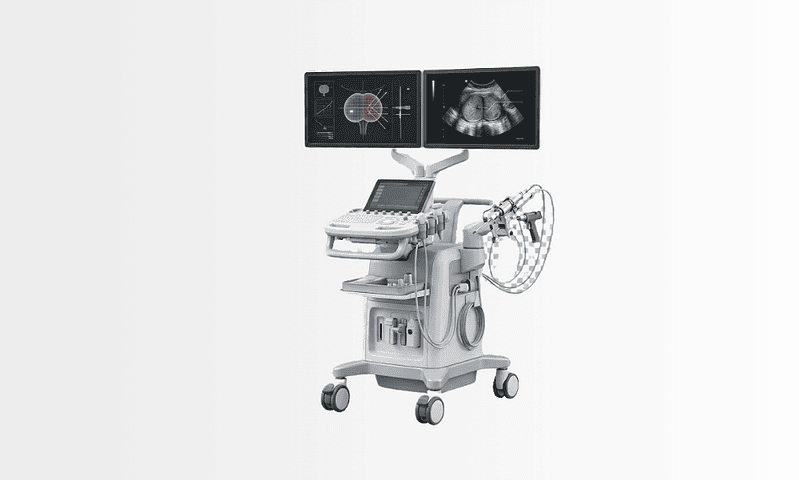
HIFU destroys targeted prostate tissue with heat, without cutting and without radiation. It belongs to the family of ablation therapy techniques: treatments that destroy diseased tissue in place rather than removing it surgically. Because the energy source sits in the rectum, directly behind the prostate, the sound waves travel only a very short distance to reach the gland. High-resolution imaging on the same probe lets the physician watch the prostate throughout the procedure, confirm positioning and deliver each treatment pulse to a specific point. The ablated tissue is then gradually broken down and remodelled by the body over the following weeks, while surveillance confirms what the treatment achieved.
How is focal therapy different from whole-gland HIFU?
Focal therapy for prostate cancer treats only the affected zone of the gland, whereas whole-gland HIFU ablates most or all of the prostate tissue. Depending on where the cancer sits and how far it extends, a focal plan may cover a single lesion, one side of the prostate, a hemi-ablation, or a defined region such as the anterior or posterior gland. The purpose of the focal approach is not simply to offer a “smaller” treatment. It is to match treatment intensity to disease burden: preserving untreated prostate tissue when it is considered oncologically reasonable to do so. Because the structures that control urinary continence and erectile function lie very close to the prostate, limiting the treatment volume may reduce the risk of side effects in selected men, although no treatment is free of risk. That last point deserves emphasis. Focal HIFU is an active cancer treatment with real trade-offs, not a shortcut.
Is prostate HIFU the same as the cosmetic HIFU used on the face?
No. The same physical principle, focused ultrasound, is applied at shallow depth in aesthetic clinics to tighten facial skin, which is why questions such as “is HIFU as good as Botox” appear alongside searches for prostate treatment. Cosmetic HIFU and prostate HIFU share a name and nothing else: different devices, different depths, different training and an entirely different medical purpose. Everything on this page refers to HIFU as a treatment for localised prostate cancer, performed in hospital under anaesthesia by urological specialists.
Why Precision Matters When You Are Weighing Prostate Cancer Treatment
A prostate cancer diagnosis usually brings two concerns at once. The first is clear and urgent: how to treat the cancer effectively. The second is more personal: how treatment may affect daily life afterwards, urinary control, sexual function, energy, work, travel and confidence. The conversation around HIFU and focal therapy usually begins exactly here, in the space between those two concerns.
Prostate cancer is not one single disease. Some tumours grow slowly and may safely be monitored for years. Others are more likely to progress and need active treatment. Between these two groups sits a set of patients who may benefit from a tissue-sparing strategy: one that treats the cancer focus while preserving as much normal prostate as possible. HIFU prostate cancer treatment was developed for precisely this middle ground, and for the right person it can be an important option.
Men considering HIFU often want to know whether a less invasive option is genuinely serious and evidence-based, or whether choosing focal therapy means accepting unnecessary oncological risk. These are reasonable questions, and they do not have a universal answer. The answer depends on the biology and location of the tumour, the results of modern imaging and biopsy, and a careful review by experienced urologists, radiologists, pathologists and oncology specialists. A sound decision starts with getting the diagnosis right, understanding the trade-offs plainly, and building a treatment plan around your disease and your priorities, not around a preference for any single technology.
Who May Be a Candidate for Prostate HIFU?
Men who explore HIFU usually arrive at it after an elevated PSA blood test, an abnormal prostate MRI, or a biopsy showing localised prostate cancer. Some have no symptoms at all, which is common in early disease. Others have urinary symptoms that prompted the evaluation, although urinary symptoms alone do not necessarily indicate cancer and are often caused by benign enlargement of the prostate.
Typical situations that lead to a discussion of focal therapy include:
- A biopsy showing localised prostate cancer that appears confined to one region of the gland
- An MRI identifying a suspicious lesion that can be correlated with the biopsy findings
- A wish to actively treat known cancer while trying to reduce the impact on urinary continence and sexual function
- A wish to avoid or defer more extensive treatment when that is clinically appropriate
- Concern that active surveillance may no longer be the best choice because of tumour features or change over time
What does the diagnostic workup involve?
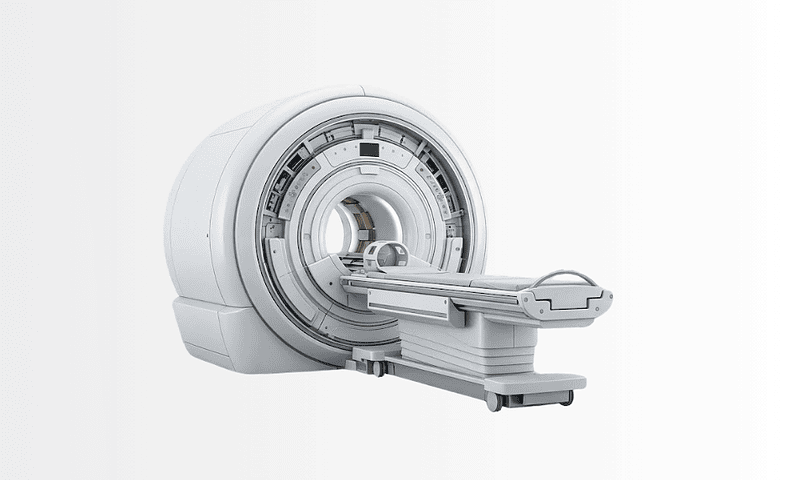
Diagnosis and treatment planning rest on more than one test. A modern prostate cancer workup commonly includes PSA testing, a digital rectal examination, multiparametric MRI, and targeted plus systematic prostate biopsy. The MRI defines tumour size, location and relationship to surrounding structures. The biopsy confirms the diagnosis and establishes the grade and pattern of the cancer cells. In some cases, additional imaging is used to check whether the disease remains confined to the prostate. HIFU is usually considered for localised prostate cancer, cancer confined to the gland with no evidence of spread elsewhere. It may also be discussed in some recurrent cases after prior therapy, but that requires a particularly careful assessment, because earlier treatment changes both the anatomy and the risk profile.
Which clinical situations does focal HIFU address?
The strongest role for focal HIFU is in men with a limited number of cancerous areas, especially when one dominant lesion can be clearly identified on both imaging and biopsy. Clinical indications may include:
- Localised, clinically significant prostate cancer confined to a targetable part of the gland
- Unilateral disease, cancer mainly on one side of the prostate
- Visible MRI lesions that match biopsy-confirmed cancer
- Selected intermediate-risk cancers where focal treatment is considered oncologically reasonable
- Some cases of recurrent localised disease after prior radiation or other treatment, if the anatomy and risk profile allow
When is HIFU not the right choice?
Not every patient with prostate cancer is a candidate, and stating this plainly matters more than any sales point. Focal HIFU works when the cancer is visible and localisable, when the extent of disease has been mapped carefully, and when the clinical goal is to treat a defined region rather than the whole gland. When multiple significant lesions are scattered through the prostate, when the tumour extends beyond the prostate capsule, or when there is evidence of nodal or distant spread, focal HIFU is generally not the preferred approach. In those settings, surgery, radiation-based treatment, systemic options such as hormone therapy, or a combination approach may be needed to achieve appropriate cancer control.
Equally important: not every man with localised prostate cancer needs immediate treatment at all. Some low-risk cancers are appropriately managed with active surveillance, regular PSA tests, repeat imaging and follow-up biopsy when needed. Focal therapy enters the conversation when treatment is justified but an organ-preserving strategy may still be feasible. Suitability depends on staging and risk assessment, not on preference alone. The question is never only whether HIFU is technically possible; it is whether HIFU is the right oncological choice for you.
Is HIFU Effective for Prostate Cancer?
In appropriately selected men with localised disease, HIFU can destroy the targeted cancer tissue, and it is an established option in focal therapy programmes at specialist centres. Its effectiveness, however, is inseparable from patient selection. When the tumour is well mapped, confined and targetable, the treatment can do what it is designed to do. When disease is more extensive than imaging suggested, focal treatment alone may not be enough, which is exactly why structured follow-up is built into the pathway rather than added as an afterthought.
What is the success rate of HIFU for prostate cancer?
There is no single success rate that honestly applies to every patient, and this page deliberately quotes none. Published results vary widely depending on how success is defined, absence of significant cancer on follow-up biopsy, freedom from further treatment, PSA behaviour, and on which patients were treated in each study. Tumour grade, lesion size, location and the quality of pre-treatment imaging all shift the picture. What can be said plainly: outcomes are strongest when selection is strict, imaging and biopsy are of high quality, and follow-up is rigorous. A responsible clinical team will discuss expected outcomes with you in the context of your own biopsy grade, MRI findings and PSA history, rather than quoting one headline figure.
What is the disadvantage of HIFU?
The main disadvantage is uncertainty about untreated tissue. Because part of the prostate remains in place, clinically significant cancer can persist or later appear elsewhere in the gland, which is why HIFU commits you to ongoing surveillance: PSA monitoring, repeat MRI and often follow-up biopsy. Some men will eventually need a second focal treatment or a whole-gland therapy. Other limitations are practical: HIFU depends on the lesion being visible and reachable, so anterior lesions in very large glands, calcifications that block sound waves, or unfavourable rectal anatomy can make it unsuitable. Side effects, while generally less burdensome than after whole-gland treatment in selected men, still occur: temporary urinary symptoms, possible effects on erectile function, and, less commonly, stricture or infection. Finally, HIFU is a newer option than surgery or radiotherapy, so long-term comparative evidence is still maturing. None of this makes HIFU a poor treatment. It makes it a treatment that must be chosen for the right reasons, with clear counselling beforehand.
How Prostate HIFU Is Performed, Step by Step
Pre-treatment evaluation and planning
The process begins with confirming that focal therapy is appropriate. This usually means a review of your PSA history, the pathology from your biopsy samples, your prostate MRI, and the distribution of disease within the gland. In many centres these details are reviewed in a multidisciplinary setting or specialist board, so the treatment plan reflects more than one expert opinion. Doctors also evaluate prostate size, urinary symptoms, prior procedures, rectal anatomy, current medicines and overall fitness for anaesthesia. If the prostate is very large or urinary obstruction is significant, additional preparation may sometimes be recommended before HIFU. For patients travelling for treatment, it helps when imaging review, pathology confirmation, consultation and scheduling are organised in advance, so the visit is coordinated rather than improvised.
Before the procedure
You will receive instructions about eating and drinking before anaesthesia. Decisions about regular medicines, including blood thinners, are made by your treating doctor as part of anaesthesia planning, never on your own. Pre-procedure tests may include blood work, urine testing and an anaesthesia assessment. The care team explains which area of the prostate will be treated, which functional risks apply in your case, and what follow-up will involve after you return home. Most HIFU procedures are performed under general or spinal anaesthesia; the aim is to keep you comfortable and completely still so the energy can be delivered accurately. Because the prostate lies just in front of the rectum, the procedure is performed without external incisions.
During the procedure
Once the anaesthesia takes effect, treatment follows a deliberate sequence:
- You are positioned carefully and the treatment probe is placed in the rectum, providing both real-time ultrasound imaging and the focused energy source.
- The physician maps the treatment zone using your previously reviewed MRI and biopsy findings alongside the live imaging.
- Focused ultrasound energy is delivered in small, controlled units, each pulse ablating a precise point of tissue.
- The focal point is moved step by step until the planned area, the known lesion plus its safety margin, has been covered.
- Real-time monitoring confirms positioning and treatment progress throughout.
The technology matters here because it underwrites the precision. High-resolution imaging defines the anatomy; computer-assisted planning shapes the ablation zone around the lesion’s location; the thermal effect is created internally, with no surgical wound. In focal therapy the planning is highly deliberate: the intention is to ablate the cancer-bearing area while sparing uninvolved prostate and the nearby structures that govern continence and erectile function, as far as the disease allows. Procedure time varies with prostate size, lesion size and whether a small focal zone or a larger hemi-ablation is planned. In general, expect the treatment to take a few hours including preparation and recovery from anaesthesia.
Immediately after treatment
You are monitored as the anaesthesia wears off. Most men describe mild discomfort rather than severe pain, though experiences differ. A urinary catheter is commonly placed for a short period, because swelling in the treated prostate can temporarily affect urination; it may remain for several days depending on the extent of treatment and your baseline urinary function. Many patients go home the same day or after a short observation period. If you have travelled for treatment, staying nearby briefly before flying home is often sensible, so the team can confirm early recovery and catheter management before discharge.
Recovery and follow-up
Recovery after focal HIFU is generally faster than after major surgery, but it is a process, not a single day. In the first days you may notice temporary urinary frequency, urgency, mild burning, light blood in the urine, perineal discomfort or fatigue. These effects are usually manageable with medication prescribed by your team, hydration and time.
Follow-up is not an optional extra; it is half of the treatment. Because part of the prostate remains, surveillance continues after HIFU. PSA is monitored over time, though PSA alone does not tell the whole story, because untreated prostate tissue still produces it. Follow-up therefore usually includes repeat MRI and, in many protocols, a follow-up biopsy to assess the treated area and to check for significant disease elsewhere in the gland. This surveillance-based model is one of the most important ideas to absorb before choosing focal therapy. HIFU is not “set it and forget it”. It is active treatment followed by structured reassessment. If residual or recurrent disease is found, the options remain broad: further focal treatment, whole-gland therapy, surgery, radiation or continued surveillance, depending on what the findings show. Other focal technologies, such as cryotherapy, exist within the same treatment philosophy, and in some recurrent situations one modality may be preferred over another.
Why Acting Early Can Matter
Localised prostate cancer often gives you time to think carefully, and you should use it. But time is not unlimited, and delay is not always harmless. While a tumour is still confined and clearly mapped, it may be suitable for focal treatment. If it grows, becomes multifocal or extends beyond the prostate capsule, the choices narrow and the opportunity for tissue-sparing therapy can be lost.
Timing also affects the quality of the decision itself. Some men remain appropriate for active surveillance for years. Others show changes on PSA, MRI or repeat biopsy that indicate a higher likelihood of progression. Acting at the right moment is not about rushing into treatment; it is about following a disciplined diagnostic pathway and intervening when the balance shifts from monitoring to treating. The potential costs of postponing necessary treatment are concrete: local tumour progression, higher-grade disease identified later, loss of eligibility for focal treatment, and a greater likelihood that broader therapy will eventually be needed. Early, accurate evaluation is what separates cancers that can safely be watched from cancers that should be treated while still localised.
Potential Advantages for the Right Candidate
For appropriately selected men, prostate HIFU offers several potential advantages. Read the right-hand column carefully, each benefit carries a condition, and that is deliberate.
| Benefit | What It Means for You |
|---|---|
| Targeted treatment | The cancer-bearing part of the prostate is treated directly, while uninvolved tissue may be preserved when clinically appropriate. |
| Minimally invasive approach | No surgical incision is typically required, which may reduce the immediate recovery burden compared with more invasive procedures. |
| Potential function preservation | By limiting the treatment volume, focal therapy may help reduce the impact on urinary continence and sexual function in selected patients, though risks remain. |
| Short hospital stay | Many patients are discharged the same day or after brief observation, which can make travel planning easier. |
| Repeatable and flexible care pathway | If follow-up shows residual or recurrent disease, further focal treatment or other established therapies may still be possible. |
Recovery Timeline After Prostate HIFU
Recovery usually progresses in stages, and knowing what to expect makes the experience less uncertain. Individual timelines vary, treat this as orientation, not a schedule.
| Time Period | What Patients Can Expect |
|---|---|
| Day 1 | Monitoring after anaesthesia, mild discomfort or urinary irritation, and discharge planning. A catheter is often in place temporarily. |
| First week | Gradual improvement in urinary symptoms, catheter removal if planned, light activity, and avoidance of strenuous exertion unless your doctor advises otherwise. |
| First month | Most patients return to many normal routines. Urinary symptoms usually continue to settle, though recovery speed varies. |
| Longer term | Ongoing PSA monitoring, follow-up imaging, and sometimes repeat biopsy to confirm the treatment effect and detect any clinically significant remaining or recurrent cancer. |
What Influences Outcomes and a Good Result
The most important factor is patient selection. HIFU works best when the cancer is localised, visible and accurately mapped. A good result depends on understanding not only where the known lesion sits, but whether additional clinically significant disease may be hiding elsewhere in the prostate. That is a diagnostic question before it is a treatment question.
Tumour grade, size and location all matter. Lesions near critical structures may still be treatable, but planning becomes more delicate, because the physician must balance cancer control against functional preservation. Prostate size, baseline urinary function, prior prostate procedures and overall health also influence both the technical plan and the pace of recovery.
The quality of imaging and biopsy matters as much as the treatment itself. Multiparametric MRI, targeted biopsy techniques, expert pathology review and structured follow-up together determine how accurate a focal therapy decision can be. In modern practice, HIFU should be understood as part of a diagnostic-and-treatment pathway within comprehensive cancer treatment, not as an isolated procedure bought off the shelf.
Expectations shape satisfaction too. Men who understand that focal therapy aims to control localised cancer while preserving function where possible tend to make confident decisions and cope well with the surveillance that follows. Men who expect zero side effects, zero follow-up, or certainty that no further treatment will ever be needed are set up for disappointment, even when the treatment itself was clinically appropriate and technically well executed. Honest counselling before treatment is not a formality; it is part of what makes the outcome good.
Insurance, Coverage and Availability
Beyond the clinical questions, most men researching HIFU quickly run into practical ones: who pays, and where the treatment is actually performed. Both answers vary by country, so here is the honest shape of each.
Is HIFU for prostate cancer covered by insurance?
Coverage varies considerably by country, insurer and policy. In some health systems, HIFU for localised prostate cancer is reimbursed under defined conditions; in others it is classed as a newer or selectively funded technology, and approval depends on the clinical indication and sometimes on prior authorisation. Private policies differ in how they treat focal therapy relative to surgery or radiotherapy. Before scheduling treatment anywhere, ask your insurer directly whether HIFU for your specific diagnosis is covered, what documentation is required, and whether pre-approval is needed. Put the answer in writing.
Does health insurance cover HIFU for prostate cancer?
Insurers’ positions on HIFU have evolved over time, and coverage in practice can depend on the clinical indication, the treatment setting and how the individual claim is assessed. There is no substitute for confirming your own situation: check with your insurer or national scheme, and with the treating facility’s billing office, before committing to a date. Patients treated abroad should also note that domestic public insurance schemes generally do not reimburse treatment performed outside their own system, so the funding question needs answering before travel, not after.
Where can I get HIFU treatment for prostate cancer?
HIFU for prostate cancer is performed at specialist urology and oncology centres in many countries, typically in hospitals that combine advanced prostate imaging, targeted biopsy capability and a formal focal therapy programme. Availability is uneven: not every hospital offers it, and not every centre that owns the device runs the full diagnostic pathway around it. When comparing centres, the questions worth asking are less about the machine and more about the process, how candidates are selected, whether cases are reviewed by a multidisciplinary team, and how follow-up is structured after you go home. Acibadem hospitals provide prostate HIFU within this kind of structured pathway, alongside the surgical, radiation-based and systemic alternatives, which matters because the right recommendation is sometimes not HIFU at all.
How Prostate HIFU Care Is Organised at Acibadem
For a treatment where selection and follow-up carry as much weight as the procedure itself, the way care is organised matters. At Acibadem, prostate cancer care is typically built around experienced urologists working with radiology, pathology, anaesthesia, oncology and other relevant specialists as needed. This multidisciplinary model is particularly valuable in focal therapy, where suitability depends on careful joint interpretation of MRI, biopsy findings, PSA history and your functional priorities.
Technology supports each stage: modern imaging to localise disease, procedural imaging to guide the treatment, and refined planning tools to define the ablation zone with precision. The benefit to you is practical rather than promotional, treatment decisions rest on detailed anatomical information instead of a one-size-fits-all protocol.
International patient teams help with the practicalities that surround treatment abroad: reviewing medical records ahead of a visit, coordinating appointments and imaging into a compact schedule, interpreter support, and planning the return home and remote follow-up. These services reduce friction; they do not replace the medical judgement at the centre of the process.
Most tellingly, plans are personalised in both directions. Some men who ask about HIFU learn that active surveillance is the better option for now. Others are advised that surgery or radiation would offer more appropriate cancer control for their disease. That willingness to recommend something other than the treatment you asked about is a sign of a serious programme: define the disease carefully first, then match the approach to the clinical picture and to your own goals.
Making the Decision
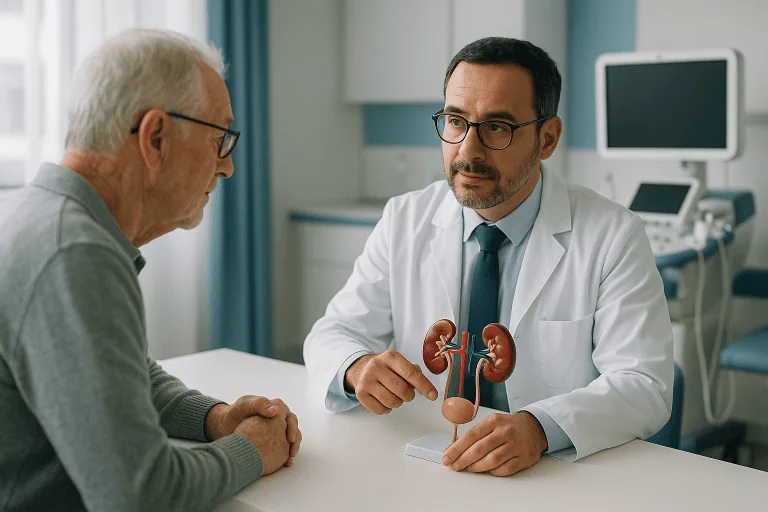
If you are weighing prostate HIFU, the decision ultimately rests on a small number of concrete things: your PSA history, your MRI, your biopsy pathology, your baseline urinary and sexual function, and what you want treatment to protect. For the right candidate, focal HIFU offers a meaningful balance between active cancer control and preservation of function, accepted together with a commitment to structured surveillance afterwards. For others, a different strategy is simply safer or more effective, and choosing it is not a failure of nerve but a correct reading of the evidence. Whatever direction you take, insist on the same standard everywhere: precise diagnosis first, honest discussion of trade-offs second, and a treatment plan built around your disease rather than around any single technique.
Preparation
- Patients usually undergo urologic evaluation, imaging, biopsy review, and routine blood tests before treatment. Your doctor may advise stopping certain medications, fasting before anesthesia, and arranging transport home. A bowel preparation or catheter planning may also be discussed depending on the case.
Aftercare
- Mild urinary symptoms, temporary catheter use, and short-term discomfort can occur after treatment. Follow-up usually includes PSA monitoring, imaging, and repeat assessment to check treatment response. Patients should follow hydration, activity, and medication instructions closely during recovery.
Frequently Asked Questions
What is Prostate HIFU focal therapy and how does it work?
Prostate HIFU, or high-intensity focused ultrasound, is a minimally invasive treatment that uses targeted ultrasound energy to heat and destroy selected prostate tissue. In focal therapy, the aim is to treat only the cancerous area while preserving as much healthy prostate tissue as possible. This approach may help reduce side effects compared with whole-gland treatments. At Acibadem, urology specialists evaluate imaging, biopsy findings, and overall health to decide whether focal HIFU is suitable for you.
Who is a good candidate for prostate HIFU focal therapy?
Prostate HIFU focal therapy is often considered for men with localized prostate cancer confined to a specific part of the prostate. Suitability depends on factors such as PSA level, MRI findings, biopsy results, prostate size, previous treatments, urinary symptoms, and general health. It is not the best option for every patient. A personalized assessment by Acibadem urology specialists helps determine whether focal HIFU matches your cancer characteristics and treatment goals.
Is HIFU better than surgery or radiotherapy for prostate cancer?
HIFU is not automatically better or worse than surgery or radiotherapy; it is simply different and may suit certain patients well. Focal HIFU is designed to target a limited area, which may help preserve urinary and sexual function in selected cases. However, surgery or radiotherapy may be more appropriate depending on cancer extent and long-term treatment goals. Acibadem specialists compare all suitable options with you and recommend a personalized plan based on your diagnosis.
What are the benefits of focal HIFU for prostate cancer?
Potential benefits of focal HIFU include a minimally invasive approach, no surgical incision, shorter hospital stay, and faster recovery compared with more extensive treatments. Because only the affected area is treated, some men may experience fewer side effects related to urinary control and sexual function. It can also be repeated or followed by other treatments if needed in some cases. At Acibadem, each patient receives an individualized evaluation to weigh these benefits against possible limitations.
What are the risks and side effects of prostate HIFU treatment?
Like any prostate cancer treatment, HIFU can cause side effects and complications. These may include temporary urinary burning, urgency, frequency, difficulty urinating, blood in the urine, pelvic discomfort, urinary tract infection, and swelling after the procedure. Some men may also experience changes in erectile function or, less commonly, urinary leakage. The exact risk profile depends on the treated area and your baseline health. Acibadem specialists explain expected side effects clearly before treatment planning begins.
How long does the HIFU procedure take and will I need to stay in hospital?
The HIFU procedure usually takes a few hours, although exact timing depends on prostate size, the treatment area, and whether additional steps are needed. It is commonly performed under anesthesia so you remain comfortable. Many patients stay only a short time in the hospital, and some are discharged the same day or the following day depending on recovery. Your Acibadem care team will tell you what to expect based on your medical condition and travel plans.
What is recovery like after focal HIFU, and when can I return to normal activities?
Recovery after focal HIFU is often quicker than after major prostate surgery, but each patient heals at a different pace. You may go home with a urinary catheter for a short period, and mild urinary symptoms can occur during the first days or weeks. Many men return to light daily activities fairly soon, while strenuous exercise should wait until the doctor advises. Acibadem specialists provide personalized aftercare instructions, including travel timing for international patients.
Will prostate HIFU affect sexual function or urinary control?
One reason some patients consider focal HIFU is the possibility of preserving sexual and urinary function better than with whole-gland treatments. However, outcomes vary depending on where the tumor is located, how much tissue needs treatment, age, baseline erectile function, and urinary health before the procedure. Some men notice little change, while others may develop temporary or longer-lasting symptoms. A personalized assessment at Acibadem helps clarify your individual risks and likely functional outcomes.
Can prostate cancer come back after HIFU, and what follow-up is needed?
Yes, prostate cancer can persist or recur after focal HIFU, which is why careful follow-up is essential. Monitoring usually includes PSA tests, prostate MRI, symptom review, and sometimes repeat biopsy to assess the treated and untreated areas. Follow-up schedules are tailored to your cancer features and response to treatment. If needed, additional treatment options may still be available later. At Acibadem, specialists create a structured follow-up plan to monitor results closely and guide next steps.
Why do international patients choose Turkey and Acibadem for prostate HIFU focal therapy?
International patients often choose Turkey for advanced medical care, experienced specialists, and coordinated treatment planning. At Acibadem, prostate cancer care involves modern imaging, pathology review, and multidisciplinary urology expertise to determine whether focal HIFU is appropriate. Patients also value support with appointments, travel organization, and communication in an international setting. Before recommending treatment, Acibadem specialists perform a personalized assessment to confirm diagnosis, discuss alternatives, and create a care plan suited to your needs.
Medically reviewed by the Acıbadem International Medical Board September 13, 2026
See our medical review board →
Update history
- PublishedJuly 20, 2026
- Medical review approvedSeptember 13, 2026
- Last content updateSeptember 12, 2026