Robotic Heart Surgery
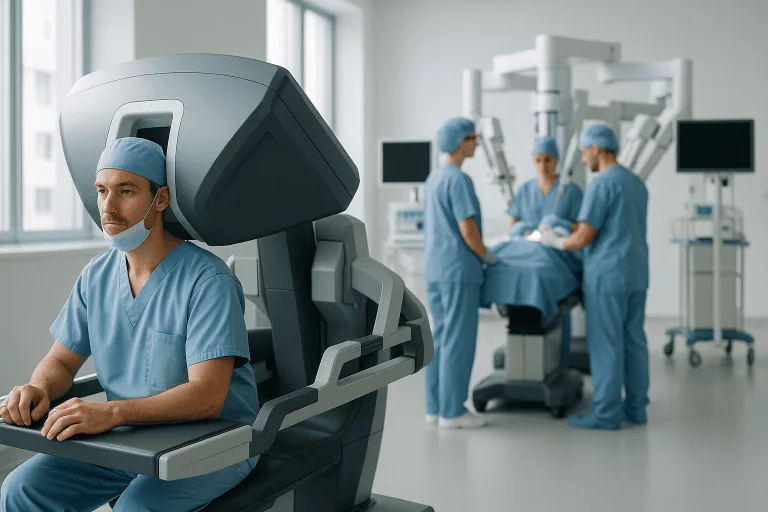
Robotic heart surgery is a minimally invasive technique in which the surgeon operates through several small incisions in the side of the chest using robotic arms and a magnified 3D camera. It…
Quick answer
Robotic heart surgery is a minimally invasive approach in which a surgeon controls robotic instruments through small incisions between the ribs instead of opening the breastbone. It is used mainly for mitral valve repair, single-vessel bypass, and closing holes in the heart. Recovery is often quicker, but not every patient or condition is suitable.
What is robotic heart surgery?
Robotic heart surgery is a form of minimally invasive heart surgery in which the surgeon operates through a few small incisions (cuts) in the side of the chest instead of opening the breastbone. The surgeon sits at a console a short distance from the patient and controls robotic arms that hold tiny instruments and a high-definition three-dimensional camera. The robot does not act on its own; every movement is made by the surgeon in real time. You may also see the terms robotic cardiovascular surgery or robotic surgery for heart conditions used to describe the same approach.
Traditional open heart surgery usually requires a sternotomy, which means dividing the breastbone to reach the heart. Robotic techniques aim to avoid this by working between the ribs. The instruments can rotate and bend more than a human wrist, and the magnified camera view helps the surgeon see fine structures inside the heart.
Conditions and procedures for which robotic heart surgery is used include:
- Robotic mitral valve repairfixing a leaking mitral valve (the valve between the two left chambers of the heart) so that blood no longer flows backward.
- Robot bypass surgerya form of coronary artery bypass grafting, in which a healthy blood vessel is used to route blood around a blocked heart artery, most often on the front of the heart.
- Closure of an atrial septal defect, which is a hole between the two upper chambers of the heart.
- Removal of certain benign (non-cancerous) heart tumors, such as an atrial myxoma.
- Some procedures for atrial fibrillation, an irregular heart rhythm, including ablation (creating small scars to block abnormal electrical signals).
- Certain tricuspid valve repairs and other selected procedures.
In many hospital groups, robotic heart operations are performed by cardiac surgeons working within a dedicated robotic surgery program that also covers other specialties. At Acibadem, for example, these operations are managed by the cardiovascular surgery department in coordination with the robotic surgery unit.
Who is a candidate
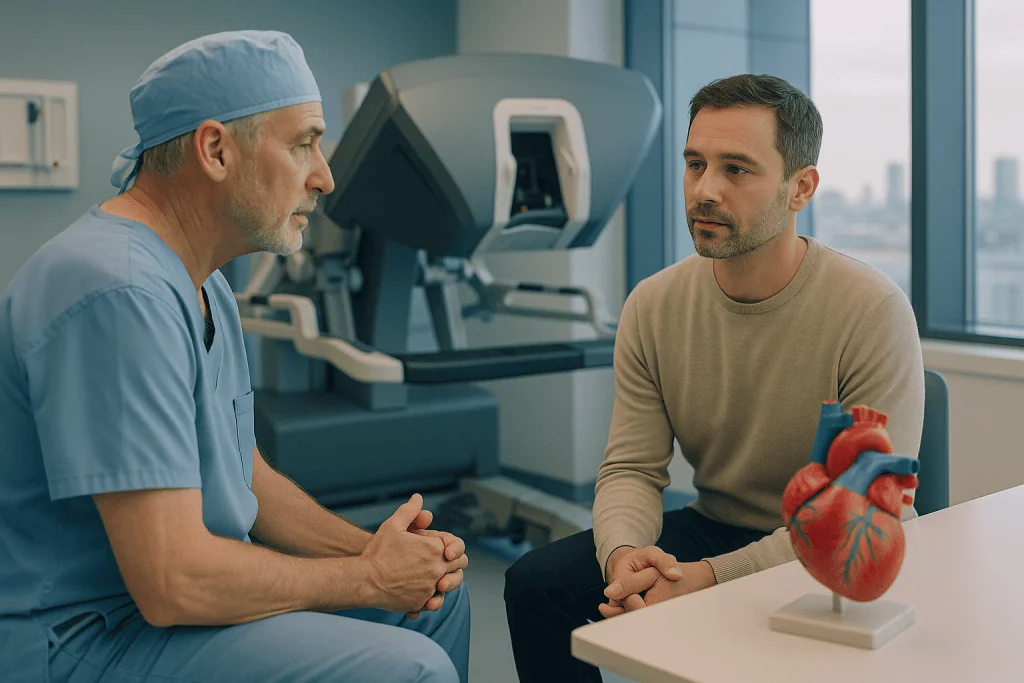
Not every heart problem, and not every patient, is suited to a robotic approach. A cardiac surgeon and a cardiologist (a heart specialist who does not operate) usually review your case together before recommending it.
You may be considered a candidate if:
- You have a single, well-defined problem such as isolated mitral valve disease, a hole between the heart chambers, or a blockage in one or two arteries that can be reached from the left side of the chest.
- Your heart function is reasonably preserved and your lungs are healthy enough to tolerate having one lung temporarily deflated during the operation.
- Your blood vessels in the groin are large and healthy enough to connect to the heart-lung machine, which takes over the work of the heart and lungs during surgery.
- You have not had extensive previous surgery or radiation to the chest that could cause scarring.
Robotic heart surgery is often not suitable when:
- Several different problems need to be fixed at the same time, for example a valve repair plus multiple bypass grafts.
- There is heavy calcium buildup in the aorta (the main artery leaving the heart) or in the vessels of the groin, which can make the connections to the heart-lung machine unsafe.
- Severe lung disease means you cannot safely breathe with one lung for a period of time.
- The heart is too weak or the situation is an emergency, such as a heart attack in progress, where speed matters more than incision size.
- Body shape or previous chest surgery makes it difficult to place the instruments correctly.
In these situations your surgeon may recommend conventional open surgery, a different minimally invasive technique, or a catheter-based treatment instead. The decision is individual and depends on your test results.
How the procedure works
The steps below describe a typical robotic heart operation in plain language. Details vary depending on whether you are having robotic mitral valve repair, robot bypass surgery, or another procedure.
Before the operation
- You receive general anesthesia, which means you are fully asleep and feel nothing. A breathing tube is placed, often one that allows the anesthesiologist to ventilate one lung at a time.
- A small ultrasound probe is placed in the esophagus (the food pipe) so the team can watch the heart from the inside during surgery.
- You are positioned on your back, slightly turned, with the right or left side of the chest raised depending on the procedure.
During the operation
- The surgeon makes three to five small incisions between the ribs. One slightly larger incision, sometimes called a working port, allows sutures and small devices to be passed in and out.
- Thin tubes are inserted through a small incision in the groin and connected to the heart-lung machine, which keeps blood circulating while the heart is stopped or slowed. For some bypass operations the heart is kept beating and the machine is not needed.
- The robotic arms are attached to the ports. The surgeon then moves to the console, views the heart in magnified 3D, and controls the instruments with hand and foot controls. A second surgeon or assistant stays at the operating table to change instruments and pass materials.
- The repair itself is performed: for example, reshaping the mitral valve and adding a support ring, closing a septal defect with stitches or a patch, or sewing a bypass vessel onto a heart artery.
- The team checks the repair with the internal ultrasound, restarts the heart if it was stopped, and removes the heart-lung machine tubes.
- Small drainage tubes are left in the chest to remove fluid and air, and the incisions are closed.
After the operation
- You wake up in an intensive care unit or a specialized recovery area. The breathing tube is usually removed within hours once you are awake and breathing well.
- Heart rhythm, blood pressure, and oxygen levels are monitored continuously for the first day or so.
- Drainage tubes are typically removed within one to three days, and you are encouraged to sit up and walk short distances early to reduce the risk of lung complications and blood clots.
The operation itself often takes three to five hours, though setup and preparation add time. Your family should expect the whole process, from entering the operating room to arriving in the recovery area, to take longer than the surgery itself.
Preparation for robotic heart surgery
Preparation usually begins several weeks before the operation. Because the robotic approach depends on your anatomy, testing is often more detailed than for open surgery.
- Imaging: You will typically have an echocardiogram (an ultrasound of the heart), and often a CT scan of the chest, abdomen, and pelvis to check the aorta and the groin vessels that will be used for the heart-lung machine. A coronary angiogram, which is an X-ray of the heart arteries using dye, may also be needed.
- Lung and general health checks: Breathing tests, blood tests, and an assessment of kidney and liver function help the team confirm you can safely tolerate one-lung ventilation and anesthesia.
- Medications: Blood thinners such as warfarin, and antiplatelet drugs such as clopidogrel, are often paused for several days before surgery on your doctor’s instructions. Never stop heart medicines on your own; your cardiologist will tell you exactly which ones to take on the morning of surgery.
- Smoking and alcohol: Stopping smoking, ideally several weeks in advance, lowers the risk of lung and wound problems. Reducing alcohol is also usually advised.
- Dental check: Before valve surgery, many centers ask for a dental review because untreated gum or tooth infection can raise the risk of infection on a repaired valve.
- Fasting: You will be asked not to eat or drink for a set number of hours before the operation, usually from midnight the night before.
- Practical planning: Arrange for someone to help at home for the first one to two weeks, and prepare a list of your medications and allergies to bring to the hospital.
You will meet the anesthesiologist before surgery to discuss your medical history and any past reactions to anesthesia.
Recovery and aftercare
Recovery after robotic heart surgery is often faster than after open surgery because the breastbone is not divided, but it is still major surgery on the heart and the body needs time to heal.
- Hospital stay: Many patients go home after three to five nights, depending on the procedure and how quickly heart rhythm and breathing settle.
- First two weeks: Soreness in the side of the chest and groin is common and is usually managed with prescribed pain medicine. Some people feel tired and short of breath with mild effort. Walking a little more each day is encouraged.
- Two to four weeks: Many patients return to light daily activities and desk work. Driving is typically allowed once you are off strong pain medicine and can turn and brake comfortably, often after about two weeks, but follow your surgeon’s advice.
- Four to eight weeks: Heavier exercise and lifting are usually reintroduced gradually. Because the breastbone is intact, many people can lift and use their arms sooner than after open surgery, but the chest wall muscles still need time.
Other points to expect:
- You will usually be prescribed medicines such as aspirin or a short course of a blood thinner, and sometimes drugs to control heart rhythm. Take these exactly as directed.
- A structured cardiac rehabilitation program, which combines supervised exercise with education, is often recommended and can support a safer return to activity.
- Keep the incisions clean and dry as instructed. Small dressings are typically removed within a few days; stitches are often dissolvable.
- Follow-up visits and a repeat echocardiogram are commonly scheduled to confirm the repair is working well.
- Numbness or tingling around the incisions and in the side of the chest can persist for weeks or months and usually improves with time.
Risks and side effects
All heart operations carry risk, and robotic heart surgery shares most of the risks of conventional surgery while adding a few that relate to the approach itself. Your surgeon will discuss your personal risk, which depends on age, heart function, and other conditions.
General risks include:
- Bleeding that requires transfusion or a second operation.
- Infection at the incisions, in the chest, or on a repaired valve.
- Irregular heart rhythms, especially atrial fibrillation, in the days after surgery. This is common and often temporary.
- Stroke, heart attack, or kidney injury, particularly in people with existing vascular disease.
- Fluid or air around the lung that may need a drainage tube.
- Reactions to anesthesia.
Risks that are more specific to the robotic approach include:
- Conversion to open surgery: In a small proportion of cases the surgeon cannot complete the operation safely through the small incisions and must open the chest. This is a safety measure, not a failure.
- Groin vessel injury: Because the heart-lung machine is connected through the groin, the artery or vein there can be damaged or narrowed, and rarely the leg’s blood supply can be affected.
- Aortic dissection: A tear in the wall of the aorta is rare but serious and is one reason the aorta is imaged carefully beforehand.
- One-lung ventilation problems: The temporarily collapsed lung can be slow to reopen, causing breathlessness or pneumonia.
- Nerve irritation: Pain or numbness along a rib can last longer than the incisions take to heal.
- Incomplete repair: Occasionally a valve repair leaks more than expected and further treatment is needed.
Team experience matters. Robotic heart surgery involves a steep learning curve, and outcomes are generally better in centers where the surgical team performs these operations regularly.
Results and outlook
The evidence to date generally shows that, in carefully selected patients treated by experienced teams, robotic heart surgery achieves results comparable to conventional open surgery for the same problem. For robotic mitral valve repair, studies consistently report high rates of successful repair with durable results over the years of follow-up available so far. For robot bypass surgery of a single artery, graft function appears similar to that achieved with open techniques.
Where robotic surgery tends to differ is in the recovery experience. Patients commonly report less pain, less blood loss, a shorter hospital stay, smaller scars, and a quicker return to work and normal activity compared with a sternotomy. These advantages are most consistent for valve repair and septal defect closure.
Long-term outcome depends more on the underlying condition and on your general health than on the way the chest was entered. A repaired valve still needs regular monitoring, and a bypass graft does not cure coronary artery disease; controlling blood pressure, cholesterol, diabetes, and smoking remains essential. Your cardiologist will set a follow-up schedule and adjust medicines over time.
Cost considerations
This page does not provide prices, which vary widely between countries, hospitals, and individual cases. Understanding what drives the overall cost of robotic cardiovascular surgery can help you ask the right questions.
- Robotic system and disposables: The robotic instruments are single-use or have limited lifespans, and the equipment itself is costly to buy and maintain. This usually makes the operating room portion more expensive than open surgery.
- Implants and devices: A mitral valve repair ring, a closure patch, or other implanted materials add to the bill and vary by type.
- Hospital stay: Intensive care time and the number of nights on the ward are major cost drivers. Shorter stays after robotic surgery can partly offset the higher operating room cost.
- Pre-operative testing: CT scans, echocardiograms, angiography, and laboratory tests are typically billed separately.
- Surgeon and anesthesia fees: These depend on the complexity and duration of the procedure.
- Follow-up and rehabilitation: Clinic visits, repeat imaging, medications, and cardiac rehabilitation sessions continue for months after discharge.
- Complications: Any unplanned event, such as conversion to open surgery or a longer stay, increases total cost.
Insurance coverage for robotic techniques differs by policy and region, and international patients should ask for a written estimate that lists what is and is not included.
Frequently asked questions
Is robotic heart surgery safer than open heart surgery?
In appropriately selected patients and experienced hands, robotic heart surgery appears to be as safe as open surgery, with a lower risk of some complications related to dividing the breastbone, such as wound infection and prolonged pain. It is not automatically safer for everyone, because it introduces its own risks, including groin vessel injury and the possibility of needing to convert to open surgery. The safest option is the one that suits your anatomy and condition.
How long does robotic mitral valve repair take?
The operation itself often takes three to five hours, and the total time in the operating room is longer once anesthesia, positioning, and setup are included. Complex repairs can take longer. Your surgical team can give you a more specific estimate based on the details of your valve.
Can robot bypass surgery treat multiple blocked arteries?
Robot bypass surgery is most often used for one or two blockages on the front of the heart. When several arteries are blocked, surgeons may combine a robotic bypass with stents placed by a cardiologist, a strategy sometimes called a hybrid approach, or they may recommend conventional open bypass surgery. The choice depends on the location and number of blockages.
Does robotic surgery for heart conditions leave scars?
Yes, but they are small. Most patients have three to five incisions between the ribs on one side of the chest, each usually less than a few centimeters, plus a small incision in the groin. These typically fade over months. There is no long scar down the center of the chest.
How soon can I go back to work after robotic cardiovascular surgery?
Many people with desk-based jobs return within two to four weeks, while those with physically demanding work may need six to eight weeks or longer. Your recovery will depend on the specific procedure, your general health, and how you feel. Your surgeon and cardiac rehabilitation team can advise you.
Is the robot performing the surgery?
No. The robot is a tool that translates the surgeon’s hand movements into precise motions of small instruments inside the chest. It cannot make decisions or move on its own. A full surgical team, including a surgeon at the table, an anesthesiologist, and a perfusionist who runs the heart-lung machine, is present throughout.
Will I need blood thinners after robotic mitral valve repair?
Many patients take a blood thinner or aspirin for a period after valve repair, often for a few weeks to a few months, to reduce the risk of clots forming on the repaired valve or support ring. Long-term blood thinners are usually not required after a repair unless you have another reason for them, such as atrial fibrillation. Your cardiologist will decide based on your situation.
When to see a doctor
You should be assessed by a cardiologist or cardiac surgeon if you have been told you have a heart valve problem, a hole in the heart, or blocked heart arteries and you want to understand whether a robotic approach is an option. Symptoms that warrant specialist evaluation, whether or not you already have a diagnosis, include:
- Shortness of breath during activity or when lying flat.
- Chest pain, pressure, or tightness, especially with exertion.
- Palpitations, meaning a racing, pounding, or irregular heartbeat.
- Unexplained tiredness, dizziness, or fainting.
- Swelling of the ankles or legs.
- A heart murmur detected during a routine examination.
After robotic heart surgery, contact your surgical team promptly if you notice:
- Fever, or redness, warmth, swelling, or drainage from any incision.
- Increasing shortness of breath, a new cough, or difficulty lying flat.
- Rapid weight gain or new swelling of the legs, which can indicate fluid buildup.
- A persistently fast or irregular heartbeat.
- Pain, coldness, numbness, or color change in the leg on the side where the groin incision was made.
Seek emergency care immediately if you experience severe chest pain, sudden severe shortness of breath, fainting, signs of a stroke such as facial drooping, arm weakness, or slurred speech, heavy bleeding from an incision, or a sudden swelling in the groin. These can signal serious complications that need urgent treatment.
Preparation
- Expect detailed imaging, including an echocardiogram and usually a CT scan of the chest and groin vessels, plus breathing and blood tests. Blood thinners and some heart medicines may need to be paused on your doctor's instructions, and stopping smoking several weeks beforehand lowers lung and wound risks. A dental check is often requested before valve surgery. Fast as instructed and arrange help at home for the first one to two weeks.
Aftercare
- Walk a little more each day, keep incisions clean and dry, and take prescribed medicines, including any blood thinner, exactly as directed. Many patients return to light activity within two to four weeks, with heavier exertion reintroduced gradually over six to eight weeks. Attend follow-up visits and the repeat echocardiogram, and consider a cardiac rehabilitation program. Report fever, wound drainage, worsening breathlessness, leg swelling, or an irregular heartbeat promptly.
Medically reviewed by the Acıbadem International Medical Board September 8, 2026
See our medical review board →
Update history
- PublishedSeptember 8, 2026
- Medical review approvedSeptember 8, 2026
- Last content updateSeptember 8, 2026
References2
From the Acibadem Blog

Robotic Heart Surgery Recovery: Light Activity in Weeks and Full Exertion Over Two Months
Robotic heart surgery recovery time is usually shorter than recovery after open-chest surgery because the breastbone is left intact. Most people leave the hospital…

Why a Dental Check and a Chest CT Come Before Robotic Heart Surgery
A dental check before heart valve surgery looks for gum infection, abscesses and loose or decayed teeth, because bacteria from the mouth can enter…