Robotic Partial Nephrectomy
Robotic partial nephrectomy is a minimally invasive operation to remove a tumor from the kidney while leaving the healthy part of the organ in place. It is most often used for small…

Quick answer
Robotic partial nephrectomy is a minimally invasive operation that removes a kidney tumor while preserving the rest of the kidney. The surgeon controls small instruments through several tiny abdominal incisions under general anesthesia. It is mainly used for small kidney cancers, usually involves a one-to-three-night hospital stay, and full recovery often takes around four to six weeks.
What is robotic partial nephrectomy?
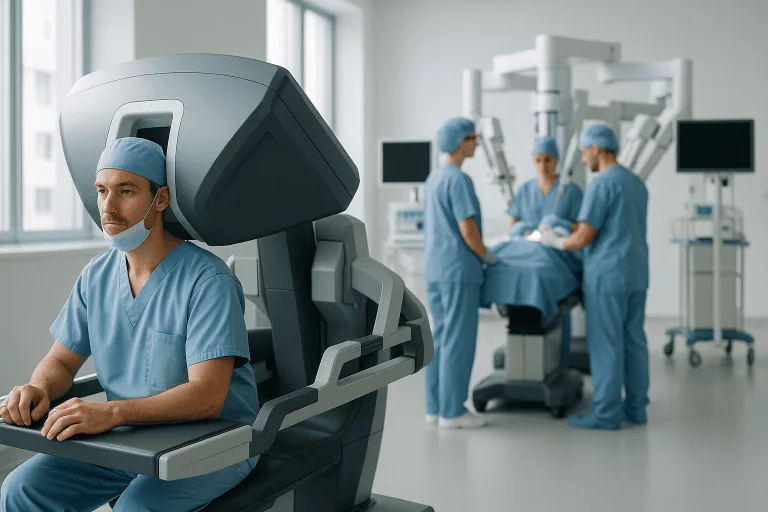
Robotic partial nephrectomy is an operation that removes a tumor from the kidney while leaving the rest of the kidney in place. “Nephrectomy” means surgical removal of kidney tissue, and “partial” means only part of the organ is taken out. “Robotic” describes how the operation is performed: the surgeon sits at a console and controls small instruments that are inserted through several tiny cuts in the abdomen. The robotic system does not operate on its own; it translates the surgeon’s hand movements into precise movements of the instruments inside the body.
This type of robotic kidney surgery is most often used for small or medium-sized kidney tumors. Many of these are kidney cancers, most commonly a type called renal cell carcinoma (cancer that starts in the lining of the kidney’s small filtering tubes). It is also sometimes used for tumors that turn out to be benign (not cancerous), such as an oncocytoma or an angiomyolipoma, because it is not always possible to tell before surgery whether a growth is cancer.
The main goal of a partial nephrectomy is to remove the tumor completely while preserving as much healthy, working kidney tissue as possible. Keeping more kidney tissue helps protect long-term kidney function, which matters for blood pressure control, waste filtering, and overall health. A robotic approach is one way of performing this operation; the same operation can also be done through a single larger incision (open surgery) or with standard laparoscopic (keyhole) instruments.
Who is a candidate for robotic kidney surgery
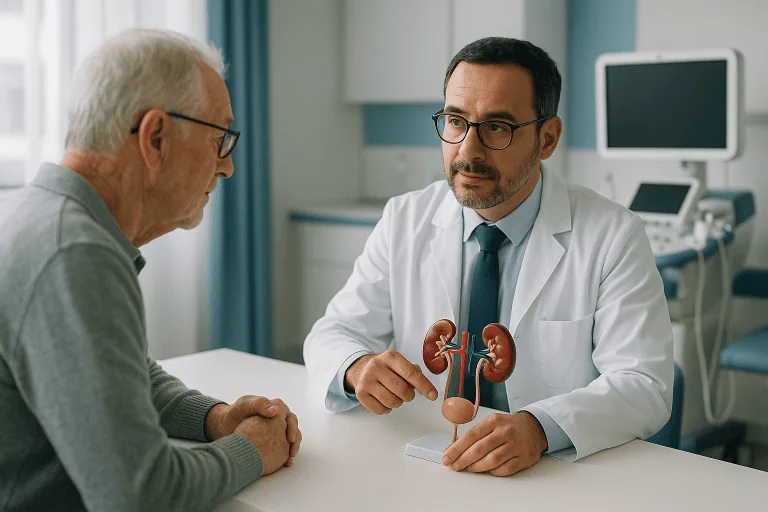
Your urologist (a surgeon who specializes in the kidneys, bladder, and urinary tract) will decide whether robotic partial nephrectomy is a good option based on several factors. The most important is the tumor itself: its size, where it sits in the kidney, and how close it is to the blood vessels and the collecting system (the part of the kidney that gathers urine). Imaging such as a CT scan (a detailed X-ray that creates cross-sectional images) or an MRI (a scan that uses magnets and radio waves) is used to plan the operation.
Partial nephrectomy is generally considered when:
- The tumor is relatively small and confined to the kidney.
- The tumor is positioned so that it can be removed with a safe margin of normal tissue around it.
- Preserving kidney function is a priority, for example if you have only one working kidney, existing chronic kidney disease, diabetes, or high blood pressure.
- You are medically fit enough for general anesthesia and abdominal surgery.
Robotic partial nephrectomy may not be suitable in some situations. If a tumor is very large, has grown into the main blood vessels, or has spread beyond the kidney, your surgeon may recommend a radical nephrectomy instead, meaning removal of the whole kidney, sometimes with nearby tissue. This can also be done robotically and is often referred to simply as robotic nephrectomy. Extensive previous abdominal surgery with heavy scarring, certain heart or lung conditions that make it unsafe to inflate the abdomen with gas, or severe obesity may also change the recommended approach. In some cases, especially for very small tumors in older or frailer patients, doctors may suggest active surveillance (careful monitoring with repeat scans) or ablation (destroying the tumor with heat or cold through a needle) rather than surgery.
How the procedure works
Understanding each stage can make the experience less daunting. The details vary from hospital to hospital, so your own team’s instructions take priority.
Before the operation. You will meet the surgical team and an anesthesiologist (a doctor who manages anesthesia and monitors you during surgery). Blood tests, urine tests, and heart tracing are commonly performed. Your scans are reviewed in detail so the surgeon can plan where to make the incisions and how to reach the tumor. You will be asked to sign a consent form after the risks and alternatives have been explained.
During the operation. Robotic partial nephrectomy is performed under general anesthesia, so you are fully asleep. In simple terms, the steps usually include:
- Positioning you on your side so the affected kidney is accessible.
- Making several small cuts, usually between four and six, each about a centimeter long, in the abdomen.
- Filling the abdomen with carbon dioxide gas to create working space, and inserting a camera and robotic instruments through the small cuts.
- Locating the kidney and the tumor, often with the help of an ultrasound probe inside the body to confirm the edges of the tumor.
- Temporarily clamping the artery that supplies the kidney, which reduces bleeding. Surgeons aim to keep this clamp time as short as safely possible because the kidney tissue is without normal blood flow during this period.
- Cutting out the tumor together with a thin rim of normal tissue.
- Closing the collecting system if it was opened, then stitching the kidney back together to control bleeding.
- Releasing the clamp, checking for bleeding or urine leak, removing the tumor in a sealed bag through one of the small incisions, and closing the wounds.
The whole operation often takes around two to four hours, depending on how complex the tumor is.
After the operation. You will wake up in a recovery area. A urinary catheter (a thin tube draining the bladder) is commonly left in place for a day or so, and some patients have a small drain near the wound for a short time. Pain is usually managed with tablets and, at first, sometimes with intravenous medicine. Most patients are encouraged to sit up and walk within the first day, which helps prevent blood clots and speeds recovery.
Preparation for robotic partial nephrectomy
Good preparation lowers the chance of complications and helps you recover more smoothly. Your care team will give personalized instructions, but the following points are common:
- Medication review. Tell your doctor about every medicine, supplement, and herbal product you take. Blood thinners such as warfarin, clopidogrel, or direct oral anticoagulants, and sometimes aspirin, usually need to be paused before surgery, but only on medical advice. Some diabetes medicines are also adjusted.
- Smoking. If you smoke, stopping before surgery reduces breathing and wound problems. Even a few weeks of not smoking can help.
- Fasting. You will typically be asked not to eat for several hours before the operation and to stop clear fluids at a set time. Follow the exact instructions you are given.
- Kidney function check. Blood tests measure how well your kidneys are working before surgery so that changes can be tracked afterward.
- Practical planning. Arrange for someone to take you home and, ideally, to be with you for the first day or two. Prepare loose clothing, and think about what you will need at home so you are not lifting or reaching in the first weeks.
- Questions to ask. It is reasonable to ask how many of these operations your surgeon performs, what the plan would be if a partial removal is not possible during the operation, and how your kidney function will be monitored afterward.
In many hospitals, this operation is performed within a dedicated robotic surgery program. At Acibadem, for example, robotic urologic procedures are managed through the Robotic Surgery unit in coordination with the urology and oncology departments.
Recovery and aftercare after partial nephrectomy
Partial nephrectomy recovery is usually quicker after a robotic operation than after open surgery, because the incisions are smaller and there is less disturbance of the abdominal muscles. However, the kidney itself has still had a significant operation, so internal healing takes time even when the outside looks well.
In the hospital. Many patients stay one to three nights. During this time your team monitors blood pressure, urine output, blood counts, and kidney function, and checks for signs of bleeding or urine leakage. Walking early, breathing exercises, and gradually returning to normal eating are encouraged.
The first two weeks at home. Tiredness is normal and often lasts longer than people expect. Mild to moderate discomfort at the incision sites, bloating from the gas used during surgery, and shoulder-tip pain are common and typically settle within days. You can usually shower once your team confirms it is safe, keeping the wounds clean and dry. Most people are told to avoid lifting anything heavier than a light grocery bag and to avoid driving until they are off strong pain medicine and can brake comfortably.
Weeks two to six. Light activity such as walking is encouraged and can be increased gradually. Desk-based work is often possible after two to three weeks, while physically demanding jobs and vigorous exercise, including running, cycling, and contact sports, are typically delayed for around four to six weeks. This restriction is important because the stitched kidney can bleed if strained too early.
Longer term. Your kidney function will be rechecked with blood tests. Follow-up imaging is arranged based on the pathology result (the laboratory analysis of the removed tissue). Most people return to their normal routine within about six weeks, though individual recovery varies with age, general health, and the complexity of the operation.
Practical aftercare tips include drinking fluids as advised, taking pain relief regularly at first rather than waiting for severe pain, avoiding constipation with fiber and fluids, and watching your wounds for redness, swelling, or discharge.
Risks and side effects
Robotic partial nephrectomy is a well-established operation, but like all surgery it carries risks. Your surgeon will discuss these with you in detail. The main ones include:
- Bleeding. The kidney has a rich blood supply. Bleeding can occur during surgery or, less commonly, days to weeks afterward. Some patients need a blood transfusion, and occasionally a procedure to seal a bleeding vessel or a return to the operating room.
- Urine leak. If the collecting system was opened and does not seal fully, urine can leak from the kidney. This often settles on its own or with a temporary drain or internal stent (a thin tube placed inside the ureter).
- Reduced kidney function. Some loss of function in the operated kidney is expected because tissue is removed and blood flow is paused. For most people the change is modest, especially if the other kidney is healthy, but those with pre-existing kidney disease are at higher risk of a meaningful decline.
- Conversion to a different operation. If the tumor proves more difficult than expected or bleeding cannot be controlled, the surgeon may need to remove the whole kidney or switch to an open incision.
- Infection. Wound infection, urinary infection, or, rarely, a collection of infected fluid inside the abdomen.
- Blood clots. Clots in the leg veins or lungs are a risk after any major surgery, which is why early walking and sometimes blood-thinning injections are used.
- Injury to nearby structures. Rarely, the bowel, spleen, liver, pancreas, or major blood vessels can be injured.
- Anesthesia-related problems. Including reactions to medicines and, uncommonly, heart or breathing complications.
- Positive margin. Occasionally the laboratory finds tumor cells at the cut edge of the specimen, which may require closer monitoring or further treatment.
- Hernia at an incision site, and skin numbness or tingling around the wounds.
Common minor side effects that usually pass include fatigue, bloating, temporary shoulder pain from the gas, constipation from pain medicine, and bruising around the incisions.
Results and outlook
The evidence on kidney cancer robotic surgery generally shows that, when a partial nephrectomy is technically appropriate, the robotic approach achieves cancer control comparable to open partial nephrectomy, with the advantages of smaller wounds, less blood loss, less pain, and a shorter hospital stay. Compared with removing the whole kidney, partial nephrectomy preserves more kidney function, and this is one of the main reasons guidelines favor it for suitable small tumors.
For small kidney cancers that are confined to the kidney and are removed completely, the long-term outlook is generally favorable, and the likelihood of the cancer returning is low. Outcomes depend on the type and grade of the tumor (how abnormal the cells look), its stage (how far it has grown), and your overall health. Your surgeon and oncologist will explain what the pathology report means for you specifically.
Not every tumor removed turns out to be cancer. When the report shows a benign growth, no further cancer treatment is needed, although your doctor may still check your kidney function periodically.
Follow-up after surgery typically involves periodic blood tests and imaging over several years. The schedule varies with the risk level of the tumor. Maintaining good blood pressure control, managing diabetes if present, avoiding smoking, and using anti-inflammatory painkillers cautiously all help protect the remaining kidney tissue.
Cost considerations
The cost of robotic partial nephrectomy varies widely between countries, hospitals, and insurance arrangements, so no single figure applies. The elements that usually drive the overall price include:
- Surgical fees for the surgeon, assistants, and anesthesiologist.
- Robotic system use and disposable instruments. Robotic operations rely on specialized equipment and single-use components, which generally makes them more expensive than standard laparoscopic surgery.
- Operating room time, which depends on the complexity of the tumor.
- Length of hospital stay and the level of care needed after surgery.
- Imaging, laboratory tests, and pathology before and after the operation.
- Additional procedures if complications occur, such as a stent placement or transfusion.
- Follow-up visits and surveillance scans over the following years.
If you have health insurance, check in advance whether robotic surgery is covered and what your share of the cost may be. Hospitals can usually provide an itemized estimate on request.
Frequently asked questions
Is robotic partial nephrectomy better than open surgery?
For suitable tumors, robotic partial nephrectomy generally offers a shorter hospital stay, less pain, and faster return to activity than open surgery, with similar cancer outcomes. Open surgery remains the better choice for some large or complex tumors. The right approach depends on your tumor and your surgeon’s assessment, not on the technology alone.
How long does partial nephrectomy recovery take?
Many patients leave the hospital within one to three days and feel reasonably comfortable within two weeks, but full recovery, including a return to heavy lifting and vigorous exercise, typically takes around four to six weeks. Fatigue can last longer. Your surgeon will guide you on when it is safe to resume specific activities.
Will I have normal kidney function after robotic kidney surgery?
Most people keep good overall kidney function because the healthy part of the operated kidney and the other kidney continue to work. Some reduction in the operated kidney’s function is expected. If you have pre-existing kidney disease or only one kidney, the impact may be greater, and your doctor will monitor blood tests closely.
Is kidney cancer robotic surgery a cure?
When a small kidney cancer is completely removed, many patients need no further treatment and the chance of recurrence is low, but no operation can guarantee that cancer will never return. That is why follow-up scans and blood tests are recommended for several years after surgery.
What is the difference between robotic nephrectomy and robotic partial nephrectomy?
Robotic nephrectomy usually refers to removing the whole kidney, while robotic partial nephrectomy removes only the tumor and a small rim of surrounding tissue. Partial removal is preferred when it can be done safely because it preserves kidney function, while total removal may be necessary for larger or more centrally located tumors.
How painful is robotic partial nephrectomy?
Pain is usually milder than after open surgery because the incisions are small. Most patients manage with oral pain relief within a day or two. Temporary shoulder pain and bloating from the gas used during the operation are common and usually fade within a few days.
Can the tumor be removed if it is in the middle of the kidney?
Tumors near the center of the kidney, close to the main blood vessels or collecting system, are more complex to remove. Experienced surgeons can often still perform a partial nephrectomy, but the risk of bleeding or urine leak is higher, and in some cases removing the whole kidney is safer. Your surgeon will explain the plan for your specific tumor.
When to see a doctor
You should be assessed by a urologist if a scan has shown a mass on your kidney, or if you have symptoms that can be linked to kidney problems, such as blood in the urine, persistent pain in the side or lower back that is not explained by injury, a lump in the abdomen, unexplained weight loss, or ongoing fever and tiredness. Many kidney tumors cause no symptoms and are found by chance on imaging done for other reasons, so any newly discovered kidney lesion deserves specialist review even if you feel well.
After robotic partial nephrectomy, seek urgent medical attention if you notice any of the following:
- Heavy or increasing blood in the urine, especially with clots, or being unable to pass urine.
- Sudden severe pain in the abdomen or side, or a rapidly swelling abdomen.
- Dizziness, fainting, a racing heart, or very pale skin, which can indicate internal bleeding.
- Fever above 38 degrees Celsius (100.4 degrees Fahrenheit), shaking chills, or pus, spreading redness, or foul-smelling discharge from a wound.
- Chest pain, shortness of breath, or coughing up blood, which can signal a blood clot in the lungs.
- Pain, swelling, or redness in one calf or leg.
- Persistent vomiting, inability to keep fluids down, or no bowel movement with a painful, swollen abdomen.
- Fluid draining continuously from an incision, which may suggest a urine leak.
For less urgent concerns, such as mild wound irritation, ongoing tiredness, constipation, or questions about returning to work or exercise, contact your surgical team at your scheduled follow-up or sooner if you are unsure. It is always better to have a symptom checked than to wait.
Preparation
- Tell your surgical team about all medicines and supplements, especially blood thinners, which may need to be paused on medical advice. Stop smoking if you can, follow fasting instructions exactly, and complete pre-operative blood tests and heart tracing. Arrange transport home and support for the first days after surgery.
Aftercare
- Walk early and often, take pain relief as prescribed, and keep incisions clean and dry. Avoid heavy lifting and vigorous exercise for about four to six weeks to protect the healing kidney. Attend follow-up visits for kidney function blood tests and imaging, and seek urgent care for heavy bleeding in the urine, fever, severe pain, or breathing difficulty.
Medically reviewed by the Acıbadem International Medical Board September 8, 2026
See our medical review board →
Update history
- PublishedSeptember 8, 2026
- Medical review approvedSeptember 8, 2026
- Last content updateSeptember 8, 2026
References3
From the Acibadem Blog

Who Is a Candidate for Robotic Partial Nephrectomy? Tumor Size, Location and Kidney Health
A robotic partial nephrectomy candidate is usually someone with a single, small kidney tumor, most often 4 cm or under and sometimes up to…

Is a Robotic Partial or Radical Nephrectomy Right for Your Kidney Tumor? How Surgeons Decide
Surgeons usually favor a partial nephrectomy, which removes only the tumor and a rim of kidney, for smaller tumors confined to one part of…