Spinal Stenosis Surgery
Spinal stenosis surgery is an operation that widens a narrowed spinal canal to relieve pressure on the spinal cord or nerve roots. The most common technique is a laminectomy, a type of…
Quick answer
Spinal stenosis surgery relieves pressure on nerves caused by a narrowed spinal canal. The most common operation is a laminectomy, which removes bone and thickened ligament to make more room; a fusion is added only if the spine is unstable. It is usually considered when leg or arm symptoms persist despite non-surgical care, and recovery often takes weeks to months.
What is spinal stenosis surgery?
Spinal stenosis surgery is an operation that creates more room inside the spinal canal, the bony tunnel that protects the spinal cord and the nerves that branch from it. Spinal stenosis means this tunnel has become narrowed, most often because of age-related wear. Thickened ligaments, bulging discs, bone spurs (small bony outgrowths) and enlarged joints can all press on the nerves. When that pressure causes pain, numbness, weakness or trouble walking that does not settle with other treatment, surgery may be considered.
The most common form is decompression surgery of the spine. Decompression simply means removing whatever is pressing on the nerves. The best-known decompression operation is a laminectomy, in which the surgeon removes part or all of the lamina, the flat piece of bone at the back of each vertebra, along with thickened ligament and any bone spurs. A smaller version, called a laminotomy, removes only a portion of the lamina. In some cases the surgeon also performs a spinal fusion, joining two or more vertebrae together with bone graft and metal screws or rods so they heal into a single, stable unit.
Spinal stenosis surgery is most often carried out in the lower back, where it is known as lumbar spinal stenosis surgery. It is also performed in the neck (cervical stenosis), where pressure on the spinal cord itself can cause problems with hand coordination, balance and walking. Less commonly it is needed in the mid-back. In hospital groups such as Acibadem, this type of surgery is typically managed by the Neurosurgery department, often working alongside orthopedic spine specialists.
Who is a candidate
Spinal stenosis is very common in people over 50, and many people who have narrowing on a scan have no symptoms at all. Surgery is not offered for the appearance of a scan; it is offered for symptoms that are affecting a person’s life. Your doctor may discuss surgery if you have:
- Leg or arm pain, numbness, tingling or weakness that clearly matches the narrowed area seen on imaging
- Neurogenic claudication, which means leg pain or heaviness that comes on with standing or walking and eases when you sit or lean forward
- Symptoms that have not improved after a reasonable trial of non-surgical care such as physical therapy, activity changes, pain medication or spinal injections
- Progressive weakness, worsening balance or loss of fine hand movement, which may point to pressure on the spinal cord itself
- Loss of bladder or bowel control, which is an emergency and usually needs urgent assessment
Surgery may not be suitable, or may need to be delayed, in several situations. If back pain is the main complaint and there is little leg or arm involvement, decompression alone is often less helpful, because it targets nerve pressure rather than the back pain itself. People with severe heart or lung disease, uncontrolled diabetes, active infection, very thin bones (osteoporosis) or a high anesthetic risk may be advised against surgery or offered a more limited procedure. Smoking, obesity and long-term steroid use can slow healing and increase complications, so your surgical team may ask you to address these first. Finally, if symptoms are mild and manageable, most specialists recommend continuing conservative care rather than operating.
How the procedure works
Before the operation. You will usually have already had an MRI (magnetic resonance imaging) or CT (computed tomography) scan to show exactly where the narrowing is. Blood tests, a heart tracing and a review of your medications are common. The surgeon explains which levels of the spine will be treated, whether a fusion is planned and what type of anesthesia will be used. Spinal stenosis surgery is almost always performed under general anesthesia, meaning you are fully asleep.
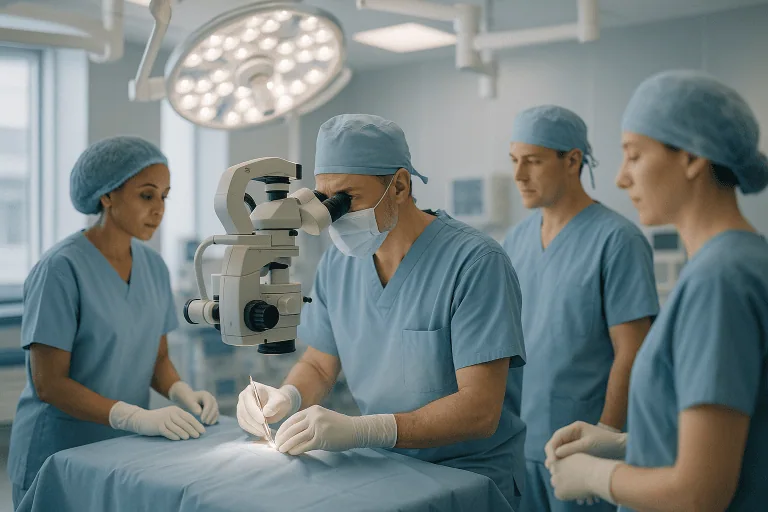
During the operation. You lie face down on a padded operating table. For a lumbar laminectomy the surgeon makes an incision in the middle of the lower back over the affected levels. The muscles are gently moved aside to expose the back of the spine. Using special instruments, and often a microscope or magnifying glasses, the surgeon removes the lamina, the thickened ligament and any bone spurs or disc material pressing on the nerves. The surgeon checks that the nerve roots move freely. If the spine is judged unstable, or if a lot of bone has been removed, screws, rods and bone graft may be placed to fuse the segment. Some centers offer minimally invasive techniques that use smaller incisions and tubes to reach the spine; your surgeon can explain whether this approach suits your anatomy. The wound is then closed with stitches or staples, and a dressing is applied.
A single-level decompression often takes around one to two hours. Operations involving several levels or a fusion typically take longer, sometimes three to four hours or more.
After the operation. You wake up in a recovery area where nurses monitor your breathing, blood pressure and pain. Many people are helped to stand and take a few steps the same day or the next morning, with support from a physical therapist. Hospital stay is often one to three nights for a decompression alone and somewhat longer after a fusion. Before discharge you will be shown how to get in and out of bed safely, how to care for the wound and which movements to avoid.
Preparation for spinal stenosis surgery
Good preparation can make recovery smoother. Your team will give you specific instructions, but the following points are common:
- Medications: Tell your surgeon about everything you take, including supplements. Blood thinners, aspirin and some anti-inflammatory drugs are often paused before surgery, but never stop a prescribed medicine without being told to.
- Smoking: Nicotine reduces blood flow to healing bone and tissue and is strongly linked to failed fusions. Stopping several weeks before surgery is usually advised.
- Health conditions: Blood sugar, blood pressure and any dental or skin infections should be under control.
- Fasting: You will be asked not to eat or drink for a set number of hours before the anesthetic.
- Home setup: Arrange for someone to drive you home and help for the first days. Move frequently used items to waist height, remove loose rugs and consider a raised toilet seat or a shower chair.
- Conditioning: If pain allows, gentle walking and the exercises your physical therapist suggests beforehand may help you regain mobility more quickly afterward.
Recovery and aftercare
Spinal stenosis surgery recovery varies a great deal depending on your age, general health, the number of levels treated and whether a fusion was performed. The following is a general picture rather than a promise.
First two weeks. Pain at the incision is expected and is usually controlled with prescribed medication that is gradually reduced. Short, frequent walks are encouraged from the first day because they help circulation, breathing and bowel function. You will typically be asked to avoid bending deeply, lifting anything heavier than a light bag and twisting the trunk. Keep the wound clean and dry as instructed; stitches or staples are often removed at around 10 to 14 days.
Weeks two to six. Many patients return to light daily activities and desk-based work within this period. Driving is usually allowed once you are off strong painkillers and can turn comfortably to check mirrors. Leg pain and tingling from nerve pressure often improve early, but numbness and weakness that were present for a long time before surgery may take months to improve, and in some cases do not fully recover.
Six weeks to three months. Physical therapy commonly begins or intensifies, focusing on core strength, posture and flexibility. Physically demanding jobs and sports are usually reintroduced gradually. After a fusion, restrictions on bending and lifting often last longer because the bone graft needs time to knit together.
Beyond three months. Most soft-tissue healing is complete, though a fusion can take six to twelve months or more to become solid on X-ray. Follow-up appointments, sometimes with repeat imaging, check that healing is progressing and that symptoms are settling.
Practical aftercare tips include changing position regularly, sleeping with a pillow under or between the knees for comfort, taking stool softeners if constipated from pain medication, and stopping any activity that sharply increases leg pain rather than pushing through it.
Risks and side effects
Spinal stenosis surgery is a well-established procedure, and serious complications are uncommon, but no spine operation is risk-free. Your surgeon will discuss the risks that apply to you. They generally include:
- Infection of the wound or, more rarely, the deeper tissues, which may need antibiotics or a further operation to clean the wound
- Dural tear, a small leak of the fluid surrounding the nerves; this is usually repaired during surgery but can cause headache or require extra bed rest
- Nerve injury, which can lead to new numbness, weakness or, rarely, bladder or bowel problems
- Bleeding and blood clots in the legs or lungs, which is why early walking and sometimes blood-thinning injections are used
- Persistent or returning symptoms, because scar tissue can form, other levels can narrow over time, or the nerves may have been damaged before surgery
- Spinal instability after decompression, which may later require a fusion
- Fusion-related problems such as the bone failing to knit (non-union), screws loosening, or extra stress on neighboring levels
- Anesthetic risks, including heart, lung or blood pressure problems, which are higher in older adults and people with other medical conditions
Common, usually temporary, side effects include soreness around the incision, muscle spasm, fatigue for a few weeks and short-lived difficulty passing urine after the anesthetic.
Results and outlook
The evidence broadly shows that, for people with clear nerve-related symptoms that have not responded to non-surgical care, decompression surgery relieves leg pain and improves walking ability more reliably in the first years than continued conservative treatment. Relief of leg pain and claudication tends to be the most consistent benefit. Back pain improves less predictably, and long-standing numbness or weakness may only partially recover.
Over longer follow-up, the difference between surgical and non-surgical groups tends to narrow, partly because some people managed without surgery improve on their own, and partly because degeneration can continue at other levels in those who had surgery. A minority of people need a second operation over the following years. Adding a fusion to a decompression does not appear to improve results for most people with simple stenosis, but it is often recommended when the spine is unstable or slipped (spondylolisthesis).
Outcomes are generally better in people who are otherwise healthy, do not smoke, have symptoms that match the imaging closely, and are treated before severe or long-standing nerve damage has set in. Your surgeon can give you a realistic picture based on your specific situation rather than general figures.
Cost considerations
The cost of spinal stenosis surgery varies widely and depends on several factors rather than a single fee. The main drivers include:
- Type and extent of surgery: A single-level laminectomy is usually less costly than a multi-level decompression, and any fusion adds significantly because of the implants involved.
- Implants and devices: Screws, rods, cages, bone graft materials and any spacer devices carry their own costs.
- Hospital stay: The number of nights, the level of nursing care and whether intensive care monitoring is needed all affect the total.
- Anesthesia and operating time: Longer procedures use more theater time and anesthetic resources.
- Imaging and tests: Pre-operative MRI or CT, blood work and post-operative X-rays are usually charged separately.
- Rehabilitation and follow-up: Physical therapy sessions, clinic visits and any bracing form part of the overall picture.
- Complications: An unplanned readmission or second procedure will add to costs.
Insurance coverage, national health systems and hospital pricing policies differ from place to place, so a written estimate from the treating hospital is the only reliable guide for your own case.
Frequently asked questions
Is a laminectomy the same as spinal stenosis surgery?
Not exactly. Laminectomy is one specific type of spinal stenosis surgery, and the most common one. It removes the lamina, the bony roof of the spinal canal, to relieve pressure. Other options include laminotomy, which removes less bone, foraminotomy, which widens the openings where nerves exit the spine, and decompression combined with fusion. Your surgeon chooses the approach based on where and how severe the narrowing is.
How long does spinal stenosis surgery recovery take?
Many patients are walking within a day and return to light activities in a few weeks, but full recovery is gradual. Soft tissues typically heal over about six to twelve weeks, while a fusion can take six months to a year to become solid. Nerve symptoms such as numbness may keep improving for many months. Recovery is usually slower in older adults, after multi-level or fusion surgery, and in people with other health problems.
How successful is lumbar spinal stenosis surgery?
For appropriately selected patients, lumbar spinal stenosis surgery often provides meaningful relief of leg pain and improves walking distance, and most people report being satisfied with the result. It is less reliable for back pain and cannot reverse nerve damage that has been present for a long time. A minority of people have ongoing symptoms or need further surgery years later. Your own likelihood of benefit depends on your symptoms, imaging findings and general health.
Is decompression surgery on the spine done as a minimally invasive procedure?
In some cases, yes. Minimally invasive decompression surgery of the spine uses smaller incisions, tubes and a microscope or endoscope (a thin camera) to reach the narrowed area with less disruption to the muscles. It may mean less early pain and a shorter stay, but it is not suitable for every pattern of stenosis, and long-term results appear broadly similar to open surgery. Your surgeon can explain whether it is an option for you.
Will I need a fusion as well as a decompression?
Most people with simple spinal stenosis do not need a fusion. Fusion is generally reserved for situations where the spine is already unstable, where one vertebra has slipped forward over another, or where removing bone to decompress the nerves would leave the segment unstable. Fusion adds implants, operating time and recovery time, so surgeons weigh its benefits carefully.
Can spinal stenosis come back after surgery?
The treated level rarely re-narrows in the same way, but the wear-and-tear process that caused the stenosis continues with age, so neighboring levels can become narrowed over time. Scar tissue can also form around the nerves. This is one reason a small proportion of people need further surgery in later years. Staying active, maintaining a healthy weight and not smoking may help protect the spine.
What can I not do after lumbar spinal stenosis surgery?
In the early weeks you will typically be asked to avoid heavy lifting, deep bending, twisting, prolonged sitting and high-impact activity. Driving usually resumes once you are off strong pain medication and can move comfortably. After a fusion, these restrictions often last longer. Your surgeon and physical therapist will give you a personalized schedule for returning to work, exercise and sports.
When to see a doctor
You should be assessed by a spine specialist if you have leg or arm pain, numbness or weakness that has lasted more than a few weeks despite rest and simple treatment, if you can only walk short distances before having to sit or lean forward, or if you notice changes in balance, hand coordination or the way you walk. Sudden weakness in a leg or foot, or any new difficulty controlling your bladder or bowels, needs urgent medical attention because it may indicate severe nerve compression.
After spinal stenosis surgery, seek urgent care if you experience any of the following:
- Fever, chills, or redness, swelling, warmth or discharge from the incision
- Clear fluid leaking from the wound, or a severe headache that is worse when sitting or standing up
- New or worsening weakness, numbness or pain in the legs or arms
- Difficulty passing urine, loss of bladder or bowel control, or numbness around the genitals or inner thighs
- Calf pain, swelling or warmth, which may signal a blood clot
- Chest pain, shortness of breath or coughing up blood, which may signal a clot in the lungs and is an emergency
If you are unsure whether a symptom is normal after surgery, it is safer to have it checked by your surgical team than to wait.
Preparation
- Tell your surgical team about all medications and supplements, as blood thinners and some anti-inflammatory drugs are often paused before surgery. Stop smoking several weeks beforehand if you can, and make sure blood sugar and blood pressure are well controlled. Follow fasting instructions, arrange transport home and help for the first days, and prepare your home to reduce bending and fall risks.
Aftercare
- Walk short distances several times a day from the first day, and avoid heavy lifting, deep bending and twisting for the period your surgeon advises. Keep the incision clean and dry and attend follow-up appointments for wound checks and imaging. Begin physical therapy when recommended, and report fever, wound leakage, new weakness, bladder or bowel changes, calf swelling or chest pain immediately.
Medically reviewed by the Acıbadem International Medical Board September 8, 2026
See our medical review board →
Update history
- PublishedSeptember 8, 2026
- Medical review approvedSeptember 8, 2026
- Last content updateSeptember 8, 2026
References3
From the Acibadem Blog
What Happens During Spinal Stenosis Surgery: How a Laminectomy Frees the Pinched Nerves
In spinal stenosis surgery, most often a laminectomy, a surgeon makes an incision over the affected part of the spine, moves the muscles aside,…

Decompression Alone vs With Fusion: How Spinal Stenosis Surgery Is Tailored
A laminectomy removes bone and ligament pressing on spinal nerves; fusion is added only when the spine at that level is judged unstable or…
What Spinal Stenosis Surgery Relieves and What It May Not: Leg Pain vs Back Pain
Spinal stenosis surgery, usually a decompression that widens the narrowed canal, is most reliable at easing leg symptoms caused by pinched nerves: the aching,…