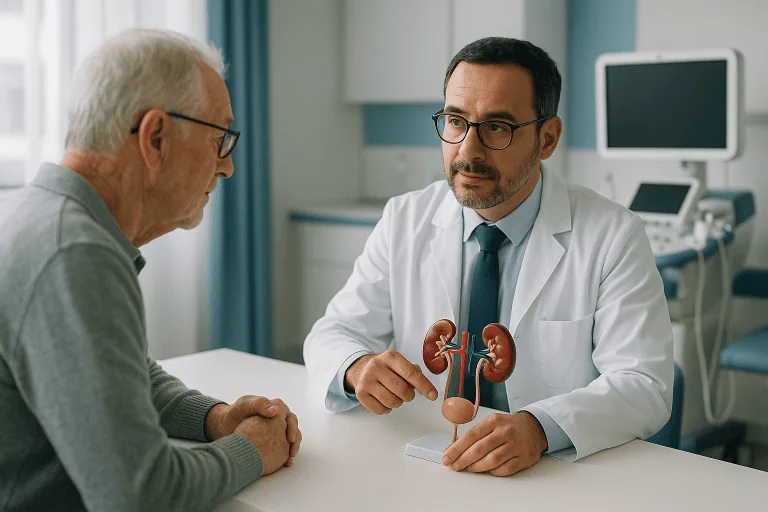
Testosterone Deficiency Treatment
Testosterone deficiency is evaluated with symptoms, medical history and morning hormone tests, then managed with lifestyle care or testosterone replacement when appropriate.

Quick answer
Testosterone deficiency, also called male hypogonadism, means the body produces too little testosterone for normal physical, sexual and psychological function. It is confirmed with repeated morning blood tests interpreted alongside symptoms. Treatment may involve correcting an underlying cause, such as sleep apnoea, obesity or a medication effect, or medically supervised testosterone replacement therapy with ongoing monitoring of hormone levels, blood counts and symptom response.
Testosterone Deficiency: What It Is and Who It Affects
Testosterone deficiency is a condition in which the body produces too little testosterone for normal physical, sexual and psychological function. It is confirmed with repeated morning blood tests interpreted alongside your symptoms, and it is treated either by correcting an underlying cause or, in clearly confirmed cases, with medically supervised testosterone replacement therapy. It becomes more common with age, excess weight, chronic illness, sleep disorders and certain medications, which is why the evaluation looks at your whole health, not just one hormone.
Many men first seek help because they feel unlike themselves rather than because they suspect a hormone problem. Energy is lower. Motivation is harder to sustain. Workouts no longer produce the same results. Libido has changed, mood feels flatter, or concentration slips. Others notice erectile difficulties, fewer morning erections, increased abdominal weight or disturbed sleep. These changes are easy to attribute to stress, ageing, travel or work pressure, particularly when they develop gradually over months or years. That gradual onset is one of the reasons testosterone deficiency is often recognised late.
The condition raises understandable questions before any decision is made. Is low testosterone truly the cause of the symptoms? Are hormone treatments safe? Will treatment affect fertility? How long does it take to feel different? What tests are needed before therapy begins? These questions matter, because testosterone deficiency should not be diagnosed from symptoms alone, and treatment should not be started without careful assessment. At Acibadem, the goal of care is not simply to raise a laboratory number. It is to understand why testosterone is low, decide whether treatment is appropriate, reduce symptoms safely and protect long-term health. For some men, the best plan begins with weight management, sleep treatment, a physician-led medication review or better control of diabetes and metabolic risk. For others, testosterone replacement is considered when symptoms and repeated morning hormone tests both support the diagnosis.
Getting this right matters in both directions. Untreated testosterone deficiency may be associated with reduced quality of life, sexual dysfunction, loss of muscle and bone strength, anaemia, low mood and worsening metabolic health in some men. At the same time, unnecessary testosterone use creates avoidable risks. A careful, evidence-based evaluation separates men who may genuinely benefit from treatment from men whose symptoms have another cause entirely.
What is testosterone?
Testosterone is the principal male sex hormone, produced mainly by the testicles under the control of signals from the brain, luteinising hormone and follicle-stimulating hormone, released by the pituitary gland. This system works as a connected axis: the brain signals the testicles, the testicles produce testosterone, and the resulting level feeds back to the brain. Because the system is interconnected, a low reading can originate at several points. Testicular disease, pituitary or hypothalamic problems, chronic illness, obesity, certain medications, sleep disorders and age-related change can all lower testosterone. Women produce small amounts of testosterone as well, but this page concerns deficiency in men, where the hormone plays a central role in daily physiology.
What exactly does testosterone do for men?
Testosterone supports sexual desire, contributes to erectile function, and sustains the hormonal environment that sperm production depends on as part of the wider system of male reproduction. Beyond sexual health, it helps maintain muscle mass and strength, bone density, red blood cell production, fat distribution, and body and facial hair. It also influences mood, motivation and, to a degree, concentration. It is equally important to be clear about what testosterone does not do. It is not a general anti-ageing treatment. Normal levels do not by themselves ensure energy, mood or sexual function, because each of these depends on many other factors. And pushing levels above the normal range does not add benefit: it adds risk. Responsible treatment aims for the physiologic range, nothing more.
What Is Hypogonadism?
Hypogonadism is the medical term for testosterone deficiency: the testicles do not produce enough testosterone, either because of a problem within the testicles themselves or because the brain’s hormonal signals to them are reduced. The distinction between these two forms shapes everything that follows, which tests are needed, which treatments make sense, and what monitoring looks like. That is why a proper evaluation always asks not only whether testosterone is low, but where in the system the problem sits.
Primary hypogonadism
In primary hypogonadism, the testicles themselves cannot produce adequate testosterone even though the brain is signalling normally, or more strongly than normal, as it tries to compensate. Causes include testicular injury, infection, surgery, chemotherapy, radiation therapy, genetic conditions and age-related decline in testicular function. On blood testing, luteinising hormone and follicle-stimulating hormone are typically elevated, which points the physician towards the testicles as the source of the problem. Bone health and fertility assessment often carry particular weight in this group, because the deficiency may be long-standing.
Secondary hypogonadism
In secondary hypogonadism, the testicles are capable of producing testosterone but the signals from the pituitary or hypothalamus are reduced. This pattern may be associated with pituitary tumours, elevated prolactin, obesity, severe chronic illness, obstructive sleep apnoea, certain medications, including long-term opioids and corticosteroids, and hormonal suppression from prior anabolic steroid use. Here, luteinising hormone and follicle-stimulating hormone are low or inappropriately normal despite the low testosterone. Secondary hypogonadism deserves careful attention because some of its causes are treatable in their own right, and a few, such as pituitary disease, need dedicated endocrine evaluation and sometimes imaging.
Low testosterone after anabolic steroid use
Some men seek care after using non-prescribed testosterone, anabolic steroids or so-called anti-aging hormone programmes. These situations need particular care. Externally administered androgens suppress the body’s own hormone production and sperm production, and recovery after stopping can take time. Management depends on how long the products were used, the man’s fertility goals, testicular function and laboratory findings. The honest message is that there is no shortcut here: the axis usually needs time, structured testing and physician-led follow-up, and rushing back onto hormones can prolong the suppression the man is trying to escape.
Low Testosterone Symptoms in Men
Low testosterone symptoms in men rarely arrive all at once. They accumulate quietly, often over years, and they overlap with the symptoms of many other conditions, which is exactly why symptoms alone can never confirm the diagnosis. What follows describes the typical picture, and then the conditions that can imitate it.
What are the signs of low testosterone in males?
A male with low testosterone symptoms usually describes a cluster of changes rather than a single complaint. Common features include reduced sexual desire, fewer spontaneous or morning erections, erectile dysfunction, lower energy, low mood, irritability, reduced muscle mass, increased body fat, and decreased shaving frequency. Some men experience hot flushes. Others come to attention through low bone density, an unexplained anaemia, or difficulty conceiving. Some present only after a fracture or a bone density scan shows osteopenia or osteoporosis. A history of testicular injury, chemotherapy, radiation therapy, pituitary disease, or long-term opioid or corticosteroid treatment raises the likelihood that a hormonal cause is genuinely in play. None of these signs is specific on its own; together, and confirmed by testing, they build a coherent picture.
Symptoms that overlap with other conditions
Fatigue alone may be related to anaemia, thyroid disease, depression, sleep apnoea, chronic infection, medication effects or simple overtraining. Erectile dysfunction may be vascular, neurological, hormonal, psychological, medication-related, or, most often, a combination of factors. Low mood and poor concentration have their own long list of causes. This overlap is not a technicality. It means that treating a presumed hormone problem without testing can leave the real cause untreated, and it means a proper workup sometimes finds something more important than a low hormone level. A structured evaluation exists to protect you from both errors.
Diagnosis: How Testosterone Deficiency Is Confirmed
Diagnosis rests on two pillars: consistent symptoms and repeatedly low morning testosterone. A clinician reviews the timing and pattern of your symptoms, your medical history, medications, supplements, fertility goals, prior hormone or anabolic steroid use, sleep quality and exercise habits, along with conditions such as diabetes, obesity, cardiovascular disease, thyroid disease, depression and prostate disorders. A focused physical examination may assess body composition, blood pressure, testicular size, breast tissue enlargement, body hair distribution and signs of endocrine or metabolic disease. The purpose is not only to identify low testosterone, but to understand the broader health context in which it occurs.
How do I know if I have testosterone deficiency?
The only reliable way to know is a morning blood test, repeated on a separate day and interpreted by a physician alongside your symptoms, no questionnaire, symptom checklist or single reading can confirm it. Total testosterone is measured first, usually in an early morning sample before around 10 a.m., when levels are generally highest; timing can be adjusted for shift workers or unusual sleep schedules. Because levels vary from day to day, testing is usually repeated before any conclusion is drawn. If results are borderline, if conditions affecting hormone-binding proteins are present, or if symptoms and numbers do not align, free testosterone or calculated free testosterone may be added. Depending on the picture, further tests may include luteinising hormone, follicle-stimulating hormone, prolactin, thyroid function, a full blood count, metabolic panels, liver and kidney function, fasting glucose or HbA1c, a lipid profile and, when age-appropriate, prostate-specific antigen. Imaging, such as pituitary MRI or testicular ultrasound, is not needed for every patient, but becomes important when findings suggest a structural cause. Bone density testing may be recommended for men with fracture risk or long-standing deficiency.
What is a normal testosterone level by age?
There is no single normal number that applies to every man at every age. Laboratories set their own reference ranges, which vary by assay, and a result only means something when read against the range of the laboratory that produced it. Testosterone also follows a daily rhythm, highest in the morning, lower later in the day, and levels decline gradually from early adulthood onwards, so an older man’s typical value differs from a younger man’s without either being abnormal. Illness, poor sleep and acute stress can temporarily lower readings. Binding proteins matter too: sex hormone-binding globulin changes with age, weight and liver function, which can make a total testosterone value misleading in some men. The clinically meaningful question is not “what is my number” but “is my level persistently below the reference range, in the morning, on repeated testing, with symptoms that fit.” That combination, not age-adjusted arithmetic, is what supports a diagnosis.
Can vitamin D deficiency cause low testosterone?
Low vitamin D and low testosterone are linked in observational studies, but a direct cause-and-effect relationship has not been proven, and supplementation trials have produced inconsistent results. The two problems share common drivers, obesity, chronic illness, inactivity and limited time outdoors, which explains much of why they appear together. The reverse question comes up as well: there is no established mechanism by which low testosterone causes vitamin D deficiency; when both are present, shared causes are the more likely explanation. As for vitamin deficiency in general, severe malnutrition and chronic illness can suppress the hormonal axis, but an isolated mild vitamin shortfall is rarely the sole reason a man’s testosterone is low. Correcting a documented deficiency is sensible general care under your doctor’s guidance: it simply should not be relied on as a treatment for confirmed hypogonadism, and it does not replace proper hormonal evaluation.
Can iron deficiency cause low testosterone?
Iron deficiency is not an established direct cause of low testosterone. The better-documented relationship runs the other way: testosterone supports red blood cell production, so testosterone deficiency can contribute to anaemia, and an unexplained anaemia is sometimes the clue that leads to hormonal testing in the first place. Iron deficiency and low testosterone can still appear together, usually because a chronic illness is driving both. There is one important exception worth knowing: iron overload, the condition haemochromatosis, can deposit iron in the pituitary gland and testicles and cause genuine hypogonadism. This is one reason a full blood count, and iron studies where indicated, belong in the diagnostic workup: they help the physician establish which problem came first and what actually needs treating.
Who Should Consider an Evaluation
Evaluation makes sense when symptoms consistent with low testosterone persist despite reasonable attention to sleep, stress, nutrition and general health. It also makes sense for men with a history that raises the probability of a hormonal cause: testicular injury or surgery, chemotherapy or radiation therapy, pituitary disease, long-term opioid or corticosteroid treatment, a fragility fracture or a scan showing reduced bone density, an unexplained anaemia, or difficulty conceiving. A structured diagnostic pathway serves two purposes at once. It prevents undertreatment, men living for years with a correctable deficiency, and it prevents unnecessary hormone use in men whose symptoms have another explanation. Along the way, it frequently identifies related conditions, from sleep apnoea to early diabetes, that deserve treatment in their own right and would otherwise have been missed.
How Testosterone Deficiency Is Treated, Step by Step
Treatment follows a defined sequence rather than a single decision. In outline, the pathway runs through consultation, confirmatory testing, treatment of reversible causes, a decision about replacement therapy, fertility planning where relevant, and ongoing monitoring. Each step is described below.
Step 1: Consultation and medical review
The process begins with a detailed consultation. Your physician asks about the timing and pattern of symptoms, sexual function, energy, mood, sleep, exercise, weight changes, chronic diseases, medications, supplements, alcohol use, smoking, prior testosterone or anabolic steroid exposure, and family history. Fertility plans are discussed early, because they can substantially change the treatment strategy. Prostate history, cardiovascular risk, any history of blood clots, and symptoms suggesting sleep apnoea are reviewed alongside previous laboratory results. A focused examination follows, looking at the physical signs described in the diagnosis section. This first step often takes longer than patients expect, and it should: most of the important decisions in testosterone care depend on information gathered here.
Step 2: Morning hormone testing and the wider workup
Blood testing is scheduled for the morning, and repeated testing is usually needed to confirm persistently low levels. If the first result is low or borderline, additional hormone tests help determine whether the problem is likely testicular, pituitary, medication-related, metabolic or functional. Depending on the findings, the workup may extend to the full panel described earlier, blood count, metabolic and lipid testing, diabetes screening, thyroid and prolactin testing, prostate assessment when age-appropriate, and imaging or bone density measurement in selected patients. Previous results are reviewed where available, though repeat testing may still be recommended when timing, assay quality or clinical consistency is uncertain: a repeated morning sample under known conditions is often worth more than a folder of mixed historical values.
Step 3: Treating reversible causes first
Before prescribing testosterone, physicians consider whether the low level may improve by treating an underlying contributor. Weight loss, improved sleep, treatment of obstructive sleep apnoea, resistance training, better diabetes control, management of depression or chronic inflammation, and a physician-led review of medications can all be relevant. In some men, these steps meaningfully improve both testosterone levels and symptoms without any hormone prescription. This is not delay for its own sake, and it is not a dismissal of symptoms. It means the plan is built around the cause. If low testosterone is primarily driven by untreated sleep apnoea, giving testosterone without addressing the sleep disorder is less effective and may carry additional risk. If a prescribed medication is contributing, the care team coordinates with the relevant specialists to explore safer options: a decision that always belongs to the treating doctors, never to the patient alone.
How can I increase my testosterone without medication?
The measures with the best support are unglamorous: losing excess weight, building resistance training into your week, sleeping enough and treating sleep apnoea if it is present, moderating alcohol, and managing diabetes and chronic inflammation. In men whose low levels are functional, driven by weight, sleep or illness rather than damaged glands, these steps can produce measurable improvement, though the change is gradual and varies from man to man. What deserves scepticism are unregulated “testosterone booster” supplements. They may contain uncertain doses or undisclosed ingredients, some have contained actual androgens, and they can complicate fertility, liver health and the endocrine recovery they claim to support. If lifestyle measures do not resolve symptoms and testing confirms a genuine deficiency, the honest next conversation is about supervised medical treatment, not stronger supplements.
Step 4: Testosterone replacement therapy (TRT) when appropriate
When symptoms are significant, testosterone is repeatedly low, and no contraindication is present, testosterone replacement therapy may be considered. TRT is designed to restore testosterone to a physiologic range, not to create supranormal levels. The form of treatment is selected according to your preferences, lifestyle, absorption, monitoring needs and safety profile. Common medically supervised options include topical gels, injections at defined intervals, patches, and longer-acting preparations in selected settings. Each has trade-offs worth understanding before you choose. Topical treatment provides steady daily dosing but requires careful application and precautions to prevent transfer to partners or children. Injectable treatment suits some men’s routines better but can produce peaks and troughs depending on the formulation and dosing interval. Whatever the form, higher is not better. Excess dosing may increase risks such as an elevated red blood cell count, acne, fluid retention, mood changes, breast tenderness, worsening sleep apnoea and fertility suppression. Responsible care adjusts the dose against both laboratory values and how you actually feel.
Fertility-sensitive management
If you are trying to conceive now, or may want children in the future, the plan changes materially. Conventional testosterone replacement suppresses luteinising hormone and follicle-stimulating hormone, reducing sperm production, sometimes significantly. For some men, semen analysis, sperm banking, or referral to specialists in male infertility is appropriate before treatment begins. In selected patients, alternative medications that stimulate the body’s own testosterone production may be considered, depending on the diagnosis and clinical protocols. This conversation carries particular weight for younger men, men with borderline levels, men recovering from anabolic steroid use, and couples already undergoing fertility investigation, where assessment for female infertility often runs in parallel and the two workups need to be coordinated rather than sequential. The guiding principle is simple: a treatment that improves one symptom must not quietly undermine a major life goal.
Monitoring and follow-up
Starting testosterone therapy is not a one-time event; it is a monitored medical treatment. After therapy begins, follow-up tests are performed after an initial adjustment period to evaluate testosterone levels, haematocrit, symptom response and side effects, and the dose is adjusted accordingly. Prostate monitoring may be recommended based on age, risk factors and clinical guidelines. Laboratory testing confirms that levels sit where they should; imaging remains available if a structural cause is suspected later; and organised medical records keep test results, physician notes and the treatment plan in one place, so that follow-up stays coherent even when more than one specialist is involved. The emphasis throughout is clarity: you should leave understanding the diagnosis, the reasoning behind the treatment, and exactly which tests are due and when.
What “recovery” looks like
Because this is medical rather than surgical treatment, there is no physical recovery period in the traditional sense. You can usually continue normal daily activities from the start. The more accurate frame is a period of physiologic adjustment and symptom monitoring. Sexual desire may improve earlier than changes in body composition or bone health. Energy, mood and motivation tend to shift gradually, and the pace varies from man to man. If symptoms do not improve despite normalised testosterone levels, that is a finding in itself: physicians reassess other possible causes rather than escalating the dose. Long-term treatment requires periodic review. Some men remain on therapy for years under supervision; others stop or change treatment as goals, risks, fertility plans or medical conditions evolve. Monitoring is not a formality: it is a central part of safe and effective care.
Why Acting Early Matters
Delaying evaluation can prolong symptoms and allow related problems to progress. Persistent testosterone deficiency may contribute to reduced sexual function, lower quality of life, loss of lean muscle, increased fat mass, low bone density, anaemia and mood changes. When the deficiency stems from a pituitary disorder, testicular disease, a medication effect or a sleep disorder, delayed diagnosis also delays treatment of the root cause, and some of those root causes matter more than the hormone level itself.
Early evaluation matters for a second reason: not every symptom that resembles low testosterone is hormonal. Fatigue, low libido, erectile dysfunction and mood changes can be early signals of cardiovascular disease, diabetes, depression, thyroid disease, sleep apnoea or medication side effects. A proper workup can surface these conditions earlier, when management tends to be more effective. In this sense, the diagnostic pathway has value even when the final answer is “your testosterone is normal.”
There is a third risk in waiting: men who feel unheard sometimes turn to unregulated hormones, supplements or anabolic steroids. These products may contain uncertain doses or undisclosed ingredients, and they can complicate fertility, liver health, cardiovascular risk and the endocrine system’s own recovery. Medically supervised care offers a safer route, appropriate testing, physiologic dosing and structured monitoring. Acting early does not mean rushing into testosterone therapy. It means obtaining a clear diagnosis, understanding the options, and choosing a plan that fits your health and your goals. For many men, simply knowing whether testosterone is truly low is the first step towards an effective solution.
Potential Benefits of Treatment
When testosterone deficiency is correctly diagnosed and appropriately treated, men may notice benefits across several areas of health and daily function. “May” is the operative word: response varies, and part of good follow-up is checking honestly whether the expected benefits have materialised.
| Benefit | What It Means for You |
|---|---|
| Improved sexual desire | Men with confirmed deficiency may notice better libido and more spontaneous sexual interest, though erectile function may also require vascular or urologic evaluation. |
| Better energy and motivation | Some patients report less fatigue and improved drive over time, especially when treatment is combined with sleep, exercise and metabolic care. |
| Support for muscle and body composition | Testosterone may help preserve or improve lean mass when paired with resistance training and adequate nutrition. |
| Bone health protection | In men with long-standing deficiency, treatment may help support bone density and reduce future fracture risk as part of a broader bone health plan. |
| Correction of deficiency-related anaemia | Some men with low testosterone and unexplained anaemia may see improvement in red blood cell production under careful monitoring. |
| Clearer medical direction | A structured evaluation identifies whether symptoms are hormonal or related to another treatable condition, preventing unnecessary or unsafe therapy. |
Recovery Timeline: What to Expect After Starting Care
The timeline varies with the diagnosis, the treatment chosen, your baseline health and whether lifestyle or medical therapy leads the plan. Most men, however, follow a broadly similar pattern of assessment, adjustment and monitored review.
| Time Period | What Patients Can Expect |
|---|---|
| Day 1 | Consultation, symptom review, medical history, physical examination, and planning for morning hormone tests or review of previous results. |
| First Week | Laboratory results are interpreted, repeat testing may be scheduled, and reversible causes such as sleep apnoea, medication effects, obesity or metabolic disease are considered. |
| First Month | If treatment is started, you learn correct use, possible side effects and the monitoring schedule. Some symptoms may begin to shift, but early response varies. |
| Three to Six Months | Follow-up testing assesses testosterone levels, blood count, symptom response and dose suitability. Adjustments are made if levels are too low, too high, or symptoms persist. |
| Longer Term | Periodic monitoring continues. Bone health, prostate considerations, fertility goals, cardiovascular risk, sleep, weight and metabolic health remain part of ongoing care. |
Factors That Influence Your Outcome
A good result begins with an accurate diagnosis. Men who have both consistent symptoms and repeatedly low morning testosterone are more likely to benefit from testosterone-focused treatment than men with nonspecific symptoms and normal hormone levels. The cause matters just as much: primary testicular failure, pituitary dysfunction, obesity-related suppression, medication-induced hypogonadism and prior anabolic steroid use each call for a different strategy, and applying the wrong one wastes time at best.
Baseline health strongly shapes the response. Sleep apnoea, poorly controlled diabetes, excess weight, depression, high alcohol intake, a sedentary routine and chronic stress can all blunt the effect of treatment if left unaddressed. Testosterone therapy may improve specific symptoms, but it is not a substitute for cardiovascular risk management, nutrition, resistance exercise or sleep treatment. The best results consistently occur when hormone care is integrated with broader medical care rather than run in isolation.
Fertility goals are a major planning factor. A plan that works well for a man who has completed his family may be inappropriate for a man actively trying to conceive. Semen analysis, fertility counselling and alternative treatments may all belong in the plan, which is why it helps to be open about reproductive intentions even when they are uncertain. “Maybe someday” changes the plan just as much as “definitely this year.”
Dose selection and monitoring carry the rest of the weight. Treatment should be individualised and adjusted against laboratory values, symptom response, side effects and safety markers. Overcorrection creates problems; underdosing leaves symptoms unresolved. Monitoring haematocrit is particularly important, because testosterone increases red blood cell production. Prostate evaluation may be appropriate depending on age, symptoms, family history and clinical guidelines. Expectations should stay realistic throughout: treatment may improve libido, energy, mood, body composition, bone density or anaemia in appropriately selected men, but it does not reverse normal ageing, replace exercise or resolve every cause of erectile dysfunction. Some benefits appear gradually, and some symptoms have more than one cause. Careful follow-up lets physicians refine the plan rather than continue ineffective treatment unquestioned.
Finally, adherence matters. Topical medications must be applied correctly and consistently. Injections must be given at the right dose and interval. Follow-up appointments and laboratory tests should be completed even when you feel well, feeling well is a data point, not a discharge. Whoever continues your follow-up, the plan should specify which tests are needed, when they are due, and how the results reach the treating physician.
Testosterone Deficiency Care at Acibadem
Testosterone deficiency sits at the junction of several specialties, and care at Acibadem is organised to reflect that. Depending on your situation, the pathway may involve endocrinology, urology, cardiology, internal medicine, sleep medicine, radiology, laboratory medicine, nutrition and reproductive specialists. This coordination matters most when symptoms are complex, when fertility is a concern, when previous treatment has not helped, or when an underlying pituitary, testicular, metabolic or cardiovascular condition is suspected.
Care pathways follow evidence-based standards. In practice, that means diagnosis is built on symptoms plus appropriate morning hormone testing, never on a single isolated value or a general wish to feel younger. Physicians assess whether replacement is medically appropriate, whether reversible causes should be treated first, and whether alternative approaches are needed for men who want to preserve fertility. Diagnostic resources support each of these decisions: laboratory testing measures hormone levels and safety markers, imaging is used when pituitary or testicular disease is suspected, bone density assessment is available for men with long-standing deficiency or fracture risk, and cardiometabolic evaluation identifies diabetes, lipid disorders or blood pressure issues that contribute to symptoms and long-term risk. Technology here serves a practical purpose: clarifying the diagnosis, guiding treatment and monitoring safety.
Experienced clinical judgement matters because the decisions are rarely mechanical. A mildly low result in one man calls for repeat testing and lifestyle management; a similar value in another man with clear symptoms and risk factors leads somewhere different. A man with low libido and infertility needs different care from a man with primary testicular failure and reduced bone density. Personalised planning aligns therapy with your age, medical history, reproductive goals and follow-up options, and the care team prepares a clear written plan that can be shared with any physician who continues your care. The experience is designed to be medically rigorous and personally considerate: these consultations touch on subjects, sexual health, fertility, ageing, mood, body image, that are private and sometimes difficult, and they are handled without judgement.
Second opinions are a routine part of testosterone care. Some men have been told they need lifelong testosterone after limited testing. Others have persistent symptoms but were told their levels were normal without any review of test timing, free testosterone, medications or related conditions. An independent review of the diagnosis, the current dose, the adequacy of monitoring and the fertility and cardiovascular considerations can clarify whether an existing plan is sound, or where it needs to change.
Making an Informed Decision
Testosterone deficiency is a treatable condition, and the quality of the outcome usually reflects the quality of the evaluation that preceded it. The right plan starts with understanding your symptoms, confirming hormone levels with properly timed morning testing, identifying the cause, and choosing treatment that fits your health profile and goals. For some men, that means lifestyle and metabolic care with no hormone prescription at all. For others, it means testosterone replacement or fertility-sensitive hormonal management under ongoing medical supervision. Neither path is better in the abstract; the right one is the one that matches your diagnosis. What matters most is that the decision rests on repeated, well-timed testing, an honest discussion of benefits and risks, a plan for fertility if it could ever matter to you, and a monitoring schedule that continues after the first prescription. Understood that way, testosterone care is less a single treatment than a structured, reviewable partnership between you and your physicians, one that adapts as your health, goals and results change over time.
Preparation
- Patients usually need a clinical assessment and morning blood tests to confirm low testosterone on more than one occasion. Bring current medications, supplements and previous test results. Your doctor may also review fertility plans, prostate health, sleep apnea, heart risk and other hormone conditions before treatment.
Aftercare
- Follow-up visits monitor symptom response, testosterone levels, blood count and prostate-related tests when indicated. Use medication only as prescribed and report acne, swelling, mood changes, breathing problems during sleep or urinary symptoms. Treatment may be adjusted over time to balance benefits and safety.
Frequently Asked Questions
What affects the cost of testosterone deficiency evaluation?
The cost depends on the specialist consultation, required hormone and blood tests, whether imaging or additional investigations are needed, and the complexity of your medical history. International patient services, interpreter support and follow-up planning can also affect the total.
What affects the cost of testosterone replacement therapy?
Costs vary according to the prescribed form of treatment, medication supply, monitoring tests, follow-up visits and any care needed for related conditions. A specialist must confirm that treatment is appropriate before a plan can be priced.
Can I get a personalised quote before travelling to Turkey?
Yes. You can request a free consultation and share your symptoms, previous test results, medical history and current medications. The medical team can then advise which assessments may be needed and prepare a personalised cost estimate.
Is testosterone treatment always included in the first visit package?
Not always. The first step is usually confirmation of diagnosis and safety assessment. Treatment is recommended only when appropriate, so medication and follow-up costs may be separate depending on your final care plan.
Do I need ongoing follow-up after starting testosterone therapy?
Yes, ongoing monitoring is important to assess symptom response, hormone levels and safety markers. Your specialist will explain the follow-up schedule and whether monitoring can be coordinated with your local physician after returning home.
Medically reviewed by the Acıbadem International Medical Board September 1, 2026
See our medical review board →
Update history
- PublishedJune 8, 2026
- Medical review approvedSeptember 1, 2026
- Last content updateSeptember 8, 2026
References2
- Low Testosterone (Male Hypogonadism) my.clevelandclinic.org
- Testosterone Levels Test medlineplus.gov
Trusted care for international patients
From the Acibadem Blog

How Doctors Decide Between Lifestyle Care and Testosterone Replacement for Low Testosterone
Doctors decide between lifestyle care and testosterone replacement by first confirming low testosterone on at least two morning blood tests, then matching the result…