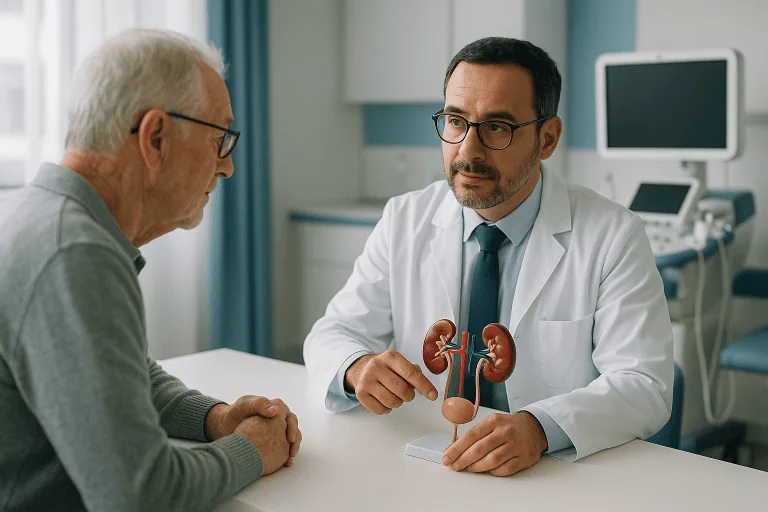
Urological Surgeries
Urological surgeries treat conditions of the kidneys, bladder, prostate, ureters and male reproductive organs using open, laparoscopic or robotic techniques tailored to diagnosis and patient health.
Quick answer
Urological surgeries are operations on the urinary tract, kidneys, ureters, bladder and urethra, and on the male reproductive organs. They include endoscopic procedures performed through natural openings, laparoscopic and robot-assisted operations through small incisions, and open surgery. Depending on the diagnosis, they remove tumours, clear kidney stones, relieve blockages, treat urinary leakage or rebuild damaged anatomy. Duration and recovery vary widely by procedure.
Urological Surgeries: Understanding What You Are Facing
Urological surgeries are operations on the urinary tract, the kidneys, ureters, bladder and urethra, and on the male reproductive organs, including the prostate, testes and penis. They range from short endoscopic procedures performed through natural openings to major cancer and reconstructive operations lasting several hours. Depending on your diagnosis, a urological surgery may remove a tumour, clear a kidney stone, relieve an obstruction, correct urinary leakage, treat an enlarged prostate or rebuild anatomy damaged by injury or previous treatment.
If you have been told you may need one, the questions arrive quickly. Is surgery genuinely necessary, or is there a less invasive route? Will the operation affect urination, sexual function, fertility, kidney health or your day-to-day independence? How long will recovery take, and what level of expertise does a safe result demand? These questions matter even more if you are weighing up treatment away from home and want medical clarity before you commit to travel. This page works through them in order: what urological surgeries actually are, who needs them, how each type is performed, and what genuinely shapes the outcome.
One point is worth stating at the outset. The aim of good urological care is never simply to perform an operation. It begins with a precise diagnosis, a careful assessment of your general health and an honest discussion of benefits, risks and alternatives. For many patients, the right approach is the least invasive one that can safely and effectively treat the problem. For others, an open or complex reconstructive procedure offers the most durable result. The plan should be tailored to the condition, your anatomy, your kidney function, the cancer stage if cancer is present, any previous treatments, and your own priorities, not to a preferred technique.
At Acibadem, urological surgery is planned within an evidence-based clinical pathway, supported by modern imaging, laboratory evaluation and anaesthesia assessment, and, when cancer is involved, reviewed in multidisciplinary tumour boards. International patients are guided through the process with coordinated appointments, interpretation support and individualised care planning before, during and after treatment.
What is urologic surgery?
Urologic surgery is the branch of surgery that deals with the urinary system in men and women and with the male reproductive system; “urologic surgery” and “urological surgery” describe exactly the same field, in American and British usage respectively. Urologists are unusual among specialists in that they manage both the medical and the surgical side of their organ systems: the same doctor who prescribes medication for an enlarged prostate or arranges surveillance for a small kidney lesion is trained to operate when medication or monitoring is no longer enough. In practice, urologic surgery covers three kinds of work. Diagnostic procedures, such as cystoscopy or biopsy, establish what the problem is. Therapeutic procedures treat it, removing a tumour, fragmenting a stone, opening a blockage. Reconstructive procedures restore anatomy and function after disease, injury or earlier operations. Many patients will encounter more than one of these along a single treatment pathway.
What Are Urological Surgeries?
Urological surgeries are procedures used to diagnose, treat or reconstruct conditions of the urinary tract and the male reproductive system. The urinary tract includes the kidneys, which filter blood and produce urine; the ureters, the narrow tubes that carry urine from each kidney down to the bladder; the bladder, which stores urine; and the urethra, through which urine leaves the body. In men, urologists also treat the prostate, the testes, the epididymis, the vas deferens, the penis and the related structures of the scrotum. Because these organs sit so close to the mechanisms of urinary control, sexual function, fertility and kidney health, surgery in this region demands both technical skill and careful counselling about what an operation will and will not change.
What are the different types of urology surgery?
Urology surgery divides into four broad technical approaches, endoscopic, laparoscopic, robot-assisted and open, and the right one depends on the condition, the anatomy and the goal of treatment.
- Endoscopic surgery is performed through natural openings, usually the urethra, with slender instruments and a camera. No external incision is made. It is used for bladder tumours, prostate obstruction, ureteral and kidney stones, urethral strictures and diagnostic evaluation.
- Laparoscopic surgery uses several small abdominal incisions through which a camera and fine instruments are inserted. It is used for operations such as kidney removal, partial kidney surgery and ureteral reconstruction.
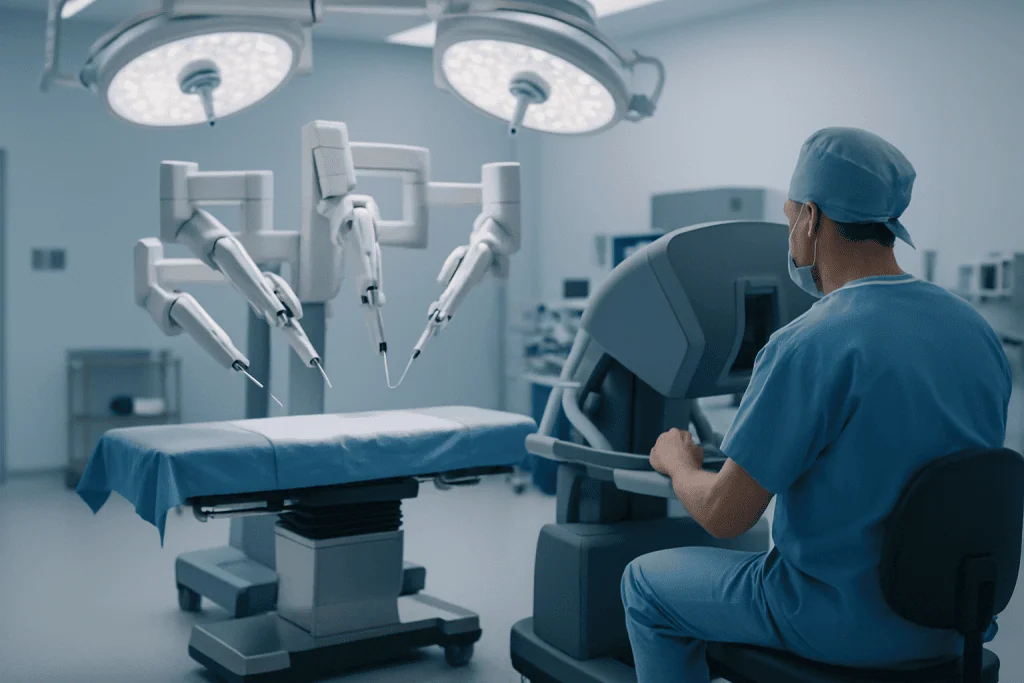
- Robot-assisted surgery is a refinement of the laparoscopic approach in which the surgeon controls the instruments from a console, with three-dimensional magnified vision and wristed instrument movement. The surgeon remains in full control throughout; the system does not operate independently.
- Open surgery uses a larger incision and remains essential for very large tumours, extensive cancer, complex reconstruction, major trauma and cases where scarring from previous operations makes a minimally invasive approach unsafe.
Beyond the technical approach, urological surgeries can also be grouped by purpose: stone surgery, cancer surgery, surgery for benign prostate enlargement, incontinence surgery, surgery on the testes, penis and scrotum, fertility-related procedures, and reconstructive surgery of the urethra, ureter or bladder. A single patient’s pathway may combine categories: a diagnostic endoscopy first, then a definitive operation once the pathology is clear.
What is the most common surgery for a urologist?
In most urology departments, the procedures performed most frequently are the short endoscopic ones: cystoscopy for diagnosis, transurethral resection of bladder tumours, ureteroscopy with laser fragmentation of stones, and transurethral surgery for benign prostate enlargement. Alongside these, urologists routinely perform smaller procedures such as vasectomy, circumcision and hydrocele repair. The exact mix varies with the population a department serves: a centre with a large cancer practice performs more prostatectomies and kidney operations, while a general practice sees a steady flow of stone and prostate work. What the common procedures share is that they are usually brief, often done as day cases or with a single overnight stay, and treat conditions that are widespread: kidney stones and prostate enlargement between them account for a large share of all urological operating time.
The choice of technique within any diagnosis is a genuine decision, not a formality. A small kidney stone may be treated with endoscopic laser fragmentation, while a larger or more complex stone may need a percutaneous approach through a small puncture in the back. A bladder tumour may be removed through the urethra for diagnosis and treatment, while muscle-invasive bladder cancer may require removal of the bladder itself and construction of a new urinary diversion. Prostate enlargement can usually be managed endoscopically, whereas localised prostate cancer may be treated with nerve-sparing radical prostatectomy in carefully selected patients. Each of these pairs treats “the same organ”, yet the operations, the risks and the recoveries differ completely, which is why the diagnosis has to be settled before the operation is chosen.
A high-quality surgical plan also considers what should be preserved, not only what should be removed or repaired. Urinary continence, erectile function, fertility and kidney tissue are all taken into account whenever it is medically appropriate to do so, and the trade-offs are discussed with you openly before anything is scheduled.
Who May Need Urological Surgery?
You may be referred for urological surgery when symptoms, abnormal test results or imaging findings point to a condition that cannot be adequately managed with medication, surveillance or other non-surgical treatment. Sometimes surgery is urgent, for example, when a stone blocks the flow of urine and infection is present at the same time. More often, surgery is planned after a complete evaluation and an unhurried discussion of the options, including the option of not operating.
Symptoms that commonly lead to a surgical evaluation include blood in the urine, recurrent urinary tract infections, severe flank pain, difficulty urinating, a weak urinary stream, inability to empty the bladder, urinary leakage, pelvic pain, testicular swelling, a scrotal mass, erectile or ejaculatory concerns, infertility, and abnormal prostate screening results. It is worth knowing that some urological diseases cause few or no symptoms in their early stages: kidney tumours, early bladder tumours, prostate cancer and certain congenital abnormalities of the urinary tract are often found incidentally, on imaging or laboratory tests ordered for another reason entirely. An absence of pain does not mean an absence of disease.
Diagnosis begins with a detailed medical history and physical examination. Depending on the concern, the urologist may request urine tests, blood tests, kidney function tests, prostate-specific antigen (PSA) testing, semen analysis, ultrasound, computed tomography, magnetic resonance imaging, cystoscopy, urodynamic studies or biopsy. For suspected cancers, imaging and pathology are reviewed carefully to establish stage and grade, because these determine which treatments are realistic. Complex cases are discussed in a multidisciplinary board bringing together urologists, radiologists, pathologists, medical oncologists, radiation oncologists and other specialists as needed, so that the recommendation reflects more than one perspective.
Typical candidates for urological surgery include people with kidney stones that are large, painful, recurrent or obstructing; men whose benign prostate enlargement no longer responds to medication; patients with localised or advanced urological cancers; people with strictures or blockages of the ureter or urethra; those with urinary incontinence that has not improved with conservative care; men with testicular torsion, varicocele, hydrocele or infertility-related conditions; and patients who need reconstruction after injury, infection or earlier surgery. Bladder dysfunction is also common in people living with neurological conditions such as stroke or spinal cord injury, and in these patients surgical options are usually planned alongside neurological rehabilitation, so that bladder management and the wider recovery programme support each other rather than pulling in different directions.
When surgery has been recommended, a second opinion can be genuinely valuable, particularly for international patients weighing a journey against the recommendation. A second opinion may confirm the proposed plan, identify a less invasive alternative, clarify whether the operation is urgent or can safely wait, or spell out the expected effects on urinary and sexual function in more concrete terms. Reviewing imaging and pathology before any travel takes place reduces uncertainty and means decisions are made on complete information rather than assumptions.
Conditions and Indications Treated With Urological Surgery
Urological surgery is used for both benign and cancerous conditions, and the goal differs accordingly. In benign disease, surgery usually aims to relieve symptoms, protect kidney function, correct anatomy or improve quality of life. In cancer, surgery may remove tumours, establish a diagnosis, reduce the risk of recurrence, or work in combination with chemotherapy, immunotherapy or radiation as one part of a broader treatment plan.
Kidney and ureter conditions include kidney stones, ureteral stones, ureteropelvic junction obstruction, ureteral strictures, kidney tumours, cystic kidney disease requiring intervention, traumatic injury and selected congenital abnormalities. Surgery may involve fragmenting or extracting stones, reconstructing the ureter or renal pelvis, removing part of a kidney to take out a tumour while preserving the rest, or removing the whole kidney when that is necessary. Where a tumour is small and favourably placed, partial removal is often considered first, precisely because preserving working kidney tissue matters for the rest of your life.
Bladder conditions include non-muscle-invasive bladder cancer, muscle-invasive bladder cancer, bladder stones, severe bladder dysfunction and urinary fistulas, as well as selected cases of painful or contracted bladder. Procedures range from transurethral removal of bladder tumours, a short endoscopic operation that both diagnoses and treats early disease, up to cystectomy with urinary diversion, one of the most demanding operations in urology, reserved for advanced or aggressive cancer.
Prostate conditions are among the most common reasons men seek urological care at all. Benign prostatic enlargement can cause urinary frequency, urgency, a weak stream, incomplete emptying, urinary retention and nocturia, waking repeatedly at night to urinate. When medication no longer provides adequate control, endoscopic or other surgical treatments are considered. Nocturia deserves a specific note: where night-time urination persists even after the prostate has been treated, a separate sleep disorder is sometimes part of the picture, which is the territory of neurological sleep medicine rather than urology alone. Prostate cancer surgery, by contrast, is a decision made on entirely different grounds: cancer stage and grade, life expectancy, general health and your own preferences all feed into whether radical prostatectomy, radiation, systemic treatment or active surveillance is the right path.
Male reproductive and genital conditions treated surgically include testicular tumours, varicocele, hydrocele, spermatocele, undescended testis, penile curvature, penile cancer, erectile dysfunction requiring prosthetic surgery in selected cases, vasectomy and vasectomy reversal, and certain infertility-related conditions. Testicular torsion, a twisting of the testis on its blood supply, is managed as a time-sensitive condition in clinical practice, because the blood flow to the organ can be lost within hours; scrotal swellings and masses, including painless ones, are also evaluated carefully because some underlying causes need timely treatment.
Reconstructive urology addresses urethral strictures, urinary fistulas, pelvic injury, complications after prior surgery, congenital abnormalities and the construction or revision of urinary diversions. These operations are technically demanding. They require detailed preoperative imaging, functional assessment and a candid discussion of what result is realistic, because in reconstruction the difference between a durable repair and a cycle of repeated temporary fixes often lies in the planning.
How Urological Surgery Is Performed
The operation itself is only the middle of the process. A safe urological surgery requires a confirmed diagnosis, a clear surgical objective and an assessment of your fitness for anaesthesia, all before you enter the operating theatre. For international patients, this stage usually begins with the transfer of medical records, imaging files, laboratory results, pathology reports and summaries of previous treatment, so that the clinical team can judge whether further evaluation is needed and whether surgery genuinely appears to be the right recommendation.
Preparation and anaesthesia
Before surgery you will typically undergo blood tests, urine testing, an electrocardiogram, chest evaluation when indicated and a consultation with the anaesthesia team. Imaging is repeated if earlier studies are incomplete, outdated or not detailed enough for surgical planning: an operation planned on old images is an operation planned on guesswork. If you take blood thinners, diabetes medication or certain supplements, the surgical team will give you specific instructions; those decisions belong to your treating doctors, and nothing should be changed without them. If infection is suspected, it is treated before elective surgery wherever possible. For cancer operations, staging studies establish whether surgery should be performed alone or combined with other treatments.
The type of anaesthesia depends on the procedure. Many endoscopic stone, bladder and prostate procedures are done under general or regional anaesthesia; major kidney, bladder and prostate operations usually require general anaesthesia. The anaesthesia team evaluates conditions such as heart disease, lung disease, sleep apnoea, diabetes and previous reactions to anaesthesia in order to reduce perioperative risk, which is one reason a complete, honest medical history matters so much.
Endoscopic surgery
Endoscopic surgery is performed with slender instruments inserted through natural channels, usually the urethra. A camera provides a magnified view on a monitor, and specialised tools can remove tissue, open narrowed segments, control bleeding or fragment stones. Laser energy is used in selected stone and prostate procedures to cut, vaporise or break tissue with precision. Because there is no external incision, recovery is often quicker than after open surgery, though temporary urinary burning, frequency or a short period with a catheter are still common, and it is fairer that you expect them than that they surprise you.
Laparoscopic and robot-assisted surgery
Laparoscopic surgery uses several small abdominal incisions through which the surgeon inserts a camera and instruments, allowing operations such as kidney removal, partial kidney surgery, ureteral reconstruction and selected prostate and adrenal procedures to be performed without a large wound. Robot-assisted surgery is a form of minimally invasive surgery in which the surgeon controls the instruments from a console. The system offers three-dimensional magnified vision and wristed instrument movement, which is particularly useful in delicate dissection, fine suturing and reconstruction deep in the pelvis. It is worth repeating plainly: the surgeon remains in full control throughout the procedure. The robot is an instrument platform, not a decision-maker, and its value depends entirely on the experience of the team using it.
Open surgery
Open surgery uses a larger incision and is chosen deliberately for very large tumours, extensive cancer, complex reconstruction, major trauma, and situations where previous operations or unusual anatomy make open access safer. Recovery tends to be longer than after minimally invasive surgery, but open surgery remains an essential option whenever it provides better exposure, better control or a more complete cancer operation. A minimally invasive approach that compromises the result is not a smaller operation: it is a worse one.
How long are urology surgeries?
Anywhere from under an hour to several hours, depending entirely on the operation. A simple endoscopic procedure, a diagnostic cystoscopy, a small stone fragmentation, may take less than an hour, while complex cancer or reconstructive surgery can last several hours. Hospital stay varies just as widely: some procedures are day cases or need a single overnight stay, while major operations require several days in hospital for monitoring, pain control and the management of drains or catheters. Neither a short operation nor a long one is inherently “better”; duration reflects the complexity of what has to be done, and rushing complex surgery serves nobody.
After the operation
Immediately after surgery you are monitored for pain control, bleeding, urine output, infection, bowel function and safe mobility. A urinary catheter may drain the bladder temporarily to support healing. Depending on the procedure, you may also have a stent in the ureter, a drain near the surgical site or a nephrostomy tube through the back; the care team explains how each device is managed and when it will be removed, so none of it should come as a surprise on the ward.
Discharge instructions usually cover hydration, wound care, medication use, activity restrictions, catheter care where relevant, the warning signs that need prompt medical review, such as fever, heavy bleeding or inability to urinate, and the schedule of follow-up appointments. You will generally be advised to avoid heavy lifting and strenuous activity for a period defined by the specific procedure, while early walking is actively encouraged, because it reduces the risk of blood clots and helps bowel function recover. For international patients, the timing of the return journey is planned around the complexity of the surgery, fitness to fly, catheter or drain status and the surgeon’s follow-up requirements, not around a pre-booked ticket.
Why Acting Early Matters
Delaying evaluation for urological symptoms allows some problems to progress quietly. Blood in the urine, persistent urinary obstruction, recurrent infections, unexplained flank pain and abnormal imaging findings all deserve timely assessment. Not every finding is dangerous, and not every condition needs urgent treatment, but the decision to wait should be a medical judgement made on complete information, not a default reached by putting the question off.
Kidney stones that block urine flow cause kidney swelling, severe pain and infection. When obstruction and infection occur together, the situation can escalate, because bacteria trapped under pressure can spread into the bloodstream. Benign prostate enlargement, left severely obstructed for long enough, can gradually damage the bladder itself and lead to urinary retention, recurrent infections, bladder stones and strain on the kidneys, problems that are harder to reverse than the original obstruction was to treat.
In urological cancers, timing shapes the menu of options. Early-stage kidney, bladder, prostate and testicular cancers are more often treatable with organ-preserving or function-preserving strategies; once disease advances, treatment tends to become more complex and may require combinations of surgery, systemic therapy and radiation. Prompt diagnosis does not always mean immediate surgery, in some prostate cancers, active surveillance is the medically appropriate choice. But surveillance is a deliberate decision made after expert assessment. It is not the same thing as avoiding the assessment.
Urethral strictures, urinary fistulas and other reconstruction problems also tend to worsen with time, producing infections, pressure on the kidneys, leakage and cycles of repeated temporary procedures. Early referral to a urologist with reconstructive experience can break that cycle before it becomes entrenched.
If you are considering treatment abroad, early planning matters practically as well as medically. Gathering imaging files, pathology slides, medication lists and medical clearance takes time, and a well-organised pre-travel review means you arrive with a clear plan rather than losing days to repeated tests after arrival.
Benefits of Urological Surgery
What these operations can realistically offer depends on the condition being treated, but the goals are consistent: control the disease, protect organ function and improve daily life. The table below summarises what each goal means in practice.
| Benefit | What It Means for You |
|---|---|
| Relief of obstruction | Improved urine flow may reduce pain, infections, bladder strain and pressure on the kidneys. |
| Cancer control | For selected urological cancers, surgery can remove tumours and provide important staging information to guide further treatment. |
| Preservation of kidney function | Timely treatment of stones, tumours or blockages can help protect remaining healthy kidney tissue whenever possible. |
| Improved urinary quality of life | Procedures for prostate enlargement, incontinence or strictures may reduce urgency, leakage, night-time urination or retention. |
| Less invasive options when appropriate | Endoscopic, laparoscopic and robot-assisted techniques may reduce incision size, blood loss and recovery time in suitable patients. |
| Personalised functional planning | When medically appropriate, surgical plans may consider urinary control, sexual function, fertility and long-term lifestyle needs. |
Notice the conditional language in that table, “may”, “can”, “in suitable patients”. It is there deliberately. No operation delivers every benefit to every patient, and part of an honest preoperative conversation is establishing which of these goals apply to your case and which do not.
Recovery Timeline After Urological Surgery
Recovery varies by procedure and by your general health, but the timeline below gives a fair sense of what many patients experience. Treat it as orientation, not a schedule: the operation-specific plan your surgeon gives you always takes precedence.
| Time Period | What Patients Can Expect |
|---|---|
| Day 1 | Monitoring after anaesthesia, pain control, urine output checks and early walking when safe. Some patients go home the same day; others remain in hospital. |
| First Week | Gradual increase in light activity, attention to hydration and wound or catheter care. Mild urinary discomfort, fatigue or bruising may occur depending on the operation. |
| First Month | Many patients return to routine daily activities, though heavy lifting, intense exercise and sexual activity may still be restricted after certain surgeries. |
| Longer Term | Follow-up focuses on symptom improvement, kidney function, cancer surveillance if relevant, catheter or stent removal, and recovery of urinary or sexual function. |
Two things distort expectations most often. The first is assuming that a small incision means a small recovery, internal healing after minimally invasive surgery still takes time even when the skin looks unremarkable. The second is assuming that discharge from hospital means the episode is over; for cancer operations in particular, structured follow-up is part of the treatment, not an optional extra.
Factors That Influence Outcomes
A good result in urological surgery is never down to a single factor. The most important element is matching the correct procedure to the correct diagnosis. A patient with a small ureteral stone, one with a large staghorn stone, one with a bladder tumour, one with a urethral stricture and one with localised prostate cancer all need entirely different surgical strategies, and even within a single diagnosis, the best approach varies with anatomy, disease severity, previous operations and your own goals.
In cancer surgery, the stage and biology of the disease weigh heavily. Tumour size, location, grade and spread determine whether surgery aims to remove the disease completely, spare the organ, or serve as one component of a combined plan. Accurate imaging and careful pathology review protect you from both under-treatment and unnecessarily aggressive treatment, and in selected cases discussion at a multidisciplinary tumour board keeps surgery, medical oncology, radiation oncology, radiology and pathology aligned on the same plan.
Your overall health matters too. Diabetes, obesity, smoking, heart disease, lung disease, kidney impairment and the use of blood thinners all influence anaesthesia risk, wound healing, infection risk and the pace of recovery. Addressing these issues before elective surgery, under the direction of your doctors, may reduce complications. A complete medication list and a frank account of previous surgeries, allergies and implanted devices are among the most useful things you can bring to a preoperative consultation.
Surgeon experience and institutional systems form the next layer. Complex urological surgery benefits from teams accustomed to advanced imaging, minimally invasive platforms, experienced perioperative nursing, intensive monitoring when it is needed and organised post-discharge follow-up. For international patients there is an additional factor: communication. Clear instructions in your own language, organised medical records and a defined follow-up plan are what allow recovery to continue safely once you are home.
Your own participation counts as well. Following the instructions on fasting, medication, catheter care, activity limits and hydration has a direct bearing on how smoothly recovery goes, and attending scheduled surveillance after cancer surgery matters because recurrence monitoring and the early detection of complications can influence long-term outcomes. None of this requires heroics: it requires taking the written plan seriously.
Finally, functional recovery after some procedures simply takes time. After prostate cancer surgery, urinary control and erectile function typically improve gradually, influenced by age, baseline function, whether nerve-sparing was feasible and the use of rehabilitation. After bladder removal and urinary diversion, there is a genuine period of education and adaptation. After reconstructive surgery, healing may involve a spell of catheterisation and follow-up imaging. A realistic preoperative conversation distinguishes what is typical, what is temporary and what needs medical attention, and it is worth insisting on that conversation before you consent.
Can urologic surgery shorten your erection?
Some urologic operations can affect erections, and after radical prostatectomy in particular some men notice a change in erectile function and, in some cases, a modest change in penile length. The reasons are anatomical: the nerves responsible for erections run alongside the prostate and can be stretched or damaged during its removal, and a period of reduced erections after surgery can itself affect the tissue. Where the cancer allows, surgeons use nerve-sparing techniques precisely to protect this function, and structured penile rehabilitation approaches exist to support recovery, which, when it occurs, tends to be gradual rather than immediate. It is equally important to keep perspective: the great majority of urological operations, including stone procedures, bladder tumour resections and most endoscopic prostate operations for benign enlargement, do not shorten the penis or damage erections, although some prostate procedures can alter ejaculation. If sexual function matters to your decision, and for most men it does, it belongs on the table explicitly during surgical planning, with honest answers about what your specific operation is likely to change.
Urological Surgery at Acibadem: How the Pathway Works
International patients considering urological surgery usually weigh three things at once: medical expertise, transparent planning and practical support in an unfamiliar country. Acibadem’s approach is built around that combination, with established surgical infrastructure, modern diagnostic pathways and experienced physicians across urology, anaesthesia, radiology, pathology, oncology and rehabilitation services.
For urological cancers, treatment planning may involve multidisciplinary tumour boards, where imaging, biopsy results, surgical options and non-surgical treatments are integrated into a single coordinated plan. This matters most when the decision is genuinely nuanced: whether to remove part of a kidney or all of it, whether the bladder can be preserved, whether a prostate cancer is better suited to surgery or surveillance, and whether systemic therapy should come before or after an operation.
Acibadem hospitals use advanced imaging alongside endoscopic, laparoscopic and robot-assisted surgical capabilities where appropriate. The value of these technologies lies in what they do for the patient in front of them: clearer visualisation of delicate anatomy, smaller incisions for selected operations, more precise tissue handling, better tools for reconstructing urinary structures, and detailed monitoring during and after surgery. Technology is not a substitute for judgement: it is selected according to the diagnosis and the surgeon’s assessment of safety and benefit, and declined when it adds nothing.
The practical side of care is treated as part of the medicine, not an afterthought. Acibadem International provides multilingual coordination services, supporting patients and families through appointment scheduling, hospital admission, interpretation and medical documentation. Where records are reviewed before travel, the clinical team can identify missing tests, estimate the likely length of stay and prepare a diagnostic or surgical plan in advance, which shortens the uncertain period after arrival and lets families make decisions on solid ground. After treatment, patients receive medical reports and follow-up guidance to share with their physicians at home, so that continuity does not depend on memory.
Personalised counselling carries particular weight in urology because outcomes are so closely tied to daily function. A man with prostate enlargement may care most about symptom relief with minimal downtime. A man with prostate cancer needs to understand the balance between cancer control, continence and sexual function. A patient with a kidney tumour wants to know whether partial removal is possible. A patient facing cystectomy needs detailed counselling about urinary diversion and what life looks like afterwards. These conversations take time, and they are treated as part of the operation, not a preamble to it.
Making a Confident Decision
Choosing to undergo surgery, at home or abroad, is a personal decision, and confidence in it comes from the whole pathway, not just the operation: the accuracy of the diagnosis, the safety of the anaesthesia, the standards of the hospital, the clarity of communication, the recovery plan and the follow-up arrangements. If any of those elements is vague, it is reasonable to ask more questions before consenting.
A structured second opinion is one of the most useful tools available when the stakes feel high. In practice it means an independent specialist reviewing the existing records, imaging and pathology, then giving a view on whether the diagnosis is secure, whether surgery is necessary at all, which technique fits the case, and what recovery is realistically likely to involve. Sometimes it confirms the original plan and settles the mind; sometimes it changes the plan materially. Either outcome is valuable.
Urological operations can feel intimidating precisely because they touch on functions people rarely discuss out loud, urination, continence, sexual function, fertility. Clear information changes that. With a careful diagnosis, an appropriately chosen technique, multidisciplinary planning where the case demands it, and attentive postoperative care, most patients move into treatment with a far clearer understanding of what to expect, what is temporary, and what the operation is genuinely there to achieve.
Preparation
- Preparation begins with a urology consultation, blood and urine tests, imaging, and anesthesia assessment. Your doctor reviews medications such as blood thinners and may request fasting before surgery. International patients should share previous reports and imaging before arrival for treatment planning.
Aftercare
- After surgery, pain control, wound care, catheter or drain management, and early walking are closely monitored. Follow-up visits check healing, pathology results if relevant, and urinary function. Patients should avoid heavy lifting and follow individualized guidance on hydration, medications, and return to daily activities.
Frequently Asked Questions
What affects the cost of urological surgery?
The final cost depends on the diagnosis, surgical technique, required imaging and laboratory tests, anaesthesia, hospital stay, surgeon expertise, use of robotic or laser technology, pathology needs and postoperative follow-up. A personalised quote can be prepared after a specialist reviews your medical records.
How can I get a personalised quote from Acibadem?
You can request a free consultation and share your diagnosis, reports, imaging results, medication list and previous surgery history. The international patient team can coordinate review by a urology specialist and provide a treatment plan and cost estimate based on your case.
Are robotic urological surgeries always more expensive?
Robotic-assisted procedures may involve additional technology and operating room resources, which can influence cost. However, suitability and value depend on the condition, anatomy, surgeon recommendation and expected recovery needs rather than technology alone.
What is usually included in a urological surgery package?
Packages may include specialist consultation, standard preoperative tests, surgery, anaesthesia, hospital stay, nursing care and basic patient coordination. Items such as advanced imaging, pathology, implants, stents, extra hospital stay, medication after discharge and travel services should be clarified in advance.
Will I need to stay in Turkey after surgery?
Many urological procedures require a recovery and follow-up period before travel, especially if a catheter, stent, drain or wound check is needed. Your urologist will advise when it is safe to fly based on the procedure, your recovery and any test results.
Is this information medical or financial advice?
No. This is general educational information for international patients. Your treatment plan and quote should be based on specialist assessment, medical records and the hospital’s formal quotation process.
Medically reviewed by the Acıbadem International Medical Board September 13, 2026
See our medical review board →
Update history
- PublishedJune 8, 2026
- Medical review approvedSeptember 13, 2026
- Last content updateSeptember 12, 2026
Trusted care for international patients
From the Acibadem Blog

How to Read a Urological Surgery Plan: Approach, Anesthesia, Hospital Stay and Follow-Up
A urological surgery plan typically sets out four things: the operation and its approach (open, keyhole, robotic or through the urethra), the type of…