Ruby Angiomas Are Benign and Rarely Need Treatment

A ruby (cherry) angioma is a harmless cluster of small blood vessels that appears as a bright red spot, most often on the trunk, and becomes more common with age. It is not skin cancer. See a dermatologist if a spot bleeds repeatedly, changes, or looks unusual.
Key Takeaways
- Ruby angioma is usually a harmless cluster of small blood vessels in the skin.
- These spots often appear as bright red, smooth, round marks on the trunk, arms, or shoulders.
- Most ruby angiomas do not require treatment unless they bleed, become irritated, or the diagnosis is uncertain.
- A dermatologist can usually diagnose ruby angioma during a skin examination.
- Removal options may include laser therapy, electrocautery, or other minor skin procedures.
You step out of the shower, glance in the mirror, and there it is — a tiny bright red dot on your chest that you’re sure wasn’t there last year. Most people find these by accident, exactly like that.
It’s very likely a ruby angioma: a common, non-cancerous skin growth made of small blood vessels sitting near the surface of the skin. Most of the time it needs no treatment at all. But a doctor can confirm what it is and remove it if it bleeds, changes, or simply bothers you cosmetically.
What is a ruby angioma?
A ruby angioma is a common benign skin growth made up of tiny blood vessels. It usually looks like a small bright red, cherry-red, or red-purple spot on the skin. Many people also know it as a cherry angioma. Although the appearance can be noticeable, it is not a form of skin cancer and is usually not dangerous.
These spots can be flat at first and later become slightly raised. They are often round or oval and may range from pinpoint size to several millimeters across. Most develop on the chest, abdomen, back, shoulders, or upper arms, but they can appear almost anywhere on the body.
Ruby angiomas tend to become more common with age. Some people develop only a few, while others may have many. Because they are made of blood vessels close to the skin surface, they can bleed if scratched or accidentally cut.
Ruby angiomas are usually harmless, but any new or changing spot that doesn’t look typical is worth a look. A skin specialist can tell a ruby angioma apart from other red lesions, including skin cancer, with a simple clinical examination.
How ruby angioma looks and feels
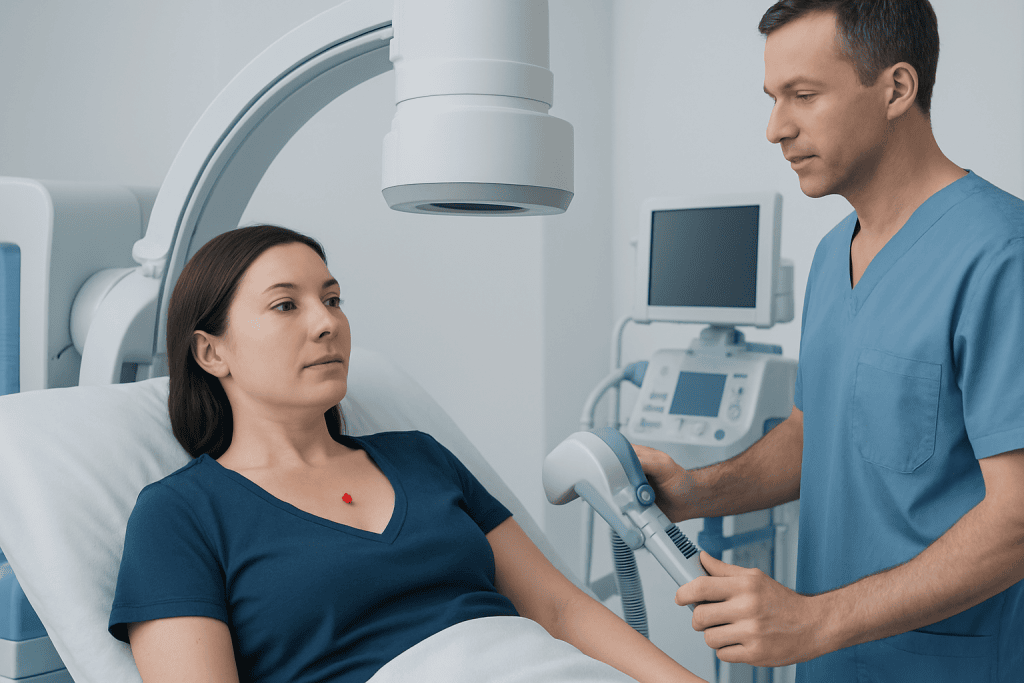
The most recognizable sign of a ruby angioma is a small, well-defined red spot on the skin. The color may be bright red, dark red, or slightly purple, depending on the depth of the blood vessels and the person’s skin tone. The surface is often smooth, and the borders are usually clear.
Most ruby angiomas do not cause symptoms. They are generally painless and not itchy. Many people notice them incidentally while dressing, showering, or looking in the mirror rather than because they feel different from the surrounding skin.
Clothing, shaving or everyday friction can irritate a ruby angioma. It may bleed briefly, crust over, or look inflamed for a few days. That alone isn’t usually a worry — but if it keeps bleeding or staying irritated, have a doctor look at it.
- Usually small, round, and red
- May be flat or slightly raised
- Common on the trunk and upper body
- Often painless, but can bleed if injured
Why ruby angiomas develop
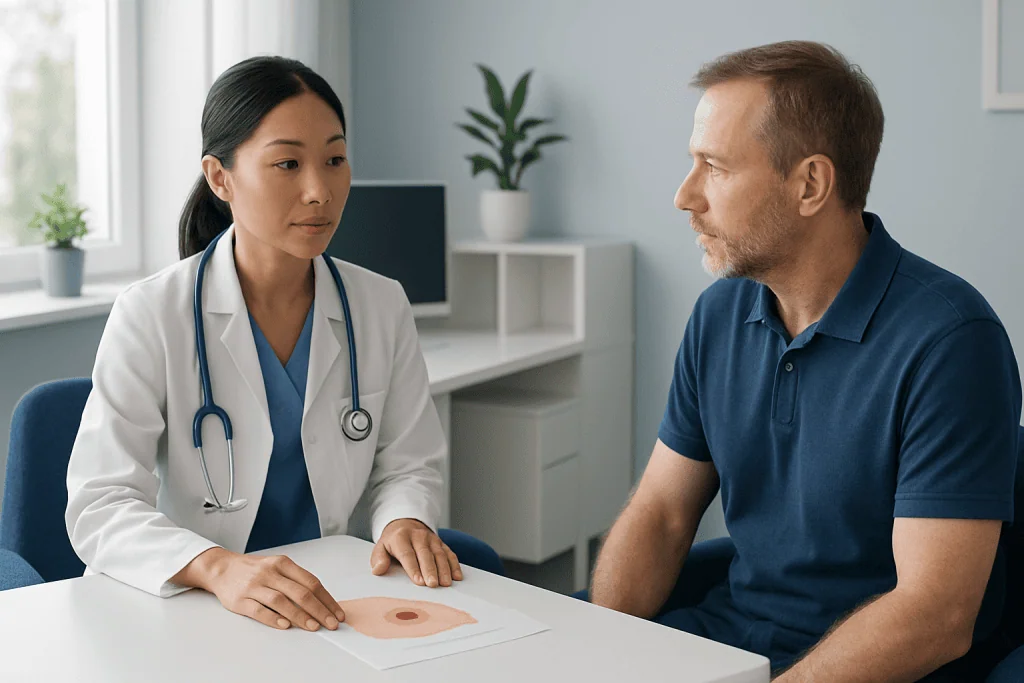
The exact cause of ruby angioma is not fully understood. Doctors believe these lesions develop when small blood vessels in the skin grow or cluster in a localized area. In many cases, they appear without a clear trigger.
Age is one of the strongest associations. Ruby angiomas become more common in adulthood and tend to increase over time. Genetics may also play a role, since some people seem more prone to developing multiple lesions.
Hormonal changes, pregnancy, certain environmental exposures, and some medical conditions have been discussed as possible influences, but they do not explain every case. For most patients, a ruby angioma is simply a benign skin change rather than a sign of an underlying disease.
Don’t assume every red spot on your skin is a ruby angioma. Other vascular growths, inflammatory lesions and skin diseases can look much the same. If you’re in any doubt, get it checked — that’s always the safest route.
How doctors diagnose ruby angioma
Diagnosis is usually straightforward. A doctor, often a dermatologist, can often identify a ruby angioma by looking at its size, color, shape, and location. The medical history also helps, especially whether the spot has been stable or has changed over time.
In some cases, the doctor may use a dermatoscope, a handheld magnifying tool that allows closer examination of skin structures. This can help confirm that the lesion is vascular and benign in appearance. A dermatoscopic exam is painless and performed in the clinic.
If the lesion has unusual features, grows rapidly, bleeds repeatedly without injury, or does not look typical, a biopsy may be recommended. During a biopsy, part or all of the lesion is removed and examined under a microscope. This is done to rule out other conditions and confirm the diagnosis.
Patients should seek assessment sooner if a red lesion becomes dark, uneven, ulcerated, tender, or difficult to distinguish from a changing mole. In uncertain cases, timely dermatology evaluation helps provide reassurance and appropriate next steps.
Treatment options and when removal may help
Most ruby angiomas do not need treatment. If they are not bleeding, painful, or bothersome in appearance, watchful observation is often enough. Because these lesions are benign, leaving them alone is a reasonable option for many people.
Treatment may be considered if the angioma catches on clothing, bleeds often, becomes irritated, or causes cosmetic concern. Common removal methods include laser therapy, electrocautery, cryotherapy in selected cases, or minor shave excision. The best method depends on the lesion’s size, location, and the person’s skin type.
Laser-based removal can target the small blood vessels and may be useful for visible vascular lesions. In some settings, a doctor may discuss laser treatment as a focused option. Other small procedures are often done in an outpatient setting with local anesthesia or minimal discomfort.
Any procedure can have possible side effects such as temporary redness, scabbing, pigment change, or a small scar. A doctor will explain the expected healing process and whether treatment is likely to fully remove the spot or improve its appearance. If removal is planned, consultation with a specialist in skin treatments can help match the technique to the patient’s needs.
Self-care, monitoring, and prevention
There is no proven way to prevent ruby angiomas completely. Since they are strongly associated with age and individual tendency, they may appear even in people with healthy skin habits. Still, regular skin awareness is useful because it helps people notice changes early.
At home, it is best not to pick, scratch, or try to remove a ruby angioma. Because these lesions contain blood vessels, self-removal can cause bleeding, irritation, and infection. If a spot is accidentally injured, gentle pressure with a clean cloth usually stops minor bleeding.
Basic skin care still helps: protect yourself from the sun, avoid repeated friction where you can, and check your skin now and then for anything new or changing. Sun exposure isn’t thought to be a main cause of ruby angiomas, but protecting your skin is a sensible habit for plenty of other reasons.
- Do not cut or squeeze the lesion at home
- Use sunscreen and protective clothing for general skin health
- Monitor for bleeding, rapid growth, or unusual color change
- Arrange a medical review if the diagnosis is uncertain
When to seek medical care
Although ruby angioma is usually harmless, medical advice is important if a skin spot is new and its identity is unclear. A doctor should assess any lesion that changes quickly, develops irregular borders, becomes very dark, forms a sore, or bleeds repeatedly without obvious trauma. These features do not always mean something serious, but they should not be ignored.
People may also want treatment if the angioma is in a visible area, catches on jewelry or clothing, or affects comfort and confidence. In these situations, a doctor can explain whether removal is appropriate and what results to expect. Seeking professional advice is especially helpful when there are many lesions or when they appear suddenly.
International patients who need assessment or treatment can be seen by Acibadem International’s multidisciplinary specialists in JCI-accredited hospitals. When appropriate, patients may be guided to services such as dermatology evaluation or other skin-focused care after a personalized clinical review.
If you’re not sure whether that red spot is really a ruby angioma, book an appointment. A clear answer puts your mind at rest, and if anything does need treating, it gets handled at the right time.
Frequently asked questions
Is ruby angioma dangerous?
Ruby angioma is usually not dangerous. It is a benign growth made of small blood vessels and is not considered cancer. Still, any skin lesion that looks unusual or changes over time should be checked by a doctor.
What is the difference between ruby angioma and cherry angioma?
There is essentially no difference in common clinical use. Ruby angioma and cherry angioma usually refer to the same harmless red vascular skin lesion. Doctors may use either term depending on preference.
Can a ruby angioma turn into cancer?
A true ruby angioma does not usually turn into cancer. However, some other skin conditions can resemble it, which is why a changing or atypical red spot should be examined. Proper diagnosis is the key to reassurance.
Why do ruby angiomas bleed easily?
They can bleed because they are made of tiny blood vessels close to the skin surface. Even mild friction, scratching, or shaving may injure them. If bleeding happens often or without clear injury, a medical review is sensible.
Should a ruby angioma be removed?
Removal is not always necessary. Many people leave them untreated unless they bleed, become irritated, or cause cosmetic concern. A doctor can explain the benefits and possible downsides of removal based on the lesion’s size and location.
Can I remove a ruby angioma at home?
Home removal is not recommended. Trying to cut, burn, or squeeze the lesion can cause bleeding, infection, and scarring. Safe removal should be done by a qualified healthcare professional.
This article is for general information only and is not a substitute for professional medical advice. Please consult a qualified doctor about your individual situation.
Joint and spine care in Turkey — expert assessment & treatment
7 JCI-accredited hospitals · board-certified surgeons · reply within 24h
Add us as a Preferred Source to see more of our trusted health content across Google Search, AI Overviews and Discover.

Medically reviewed by the Acıbadem International Medical Board — August 24, 2026
See our medical review board →
Update history
- PublishedJuly 28, 2026
- Medical review approvedAugust 24, 2026
- Last content updateAugust 24, 2026
References1
- Cherry angioma - MedlinePlus Medical Encyclopedia — medlineplus.gov
Dermatology Specialists at Acibadem




Related Treatments
Related Conditions
More from the Health Library

The Skin Barrier: How It Works and What Damages It

Light Skin, Sun Sensitivity, and Changes Worth Checking

Ingrown Hair Cysts Often Settle With Gentle Skin Care

Palmoplantar Psoriasis Affects the Palms and Soles

Anal Bleaching Is Cosmetic and Carries Skin Risks