Allograft Bone Grafting
Allograft bone grafting is a surgical method in which screened, processed bone from a human donor is placed into a patient to repair or rebuild bone. It is commonly part of spinal…
Quick answer
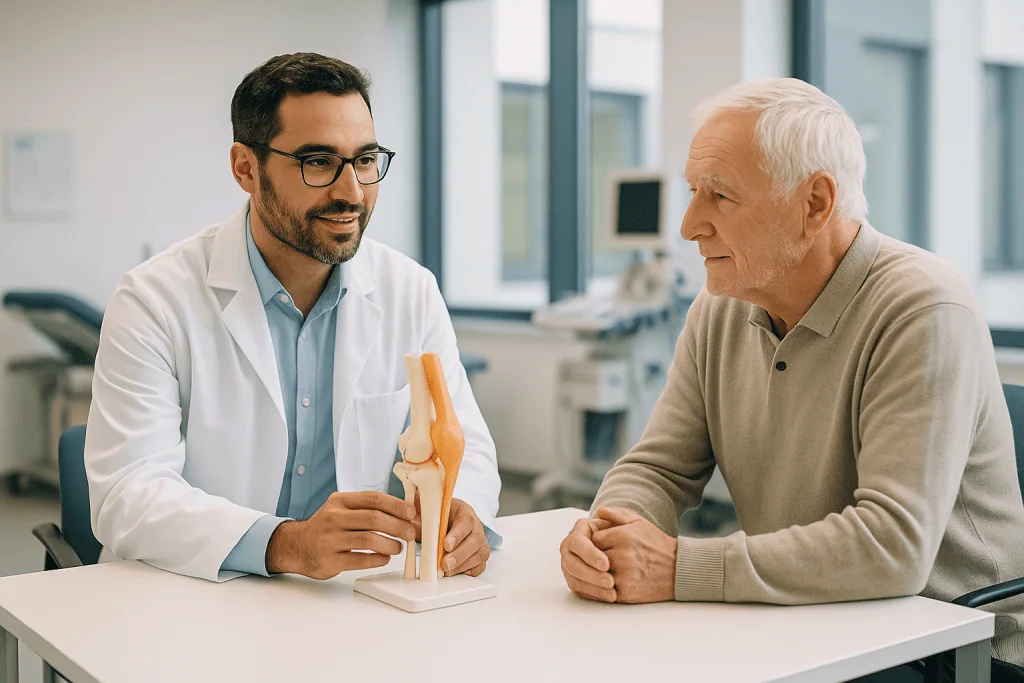
Allograft bone grafting is a surgical technique that uses processed bone from a human donor to fill bone defects, support spinal fusion, repair unhealed fractures or rebuild bone around joint implants. The donor bone acts as a scaffold that the patient's own bone gradually grows into and replaces over months.
What is allograft bone grafting?
Allograft bone grafting is a surgical technique in which bone taken from a human donor is placed into a patient’s body to help repair, replace or rebuild bone. The word allograft means tissue transplanted from one person to another person of the same species. This is different from an autograft, in which bone is taken from another part of the patient’s own body, and from synthetic bone substitutes, which are manufactured materials designed to imitate bone.
Donor bone comes from people who have chosen to donate tissue after death, or in some cases from living donors, for example the top of the thigh bone removed during a hip replacement. Before it can be used, the bone is processed by a tissue bank. It is screened for infections, cleaned, and usually sterilized, frozen or freeze-dried. Because the living cells are removed during processing, allograft bone does not carry the patient’s own bone-forming cells. Instead it works mainly as a scaffold, a framework that the patient’s own bone gradually grows into and replaces over time.
Allograft bone grafting is used in many areas of orthopedic surgery, which is the specialty that treats bones, joints, ligaments and tendons. Common situations include:
- Spinal fusion, an operation that joins two or more vertebrae (the bones of the spine) into one solid bone.
- Fractures that have not healed, known as nonunion, or fractures with missing bone.
- Rebuilding bone lost around a loose or worn artificial joint during revision joint replacement surgery.
- Filling the space left after removing a benign bone tumor or bone cyst (a fluid-filled hollow in the bone).
- Replacing large sections of bone removed because of cancer, sometimes called limb salvage surgery.
- Dental and jaw surgery, where bone is built up before placing dental implants.
In hospital settings, this treatment is usually managed by orthopedic and spine surgeons. At Acibadem, for example, it falls under the Orthopedics & Joint Center and related surgical departments.
Who is a candidate
People often ask who needs allograft bone grafting. In general, a surgeon may recommend it when a bone defect is too large to heal on its own, when bone needs to be added to encourage two bones to fuse, or when structural support is needed while the body’s own bone regrows. Allograft is often chosen instead of autograft when:
- A large amount of bone is needed and the patient’s own supply, usually taken from the pelvis, would not be enough.
- The surgeon wants to avoid a second surgical site and the pain that can follow harvesting the patient’s own bone.
- The patient is older, frail, or has a condition that makes an additional operation on the pelvis undesirable.
- A specific shape or size of bone is needed, such as a shaped block or a whole segment of bone.
Allograft bone grafting may not be suitable, or may need extra caution, in certain situations. These include:
- An active infection at or near the surgical site, because infection can prevent the graft from being incorporated.
- Severe uncontrolled diabetes, heavy smoking, or poor blood supply to the area, all of which can slow bone healing.
- Certain religious or personal objections to receiving donated human tissue; alternatives such as autograft or synthetic materials can be discussed.
- Situations where the surgeon judges that living bone with its own cells (autograft) offers a clearly better chance of healing.
The decision is individual. Your surgeon will weigh the size and location of the defect, your general health, your age and your goals before recommending a graft type.
How the procedure works
The allograft bone grafting procedure is almost always part of a larger operation, such as a spinal fusion, a fracture repair or a joint revision. The steps below describe the graft-related parts in plain language.
Before the operation. Imaging such as X-rays, computed tomography (CT, a detailed cross-sectional X-ray scan) or magnetic resonance imaging (MRI, a scan using magnets and radio waves) helps the surgeon measure the defect and plan the graft. The appropriate type of allograft is ordered from a tissue bank. It may be small chips or granules, a paste-like preparation, a shaped block, or a large structural piece of bone.
During the operation. Most of these procedures are performed under general anesthesia, meaning you are fully asleep. Some smaller grafts, such as those in dental or hand surgery, may use local or regional anesthesia, which numbs only part of the body. The surgeon makes an incision over the affected area and clears away damaged tissue, scar or old cement. The bone edges are prepared so they bleed slightly, which brings in healing cells. The allograft is then shaped to fit and packed or fitted into place. In many cases it is held with metal plates, screws, rods or a cage (a hollow implant filled with bone) so that it stays stable while healing occurs. The wound is closed with stitches or staples, and a dressing is applied.
After the operation. Over the following months, the body treats the allograft as a framework. New blood vessels grow into it, the patient’s own bone cells move in, and the donor bone is slowly remodeled and replaced. This process is called incorporation. It is generally slower than with autograft because the graft has no living cells of its own, and the timeline depends on the graft’s size and location.
Preparation for allograft bone grafting
Preparation depends on the main operation, but several steps are common:
- Medical assessment. Blood tests, an electrocardiogram (a recording of the heart’s electrical activity) and a review of your medications help check that you are fit for anesthesia.
- Medication review. Blood-thinning medicines, some anti-inflammatory painkillers and certain supplements may need to be paused before surgery. Only change medicines on your doctor’s advice.
- Smoking and alcohol. Smoking is strongly linked to poor bone healing and graft failure. Stopping well before surgery, and staying stopped through recovery, is one of the most important things a patient can do.
- Nutrition and blood sugar. Adequate protein, calcium and vitamin D support bone healing. If you have diabetes, good blood sugar control before and after surgery is important.
- Fasting. You will usually be asked not to eat or drink for a set number of hours before general anesthesia.
- Home planning. Depending on the site, you may need crutches, a walker, a brace or help at home for the first weeks. Arranging this in advance makes the return home easier.
You will also be asked to sign a consent form that explains the use of donated human tissue. Tissue banks follow strict screening and tracking rules, and your care team can explain how the graft was processed.
Recovery and aftercare
Allograft bone grafting recovery time varies widely because it depends mostly on the main operation and on where the graft is placed. A small dental graft may allow a return to normal activity within days, while a large structural graft in the leg or spine can take many months to fully incorporate.
In the hospital. Small grafts are often done as outpatient or day-case procedures. Spinal fusion or joint revision surgery typically involves a hospital stay of one to several nights. Pain is managed with medicines, and physical therapists usually begin gentle movement early.
First weeks. The wound normally heals within two to three weeks. Many patients are asked to limit weight or movement on the grafted area during this time, using a brace, sling, cast or crutches as instructed. Swelling and stiffness are common and often improve gradually.
Weeks to months. Return to light daily activities often happens within six to twelve weeks for many orthopedic procedures, though this is highly individual. Follow-up X-rays are used to check that the graft is stable and beginning to fuse or incorporate. Physical therapy helps rebuild strength and range of motion.
Long term. Complete incorporation of a large allograft can take a year or longer. During this period the graft is gradually replaced by the patient’s own bone. Your surgeon may continue periodic imaging to confirm healing.
Helpful aftercare habits include keeping the wound clean and dry as directed, taking medicines as prescribed, avoiding smoking, following weight-bearing limits exactly, and attending every follow-up visit.
Risks and side effects
Understanding allograft bone grafting risks and benefits helps patients make an informed choice. No surgery is free of risk. Possible problems include:
- Infection at the surgical site. Infection involving a graft can be serious and sometimes requires removal of the graft and further surgery.
- Failure to incorporate or nonunion, meaning the graft does not fuse with the surrounding bone. This is more common in smokers, in people with poor blood supply, and with very large grafts.
- Graft resorption, where the body breaks down the graft faster than it builds new bone, leading to loss of volume.
- Fracture of the graft, especially with large structural pieces, before the patient’s own bone has fully replaced them.
- Bleeding, blood clots, nerve or blood vessel injury, and reactions to anesthesia, as with any operation.
- Disease transmission from donor to recipient. Modern donor screening, testing and processing make this very rare, but the risk cannot be described as zero.
- Immune reaction. Processed bone is generally well tolerated, and rejection in the sense seen with organ transplants is unusual, though mild inflammatory responses can occur.
The main benefits, compared with autograft, are avoiding a second wound, shorter operating time, less postoperative pain at a donor site, and availability in large quantities and specific shapes. Compared with synthetic materials, allograft is natural bone with a structure that the body readily remodels. Your surgeon can explain how these trade-offs apply to your particular situation.
Results and outlook
The evidence generally shows that allograft bone is an established and widely used option that leads to successful healing in many patients, particularly when used as filler or in combination with the patient’s own bone and stable fixation. Studies comparing allograft with autograft in spinal fusion and fracture care have often found broadly comparable outcomes for many indications, while autograft is still frequently considered the reference standard because it contains living cells.
Outcomes tend to be better with smaller grafts that have good contact with healthy, well-vascularized bone, and less predictable with very large structural grafts, which take longer to incorporate and carry a higher risk of fracture or nonunion. Patient factors matter a great deal: not smoking, controlled blood sugar, good nutrition and careful adherence to activity restrictions all influence healing.
Because allograft is eventually replaced by the patient’s own bone, a successfully healed graft can provide long-lasting support. Your surgeon will discuss what is realistic for your specific condition rather than offering a single figure that applies to everyone.
Cost considerations
The cost of allograft bone grafting is rarely a stand-alone charge. It is usually part of a wider surgical bill, and several factors influence the total:
- The main operation. A spinal fusion or revision joint replacement is far more complex than a small graft during a dental or hand procedure.
- The type and size of graft. Processed chips or paste generally cost less than large, custom-shaped structural allografts supplied by a tissue bank.
- Implants and devices. Plates, screws, rods and cages used to hold the graft add to the cost.
- Hospital stay and anesthesia. Outpatient procedures cost less than those needing several nights in the hospital.
- Imaging and follow-up. Repeated X-rays or CT scans over many months, physical therapy and clinic visits are part of the overall picture.
- Insurance coverage. Coverage varies by country, insurer and indication; checking in advance is advisable.
Frequently asked questions
What is the allograft bone grafting procedure like from the patient’s point of view?
From your perspective, the procedure is the same as the main operation you are having, such as a fusion or fracture repair. You are usually asleep under general anesthesia, and the graft is placed through the same incision. You will not feel the graft itself, and there is no second wound as there would be with bone taken from your pelvis.
How long is allograft bone grafting recovery time?
It depends mainly on the operation and the graft’s size. Wound healing typically takes a few weeks, many patients return to light daily activities within roughly six to twelve weeks, and full incorporation of larger grafts can take a year or more. Your surgeon will give a timeline based on your situation and follow-up imaging.
What are the main allograft bone grafting risks and benefits?
The main benefits are avoiding a second surgical site, less pain, and having enough bone available in the needed shape. The main risks are infection, failure of the graft to fuse, graft resorption or fracture, and a very small risk of disease transmission despite careful screening. These should be balanced against the risks of leaving the bone defect untreated.
Who needs allograft bone grafting rather than their own bone?
Allograft is often chosen when a large volume of bone is needed, when the patient’s own bone supply is limited, when the surgeon wants to avoid harvesting from the pelvis, or when a specific structural shape is required. In many cases surgeons combine allograft with a smaller amount of the patient’s own bone.
Can my body reject donor bone?
True rejection, as seen with organ transplants, is uncommon with processed bone because the living cells and much of the immune-triggering material are removed during processing. Patients do not usually need anti-rejection medicines. However, the graft can still fail to incorporate for other reasons, such as infection or poor blood supply.
Is donor bone safe?
Donated bone is obtained under regulated conditions, and donors are screened for infectious diseases before the tissue is processed and sterilized or treated. This makes transmission of infection very rare, though no medical treatment can be described as completely risk-free. Your care team can explain the standards followed by the tissue bank that supplied your graft.
Will I need the graft removed later?
Usually not. The graft is intended to be gradually replaced by your own bone and to remain permanently. Removal is generally only considered if the graft becomes infected, fails to heal, or breaks. Metal hardware used to hold the graft is sometimes removed later, but this is a separate decision.
When to see a doctor
You should be assessed by an orthopedic or spine specialist if you have a fracture that has not healed after several months, ongoing pain and instability around an artificial joint, a known bone defect or cyst, or a spinal condition for which fusion has been suggested. A specialist can determine whether any form of bone grafting is appropriate for you.
After allograft bone grafting, seek urgent medical attention if you notice:
- Fever, chills, or increasing redness, warmth, swelling or pus at the wound, which may signal infection.
- Sudden severe pain, a cracking sensation, or new deformity at the grafted area, which could mean the graft or fixation has failed.
- Calf pain, swelling of one leg, chest pain or shortness of breath, which can be signs of a blood clot.
- New numbness, weakness, or loss of bladder or bowel control after spinal surgery.
- Bleeding that does not stop with gentle pressure.
Less urgent but still important reasons to contact your surgical team include pain that is not controlled by prescribed medicines, a wound that is not closing as expected, or difficulty following the activity restrictions you were given. Early assessment often allows problems to be treated before they affect the graft’s healing.
Preparation
- Expect a preoperative medical assessment with blood tests and a review of your medications; blood thinners and some anti-inflammatory drugs may need to be paused on your doctor's advice. Stop smoking well before surgery, since smoking is strongly linked to graft failure. Follow fasting instructions before anesthesia and arrange mobility aids or help at home in advance.
Aftercare
- Keep the wound clean and dry as instructed and take prescribed medicines. Follow weight-bearing and movement limits exactly, using any brace, cast or crutches provided. Attend all follow-up visits and imaging so your surgeon can confirm the graft is incorporating, and continue to avoid smoking throughout healing.
Update history
- PublishedSeptember 13, 2026
- Last content updateSeptember 13, 2026
References2
Doctors Performing This Treatment

Assoc. Prof. Ali Şahin, MD
Orthopedic Surgery & Traumatology
Assoc. Prof. Mehmet Salih Söylemez, MD
Orthopedic Surgery & Traumatology
Assoc. Prof. Serkan Sürücü, MD
Orthopedic Surgery & Traumatology
Abdullah Yener İnce, MD
Orthopedic Surgery & Traumatology
Ali Koç, MD
Orthopedic Surgery & Traumatology
Emre Sarıekiz, MD
Orthopedic Surgery & Traumatology
Güven Genç, MD
Orthopedic Surgery & Traumatology
Mustafa Şengün, MD
Orthopedic Surgery & Traumatology
Prof. Hakan Turan Çift, MD
Orthopedic Surgery & Traumatology
Prof. Umut Yavuz, MD
Orthopedic Surgery & Traumatology
Prof. Ahmet Alanay, MD
Orthopedic Surgery & Traumatology
Prof. Alper Kaya, MD
Orthopedic Surgery & Traumatology
Prof. Arel Gereli, MD
Orthopedic Surgery & Traumatology
Prof. Ata Can Atalar, MD
Orthopedic Surgery & Traumatology
Prof. Aziz Kaya Alturfan, MD
Orthopedic Surgery & Traumatology
Prof. Barış Kocaoğlu, MD
Orthopedic Surgery & Traumatology
Prof. Burak Akan, MD
Orthopedic Surgery & Traumatology
Prof. Cihangir Tetik, MD
Orthopedic Surgery & Traumatology
Prof. Emre Toğrul, MD
Orthopedic Surgery & Traumatology
Prof. Erhan Serin, MD
Orthopedic Surgery & Traumatology
Prof. Fatih Dikici, MD
Orthopedic Surgery & Traumatology
Prof. Göksel Dikmen, MD
Orthopedic Surgery & Traumatology
Prof. Gündüz Tezeren, MD
Orthopedic Surgery & Traumatology
Prof. Harzem Özger, MD
Orthopedic Surgery & TraumatologyMedical Units
Available at These Hospitals