What Is Invasive Cardiology? Tests and Treatments Explained

Invasive cardiology uses catheters inserted through blood vessels to examine or treat the heart. Common procedures include cardiac catheterization, coronary angiography, angioplasty, and stent placement.
Key Takeaways
- Invasive cardiology uses catheters inserted through blood vessels to examine or treat the heart.
- Common procedures include cardiac catheterization, coronary angiography, angioplasty, and stent placement.
- These treatments are often used for chest pain, blocked arteries, heart attacks, valve problems, or abnormal heart rhythms.
- Many invasive cardiology procedures are minimally invasive and involve shorter hospital stays than open-heart surgery.
- A cardiologist chooses tests and treatments based on symptoms, imaging, overall health, and the urgency of the condition.
Invasive cardiology is a branch of heart care that uses thin tubes called catheters to diagnose and treat certain cardiovascular conditions. These procedures can help restore blood flow, assess heart function, and guide treatment with less recovery time than many traditional surgeries.
Overview
Invasive cardiology is a medical specialty focused on diagnosing and treating heart and blood vessel conditions using catheters. A catheter is a thin, flexible tube that is usually inserted through an artery or vein in the wrist, arm, or groin and guided toward the heart. This allows doctors to assess blood flow, pressure, and heart structure, and in many cases to treat a problem during the same procedure.
The term “invasive” can sound concerning, but these procedures are commonly less invasive than open-heart surgery. Many are performed through a small skin puncture rather than a large incision. For this reason, invasive cardiology often plays a key role when a person needs fast diagnosis or treatment, especially for blocked coronary arteries, some valve problems, or certain rhythm disorders.
Invasive cardiology overlaps with interventional cardiology. In everyday use, people may hear both terms used together. Diagnostic invasive cardiology includes tests such as cardiac catheterization and coronary angiography, while interventional procedures include treatments such as balloon angioplasty, coronary stent placement, and some types of catheter-based valve repair.
These procedures are often recommended after noninvasive testing suggests a significant heart problem. For example, a patient may first undergo non-invasive cardiology testing or echocardiography before a cardiologist decides whether a catheter-based procedure is needed.
When Invasive Cardiology Is Used
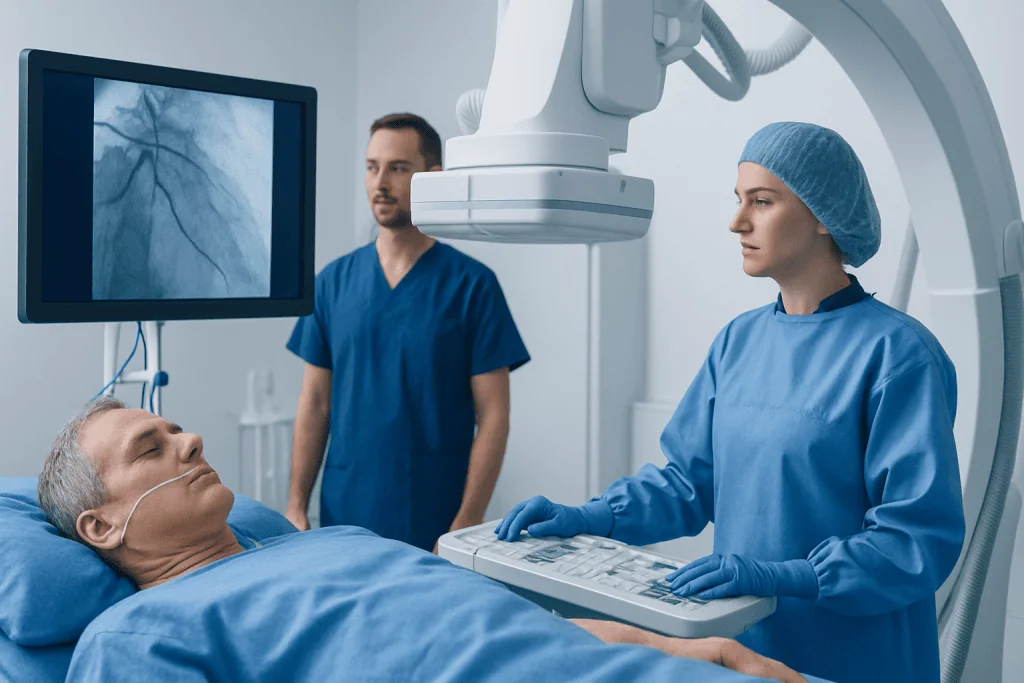
Invasive cardiology is used when doctors need more precise information than can be provided by external tests alone, or when treatment needs to happen quickly. A common reason is suspected narrowing or blockage in the coronary arteries, which supply blood to the heart muscle. This may happen in people with ongoing chest pain, an abnormal stress test, or symptoms of a heart attack.
It can also be used to evaluate heart valve disease, congenital heart defects, unexplained shortness of breath, or problems with heart pumping function. In some cases, it helps clarify whether symptoms are related to coronary artery disease, heart failure, or another cardiovascular condition.
Doctors may recommend invasive cardiology in both emergency and planned situations. In an emergency, such as myocardial infarction, opening a blocked artery as quickly as possible can help limit heart muscle damage. In a scheduled setting, the goal may be to confirm a diagnosis, assess severity, or choose the best treatment plan.
Not every heart condition requires an invasive approach. Some people are best managed with medications, lifestyle changes, and follow-up monitoring. The decision depends on symptoms, test results, overall health, and the potential benefits and risks of the procedure.
Common Tests and Procedures

One of the most common diagnostic procedures is cardiac catheterization. During this test, a catheter is guided into the heart to measure pressures, evaluate blood flow, and sometimes assess how well the heart is pumping. A related test, coronary angiography, uses contrast dye and X-ray imaging to show whether the coronary arteries are narrowed or blocked.
If a blockage is found, treatment may sometimes be performed immediately. Balloon angioplasty opens a narrowed artery by inflating a small balloon at the site of the blockage. A stent, which is a tiny mesh tube, is often placed to help keep the artery open. This is a standard treatment for some people with chest pain, unstable plaques, or acute coronary syndromes.
Other invasive cardiology procedures may include intravascular imaging, pressure-wire testing to assess how severe a narrowing is, and catheter-based treatments for structural heart problems. Some patients with rhythm disorders may also be referred for ablation procedures, although the exact approach depends on the type of arrhythmia and the center’s expertise.
In some situations, catheter-based treatment is not enough or is not the best option. If the artery disease is complex or affects multiple major vessels, a heart team may recommend coronary artery bypass surgery instead of or after catheter-based treatment.
How to Prepare and What Happens During the Procedure
Before an invasive cardiology procedure, the care team reviews the person’s symptoms, medications, allergies, kidney function, and bleeding risk. Blood tests, an electrocardiogram, and imaging may be done in advance. Patients are often asked not to eat or drink for several hours before the procedure, and the doctor may advise temporary changes to blood thinners, diabetes medicines, or other drugs.
Most procedures are done in a specialized catheterization laboratory. The patient usually remains awake but receives medication to help with relaxation and comfort. After the skin is cleaned and numbed, the doctor inserts a catheter through a blood vessel in the wrist or groin and guides it to the heart using imaging for direction.
During angiography, contrast dye is injected so the arteries can be seen clearly on X-ray. Some people feel brief warmth when the dye is given. If treatment such as angioplasty or stenting is needed, special tools can be passed through the catheter to the exact site of the blockage.
Many procedures take under a few hours, depending on their complexity. Afterward, the catheter is removed, and pressure or a closure device is used to reduce bleeding. Patients are monitored while the access site, heart rhythm, blood pressure, and symptoms are checked closely.
Benefits, Risks, and Recovery
The main benefit of invasive cardiology is that it can provide detailed, real-time information and, in many cases, immediate treatment. For example, in a blocked coronary artery, reopening the vessel promptly can improve blood flow and reduce damage to the heart. Because these procedures are minimally invasive, recovery is often quicker than with open surgery.
As with any medical procedure, there are risks. These can include bleeding or bruising at the catheter site, blood vessel injury, allergic reaction to contrast dye, irregular heart rhythms, kidney strain from contrast, infection, stroke, or heart attack. Serious complications are uncommon, but the exact risk varies depending on the procedure, the person’s age, kidney function, and other medical conditions.
Recovery is usually straightforward. Some patients go home the same day, while others stay overnight or longer if the procedure was done urgently or if treatment was more complex. Patients are commonly advised to rest, drink fluids if appropriate, avoid heavy lifting for a short time, and watch for swelling, bleeding, chest pain, fever, or worsening shortness of breath.
Long-term recovery also depends on treating the underlying heart condition. After a procedure, doctors often recommend medication, risk-factor control, and lifestyle changes. In many cases, a supervised program such as cardiac rehabilitation supports safe recovery, exercise, and education.
Conditions Treated With Invasive Cardiology
Invasive cardiology is best known for treating narrowed or blocked coronary arteries, but its role is broader. It can help manage stable and unstable angina, acute coronary syndromes, some congenital heart defects, certain valve conditions, and selected structural heart problems. It may also be part of the evaluation of cardiomyopathies, pulmonary hypertension, or complex cases of unexplained heart symptoms.
Some patients undergo invasive testing because symptoms such as chest discomfort or shortness of breath do not match the results of noninvasive tests. In other cases, invasive procedures help determine how advanced a known condition is, such as aortic valve stenosis or cardiomyopathy.
For heart rhythm disorders, treatment pathways may involve both invasive and noninvasive care. Depending on the diagnosis, a person may need medication, monitoring devices, or procedures performed by an electrophysiologist, a cardiologist who specializes in the heart’s electrical system. Care is usually individualized rather than based on one test alone.
Modern cardiology often uses a team-based approach. Interventional cardiologists, imaging specialists, heart failure experts, cardiac surgeons, anesthesiologists, and rehabilitation teams may all contribute to deciding whether catheter-based treatment, surgery, or medical therapy is the safest and most effective next step.
Prevention, Follow-Up, and When to See a Doctor
Even when invasive cardiology successfully treats a specific blockage or structural issue, long-term heart health still depends on prevention. Important steps include controlling blood pressure, cholesterol, and blood sugar; not smoking; staying physically active; eating a balanced diet; maintaining a healthy weight; and taking prescribed medicines consistently. These measures help reduce the chance of future heart events.
Regular follow-up matters after any heart procedure. A cardiologist may review symptoms, blood pressure, exercise tolerance, lab results, and medications. Some patients also need repeat imaging or stress testing. If a stent was placed, taking antiplatelet medication exactly as prescribed is especially important unless a doctor advises otherwise.
People should seek medical attention promptly for symptoms such as persistent chest pain, new shortness of breath, fainting, severe palpitations, sudden weakness, or bleeding from the procedure site. Emergency care is needed if symptoms suggest a heart attack or stroke. It is always safest to discuss new or worsening symptoms with a qualified healthcare professional.
For patients seeking coordinated cardiovascular care, Acibadem International’s multidisciplinary specialists and JCI-accredited hospitals diagnose and treat heart conditions for international patients, including catheter-based and surgical options when appropriate.
Frequently asked questions
What is the difference between invasive and noninvasive cardiology?
Noninvasive cardiology uses tests done from outside the body, such as electrocardiograms, echocardiograms, CT scans, or stress tests. Invasive cardiology uses catheters placed inside blood vessels to directly examine or treat the heart and arteries. Invasive procedures usually provide more detailed information and can allow immediate treatment.
Is cardiac catheterization the same as surgery?
Cardiac catheterization is a procedure, but it is not the same as open-heart surgery. It is usually done through a small puncture in the wrist or groin using a thin catheter. Recovery is often quicker, although some patients may still need surgery depending on the findings.
Why would someone need a coronary angiogram?
A coronary angiogram is used to look for narrowing or blockages in the coronary arteries. A doctor may recommend it for chest pain, abnormal stress test results, suspected heart attack, or ongoing symptoms that need a clear diagnosis. It helps guide whether medication, stenting, or surgery is the best treatment.
Are invasive cardiology procedures painful?
Most people feel pressure rather than pain during the procedure because the access site is numbed with local anesthetic. Sedation is often given to help the patient relax. Mild soreness or bruising at the insertion site can happen afterward, but severe pain should be reported to the care team.
How long does it take to recover after a stent procedure?
Recovery time varies, but many patients return to light activities within a few days. Some go home the same day, while others stay overnight for monitoring. The doctor will give specific advice about lifting, exercise, medications, and when normal routines can resume.
Can invasive cardiology prevent a heart attack?
In some situations, yes. If a dangerous blockage is found and treated, restoring blood flow can reduce the risk of serious heart damage or prevent worsening symptoms. However, preventing heart attacks also depends on long-term risk reduction, including medicines, blood pressure and cholesterol control, and healthy lifestyle habits.
This article is for general information only and is not a substitute for professional medical advice. Please consult a qualified doctor about your individual situation.
Invasive Cardiology in Turkey — costs, top hospitals & a free quote
JCI-accredited · board-certified surgeons · reply within 24h
Add us as a Preferred Source to see more of our trusted health content across Google Search, AI Overviews and Discover.

Cardiology Department
Diagnosis and treatment of heart and vascular conditions, from prevention to advanced interventional procedures.
93 specialists in this unitRelated Treatments
Related Conditions
More from the Health Library

What Is Nuclear Cardiology?

Hypertension: Early Signs, Causes, and How It Is Diagnosed

Endovascular Aneurysm Repair Recovery: Hospital Stay, Walking, and Follow-Up Scans

Coronary Stent Recovery: Driving, Exercise, Travel, and Follow-Up

Ablation Recovery Timeline: What to Expect in the First Days and Weeks