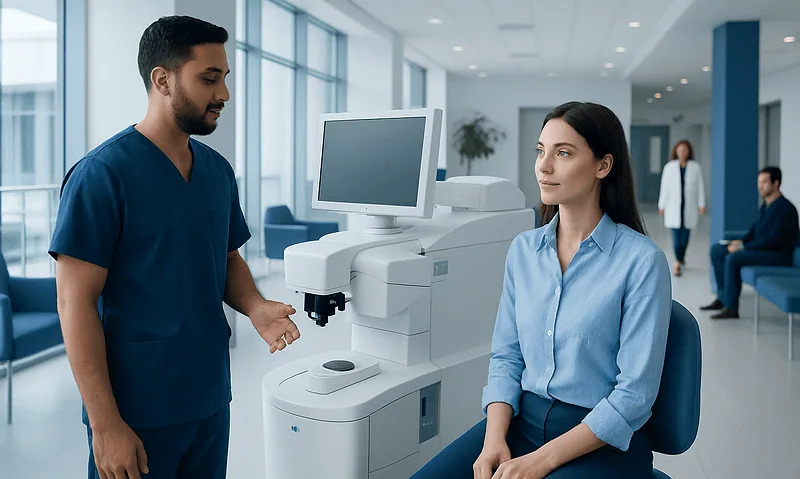
Are You Awake During LASIK? What Happens in Surgery

LASIK is typically performed while the patient is awake, not under general anesthesia. Numbing eye drops are used so the eye should not feel pain during surgery.
Key Takeaways
- LASIK is typically performed while the patient is awake, not under general anesthesia.
- Numbing eye drops are used so the eye should not feel pain during surgery.
- Patients may notice pressure, lights, or blurry vision for a short time during the procedure.
- The treatment is usually quick, and many people go home the same day.
- Not everyone is a good candidate for LASIK, so a detailed eye evaluation is essential.
Yes, most people are awake during LASIK. The procedure is usually brief, the eye is numbed with drops, and the surgical team guides the patient through each step to help the experience feel calm and manageable.
Overview: Are You Awake During LASIK?
The short answer is yes. During LASIK, the patient is usually awake the entire time. This is normal and expected because the procedure is very short and depends on the patient being able to look at a light and follow simple instructions from the surgeon.
Although the patient is awake, the eye is numbed with anesthetic drops. These drops prevent pain, so most people describe LASIK as uncomfortable rather than painful, or simply unusual because of the bright lights and brief pressure. In some centers, a mild medicine to help relaxation may also be offered, but general anesthesia is not usually needed.
LASIK is a type of laser vision correction used to treat refractive errors such as nearsightedness, farsightedness, and astigmatism. The goal is to reshape the cornea so light focuses more accurately on the retina, which can reduce dependence on glasses or contact lenses.
Because vision and eye health vary from person to person, LASIK is not the right option for everyone. A careful eye examination helps determine whether LASIK or another approach may be more suitable.
What Happens During LASIK Surgery?
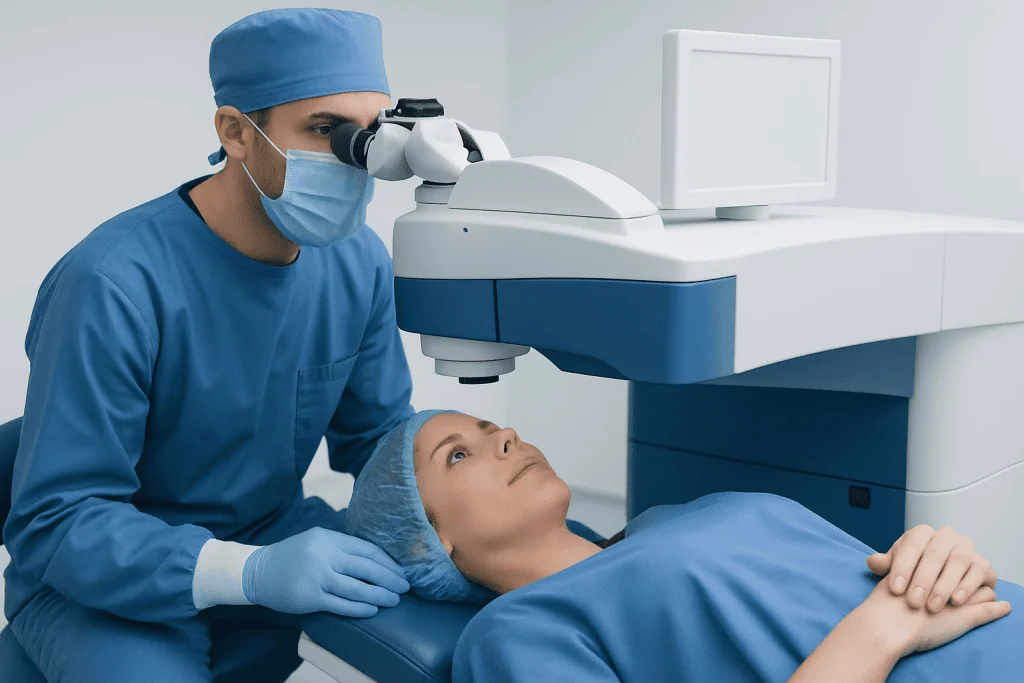
LASIK is usually done as an outpatient procedure, meaning the patient goes home the same day. Before surgery begins, the eye area is cleaned, numbing drops are placed in the eye, and an instrument is used to keep the eyelids open so blinking does not interfere with treatment.
The surgeon then creates a very thin flap in the cornea. This may be done with a femtosecond laser or another precise surgical instrument, depending on the technique used. The flap is gently lifted, and an excimer laser reshapes the underlying corneal tissue according to the patient’s prescription.
During the laser part of the procedure, the patient is usually asked to look at a fixation light. The vision may become blurry or dim for a few moments, which can feel strange but is expected. After the cornea is reshaped, the flap is placed back into position, where it naturally adheres without stitches in most cases.
The treatment itself is typically very quick for each eye. Even so, the patient is supported throughout the process with step-by-step instructions. Knowing what to expect often makes the experience feel less stressful and more controlled.
What Does LASIK Feel Like?

Many people wonder whether being awake means they will feel the surgery. In most cases, the answer is no pain, but some sensations are common. Patients may feel mild pressure for a few seconds, especially when the corneal flap is being created.
They may also notice bright lights, shadows, movement, or a temporary loss of clear vision during parts of the procedure. Some people detect a faint smell during laser use. These sensations can be surprising, but they are part of the normal surgical experience and do not usually mean anything is wrong.
Because the eye is numb, sharp pain is not expected during standard LASIK. If a patient feels significant discomfort, they should tell the surgeon immediately. The team can pause, reassure the patient, and make sure the eye remains comfortable.
It may help to remember that being awake during LASIK is beneficial. The patient can respond to instructions, keep the eye directed appropriately, and communicate with the team if needed. This active cooperation supports both safety and precision.
Who Is a Good Candidate for LASIK?
LASIK can be a good option for adults with stable vision and healthy eyes who want to reduce dependence on glasses or contact lenses. It is most often considered for nearsightedness, farsightedness, and astigmatism. However, a person’s prescription alone does not determine candidacy.
Corneal thickness and shape are especially important. If the cornea is too thin or irregular, LASIK may not be advised. Conditions such as dry eye disease, active eye infection, uncontrolled autoimmune disease, pregnancy-related vision changes, or certain corneal disorders can also affect eligibility.
One important example is keratoconus, a condition in which the cornea becomes thin and cone-shaped. In this situation, LASIK is usually not appropriate because it can further weaken the cornea. A specialist may suggest other treatments or another form of vision correction instead.
For some patients, alternatives such as PRK or ReLEx SMILE may be discussed. The best procedure depends on the person’s eye measurements, lifestyle, occupation, and long-term visual goals.
How Doctors Decide If LASIK Is Safe
Safety begins well before the day of surgery. A detailed preoperative assessment measures the cornea, checks the tear film, evaluates the pupil, reviews the prescription, and looks for any signs of eye disease. This step is essential because it helps identify patients who are likely to benefit and those who may need a different treatment plan.
The evaluation usually includes corneal mapping, refraction testing, and a general eye health examination. Doctors also ask about medications, medical conditions, previous eye problems, and work or sports activities. People who wear contact lenses may need to stop wearing them for a period before testing so the cornea can return to its natural shape.
If the surgeon sees reasons to delay or avoid LASIK, this does not necessarily mean vision correction is impossible. It simply means that another option may be safer or more effective. Patient selection is one of the most important parts of achieving a good outcome.
Questions about expectations are also important. LASIK can reduce reliance on corrective lenses, but it does not guarantee perfect vision in every situation, and some people may still need glasses for certain tasks, especially with aging.
Recovery After LASIK
Recovery usually begins quickly, but the first few hours can bring tearing, burning, light sensitivity, or the feeling that something is in the eye. These symptoms are common and often improve within a day or two. Resting with the eyes closed after surgery is commonly advised.
Vision may be blurry or fluctuate at first, then gradually become clearer over days to weeks. The doctor typically prescribes medicated eye drops and lubricating drops to support healing and reduce the risk of inflammation or infection. It is important to use these exactly as instructed.
Patients are usually told not to rub their eyes, swim, or use eye makeup for a period after surgery. Protective shields may be recommended while sleeping during the early recovery phase. Follow-up visits help confirm that the cornea is healing properly and that vision is improving as expected.
Most people can return to normal daily activities fairly soon, but exact timing varies. Activities such as driving, screen work, exercise, and travel should be discussed with the treating doctor. If recovery seems slower than expected, medical advice should be sought rather than waiting and guessing.
Possible Risks and Side Effects
Like any procedure, LASIK has potential risks and side effects. Common short-term effects include dry eyes, glare, halos around lights, light sensitivity, and fluctuating vision. These often improve over time as the eye heals, though some symptoms may last longer in certain patients.
Less common but more serious complications can include infection, inflammation, problems with the corneal flap, or undercorrection and overcorrection of vision. Rarely, some people may continue to need glasses or may need an enhancement procedure. This is one reason careful assessment and follow-up are so important.
Patients should also understand that age-related changes such as presbyopia can still develop after LASIK. This means reading glasses may become necessary later in life even if distance vision improves well. LASIK corrects existing refractive error, but it does not stop natural aging of the eye.
When performed in appropriately selected patients by experienced ophthalmic teams, LASIK is widely considered safe and effective. Still, it is best approached as a medical procedure with benefits, limits, and responsibilities before and after surgery.
When to See a Doctor and Questions to Ask
Anyone considering LASIK should see an ophthalmologist for a full evaluation rather than assuming they are a candidate. Professional assessment is especially important for people with dry eyes, changing prescriptions, previous eye injuries, corneal disease, or systemic health conditions that may affect healing.
After surgery, a doctor should be contacted promptly if there is severe pain, sudden worsening of vision, marked redness, discharge, or symptoms that seem to be getting worse instead of better. Early attention can help identify and treat complications quickly.
Helpful questions to ask include whether the patient is a good candidate, what alternative procedures may be appropriate, what side effects are most likely, how long recovery may take, and what results are realistic. Clear communication helps patients make informed choices and feel more comfortable on the day of treatment.
For international patients seeking specialist care, Acibadem International’s multidisciplinary eye teams in JCI-accredited hospitals evaluate and treat refractive conditions, including LASIK, based on individual eye structure and visual needs.
Frequently asked questions
Are people fully awake during LASIK?
Yes, most people are fully awake during LASIK. The eyes are numbed with drops, and some patients may receive a mild medicine to help them relax, but general anesthesia is not usually required.
Does LASIK hurt if the patient is awake?
LASIK is not usually painful because numbing eye drops are used before the procedure. Some people feel pressure, notice lights, or experience mild discomfort, but sharp pain is not expected.
Can a person blink or move during LASIK?
The eyelids are gently held open with a small instrument so blinking does not interrupt the procedure. Small eye movements are also accounted for by modern laser tracking systems, and the surgeon gives clear instructions throughout.
How long does LASIK surgery take?
The laser treatment itself usually takes only a short time for each eye. The full visit is longer because it includes preparation, checks before and after the procedure, and recovery instructions.
What will a patient see during LASIK?
During LASIK, the patient may see bright lights, shadows, movement, or temporary blurring. Vision may dim briefly during certain steps, which can feel unusual but is generally normal.
Is LASIK safe for everyone?
No, LASIK is not suitable for everyone. People with certain corneal problems, unstable vision, severe dry eye, or some medical conditions may be better suited to another treatment.
How soon can someone return to normal activities after LASIK?
Many people resume light daily activities within a day or two, but healing times vary. The doctor will advise when it is safe to drive, exercise, swim, or use eye makeup based on the individual recovery process.
This article is for general information only and is not a substitute for professional medical advice. Please consult a qualified doctor about your individual situation.
LASIK in Turkey — costs, top hospitals & a free quote
JCI-accredited · board-certified surgeons · reply within 24h
Add us as a Preferred Source to see more of our trusted health content across Google Search, AI Overviews and Discover.

Related Treatments
More from the Health Library

Myopia in Children: Nearsightedness and Progression Control
Contact Lenses for Dry Eyes: Are They Still an Option?

What Does OD Mean in Eye Care? Eye Doctor Titles Explained
Astigmatism Surgery: LASIK, SMILE, or Toric Lens Treatment?

Comprehensive Eye Checkups: What an Eye Care Center Can Detect Early