Egg Freezing: Candidates, Process, Success Factors, and Risks

Egg freezing involves ovarian stimulation, egg retrieval, and rapid freezing of mature eggs using vitrification. The age at which eggs are frozen is one of the most important factors influencing future success.
Key Takeaways
- Egg freezing involves ovarian stimulation, egg retrieval, and rapid freezing of mature eggs using vitrification.
- The age at which eggs are frozen is one of the most important factors influencing future success.
- Candidates may include people delaying pregnancy, those facing cancer treatment, or individuals with conditions that may reduce fertility.
- Egg freezing is generally safe, but possible risks include medication side effects, ovarian hyperstimulation, and rare procedure-related complications.
- A fertility specialist can provide individualized counseling about expected egg numbers, timing, costs, storage, and future IVF use.
Egg freezing, also called oocyte cryopreservation, is a fertility preservation option that stores mature eggs for possible future pregnancy. It may be considered for medical, personal, or family-planning reasons, but outcomes depend on several factors and are not guaranteed.
Overview
Egg freezing is a fertility preservation method in which mature eggs are collected from the ovaries, frozen, and stored for possible use later. The medical term is mature oocyte cryopreservation. If the person decides to try for pregnancy in the future, the eggs can be thawed, fertilized with sperm in a laboratory through in vitro fertilization, and transferred as embryos to the uterus.
Modern egg freezing usually uses a rapid-freezing technique called vitrification. This method helps reduce ice crystal formation inside the egg, which is important because eggs are delicate cells with high water content. Vitrification has improved the reliability of egg survival after thawing compared with older slow-freezing methods.
Egg freezing can offer more reproductive flexibility, but it should be understood as an option rather than an insurance policy. It cannot guarantee a future baby, and some people may need more than one treatment cycle to store a reasonable number of eggs. A fertility specialist can explain realistic expectations based on age, ovarian reserve, health history, and personal goals.
Who May Be a Candidate for Egg Freezing
People consider egg freezing for different reasons. Some do so because they are not ready to become pregnant but would like to preserve the possibility of using younger eggs later. Others need fertility preservation before medical treatments that may harm the ovaries, such as certain chemotherapy, radiotherapy, or ovarian surgery.
Egg freezing may also be discussed for individuals with medical conditions that can reduce fertility over time. These may include endometriosis, some autoimmune conditions requiring gonadotoxic treatment, genetic conditions associated with early menopause, or a family history of premature ovarian insufficiency. People undergoing gender-affirming treatment may also consider egg freezing before starting therapies that could affect fertility.
Common situations where egg freezing may be considered include:
- Planned delay of pregnancy for personal, educational, career, or relationship reasons
- Fertility preservation before cancer treatment or other medically necessary therapy
- Low ovarian reserve or risk of declining ovarian function
- Need to avoid embryo freezing for personal, ethical, or relationship reasons
- Fertility preservation before surgery involving the ovaries
The best candidacy decision is individualized. A doctor will consider age, menstrual history, hormone test results, ultrasound findings, medical conditions, and whether pregnancy may be medically safe in the future.
The Egg Freezing Process

The process begins with a consultation and fertility assessment. This usually includes a medical history review, pelvic ultrasound to count small follicles in the ovaries, and blood tests such as anti-Müllerian hormone and other reproductive hormones. These tests help estimate ovarian reserve, although they do not predict fertility with certainty.
During ovarian stimulation, injectable hormone medications are used for several days to encourage multiple follicles to mature at the same time. The patient is monitored with ultrasound and blood tests so the care team can adjust medication and choose the safest timing for egg retrieval. When the follicles are ready, a trigger injection is given to help the eggs complete maturation.
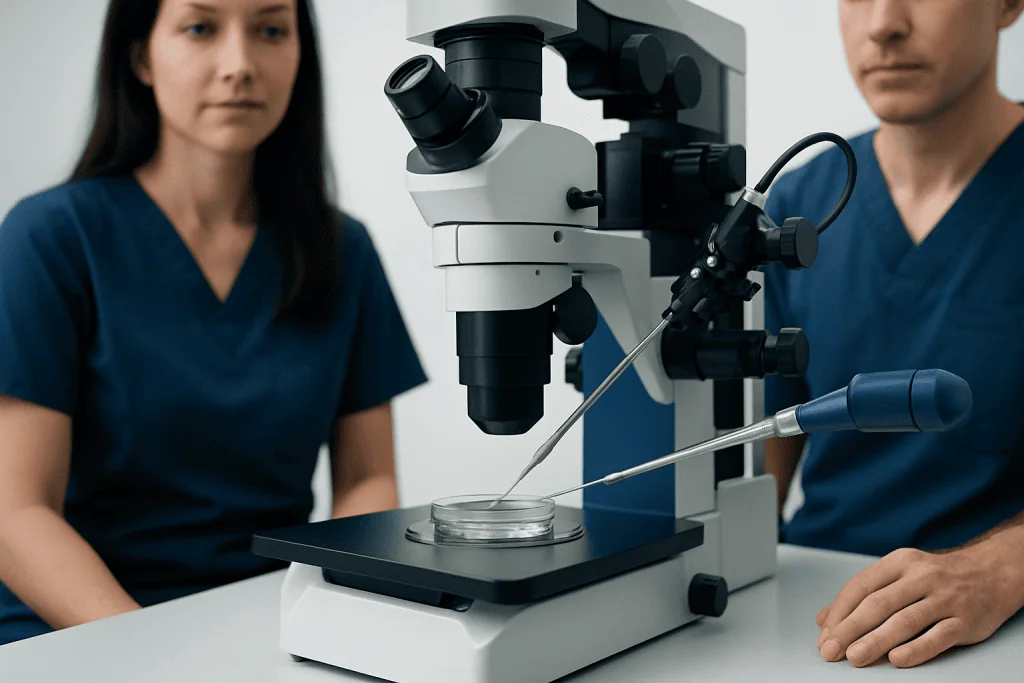
Egg retrieval is a short procedure performed with ultrasound guidance, usually through the vagina. A thin needle is used to collect fluid from the follicles, and the embryology laboratory identifies the eggs. Mature eggs are then frozen by vitrification and placed in secure cryostorage tanks.
Most people return home the same day and may resume many routine activities within a short time, depending on how they feel and their doctor’s instructions. Mild cramping, bloating, or spotting can occur after retrieval. The clinic will explain how many mature eggs were frozen and discuss whether another cycle may be useful based on the person’s goals.
Success Factors and Future Use
The most important success factor is the age at which the eggs are frozen. Eggs frozen at a younger age generally have a higher chance of resulting in healthy embryos later because egg quality declines with age, especially from the mid-30s onward. This is why timing is a key part of counseling for elective egg freezing.
The number of mature eggs stored also matters. Not every frozen egg will survive thawing, fertilize normally, develop into a transferable embryo, implant, and lead to a live birth. For this reason, fertility specialists often discuss target egg numbers based on age and reproductive goals, while explaining that these are estimates rather than guarantees.
Other factors include ovarian reserve, response to stimulation, sperm quality at the time of future use, embryo development, uterine health, and the expertise of the laboratory. Lifestyle and overall health may also influence fertility treatment outcomes. Smoking, certain untreated medical conditions, and significant extremes of body weight can affect reproductive health and should be addressed with medical guidance.
When frozen eggs are used in the future, they are thawed and commonly fertilized using intracytoplasmic sperm injection, in which a single sperm is injected into each mature egg. Resulting embryos may be transferred to the uterus or, in some cases, tested or frozen for later transfer. The treatment plan depends on age at embryo transfer, medical history, embryo development, and patient preferences.
Risks and Possible Side Effects
Egg freezing is generally considered safe when performed by trained fertility teams, but it is still a medical procedure. The hormone medications used for ovarian stimulation can cause temporary bloating, breast tenderness, mood changes, headaches, or abdominal discomfort. These symptoms usually improve after the cycle is completed.
A less common but important risk is ovarian hyperstimulation syndrome, in which the ovaries respond strongly to stimulation and fluid shifts occur in the body. Modern stimulation protocols and careful monitoring have reduced this risk. Patients should contact their clinic promptly if they develop severe abdominal pain, rapid weight gain, shortness of breath, persistent vomiting, or markedly decreased urination after treatment.
Egg retrieval carries small risks such as bleeding, infection, injury to nearby organs, or reaction to anesthesia or sedation. These complications are uncommon, but patients should receive clear instructions about warning signs after the procedure. Emotional stress is also possible, especially if the response to stimulation is lower than expected.
There are also practical and ethical considerations. Eggs may remain stored for years, so patients should understand storage policies, consent forms, what happens if storage fees are not continued, and decisions about unused eggs. Laws and regulations vary by country, so local legal and clinic-specific guidance is important.
Preparation, Prevention, and Self-Care
Before starting an egg freezing cycle, patients can prepare by reviewing their health history, current medications, allergies, and previous surgeries with the fertility team. People with chronic conditions such as thyroid disease, diabetes, autoimmune disease, or blood clotting disorders may need coordination between specialists to make treatment as safe as possible.
Healthy habits can support general reproductive health, although they cannot stop natural age-related egg decline. Patients are usually advised to avoid smoking and recreational drugs, limit alcohol, maintain a balanced diet, and discuss supplements or medications with their doctor before treatment. It is also helpful to plan the cycle schedule in advance because monitoring visits can be frequent.
Practical preparation may include learning how to use injectable medications, arranging transportation for the retrieval day, and understanding activity restrictions after the procedure. Patients should ask how they will be contacted with test results, what symptoms require urgent advice, and how long eggs can be stored under local regulations.
Emotional self-care is also important. Egg freezing can bring hope, relief, uncertainty, or disappointment, sometimes all within the same cycle. Counseling, support groups, and open communication with the care team can help patients make informed decisions and feel supported throughout the process.
When to See a Fertility Specialist
A consultation with a fertility specialist is appropriate whenever someone is considering egg freezing, especially if they are in their 30s, have irregular periods, have known endometriosis, have had ovarian surgery, or have a family history of early menopause. People who have been advised to start cancer treatment or other potentially fertility-impacting therapy should seek urgent fertility preservation counseling before treatment begins, if time allows.
Medical advice is also recommended if a person has symptoms that may suggest a reproductive health condition, such as very painful periods, absent periods, pelvic pain, or known hormonal disorders. Early evaluation does not mean treatment is required immediately, but it can provide useful information about options and timing.
Patients should seek prompt medical guidance after an egg retrieval if they experience severe pain, heavy bleeding, fever, fainting, shortness of breath, persistent vomiting, or rapidly worsening abdominal swelling. These symptoms are not expected and should be assessed by a healthcare professional.
Acibadem International’s multidisciplinary specialists and JCI-accredited hospitals provide fertility assessment and egg freezing services for international patients, including coordination across gynecology, reproductive medicine, embryology, and related specialties. Any decision should be made after individualized counseling with a qualified fertility doctor.
Frequently asked questions
What is the best age to freeze eggs?
There is no single perfect age, but eggs frozen at a younger age generally have better potential for future use. Many people discuss egg freezing in their early to mid-30s, although medical reasons may require earlier action. A fertility specialist can interpret ovarian reserve tests and personal goals to help guide timing.
Does egg freezing guarantee a future pregnancy?
No. Egg freezing improves the chance of having eggs available later, but it cannot guarantee pregnancy or a baby. Success depends on age at freezing, the number and quality of eggs, thaw survival, fertilization, embryo development, uterine health, and other factors.
How long can frozen eggs be stored?
Frozen eggs can often be stored for many years when maintained correctly in cryostorage, but storage limits and consent rules vary by country and clinic. Patients should ask about local regulations, renewal of consent, fees, and instructions for unused eggs. Keeping contact information updated with the clinic is important.
Is egg retrieval painful?
Egg retrieval is usually performed with sedation or anesthesia, so significant pain during the procedure is not expected. Mild cramping, bloating, or spotting afterward is common and usually temporary. The clinic will provide instructions about pain relief, rest, and when to call for medical advice.
How many eggs should someone freeze?
The recommended number varies according to age, ovarian reserve, and future family goals. Because not every egg will lead to an embryo or pregnancy, some patients may consider more than one stimulation cycle. A fertility doctor can provide individualized estimates rather than a universal number.
Can egg freezing affect future natural fertility?
Egg freezing does not use up eggs that would otherwise remain available for future cycles; it recruits eggs from a group that would naturally be lost during that menstrual cycle. The procedure is not expected to reduce natural fertility. However, underlying age-related decline or medical conditions can still affect future fertility.
This article is for general information only and is not a substitute for professional medical advice. Please consult a qualified doctor about your individual situation.
IVF & fertility treatment in Turkey — success rates and costs
JCI-accredited · board-certified surgeons · reply within 24h
Add us as a Preferred Source to see more of our trusted health content across Google Search, AI Overviews and Discover.

Related Treatments
Related Conditions
More from the Health Library

IVF After 40: Testing, Treatment Options, and Realistic Expectations

When to See a Fertility Specialist: Age, Timing, and Warning Signs

How to Get Pregnant: Fertility Basics, Timing, and When to Seek Help

Unexplained Recurrent Miscarriage: When IVF Testing May Help

Unexplained Infertility: What It Means and Next Steps

Ovarian Hyperstimulation Syndrome in IVF: Symptoms, Prevention, and Care
Gynecology & Obstetrics Specialists at Acibadem
Dr. Bilgiye Ergin
Gynecology & Obstetrics
Dr. Birgül Karakoç
Gynecology & Obstetrics
Prof. Dr. Bülent Özçelik
Gynecology & Obstetrics
Prof. Dr. Bülent Tıraş
Gynecology & Obstetrics