Excessive Daytime Sleepiness: Tests That Help Find a Neurological Cause

Excessive daytime sleepiness can come from sleep loss, sleep disorders, medicines, mental health conditions, or neurological problems. A careful history, sleep diary, physical exam, and medication review are the first steps in evaluation.
Key Takeaways
- Excessive daytime sleepiness can come from sleep loss, sleep disorders, medicines, mental health conditions, or neurological problems.
- A careful history, sleep diary, physical exam, and medication review are the first steps in evaluation.
- Common tests include overnight sleep studies, daytime nap testing, blood work, and sometimes brain, nerve, or imaging tests.
- Narcolepsy, movement disorders, seizures, neurodegenerative disease, and some brain injuries can contribute to daytime sleepiness.
- Urgent medical care is needed if sleepiness appears suddenly or occurs with confusion, weakness, severe headache, or other stroke-like symptoms.
Excessive daytime sleepiness is more than ordinary tiredness. When it is persistent, unexplained, or accompanied by other nervous system symptoms, doctors may use targeted tests to look for a neurological cause and choose the right treatment.
Overview: What Excessive Daytime Sleepiness Means
Excessive daytime sleepiness describes an ongoing tendency to feel unusually sleepy during the day, even in situations when a person should be awake and alert. It may show up as repeated naps, dozing off while reading or watching television, trouble staying attentive at work or school, or even falling asleep in risky situations such as driving. This is different from simple fatigue, which is more often a feeling of low energy without an irresistible urge to sleep.
Many cases are related to too little sleep, shift work, sleep apnea, medications, alcohol, or mental health conditions. However, some people have excessive daytime sleepiness because of a neurological problem affecting the brain’s sleep-wake systems, movement control, breathing, or alertness. Examples include narcolepsy, certain seizure disorders, head injury, neurodegenerative illnesses, and some disorders that disrupt nighttime sleep.
Because the causes vary widely, testing is usually done step by step. Doctors often begin by confirming whether the problem is true sleepiness, identifying how long it has been happening, and looking for clues such as snoring, sudden muscle weakness, abnormal nighttime movements, headaches, memory changes, or symptoms of nerve or muscle disease. The goal is not just to name the problem, but to find a cause that can be treated safely and effectively.
Symptoms That May Suggest a Neurological Cause
Excessive daytime sleepiness itself is a symptom, not a diagnosis. What raises concern for a neurological cause is the pattern of sleepiness and the presence of other nervous system symptoms. A person may feel they cannot stay awake despite enough time in bed, may have vivid dream-like experiences when falling asleep or waking up, or may briefly lose muscle strength with emotions such as laughter. These features can point toward conditions like stroke in acute settings or more commonly sleep-wake disorders such as narcolepsy when symptoms are chronic.
Doctors also ask about morning headaches, memory difficulties, slowed thinking, unrefreshing sleep, unusual behaviors during sleep, leg movements, tremor, balance problems, and weakness. In some people, daytime sleepiness is related to movement or brain conditions that interrupt sleep at night, including movement disorders or neurodegenerative disease. New sleepiness with double vision, facial droop, severe headache, fainting, or sudden weakness needs urgent evaluation because these signs can reflect a serious neurological problem.
Family members often notice important clues. They may report loud snoring, pauses in breathing, acting out dreams, repetitive limb movements, staring spells, confusion, or personality changes. These observations can help doctors decide whether testing should focus first on sleep medicine, epilepsy, breathing disorders, or structural problems in the brain and nervous system.
Common Causes and Risk Factors

The most common reason for daytime sleepiness is not getting enough restorative sleep. Irregular schedules, insomnia, obstructive sleep apnea, and sedating medications are frequent contributors. Alcohol, some antihistamines, pain medicines, anti-anxiety drugs, antidepressants, and certain seizure medicines can all increase sleepiness. Depression and anxiety may also disturb sleep quality and worsen daytime alertness.
Neurological causes are less common but important to identify. They include central disorders of hypersomnolence such as narcolepsy, brain injury, epilepsy, Parkinsonian conditions, dementia syndromes, neuromuscular disorders that affect nighttime breathing, and rare inflammatory or structural conditions involving the brain. In children and teenagers, developmental, seizure-related, and sleep-wake disorders may need a different evaluation approach, sometimes involving pediatric neurology assessment.
Risk factors that increase the likelihood of a neurological workup include sleepiness that is severe or long-lasting, symptoms beginning after head trauma, associated weakness or numbness, abnormal movements, memory decline, sudden sleep attacks, cataplexy-like episodes, or unexplained changes in behavior. Older adults may need a tailored approach because aging, multiple medications, and neurodegenerative disease can overlap; in this setting, expertise in geriatric neurology may be helpful.
How Doctors Evaluate Excessive Daytime Sleepiness
The evaluation usually starts with a detailed clinical history. Doctors ask when the sleepiness began, how often it happens, whether it interferes with driving or work, and how many hours the person sleeps on weekdays and weekends. They also review sleep habits, snoring, witnessed breathing pauses, restless legs, dream enactment, medication use, caffeine and alcohol intake, mental health symptoms, and any recent illness or head injury.
A physical and neurological examination comes next. The clinician checks alertness, memory, eye movements, strength, reflexes, balance, coordination, and signs of breathing or muscle disorders. Depending on the findings, patients may be asked to keep a sleep diary for one to two weeks or wear an actigraphy device that estimates sleep and activity patterns over time.
Doctors often use standardized questionnaires to measure sleepiness, such as the Epworth Sleepiness Scale. These tools do not diagnose the cause on their own, but they help estimate severity and track change over time. If the history suggests a neurologic sleep disorder, the person may be referred for neurological sleep medicine evaluation, where sleep testing can be coordinated with neurology, respiratory, and behavioral assessments.
- Sleep history and sleep schedule review
- Medication and substance review
- Neurological examination
- Sleep diary or actigraphy
- Questionnaires that measure daytime sleepiness
Tests That Help Find a Neurological Cause
The most important test for many people is an overnight sleep study, called polysomnography. This test records brain waves, breathing, oxygen levels, heart rhythm, leg movements, and body position during sleep. It can identify obstructive sleep apnea, periodic limb movements, REM sleep behavior disorder, and other conditions that fragment sleep and lead to daytime sleepiness. If narcolepsy or another central hypersomnolence disorder is suspected, the overnight study is often followed the next day by a Multiple Sleep Latency Test, which measures how quickly a person falls asleep during scheduled naps and whether dream sleep begins unusually early.
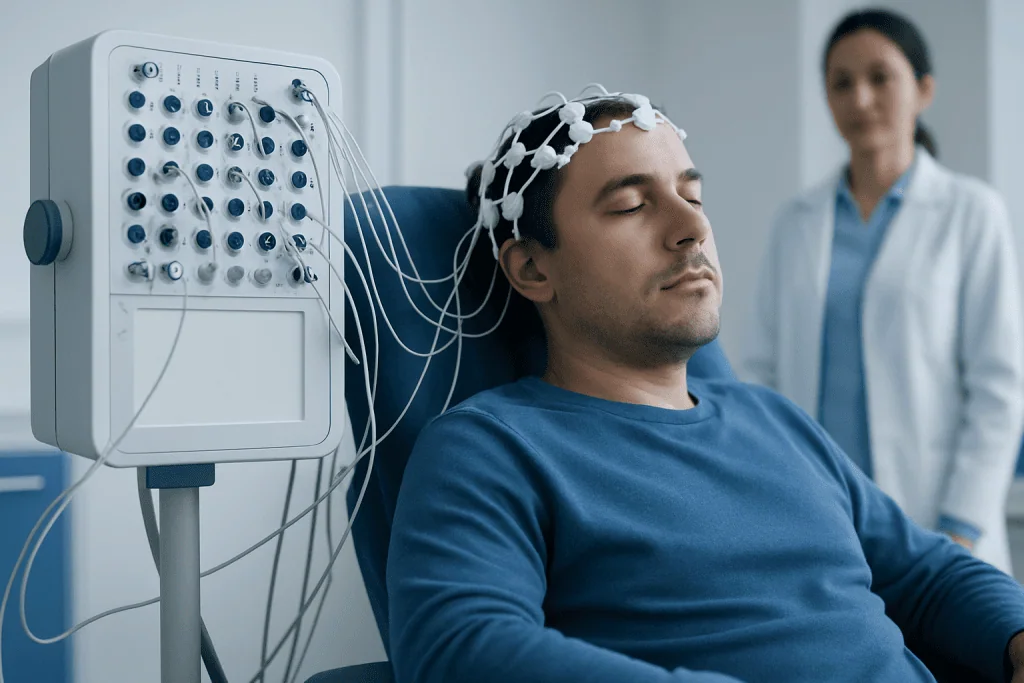
When doctors suspect seizures, unusual nighttime episodes, or brain-wave abnormalities, they may order an electroencephalogram or prolonged video EEG monitoring. Nerve and muscle testing can be useful if there are symptoms of weakness, breathing problems during sleep, or concern for neuromuscular disease; these assessments may be part of a broader neurophysiology testing plan. Blood tests may also be done to look for thyroid disorders, anemia, vitamin deficiencies, inflammation, infection, or metabolic problems that can worsen sleepiness.
Brain imaging such as MRI is not needed for everyone, but it can be important when the history or examination suggests a structural cause. Examples include new focal neurological symptoms, headaches with neurological signs, cognitive changes, or suspicion of tumor, inflammation, stroke, hydrocephalus, or injury. In selected cases, doctors may also use specialized sleep, movement, neuropsychological, or autonomic testing to clarify whether daytime sleepiness is part of a broader neurological condition, such as meningioma causing pressure effects or transient ischemic attack symptoms that need urgent distinction from sleep-related events.
Treatment Options After Testing
Treatment depends on the cause found during evaluation. If poor sleep habits or sleep deprivation are the main problem, improving sleep routines may be enough. If obstructive sleep apnea is identified, treatment may include weight management, positional strategies, oral devices, or positive airway pressure therapy. When medications contribute, a doctor may adjust the timing, dose, or type of medicine rather than stopping anything suddenly.
When a neurological sleep disorder is diagnosed, treatment is more specific. For example, narcolepsy is managed with a combination of scheduled naps, sleep hygiene, and medicines that support wakefulness or target related symptoms. Movement disorders, seizures, or neurodegenerative illnesses are treated according to the underlying diagnosis, with the aim of improving both nighttime sleep and daytime function. In some cases, specialists may also address associated mood, cognitive, or behavioral issues because these can worsen the experience of sleepiness.
Follow-up is important because treatment often needs adjustment over time. Doctors may repeat questionnaires, review sleep logs, or order additional testing if symptoms change. Near the end of the diagnostic journey, some patients benefit from coordinated care across sleep medicine, neurology, respiratory medicine, and psychology. Acibadem International’s multidisciplinary specialists in JCI-accredited hospitals diagnose and treat neurological causes of excessive daytime sleepiness for international patients when this kind of integrated evaluation is needed.
Self-care, Safety, and When to See a Doctor
While testing is being arranged, practical self-care can reduce symptoms and improve safety. A consistent sleep schedule, a dark and quiet sleep environment, limiting alcohol close to bedtime, and reviewing caffeine use can all help. People with significant sleepiness should avoid driving, operating heavy machinery, or working at heights until they have medical advice and symptoms are better controlled.
It is sensible to seek medical care if daytime sleepiness lasts for more than a few weeks, keeps returning despite enough sleep, or interferes with school, work, relationships, or concentration. A doctor should also be consulted if there are warning signs such as snoring with witnessed apneas, morning headaches, dream enactment, memory loss, weakness, numbness, tremor, blackouts, or sleep attacks.
Emergency care is needed if sleepiness starts suddenly or is accompanied by confusion, new trouble speaking, facial droop, severe headache, seizure, chest pain, shortness of breath, or one-sided weakness. These symptoms can signal urgent conditions that should not be attributed to tiredness alone. Prompt evaluation helps protect health and also increases the chance of finding a treatable cause early.
Frequently asked questions
What is the difference between fatigue and excessive daytime sleepiness?
Fatigue usually means low energy, physical tiredness, or lack of motivation, but a person may not actually fall asleep. Excessive daytime sleepiness means there is a strong tendency to doze off or struggle to stay awake during the day. The distinction matters because the causes and tests can be different.
Which test is most commonly used first for unexplained daytime sleepiness?
A doctor often begins with a history, exam, sleep diary, and review of medications and sleep habits. If a sleep disorder is suspected, an overnight sleep study is commonly the first formal test. This can show whether poor nighttime sleep quality, breathing pauses, or movement-related sleep disruption is causing the problem.
How is narcolepsy diagnosed?
Narcolepsy is usually evaluated with an overnight sleep study followed by a Multiple Sleep Latency Test the next day. Doctors also look for a typical symptom pattern, such as irresistible sleepiness, vivid dream-like experiences, sleep paralysis, or episodes of sudden muscle weakness. Diagnosis should be made by a qualified sleep or neurology specialist.
Does everyone with excessive daytime sleepiness need a brain MRI?
No. Brain MRI is usually reserved for people whose symptoms or examination suggest a structural neurological problem, such as new weakness, seizures, severe headaches, cognitive changes, or focal findings on exam. Many people are evaluated first with sleep-focused testing rather than imaging.
Can medications cause excessive daytime sleepiness?
Yes. Sedating medicines are a very common cause of daytime sleepiness, including some allergy medicines, pain medicines, anti-anxiety drugs, antidepressants, and seizure medicines. A doctor can review all prescription drugs, over-the-counter products, and supplements to see whether they may be contributing.
When should excessive daytime sleepiness be considered urgent?
Urgent evaluation is needed if sleepiness appears suddenly or occurs with confusion, trouble speaking, severe headache, seizure, fainting, chest pain, or one-sided weakness. These symptoms may point to a serious medical or neurological problem. Even without emergency signs, do not ignore sleepiness that makes driving or daily activities unsafe.
References
- American Academy of Sleep Medicine
- National Institute of Neurological Disorders and Stroke
- National Heart, Lung, and Blood Institute
- Mayo Clinic
- MedlinePlus
This article is for general information only and is not a substitute for professional medical advice. Please consult a qualified doctor about your individual situation.
Explore treatments in Turkey — costs, top hospitals & a free quote
JCI-accredited · board-certified surgeons · reply within 24h
Add us as a Preferred Source to see more of our trusted health content across Google Search, AI Overviews and Discover.

Neurology
Diagnosis and treatment of disorders of the brain, spinal cord, nerves and muscles.
51 specialists in this unit