IVF With Adenomyosis: Uterine Changes, Testing, and Treatment Planning

Adenomyosis occurs when tissue similar to the uterine lining grows within the muscular wall of the uterus, sometimes causing an enlarged or tender uterus. The condition may be linked with heavy periods, pelvic pain, miscarriage risk, or reduced implantation, although its impact varies from person to person.
Key Takeaways
- Adenomyosis occurs when tissue similar to the uterine lining grows within the muscular wall of the uterus, sometimes causing an enlarged or tender uterus.
- The condition may be linked with heavy periods, pelvic pain, miscarriage risk, or reduced implantation, although its impact varies from person to person.
- Transvaginal ultrasound is often the first test; MRI may be used when the diagnosis is unclear or detailed mapping is needed.
- IVF plans may include medical pretreatment, frozen embryo transfer, careful endometrial preparation, or surgery in selected cases.
- Treatment decisions should consider age, ovarian reserve, symptoms, other fertility factors, and whether adenomyosis is diffuse or focal.
- A fertility specialist can help patients balance timely treatment with uterine optimization before embryo transfer.
Adenomyosis is a benign uterine condition that can affect menstrual comfort, implantation, and pregnancy planning, but many people still conceive with careful fertility care. IVF planning usually focuses on confirming the diagnosis, assessing the uterine lining and muscle, treating symptoms when needed, and timing embryo transfer in the safest, most individualized way.
Overview
Adenomyosis is a non-cancerous condition in which tissue similar to the endometrium, the lining of the uterus, is found within the myometrium, the muscular wall of the uterus. This can make the uterus thicker, softer, or enlarged, and it may change how the uterus contracts during menstruation and early pregnancy. Some people have no symptoms, while others experience heavy bleeding, cramping, pelvic pressure, or pain with intercourse.
For people planning in vitro fertilization, adenomyosis is important because the uterus is not only the place where an embryo implants, but also an active muscle and immune environment. Changes in inflammation, blood flow, uterine contractions, and endometrial receptivity may influence implantation or early pregnancy maintenance. The degree of effect is highly individual, and adenomyosis is often found together with other fertility factors such as endometriosis, fibroids, diminished ovarian reserve, or male factor infertility.
IVF with adenomyosis therefore requires a thoughtful plan rather than a single standard approach. Care may involve confirming the diagnosis, assessing the uterine cavity, deciding whether to freeze embryos before transfer, and considering medical treatment to quiet uterine inflammation or reduce uterine volume. The aim is to give each patient a realistic and safe pathway, while avoiding unnecessary delays when age or ovarian reserve are important considerations.
How Adenomyosis May Affect Fertility and IVF

Adenomyosis may affect fertility in several ways, although not every patient is affected in the same way. The condition can alter the junctional zone, which is the area between the uterine lining and the uterine muscle. A disrupted junctional zone may be associated with abnormal uterine contractions, local inflammation, and changes in the signals that help an embryo attach to the endometrium.
In IVF, the ovaries, eggs, sperm, embryo development, and uterine environment all matter. Adenomyosis mainly concerns the uterine side of the process. Even when high-quality embryos are available, implantation may be more challenging if the uterus is enlarged, inflamed, or contracting more than usual. Some studies associate adenomyosis with lower implantation rates or higher miscarriage rates, but results vary because patients differ in age, embryo quality, disease severity, and other conditions.
The pattern of adenomyosis also matters. Diffuse adenomyosis involves a broader area of the uterine muscle, while focal adenomyosis or adenomyoma appears as a more localized area. A patient with mild ultrasound features and no symptoms may need only close planning, while a patient with a markedly enlarged uterus, severe pain, or repeated implantation failure may benefit from a more detailed treatment strategy before embryo transfer.
Because IVF is a multi-step process, clinicians usually look beyond adenomyosis alone. A complete plan may include ovarian reserve testing, semen analysis, tubal and uterine cavity assessment, thyroid and metabolic review when appropriate, and discussion of prior pregnancies or miscarriages. Patients who are investigating broader infertility causes often benefit from having all contributing factors reviewed together rather than treating adenomyosis in isolation.
Symptoms and Uterine Changes to Watch For
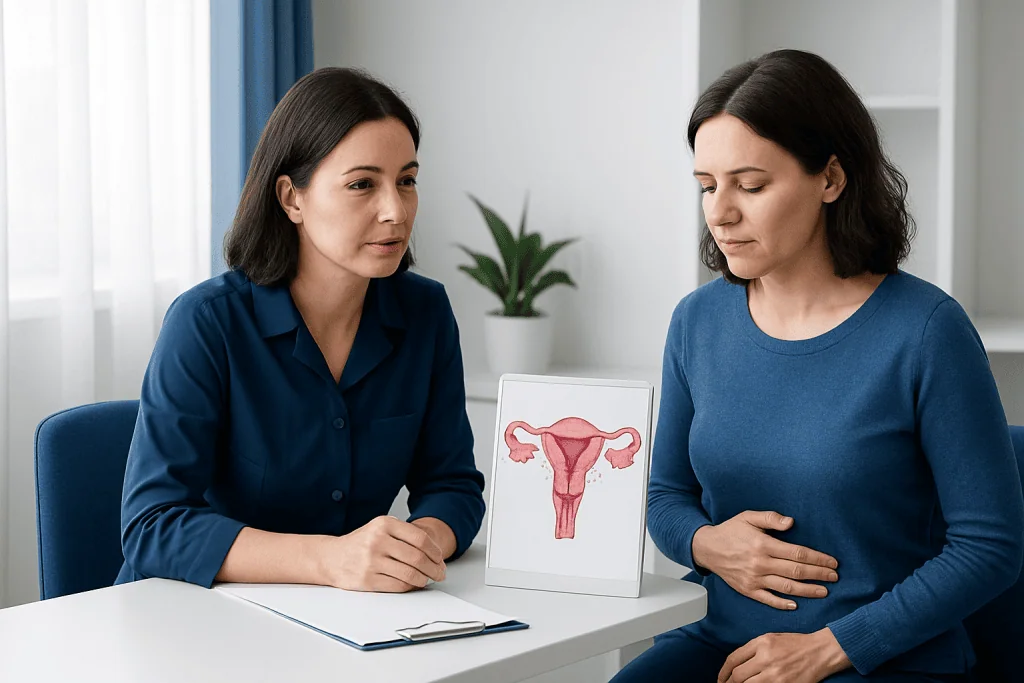
Adenomyosis can be silent, meaning it is found only during fertility imaging. When symptoms occur, they often overlap with endometriosis or fibroids, so proper evaluation is important. Common symptoms include heavy or prolonged menstrual bleeding, painful periods, chronic pelvic discomfort, bloating or pelvic fullness, and pain during intercourse. Some patients also report spotting before a period or worsening cramps over time.
On examination or imaging, the uterus may appear enlarged or uneven in texture. Ultrasound may show a thickened junctional zone, small cyst-like spaces within the muscle, fan-shaped shadowing, asymmetrical uterine walls, or a globular uterine shape. MRI can show similar features with more detailed tissue contrast, especially when the diagnosis is uncertain or when surgery is being considered.
Symptoms do not always match severity on imaging. A patient with noticeable adenomyosis may have mild symptoms, while another with significant pain may have subtle imaging findings. This is why fertility planning usually combines symptom history, imaging, menstrual pattern, prior IVF outcomes, and reproductive goals.
Patients should tell their doctor about menstrual flow, pain level, medication use, previous pelvic surgery, history of endometriosis, miscarriages, or failed embryo transfers. These details help the care team decide whether adenomyosis is likely to be a major factor in the IVF plan or one part of a broader fertility picture.
Diagnosis Before IVF: Ultrasound, MRI, and Related Tests
Transvaginal ultrasound is usually the first-line test for suspected adenomyosis. It is widely available, does not involve radiation, and can be performed during a fertility evaluation. A clinician experienced in gynecologic ultrasound can assess the uterine muscle, uterine cavity, ovaries, endometriosis-related findings, fibroids, and ovarian reserve markers such as antral follicle count.
MRI may be recommended if ultrasound findings are unclear, if the uterus is difficult to assess, or if detailed mapping is needed before surgery. MRI can help distinguish adenomyosis from fibroids and may better define diffuse versus focal disease. It is not required for every patient, but it can be helpful when symptoms are significant or previous treatments have not been successful.
Additional tests may be used to check whether the uterine cavity itself is suitable for embryo transfer. These may include saline infusion sonography, hysteroscopy, or other imaging when polyps, submucosal fibroids, adhesions, or cavity distortion are suspected. Adenomyosis is located in the uterine muscle, but cavity abnormalities can coexist and may also affect implantation.
A complete fertility evaluation also looks at egg supply, ovulation, sperm factors, endocrine conditions, and medical history. This is particularly important because adenomyosis can be found alongside other causes of female infertility. A diagnosis should guide decisions, not create a one-size-fits-all pathway.
IVF Treatment Planning With Adenomyosis
The best IVF strategy depends on the patient’s age, ovarian reserve, embryo availability, adenomyosis severity, symptoms, and prior treatment history. In some cases, the fertility team may recommend ovarian stimulation and embryo creation first, especially when ovarian reserve is low or age-related egg decline is a concern. Embryos may then be frozen while the uterus is treated or prepared for transfer.
Frozen embryo transfer is often considered when adenomyosis requires pretreatment or when the uterus needs time to recover after stimulation. Ovarian stimulation can temporarily raise hormone levels, and some clinicians prefer to separate egg retrieval from embryo transfer to allow more controlled endometrial preparation. This approach may also provide time to use medications that suppress estrogen-driven activity in adenomyosis before transfer.
Medical pretreatment may include hormonal suppression with medications such as gonadotropin-releasing hormone agonists or other hormone-based regimens, depending on the patient’s situation. These treatments aim to reduce inflammation, calm symptoms, or decrease uterine volume before embryo transfer. The choice and duration should be individualized because prolonged delay may not be suitable for every patient, especially when fertility time is limited.
For some patients, IVF may involve additional laboratory techniques based on sperm or fertilization factors, embryo development, or previous outcomes. A specialist can explain how IVF treatment steps such as ovarian stimulation, egg retrieval, fertilization, embryo culture, and embryo transfer are adapted when adenomyosis is present. If fertilization problems are also identified, techniques such as intracytoplasmic sperm injection may be discussed for the sperm and egg stage, although this does not treat adenomyosis itself.
Treatment Options Before Embryo Transfer
Treatment before embryo transfer is not always necessary, but it may be considered when adenomyosis is moderate to severe, symptoms are significant, the uterus is enlarged, or there is a history of implantation failure or miscarriage. The goal is to improve the uterine environment without adding unnecessary complexity. Patients should discuss the expected benefits, side effects, timing, and alternatives with their fertility specialist.
Common approaches may include medical suppression, pain and bleeding control, and careful selection of embryo transfer timing. Some patients benefit from a medicated frozen embryo transfer cycle, while others may be suitable for a natural or modified natural cycle if ovulation and lining development are appropriate. Luteal phase support and monitoring are planned according to the clinic protocol and individual needs.
Surgery is considered only in selected cases, usually for focal adenomyosis or adenomyoma that is clearly defined and thought to interfere with fertility or cause severe symptoms. Surgery in the uterine muscle can be complex and may affect future pregnancy planning, including delivery recommendations. It should be performed by surgeons experienced in fertility-preserving uterine procedures and discussed carefully before deciding.
Other supportive measures may include treating anemia from heavy bleeding, optimizing vitamin D or thyroid status if abnormal, reviewing medications, and managing coexisting endometriosis or fibroids. Lifestyle steps such as stopping smoking, maintaining a healthy weight, and managing stress may support overall reproductive health, but they cannot replace medical assessment when adenomyosis is affecting IVF planning.
Prevention, Self-Care, and Preparing for Consultation
There is no proven way to prevent adenomyosis, and patients should not blame themselves for developing it. The condition is influenced by complex hormonal, inflammatory, and tissue factors that are still being studied. However, good menstrual and fertility care can help identify the condition earlier and support better planning.
Self-care can be helpful for symptom control while fertility treatment is being organized. Patients may track bleeding, pain, cycle length, medication use, and any bowel or bladder symptoms. Heat therapy, gentle physical activity, and doctor-approved pain relief may help some people during menstruation. Because some pain medicines are not suitable around ovulation, embryo transfer, or pregnancy, patients should ask their doctor which options are safe at each stage.
Before a fertility consultation, it is useful to gather prior ultrasound or MRI reports, IVF records, embryo grading information if available, surgical notes, blood test results, and a timeline of pregnancies or miscarriages. Questions to ask may include whether adenomyosis appears mild, moderate, or severe; whether the uterine cavity is normal; whether pretreatment is advised; and whether embryo freezing before transfer is recommended.
Emotional preparation also matters. Adenomyosis can make fertility treatment feel more uncertain, particularly for patients who have already experienced failed cycles or pregnancy loss. Clear communication with the fertility team, realistic timelines, and support from counseling or patient support groups can help patients make decisions with less pressure.
When to See a Doctor
A person planning pregnancy or IVF should seek medical evaluation if they have heavy periods, worsening cramps, pelvic pain, pain during intercourse, unexplained infertility, recurrent miscarriage, or previous embryo transfer failures. Assessment is also appropriate when an ultrasound report mentions adenomyosis, an enlarged uterus, junctional zone changes, or possible adenomyoma. Early review helps clarify whether the finding is likely to influence treatment.
Urgent care is needed for very heavy bleeding that causes dizziness, fainting, chest discomfort, shortness of breath, or severe pain that is not controlled with prescribed medication. These situations may be related to anemia, acute gynecologic problems, or other medical conditions and should be assessed promptly. For most patients, however, adenomyosis is managed through planned specialist care rather than emergency treatment.
Patients considering international fertility care may benefit from coordinated assessment by reproductive medicine, gynecology, imaging, embryology, and pregnancy care specialists. Acibadem International’s multidisciplinary teams and JCI-accredited hospitals diagnose and treat adenomyosis-related fertility concerns for international patients, including those planning IVF, embryo transfer, or fertility-preserving surgery.
The most important step is an individualized consultation. Adenomyosis can influence IVF planning, but it does not define the entire fertility outlook. With careful diagnosis, tailored preparation, and follow-up, many patients can move forward with a plan that reflects both medical evidence and personal priorities.
Frequently asked questions
Can IVF work if a person has adenomyosis?
Yes, IVF can work for people with adenomyosis, but planning may need to be more individualized. The fertility team will consider the severity of uterine changes, age, ovarian reserve, embryo quality, symptoms, and previous pregnancy or IVF history. Some patients proceed directly to embryo transfer, while others benefit from pretreatment first.
Is adenomyosis the same as endometriosis?
No. Adenomyosis involves endometrium-like tissue within the muscular wall of the uterus, while endometriosis involves similar tissue outside the uterus, often on the ovaries, pelvic lining, or bowel surfaces. The two conditions can occur together, and both may contribute to pelvic pain or fertility challenges.
Which test is best for diagnosing adenomyosis before IVF?
Transvaginal ultrasound is usually the first test because it is accessible and can assess several fertility-related structures at the same visit. MRI may be added when ultrasound findings are uncertain, when the uterus is enlarged, or when detailed mapping is needed. The best test depends on symptoms, prior imaging, and the treatment plan.
Does adenomyosis always need treatment before embryo transfer?
No, not always. Mild adenomyosis without symptoms or prior implantation problems may only require careful monitoring and transfer planning. Treatment is more often considered when symptoms are significant, the uterus is markedly enlarged, or there is a history of repeated implantation failure or miscarriage.
Why might a frozen embryo transfer be recommended?
A frozen embryo transfer may allow time to treat or calm adenomyosis before placing an embryo in the uterus. It also separates ovarian stimulation from the transfer cycle, which can give the doctor more control over endometrial preparation. This approach is individualized and is not required for every patient.
Can surgery improve IVF outcomes in adenomyosis?
Surgery may help selected patients with focal adenomyosis or adenomyoma, especially when symptoms are severe or the lesion affects the uterine shape. It is not a routine treatment for all adenomyosis because surgery in the uterine muscle can carry risks and may affect pregnancy planning. A fertility-focused gynecologic surgeon should review the benefits and risks.
What should patients ask their fertility specialist?
Useful questions include how severe the adenomyosis appears, whether the uterine cavity is normal, whether pretreatment is recommended, and whether embryo freezing should be considered. Patients can also ask how adenomyosis interacts with other fertility factors such as age, ovarian reserve, sperm results, endometriosis, or fibroids. Bringing previous scans and IVF records helps the consultation be more precise.
This article is for general information only and is not a substitute for professional medical advice. Please consult a qualified doctor about your individual situation.
IVF & fertility treatment in Turkey — success rates and costs
JCI-accredited · board-certified surgeons · reply within 24h
Add us as a Preferred Source to see more of our trusted health content across Google Search, AI Overviews and Discover.

Related Treatments
Related Conditions
More from the Health Library

Preimplantation Genetic Testing: PGT-A and PGT-M Explained

Hydrosalpinx Before IVF: Why Fluid-Filled Tubes Can Affect Success

Hysteroscopy Before IVF: When Uterine Evaluation May Improve Planning

IVF Cost in Turkey: What Is Included and What Can Change the Price

When to Consider IVF: Common Fertility Problems and Treatment Pathways

The Two-Week Wait After IVF: Symptoms, Testing, and What to Avoid
Gynecology & Obstetrics Specialists at Acibadem

Prof. Dr. Bülent Özçelik
Gynecology & Obstetrics
Prof. Dr. Bülent Tıraş
Gynecology & Obstetrics
Dr. Burak Güler
Gynecology & Obstetrics
Dr. Burak Tanır
Gynecology & Obstetrics