Neuromodulation for Tremor: Which Patients May Benefit From Device-Based Treatment?
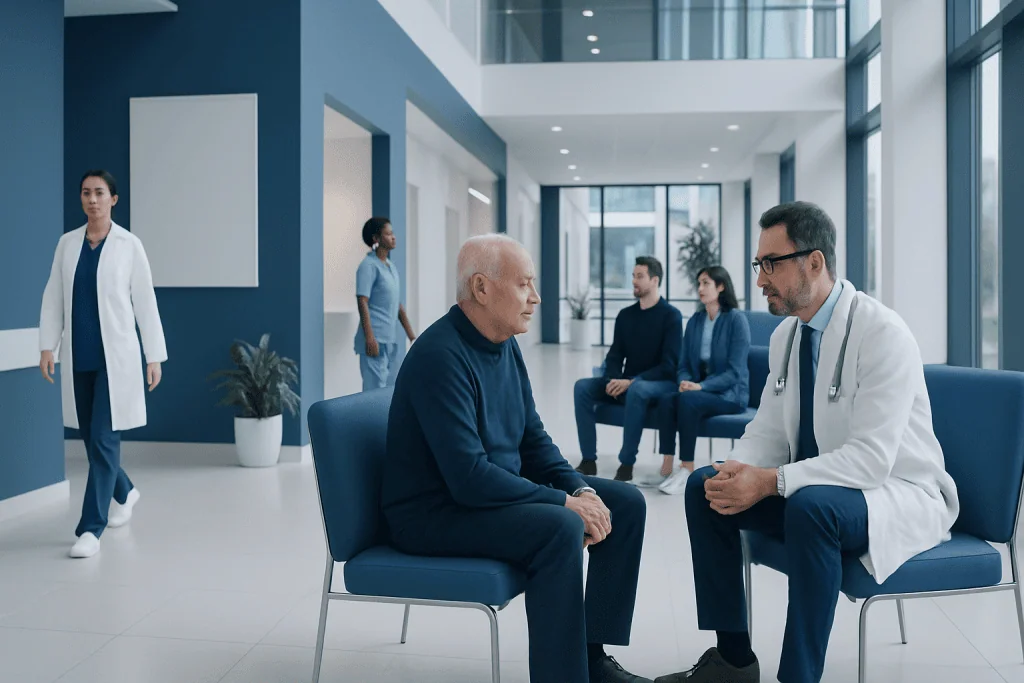
Neuromodulation is most often considered when tremor remains disabling despite well-managed medical treatment. The best-known device-based option is deep brain stimulation, but candidacy depends on tremor type, overall health, and treatment goals.
Key Takeaways
- Neuromodulation is most often considered when tremor remains disabling despite well-managed medical treatment.
- The best-known device-based option is deep brain stimulation, but candidacy depends on tremor type, overall health, and treatment goals.
- Essential tremor and some Parkinsonian tremors are common situations where neuromodulation may be helpful.
- Careful diagnosis is essential because not every tremor responds to the same treatment.
- Assessment usually involves a movement disorder neurologist, imaging, and review of cognition, mood, and daily function.
Neuromodulation for tremor refers to device-based therapies that change abnormal brain activity to reduce shaking. It may benefit carefully selected people whose tremor significantly affects daily life and does not improve enough with medication or other standard treatment.
Overview: what neuromodulation for tremor means
Neuromodulation for tremor is a medical approach that uses targeted technology to influence the nerve circuits involved in involuntary shaking. In practice, this usually means a device-based therapy such as deep brain stimulation, in which thin electrodes are placed in specific brain areas and connected to a small implanted pulse generator. The system delivers controlled electrical signals that can help reduce tremor.
Tremor itself is a symptom rather than a single disease. It can happen with conditions such as essential tremor, Parkinson’s disease, dystonia, multiple sclerosis, or after certain brain injuries. Because the cause matters, treatment decisions begin with an accurate diagnosis and a clear understanding of how the tremor behaves during rest, posture, or movement.
Neuromodulation is generally not the first treatment used for tremor. Many patients first try medication, lifestyle changes, occupational therapy strategies, and treatment of any underlying neurological disorder. Device-based treatment is usually considered when tremor remains troublesome enough to interfere with eating, drinking, writing, dressing, work, or social confidence.
For appropriate patients, neuromodulation can improve quality of life, but it is not a cure for the underlying condition. The goal is symptom control, better function, and greater independence. A specialist team often discusses expected benefits, possible limitations, and the practical demands of follow-up care before recommending this option.
Which patients may benefit most
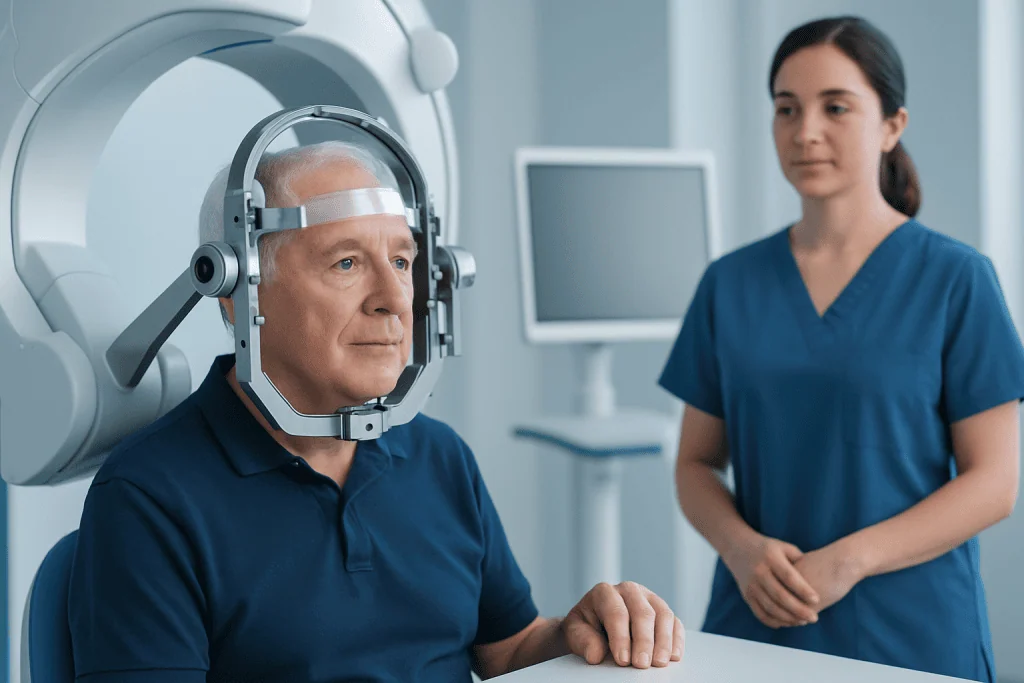
Patients most likely to benefit from neuromodulation for tremor are those with a confirmed tremor disorder, significant functional impairment, and symptoms that have not responded well enough to medication. A tremor that prevents someone from using utensils, signing documents, applying makeup, typing, or holding a cup steadily may be considered disabling even if it is not life-threatening.
One of the most common groups considered for device-based treatment is people with moderate to severe essential tremor. Another group includes selected patients with Parkinsonian tremor, especially when tremor remains prominent despite medication adjustment. In some settings, certain patients with tremor related to dystonia or other movement disorders may also be evaluated, although results can vary by diagnosis and tremor pattern.
Good candidates are usually healthy enough to undergo a procedure and participate in long-term follow-up. They also need realistic expectations. Neuromodulation may reduce tremor substantially, but it may not remove every symptom, and it may not treat non-tremor problems equally well. In Parkinson’s disease, for example, stiffness, slowness, balance, speech, and cognitive symptoms may each respond differently.
Doctors also look at age in a balanced way. Older age alone does not automatically rule out treatment, and younger age alone does not guarantee suitability. What matters more is the person’s overall health, brain imaging, medication response, cognition, mood, and the practical impact of tremor on daily life.
When device-based treatment may not be the best fit

Neuromodulation is not suitable for everyone with tremor. Some people have mild symptoms that are manageable with medication, stress reduction, adaptive utensils, or other supportive measures. In such cases, the potential burden of an invasive procedure may outweigh the likely benefit.
It may also be less appropriate when the diagnosis is uncertain or when the tremor is caused by a problem unlikely to respond well to stimulation. For example, tremor related to medication side effects, severe neuropathy, unstable metabolic disorders, or structural brain injury may need a different treatment pathway. A person who has recently had a stroke may need detailed reassessment to determine whether tremor is truly the main target and whether device-based therapy is appropriate.
Some health factors can make treatment riskier or outcomes less predictable. These may include uncontrolled medical illness, active infection, significant untreated depression or anxiety, severe memory impairment, or poor ability to attend follow-up visits. Because the device often needs programming over time, regular access to a specialist team is important.
Another reason a patient may not be a strong candidate is if the main difficulty is not tremor itself, but balance problems, freezing of gait, advanced dementia, or generalized frailty. In these situations, even a meaningful reduction in shaking may not translate into enough practical benefit. A careful, individualized discussion helps match the treatment to the person’s real goals.
How specialists evaluate candidacy
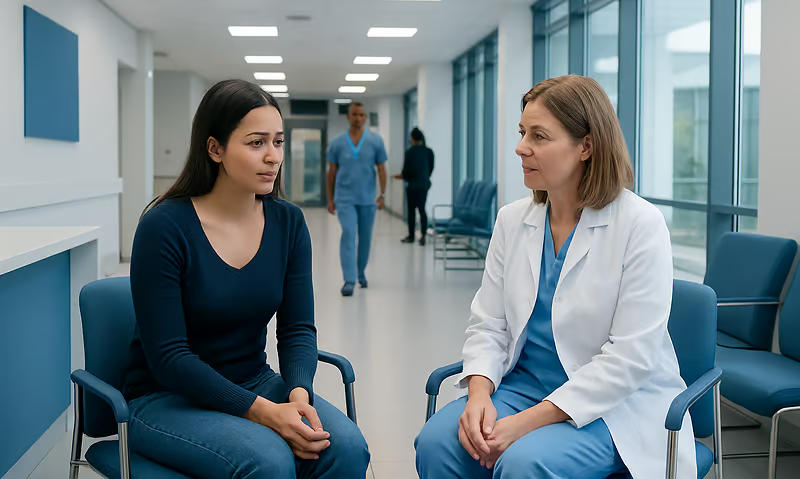
Evaluation usually begins with a neurologist experienced in movement disorders and tremor diagnosis. The doctor reviews when the tremor started, which body parts are affected, what makes it better or worse, how much it interferes with daily activities, and which medications have already been tried. Videos from home can sometimes help show how the tremor behaves in real-life situations.
A neurological examination helps distinguish between resting tremor, action tremor, postural tremor, and intention tremor. This step is important because different tremor patterns suggest different underlying causes. Brain imaging, usually MRI or CT depending on the situation, may be used to look for structural problems and to plan treatment safely. In some cases, additional testing through neurophysiology can help clarify the diagnosis.
Assessment often extends beyond the tremor itself. Many centers evaluate cognition, speech, mood, and overall functional status before proceeding. This may involve neuropsychological testing, medication review, and consultation with neurosurgery. These steps do not mean something is wrong; they are part of choosing the safest and most effective approach.
At the end of the evaluation, the care team discusses whether the expected benefit is likely to justify the procedure. This is also the time to talk about the goals most meaningful to the patient, such as eating independently, handwriting, reducing embarrassment in public, or lowering the need for tremor medication. Shared decision-making is central to good outcomes.
Types of neuromodulation used for tremor
The best-established neuromodulation treatment for tremor is deep brain stimulation, often called DBS. In DBS, electrodes are placed in carefully selected brain targets involved in movement control. These electrodes connect to a battery-powered stimulator, typically implanted under the skin in the chest. After implantation, the system is programmed and adjusted over time to find the best balance between tremor control and side effects.
DBS is used most commonly for essential tremor and Parkinson’s disease, and in selected cases for other tremor syndromes. It has the advantage of being adjustable and, unlike destructive lesion procedures, largely reversible in the sense that stimulation settings can be changed or the system can be turned off. For many patients, that flexibility is one of its major strengths.
Some tremor care pathways also include non-implantable or less invasive technologies, but these are not all considered neuromodulation in the same way. Because terminology can vary, patients benefit from asking exactly which procedure is being proposed, whether it involves an implant, and what kind of follow-up it requires. A center that offers neuromodulation can explain the available options in detail.
Planning and implantation are often performed with support from advanced imaging and a multidisciplinary team including neurology, neurosurgery, anesthesia, and rehabilitation specialists. The treatment does not end at surgery; programming visits and longer-term monitoring are essential parts of the process.
Potential benefits, limits, and risks
The main potential benefit of neuromodulation for tremor is improved control of shaking that has been resistant to medication. Patients may find they can drink from a glass with less spilling, write more legibly, use a phone more easily, or feel more comfortable in social and professional settings. In some cases, medication burden may also be reduced, although this depends on the underlying diagnosis.
At the same time, it is important to understand the limits. Neuromodulation does not cure essential tremor, Parkinson’s disease, or other neurological causes of tremor. Symptoms can still change over time, and some aspects of a disease may continue to progress. The degree of improvement varies from person to person, and one hand or side may respond differently than another.
Because most neuromodulation procedures for tremor involve surgery, there are risks to consider. These include bleeding, infection, device malfunction, lead movement, pain at the implant site, and side effects related to stimulation such as tingling, speech changes, or balance difficulty. Many stimulation-related effects can be improved by adjusting settings, but follow-up is important.
Patients and families should also think about practical issues such as battery replacement, activity restrictions in the recovery period, and the need to tell future healthcare providers about the implanted device. A well-informed patient is better prepared to decide whether the likely functional gains fit their goals and lifestyle.
After treatment: recovery, programming, and self-care
Recovery after device implantation varies by the exact procedure and the patient’s general health. Most people need time for wound healing before the full benefit of programming can be assessed. It is normal for treatment to be a process rather than a single event, especially with DBS, where settings may need several adjustments over weeks or months.
Follow-up appointments are a central part of success. During these visits, specialists fine-tune the stimulation, review symptom changes, and monitor for side effects. Medication may also be adjusted. Patients often keep notes about which daily activities are easier or harder so the team can make practical programming decisions.
Self-care remains important even when a device is working well. Adequate sleep, stress management, limiting personal tremor triggers such as excess caffeine when relevant, and using adaptive tools can all help. Physical or occupational therapy may improve posture, hand use, and confidence in daily tasks. For some patients, broader care through services such as geriatric neurology or rehabilitation can support long-term function.
Near the end of the care journey, some international patients look for coordinated evaluation and follow-up planning. Acibadem International’s multidisciplinary specialists and JCI-accredited hospitals diagnose and treat tremor disorders for international patients, with care pathways tailored to the person’s neurological condition and treatment goals.
When to see a doctor about tremor
A person should see a doctor if tremor is new, worsening, or beginning to interfere with daily activities. Even when shaking seems mild, evaluation can be helpful if it affects work, handwriting, eating, sleep, confidence, or social interaction. Early assessment can also help identify reversible causes such as medication effects or thyroid problems.
Medical review is especially important if tremor appears together with stiffness, slowness, gait problems, weakness, numbness, speech changes, memory decline, or sudden neurological symptoms. These features may point to a broader neurological condition that needs attention. A careful diagnosis is the first step toward deciding whether medication, supportive therapy, or device-based treatment is appropriate.
Patients already taking tremor medication should return for review if side effects become difficult or if the benefit is no longer enough. It is often possible to optimize treatment before moving to procedural options. However, if tremor remains disabling despite well-managed medical therapy, asking about referral to a movement disorders specialist is reasonable.
Emergency care is needed for sudden tremor accompanied by severe weakness, facial droop, new confusion, loss of consciousness, or other acute neurological symptoms. For ongoing but non-urgent tremor concerns, a scheduled consultation with a qualified neurologist can help clarify the cause and outline the most suitable next steps.
Frequently asked questions
What is neuromodulation for tremor?
Neuromodulation for tremor is a treatment approach that changes abnormal nerve signaling in movement-related brain circuits. The most established example is deep brain stimulation, which uses an implanted device to reduce tremor in carefully selected patients.
Who is usually considered for device-based treatment?
It is usually considered for people whose tremor causes meaningful difficulty in daily life and does not improve enough with medication or other standard care. Common examples include selected patients with essential tremor or Parkinsonian tremor.
Is deep brain stimulation a cure for tremor?
No. Deep brain stimulation can reduce tremor and improve function, but it does not cure the underlying neurological disorder. Symptoms may still change over time, and regular follow-up is needed to adjust treatment.
How do doctors decide if someone is a good candidate?
Doctors look at the type of tremor, how severe it is, whether medications have been tried, and the patient's overall health, cognition, and goals. The evaluation often includes a movement disorder examination, brain imaging, and discussion with a multidisciplinary team.
Are there risks with neuromodulation for tremor?
Yes. As with any implanted device or brain procedure, there can be risks such as infection, bleeding, hardware problems, or stimulation side effects like speech or balance changes. These risks are reviewed carefully before treatment, and many stimulation-related issues can be adjusted afterward.
Can older adults still benefit from neuromodulation?
Yes, some older adults can benefit if they are otherwise appropriate candidates. Age alone is usually less important than overall health, cognitive function, independence, and how much the tremor affects daily life.
References
- National Institute of Neurological Disorders and Stroke
- National Institute for Health and Care Excellence
- American Academy of Neurology
- International Parkinson and Movement Disorder Society
- National Health Service
This article is for general information only and is not a substitute for professional medical advice. Please consult a qualified doctor about your individual situation.
Neuromodulation in Turkey — costs, top hospitals & a free quote
JCI-accredited · board-certified surgeons · reply within 24h
Add us as a Preferred Source to see more of our trusted health content across Google Search, AI Overviews and Discover.

Neurology
Diagnosis and treatment of disorders of the brain, spinal cord, nerves and muscles.
51 specialists in this unit