Neuropsychology for Memory Problems: Who Needs Testing and Why

Neuropsychological testing measures memory, attention, language, planning, and other thinking skills in detail. Testing can help distinguish normal aging from mild cognitive impairment, dementia, depression, sleep problems, brain injury, and other causes.
Key Takeaways
- Neuropsychological testing measures memory, attention, language, planning, and other thinking skills in detail.
- Testing can help distinguish normal aging from mild cognitive impairment, dementia, depression, sleep problems, brain injury, and other causes.
- A person may benefit from testing when memory concerns affect daily life, work, school, or safety.
- Results are used to guide treatment, rehabilitation, school or workplace support, and follow-up over time.
- Memory problems should always be assessed in the context of medical history, medications, mood, sleep, and neurological symptoms.
Neuropsychology for memory problems helps doctors understand whether forgetfulness is within normal limits, related to stress or mood, or caused by a medical or neurological condition. Careful testing can clarify strengths and weaknesses in thinking, support diagnosis, and guide practical treatment planning.
Overview: What Neuropsychology Testing Looks At
Neuropsychology for memory problems is a detailed way of assessing how the brain is functioning in everyday thinking tasks. A neuropsychologist uses standardized tests to evaluate memory, attention, language, problem-solving, visual-spatial skills, processing speed, and emotional factors that may affect thinking. The goal is not simply to label forgetfulness, but to understand its pattern and likely cause.
Many people worry that memory lapses automatically mean dementia. In reality, memory difficulties can happen for many reasons, including normal aging, poor sleep, stress, anxiety, depression, medication effects, vitamin deficiencies, head injury, or neurological disease. A neuropsychological assessment helps separate these possibilities by looking at strengths and weaknesses across several areas of cognition rather than relying on a single short screening test.
This type of evaluation is often requested by neurologists, psychiatrists, geriatricians, rehabilitation specialists, or primary care doctors. It may be part of broader care through services such as neuropsychology assessment and, when appropriate, coordinated with geriatric neurology for older adults or with imaging and neurological review.
Who May Need Testing for Memory Problems
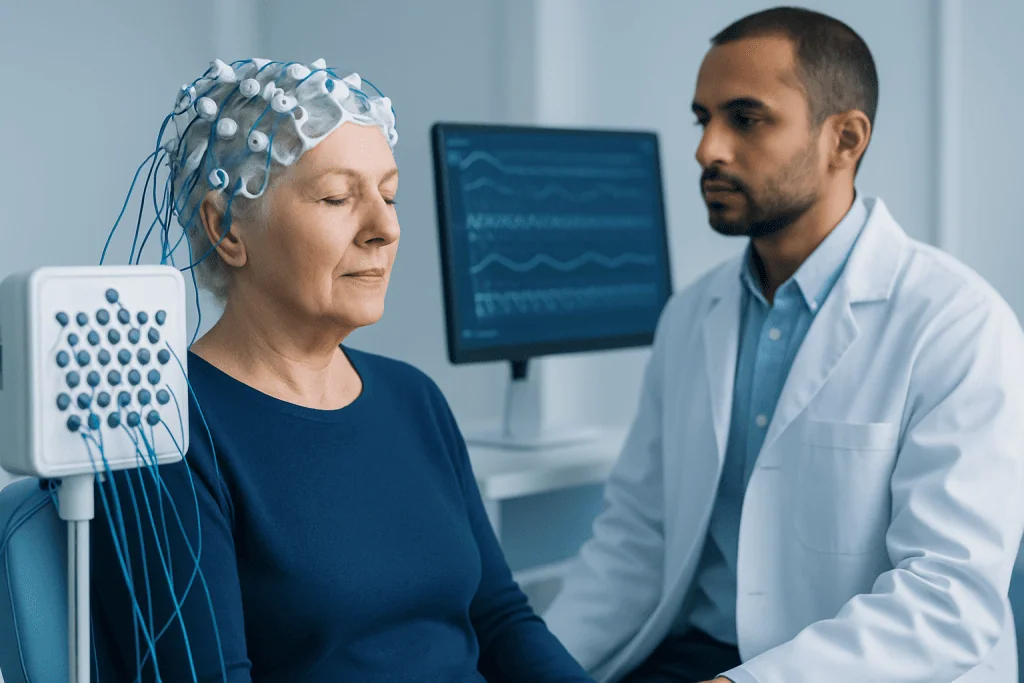
Testing may be helpful for adults of any age who notice persistent memory changes that are new, worsening, or interfering with daily life. Examples include repeating questions, missing appointments, misplacing important items, getting lost in familiar places, forgetting conversations, or struggling to follow steps that once felt easy. Family members are often the first to notice these changes, especially if the person is minimizing symptoms.
Not everyone with occasional forgetfulness needs formal testing. Brief lapses during busy or stressful periods are common. However, an evaluation becomes more important when memory problems affect work performance, finances, medication management, driving, academic tasks, household responsibilities, or relationships. It is also useful when there is disagreement between what the person feels and what others observe.
Doctors may recommend testing after a neurological event or in the context of a condition known to affect thinking. This can include stroke, traumatic brain injury, seizure disorders, sleep disorders, movement disorders, or suspected neurodegenerative disease. In some cases, a neuropsychological assessment provides a baseline that can be compared with future testing to track change over time.
- Older adults with increasing forgetfulness
- People with head injury or concussion symptoms that persist
- Adults with depression, anxiety, or sleep problems where cognition is also affected
- Patients being evaluated for mild cognitive impairment or dementia
- People with complex medical or neurological conditions that may affect attention and memory
Common Causes of Memory Problems

Memory problems are a symptom, not a diagnosis. Some causes are relatively reversible, while others are progressive and need long-term planning. Stress, burnout, anxiety, and depression can reduce concentration and make it difficult for new information to be stored efficiently. In these cases, the problem may feel like poor memory, even though the main issue is attention or mental overload.
Sleep disorders are another common cause. Poor-quality sleep, sleep apnea, insomnia, and certain neurological sleep disorders can affect memory consolidation and daytime concentration. Alcohol use, recreational drugs, and some prescription medicines may also impair memory. Thyroid disease, vitamin B12 deficiency, infection, chronic pain, and metabolic problems can contribute as well.
Neurological causes include mild cognitive impairment, Alzheimer disease and other dementias, Parkinsonian conditions, epilepsy, multiple sclerosis, brain tumors, and the effects of vascular disease. Memory can also change after events such as transient ischemic attack or chronic headache conditions when attention and processing are reduced. Because these causes can overlap, testing is most useful when interpreted together with the person’s medical history, examination, and any needed imaging or laboratory studies.
How Neuropsychological Assessment Is Performed
A neuropsychological evaluation usually begins with an interview. The specialist asks about current symptoms, medical history, education, work, language background, mood, sleep, medications, substance use, and how daily life has changed. Information from a spouse, family member, or caregiver can be very valuable, because memory difficulties may limit a person’s own awareness of the problem.
Testing itself involves paper-and-pencil tasks, spoken questions, computer-based tasks, or problem-solving activities. These are designed to compare a person’s performance with expected norms for age and educational background. The person may be asked to learn and recall word lists, remember stories or figures, name objects, switch attention, solve puzzles, copy designs, or complete tasks under time limits. The process is not invasive, and there are no needles or sedation involved.
The length of testing varies, often ranging from a brief targeted assessment to several hours with breaks. Sometimes additional evaluation is arranged through neuroradiology or neurological testing if there are concerns about structural brain changes, vascular problems, or other neurological disease. The final report does not just provide scores; it explains what the pattern means in practical terms and how it may relate to diagnosis and daily functioning.
What the Results Can Show
One of the main benefits of neuropsychology for memory problems is that it looks beyond the simple question of whether memory is “good” or “bad.” Results may show that memory storage is impaired, that information is not being learned efficiently because attention is poor, or that retrieval is difficult even though the information was stored. These distinctions matter, because they point to different causes and management strategies.
Testing can help distinguish normal age-related change from mild cognitive impairment and from different forms of dementia. It can also show when memory complaints are more closely linked to mood symptoms, fatigue, chronic pain, or sleep disruption. After brain injury, it may clarify whether symptoms reflect lasting cognitive changes, emotional distress, or both. In younger adults, it can identify patterns affecting work, school, or independent living.
Results may support referrals for rehabilitation, counseling, medication review, or specialist neurological care. For example, where cognitive and emotional symptoms overlap, a doctor may coordinate care with neuropsychiatry services. In other situations, serial testing over months or years helps track whether cognition is stable, improving, or gradually changing.
Treatment and Next Steps After Testing
Neuropsychological testing does not treat memory loss by itself, but it often makes treatment more precise. The next steps depend on the underlying cause. If the evaluation suggests depression, anxiety, poor sleep, medication effects, or another potentially reversible factor, treatment may focus on those issues first. Improving sleep, treating mood symptoms, adjusting medications, correcting vitamin deficiencies, and controlling blood pressure or diabetes can all support better cognitive function.
When testing suggests a neurological condition, the person may need further assessment and follow-up with a neurologist. This may include investigations for neurodegenerative conditions, movement disorders, vascular disease, or prior brain injury. In some cases, the assessment helps diagnose mild cognitive impairment early, allowing the person and family to plan support and monitor changes carefully.
Practical management is an important part of care. Strategies may include memory aids, calendars, phone reminders, pill organizers, simplified routines, reduced multitasking, and family education. Cognitive rehabilitation may help some patients build compensatory techniques. Near the end of the care pathway, international patients may also seek coordinated evaluation at centers such as Acibadem International, where multidisciplinary specialists in JCI-accredited hospitals assess and treat memory-related neurological conditions.
Self-care, Monitoring, and Ways to Support Brain Health
While not all memory problems can be prevented, healthy daily habits can support brain function and may reduce avoidable cognitive strain. Regular physical activity, adequate sleep, social engagement, balanced nutrition, hearing and vision correction when needed, and careful management of chronic conditions all play a role. Avoiding excess alcohol and discussing medication side effects with a doctor are also sensible steps.
Mental strategies can make day-to-day life easier. Writing things down, keeping important items in the same place, using one calendar consistently, breaking tasks into smaller steps, and limiting distractions can help many people. Family members often benefit from learning supportive communication techniques, such as giving one instruction at a time and allowing extra time for responses.
It is also useful to monitor change rather than relying on memory alone. Keeping a brief symptom diary can show whether forgetfulness is stable, linked to stress, or getting worse over time. This information can make medical appointments more productive and can help doctors decide whether repeat cognitive testing or additional assessment is needed.
When to See a Doctor About Memory Changes
A medical review is important when memory problems are new, progressive, or interfering with daily life. It is especially important if forgetfulness affects safety, such as missed medications, leaving the stove on, wandering, falls, difficulty driving, or confusion with finances. Changes in personality, behavior, judgment, or language should also be assessed promptly.
Urgent evaluation is needed when memory problems appear suddenly or are accompanied by weakness, facial drooping, severe headache, confusion, seizure, fever, or trouble speaking. These symptoms can point to emergencies such as stroke or other acute neurological illness. A sudden change should not be assumed to be simple aging or stress.
Even when symptoms are mild, early assessment can be reassuring and practical. It may show that the problem is related to stress, sleep, or mood and can improve with treatment. If a progressive condition is present, earlier diagnosis allows better planning, targeted support, and more informed decisions for the future.
Frequently asked questions
Is neuropsychological testing the same as a memory screening test?
No. A brief memory screening test is usually short and helps identify whether further assessment may be needed. Neuropsychological testing is more detailed and looks at several areas of thinking, which makes it more useful for understanding the likely cause of memory problems.
Does needing testing mean a person has dementia?
Not at all. Many people are referred for testing because of stress, depression, sleep problems, medication effects, concussion, or normal concerns about aging. Testing is used to clarify the reason for symptoms, not to assume the diagnosis in advance.
How should someone prepare for a neuropsychology appointment?
It helps to bring a medication list, glasses or hearing aids if used, and any relevant medical records. A family member or close friend may be asked to provide observations. Getting a reasonable night's sleep and eating normally beforehand can also improve the quality of testing.
Can anxiety or depression really affect memory that much?
Yes. Anxiety, depression, and chronic stress can strongly affect concentration, learning, and recall. In these situations, the person may feel very forgetful, even when the underlying issue is reduced attention or mental fatigue rather than a degenerative brain disease.
How long does neuropsychological testing take?
The length varies depending on the reason for referral and how broad the assessment needs to be. Some evaluations are relatively brief, while others last several hours with breaks. The specialist will usually explain the expected timeline in advance.
What happens after the results are ready?
The neuropsychologist typically explains the findings and sends a report to the referring doctor. The results may lead to treatment for mood or sleep issues, medication review, rehabilitation strategies, further neurological evaluation, or repeat testing later to monitor changes.
References
- National Institute on Aging
- American Academy of Neurology
- Alzheimer's Association
- Centers for Disease Control and Prevention
- World Health Organization
This article is for general information only and is not a substitute for professional medical advice. Please consult a qualified doctor about your individual situation.
Neuropsychology in Turkey — costs, top hospitals & a free quote
JCI-accredited · board-certified surgeons · reply within 24h
Add us as a Preferred Source to see more of our trusted health content across Google Search, AI Overviews and Discover.

Neurology
Diagnosis and treatment of disorders of the brain, spinal cord, nerves and muscles.
51 specialists in this unit