Scintillating Scotoma: Diagnosis, Outlook, and Modern Treatment Approaches

A scintillating scotoma is a temporary shimmering or zigzag pattern in vision, most often caused by migraine aura. It usually builds over 5 to 20 minutes and clears within an hour, with or without headache. A first episode, or symptoms that are new or unusual, should be evaluated by a doctor to rule out eye or neurological causes.
Key Takeaways
- Scintillating scotoma is usually a visual aura caused by temporary changes in brain activity, often related to migraine.
- It commonly causes flashing lights, shimmering zigzags, blind spots, or distorted vision that gradually spread and then clear.
- Most episodes are short-lived and not harmful, but new, prolonged, or one-sided vision loss needs urgent assessment.
- Diagnosis is based on symptom pattern, medical history, and an eye or neurological evaluation when needed.
- Treatment focuses on identifying triggers, managing migraine, and ruling out other eye or vascular conditions.
You are reading, and suddenly part of the page is missing. In its place: a shimmering zigzag, a flickering crescent of light that slowly drifts across your vision. It is unsettling the first time it happens.
This is called scintillating scotoma — a temporary visual disturbance that often appears as shimmering, zigzag, flashing, or crescent-shaped patterns in the field of vision. It is commonly associated with migraine aura and usually resolves on its own. Still, a first episode or any atypical symptoms should be medically evaluated.
Overview
Scintillating scotoma is a temporary visual phenomenon in which a person sees shimmering, flashing, zigzag, or sparkling shapes, often with a small blind spot or area of distorted vision. For many people, it is part of a migraine aura, meaning it happens before or during a migraine attack, although it can also occur without a headache.
The experience may start near the center of vision and slowly move outward over several minutes. Some people describe it as a crescent of flickering light, while others notice jagged lines, geometric patterns, or a patch where reading becomes difficult. The term itself combines two ideas: “scintillating,” meaning sparkling or flickering, and “scotoma,” meaning an area of reduced or missing vision.
In most cases, it is temporary and clears completely. That does not stop it from being frightening the first time. And because some eye, neurological, or vascular problems can also affect vision suddenly, get it checked when symptoms are new, unusual, or do not follow a typical aura pattern.
How It Feels and Common Symptoms
The symptoms of scintillating scotoma are visual, not usually painful at first. People may notice bright zigzags, shimmering edges, flickering spots, wavy lines, or a glowing arc. A blind spot may be present in the middle of the pattern or next to it, making parts of words or objects harder to see.
A typical episode tends to build gradually over 5 to 20 minutes and then fade within about an hour. The changes often affect both eyes, even if it initially seems like only one side of the visual field is involved. Covering one eye and then the other may help a person realize the disturbance is coming from the visual processing system in the brain rather than from a problem limited to one eye.
Some episodes are followed by a headache, nausea, light sensitivity, or sound sensitivity. Others occur on their own, which is sometimes called migraine aura without headache. Symptoms that can occur with scintillating scotoma include:
- Flashing or shimmering lights
- Zigzag or jagged lines
- A temporary blind spot
- Blurred or distorted central vision
- Difficulty reading during the episode
- Headache or migraine symptoms afterward
What Causes Scintillating Scotoma?

The most common cause of scintillating scotoma is migraine aura. Experts believe migraine aura is linked to a temporary wave of altered electrical activity in the brain, often called cortical spreading depression. When this affects the visual areas of the brain, it can produce moving, shimmering, or missing areas in the visual field.
Not every visual disturbance is a migraine aura, though. Eye conditions, retinal problems, transient ischemic attacks, and other neurological disorders can look similar from the outside. That is why your doctor will ask how the symptoms began, how long they lasted, whether one or both eyes were affected, and whether any neurological warning signs came with them.
Possible triggers for migraine-related episodes vary from person to person. Common examples include stress, poor sleep, dehydration, missed meals, hormonal changes, bright lights, certain foods, and prolonged screen exposure. In people with frequent aura, identifying patterns can help reduce attacks and guide management. If migraine is suspected, clinicians may also consider related conditions such as migraine.
Risk Factors and When Symptoms May Suggest Another Problem
Scintillating scotoma is more likely in people who have a personal or family history of migraine. It may first appear in adolescence or adulthood, but it can occur at many ages. Hormonal fluctuations, stress, and sleep disruption may increase the chance of episodes in susceptible individuals.
Doctors also pay attention to features that are less typical for a migraine aura. For example, a sudden curtain-like loss of vision in one eye, persistent visual loss, weakness, trouble speaking, confusion, or a new severe headache can point to other conditions that need urgent evaluation. A visual event lasting only a few seconds or persisting far beyond an hour may also deserve closer assessment.
Because some retinal and vascular conditions can affect vision abruptly, a clinician may evaluate whether symptoms fit an eye disorder such as retinal detachment or a neurological emergency such as stroke. The point is not to assume the worst — it is to tell a generally benign aura apart from problems that need treating quickly.
How Diagnosis Is Made
Diagnosis begins with a detailed description of the episode. A doctor may ask what the person saw, how the symptoms started, whether the pattern expanded or moved, how long it lasted, and whether it affected one eye or both visual fields. The presence of headache, nausea, light sensitivity, or previous similar episodes can strongly support migraine aura as the explanation.
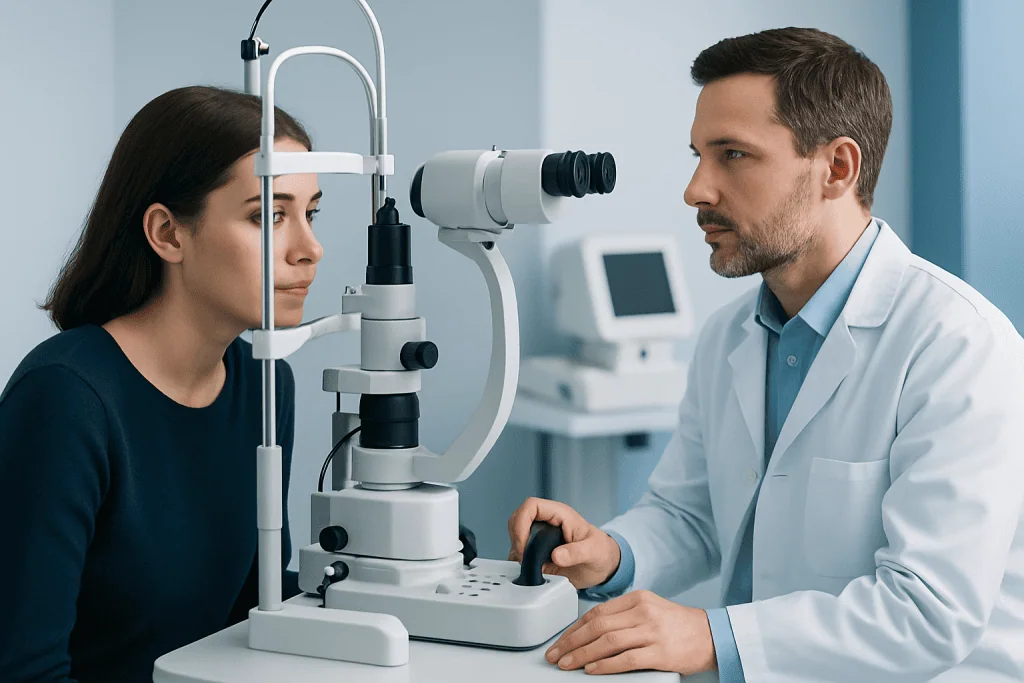
A physical examination may include a neurological exam and an eye assessment. Depending on the symptoms, referral to ophthalmology or neurology may be appropriate. If there is any concern about the retina, optic nerve, or circulation to the brain, additional tests may be recommended to rule out other causes of visual disturbance.
Further evaluation is more likely when the symptoms are new, occur later in life for the first time, are unusually prolonged, or are accompanied by weakness, numbness, or speech changes. In selected cases, doctors may use brain MRI or other imaging to exclude structural or vascular causes. Eye examination and comprehensive eye examination may help identify conditions affecting the retina or optic nerve.
Modern Treatment Approaches
There is no single treatment that stops every episode of scintillating scotoma immediately, especially when it is part of a migraine aura that is already underway. Management usually focuses on confirming the diagnosis, reducing attack frequency, and treating associated migraine symptoms when present. If the visual symptoms occur without headache, treatment still centers on migraine prevention when episodes are frequent or disruptive.
For occasional typical episodes, a doctor may recommend resting in a quiet, dim environment until the aura passes, along with hydration and trigger management. If headaches follow the aura, migraine treatment may include nonprescription pain relief or prescription migraine medicines chosen by a physician based on the individual’s medical history. Frequent or disabling episodes may lead to discussion of preventive migraine therapies.
When symptoms do not fit the usual aura pattern, treatment follows the underlying cause. A retinal disorder, a vascular event, or another neurological condition needs a different approach — and this is not something to work out on your own. If your aura keeps coming back, a neurologist can tailor a plan and decide whether further testing is needed.
Prevention, Self-care, and Outlook
Many people can reduce episodes by learning and managing personal triggers. Keeping a symptom diary may help identify links with stress, poor sleep, skipped meals, dehydration, hormonal changes, alcohol, or prolonged visual strain. Regular meals, adequate fluids, a consistent sleep schedule, and gradual stress reduction are often helpful foundations.
Screen habits can also matter. For some people, frequent breaks, reduced glare, appropriate glasses, and attention to posture and lighting help limit visually triggered discomfort. If episodes are frequent, a clinician may review medications, caffeine use, and broader health factors such as blood pressure or vascular risk.
The outlook is generally good when scintillating scotoma is related to migraine aura and symptoms follow a familiar pattern. The visual disturbance usually clears completely without causing lasting eye damage. Some patients prefer to be assessed at a center where ophthalmology and neurology work side by side. At Acibadem International, multidisciplinary specialists in JCI-accredited hospitals diagnose and treat such conditions for international patients.
When to Seek Medical Care
Medical care is important for a first episode of scintillating scotoma, especially if the diagnosis has never been confirmed. A doctor should also assess symptoms that change in pattern, become more frequent, or interfere with daily activities such as driving, reading, or work. Even when migraine is likely, recurring visual aura deserves discussion with a qualified clinician.
Urgent evaluation is needed for sudden vision loss in one eye, persistent visual loss, weakness, numbness, trouble speaking, fainting, confusion, or a severe unusual headache. These features are not typical of a simple migraine aura and may point to an eye emergency or a neurological problem. If you are not sure whether what you are seeing is migraine-related, get advice quickly rather than waiting it out alone.
Frequently asked questions
Is scintillating scotoma the same as a migraine?
Scintillating scotoma is not the migraine itself, but it is often part of a migraine aura. It can happen before a headache, during a headache, or sometimes without any headache at all. A doctor can help confirm whether the pattern fits migraine aura.
How long does a scintillating scotoma usually last?
A typical episode develops gradually and lasts less than an hour, often around 20 to 30 minutes. The visual pattern usually expands or shifts before fading away. Symptoms that are very brief, very prolonged, or persistent should be evaluated.
Can scintillating scotoma cause permanent vision loss?
Migraine-related scintillating scotoma usually does not cause permanent damage and vision returns to normal after the episode. However, not every visual disturbance is due to migraine. Sudden or lasting vision loss needs urgent medical attention to rule out other causes.
Does scintillating scotoma affect one eye or both eyes?
Many people feel as if it affects one eye, but a true migraine aura usually involves the visual field of both eyes because it comes from the brain’s visual pathways. Covering one eye and then the other may show that the pattern is still present. A symptom clearly limited to one eye may suggest a retinal or ocular problem and should be assessed.
What can trigger scintillating scotoma?
Common triggers include stress, lack of sleep, dehydration, skipped meals, bright light, hormonal changes, and prolonged screen exposure. Triggers vary from person to person, so keeping a diary can be useful. Identifying patterns may help reduce future episodes.
When should someone worry about scintillating scotoma?
A first episode, a major change in the usual pattern, or symptoms with weakness, speech trouble, confusion, or persistent vision loss should be assessed promptly. Sudden complete or curtain-like loss of vision in one eye is especially important to treat as urgent. It is safest to seek care whenever the symptoms do not feel typical or familiar.
This article is for general information only and is not a substitute for professional medical advice. Please consult a qualified doctor about your individual situation.
Explore treatments in Turkey — costs, top hospitals & a free quote
7 JCI-accredited hospitals · board-certified surgeons · reply within 24h
Add us as a Preferred Source to see more of our trusted health content across Google Search, AI Overviews and Discover.

Medically reviewed by the Acıbadem International Medical Board — August 24, 2026
See our medical review board →
References (3)
- Migraine – MedlinePlus — medlineplus.gov
- Vision Impairment and Blindness – MedlinePlus — medlineplus.gov
- Migraine – NHS — www.nhs.uk
Neurology
Diagnosis and treatment of disorders of the brain, spinal cord, nerves and muscles.
51 specialists in this unitNeurology Specialists at Acibadem





Related Treatments
Related Conditions
More from the Health Library

Pml Leukoencephalopathy: Diagnosis, Outlook, and Modern Treatment Approaches

Idiopathic Intracranial Hypertension and Its Threat to Vision

How the Phrenic Nerve Powers Breathing and What Can Go Wrong

Insomnia Usually Has More Than One Cause

Hemiplegic Migraine Causes One-Sided Weakness That Mimics Stroke