Bichectomy (Cheek Reduction)
Bichectomy, or cheek reduction, is a facial contouring surgery that removes part of the buccal fat pads to create a slimmer, more defined midface and jawline.

Quick answer
Buccal fat removal, also called bichectomy, is a surgical procedure that removes part of the buccal fat pad, a deep pocket of fat in the lower cheek, through small incisions inside the mouth. It reduces persistent lower-cheek fullness and adds definition below the cheekbones. The operation is usually short, leaves no external scar, and most patients go home the same day.
What Is Buccal Fat Removal (Bichectomy)?
Buccal fat removal, also called bichectomy or cheek reduction, is a surgical procedure that removes part of the buccal fat pad, a naturally occurring pocket of deep fat in the lower cheek, through small incisions made inside the mouth. It reduces persistent lower-cheek fullness and creates a more defined transition between the cheekbones and the jawline. It is intended for adults whose cheek fullness comes from anatomy rather than weight, and who have enough overall facial volume to tolerate a conservative reduction. Because the operation is short and the incisions leave no visible external scar, many international patients plan bichectomy in Turkey as part of a brief, structured stay that includes evaluation, surgery and an in-person follow-up before flying home.
You may see the procedure written several ways. English-language sources use buccal fat removal, bichectomy or cheek reduction more or less interchangeably. In Spanish-speaking countries the same operation is known as bichectomia. Whatever the name, the surgery is identical in principle: a controlled portion of one deep fat compartment is removed from each cheek, and nothing else in the face is altered.
Where is the buccal fat pad, and what does it do?
The buccal fat pad sits deep in the lower part of the cheek, between the muscles you use to chew. It is present in everyone and helps shape the contour of the midface. Its size varies considerably from person to person, and it does not shrink reliably with diet or exercise. In some people, a naturally large buccal fat pad makes the lower cheeks look full or rounded even when the rest of the body is lean. That is the specific anatomy bichectomy addresses.
It helps to be precise about what the procedure does not do. Bichectomy does not change the bones of the face, does not remove all cheek fullness, and is not a substitute for weight loss. It is more accurate to think of it as facial contour refinement than as “cheek slimming”: one deep fat compartment is selectively reduced to improve proportion in well-chosen patients. Depending on your goals and anatomy, a surgeon may recommend performing it alone or combining it with chin contouring, facelift techniques or another facial procedure, so that the upper, middle and lower face stay in balance. The right plan comes from a detailed assessment of the whole face, not from a single concern viewed in isolation.
A personal decision about facial balance
For most people, exploring buccal fat removal is less about following a trend and more about wanting the face to reflect how they see themselves. Some feel their cheeks look persistently full even when they are otherwise lean. Others notice that photographs make the midface appear heavier than it does in person, or that the lower face lacks the definition they want along the cheekbones and jawline. Because the face is central to identity, even small changes can feel significant, and it is entirely normal to feel uncertain. Common questions include whether fuller cheeks are simply part of your natural anatomy, whether the result will look obvious, and whether removing buccal fat could leave the face too hollow later in life. These are thoughtful questions, and they deserve careful evaluation rather than quick answers. Facial structure, skin quality, age, weight stability and ethnic features all influence how a reduced cheek will look, now and in twenty years.
Who May Be a Good Candidate for Bichectomy
Bichectomy is generally considered by adults who have persistent fullness in the lower cheeks and want a slimmer or more defined facial shape. Many describe their face as “baby-faced”, “round” or “puffy” despite not being overweight. Others notice that the contour under the cheekbones is less visible than they would like, or that the lower face seems disproportionately wide compared with the forehead or chin.
The procedure may be appropriate for you if you:
- Have naturally prominent lower-cheek fullness that has remained stable over time
- Are in good general health and at a stable weight
- Have realistic expectations about subtle facial contour changes
- Want a permanent surgical approach rather than temporary contouring treatments
- Have enough overall facial volume to allow reduction without creating a hollow appearance
Not everyone with fuller cheeks is a good candidate. If your face is already narrow, or your natural cheek volume is likely to decrease noticeably with age, removing buccal fat can increase the risk of an overly gaunt look in later decades. If your fullness comes mainly from weight changes, fluid retention, enlarged chewing muscles, a wide jawbone or skin laxity rather than the buccal fat pad itself, a different treatment, or no treatment, may serve you better. A responsible surgeon will say so plainly.
The assessment here is anatomical rather than a disease diagnosis. The surgeon evaluates your face at rest and in motion, from the front and in profile, in relation to your age, skin quality, bone structure and goals. Medical history matters too: conditions that affect healing, smoking, previous facial procedures, dental issues and current medications are all reviewed before surgery is considered. Photographic analysis is usually part of the consultation, because it helps the surgeon assess proportion and discuss what degree of change is realistic. When bichectomy is planned alongside another procedure, additional imaging and documentation may support planning. The decision is never based on one feature alone, but on how the entire face will look once volume is reduced.
How to get rid of face fat: where surgery fits
If you are searching for how to get rid of face fat, surgery is rarely the first answer. Facial fullness that follows your body weight tends to respond to the same things the rest of your body responds to: sustained weight management, sleep and general health. Fullness caused by fluid retention or enlarged chewing muscles has its own causes and its own treatments. Buccal fat is the exception: it is a deep, anatomically fixed compartment that changes little with diet or exercise. That is precisely why bichectomy exists: it addresses the one source of lower-cheek fullness that lifestyle measures cannot meaningfully reach. A careful consultation distinguishes between these causes before any operation is proposed, because removing buccal fat from a face whose fullness comes from somewhere else will not produce the change you are hoping for.
Concerns Bichectomy Addresses, and What It Does Not
Bichectomy is an aesthetic procedure, so it does not treat a disease in the usual sense. It addresses specific contour concerns related to the size and prominence of the buccal fat pads. The most common indication is persistent lower-cheek fullness that is out of proportion to the rest of the face.
It may help address:
- Round or overly full lower cheeks in adults
- Limited definition beneath the cheekbones
- A soft or less sculpted transition between the midface and jawline
- Facial disproportion where the mid-lower face appears heavier than other features
- Dissatisfaction with facial contour despite stable weight and healthy habits
In some patients, cheek fullness contributes to a youthful roundness they no longer feel reflects them. In others, it creates asymmetry or makes facial angles look less defined in photographs. Bichectomy can help when these concerns trace back to the underlying anatomy of the buccal fat pads.
It is equally important to define what the procedure does not address. It does not tighten loose skin, lift sagging tissues, reduce jowls caused by ageing, or narrow a face that is broad because of enlarged chewing muscles or a wide jawbone. It does not treat generalised facial swelling, and it does not replace weight management. A sound surgical assessment rules these other causes out first, so that the treatment matches the actual problem. When it does not, the honest recommendation is a different procedure, or none.
How Bichectomy Is Performed
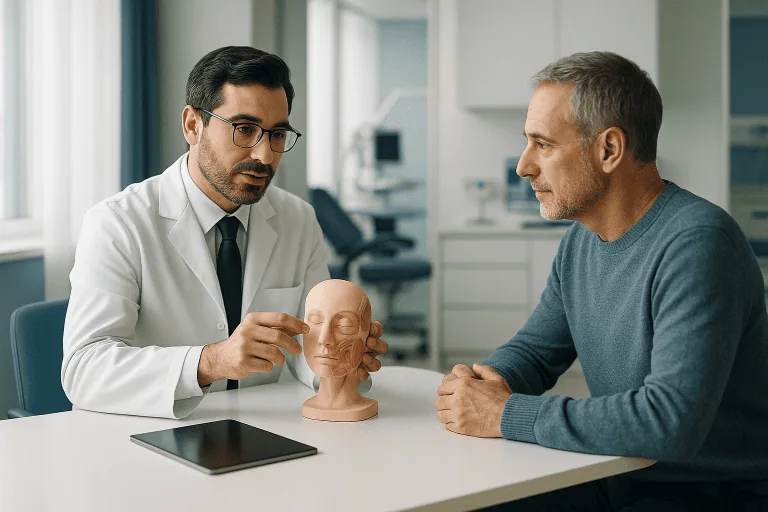
The process begins with a detailed preoperative consultation. The surgeon reviews your medical history, current medications, smoking status, prior surgeries and aesthetic goals, then examines your face to judge whether buccal fat reduction is likely to improve balance without creating excessive hollowness. If surgery is appropriate, the plan specifies how much fat to remove on each side and whether the procedure will be done alone or combined with another facial operation.
Preparation is straightforward but matters. You will usually be advised to stop smoking well in advance, because nicotine impairs healing. Medications and supplements that increase bleeding risk are reviewed by the treating team, who decide what should be adjusted and when: that decision always belongs to your doctor, not to a checklist. Depending on your age, health status and the planned anaesthesia, routine medical tests may be requested before the operation is confirmed.
On the day of surgery, bichectomy is often performed under local anaesthesia with sedation, though the anaesthesia plan depends on you and on whether other procedures are combined. The operation itself follows a consistent sequence:
- The inside of the mouth is cleansed and the area is numbed.
- The surgeon makes a small incision in the inner lining of one cheek.
- Gentle pressure and careful dissection expose the buccal fat pad through this opening.
- A measured portion of the fat is removed, enough to refine the contour, never as much as possible.
- Bleeding is controlled, the tissues are repositioned, and the incision is closed with dissolvable sutures.
- The same steps are repeated on the other side, with close attention to symmetry.
That fourth step deserves emphasis. Successful buccal fat removal is not about maximal extraction. It is about removing enough to create refinement while preserving natural softness and long-term harmony. Because dissolvable sutures are used inside the mouth, they are absorbed as the lining heals, and there is normally nothing to remove afterwards.
How long does the operation take?
When performed alone, bichectomy is a short operation, many cases are completed in well under an hour. Your total time at the hospital is longer, because it includes admission, anaesthesia preparation and postoperative monitoring. If bichectomy is combined with other procedures, operative time naturally increases. Most patients go home the same day unless a combined procedure or a medical reason requires a longer stay.
What supports safety during the procedure?
Several elements of modern surgical practice contribute to planning and safety. Standard preoperative photography documents symmetry and anchors realistic goals. Modern anaesthesia monitoring supports comfort and stability throughout the operation. Sterile technique, precision instruments and careful intraoral access minimise trauma to surrounding tissues. When bichectomy is combined with other facial surgery, additional imaging or planning tools may support an individualised strategy. None of this replaces surgical judgment: it serves it.
What happens immediately afterwards?
Your cheeks may feel swollen or tight. Mild discomfort is common; severe pain is not typical. Because the incisions are inside the mouth, you will receive specific instructions on oral hygiene, rinsing and temporary dietary changes, usually a soft or liquid diet at first, to avoid irritating the incision sites. Cold application and keeping your head elevated help with early swelling. Before discharge, the care team explains what symptoms are expected during normal healing and which signs should prompt medical review.
How Risky Is Buccal Fat Removal?
Buccal fat removal is generally considered a low-complexity procedure when performed by an experienced facial surgeon on a well-selected patient, but no operation is without risk, and it would be misleading to describe this one as trivial. Short-term risks are those of any intraoral surgery: swelling, bruising, bleeding, infection and temporary numbness or tightness in the cheek. Structures near the buccal fat pad, including branches of the facial nerve and the duct that drains the parotid salivary gland, must be respected during dissection, which is one reason surgical experience matters more here than the operation’s short duration might suggest.
The risk most specific to bichectomy is aesthetic rather than medical: over-resection. Because the face naturally loses volume with age, removing too much buccal fat can produce a hollow, gaunt appearance that becomes more pronounced over the years and is difficult to reverse. This is why conservative removal and honest candidate selection are the two decisions that most influence how you will feel about the result a decade from now. Asymmetry is another possibility, though early unevenness is usually swelling rather than a true difference, and judgement should wait until healing is complete.
Is it bad to have a bichectomy?
No, but it is bad to have one for the wrong face. In an adult with genuinely prominent buccal fat, stable weight and sufficient overall facial volume, a conservative bichectomy is a reasonable, well-established procedure. In someone whose face is already slim, whose fullness comes from weight or muscle rather than buccal fat, or whose face is likely to hollow with age, the same operation can do lasting aesthetic harm. The question to ask is not whether bichectomy is good or bad in general, but whether it is right for your specific anatomy, and a surgeon willing to say no is worth more than one who always says yes.
Recovery After Buccal Fat Removal
Recovery varies from patient to patient, but the general course follows a predictable pattern. Expect the counterintuitive part first: initial swelling often makes the face look fuller before it looks slimmer. This early phase is temporary, and knowing that in advance makes the first days far less unsettling.
| Time Period | What You Can Expect |
|---|---|
| Day 1 | Mild to moderate swelling, a feeling of tightness inside the cheeks, and discomfort that is usually manageable with prescribed medication. Soft foods and careful oral hygiene are important. |
| First week | Swelling and any bruising are usually most noticeable now. Light daily activities typically resume; strenuous exercise is postponed. |
| First month | The cheeks begin to settle and contour changes become easier to appreciate. Internal healing continues even after you feel normal. |
| Longer term | Final definition appears gradually as residual swelling resolves and tissues adapt. Results are typically subtle, natural-looking and more apparent over time than immediately after surgery. |
A few practical points make the early weeks easier. Sleep with your head elevated for the first nights, since gravity reduces facial swelling. Keep the inside of your mouth clean exactly as instructed, follow the dietary progression your team gives you, and avoid smoking throughout healing. Final refinement may take several weeks to months to appear, depending on your healing pattern and whether other procedures were performed at the same time, patience here is not optional, it is part of the treatment.
Buccal Fat Removal Before and After: Reading Results Honestly
Looking at buccal fat removal before and after photographs is a sensible part of your research, but those images need reading with care. Lighting, camera angle, facial expression, make-up and the time elapsed since surgery can each change how dramatic a result appears, sometimes more than the surgery itself. A photograph taken at six weeks, while residual swelling still softens the contour, will look different from the same face at six months. Our guide to what realistic before-and-after results mean explains how to interpret such images without being misled by the most flattering examples.
Standardised clinical photography, consistent lighting, distance, angles and expression, taken before surgery and at defined points afterwards, is the honest version of before-and-after documentation, and it also serves the surgical plan itself. It records your starting symmetry, anchors the discussion of what is realistic, and lets you and your surgeon assess the actual change rather than a remembered impression. You can read how this works in practice in medical photography before and after treatment in Turkey. Expect a genuine bichectomy result to look like a refined version of your own face, not a different one; if a gallery shows transformations that seem structural, something other than buccal fat removal is usually involved.
Buccal Fat Removal Cost: What Shapes the Price
Buccal fat removal cost varies from patient to patient because the price reflects a plan, not a fixed product. The main drivers are the same everywhere: the scope of the preoperative evaluation, the type of anaesthesia, whether the procedure is performed alone or combined with other facial surgery, the facility setting, the surgeon’s experience, and the follow-up included after the operation. Medication after discharge, additional tests your health status requires, and the length of your stay all affect the total as well. Any figure quoted before a surgeon has actually assessed your face is an assumption, not a price.
How much does a bichectomy cost?
There is no single honest answer, and this page deliberately does not quote one. What you can and should obtain is an itemised, written estimate for your specific case, one that states what the evaluation covers, what the surgical fee includes, how anaesthesia and facility charges are handled, and which situations could add costs. Our guide on how to ask for a clear cost breakdown before treatment explains how to request this well. Remember also the non-medical items, flights, accommodation, local transport, that quotes rarely include, and budget for them separately when you compare estimates.
How much does a bichectomy cost in Turkey?
The same logic applies: the cost in Turkey depends on your individual plan, and a serious provider will confirm it in writing after reviewing your case rather than advertising a universal number. At Acibadem, the treatment cost is verified and documented before you travel, so the figure you plan around is the figure your treatment is based on; the process is described in how we verify your final treatment cost before travel. Be cautious with any quote that arrives before anyone has examined your face or medical history, for bichectomy, candidacy is the first question, and price only meaningfully exists once candidacy is established.
Having Bichectomy in Turkey as an International Patient
Bichectomy travels well as a procedure: it is short, it uses intraoral incisions with dissolvable sutures, and the early recovery milestones fall within a stay of realistic length. Even so, having surgery abroad works best when the pathway is planned rather than improvised. A typical care pathway for an international patient runs in three phases. Before travel, your medical history, photographs and goals are reviewed, the surgical plan and anaesthesia approach are defined, and your written cost estimate is confirmed. During your stay, you have an in-person consultation and examination, the operation itself, and at least one follow-up visit so the surgical team can assess healing, answer questions and confirm you are ready to fly. After you return home, follow-up continues remotely at agreed intervals, usually supported by photographs, until healing is complete.
Plan your trip around healing, not just the operation date. You will want to remain near the hospital for the follow-up review before departure, and it is sensible to build slack into your schedule in case your team recommends an extra day. Remember that early swelling means you will not see the final contour before you leave: that is normal, and remote follow-up exists precisely to bridge the months in which the result emerges. Practical matters such as airport transfers, interpreter support, appointment coordination and what to bring are covered in what happens before, during and after treatment in Turkey. Give some thought to the small logistics too: soft foods for the first days, a comfortable place to rest with your head elevated, and loose scheduling in the first week so recovery is not competing with sightseeing.
Why Timing Matters
Bichectomy is elective, so it is not urgent in the way cancer or heart treatment may be. Timing still matters. If your concern about facial contour has been stable for years, your weight is stable and your facial development is mature, a timely evaluation clarifies whether surgery is appropriate before more uncertainty builds. Many people spend years on non-surgical strategies that cannot change buccal fat pad anatomy; a proper consultation prevents that frustration and gives you a clear answer either way.
There is also value in assessing your anatomy before further age-related changes occur. As the face naturally loses volume over time, the decision becomes more nuanced. A younger adult with persistent lower-cheek fullness may still have enough facial volume to benefit from conservative reduction, while someone whose face is already beginning to hollow may be better served by leaving the buccal fat alone. The main risk of delay is not medical danger but a less ideal treatment window or prolonged dissatisfaction. Equally, acting too quickly without a thorough assessment is its own mistake. The right pace is neither rushed nor indefinitely postponed: an informed decision based on stable goals, mature facial development and an individualised examination by an experienced plastic surgeon.
Potential Benefits, and What Influences the Outcome
When the procedure is well indicated and conservatively performed, the benefits are aesthetic but meaningful in everyday life:
- Reduced lower-cheek fullness. The face may look less rounded and more proportionate, especially if prominent buccal fat was the main source of fullness.
- Improved facial definition. Contours beneath the cheekbones and toward the jawline may become more visible, creating a more sculpted appearance.
- No visible external scar. Because the incision is inside the mouth, there is usually no scar on the skin.
- Permanent reduction of the targeted fat pad. The removed portion of buccal fat does not typically return, so the contour change is long-lasting if your weight remains relatively stable.
- Compatibility with other facial procedures. For selected patients, treatment can be integrated into a broader plan that improves overall facial balance rather than addressing one feature in isolation.
Whether you actually see these benefits depends on more than the technical act of removing fat. Patient selection comes first: people with true buccal fullness, stable weight and good facial volume do better than those with generalised thinness or fullness from other causes. The surgeon’s judgment comes next. Removal must be conservative and tailored, over-resection can produce a hollow look that worsens with age, while under-resection leaves you feeling little changed. Striking that balance requires experience in facial aesthetics and an understanding of how faces age.
Age and features matter too. Younger patients often have fuller faces and thicker soft-tissue support; older patients may already be losing volume naturally. Ethnic and individual characteristics deserve respect: the goal is refinement consistent with your natural appearance, not a generic ideal. Healing quality influences how quickly results become visible: swelling can persist for weeks, and early asymmetry usually reflects uneven swelling rather than the final outcome. Following aftercare instructions, not smoking, maintaining oral hygiene and attending follow-up visits all support recovery. Finally, expectations shape satisfaction. Bichectomy refines the lower cheeks; it does not reshape the entire face. Patients who understand that measured scope in advance are consistently the ones most content with the result.
How Acibadem Approaches Bichectomy
Acibadem’s plastic and aesthetic surgery teams evaluate facial procedures within a broader medical framework, which matters when surgery affects visible features and long-term appearance. Preoperative assessment is thorough, particularly for patients travelling from abroad, who need clarity before making plans, and when a case would benefit from broader input, multidisciplinary evaluation helps align aesthetic goals with functional and medical considerations. In practice, that measured approach sometimes means a patient is advised to consider a different procedure, a combined approach, or no surgery at all. In facial contouring, restraint can be as valuable as intervention.
Technology supports planning and safety, careful photographic assessment, modern anaesthesia monitoring, precision instruments and standardised perioperative protocols, but it is used in service of clinical judgment, never as a substitute for it. For international patients, Acibadem also provides the practical layer that makes treatment abroad workable: appointment coordination, help with medical documentation, and communication in multiple languages, so you understand what to expect before travel, how long to stay and how follow-up is organised. How that support works across the whole journey is set out in this overview of international patient support. Above all, treatment plans are personalised. Facial contour surgery should reflect your anatomy, age and goals, not a fixed formula: a principle that matters most in exactly this kind of operation, where subtle planning decisions shape how the face looks for decades.
Deciding Whether Bichectomy Is Right for You
The most important first step is an expert assessment of whether your cheek fullness is truly caused by prominent buccal fat pads and whether reducing them is likely to improve your facial balance over time, not just this year, but as your face ages. For the right patient, buccal fat removal creates a more defined, natural-looking refinement with no external scar, a short operation and a manageable recovery. For the wrong patient, it removes volume the face will later miss. Many people begin this process with questions rather than certainty, and that is exactly the right place to start: understanding your anatomy, what result is realistic, whether another procedure would suit you better, and how recovery would fit into your plans. Thoughtful facial surgery starts with good information and a surgeon honest enough to tell you when the answer is no.
Preparation
- Your surgeon evaluates facial anatomy, skin quality, and aesthetic goals to confirm whether bichectomy is appropriate. You may be asked to stop smoking, avoid blood-thinning medications if medically safe, and follow fasting instructions if sedation is planned. Preoperative photographs and a treatment plan are usually prepared before surgery.
Aftercare
- Mild swelling, soreness, and limited mouth discomfort are common for several days after bichectomy. Patients are usually advised to follow oral hygiene instructions, use prescribed medications, and begin with soft foods. Final cheek contour becomes more visible as swelling settles over the following weeks.
Frequently Asked Questions
What is bichectomy and how does cheek reduction surgery work?
Bichectomy, also called buccal fat removal or cheek reduction surgery, is a cosmetic procedure that reduces fullness in the lower cheeks by removing part of the buccal fat pads. The goal is to create a slimmer, more contoured facial appearance, especially around the cheekbones and jawline. The procedure is usually performed through small incisions inside the mouth, so there are no visible external scars. Acibadem plastic surgeons evaluate facial balance carefully before recommending treatment.
Who is a good candidate for bichectomy?
Good candidates are usually adults with naturally full or rounded cheeks who want a more defined facial contour and are in good general health. It may be suitable if cheek fullness does not improve with weight changes and if your face has enough natural volume to maintain balance over time. It is not ideal for everyone, especially people with very slim faces or certain medical conditions. At Acibadem, specialists provide a personalized assessment to determine whether bichectomy fits your goals.
Will bichectomy make my face look too thin as I get older?
This is a common concern because facial volume naturally decreases with age. If too much buccal fat is removed, the cheeks may appear hollow later in life. That is why careful patient selection and conservative surgical planning matter. Experienced plastic surgeons assess your age, skin quality, bone structure, and long-term facial harmony before advising surgery. At Acibadem, the treatment plan is individualized to help achieve a refined result while preserving a natural appearance.
How is cheek reduction surgery performed and does it leave scars?
Bichectomy is commonly performed under local anesthesia with sedation or, in some cases, general anesthesia. The surgeon makes small incisions inside the mouth, gently accesses the buccal fat pads, removes the planned amount of fat, and closes the incisions with dissolvable stitches. Because the cuts are inside the mouth, there are usually no visible scars on the face. The procedure is relatively short, and most patients return to their hotel or home the same day after recovery monitoring.
How long is recovery after bichectomy and when will I see the final result?
Most patients experience mild to moderate swelling, a feeling of tightness, and some tenderness for several days after surgery. Many people can return to light daily activities within a few days, although full social recovery varies. You may need a soft or liquid diet briefly while the mouth heals. Early changes can be seen once swelling begins to settle, but the final contour usually appears gradually over several weeks to a few months as tissues fully heal.
Is bichectomy painful?
During the procedure, anesthesia helps keep you comfortable, so you should not feel pain while the surgery is being performed. Afterward, discomfort is usually manageable and often described as soreness or swelling inside the cheeks rather than strong pain. Your surgeon may recommend pain relief medication, mouth care instructions, and dietary adjustments to support healing. Following aftercare guidance closely can make recovery smoother. If needed, Acibadem teams also support international patients with post-operative follow-up planning.
What are the risks or side effects of buccal fat removal?
Like any surgery, bichectomy carries potential risks, including swelling, bruising, infection, bleeding, asymmetry, delayed healing, or an outcome that feels too subtle or too hollow. There is also a small risk of injury to nearby structures such as salivary ducts or facial nerve branches, which is why surgeon experience is important. A detailed consultation helps reduce avoidable risks by reviewing your anatomy and medical history. Acibadem specialists explain expected benefits and possible complications clearly before treatment.
Can bichectomy be combined with other facial aesthetic procedures?
Yes, bichectomy is sometimes combined with other facial procedures such as chin enhancement, liposuction under the chin, rhinoplasty, facelift-related treatments, or non-surgical skin therapies, depending on your facial proportions and goals. Combining procedures may improve overall harmony, but it should be planned carefully to avoid overcorrection. A personalized facial analysis is important because not every patient benefits from multiple treatments. At Acibadem, plastic and aesthetic surgery specialists design tailored treatment plans for balanced, natural-looking results.
How long do bichectomy results last?
The fat removed during bichectomy does not grow back, so the contour change is generally long lasting. However, your face will still change over time due to aging, weight fluctuations, skin elasticity, and overall lifestyle. This means the result can evolve gradually even though the removed buccal fat itself is gone. Maintaining a stable weight and following healthy habits may help preserve facial balance. Your surgeon can explain what kind of long-term change is realistic for your features.
Why do international patients choose Turkey and Acibadem for bichectomy?
International patients often choose Turkey for cosmetic procedures because of experienced specialists, modern hospitals, and the convenience of combining treatment with travel. Acibadem offers comprehensive care in a hospital setting, with plastic and aesthetic surgery teams, advanced diagnostic support, and coordinated services for international patients. Before surgery, you receive an individualized evaluation to confirm whether bichectomy is appropriate for your facial structure and expectations. This personalized approach helps patients feel informed, prepared, and supported throughout the process.
Medically reviewed by the Acıbadem International Medical Board September 13, 2026
See our medical review board →
Update history
- PublishedJuly 19, 2026
- Medical review approvedSeptember 13, 2026
- Last content updateSeptember 12, 2026
From the Acibadem Blog

Is Bichectomy Right for Round Cheeks? Face Shape, Age and What Cheek Reduction Cannot Fix
A bichectomy candidate is usually an adult in good health, at a stable weight, whose cheek fullness sits low in the cheek and persists…
Doctors Performing This Treatment



Aesthetic Plastic & Reconstructive Surgery
Prof. Mehmet Veli Karaaltın, MD


Aesthetic Plastic & Reconstructive Surgery
Assoc. Prof. Erdem Güven, MD

Aesthetic Plastic & Reconstructive Surgery
Assoc. Prof. Ahmet Küçükçelebi, MD

Aesthetic Plastic & Reconstructive Surgery
Assoc. Prof. Mehmet Altıparmak, MD

Aesthetic Plastic & Reconstructive Surgery