Gigantism Treatment
Gigantism treatment addresses excess growth hormone in children, usually caused by a pituitary adenoma. Care combines endocrine testing, MRI evaluation, surgery, medication or radiotherapy when appropriate.

Quick answer
Gigantism treatment controls excess growth hormone in children whose growth plates are still open. The usual cause is a benign pituitary adenoma. Care typically combines hormone testing, pituitary MRI, transsphenoidal surgery to remove the tumour, medication to lower growth hormone activity, and radiotherapy in selected cases, followed by long-term endocrine monitoring through puberty and into adulthood.
Gigantism, Acromegaly and the Decision to Seek Treatment
Gigantism is a rare endocrine disorder in which a child or adolescent produces too much growth hormone while the growth plates of the bones are still open, driving abnormally rapid height gain and enlargement of the hands, feet and face. It is the childhood counterpart of acromegaly, the same hormone excess occurring in adults, and both are most often caused by a benign tumour of the pituitary gland called a pituitary adenoma. Treatment exists for children whose growth is excessive, accelerated and accompanied by hormonal or neurological symptoms, not for children who are simply tall.
For families, the first signs can be confusing. A child outgrows shoes and clothes far faster than expected. Headaches appear and persist. Vision changes subtly. What may initially seem like ordinary tall stature becomes a medical concern when growth crosses percentile lines rapidly and other symptoms accumulate alongside it. Because the same underlying disease continues into adulthood as acromegaly, physicians who treat gigantism draw on the wider body of knowledge built around acromegaly diagnosis and management.
The decision to seek specialised care can feel urgent and emotionally complex. Parents worry about their child’s final height, puberty, fertility, appearance, school life and long-term health. They may also have concerns about brain surgery, medication side effects, radiotherapy, or travelling abroad for care. These are reasonable concerns, and it helps to name them plainly. Gigantism requires evaluation by physicians who understand both paediatric growth and pituitary disease, because treatment is not only about slowing height velocity. It is also about protecting vision, controlling hormone levels, supporting normal puberty, relieving pressure effects from a tumour, and lowering the risk of future complications.
Early, coordinated care matters because excess growth hormone affects nearly every system in the body. In children, it can lead to abnormal height acceleration, enlargement of the hands and feet, jaw and facial changes, joint problems, headaches, sleep disturbances, insulin resistance, and strain on the heart over time. The goals of treatment are to identify the cause, reduce growth hormone and insulin-like growth factor 1 levels, manage the pituitary tumour when one is present, and help the child continue developing as safely and normally as possible.
What is gigantism?
Gigantism, sometimes spelled giantism, is excessive linear growth in a child or adolescent caused by too much growth hormone before the growth plates in the long bones have fused. Because the bones can still lengthen, the hormone excess translates directly into abnormal height, in addition to the soft tissue, metabolic and skeletal effects seen at any age. Gigantism is much rarer than the adult form of the disease, which is one reason evaluation is usually concentrated in specialist endocrine centres. A key point for families: tall stature by itself is common and usually genetic; gigantism is defined by the combination of excessive, accelerating growth and biochemical evidence of growth hormone excess.
Acromegaly definition: how gigantism and acromegaly differ
The acromegaly definition is straightforward: acromegaly is the condition caused by excess growth hormone after the growth plates have closed, so the person does not grow taller but instead develops gradual enlargement of the hands, feet, facial bones and soft tissues. The underlying disease is essentially the same as gigantism; what differs is the timing. A child with growth hormone excess grows tall. An adult with the same excess develops the characteristic changes of acromegaly without height gain. Some adolescents whose disease begins near the end of growth show features of both, sometimes called acromegalic gigantism. The distinction matters clinically because it shapes what treatment can and cannot achieve: hormone control can stop further abnormal growth in a child, but height already gained cannot be reversed, and in adults the bony changes of acromegaly are largely permanent even when hormone levels are controlled.
What Gigantism Treatment Is
Gigantism treatment is a personalised medical plan designed to control excess growth hormone production in a child or adolescent. In most cases, the source is a growth hormone-secreting pituitary adenoma. The pituitary gland sits at the base of the brain and regulates many hormones, including growth hormone, thyroid-stimulating hormone, adrenocorticotropic hormone, and the hormones that drive puberty and fertility. Because the pituitary is small but biologically powerful, even a benign tumour there can have significant effects throughout the body.
How pituitary gland tumors can secrete excess amounts of growth hormone
Pituitary gland tumors can secrete excess amounts of growth hormone because they arise from the somatotroph cells whose normal job is to produce that hormone, and, unlike healthy cells, they escape the body’s usual feedback controls. In a healthy child, growth hormone release is pulsed and regulated: the hypothalamus stimulates it, somatostatin restrains it, and rising insulin-like growth factor 1 signals the system to slow down. An adenoma ignores these brakes. It secretes continuously, IGF-1 rises, and tissues throughout the body respond with growth they were never meant to sustain. This is also why treatment has two distinct targets: the tumour itself, and the hormone activity it produces. A therapy can succeed at one and not the other, which is why follow-up always measures both.
Treatment usually combines several elements: detailed endocrine testing, high-resolution pituitary magnetic resonance imaging, assessment of vision and of the other pituitary hormones, and selection of the most appropriate therapy for that specific child. For many patients, surgery to remove the adenoma is the primary treatment, especially when the tumour is well defined and accessible. Medication may be used before surgery, after surgery, or instead of surgery in selected cases. Radiotherapy may be considered when hormone levels remain active despite surgery and medication, or when a tumour cannot be fully removed safely.
Modern care for gigantism is rarely a single appointment or one isolated procedure. It is a structured pathway involving paediatric endocrinologists, neurosurgeons with pituitary experience, neuroradiologists, ophthalmologists, radiation oncologists when needed, anaesthesiologists, pathologists and specialised nursing teams. The plan is based on the child’s age, growth pattern, tumour size and location, hormone profile, pubertal stage, symptoms and family preferences. For families receiving care away from home, the plan should also account for travel timing, post-treatment monitoring, communication with local physicians, and long-term follow-up that will continue for years.
Who May Need Treatment for Gigantism
A child may need evaluation for gigantism when growth is significantly faster than expected for age and family background. Some children are naturally tall because of genetics, and tall stature alone does not mean disease. Concern increases when height crosses growth percentiles rapidly, when hands and feet enlarge disproportionately, or when accelerated growth is accompanied by headaches, visual changes, excessive sweating, fatigue, joint pain, delayed or abnormal puberty, or changes in facial features.
Families often notice practical signs before medical signs are obvious. Shoes need frequent replacement. A child becomes much taller than classmates within a short period. Rings, gloves or sports equipment no longer fit. The lower jaw becomes more prominent, the spacing between the teeth widens, or the forehead and facial bones appear heavier. Some children develop thickened or oily skin, changes in body odour, acne, snoring, or sleep-related breathing problems. If the pituitary tumour presses on nearby structures, the child may experience persistent headaches or loss of peripheral vision, often without realising it, because children adapt to a shrinking visual field remarkably well.
What does acromegaly look like?
Acromegaly and gigantism share a recognisable appearance driven by growth hormone’s effect on bone and soft tissue: enlarged hands and feet, coarsened features, and the big facial changes families often notice first: a heavier brow, a broader nose, thickened lips and a more prominent lower jaw that can push the bite out of alignment. In children with gigantism, unusual height dominates the picture; in adults with acromegaly, the changes creep in over years and are frequently spotted first by someone who has not seen the person for a long time, or by comparing old photographs. Dental spacing changes and bite problems are common enough that dentists and orthodontists are sometimes the first clinicians to suspect the diagnosis; significant jaw changes may later involve oral and maxillofacial surgery assessment once hormone levels are controlled. None of these features on its own proves the disease; the appearance prompts testing, and blood tests and imaging confirm or exclude it.
What famous person has acromegaly?
The best-known example is the wrestler and actor André the Giant, whose acromegalic gigantism began in childhood and continued into adulthood; his height and distinctive features were direct results of untreated growth hormone excess. Robert Wadlow, historically the tallest person reliably recorded, had pituitary-driven gigantism. Several character actors of earlier cinema were cast precisely because of the facial changes acromegaly produces. These public examples are worth knowing for one reason only: they show what the disease can do when it is not controlled, in an era when today’s diagnostic and treatment options did not exist. A child evaluated and treated promptly faces a very different trajectory.
How is gigantism diagnosed?
Diagnosis begins with a careful medical history, growth chart review and physical examination, followed by targeted blood tests and pituitary imaging. Physicians assess growth velocity, height compared with parental height expectations, pubertal development, body proportions, blood pressure and signs of other endocrine disorders. Laboratory testing typically starts with insulin-like growth factor 1, often called IGF-1, which reflects average growth hormone activity over time and must be interpreted against age- and puberty-specific reference ranges. Growth hormone itself may be measured, but because it fluctuates through the day, dynamic testing is often needed. An oral glucose suppression test is commonly used: growth hormone normally falls after glucose intake, and in gigantism it fails to suppress appropriately.
Additional blood tests evaluate the rest of pituitary function, thyroid function, cortisol-related testing, prolactin, gonadotropins, sex hormones, and sometimes tests related to water balance. Bone age imaging may be performed to assess skeletal maturation and estimate remaining growth potential. A dedicated pituitary MRI identifies whether an adenoma is present, how large it is, whether it extends toward the optic nerves, and whether it involves nearby structures such as the cavernous sinus; it also helps distinguish a pituitary adenoma from other brain tumours that can occasionally arise in the same region. Formal visual field testing is important whenever the tumour lies close to the optic pathways.
Some children need genetic evaluation, especially if gigantism begins very early, if there is a family history of pituitary or other endocrine tumours, or if the tumour has unusual features. Certain inherited conditions, including AIP gene mutations, X-linked acrogigantism, multiple endocrine neoplasia type 1, Carney complex and McCune-Albright syndrome, predispose to pituitary adenomas and growth hormone excess. Identifying a genetic cause can influence treatment decisions, family counselling and long-term surveillance, because inherited tumours sometimes behave differently and other family members may benefit from screening.
Conditions and Indications Addressed by Gigantism Treatment
Gigantism treatment primarily addresses excess growth hormone production before the closure of the growth plates. The most common indication is a growth hormone-secreting pituitary adenoma. These adenomas are usually benign, meaning they do not behave like cancer, but they can still cause serious endocrine and pressure-related problems. A small adenoma may produce very high hormone levels, while a larger one may also compress the optic nerves or the normal pituitary tissue around it. Detailed information on how these tumours are assessed is covered on our pituitary tumour page.
Treatment may also address mixed adenomas that secrete growth hormone together with another hormone, most often prolactin. In these cases, the medical plan may include therapies targeting more than one hormonal pathway. Some patients have pituitary hyperplasia, in which the gland tissue is enlarged and overactive, sometimes because of abnormal stimulation from elsewhere in the endocrine system. Very rarely, growth hormone excess is driven by a tumour outside the pituitary that produces growth-hormone-releasing hormone.
What are the main causes of acromegaly?
The main cause of acromegaly, in adults and in the childhood form, gigantism, is a benign growth hormone-secreting adenoma of the pituitary gland, which accounts for the overwhelming majority of cases. Less common causes include pituitary hyperplasia, mixed hormone-secreting tumours, and, rarely, ectopic production of growth-hormone-releasing hormone by a tumour elsewhere in the body. In children, genetic predisposition plays a larger role than in adults: early-onset gigantism in particular raises the possibility of inherited syndromes such as X-linked acrogigantism or familial isolated pituitary adenoma linked to AIP mutations. This is why the cause is investigated properly rather than assumed: the underlying source determines which treatment sequence makes sense.
Beyond the tumour itself, treatment addresses the effects of long-standing hormone excess. These may include abnormal linear growth, soft tissue enlargement, facial bone changes, dental spacing changes, headaches, visual field loss, joint discomfort, scoliosis or posture changes, sleep apnoea, insulin resistance, high blood pressure, and changes in heart structure or function. In adolescents, gigantism may interfere with normal puberty or reproductive hormone development, particularly when the tumour compresses the healthy part of the gland.
The indication for treatment is never limited to achieving a specific height. The broader aims are biochemical control, tumour control, preservation of neurological function, support of normal endocrine development, and prevention of complications that become harder to reverse with time. When children are still growing, timely control of growth hormone helps limit excessive height progression. When growth plates are near closure, treatment remains just as important, because ongoing hormone excess continues to affect soft tissues, metabolism, joints, sleep, cardiovascular health and quality of life, exactly the pattern seen in adult acromegaly.
What are acromegaly symptoms, and do they overlap with gigantism?
Acromegaly symptoms include enlarging hands and feet, coarsening facial features, headaches, excessive sweating, joint pain, snoring or sleep apnoea, tingling in the hands, fatigue, and changes in glucose metabolism, and children with gigantism can develop every one of these on top of their abnormal height. The overlap is complete because the hormone is the same; only the skeleton’s response differs. In practice this means a child being evaluated for gigantism is assessed for the whole spectrum of growth hormone effects, not only for growth: sleep quality, blood pressure, glucose handling, joint comfort, skin changes and heart function all belong in the picture. Recognising these symptoms as one connected disease, rather than a list of separate problems, is often the turning point in reaching the diagnosis.
How Gigantism Treatment Is Performed
Initial Evaluation and Treatment Planning
The treatment process begins with confirming the diagnosis and understanding the full impact of the disease. For families travelling for care, much of the early review can start before travel, using existing medical records, growth charts, laboratory results, imaging files and physician notes. Once the child is evaluated in person, the medical team may repeat or expand testing to ensure accuracy and to establish a reliable baseline for future comparison: an important step, because laboratory methods and reference ranges vary between institutions.
Endocrine testing is central. IGF-1 is interpreted according to age and pubertal stage, because normal ranges shift considerably across childhood and adolescence. Dynamic growth hormone testing may be performed under controlled conditions. The other pituitary hormones are assessed because a pituitary tumour can either overproduce hormones or reduce normal hormone production by compressing healthy gland tissue. If deficiencies are found, the endocrinology team addresses them before surgery or during recovery, sometimes with structured hormone therapy that is adjusted as the child’s situation changes.
Imaging usually includes a dedicated pituitary MRI with thin-section views. This lets the team evaluate tumour size, direction of growth, relationship to the optic chiasm, and proximity to the carotid arteries and cavernous sinuses. Visual field testing establishes whether the tumour is already affecting peripheral vision. Depending on symptoms, additional assessments may include sleep evaluation, cardiology review with echocardiography, glucose metabolism testing, dental or orthodontic assessment, and orthopaedic evaluation of the spine and joints.
After the diagnostic workup, the case is reviewed by the appropriate specialists together. In complex pituitary disease, a multidisciplinary board discusses the imaging, hormone results, surgical considerations, medication options and long-term follow-up needs. This collaborative approach matters in a rare disease: no single specialist sees enough of the whole picture alone, and the sequence of treatments is often as important as the individual treatments themselves.
Surgery for a Pituitary Adenoma
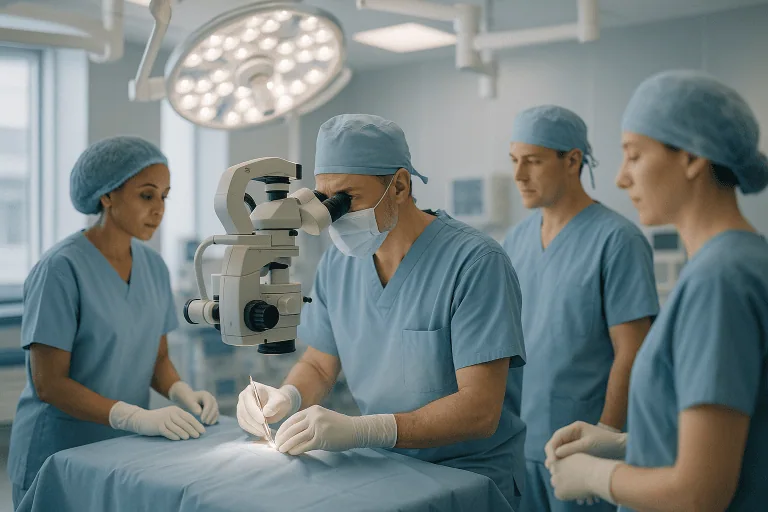
When a growth hormone-secreting adenoma is the cause, surgery is often considered first-line treatment if the tumour can be approached safely. The most common route is transsphenoidal surgery, in which the surgeon reaches the pituitary gland through the nasal passages and sphenoid sinus, avoiding any external incision. Depending on the anatomy and the tumour’s features, the procedure may be performed with an endoscopic or microscopic technique. The aim is to remove as much tumour as safely possible while preserving normal pituitary function and protecting the nearby nerves and blood vessels.
A typical surgical pathway follows these steps:
- Preoperative assessment. The child is reviewed by the anaesthesia and surgical teams. Hormone deficiencies are managed in advance, and any sleep apnoea, cardiac or metabolic issues are factored into the anaesthesia plan. Families receive instructions about fasting, admission and what to expect afterwards.
- Anaesthesia and positioning. The operation is performed under general anaesthesia with monitoring adapted to the child’s endocrine status and fluid balance needs.
- Approach and tumour removal. Using high-detail visualisation, and often a navigation system that correlates the surgical field with the preoperative MRI, the surgeon identifies the adenoma and separates it from normal gland tissue. Pituitary tumours vary in texture, shape and extension; some peel away cleanly, others extend into areas where aggressive removal would carry unacceptable risk. In children, preserving pituitary function for future growth, puberty and lifelong hormone health is a central consideration in every intraoperative decision.
- Closure and immediate recovery. The approach through the sinus is reconstructed to reduce the risk of cerebrospinal fluid leakage, and the child is monitored in a recovery setting before transfer to the ward.
The duration of surgery varies with tumour size, anatomy and complexity; many transsphenoidal procedures take several hours including anaesthesia preparation and recovery room monitoring. After surgery, children are watched closely for neurological status, fluid balance, urine output, sodium levels and pituitary hormone changes. Some need temporary hormone support. Early postoperative blood tests give a first indication of growth hormone activity, although true biochemical control is judged by follow-up IGF-1 and dynamic testing over the following months, not by a single early result.
Medication Options
Medication may be used when surgery is not appropriate, when hormone levels remain elevated after surgery, when a tumour cannot be completely removed, or as preparation before surgery in selected cases. The main medication groups are somatostatin receptor ligands, dopamine agonists and growth hormone receptor antagonists, and each works differently.
Somatostatin receptor ligands reduce growth hormone secretion in many patients and may help control tumour activity. Dopamine agonists can be useful in some growth hormone-secreting tumours, particularly when prolactin is also elevated. Growth hormone receptor antagonists do not reduce the tumour’s secretion directly; instead, they block growth hormone’s effect in the body and can help normalise IGF-1. Which medication is chosen, and by whom it should be prescribed, adjusted or stopped, is a decision for the treating endocrinologist, based on hormone levels, tumour characteristics, age, tolerance, route of administration and monitoring practicalities in the family’s home setting.
Children receiving these medications need structured follow-up. Physicians monitor IGF-1, growth velocity, symptoms, glucose metabolism, liver-related tests where relevant, gallbladder considerations for certain drug classes, and MRI findings over time. Medication can be highly valuable, but it is not a set-and-forget solution: it requires ongoing assessment to confirm that the child is responding and that side effects are recognised and managed early.
Radiotherapy When Needed
Radiotherapy is not the first treatment for most children with gigantism, but it may be considered when surgery and medication do not fully control the disease, or when residual tumour continues to grow or secrete hormone. Modern radiotherapy planning uses detailed imaging to focus treatment on the tumour while limiting exposure to the surrounding structures as far as technically possible. Depending on the case, treatment may involve highly focused radiosurgery delivered in a single session or fractionated radiotherapy delivered over multiple sessions.
Because children are still developing, the decision to use radiotherapy is made with particular care. The team weighs potential benefits against long-term risks, including delayed pituitary hormone deficiencies that can emerge years after treatment, and the fact that radiotherapy’s effect on hormone levels builds gradually rather than immediately. Families should expect a detailed discussion covering why radiotherapy is being recommended, what the alternatives are, how the treatment is planned, and how long-term monitoring will be organised afterwards.
Recovery and Follow-Up
Recovery depends on the treatment used. After pituitary surgery, many children stay in hospital for several days of monitoring. Nasal congestion, mild headache, fatigue and temporary changes in smell or taste are common. The team watches for rarer but important issues such as cerebrospinal fluid leakage, infection, sodium imbalance, or diabetes insipidus: a disturbance of water balance that can be temporary or, less often, lasting. Most children gradually return to normal daily activities over several weeks; the timing of sports, heavy lifting, swimming and air travel is agreed with the surgical team rather than assumed.
Follow-up is a long-term commitment. Growth velocity, height, weight, pubertal development, IGF-1, growth hormone suppression, the other pituitary hormones, MRI findings and vision are reviewed at planned intervals. The care plan changes as the child grows. Some patients achieve durable control after one treatment; others need a combination of surgery, medication and later radiotherapy. A thoughtful follow-up strategy is essential because hormone control can evolve over time, and the monitoring needs of a growing child differ from those of an adult with acromegaly, even though the two conditions eventually merge into one lifelong follow-up pathway.
Why Acting Early Matters
Early evaluation matters because gigantism progresses during the years when bones can still lengthen. Once the growth plates close, excessive height cannot be reversed. Treatment can still improve hormone-related symptoms and reduce future risks, but it cannot undo skeletal changes that have already occurred. This is the plainest argument for prompt assessment of any child with rapid, unexplained growth.
Delay also allows the pituitary tumour to enlarge. A larger tumour may be more difficult to remove completely and more likely to affect vision or normal pituitary function. Compression of the optic pathways causes peripheral vision loss that is often subtle at first; children adapt without realising they are missing parts of their visual field, which is why formal testing is done whenever imaging shows the tumour near the optic apparatus, rather than waiting for complaints.
Ongoing growth hormone excess adds metabolic and cardiovascular strain year by year. Children and adolescents may develop insulin resistance, abnormal glucose levels, high blood pressure, sleep apnoea, joint stress and changes in heart muscle. Some of these effects improve when hormone levels are controlled; others become entrenched. Earlier treatment reduces the accumulated burden. Timely care also gives families room to plan around schooling, puberty, psychosocial support and future health needs, instead of managing everything in crisis mode.
What is the life expectancy of someone with acromegaly?
Untreated or poorly controlled acromegaly is associated with a shortened life expectancy, mainly through cardiovascular, metabolic and respiratory complications, but the outlook changes substantially when growth hormone and IGF-1 are brought under control. The published evidence consistently points in the same direction: the excess risk is tied to active hormone excess, and effective, sustained biochemical control moves the long-term outlook much closer to that of the general population. For a child with gigantism, this is the strongest reason to treat the disease rather than simply observe it. It also explains why follow-up never really ends: keeping hormone levels controlled over decades, and detecting any recurrence early, is what protects long-term health. No responsible clinician will quote a single number for an individual child, because the answer depends on how early the disease was found, how completely it is controlled, and which complications were already present at diagnosis.
Potential Benefits of Gigantism Treatment
The benefits of treatment depend on the cause, the stage of the disease and the child’s individual response, but the goals are consistent: hormone control, tumour control, symptom relief and protection of long-term health. Honest framing matters here, treatment aims to control the disease and limit its consequences; it does not reverse height already gained or every established change.
| Benefit | What It Means for You |
|---|---|
| Control of excess growth hormone | Lowering growth hormone activity and IGF-1 can slow abnormal growth velocity and reduce the systemic effects of hormone excess. |
| Reduction or removal of pituitary tumour burden | Surgery or other therapies may relieve pressure on nearby structures and reduce the source of hormone overproduction. |
| Protection of vision | When a tumour lies close to the optic nerves, timely treatment may help prevent worsening visual field loss and, in some cases, relieve pressure-related symptoms. |
| Support for normal endocrine development | Careful monitoring identifies and treats pituitary hormone deficiencies that could otherwise affect puberty, thyroid function, adrenal function and overall development. |
| Lower risk of long-term complications | Better hormone control may reduce strain on metabolism, joints, sleep and cardiovascular health over time. |
| Clear long-term monitoring plan | Families receive structured follow-up recommendations, especially important when care involves travel between countries and multiple treating teams. |
Recovery Timeline After Treatment
Recovery varies depending on whether the child has surgery, medication, radiotherapy or a combined plan, but the following timeline reflects common expectations after pituitary surgery and early medical management. Treat it as orientation, not as a schedule; the treating team adjusts every stage to the individual child.
| Time Period | What Patients Can Expect |
|---|---|
| Day 1 | Close monitoring in hospital, including neurological checks, fluid balance, urine output, sodium levels and early hormone assessment. Nasal congestion and fatigue are common after transsphenoidal surgery. |
| First Week | Gradual improvement in comfort and mobility. The care team watches for fluid balance changes, signs of infection, cerebrospinal fluid leakage, and early endocrine needs. Discharge timing depends on stability. |
| First Month | Return to light daily routines is often possible, with restrictions on strenuous activity. Follow-up visits may include blood tests, symptom review, nasal or surgical assessment, and medication adjustments by the treating team if needed. |
| First 3 to 6 Months | IGF-1 and growth hormone response are reassessed. MRI may be scheduled depending on the surgical findings and hormone levels. Vision, growth velocity, puberty and the other pituitary hormones are reviewed. |
| Longer Term | Endocrine follow-up continues through adolescence and into adulthood. Some patients need long-term medication, repeat imaging, hormone replacement, or additional therapy if disease activity persists. |
Factors That Influence Outcomes
Outcomes in gigantism treatment are shaped by several medical and practical factors, and it is worth understanding them before treatment rather than after. The most important is how early the condition is recognised. A child treated before major skeletal, visual, metabolic or cardiovascular effects develop has a better opportunity to limit progression. Remaining growth potential also matters: if the growth plates are still open, controlling hormone excess influences future growth velocity; if they are nearly closed, treatment remains essential for every other reason, but height already gained cannot be reversed.
Tumour size and extension count heavily. Smaller, well-defined adenomas are often more straightforward to remove surgically. Larger tumours, invasive tumours, or tumours extending into the cavernous sinus may be impossible to remove completely without unacceptable risk to critical structures. In those cases, a staged or combined approach is usually recommended, surgery to reduce the tumour burden, then medication or radiotherapy to manage residual disease. This is not a failure of treatment; it is a planned sequence, and families do better when they understand it as such from the beginning.
The biology of the tumour affects response. Some adenomas respond well to medication; others are less sensitive. Mixed hormone-secreting tumours may require additional strategies. Genetic conditions can influence tumour behaviour, age of onset, recurrence risk and family screening recommendations, tumours associated with certain inherited mutations, for example, are known to be more resistant to some medical therapies. This is one reason thorough endocrine evaluation, genetic assessment where indicated, and expert pathology review of the removed tissue all matter.
Surgical experience with pituitary disease is another key factor. Pituitary surgery demands detailed knowledge of skull base anatomy, of the endocrine goals of the operation, and of the delicate balance between tumour removal and preservation of normal gland function. A good outcome is not only about removing visible tumour; it is equally about protecting vision, avoiding complications, and setting up sound postoperative endocrine care.
Long-term follow-up strongly influences the quality of the final result. Gigantism is not considered fully managed after one normal laboratory value or an uncomplicated operation. Hormone levels can change, residual tumour can become active again, and pituitary deficiencies may appear years later, particularly after radiotherapy. Children also move through puberty and into adulthood, so monitoring needs evolve. Families who maintain regular endocrine follow-up, complete the recommended imaging, and report changes in symptoms to their treating team are consistently better positioned for stable long-term control.
Finally, practical coordination matters, especially when care crosses borders. A good result depends on clear communication between the treating hospital, the family and the physicians at home. Before returning home, families should understand which tests are needed and when they should be repeated, how medication monitoring will be handled locally, and how imaging and laboratory results will be shared between the teams involved.
How Acibadem Organises Gigantism Care for International Patients
Families dealing with gigantism need more than a single specialist. They need a coordinated diagnostic and treatment pathway spanning paediatric endocrinology, pituitary neurosurgery, neuroradiology, ophthalmology, pathology, radiation oncology, anaesthesia and long-term follow-up planning. At Acibadem, care for pituitary disease is organised around multidisciplinary assessment, with treatment decisions informed by evidence-based protocols and adapted to the individual child rather than applied as a template.
The diagnostic pathway for suspected gigantism may include age-appropriate endocrine testing, dedicated pituitary MRI, visual field assessment, evaluation of the other pituitary hormones, and consultations with the relevant specialists. Imaging is reviewed with attention to surgical anatomy and tumour behaviour. When appropriate, cases are discussed in specialist boards, allowing different disciplines to contribute to the strategy. This structure is particularly useful when a child has a large tumour, persistent hormone elevation after previous treatment elsewhere, a possible genetic syndrome, or a need for combined therapy.
For patients who require surgery, Acibadem’s neurosurgical teams use modern pituitary and skull base techniques selected according to the patient’s anatomy and tumour characteristics. The purpose of advanced surgical visualisation, image guidance and detailed preoperative planning is not technology for its own sake; it is to help the surgeon approach the tumour accurately, protect nearby structures, and preserve normal pituitary function wherever possible. Paediatric anaesthesia and structured postoperative monitoring are equally important parts of the pathway, because children with endocrine disorders have specific fluid, metabolic and hormone needs after surgery.
When medication is part of the plan, endocrinologists tailor therapy according to hormone response, tumour behaviour, side effect profile and the practical realities of the family’s home country, some medications require injections, laboratory monitoring or periodic imaging that must be workable locally. The team documents how treatment should continue after travel and what information should be shared with the child’s local physicians. If radiotherapy is considered, radiation oncology specialists evaluate the most appropriate method for the child’s age and tumour location, with the long-term endocrine follow-up plan built in from the start.
Acibadem International provides organisational support for patients travelling from abroad, including medical record review, appointment coordination, interpretation in more than 20 languages, help with hospital admission processes, and communication between clinical departments. For families managing a rare paediatric endocrine disorder, this kind of coordination lets parents concentrate on the medical decisions while the scheduling, translation and logistics are handled in an orderly way.
It is also worth saying plainly what a second opinion is for. Families often seek one when the diagnosis is rare, when prior surgery did not fully control hormone levels, when long-term medication has been advised, or when radiotherapy is on the table. A well-conducted second opinion clarifies whether the diagnostic picture is complete, whether additional testing would change anything, and whether the proposed sequence of treatments is reasonable, including its limits. In a disease where surgery, medication and radiotherapy each have distinct strengths and weaknesses, understanding the reasoning behind a recommendation is as valuable as the recommendation itself.
Living With and Beyond Gigantism
Gigantism is rare, but it is treatable, and the modern outlook is very different from the historical images most people carry of the condition. Effective care begins with a precise diagnosis and a realistic, individualised plan. For some children, surgery removes the source of growth hormone excess in one step. For others, durable control takes a combination of surgery, medication and radiotherapy applied in sequence over time. In every case, the goals reach beyond height: protecting vision, supporting hormone health, guiding puberty and development, reducing long-term complications, and helping the child grow into an adult whose disease is controlled rather than defining.
What remains constant is follow-up. Because childhood-onset growth hormone excess becomes adult acromegaly if activity persists, monitoring continues across the transition into adult endocrine care, reviewing hormone levels, imaging, vision, metabolism and, where relevant, replaced hormones. Children treated for gigantism become adults with a manageable, well-understood condition and a clear map for keeping it that way. That map, built early and followed consistently, is the real product of good treatment.
Preparation
- Evaluation usually includes blood tests for growth hormone and IGF-1, glucose suppression testing, pituitary MRI and vision assessment. The care team reviews medications, general anesthesia fitness and any hormone deficiencies before treatment. Fasting is required before surgery, and families receive instructions about hospital admission and postoperative monitoring.
Aftercare
- After treatment, hormone levels, fluid balance, vision and pituitary function are monitored closely. Some patients need temporary or long-term hormone replacement, medication to control growth hormone or additional radiotherapy. Regular endocrinology follow-up and MRI checks help assess remission and detect recurrence early.
Frequently Asked Questions
What affects the cost of gigantism treatment?
The main factors are the diagnostic workup, MRI review, hormone testing, whether surgery is needed, the type of medication used, hospital stay, specialist fees, and follow-up requirements. Travel, accommodation, translation, and family logistics can also affect the total budget.
How can my family receive a personalised quote?
A personalised quote usually requires medical records, recent hormone tests, growth history, MRI images if available, and details of current medicines. Acibadem International can review the case through a free consultation and provide guidance on the likely care pathway and estimated package scope.
Does a package usually include all parts of care?
Packages may include consultation, preoperative tests, surgery, hospital stay, and standard care coordination, but inclusions differ by case. Medicines, additional imaging, extended hospitalization, intensive monitoring, or long-term follow-up may be quoted separately.
Is surgery always required for gigantism?
No. Many cases are related to a pituitary adenoma, and surgery is often considered, but some children may also need medication, radiotherapy, or combined care. A specialist team decides suitability after endocrine testing and MRI evaluation.
Can international patients continue follow-up after returning home?
Yes, follow-up can often be coordinated with the family’s local endocrinologist. The treating team may provide reports, medication recommendations, and monitoring plans, but ongoing care should be supervised by qualified specialists in the child’s home country.
Is this information medical or financial advice?
No. This is general educational information. Families should request a specialist assessment and a free personalised consultation before making medical or financial decisions.
Medically reviewed by the Acıbadem International Medical Board September 13, 2026
See our medical review board →
Update history
- PublishedJune 8, 2026
- Medical review approvedSeptember 13, 2026
- Last content updateSeptember 12, 2026
References1
- Gigantism and acromegaly medlineplus.gov
Trusted care for international patients
From the Acibadem Blog

When Is Surgery the First Step in Gigantism Treatment, and When Are Other Options Used?
Surgery is usually the first step in gigantism treatment when a growth hormone–producing pituitary tumor is well defined, reachable, and pressing on nearby structures.…

What Does Remission Look Like After Gigantism Treatment? Hormone Levels and MRI Follow-Up
After gigantism treatment, remission is defined by blood tests and scans rather than by how someone feels or looks. Doctors look for an IGF-1…