Hemochromatosis Treatment
Hemochromatosis treatment reduces excess iron and helps prevent liver, heart, endocrine and joint complications. Care usually combines therapeutic phlebotomy, monitoring and management of organ-related risks.
Quick answer
Hemochromatosis is a condition in which the body absorbs and stores too much iron, which gradually damages the liver, heart, pancreas, joints and hormone-producing glands. The standard treatment is therapeutic phlebotomy, scheduled removal of blood, similar to donation, which lowers iron stores over repeated sessions. Iron chelation medication is an alternative when phlebotomy is not suitable. Long-term monitoring prevents iron from building up again.
Hemochromatosis: Lowering Iron Before It Causes Lasting Harm
Hemochromatosis is a condition in which the body absorbs and stores more iron than it can safely use. Because the body has no natural mechanism for excreting large amounts of surplus iron, the excess gradually builds up in the liver, pancreas, heart, joints, skin and hormone-producing glands, where it can cause lasting damage over years. Treatment removes that excess, most often through scheduled blood removal known as therapeutic phlebotomy, and monitors the organs most at risk.
Learning that you have hemochromatosis can be unsettling, particularly if the diagnosis arrives after months or years of fatigue, joint pain, abnormal liver tests or unexplained changes in blood sugar, hormones or heart rhythm. Some people feel well enough to postpone care. Others worry that the condition has already affected the liver, heart or endocrine system. The central question is usually simple: can excess iron be reduced safely, and can complications be prevented? For most people the honest answer is encouraging. When hemochromatosis is diagnosed early and treated consistently, serious complications can often be prevented and a normal, active life maintained. Even when organ involvement has already begun, planned treatment can stop further iron accumulation, improve some symptoms and help specialists manage liver, cardiac, metabolic, hormonal and joint-related risks. It cannot always reverse damage that is already established: that limit is worth stating plainly from the start.
Hemochromatosis treatment is rarely a one-time intervention. It is a structured programme: confirm the diagnosis, measure how much iron the body is carrying, check whether any organ has already been affected, remove the excess iron in stages, then keep it from returning with long-term monitoring. This page explains each of those steps, what hemochromatosis is, what causes it, which symptoms should prompt testing, how the diagnosis is made and what treatment actually involves, session by session and year by year.
What Is Hemochromatosis?
Hemochromatosis is a disorder of iron regulation. Iron is essential for making red blood cells and for many cellular functions, and in a healthy body the amount absorbed from food is tightly matched to the amount needed. In hemochromatosis that regulation fails: the intestines absorb more iron than the body requires, day after day, and the surplus has nowhere to go. Over years, often decades, it settles in tissues that were never designed to store it in such quantities. The condition is usually inherited, though iron overload can also develop for other reasons, such as repeated blood transfusions.
What causes hemochromatosis?
The most common cause is a genetic change that disrupts the body’s iron-sensing system. In hereditary forms, variants in the HFE gene, particularly common in populations of European ancestry, reduce the body’s ability to switch off iron absorption when stores are already full. A person with these variants keeps absorbing iron as though the body were short of it, even when it is not. Two points matter here. First, carrying the genetic variant does not automatically mean disease: many people with HFE variants never accumulate enough iron to cause harm. Second, the condition runs in families, so a diagnosis in one person is relevant information for siblings and adult children.
Less common genetic forms exist as well. Non-HFE iron overload syndromes are rarer inherited conditions that can cause significant iron accumulation, sometimes at younger ages or with different patterns of organ involvement. The management principle is the same, excess iron must be reduced, but the diagnostic pathway and follow-up differ.
Iron overload can also be acquired rather than inherited. People who receive repeated blood transfusions for conditions such as thalassaemia, sickle cell disease, myelodysplastic syndromes or bone marrow failure disorders accumulate iron from the transfused red blood cells themselves. This is called secondary iron overload, and it requires a different treatment approach, discussed further below.
Hemochromatosis and Iron Overload: How Excess Iron Damages Organs
Hemochromatosis and iron overload are two sides of the same problem: the condition is the faulty regulation, and iron overload is its consequence. Free excess iron is chemically reactive. When it deposits in tissue, it promotes oxidative injury that slowly scars and disrupts the organ around it. In the liver: the body’s main iron store: this can progress from inflammation to fibrosis and eventually cirrhosis, which in turn raises the risk of liver cancer. In the pancreas, iron deposition can contribute to diabetes. In the heart, it can affect rhythm and pumping function, leading to arrhythmias or cardiomyopathy. In the pituitary gland and thyroid, it can disturb hormone production, causing low testosterone, menstrual changes or fertility problems. In the joints, iron-related arthritis causes pain and stiffness, classically in the knuckles, but also in knees, hips and ankles. In the skin, it can produce a bronze or grey darkening.
The crucial feature of this process is its slowness. Iron accumulates quietly over many years, which is why hemochromatosis is so often diagnosed late, and why removing the excess before organs are injured is the entire logic of treatment.
Hemochromatosis Symptoms
Hemochromatosis symptoms are often vague at first, which is precisely what makes the condition easy to miss. Many people see several doctors, for tiredness, for joint pain, for abnormal liver enzymes, before anyone connects the findings to iron. Others have no symptoms at all and are identified through routine blood tests or family screening. Both routes to diagnosis are common, and neither says much about how much iron the body is carrying.
What are the warning signs of hemochromatosis?
The most frequent early warning signs are persistent fatigue, weakness, joint pain, particularly in the small joints of the hands, and vague abdominal discomfort. Alongside these, several findings should raise suspicion when they appear together or without another explanation: abnormal liver enzymes on a routine blood test, newly diagnosed diabetes, low libido or erectile dysfunction, irregular menstrual cycles, unexplained heart rhythm symptoms, an enlarged liver, skin darkening, or a first-degree relative already diagnosed with the condition. None of these is specific to iron overload on its own. It is the combination, and the absence of a better explanation, that should prompt iron studies.
What are the weird symptoms of hemochromatosis?
The “weird” symptoms of hemochromatosis are the ones patients rarely connect to iron: skin that gradually takes on a bronze or greyish tone is the classic example: the condition was historically called “bronze diabetes” for this reason. Others include brain fog and difficulty concentrating, loss of body hair, unexplained weight changes, mood changes, a distinctive arthritis affecting the second and third knuckles, and hormonal effects such as loss of libido, erectile dysfunction or early menopause. Because these symptoms scatter across dermatology, rheumatology, endocrinology and psychiatry, they are frequently investigated in isolation for years. A single set of iron studies, ferritin and transferrin saturation, can connect them.
What are the symptoms if your iron is too high?
When iron rises well above the normal range, the pattern usually combines general symptoms with organ-specific ones: deep fatigue that rest does not fix, joint pain and stiffness, abdominal discomfort over the liver, changes in blood sugar control, palpitations or reduced exercise tolerance, sexual or menstrual changes, and darkening skin. Importantly, the severity of symptoms correlates poorly with the amount of stored iron: a person can feel largely well while carrying a heavy iron burden. Feeling fine is therefore not evidence that testing or treatment can wait.
How to Diagnose Hemochromatosis
Diagnosing hemochromatosis rests on three questions asked in order: is iron genuinely elevated, why is it elevated, and has it already caused organ damage? The diagnosis is typically built from clinical history, physical examination and blood tests, followed where needed by genetic testing and imaging. Getting the sequence right matters, because ferritin, the test that most often triggers the question, can rise for reasons that have nothing to do with iron overload.
How do you test for hemochromatosis?
The first step is a pair of blood tests: serum ferritin and transferrin saturation. Ferritin reflects stored iron, but it also rises with inflammation, infection and liver disease, so it cannot carry the diagnosis alone. Transferrin saturation shows how much iron is bound to the transport protein in the bloodstream; a persistently raised value is the more specific clue to iron overload. When both are elevated on repeat testing, ideally fasting, the suspicion is strong enough to move to the next stage: genetic testing for hereditary forms, and assessment of the organs iron damages. Supporting tests usually include a complete blood count, liver enzymes, bilirubin, fasting glucose or HbA1c, kidney function and, when needed, inflammatory markers to help interpret the ferritin result.
What does a high ferritin level mean?
A high ferritin level means the body is either storing excess iron or reacting to something else, and distinguishing the two is the single most important step in the diagnostic pathway. Chronic inflammation, fatty liver disease, alcohol-related liver injury, viral hepatitis, metabolic syndrome, malignancy and some autoimmune conditions can all push ferritin up without true iron overload. In everyday practice, these mimics are actually more common than hemochromatosis itself. This is why a result that keeps coming back with ferritin high should be interpreted alongside transferrin saturation, liver tests and the clinical picture, not treated as a diagnosis by itself. Careful interpretation protects patients in both directions: it avoids missing genuine iron overload, and it avoids putting someone through months of unnecessary phlebotomy for a ferritin elevation that was really driven by fatty liver or inflammation.
Genetic Testing for Hereditary Hemochromatosis
Hereditary hemochromatosis is confirmed with genetic testing, usually looking for the HFE variants that account for most cases in people of European ancestry. A positive result in someone with elevated iron studies settles the cause; a negative result in someone with clear iron overload prompts a search for rarer genetic forms or secondary causes. Genetic confirmation has a second, family-wide value: first-degree relatives, especially siblings and adult children, can be offered testing before they develop symptoms, which is one of the most effective forms of prevention in this condition. The same family-based logic applies to other inherited conditions, such as hereditary nephropathy, where identifying one affected person opens the door to early assessment for relatives.
Imaging, Liver Assessment and Organ Checks
Once iron overload is established, the next question is how much iron is stored and whether organs are already injured. Liver ultrasound evaluates liver structure and screens for other causes of abnormal tests. Elastography estimates liver stiffness, a marker of fibrosis, without surgery. MRI-based techniques can quantify iron concentration in the liver and, in selected cases, the heart, giving a direct picture of the iron burden. Cardiac assessment may include electrocardiography and echocardiography when symptoms or iron levels suggest risk, and hormone testing and diabetes screening cover the endocrine organs. Liver biopsy is used far less often than in the past, but it still has a role in selected patients when the degree of liver damage is unclear or when another liver disease may be overlapping with iron overload.
Who May Need Hemochromatosis Treatment
Treatment is needed when blood tests, genetic findings or organ assessments show that the body is storing too much iron. Some patients arrive at that point through symptoms; others through an abnormal routine laboratory result or family screening. Because early hemochromatosis causes vague complaints, it is not unusual for people to have seen several specialists before iron overload is recognised: a history of scattered, unexplained findings is itself a reason to check iron studies.
Patients who may need treatment or specialist monitoring include:
- Adults with elevated ferritin and transferrin saturation consistent with iron overload.
- People with genetic findings associated with hereditary hemochromatosis and evidence of increased iron stores.
- Patients with abnormal liver tests, liver enlargement, fibrosis or cirrhosis related to iron overload.
- Individuals with diabetes, heart disease, hormonal problems or joint symptoms where iron overload may be contributing.
- First-degree relatives of a person diagnosed with hereditary hemochromatosis, especially siblings and adult children.
- Patients with secondary iron overload from repeated blood transfusions or certain blood disorders, who require a different treatment approach.
One group deserves a specific note. Men are often diagnosed earlier because they do not lose iron through menstruation or pregnancy, but women also develop clinically significant iron overload, particularly after menopause, when that natural iron loss stops. Women with hemochromatosis who are planning a pregnancy are usually managed with input from obstetric specialists, in complex cases alongside a perinatology team, because iron requirements change substantially during pregnancy and the monitoring plan needs to change with them.
Conditions and Indications Hemochromatosis Treatment Addresses
The most common indication is hereditary hemochromatosis itself: an inherited tendency to absorb more iron than the body needs, with the excess deposited in organs over many years. Treatment here is preventive as much as therapeutic: the aim is to bring iron stores down before, or at least as soon as possible after, organ injury begins.
Treatment is also relevant for non-HFE hereditary iron overload syndromes. These rarer genetic conditions can produce heavy iron loading at younger ages or with unusual organ patterns, and while the core principle of iron reduction is the same, diagnosis and follow-up are more specialised.
Secondary iron overload is a distinct indication. Patients transfused repeatedly for thalassaemia, sickle cell disease, myelodysplastic syndromes or bone marrow failure accumulate iron from the transfused blood itself. Regular phlebotomy is often impossible in this group, many are anaemic or transfusion-dependent, so iron chelation therapy and specialised haematology care are usually central instead.
Finally, treatment addresses the organ-specific risks that iron overload creates: liver inflammation, fibrosis, cirrhosis and the raised liver cancer risk that accompanies cirrhosis; diabetes from pancreatic involvement; rhythm and pumping problems in the heart; low sex hormones, fertility concerns and thyroid or pituitary abnormalities; and iron-related arthritis in the hands, knees, hips or ankles. The goal of care is not simply to normalise a number on a laboratory report. It is to reduce toxic iron exposure, identify any damage already present, protect long-term health and build a monitoring plan the patient can actually sustain. For most people, treatment becomes straightforward once the diagnosis is clear and a safe phlebotomy schedule is in place.
How Hemochromatosis Treatment Is Performed
Initial Evaluation and Treatment Planning
Treatment begins with a detailed evaluation. Your physician reviews symptoms, family history, previous laboratory results, alcohol use, medication and supplement use, menstrual or pregnancy history where relevant, prior transfusions and any known liver, heart, endocrine or joint disease. This is what separates hereditary hemochromatosis from secondary causes and from the conditions that mimic it on blood tests.
The plan is then tailored to the individual. A person with high iron levels but normal haemoglobin can usually begin therapeutic phlebotomy promptly. A patient with anaemia, advanced heart disease or transfusion-related overload needs a different route. A patient with cirrhosis needs additional liver surveillance and counselling built into the plan from the outset. When several organs are involved, hepatology, haematology, cardiology, endocrinology, gastroenterology and other specialists contribute to a coordinated programme rather than the patient collecting separate opinions.
Therapeutic Phlebotomy: The Standard Treatment
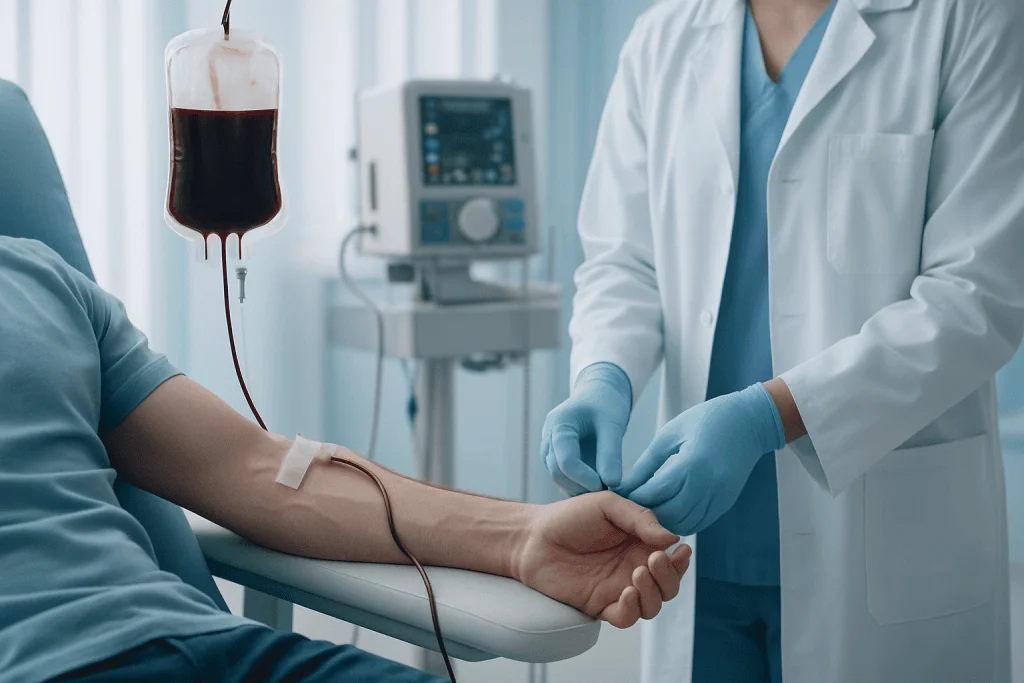
Therapeutic phlebotomy is the standard treatment for most patients with hereditary hemochromatosis. It works on simple arithmetic: each unit of blood removed takes iron with it, bound in the haemoglobin of red blood cells, and the body draws on its stores to rebuild what was removed. Repeated at planned intervals, this steadily lowers the iron burden. A typical session runs as follows:
- Before treatment, the care team confirms you are well enough for the session. Haemoglobin or haematocrit is checked to avoid removing too much blood; blood pressure, pulse and hydration may also be assessed.
- A needle is placed into a vein, usually in the arm, and a prescribed volume of blood is drawn into a collection bag, much like blood donation. The draw itself is short, though the appointment is longer because of preparation and observation.
- Afterwards, you rest briefly, drink fluids and avoid strenuous activity for the remainder of the day. Some people feel lightheaded, tired or mildly sore at the needle site; serious problems are uncommon when patients are properly screened and monitored.
Treatment runs in two phases. In the iron-reduction phase, sessions are scheduled regularly until ferritin falls into the target range set by your physician; the frequency is adjusted to your laboratory response and how you tolerate the sessions. In the maintenance phase, phlebotomy continues far less often, guided by periodic blood tests, to stop iron from building up again. Some patients need only occasional maintenance sessions; others need a more regular rhythm, depending on how much iron they continue to absorb. Simple habits make each appointment easier: arrive well hydrated, eat normally beforehand, and plan a quieter day afterwards rather than scheduling demanding physical work.
Iron Chelation Therapy When Phlebotomy Is Not Suitable
Iron chelation therapy is used when phlebotomy is not safe, practical or effective for a particular patient, most often in transfusion-related iron overload, significant anaemia or certain heart conditions. Chelation medications bind excess iron so the body can excrete it, through urine or stool depending on the agent. It is not the standard approach for classic hereditary hemochromatosis, but it has a clear role in specific situations. Chelation requires closer monitoring than phlebotomy, because these medications can affect the kidneys, liver, hearing, vision or blood counts in some patients. The choice of agent, dose and follow-up schedule depends on the cause of the overload, organ function, age, other medications and treatment goals, and, for patients who travel for care, on whether the monitoring plan can realistically be continued at home. Decisions about starting, adjusting or stopping chelation belong to the treating physician, who weighs these factors together.
Monitoring Organ Health and Long-Term Risks
Effective treatment watches more than the iron numbers. Liver assessment is central, because the liver carries most of the stored iron: patients with significant fibrosis or cirrhosis need ongoing surveillance for liver cancer and for complications of portal hypertension, with the schedule individualised to liver status and international guidelines. Endocrine evaluation follows any sign of diabetes, low testosterone, menstrual change, thyroid disease or pituitary involvement. Cardiac evaluation matters for patients with palpitations, breathlessness, reduced exercise tolerance, chest symptoms or a high iron burden. Joint symptoms deserve their own attention, because iron-related arthritis can persist even after iron levels improve, rheumatology or orthopaedic input can help with pain control, mobility and quality of life. The monitoring plan is not decoration around the phlebotomy schedule; for patients with organ involvement, it is the part of treatment that protects them most.
Do You Need to Avoid Foods Containing High Levels of Iron?
Foods containing high levels of iron, red meat, liver, iron-fortified cereals, do not usually need to be eliminated, and most patients are not asked to follow a severely restrictive diet. Phlebotomy removes iron far more efficiently than diet can add it, so dietary guidance is practical rather than extreme. The points that genuinely matter are these: avoid iron supplements unless a physician has specifically prescribed them; discuss vitamin C supplements with your doctor before taking them, because vitamin C increases iron absorption; moderate alcohol, and be particularly careful with it if there is any liver involvement; avoid raw or undercooked shellfish, because iron overload increases vulnerability to certain infections carried in it; and maintain a healthy weight, since fatty liver disease compounds liver risk. Patients with diabetes, liver disease, gastrointestinal conditions or other nutritional needs should shape any larger dietary change with professional guidance rather than on their own.
Typical Duration and Recovery
How long treatment takes depends on how much excess iron is present at diagnosis. Some patients reach maintenance levels within months; others need longer, particularly when ferritin starts very high or when sessions must be spaced out for safety. The maintenance phase, by contrast, is long-term, hereditary hemochromatosis reflects a lifelong tendency to absorb excess iron, so monitoring continues even after stores are reduced. Recovery from an individual session is usually quick: most people resume normal daily activities the same day or the next. Fatigue can follow the early, more frequent sessions. Over time, some patients notice better energy, concentration or less abdominal discomfort as iron falls, though established arthritis, diabetes or advanced liver scarring may not fully reverse. The care plan therefore always works on two fronts: reducing iron, and managing whatever complications are already present.
Why Acting Early Matters
Hemochromatosis progresses quietly. A person may feel only mildly tired while iron accumulates in the liver, pancreas or heart, and by the time symptoms are unmistakable, some damage may already be fixed in place. Removing excess iron before permanent tissue injury develops reduces the risk of serious complications and can prevent years of avoidable ill health. Delay lets the deposition continue: in the liver towards fibrosis and eventually cirrhosis, which then needs lifelong surveillance even if iron is later controlled; in the pancreas towards diabetes, which often persists after iron levels improve; in the heart towards rhythm and muscle problems; in the endocrine system towards effects on fertility, sexual health, energy and bone health; and in the joints towards arthritis that is difficult to reverse once established.
Early diagnosis also gives families something valuable. Because hereditary hemochromatosis runs in families, identifying one affected person opens the door to testing relatives before they develop symptoms, arguably the most powerful preventive step in modern hemochromatosis care.
What is the life expectancy of a person with hemochromatosis?
For people diagnosed and treated before cirrhosis, diabetes or heart involvement develop, life expectancy is generally comparable to that of people without the condition: this is one of the strongest arguments for early testing and consistent treatment. Once cirrhosis or other significant organ damage is present, the outlook depends on the extent of that damage and how well it is monitored and managed, which is why iron reduction is paired with organ-specific surveillance rather than treated as sufficient on its own. Your own outlook is something only your treating physician can discuss meaningfully, because it rests on your liver status, heart function, metabolic health and how you respond to treatment.
Benefits of Hemochromatosis Treatment
The benefits of treatment come from three directions: lowering the iron burden itself, reducing the risk to individual organs, and replacing uncertainty with a structured, lifelong monitoring plan.
| Benefit | What It Means for You |
|---|---|
| Reduction of excess iron stores | Therapeutic phlebotomy gradually removes iron from the body, bringing ferritin and transferrin saturation towards the safer ranges defined by your physician. |
| Protection of the liver | Early treatment can reduce the risk of progression to fibrosis, cirrhosis and liver-related complications, especially when combined with appropriate liver monitoring. |
| Lower ongoing risk to heart and endocrine organs | Controlling iron overload reduces continued exposure of the heart, pancreas, pituitary gland, thyroid and sex hormone systems to excess iron. |
| Improvement in selected symptoms | Some patients experience better energy, less abdominal discomfort or improved general well-being as iron falls, though long-standing joint or organ damage may persist. |
| A clear long-term monitoring plan | Regular laboratory testing and follow-up show when maintenance phlebotomy is needed and whether organ-specific screening should continue. |
| Family risk identification | Once hereditary hemochromatosis is confirmed, relatives can be offered appropriate testing and counselling before complications develop. |
Recovery Timeline After Starting Treatment
Recovery varies with iron level, treatment frequency and organ involvement, but the following timeline reflects what many patients can generally expect.
| Time Period | What Patients Can Expect |
|---|---|
| Day 1 | After a phlebotomy session you may feel normal, mildly tired or briefly lightheaded. Fluids, food and avoiding intense exercise help you recover comfortably. |
| First week | Most patients continue their usual daily routines. The care team may review haemoglobin and iron studies to confirm treatment is being tolerated safely. |
| First month | Regular sessions continue through the iron-reduction phase. Some patients begin to notice improved energy; others need more time before symptoms change. |
| Following months | Ferritin generally declines over repeated treatments. The schedule is adjusted to your laboratory response, haemoglobin and symptoms. |
| Maintenance phase | Once target levels are reached, phlebotomy becomes far less frequent. Long-term monitoring prevents reaccumulation and guides organ-specific follow-up. |
| Longer term | Many patients live actively with periodic monitoring. Those with cirrhosis, diabetes, heart disease, endocrine problems or arthritis continue specialist care for those conditions. |
Factors That Influence Outcomes
Outcomes in hemochromatosis depend most heavily on timing. Patients diagnosed before cirrhosis, diabetes, heart disease or significant endocrine damage generally have a more favourable outlook than those diagnosed afterwards. This is why physicians take elevated ferritin and transferrin saturation seriously even when symptoms are mild: the laboratory abnormality precedes the damage, and that gap is the window in which treatment does its best work.
The degree of overload at diagnosis matters too. Very high ferritin usually means a longer iron-reduction phase and closer evaluation for liver fibrosis. Transferrin saturation, liver enzymes and imaging together tell physicians both how active the iron accumulation is and how much impact it has had. The presence of a second liver condition, fatty liver disease, viral hepatitis, alcohol-related injury, changes the risk calculation and the treatment plan, because two sources of liver injury compound each other.
Consistency is the third major factor. Treatment works when phlebotomy happens at the intended intervals and monitoring is maintained; skipped follow-up lets iron climb again without any immediate warning symptoms. A clear written plan, targets, schedule, what to test and when, is what allows treatment to continue safely wherever the patient’s follow-up takes place.
Individual tolerance shapes the pace. Some people manage frequent phlebotomy easily; others need slower scheduling because of low blood pressure, small veins, cardiac conditions, age or anaemia risk. A good outcome is not the fastest possible fall in ferritin: it is safe iron reduction that protects the whole patient. Finally, organ-specific disease sets the boundaries of what treatment can achieve. Fatigue and general well-being often improve; established joint disease usually persists and needs its own management; diabetes may improve in some cases but generally needs ongoing care; cirrhosis does not reliably reverse, though controlling iron still limits further injury; and cardiac iron involvement, when present, needs coordinated cardiology and haematology input. Age, sex, genetic profile, menstrual and pregnancy history, diet, alcohol use, metabolic health and family history all feed into this picture. Your physician interprets them together, not one number at a time, to set realistic goals: reduce iron safely, monitor organ risk, manage symptoms and support long-term health.
How Hemochromatosis Care Is Organised at Acibadem
Hemochromatosis care can involve haematology, gastroenterology, hepatology, cardiology, endocrinology, radiology, nutrition and sometimes rheumatology or medical genetics. At Acibadem, care for iron overload is organised so that these assessments are coordinated rather than collected piecemeal: laboratory evaluation, genetic testing where indicated, imaging including MRI-based iron assessment and liver fibrosis evaluation, and cardiac or endocrine testing are planned around the questions that actually drive treatment decisions, is iron truly elevated, how much is stored, is the liver affected, is there heart or hormonal involvement, and is the patient suitable for phlebotomy or better served by another approach.
Complex cases, advanced liver disease, unusual genetic findings, transfusion-related overload, cardiac involvement, or overlap with conditions such as fatty liver disease, can be reviewed in multidisciplinary discussion, so that the plan reflects evidence-based protocols adapted to the individual rather than a single specialty’s view. Patients who arrive with prior laboratory results, imaging or conflicting interpretations can have existing records reviewed, with additional testing recommended only where it changes a decision. The output that matters is a written plan: diagnosis, treatment phase, monitoring targets and a follow-up schedule that can be continued after returning home. Because hemochromatosis care is a programme rather than a single procedure, the scope of that plan is also what shapes any cost estimate a patient receives: our guide on why a medical quote can be higher than expected explains how staged, multi-specialty care is typically itemised.
Personalisation is the point of all of this, because hemochromatosis is not identical in every patient. A healthy adult with early hereditary iron overload needs a different plan from a patient with cirrhosis, diabetes and joint disease. A transfusion-dependent patient needs different expertise from someone who simply absorbs too much iron through the intestine. A patient who travels frequently needs a maintenance plan whose schedule and testing can be kept up consistently. The aim is a treatment path that is medically sound, understandable and feasible for the life the patient actually leads.
A Careful, Long-Term Approach to Iron Overload
Hemochromatosis is highly manageable when it is recognised, properly evaluated and treated with consistency. The steps are clear and unglamorous: confirm the cause of the iron overload, measure its impact, remove the excess safely, monitor the vulnerable organs and keep the follow-up going over time. For most people with the hereditary form, therapeutic phlebotomy becomes a routine part of life: a scheduled appointment a few times a year in the maintenance phase, guarding health that would otherwise erode silently. For patients with complex medical conditions, treatment is broader and more specialised, but the logic is the same. What the condition rewards, above everything else, is early recognition and steady follow-through: iron removed before it injures an organ never has to be managed as a complication later.
Preparation
- Evaluation usually includes iron studies, ferritin and transferrin saturation tests, liver function tests and, when appropriate, genetic testing. Your doctor reviews medications, supplements and alcohol intake, especially iron or vitamin C use. Eat normally and drink fluids before therapeutic phlebotomy unless your care team gives different instructions.
Aftercare
- After phlebotomy, patients are usually observed briefly and encouraged to drink fluids and avoid strenuous activity for the rest of the day. Ferritin and blood counts are monitored regularly to adjust treatment frequency. Long-term care may include avoiding iron supplements, moderating alcohol and monitoring liver, heart and endocrine health.
Frequently Asked Questions
What affects the cost of hemochromatosis treatment?
The main cost factors are the extent of diagnostic testing, the need for therapeutic phlebotomy, the frequency of monitoring, specialist consultations and whether liver, heart, endocrine or joint assessment is required. Travel support, interpreter services and follow-up coordination can also affect the package.
How can I get a personalised quote?
You can request a free consultation and share recent blood tests, imaging reports, genetic results and any previous treatment notes. A specialist team can then review your case and prepare a personalised plan and quote based on your medical needs.
Is therapeutic phlebotomy always required?
Not always. Phlebotomy is commonly used, but suitability depends on iron levels, blood counts, symptoms, vein access, overall health and any heart or anemia-related concerns. A specialist decides the safest approach.
Will the quote include tests and follow-up?
This depends on the package structure. Some packages may include consultation, key laboratory tests, treatment planning and coordination, while additional imaging, specialist reviews or longer follow-up may be quoted separately.
Do international patients need to stay in hospital?
Hemochromatosis care is often outpatient-based, but this depends on the patient’s condition and whether organ-related complications require further evaluation. The care team can advise on travel timing and expected appointment needs after reviewing your records.
Medically reviewed by the Acıbadem International Medical Board September 13, 2026
See our medical review board →
Update history
- PublishedJune 8, 2026
- Medical review approvedSeptember 13, 2026
- Last content updateSeptember 12, 2026
References2
- Hemochromatosis medlineplus.gov
- Hemochromatosis (Iron Overload) my.clevelandclinic.org
Trusted care for international patients
From the Acibadem Blog

Living With Hemochromatosis: Diet, Alcohol, Supplements and What Your Doctor Reviews
Diet alone does not control hemochromatosis; regular blood removal (venesection) does. Most guidance asks people to limit or avoid alcohol, because it adds strain…

Hemochromatosis in Women: Why Iron Overload Can Appear Later and How Care Adjusts
Hemochromatosis treatment for women follows the same core approach as for men: regular removal of blood (phlebotomy) to bring stored iron down, then less…

Therapeutic Phlebotomy for Hemochromatosis: What Happens During and After a Session
During therapeutic phlebotomy for hemochromatosis, a nurse checks your hemoglobin and blood pressure, then removes about one pint of blood through a needle in…