Laparoscopic Urology
Laparoscopic urology uses small incisions and a camera to treat kidney, prostate, bladder, and urinary tract conditions with less pain, smaller scars, and faster recovery than open surgery.
Quick answer
Laparoscopic urology is minimally invasive surgery for conditions of the kidneys, ureters, bladder, prostate and adrenal glands. The surgeon operates through several small incisions using a camera and fine instruments rather than one large opening. It is used for both benign disease and cancer, and typically involves general anaesthesia, a short hospital stay and a staged return to normal activity.
What Is Laparoscopic Urology?
Laparoscopic urology is minimally invasive keyhole surgery for conditions of the kidneys, ureters, bladder, prostate, adrenal glands and male reproductive organs. Instead of opening the abdomen through one large incision, the surgeon works through several small openings using a thin camera and long, fine instruments. It is used to treat both benign disease and cancer, in patients whose diagnosis and anatomy make the approach safe and effective.
During the operation, carbon dioxide gas gently inflates the abdomen to create working space. The camera, a laparoscope, projects a magnified, high-resolution image of the surgical field onto monitors, and the surgeon dissects tissue, seals blood vessels, removes diseased organs or tissue and reconstructs the urinary tract using instruments passed through narrow tubes called ports. The magnification is one of the quiet strengths of the method. Urologic surgery often takes place deep in the abdomen or pelvis, close to major blood vessels, nerves and delicate urinary structures, and a clear, enlarged view helps the surgeon work precisely in spaces that are difficult to see well through an open incision.
It helps to understand that laparoscopic urology is a surgical technique, not a single operation. A laparoscopic adrenalectomy is a different undertaking from a laparoscopic radical prostatectomy. Removing a non-functioning kidney is not the same as kidney-sparing tumour surgery. Each procedure carries its own indications, risks, hospital stay and recovery pattern, and your care team should explain the specific operation being proposed, why it is recommended and what the alternatives are. When a surgeon suggests a laparoscopic approach, the question to hold onto is not “is laparoscopy good?” but “is laparoscopy the safest, most effective way to treat my specific condition?”
The purpose of the approach is not simply to make surgery smaller. It is to treat the underlying disease as effectively as open surgery while causing less trauma to the abdominal wall and surrounding tissue. For selected patients this can mean less postoperative discomfort, fewer wound-related problems, a shorter hospital stay and an earlier return to everyday life. None of these advantages justifies the approach if it compromises the result, and a responsible team will say so plainly when open surgery is the better choice for a particular case.
How does laparoscopic surgery differ from open surgery?
The difference lies mainly in how the surgeon reaches the organ, not in what is done once there. In open surgery, a single larger incision gives the surgeon direct access, and the operation is performed by hand through that opening. In laparoscopy, the operation is performed entirely inside the body, with instruments controlled from outside through small ports and vision provided by the camera. The internal steps, freeing the organ, controlling its blood supply, removing diseased tissue, reconstructing the urinary tract where needed, follow the same surgical principles in both approaches. What changes is the burden on the abdominal wall: several small incisions in place of one long one, which is where much of the difference in postoperative comfort and wound healing comes from.
Urologic laparoscopy can also reach the target organ by two main routes. The transperitoneal route passes through the abdominal cavity, offering a roomy working space and familiar anatomical landmarks. The retroperitoneoscopic route approaches the kidney, ureter or adrenal gland from the back, staying outside the abdominal cavity altogether: an option that can be useful in patients with previous abdominal operations because it avoids scar tissue, although the working space is smaller. The choice depends on the organ, the disease and the surgeon’s training; both routes are well established, and neither is universally superior.
Is laparoscopy a big surgery?
It can be. The incisions are small, but the operation performed through them may still be major surgery. A laparoscopic radical nephrectomy removes an entire kidney; a laparoscopic radical prostatectomy removes the prostate gland and reconnects the bladder to the urethra. These are significant operations under general anaesthesia, with real risks and a genuine recovery period, whatever the size of the scars. It is more accurate to think of laparoscopy as major surgery through minimally invasive access than as a minor procedure. At the same time, some laparoscopic procedures, a straightforward adrenalectomy or removal of a large benign cyst, for instance, are less demanding on the body than complex cancer or reconstructive operations. The honest answer depends on what is being done, not on the size of the incisions.
Laparoscopic, robotic or open, how is the approach chosen?
The approach is chosen case by case, based on the diagnosis, the size and location of a tumour or blockage, previous surgery, your overall health and kidney function, cancer stage where relevant, and the experience of the surgical team. Some operations are well suited to conventional laparoscopy. Others, particularly those requiring fine suturing deep in the pelvis, may be performed with robot-assisted surgery where the technology is available and clinically appropriate. Robotic platforms offer wristed instruments, tremor filtration and ergonomic control, but the underlying principles are the same as in laparoscopy: better visualisation, fine dissection, controlled bleeding and careful reconstruction. In some situations open surgery remains the safest route, for example when extensive scarring, tumour extension or unusual anatomy makes minimally invasive access unwise. Laparoscopy sits within a broader family of minimally invasive urology techniques, including endoscopic procedures performed through the natural urinary passages, and a comprehensive team will draw on whichever method fits your condition best rather than favouring one technique for its own sake.
Who May Need Laparoscopic Urology?
You may be considered for laparoscopic urology when you have a condition that requires surgical treatment and can be approached safely through small incisions. Some patients arrive with symptoms: flank pain, blood in the urine, recurrent urinary infections, difficulty urinating, urinary obstruction, abdominal discomfort or high blood pressure linked to an adrenal condition. Others have no symptoms at all: the problem is found on a scan performed for an unrelated reason, which is increasingly common.
Kidney masses are a frequent reason for referral. Many are discovered incidentally on ultrasound, CT or MRI. Depending on the size, location, imaging characteristics and your kidney function, surgery may involve removing only the tumour and preserving the rest of the kidney, or removing the whole kidney where necessary. Laparoscopic techniques can be used in selected patients to reduce the burden of recovery while following accepted cancer surgery principles.
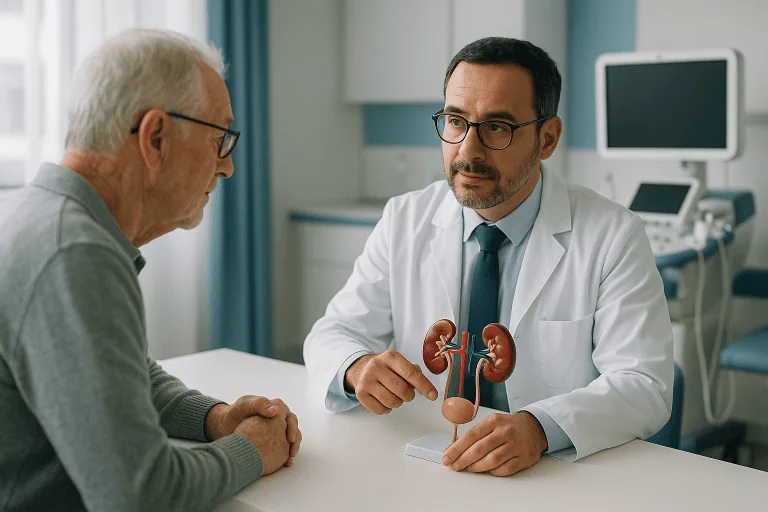
Prostate cancer may also lead to laparoscopic or robot-assisted prostate surgery in suitable cases. Patients typically come with an elevated prostate-specific antigen (PSA) result, an abnormal prostate MRI or a biopsy-confirmed cancer. Whether surgery is the right treatment at all depends on the cancer’s risk category, prostate size, urinary function, age, general health and your own priorities. A proper consultation covers urinary control, sexual function and cancer control together, and discusses alternatives such as radiation therapy or active surveillance where these are appropriate. Surgery is one option among several, not an automatic answer.
Benign conditions account for a substantial share of the laparoscopic workload as well. These include ureteropelvic junction obstruction, where urine flow from the kidney into the ureter is blocked; a non-functioning kidney causing infection or pain; adrenal tumours that produce hormones or look suspicious on imaging; large benign cysts; and certain bladder and ureter conditions that require reconstruction. Laparoscopic surgery may also form part of staging or lymph node removal in selected urologic cancers.
What is the most common surgery for a urologist?
In most urology departments, the most frequently performed procedures are endoscopic, operations carried out through the natural urinary passages rather than through incisions of any kind. These include cystoscopy, stone removal from the ureter or kidney, and transurethral surgery for an enlarged prostate. Laparoscopy occupies a different place in the department’s work: it is typically reserved for operations on the kidney, adrenal gland, prostate, ureter and bladder that cannot be reached endoscopically and would otherwise require open surgery. This distinction matters when you are weighing up a recommendation. If a team proposes laparoscopy for your condition, it is reasonable to ask how often they perform that specific operation, since it will not be their everyday endoscopic caseload.
How is the diagnosis confirmed before surgery?
Diagnosis begins with a careful medical history and physical examination, followed by targeted testing rather than a blanket battery of investigations. Blood tests assess kidney function, blood count, inflammation, hormone levels where an adrenal tumour is suspected, and general fitness for anaesthesia. Urine tests look for infection, blood, protein or abnormal cells. Imaging may include ultrasound, CT and MRI for urology, nuclear medicine studies of kidney function, or specialised imaging of the urinary tract. In prostate conditions, PSA testing, multiparametric MRI and biopsy results are usually central to the decision. In bladder conditions, cystoscopy may be needed to inspect the bladder lining directly. The point of all of this is patient selection: the same diagnosis can be managed differently depending on anatomy, disease stage and individual risk, and the imaging and laboratory picture determines whether laparoscopy is genuinely the right tool.
Conditions Treated with Laparoscopic Urology
Laparoscopic urology addresses a wide range of conditions, but the technique is never applied uniformly. In complex cases, and in essentially all cancer cases, decisions are reviewed by a multidisciplinary board, where urologic surgeons, radiologists, oncologists and pathologists align the treatment plan with international evidence-based protocols before anything is scheduled. The procedures below are the main established indications.
Laparoscopic nephrectomy and partial nephrectomy
Laparoscopic nephrectomy is the removal of a kidney through keyhole access; laparoscopic partial nephrectomy removes only the tumour while preserving the rest of the kidney. Kidney cancer and kidney masses are among the most established indications for the laparoscopic approach. Radical nephrectomy is used when the entire kidney must be removed; kidney-sparing partial nephrectomy is considered for selected tumours where preserving functioning kidney tissue is important and technically feasible. The surgeon weighs the tumour’s size, depth, closeness to blood vessels and the urinary collecting system, and the function of both kidneys. Non-functioning or severely damaged kidneys may also be removed laparoscopically when they cause recurrent infection, pain, obstruction or uncontrolled high blood pressure, though these operations can be more difficult than tumour surgery if long-standing infection, inflammation, stones or previous operations have scarred the tissue planes.
Laparoscopic pyeloplasty for ureteropelvic junction obstruction
Laparoscopic pyeloplasty is a reconstructive operation for ureteropelvic junction obstruction, the narrowing where the kidney’s drainage system meets the ureter. The surgeon removes or bypasses the narrowed segment and reconnects the drainage system to the ureter with fine suturing, restoring free urine flow. In properly selected patients this relieves obstruction, reduces pain and protects kidney function over the long term. Pyeloplasty illustrates why surgical experience matters so much in this field: the operation depends on precise internal suturing in a confined space, one of the more technically demanding skills in minimally invasive urologic surgery.
Laparoscopic adrenalectomy
Laparoscopic adrenalectomy is the removal of an adrenal gland through keyhole access, and it has become a standard approach for many adrenal tumours. These tumours may be benign or malignant, hormone-producing or non-functioning. Hormone-producing tumours can cause high blood pressure, episodes of palpitations or sweating, unexplained weight changes, low potassium or cortisol-related symptoms. Because of these hormonal effects, careful endocrine testing and anaesthesia planning are particularly important before adrenal surgery: the preparation is as consequential as the operation itself.
Laparoscopic radical prostatectomy
Laparoscopic radical prostatectomy removes the prostate gland and seminal vesicles for prostate cancer, with lymph node removal in selected patients; it may be performed conventionally or with robotic assistance. The surgeon’s aims run in parallel: remove the cancer completely, and protect urinary continence and erectile function to the extent that your anatomy and the cancer’s characteristics allow. Where the tumour’s position permits, nerve-sparing techniques are used to support recovery of function. This is precisely the kind of deep pelvic operation where magnified visualisation and fine instrument control earn their keep.
What is the success rate of a laparoscopic prostatectomy?
There is no single honest success rate, because “success” after prostatectomy is measured on three fronts at once, cancer control, urinary continence and erectile function, and the results on each depend heavily on the cancer’s stage and grade, your anatomy and age, your function before surgery, and the experience of the surgeon. Published figures vary widely between centres and between patient groups, which is why a number quoted without context tells you very little. The more useful question to put to any surgeon is specific: what outcomes do patients like me, with my PSA, biopsy grade and MRI findings, typically achieve in your hands, and over what timeframe does continence and sexual function tend to recover? A credible team will answer with nuance rather than a headline figure, and will explain that functional recovery after prostatectomy often continues for many months, supported by pelvic floor exercises and structured rehabilitation advice.
Bladder and ureter surgery
Bladder and ureter conditions can also be treated laparoscopically in selected situations. This includes partial removal of the bladder for specific tumours, ureteral reimplantation, repair of strictures, and surgery for congenital or acquired anatomical problems. More advanced bladder cancer may require larger operations that combine laparoscopic or robotic components with urinary reconstruction, significant surgery that demands thorough staging and multidisciplinary planning beforehand.
Complex urinary reconstruction
Complex urinary reconstruction is considered when obstruction, scarring, reflux or complications from earlier surgery interfere with urinary drainage. These cases require detailed imaging and planning, because the goal is not only to correct the anatomy but to preserve kidney function and reduce future infections or obstruction. Reconstructive needs also arise in female urology, where pelvic anatomy and prior gynaecological surgery add their own considerations to the planning. Reconstruction is the part of this field where individual variation is greatest, and where a generic description is least useful: the operation is designed around your specific anatomy.
How Laparoscopic Urology Is Performed
Preparing for surgery
The process begins well before the operating room. Preparation means confirming the diagnosis, establishing that laparoscopy is suitable, and getting your general health into the best achievable state. Your urologist reviews imaging, laboratory results, previous medical records, allergies, anaesthesia risks and your own priorities. If cancer is involved, staging information is examined carefully. If an adrenal tumour is suspected of producing hormones, endocrine evaluation and medical preparation come first.
Your regular medicines are reviewed as part of this preparation. Whether anything needs adjusting before surgery, blood thinners are the usual concern, is a decision that belongs entirely to your treating doctors, made with full knowledge of your case; nothing should be changed on your own initiative. Beyond medication review, stopping smoking, controlling diabetes and blood pressure, treating any urinary infection and attending to nutrition can all reduce surgical risk. You will receive clear fasting instructions, bowel preparation guidance if the specific operation requires it, and practical advice on what to bring to hospital.
What happens on the day of surgery?
Laparoscopic urologic operations are performed under general anaesthesia, and the day follows a consistent sequence:
- After you are asleep, the team positions your body to give access to the target organ, with careful padding to protect pressure points, nerves and joints. A urinary catheter may be placed depending on the procedure.
- The skin is cleaned with antiseptic, sterile drapes are applied, and several small incisions are made for the camera and instrument ports.
- Carbon dioxide gas is introduced to create working space, and the laparoscope is placed. The magnified view lets the surgeon identify organs, vessels, nerves and tissue planes before any dissection begins.
- Using specialised instruments, the surgeon dissects tissue, seals or clips blood vessels, removes diseased tissue and reconstructs the urinary tract where required. In cancer surgery, tissue is removed according to oncologic principles and sent for pathology. In reconstructive operations, fine internal suturing restores drainage or repairs narrowing.
- At the end, the surgical field is checked for bleeding, the specimen is removed through one of the small incisions or a slightly enlarged one, and the instruments are withdrawn. A temporary drain is sometimes placed.
- The incisions are closed with sutures or skin adhesive and dressed, and you are taken to a recovery area where vital signs, pain control, urine output and your emergence from anaesthesia are monitored.
What technology supports the operation?
Several layers of technology support precision and safety in these operations. High-definition camera systems provide enlarged views of deep anatomy. Advanced energy instruments seal small blood vessels and limit bleeding during dissection. Before surgery, CT, MRI, ultrasound and functional kidney studies shape the plan; during surgery, intraoperative imaging or contrast assessment can help evaluate blood flow or urinary drainage in selected cases. Robotic platforms, where used, add wristed instruments and tremor filtration for the finest dissection and suturing. It is worth keeping the technology in perspective: it helps the surgeon see better and move more precisely through smaller access points, but it does not replace judgement, training or individual planning. A well-equipped theatre in inexperienced hands is not a safeguard.
How long does the operation take?
Operating time varies widely with the procedure and the patient. A relatively straightforward laparoscopic adrenalectomy takes less time than a complex kidney-sparing tumour operation or a prostatectomy with lymph node dissection. Previous abdominal surgery, inflammation, obesity, tumour location and reconstructive needs all extend the work. Rather than relying on a generic figure, ask your surgeon for a realistic estimate for your specific operation, and remember that a longer, careful operation is preferable to a fast, compromised one.
Hospital stay and discharge
Length of stay depends on the operation and how your recovery unfolds. Many patients are discharged within a few days, while more complex procedures require longer observation. You will be encouraged to move early, walking soon after surgery reduces the risk of blood clots and helps bowel function return. Pain is managed with a combination of medicines, and patients typically need less strong pain medication than after equivalent open surgery, though this varies. The team monitors temperature, wound healing, urine output, bowel function and kidney function where relevant.
Before discharge you receive written instructions covering wound care, bathing, medications, catheter or drain care if applicable, diet, walking, activity limits and follow-up appointments, along with a clear list of warning signs and how to reach medical help if problems arise. If a catheter is needed after prostate or bladder surgery, the team explains when and how it will be removed. Pathology results become available after surgery and are reviewed with you; for cancer cases, those results determine whether additional treatment or a surveillance schedule is recommended. You should also leave with a discharge summary, pathology report, medication list and imaging records that can be shared with your own doctors, continuity of care depends on that paperwork being complete and comprehensible.
Risks and Limits of Laparoscopic Urology
Every operation carries risk, and laparoscopy is no exception. General surgical risks, bleeding, infection, injury to nearby organs or structures, blood clots, and reactions to anaesthesia, apply to these operations as they do to open surgery. Some risks are specific to the technique: the carbon dioxide gas used to create working space can cause temporary shoulder-tip discomfort and bloating afterwards, and in rare situations access-related injury can occur when the ports are placed. There is also always a possibility that an operation begun laparoscopically needs to be converted to open surgery during the procedure, usually because of bleeding, dense scarring or anatomy that cannot be handled safely through the ports. Conversion is not a failure; it is the surgeon prioritising your safety over the size of the incision.
Much of modern surgical safety lies in prevention rather than reaction. Antibiotics are typically given shortly before the incision to lower infection risk; compression stockings or pneumatic calf devices and early walking reduce the chance of blood clots; structured checklists in the operating theatre confirm the patient, the procedure and the equipment before anything begins; and the anaesthesia team monitors breathing and circulation continuously, since the gas used to create working space raises the pressure inside the abdomen and affects both. None of these layers eliminates risk, but each one reduces it, and together they are part of what distinguishes a well-run surgical programme.
The limits matter as much as the risks. Laparoscopy is not appropriate for every patient or every disease. Extensive previous abdominal surgery, very large or locally advanced tumours, certain heart and lung conditions that tolerate the gas insufflation poorly, and some emergencies all point towards different approaches. Procedure-specific risks, urinary leakage after reconstruction, changes in urinary control or sexual function after prostatectomy, loss of kidney function after kidney surgery, depend on the operation and should be discussed in concrete terms during your consultation, with reference to your own anatomy and disease rather than averages. A consultation that skips the risks is not a consultation worth having.
Benefits of Laparoscopic Urology
When the approach fits the diagnosis and the patient, laparoscopic urology offers real, practical advantages over traditional open surgery. They should be weighed honestly, as tendencies in selected patients, not certainties for everyone.
| Benefit | What It Means for You |
|---|---|
| Smaller incisions | Less visible scarring and reduced disruption of the abdominal wall compared with a large open incision. |
| Reduced postoperative discomfort | Many patients require less pain medication and begin walking earlier, depending on the procedure and their overall health. |
| Shorter hospital stay | Selected patients return home sooner, with follow-up arranged according to medical need rather than a fixed schedule. |
| Faster functional recovery | Light daily activities often resume earlier than after open surgery, while lifting and travel restrictions still apply. |
| Enhanced surgical visualisation | Magnified camera views help the surgeon work carefully around blood vessels, nerves and urinary structures. |
| Lower wound-related burden | Smaller access points may reduce some wound complications, although infection, bleeding and other risks remain possible. |
Recovery After Laparoscopic Urology
Recovery varies by procedure, but the following timeline gives a realistic sense of what many patients experience after laparoscopic urologic surgery.
| Time Period | What Patients Can Expect |
|---|---|
| Day 1 | Monitoring in the recovery area or hospital room, pain control, early walking when safe, urine output checks, and a gradual return to fluids and food as advised. |
| First week | Increasing walking, mild fatigue, incision tenderness, catheter or drain care where applicable, and no heavy lifting. Many patients have an early follow-up visit within this period. |
| First month | Steadily improving stamina, review of pathology where applicable, gradual return to desk work and routine activities, with strenuous exercise still restricted until cleared. |
| Longer term | Ongoing surveillance for cancer cases, kidney function monitoring where relevant, urinary and sexual function rehabilitation after prostate surgery, and handover to your regular physicians. |
The small incisions themselves usually heal quickly. Most are closed with absorbable sutures or skin adhesive that needs no removal, and dressings are typically simple. Mild bruising, numbness around the incisions and a feeling of tightness are common in the early weeks and usually fade on their own. Shoulder-tip discomfort from the residual carbon dioxide gas generally settles within a few days as the gas is absorbed by the body. Follow the specific wound care and showering instructions you are given, since they vary with the closure method used and the procedure performed.
How many days of bed rest are needed after laparoscopy?
Usually none in the traditional sense, modern surgical care actively avoids prescribed bed rest after laparoscopy. You will be encouraged to sit up and walk short distances as soon as it is safe, often on the day of surgery or the following morning, because early movement reduces the risk of blood clots, helps the bowel recover and speeds the return of normal breathing patterns. Resting is still important: expect fatigue, plan quiet days, and sleep as much as your body asks for. But rest means pacing yourself between short walks, not lying in bed for days. The genuine restrictions concern heavy lifting, straining and strenuous exercise, which are limited for a period your surgeon will specify for your particular operation.
When is it safe to fly after surgery?
Not immediately after major surgery, flying should wait until the medical team has assessed you and confirmed that travel is safe for your specific situation. The timing depends on the operation, how your early recovery has gone, whether a catheter or drain must be removed first, and whether pathology results need to be reviewed. Long flights carry their own considerations after abdominal surgery, particularly the risk of blood clots, and the team will advise on movement, hydration and any precautions during the journey. If travel is part of your plans, build flexibility into them from the start rather than fixing a date in advance: a schedule with room to breathe is safer and, in practice, less stressful than one that has to be rearranged.
What Influences the Outcome of Laparoscopic Urology?
A good result depends on several factors working together: accurate diagnosis, appropriate patient selection, careful surgical technique, safe anaesthesia, attentive postoperative care and disciplined follow-up. The least invasive option is not automatically the best option. In some cases open surgery, endoscopic treatment, radiation therapy, medication, active surveillance or a combined approach serves you better. The strength of a urology programme lies in matching the treatment to the patient, not in applying one technique to every situation.
Disease factors come first. For kidney tumours: size, location, depth, involvement of blood vessels and baseline kidney function. For prostate cancer: PSA level, biopsy grade, MRI findings, stage, urinary symptoms, erectile function and age. For adrenal tumours: hormone activity and imaging characteristics, which shape both the surgery and the medical preparation around it. For reconstructive procedures: the length and location of the narrowing, previous operations and the quality of the tissue available for repair.
Your own health matters just as much. Heart and lung disease, diabetes, obesity, smoking, prior abdominal surgery, kidney disease, bleeding disorders and current medications all affect surgical risk and recovery speed. Optimising these before surgery reduces complications, which is why a thorough preoperative assessment is a sign of quality rather than an inconvenience. Bring a complete medication list, including supplements, and mention any previous anaesthesia problems or blood clots, details that seem minor to you can change the plan.
Follow-up shapes long-term outcomes. After cancer surgery, surveillance may include blood tests, PSA monitoring, imaging, urine studies or cystoscopy depending on the diagnosis. After reconstructive surgery, follow-up focuses on symptom relief, kidney drainage and prevention of recurrent obstruction. After prostatectomy, recovery of urinary control and sexual function can continue for months and benefits from pelvic floor exercises and structured rehabilitation guidance. You contribute to your own result through walking, wound care, hydration, nutrition, taking medicines as prescribed and resisting the temptation to lift heavy loads too early.
Where can you find experienced laparoscopic urology teams?
Experienced laparoscopic teams are found in high-volume urology departments, typically in university hospitals and large comprehensive hospital groups, where these operations are performed regularly rather than occasionally. Volume matters because laparoscopic urologic surgery involves fine dissection, vascular control and reconstruction in anatomically demanding territory, skills that stay sharp only through repetition. When assessing a centre, look for a department that offers the full range of approaches, open, laparoscopic, robotic and endoscopic, because a team with every option available has no incentive to force your case into the one technique it happens to offer. Look for multidisciplinary tumour boards that review cancer cases before treatment, on-site anaesthesiology, interventional radiology, intensive care, pathology, oncology and nephrology support, and a willingness to discuss alternatives and risks in specifics. Acibadem’s urology departments operate within this kind of multidisciplinary hospital structure, and the same laparoscopic principles extend across surgical specialtiesgastric laparoscopic surgery, for instance, applies them to the digestive system. Wherever you are considering treatment, the decisive test is the quality of the answers you get to direct questions about experience, alternatives and outcomes in cases like yours.
Why Acting Early Matters
Many urologic conditions are easier to treat when they are evaluated before complications develop. A small kidney mass, an early-stage prostate cancer, an obstructed kidney or a hormone-producing adrenal tumour can all become harder to manage if diagnosis or treatment is delayed. Acting early does not always mean immediate surgery. Often it means timely specialist evaluation, accurate staging and choosing the right treatment at the right moment, which sometimes turns out to be monitoring rather than an operation.
The costs of delay are concrete. Untreated kidney obstruction can allow progressive loss of kidney function. Recurrent infections damage tissue and make eventual surgery more complex. A kidney tumour may grow or extend into nearby structures, changing the operation that is possible. Prostate cancer that starts localised may need more intensive treatment if it progresses. Hormone-producing adrenal tumours raise cardiovascular risk for as long as the blood pressure and metabolic disturbances they cause go unaddressed.
Intermittent symptoms deserve the same seriousness as constant ones. Blood in the urine that comes and goes, flank pain that eases for weeks at a time, or an abnormal scan finding that causes no discomfort, none of these means the underlying condition has resolved. Timely evaluation is what separates conditions that can safely be watched from those that need intervention, and only proper assessment can make that distinction.
Early planning carries a practical bonus, too: it gives the medical team time to review existing records, request missing tests, coordinate consultations and build a treatment schedule without unnecessary delay. It also gives you and your family time to understand the procedure and plan the recovery period without pressure.
Laparoscopic Urology at Acibadem
Acibadem’s hospitals provide these operations within comprehensive urology departments, supported by modern diagnostic pathways, advanced operating theatre infrastructure and multidisciplinary collaboration. Complex cases are evaluated with input from multiple specialists; for cancer diagnoses, tumour boards bring urologic surgeons, medical oncologists, radiation oncologists, radiologists, nuclear medicine physicians and pathologists together to review staging, pathology, imaging and the full range of treatment options, particularly important for prostate, kidney, bladder and adrenal disease, where surgery is often one part of a broader strategy. Recommendations follow international evidence-based protocols while being adapted to each patient’s individual situation.
Diagnostic accuracy underpins safe surgical planning. The urology teams coordinate advanced imaging, laboratory testing, pathology review, endoscopic evaluation, functional kidney assessment and anaesthesia evaluation as each case requires. Existing medical records are reviewed as part of planning, which helps identify missing information and reduces unnecessary repetition of tests; where additional investigations are needed, they are scheduled in a coordinated sequence rather than piecemeal. Where robotic or other minimally invasive technologies are used, the decision rests on the nature of the operation and the surgeon’s assessment: the technology supports clinical judgement, it does not substitute for it.
Personalised planning matters because the same procedure carries different priorities for different people. A patient with a small kidney tumour and reduced kidney function may care most about preserving renal tissue. A patient with localised prostate cancer weighs cancer control against urinary and sexual function. A patient with recurrent infections from an obstructed kidney wants relief from symptoms and protection against further damage. The consultation addresses these priorities alongside the medical facts, together with the realities of follow-up after discharge, and care concludes with the documentation continuity demands: a clear discharge summary, pathology reports, medication instructions, relevant imaging and follow-up recommendations that your own doctors can act on. You should leave understanding what was done, what was found, what recovery should look like and what monitoring comes next.
Questions Worth Asking Before You Decide
Laparoscopic surgery can offer an effective, less invasive route for many kidney, prostate, bladder, adrenal and urinary tract conditions. Whether it is the right route for you comes down to careful evaluation, and to the answers a surgical team gives when you press for specifics. Wherever you seek treatment, these questions separate a strong programme from a weak one:
- Who exactly will perform the surgery, and how often does this team carry out this specific operation?
- Is my condition routinely treated at this centre, and was my case reviewed by more than one specialist?
- What are the reasonable alternatives, including open surgery, endoscopic treatment, radiation, medication or surveillance, and why is this approach preferred in my case?
- What are the expected risks for me specifically, not in general?
- How long will I need to stay nearby after discharge, and what has to happen, catheter removal, drain removal, pathology review, before I can travel?
- What follow-up will I need after discharge, and how will it be handed over to my own doctors?
A strong programme welcomes these questions and answers them clearly. Hesitation, vagueness or a reluctance to discuss alternatives tells you something too. The operation itself lasts hours; the decision that leads to it deserves at least the same care.
Preparation
- Patients usually undergo blood tests, urine tests, imaging, and anesthesia assessment before surgery. Blood-thinning medicines may need to be adjusted, and fasting is required before general anesthesia. The surgical plan depends on the affected organ and diagnosis.
Aftercare
- Pain control, early walking, and careful wound care help reduce complications after laparoscopic urology. Patients may go home with temporary catheters or drains depending on the procedure. Follow-up visits review healing, pathology results if relevant, and return to normal activities.
Frequently Asked Questions
What affects the cost of laparoscopic urology?
The final cost depends on the diagnosis, procedure type, imaging and laboratory needs, surgeon and hospital factors, anaesthesia, hospital stay, medication, follow-up care, and any travel or translation support. A personalised assessment is needed before a reliable quote can be prepared.
How can I get a personalised quote from Acibadem?
You can request a free consultation by sharing your medical reports, imaging results, laboratory tests, and a summary of your symptoms or previous treatments. The urology team reviews your information and prepares a treatment plan and quote based on your individual needs.
Are tests and hospital stay usually included in the package?
Packages may include consultation, preoperative testing, surgery, anaesthesia, hospital stay, nursing care, and planned follow-up, but inclusions vary by case. It is important to confirm what is included and what may be billed separately before travelling.
Why do patients compare Turkey with the UK, Germany, and the USA for laparoscopic urology?
Patients often compare access time, hospital accreditation, surgeon experience, international patient support, travel logistics, language assistance, and package clarity. These factors can affect both the overall cost and the patient experience.
Is laparoscopic urology suitable for every patient?
No. Suitability depends on the condition, imaging findings, previous surgery, kidney or urinary tract function, general health, and the specialist’s assessment. This information is general and is not a substitute for medical or financial advice.
Medically reviewed by the Acıbadem International Medical Board September 13, 2026
See our medical review board →
Update history
- PublishedJune 8, 2026
- Medical review approvedSeptember 13, 2026
- Last content updateSeptember 12, 2026
Trusted care for international patients
From the Acibadem Blog

How Do Age and Heart Health Shape Laparoscopic Urology Surgery in Older Adults?
Age by itself rarely rules out laparoscopic urology surgery in older adults. Surgical teams weigh heart function, fitness for daily activity, frailty, kidney function…

Why Does the Shoulder Ache After Laparoscopic Urology Surgery? Gas Pain Explained
Shoulder pain after laparoscopic surgery is usually referred pain: the carbon dioxide gas used to inflate the abdomen stretches and irritates the diaphragm, whose…