Laser Vaginal Rejuvenation
Laser vaginal rejuvenation is an outpatient gynecologic laser treatment used to improve vaginal comfort, dryness, mild laxity, and intimate wellness without surgery.
Quick answer
Laser vaginal rejuvenation is a non-surgical procedure that applies controlled laser energy to the vaginal lining to stimulate collagen remodelling, improve moisture and elasticity, and ease symptoms such as dryness, irritation or mild laxity. It is performed as an outpatient treatment, usually without general anaesthesia, often over several sessions, and suits selected patients after gynaecological assessment.
What Is Laser Vaginal Rejuvenation?
Laser vaginal rejuvenation is a non-surgical gynaecological procedure that uses controlled laser energy to treat the vaginal lining and, in some protocols, the vaginal opening or selected external vulvar areas. Its purpose is to stimulate collagen remodelling and the tissue’s natural regenerative response, improving hydration and elasticity. It is usually considered by women troubled by vaginal dryness, irritation, discomfort during intimacy or mild laxity linked to menopause, childbirth or certain medical treatments.
The procedure is performed in an outpatient setting, without incisions and usually without general anaesthesia. In simple terms, the laser delivers carefully measured energy to the superficial and deeper layers of vaginal tissue. This controlled thermal effect may encourage collagen remodelling, increase local blood flow and support healthier mucosal tissue. Depending on your symptoms and anatomy, treatment may be carried out inside the vaginal canal, around the vaginal opening, or in selected external areas.
It is worth stating the limits plainly. Vaginal rejuvenation with a laser is a medical procedure, not a cosmetic quick fix, and it is not suitable for every concern. Pelvic organ prolapse, significant urinary incontinence, severe pain, unexplained bleeding, recurrent infections or suspected gynaecological disease all need a careful medical evaluation before any energy-based treatment is considered. It is also not a substitute for treatment of infection, hormonal disorders, endometriosis, cancer or other gynaecological conditions. A responsible plan starts with listening, examination and diagnosis, and a frank discussion of benefits, limitations and alternatives.
Changes in vaginal comfort are deeply personal. Dryness, burning, irritation, discomfort during intimacy, or changes after childbirth and menopause can affect daily life, relationships, body confidence and emotional wellbeing. Many women delay seeking care because the symptoms feel private, because they are unsure whether treatment exists at all, or because they worry they will not be taken seriously. Understanding what laser treatment can realistically achieve, and where its limits lie, is a practical first step towards deciding whether it deserves a place in your care.
How does a laser work on vaginal rejuvenation?
The laser works by creating a controlled, low-level thermal effect in the vaginal wall, which triggers the tissue’s own repair mechanisms. Fractional treatment patterns deliver energy in small, evenly spaced zones, so that micro-areas of tissue are stimulated while the surrounding mucosa is left intact. This preservation supports healing and allows the lining to remodel gradually: new collagen forms, local circulation improves, and over the following weeks the mucosa may become thicker, better lubricated and more resilient.
Two families of devices are commonly used in gynaecology: fractional carbon dioxide (CO2) lasers and erbium-based lasers. Both are designed to distribute energy in a controlled pattern; they differ mainly in wavelength and in how the thermal effect reaches the tissue. Adjustable energy settings allow the physician to tailor treatment to tissue thickness, sensitivity and clinical goals. The exact device, settings, treatment depth and number of sessions are chosen based on your medical history, examination findings, tissue characteristics and expectations. The same principles of precision and tissue preservation underpin laser surgery across many other medical fields.
What is the Mona Lisa Touch?
Mona Lisa Touch, often written MonaLisa Touch, is a brand name for one widely used fractional CO2 laser system designed specifically for vaginal treatment. Because it was among the earliest gynaecological laser platforms to become widely known, some patients use the brand name to mean the treatment itself. In practice, several manufacturers make comparable devices, and clinics may use different systems. The brand of the machine matters less than three things: whether you are an appropriate candidate, whether the energy settings are chosen with care, and whether the clinician performing the treatment is trained and experienced in intravaginal laser work.
Vaginal Rejuvenation: One Name, Several Different Treatments
Vaginal rejuvenation is an umbrella term, and it does not describe a single procedure. It can refer to energy-based treatments such as laser or radiofrequency therapy, to surgical operations such as vaginoplasty or labiaplasty, to pelvic floor physiotherapy, or to medical treatments including moisturisers, lubricants and hormonal or non-hormonal medication. These options address different problems, carry different risks and suit different patients. The broader family of options is described on our vaginal rejuvenation page; this page focuses on the laser approach.
Spelling varies widely in what people actually search for. Queries such as vajina surgery or viginal rejuvination surgery generally point to the same family of procedures described here, either the non-surgical laser treatment this page covers, or the surgical operations discussed further below. Whichever wording brought you here, the medical questions are identical: what is causing the symptoms, and which treatment genuinely addresses that cause rather than merely resembling a solution.
Who May Consider Laser Vaginal Rejuvenation?
Women may consider laser vaginal rejuvenation when vaginal symptoms affect comfort, intimacy or quality of life, and when a non-surgical approach is appropriate. Typical concerns include vaginal dryness, burning, itching, irritation, discomfort during sexual activity, mild looseness or reduced sensation, and recurrent soreness caused by fragile tissue. Some women describe a feeling that the tissue is simply less resilient than before, or that intimacy has become uncomfortable despite emotional readiness and adequate arousal.
These changes can occur at different life stages. Some patients notice them after menopause, when oestrogen levels decline and the vaginal lining becomes thinner and less lubricated. Others experience changes after childbirth, during breastfeeding, following gynaecological surgery, or in connection with certain medical treatments, including some cancer therapies. In selected patients, mild urinary symptoms associated with tissue changes may also come up during evaluation, although more significant urinary incontinence needs a dedicated urogynaecological assessment, not a laser.
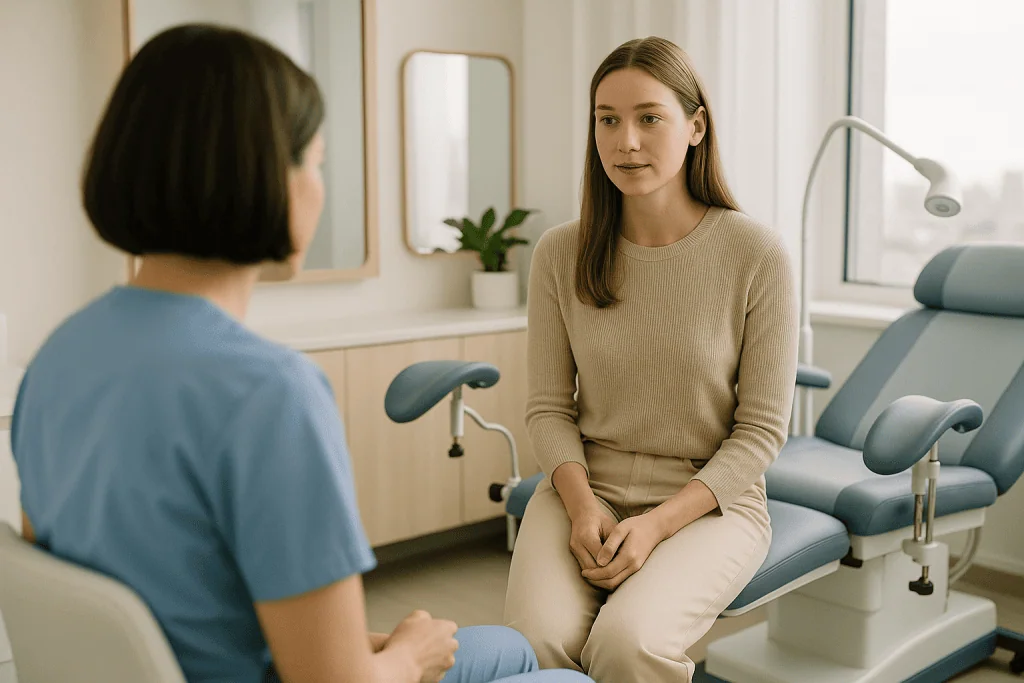
Diagnosis begins with a detailed conversation. The gynaecologist will ask when the symptoms began, what makes them better or worse, whether they are linked to menopause, childbirth, medications, cancer treatment, infections or other medical conditions, and how they affect daily life. A pelvic examination usually follows, assessing vaginal tissue quality, signs of atrophy, discharge, tenderness, scarring, pelvic support and the condition of the vulva and vaginal opening.
Further tests may be needed when symptoms suggest infection, inflammation, hormonal imbalance, abnormal bleeding, cervical disease or pelvic floor disorders. Depending on the findings, this can include vaginal swabs, urine testing, a Pap smear or HPV test where appropriate, ultrasound, hormonal assessment or referral to another specialist. A responsible clinician will not proceed straight to laser treatment if there are warning signs that need investigation first.
Laser treatment may then be considered when the symptoms are consistent with tissue-related changes, when expectations are realistic and when there are no contraindications. It can be particularly relevant for women who prefer a non-hormonal approach, who cannot use local oestrogen because of medical considerations, or who have not found sufficient relief with lubricants and moisturisers. Even then, the decision is individual, and laser therapy is often one part of a wider plan that may include pelvic floor rehabilitation, hormonal or non-hormonal medication, sexual health counselling or lifestyle measures.
Conditions and Indications Laser Treatment May Address
The most common indication discussed is genitourinary syndrome of menopause: the term used for vaginal and urinary symptoms caused by lower oestrogen levels. This may include dryness, burning, irritation, painful intercourse, urinary urgency or recurrent discomfort. In selected patients, laser treatment may be considered after evaluation and a proper discussion of the alternatives, including local hormonal therapy where it is medically suitable.
Postpartum changes are another frequent reason women seek care. After childbirth, some women notice mild vaginal laxity, altered sensation or tissue discomfort. Time, pelvic floor exercises and physiotherapy help many; some remain bothered by symptoms. Laser treatment may support tissue remodelling in mild cases, but it does not repair major pelvic floor injuries and it does not correct significant prolapse.
Discomfort during intimacy caused by dryness or fragile tissue is a further indication. Here the goal is not aesthetic: it is to improve comfort, reduce friction-related irritation and support tissue health. A comprehensive evaluation matters, because painful intercourse has many possible causes, infection, vulvar skin disorders, pelvic floor spasm, endometriosis, psychological factors and relationship-related concerns among them. Treating the wrong cause delays the right care.
Mild vaginal laxity or reduced tone may also be discussed. The expected improvement is generally subtle to moderate and depends on tissue quality, childbirth history, age, hormonal status and pelvic floor function. Patients seeking substantial tightening, prolapse correction or surgical reshaping usually need other options, which are covered later on this page.
There are clear situations in which laser vaginal rejuvenation is not appropriate:
- Pregnancy
- Active vaginal or urinary infection
- Unexplained vaginal bleeding
- Untreated cervical abnormalities or suspected malignancy
- Certain vulvar and vaginal skin conditions
- A history of pelvic radiation, a complex cancer history, autoimmune conditions affecting tissue healing, or medicines that influence healing: these do not always rule treatment out, but they require additional specialist review first
Can a woman become tight again?
Some degree of vaginal tightening is possible for some women, but the honest answer depends entirely on what is causing the sensation of looseness. When mild laxity reflects changes in tissue quality, thinning, reduced collagen, hormonal change, laser treatment may produce a subtle to moderate improvement in tone and resilience. When the underlying issue is weakened pelvic floor muscles, structured pelvic floor exercises and physiotherapy usually achieve more than any device, and they cost nothing to try. When there is structural injury or prolapse, surgical evaluation is the appropriate route. No treatment, surgical or non-surgical, restores tissue exactly to a pre-childbirth or pre-menopause state, and any clinic promising dramatic tightening from a single laser session deserves scepticism.
Can laser treatment improve a wrinkled or lax external appearance?
If the concern is a wrinkled or loose appearance of the external genital skin, the first step is understanding why it looks that way. Vulvar skin changes with age, hormonal shifts, weight change and childbirth, and a very wide range of appearance is entirely normal. Treatment of the vaginal canal itself does not change the external appearance. Where external areas are treated with a laser, the effect on skin quality is typically modest; reshaping of tissue, where genuinely wanted, is a surgical matter such as labiaplasty. A careful consultation distinguishes between a medical problem, a cosmetic preference and a normal variation that needs no treatment at all.
How Laser Vaginal Rejuvenation Is Performed
The treatment pathway is straightforward, but each step matters. A typical sequence looks like this:
- Step 1: Consultation. The physician takes a full history: symptoms, medical background, sexual health concerns, childbirth history, menopause status, medications, allergies, previous surgery and expectations. What the treatment can and cannot achieve is explained, alternatives are reviewed, and questions about comfort, privacy, recovery and follow-up are answered.
- Step 2: Preparation. A pelvic examination is performed and, where indicated, laboratory tests or imaging are arranged. If there is infection, irritation, abnormal discharge or bleeding, treatment is postponed until the cause is identified and managed. Patients are usually advised to avoid intercourse, vaginal medications, tampons and intravaginal products for a short period beforehand, following the physician’s instructions. If you are menstruating on the day, the appointment is normally rescheduled.
- Step 3: On the day. The procedure takes place in an outpatient gynaecology setting. General anaesthesia is not usually needed; a topical anaesthetic may be applied, particularly if external vulvar areas are treated or the vaginal opening is sensitive. You are positioned as for a standard pelvic examination.
- Step 4: Treatment. A specially designed vaginal handpiece or probe is introduced gently into the vaginal canal, and the physician delivers laser energy in a controlled sequence across the planned areas. You may feel warmth, mild vibration or pressure. Significant pain is not expected; if discomfort occurs, the clinician can pause and adjust the approach.
- Step 5: Duration. The treatment itself is usually brief, often under half an hour, although the appointment takes longer because of preparation, explanation and aftercare instructions.
- Step 6: Immediately afterwards. Most patients return to normal light activities the same day.
Most protocols involve a series of sessions rather than a single visit. The number and spacing of sessions vary with the indication, the tissue response, the device and the physician’s judgement, and the expected plan is explained before treatment begins. Some patients later choose maintenance sessions, particularly where symptoms are driven by menopause or ongoing hormonal change.
Aftercare is simple but important. Mild warmth, spotting, watery discharge or temporary sensitivity may occur. Patients are generally advised to avoid intercourse, tampons, swimming pools, hot baths and intense exercise for a short recovery period, as instructed. Gentle hygiene and avoiding irritating products help the tissue settle. Pain, fever, heavy bleeding or foul-smelling discharge are not part of a normal recovery.
Does laser vaginal rejuvenation work?
For carefully selected patients, laser vaginal rejuvenation can improve symptoms such as dryness, irritation and friction-related discomfort, but responses vary, and the evidence base is still developing. Clinical studies have described benefits in selected groups, particularly for vaginal dryness and genitourinary syndrome of menopause, and many patients report meaningful symptom improvement. Others notice only modest change, and some do not respond. Because tissue remodelling takes weeks and most protocols involve several sessions, the result is best judged after the recommended series and a follow-up examination, not after the first visit. Effects are also not permanent: tissue continues to age and hormonal changes continue, which is why maintenance treatment is sometimes discussed. An honest consultation covers all of this before you commit.
Potential Benefits of Laser Vaginal Rejuvenation
When patients are carefully selected and treatment is performed by trained clinicians, laser vaginal rejuvenation may offer several practical benefits for comfort and intimate wellbeing.
| Benefit | What It Means for You |
|---|---|
| Improved vaginal moisture | Some patients experience less dryness and irritation, which may make daily activities and intimacy more comfortable. |
| Support for tissue elasticity | Laser energy may stimulate collagen remodelling, helping the vaginal lining feel more resilient in selected patients. |
| Non-surgical approach | The procedure needs no incisions or hospital admission, and most patients return to light activities the same day. |
| Reduced discomfort during intimacy | When pain is related to dryness or fragile tissue, treatment may help reduce friction-related soreness and sensitivity. |
| Personalised treatment planning | The number of sessions, treatment areas and supportive therapies can be adapted to your symptoms and medical background. |
Recovery Timeline After Laser Vaginal Rejuvenation
Recovery is usually brief, but the tissue response develops gradually. Your physician will personalise the instructions according to the treatment area and your medical history.
| Time Period | What Patients Can Expect |
|---|---|
| Day 1 | Mild warmth, sensitivity, spotting or watery discharge may occur. Most patients can walk, travel locally and continue light daily activities. |
| First week | Temporary discharge or sensitivity typically settles. Intercourse, tampons, swimming, hot baths and strenuous exercise are usually avoided for the period the physician recommends. |
| First month | Some patients begin to notice improved comfort, lubrication or tissue resilience. Further sessions may be scheduled depending on the plan. |
| Longer term | Tissue remodelling may continue over time. Maintenance treatment or supportive therapies may be considered, especially for menopause-related symptoms. |
Two patterns are common. Some women notice early improvement in lubrication or comfort within days; others experience gradual change over several weeks as remodelling progresses. Because tissue biology and the underlying condition differ from patient to patient, comparing your first week to someone else’s is rarely informative: the follow-up examination after the treatment series is the meaningful checkpoint.
Why Acting Early Matters
Vaginal symptoms are often minimised, but early assessment can prevent unnecessary discomfort and identify conditions that genuinely need treatment. Dryness and tissue fragility can lead to small tears, recurrent irritation, avoidance of intimacy and increasing pelvic floor tension. Over time, discomfort creates a cycle: the body anticipates pain, muscles tighten, and sexual activity becomes progressively more difficult. Breaking that cycle is easier when it is short.
Acting early does not mean choosing laser treatment immediately. It means obtaining a clear diagnosis. Vaginal dryness may be related to menopause, breastfeeding, medications, autoimmune disease, dermatological conditions, infections or cancer therapies. Pain may come from pelvic floor dysfunction, vulvodynia, scar tissue, endometriosis or other conditions. Mild urinary symptoms may be linked to atrophic tissue, but significant leakage or urgency points to different treatment altogether.
Delaying evaluation can also postpone the detection of important warning signs. Unexplained bleeding, persistent discharge, vulvar lesions, pelvic pain or new symptoms after menopause deserve proper gynaecological examination before anyone reaches for an energy-based device; they should never be treated as simple dryness. A timely review distinguishes common tissue changes from conditions requiring more serious attention.
For women who are good candidates, earlier treatment may address symptoms before they erode confidence, relationships and everyday comfort more deeply. It also makes it easier to combine laser therapy with supportive measures, lubricants, moisturisers, pelvic floor therapy, or hormonal and non-hormonal medical treatment where a doctor considers it appropriate.
Factors That Influence a Good Result
The outcome depends on several factors, and accurate diagnosis comes first. Laser treatment is most likely to help when symptoms are closely related to vaginal dryness, mild atrophy or mild laxity. If the main issue is pelvic organ prolapse, severe urinary incontinence, pelvic floor spasm, infection, skin disease or deep pelvic pain, a different treatment pathway will serve you better, and a good clinician will say so plainly.
Hormonal status matters. Menopause, breastfeeding, certain medications and cancer treatments all affect tissue quality and healing response. Some patients do best combining laser therapy with vaginal moisturisers, lubricants, pelvic floor physiotherapy or carefully selected medical treatment. For women with a history of breast cancer or other hormone-sensitive conditions, decisions should be coordinated with the relevant oncology or specialist team rather than made in isolation.
The physician’s experience and the treatment protocol carry real weight. Energy settings must be selected with care: undertreatment produces limited benefit, while overtreatment increases the risk of burns, scarring, pain or delayed healing. A measured approach, appropriate spacing between sessions and follow-up assessment support both safety and effectiveness. This is a strong argument for choosing clinicians who perform intravaginal laser work regularly, in a setting where complications, however uncommon, can be properly managed.
Expectations shape satisfaction. Laser treatment may improve comfort and tissue quality, but it does not stop ageing, reverse every childbirth-related change or reproduce the result of surgery. A good consultation includes a candid discussion of the likely degree of benefit, the probable need for more than one session, potential side effects and the alternatives.
Finally, general health and aftercare play a role. Smoking, uncontrolled diabetes, active infection, poor genital skin health and the use of irritating products can all affect healing. Following post-treatment instructions, attending follow-up visits and reporting unexpected symptoms promptly are part of responsible care on both sides.
How Much Does Laser Vaginal Rejuvenation Cost?
No honest single figure can be quoted for laser vaginal rejuvenation before an examination, because the cost depends on decisions that can only be made after one. The main drivers are the number of sessions your protocol requires, the type of laser system used, whether treatment covers the vaginal canal alone or includes external areas, the diagnostic work-up needed beforehand, the experience of the treating physician, the setting, hospital-based care versus a standalone clinic, and whether follow-up examinations are included in the plan.
When comparing quotes, compare like with like. A price for a single session is not comparable to a price for a full treatment series with follow-up, and most protocols involve a series. Ask what the figure includes: consultation, examination, any laboratory tests, the sessions themselves, aftercare review. In many health systems this treatment is considered elective, so whether any insurer contributes varies by country, policy and indication: a question worth settling before treatment, not after.
Laser Treatment or Vaginal Rejuvenation Surgery?
Vaginal rejuvenation surgery refers to operations such as vaginoplasty, which surgically tightens the vaginal canal, and labiaplasty, which reshapes the external labia, and it addresses different problems from laser treatment. Surgery is a consideration when there is significant structural laxity, when reshaping is genuinely wanted, or when prolapse or pelvic floor injury requires reconstruction; that last category is a distinct field of pelvic floor surgery with its own evaluation pathway. Surgical procedures involve anaesthesia, incisions and a longer recovery, and in aesthetic cases they are typically performed within gynaecology or plastic, reconstructive and aesthetic surgery.
Laser treatment, by contrast, is non-surgical and targets tissue quality: moisture, elasticity, resilience. It suits milder, tissue-related concerns and patients who want to avoid or are not ready for an operation. Neither approach replaces pelvic floor rehabilitation where muscle function is the problem. The right choice follows from the diagnosis, which is why the examination comes before the treatment decision, never the other way round.
Laser Vaginal Rejuvenation at Acibadem
Acibadem approaches laser vaginal rejuvenation as part of a broader women’s health pathway rather than a standalone cosmetic service. Care takes place in a hospital-based environment where outpatient intimate treatments are supported by wider services when needed: laboratory testing, ultrasound, cervical screening, pelvic floor evaluation, dermatological input and specialist consultation. In more complex cases, where symptoms overlap with an oncology history, pelvic floor disorders or chronic pain, multidisciplinary discussion supports the decision.
Before recommending laser treatment, Acibadem gynaecologists evaluate symptoms, medical history, examination findings and personal goals. Some patients turn out to be good candidates for laser vaginal rejuvenation. Others are better served by medication, pelvic floor therapy, menopausal care, treatment of infection or skin disease, or surgical evaluation. The priority is matching the treatment to the cause of the symptoms, not applying one procedure to every concern.
Technology is used to support precision and appropriate patient selection: gynaecological laser systems, modern diagnostic tools, imaging, laboratory services and electronic medical documentation help physicians plan treatment and monitor recovery. Its purpose is not to replace clinical judgement but to make care more accurate and more tailored.
Privacy and dignity are central throughout. Patients are encouraged to speak openly about symptoms, sexual discomfort, childbirth changes, menopause, treatment history and personal goals, often for the first time in years, and the consultation is structured so that nothing has to be rushed or left unsaid.
Comfort Is Worth Taking Seriously
Laser vaginal rejuvenation may be an appropriate non-surgical option for women whose dryness, mild laxity, irritation or intimacy-related discomfort stems from tissue changes. The best outcomes begin the same way every time: a careful diagnosis, realistic expectations, and a plan built around your health history rather than around a device. Intimate discomfort is not something that has to be endured indefinitely or explained away as inevitable. With a proper medical assessment, most women can identify the cause of their symptoms and weigh the full range of options, laser treatment among them, with clear information about what each one can honestly deliver.
Preparation
- A gynecologic consultation is needed to assess symptoms, medical history, and suitability for laser treatment. Your doctor may check for pregnancy, active infection, abnormal bleeding, or recent Pap smear results. Patients are usually advised to avoid intercourse, vaginal creams, and tampons shortly before the session.
Aftercare
- Mild warmth, discharge, or temporary sensitivity can occur after treatment and usually settles quickly. Avoid intercourse, tampons, swimming pools, and hot baths for several days or as advised by your doctor. Follow-up sessions may be recommended depending on symptoms and clinical response.
Frequently Asked Questions
What affects the cost of laser vaginal rejuvenation?
Cost is influenced by the specialist consultation, gynecologic examination, laser technology, clinic or hospital setting, need for tests, treatment plan, and follow-up arrangements. Travel, accommodation, and language support can also affect the overall budget for international patients.
How can I get a personalised quote?
A personalised quote is prepared after reviewing your medical history, symptoms, expectations, and any relevant test results. Acibadem International can arrange a free consultation to help determine whether the treatment is suitable and what your care plan may include.
Is laser vaginal rejuvenation usually included in one package?
Package content varies by provider. A package may include consultation, examination, the laser procedure, and follow-up coordination, while tests, additional treatments, or extended aftercare may be separate depending on clinical need.
Will I need additional tests before treatment?
Your gynecologist may recommend an examination, infection screening, smear history review, or other assessments before treatment. These checks help confirm that symptoms are correctly diagnosed and that laser treatment is appropriate.
Can international patients plan treatment around travel?
In many cases, outpatient scheduling can be coordinated with travel plans, but timing depends on your specialist assessment and medical suitability. International patient teams can help with appointment planning, interpretation, and practical arrangements.
Medically reviewed by the Acıbadem International Medical Board September 1, 2026
See our medical review board →
Update history
- PublishedJune 8, 2026
- Medical review approvedSeptember 1, 2026
- Last content updateSeptember 1, 2026
References1
- Vaginal Atrophy (Genitourinary Syndrome of Menopause) my.clevelandclinic.org