Pregnancy Nephropathy Treatment
Pregnancy nephropathy care manages kidney-related complications during pregnancy, including proteinuria, hypertension, or reduced kidney function, with coordinated perinatology and nephrology monitoring to protect mother and baby.

Quick answer
Pregnancy nephropathy is an umbrella term for kidney problems that appear, worsen or are first recognised during pregnancy, including proteinuria, hypertension, preeclampsia and pre-existing chronic kidney disease. Care involves coordinated maternal and fetal monitoring, pregnancy-appropriate medication, blood pressure control and, where necessary, delivery planning, followed by structured postpartum kidney and blood pressure follow-up.
What Is Pregnancy Nephropathy?
Pregnancy nephropathy is an umbrella term for kidney problems that appear, worsen or are first recognised during pregnancy. It covers new findings such as protein in the urine, rising blood pressure and abnormal kidney blood tests, and it also covers pre-existing kidney disease that pregnancy places under additional strain. Care focuses on two patients at once: the mother’s kidney and cardiovascular health, and the baby’s growth and development.
The term does not describe a single disease. Behind the label may sit preeclampsia, chronic kidney disease, lupus nephritis, diabetic kidney disease, a urinary tract infection or obstruction, or a kidney disorder that was never diagnosed until pregnancy brought it to light. Some women enter pregnancy with a known kidney condition and need close supervision from the first trimester. Others develop proteinuria or hypertension for the first time in mid or late pregnancy and need prompt evaluation to establish what is happening and why. Both situations fall within the same field of care, and both benefit from the same principle: identify the cause early, monitor closely, and treat in a way that is appropriate for the stage of pregnancy.
In most cases the central findings are proteinuria, meaning excess protein in the urine; hypertension, meaning elevated blood pressure; and changes in kidney blood tests such as serum creatinine. These findings can occur alone or together, and each combination points the diagnostic work in a different direction. Isolated proteinuria in early pregnancy suggests a different set of causes than new hypertension with proteinuria after mid-pregnancy, which raises concern for preeclampsia.
This care is not limited to treating laboratory results. It is a coordinated approach built around a series of clinical questions. Is the kidney problem new, or was it present before conception? Is it driven by the pregnancy itself, by an autoimmune disease, by diabetes, by infection, by hypertension, by a medication, or by an anatomical issue such as obstruction? How is the placenta functioning? Is the baby growing appropriately? Is the mother at risk of seizures, acute kidney injury, fluid overload, stroke or other complications? And which treatment is safest for both mother and baby at this specific gestational age?
Management is individualised. Some patients need nothing more than frequent outpatient monitoring and careful medication adjustment. Others need hospital admission for observation, intravenous treatment, fetal monitoring or delivery planning. After birth, follow-up continues, because kidney and blood pressure abnormalities may improve, persist, or reveal an underlying chronic condition that needs long-term care. That postpartum phase is a genuine part of treatment, not an afterthought.
Is pregnancy hard on the kidneys?
Yes, pregnancy asks more of the kidneys, even in a completely healthy woman. Blood volume increases, kidney filtration rises, fluid balance shifts, and the urinary tract itself changes shape under hormonal and mechanical influence. Healthy kidneys with normal reserve usually manage these adaptations without difficulty. Kidneys that already carry damage, scarring or reduced function have less spare capacity, which is why pregnancy can unmask disease that was silent beforehand.
These normal adaptations also change what test results mean. Because kidney filtration rises in pregnancy, blood creatinine normally falls. A creatinine value that would look only mildly abnormal outside pregnancy can therefore be genuinely concerning during pregnancy, because it may represent a larger loss of function than the number suggests at first glance. Interpreting kidney tests against pregnancy-specific expectations, rather than standard laboratory ranges, is one of the core skills in this field.
What does proteinuria in pregnancy mean?
Proteinuria means excess protein passing into the urine, and in pregnancy its significance depends heavily on timing and context. New proteinuria after mid-pregnancy raises concern for preeclampsia, especially when it appears alongside high blood pressure, headaches, visual changes, pain in the upper abdomen, or abnormal liver and platelet tests. Proteinuria documented in early pregnancy, before the placenta could plausibly be driving it, points more towards a kidney condition that predates the pregnancy.
Quantifying the protein matters as much as detecting it. A trace finding on a dipstick is not the same as heavy, measured protein loss, and the trend over weeks often tells the team more than a single value. Higher levels of protein loss can be associated with increased risk, particularly when combined with hypertension or low blood protein levels, so repeated measurement is standard practice rather than a sign that something has been missed.
Who May Need Pregnancy Nephropathy Care?
A woman may need this specialised kidney care if routine antenatal testing or symptoms suggest that her kidneys are under stress or not functioning normally. Kidney disease in pregnancy is often subtle, and many cases are first picked up not because the patient felt unwell but because a blood pressure check, a urine test or a blood test during routine antenatal care returned an unexpected result.
Common findings that lead to referral include protein in the urine, persistent or severe high blood pressure, swelling that is more pronounced than expected for the stage of pregnancy, reduced urine output, abnormal kidney function tests, blood in the urine, and recurrent urinary tract infections. Some patients do have symptoms: headaches, visual disturbances, nausea, shortness of breath, chest discomfort, pain under the ribs, or sudden weight gain from fluid retention. Others feel entirely well and are surprised to learn that their results need investigation. Feeling well is reassuring, but it does not rule out a kidney problem that deserves attention.
Women with known kidney or systemic conditions often benefit from specialist input before conception or as early in pregnancy as possible. This includes chronic kidney disease, a kidney transplant, lupus, vasculitis, diabetes, longstanding hypertension, polycystic kidney disease, a previous pregnancy complicated by severe preeclampsia, or a past episode of acute kidney injury. Early medication review is a particular priority, because some kidney and blood pressure medicines that are appropriate outside pregnancy are not recommended during it, and the treating team weighs every prescription against gestational age and the alternatives available. Those decisions sit with the doctors managing the pregnancy; they are made individually, not by general rule.
How is kidney disease diagnosed during pregnancy?
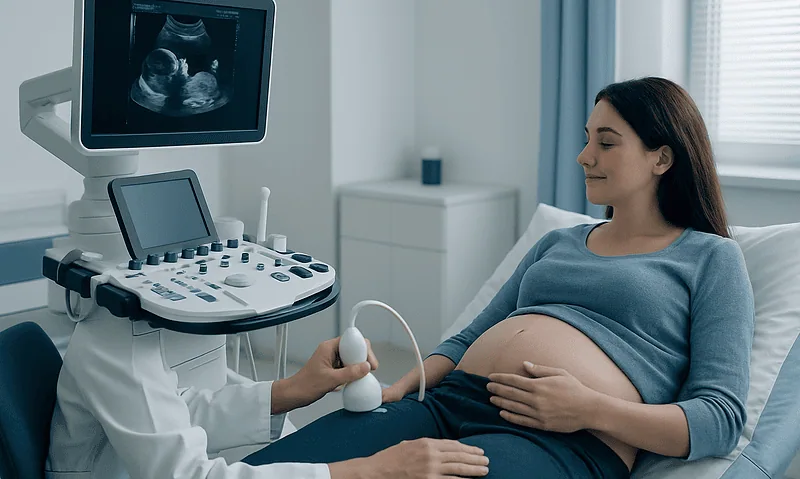
Diagnosis rests on combining a detailed history, blood pressure assessment, physical examination, blood and urine testing, and evaluation of the baby, no single test settles the question on its own. Blood tests typically include serum creatinine, electrolytes, liver enzymes and platelet count. Urine testing includes protein measurement, microscopy and culture, with autoimmune or metabolic tests added when the picture suggests them. Ultrasound can assess the mother’s kidneys and urinary tract, while obstetric ultrasound and Doppler studies evaluate fetal growth, amniotic fluid and placental blood flow.
One of the more demanding diagnostic tasks is distinguishing preeclampsia from a flare of an existing kidney disease, such as lupus nephritis. The two can look alike, both may produce rising blood pressure, worsening proteinuria and falling kidney function, yet they call for different treatment. The distinction is made by weighing clinical findings, laboratory trends over time, gestational age, fetal status and the patient’s history together, rather than relying on any single result.
Kidney biopsy, the definitive test for many kidney diseases outside pregnancy, is used sparingly during pregnancy. It may be considered when the result would meaningfully change management before delivery, but the decision is always weighed carefully against gestational timing and procedural risk. In many cases the team can manage safely on clinical and laboratory grounds and defer biopsy until after birth, when it can be performed under more favourable conditions.
Conditions and Indications Addressed
Care in this field covers a broad range of kidney and pregnancy-related conditions. The single most common concern is the overlap between hypertension, proteinuria and preeclampsia, but the field extends well beyond it, from chronic disease that predates conception to infections and obstructions that arise abruptly in the third trimester.
Preeclampsia and hypertensive disorders of pregnancy
Preeclampsia is a pregnancy-specific condition, usually marked by new hypertension and proteinuria after mid-pregnancy, that can affect the kidneys, liver, brain, blood clotting system and placenta. It matters because it can progress, sometimes gradually, sometimes quickly, which is why structured, scheduled monitoring rather than occasional checking is the standard of care. Related hypertensive disorders, including chronic hypertension with superimposed preeclampsia, are managed within the same framework, since the boundaries between them are often clearer in textbooks than at the bedside.
Chronic kidney disease (CKD) in pregnancy
Chronic kidney disease in pregnancy means pregnancy occurring in kidneys that already have reduced function or established damage. Pregnancy places additional demand on such kidneys, and the degree of risk depends on baseline kidney function, the amount of proteinuria, how well blood pressure is controlled, and the underlying diagnosis. Some women with mild, stable kidney disease do well with close supervision. Others, particularly those with more advanced impairment or heavy protein loss, need intensive, jointly planned obstetric and nephrology care throughout.
Diabetic, autoimmune and inherited kidney disease
Several underlying diseases bring their own kidney considerations into pregnancy. Diabetic nephropathy requires attention to glucose control, blood pressure and proteinuria together. Lupus nephritis and other forms of glomerulonephritis raise the question of disease flares and how to tell them apart from preeclampsia. Inherited conditions, from polycystic kidney disease to rarer disorders such as Fabry nephropathy and other forms of hereditary nephropathymay prompt both maternal monitoring and, for some families, genetic counselling. Pregnancy after kidney transplantation is a further specialised situation, in which graft function, immunosuppression and obstetric care must be planned together from the outset.
Urinary tract infections, kidney stones and obstruction
Urinary tract infections are more consequential during pregnancy than outside it. Pyelonephritis, infection reaching the kidney itself, can worsen quickly in pregnant women and may increase the risk of contractions or systemic illness if not treated promptly. Kidney stones causing obstruction, acute kidney injury from any cause, and fluid or electrolyte disorders also fall within this care pathway, because each can compromise kidney function at a time when the kidneys have little capacity to spare.
Postpartum kidney and blood pressure follow-up
Postpartum follow-up is a defined part of the care pathway, not an optional extra. Some complications improve after delivery, but rarely instantly: blood pressure may actually rise in the days after birth, and proteinuria can take weeks or months to resolve. Abnormalities that persist can indicate underlying kidney disease, or a raised long-term cardiovascular and renal risk that deserves a prevention plan. The postpartum period is therefore treated as an opportunity to confirm recovery, complete the diagnosis where it remained uncertain, and set up whatever long-term care is needed.
How Pregnancy Nephropathy Care Is Performed
Pregnancy nephropathy care is an ongoing management process rather than a single procedure. In practice it usually follows a recognisable sequence:
- Initial assessment, history, examination, blood pressure, laboratory tests and fetal evaluation to establish a baseline.
- Diagnosis and risk stratification, identifying the cause and judging how closely mother and baby need to be watched.
- Treatment and monitoring, medication, lifestyle guidance and scheduled maternal and fetal surveillance, as an outpatient or in hospital.
- Delivery planning, deciding, and revisiting, when and how birth should happen if the condition requires it.
- Postpartum follow-up, confirming recovery, detecting persistent disease and planning long-term and future-pregnancy care.
Initial assessment and risk review
The first step is a careful evaluation of the mother’s health, the stage of pregnancy, the baby’s status and the medical history. The team reviews current symptoms, blood pressure readings, urine results, all medications, previous pregnancies and their complications, any kidney history, autoimmune conditions, diabetes, hypertension and prior hospital admissions. Recent laboratory reports, ultrasound results, medication lists and discharge summaries all feed into this picture; the more complete the record, the faster the assessment moves.
The first visit usually includes blood and urine tests to establish the current level of kidney function and protein loss. Blood pressure is measured with proper technique, and repeated readings may be needed to identify a genuine pattern rather than a one-off value. The team also looks for fluid retention, neurological symptoms, abdominal tenderness and breathing difficulty. When preeclampsia is suspected, the work-up includes platelet count, liver function, kidney function and urine protein together with fetal assessment, because preeclampsia is a multi-organ condition and no single test captures it.
Maternal and fetal monitoring
Monitoring is the backbone of this care, and its frequency is set by severity and gestational age rather than by a fixed schedule. Some patients are followed as outpatients with regular clinic visits, home blood pressure logs and planned laboratory testing. Others need hospital admission for closer observation, typically when blood pressure is severe, kidney function is deteriorating, symptoms are concerning, or fetal growth and placental function need frequent reassessment. A perinatology (high-risk pregnancy) team typically leads the obstetric side of this surveillance, working alongside nephrology.
Fetal monitoring includes ultrasound to track growth, amniotic fluid volume and placental blood flow. Later in pregnancy, nonstress testing or other forms of fetal surveillance may be added to assess the baby’s wellbeing directly. All of this serves one balancing act: giving the baby more time to mature when it is safe to do so, and recommending delivery when continuing the pregnancy carries more risk than birth would.
Blood pressure and medication management
Blood pressure control is central to treatment. The team selects medications considered appropriate for pregnancy and adjusts dosing according to blood pressure response, gestational age, side effects and coexisting conditions. Some blood pressure medicines that are commonly used outside pregnancy are avoided during it because they may affect fetal development, which is why the treating doctors review every medicine early and choose replacements where needed. These are individual clinical decisions made within the consultation, based on each woman’s situation.
When preeclampsia is severe or there is a risk of seizure, magnesium sulfate may be given in hospital according to accepted obstetric protocols. If preterm delivery looks possible, corticosteroids may be recommended to support the baby’s lung maturation, depending on gestational age and circumstances. Antibiotics are used when infection is present. Fluid management is handled cautiously throughout, because in kidney disease and preeclampsia both dehydration and fluid overload can cause harm: the margin between too little and too much is narrower than in a routine pregnancy.
How to help kidneys while pregnant?
The most useful things a pregnant woman can do for her kidneys are ordinary rather than dramatic: attend antenatal checks, keep blood pressure monitored, stay adequately hydrated, and follow the individual dietary guidance her team gives her. In this setting, that guidance is tailored, not generic:
- Salt intake may be moderated, but extreme dietary restriction is generally avoided unless medically necessary, because pregnancy requires sufficient nutrition for both mother and baby.
- Adequate hydration is encouraged, with fluid targets adjusted if kidney function or fluid balance is impaired.
- Weight and swelling are tracked over time, because trends are more informative than single measurements.
- Where kidney function is significantly reduced, nephrology and nutrition specialists may tailor protein, sodium, potassium or phosphorus intake.
- Any supplement or over-the-counter product is worth discussing with the care team before use, since some are unsuitable in pregnancy or in kidney disease.
- Home blood pressure logs, kept accurately, give the team far better data than clinic readings alone.
Education is part of the treatment itself. Patients learn which symptoms their team wants to hear about without delay, among them severe headache, visual changes, sudden swelling, reduced urination, shortness of breath, chest pain, severe abdominal pain, vaginal bleeding, contractions and reduced fetal movement. Knowing what matters, and what is an expected pregnancy change, reduces both risk and anxiety.
Technology used in evaluation and monitoring
Modern monitoring in this field depends on timely diagnostics and, just as importantly, on carefully interpreted trends. Laboratory systems allow rapid assessment of kidney function, urine protein, liver enzymes, blood counts, electrolytes and infection markers, repeated at intervals so that direction of travel is visible. Ultrasound serves both patients: it images the mother’s kidneys and urinary tract, and it follows the baby’s development. Doppler ultrasound adds information about placental and fetal blood flow, which becomes especially valuable when fetal growth restriction or placental insufficiency is suspected.
Electronic fetal monitoring, blood pressure monitoring systems and maternal observation units support decision-making in higher-risk situations. Imaging is always selected with pregnancy safety in mind: when additional imaging is needed for stones, obstruction or another urgent question, the team chooses the method that answers the clinical question with the least fetal exposure. Confirming pregnancy status before certain scans or procedures is itself a standard safety step in any carefully run imaging pathway.
Duration, hospital stay and delivery planning
An outpatient evaluation may take several hours when laboratory tests, imaging and specialist consultations are arranged on the same day. Hospital admission, where needed, can range from a short observation period to several days or longer, depending on disease severity, gestational age, blood pressure stability, kidney function and the baby’s condition. There is no standard length of stay, because the condition itself sets the pace.
Delivery planning is sometimes the single most important treatment decision. In preeclampsia and some related complications, delivery of the placenta is the only definitive way to stop the pregnancy-driven process, no medication switches it off. Yet the timing must be individualised. If the pregnancy is preterm and both mother and baby are stable, the team may aim to gain time for fetal maturity under careful monitoring. If maternal or fetal risks rise, earlier delivery may be recommended instead. The method of birth, vaginal delivery or caesarean section, depends on obstetric factors, urgency, gestational age, the baby’s condition and the mother’s overall status, and the plan is revisited as circumstances change rather than fixed once and forgotten.
Postpartum recovery and follow-up
After delivery, kidney function, urine protein, blood pressure and symptoms continue to be monitored, because birth does not reset everything at once. Some women need blood pressure medication for days, weeks or longer, and breastfeeding plans are taken into account when postpartum medicines are chosen. If proteinuria or reduced kidney function persists, nephrology follow-up determines whether an underlying kidney disease is present and needs continued treatment.
The postpartum period also includes counselling about future pregnancies and long-term cardiovascular and kidney health. A history of preeclampsia, significant proteinuria or pregnancy-related kidney injury changes what preventive care looks like in the years ahead. Follow-up after a complicated pregnancy is therefore about two things at once: recovery from this pregnancy, and a realistic plan for the next one and for long-term health.
Why Early Evaluation Matters
Kidney-related complications in pregnancy can progress gradually or suddenly, and it is not always possible to predict which pattern an individual will follow. Early evaluation gives the care team time to identify the cause, bring blood pressure under control, adjust medications, follow fetal growth and recognise warning signs before they become emergencies. It also allows conditions that look similar but need different treatment, preeclampsia and an autoimmune kidney flare, for instance, to be told apart while there is still time to act on the distinction.
Delayed care carries real costs. It can increase the risk of severe hypertension, worsening kidney function, seizures, stroke, fluid accumulating in the lungs, placental problems, fetal growth restriction, preterm birth and maternal intensive care admission. Infections such as pyelonephritis can escalate quickly in pregnancy. None of these outcomes is inevitable, but each becomes harder to prevent the later a problem is recognised.
Early action does not mean aggressive intervention. In many cases it simply means better information, closer observation and a more controlled plan: the difference between decisions made calmly with full data and decisions forced by a deteriorating situation. Early assessment also settles practical questions: how often monitoring should happen, whether care can safely continue as an outpatient, and which findings would change the plan if they appeared.
Potential Benefits of Coordinated Care
What coordinated care can realistically offer depends on the underlying diagnosis and the stage of pregnancy, but the pattern of benefit is consistent: fewer surprises, better-timed decisions and a clearer plan.
| Benefit | What It Means for You |
|---|---|
| Earlier recognition of risk | Proteinuria, hypertension or reduced kidney function is evaluated promptly, so serious conditions such as preeclampsia or a kidney disease flare are not missed while they are still manageable. |
| Coordinated maternal and fetal monitoring | Perinatology and nephrology teams follow kidney health and fetal wellbeing together, balancing maternal safety against the baby’s need for time to mature. |
| Pregnancy-appropriate medication planning | Blood pressure, infection, autoimmune and kidney-related medicines are selected or adjusted with pregnancy and later breastfeeding in mind. |
| Reduced risk of emergency decisions | Structured monitoring detects deterioration earlier, so decisions about hospitalisation or delivery are made with more clinical information and less urgency. |
| Postpartum health planning | Follow-up after birth confirms recovery, detects persistent kidney disease and shapes future pregnancy and cardiovascular risk care. |
Recovery Timeline After Pregnancy-Related Kidney Complications
Recovery varies widely from one diagnosis to another, but the broad shape of the period after evaluation, treatment, hospitalisation or delivery looks like this for many patients:
| Time Period | What Patients Can Expect |
|---|---|
| Day 1 | Blood pressure monitoring, blood and urine tests, fetal assessment, medication adjustment and symptom review. If delivery has taken place, close maternal observation continues. |
| First Week | Blood pressure may fluctuate, particularly after delivery. Continued medication, repeat laboratory tests and monitoring for headache, visual symptoms, swelling or shortness of breath are common. |
| First Month | Kidney function and urine protein often begin to improve if the condition was pregnancy-related, though some patients need ongoing nephrology follow-up and medication adjustment. |
| Longer Term | Persistent proteinuria, hypertension or abnormal kidney function is investigated further. Future pregnancy planning and long-term cardiovascular and renal prevention are discussed. |
What Influences Outcomes and a Good Result?
Outcomes in pregnancy nephropathy depend on the underlying diagnosis, the severity of kidney involvement, blood pressure control, the gestational age at which the problem appears, fetal growth, placental function, and how quickly the condition is recognised. A woman with mild proteinuria and stable blood pressure follows a very different pathway from one with severe preeclampsia, rapidly declining kidney function or established chronic kidney disease, even though all three fall under the same broad label.
Baseline kidney function is one of the most important considerations. Women who enter pregnancy with normal or near-normal function face a different risk profile from those with moderate or advanced impairment, because reserve determines how much extra demand the kidneys can absorb. The amount of proteinuria matters too: heavier protein loss carries more weight in the risk assessment, especially when it accompanies hypertension or low blood protein levels.
Blood pressure control bears directly on the safety of both mother and baby. Severe hypertension needs urgent attention because it raises the risk of stroke, seizure, placental complications and organ injury. Consistent monitoring, appropriate medication and clearly agreed thresholds for hospital care are the practical foundations of a good result.
Timing of onset also shapes the pathway. Kidney and blood pressure complications appearing early in pregnancy tend to require longer surveillance and more difficult judgements about fetal maturity. Later-onset disease may allow more room to manoeuvre, but it still demands careful assessment, because deterioration can be rapid in some cases regardless of when the condition first appeared.
A good result is built on communication between specialists. Perinatologists assess pregnancy-specific risks and the baby’s wellbeing. Nephrologists evaluate kidney function, proteinuria, fluid balance and underlying renal disease. Neonatologists prepare for the baby’s needs if early delivery becomes likely. Anaesthesiology, intensive care, cardiology, endocrinology, rheumatology, urology and nutrition specialists join when the situation calls for them. No single discipline can manage a complex case of this kind well on its own.
The patient’s own participation matters as much as any specialist input. Keeping blood pressure records, attending scheduled follow-ups, reporting warning symptoms promptly, taking prescribed medication as directed by the treating team, and discussing any supplement before use all influence safety. Complete medical records, shared early, allow whichever team receives the case to make timely and informed recommendations rather than starting from scratch.
How Acibadem Organises This Care
Kidney disease in pregnancy sits at the junction of two specialties, and Acibadem structures care accordingly: perinatology, nephrology, obstetrics, neonatology, anaesthesiology and intensive care work as a coordinated team, with other disciplines drawn in when a case requires them. Complex situations, chronic kidney disease, autoimmune disease, transplant history, severe preeclampsia, fetal growth restriction, or genuine uncertainty about the timing of delivery, may be reviewed through multidisciplinary consultation, so that decisions are examined from more than one clinical perspective before they are made.
The diagnostic pathway is organised so that laboratory testing, maternal and fetal imaging, blood pressure monitoring and specialist assessment can happen in a connected sequence rather than as scattered appointments. The technologies involved, detailed ultrasound, Doppler studies, fetal surveillance, maternal kidney imaging where needed, and laboratory testing that tracks trends in kidney and organ function, support the physicians’ judgement; they do not replace it. What matters clinically is how the condition is evolving, and the pathway is designed to make that evolution visible early.
Practical coordination runs alongside the medicine: laboratory results, imaging reports, medication lists and specialist opinions are kept within one shared record, so that every physician involved works from the same up-to-date picture. In high-risk pregnancy care, where instructions must be understood precisely and decisions can be time-sensitive, that clarity is not a comfort feature: it is part of safety.
The teams involved also recognise the emotional weight these diagnoses carry. A woman may be processing medical risk while managing uncertainty about her baby, family responsibilities and the demands of daily life all at once. Clear explanations, realistic expectations and timely updates are treated as part of good medical care, not as extras. The aim throughout is that the patient understands what is happening, what the options are, and which signs her team considers urgent.
Planning Ahead After Diagnosis
A diagnosis under this umbrella is the start of a plan, not a verdict. For most women, the plan has a consistent shape: establish the cause, agree a monitoring schedule, control blood pressure, protect kidney function as far as the situation allows, decide delivery timing on evidence rather than urgency, and follow up properly after birth. Each element is adjusted as the pregnancy progresses, which is why continuity, seeing the same coordinated team, with access to the full record, carries so much weight in this field.
The record itself is a clinical tool. Recent blood pressure readings, urine protein results, kidney function tests, ultrasound reports, current medication lists and the history of previous pregnancies together allow a specialist team to assess a case quickly and accurately. Gaps in that record cost time, and in higher-risk pregnancies time is rarely neutral.
Kidney-related complications in pregnancy are frightening precisely because two lives are involved. But most can be managed with careful monitoring, treatment appropriate to the stage of pregnancy and timely decision-making. A structured care plan protects the mother’s health while supporting the best achievable conditions for the baby’s development and delivery, and, after birth, it turns what was learned during the pregnancy into a realistic plan for long-term kidney and cardiovascular health.
Preparation
- Evaluation usually includes blood pressure assessment, urine protein testing, kidney function tests, and fetal monitoring. Patients should share prior kidney disease, hypertension, diabetes, medication use, and pregnancy history. Treatment planning is individualized by perinatology and nephrology teams.
Aftercare
- Ongoing follow-up monitors blood pressure, kidney function, urine protein levels, and fetal growth. Medication adjustments, diet guidance, and timing of delivery may be planned according to maternal and fetal status. Postpartum kidney and blood pressure checks are important because some complications can persist after birth.
Frequently Asked Questions
What affects the cost of pregnancy nephropathy care?
The main factors are the severity of kidney involvement, blood pressure control, the amount of laboratory and fetal monitoring needed, specialist consultations, medication, hospital admission and whether delivery or neonatal care becomes necessary.
How can I get a personalised quote from Acibadem?
You can request a free consultation and share recent medical records, blood and urine results, ultrasound reports, medication details and pregnancy history. The team can then review your case and prepare a personalised care plan and cost estimate.
Is pregnancy nephropathy always managed in hospital?
Not always. Some patients can be followed as outpatients with close monitoring, while others may need inpatient observation if blood pressure, kidney function or fetal wellbeing becomes concerning. The decision is made by specialists.
What is usually included in a care package?
A package may include perinatology and nephrology consultations, selected blood and urine tests, ultrasound or fetal monitoring, care coordination, interpreter support and follow up planning. Admission, delivery and neonatal services may be assessed separately.
Can international patients travel for pregnancy nephropathy care?
Travel may be possible for some patients, but it depends on pregnancy stage, clinical stability, airline rules and specialist advice. Medical records should be reviewed before travel so the team can advise on safe planning and continuity of care.
Medically reviewed by the Acıbadem International Medical Board September 1, 2026
See our medical review board →
Update history
- PublishedJune 8, 2026
- Medical review approvedSeptember 1, 2026
- Last content updateSeptember 8, 2026
References1
- Preeclampsia medlineplus.gov
Trusted care for international patients
From the Acibadem Blog

How Is Pregnancy Nephropathy Treated? Monitoring Kidney Problems That Appear in Pregnancy
Kidney problems that appear in pregnancy are managed by identifying the cause and treating it while protecting the baby. Care usually combines close monitoring…
Protein in Urine and Kidney Function Tests in Pregnancy Nephropathy: What Each Result Guides
Protein in urine pregnancy tests start with a dipstick at routine visits; a positive result is usually rechecked with a protein-to-creatinine ratio or a…