Robotic Bariatric Surgery
Robotic bariatric surgery is a minimally invasive form of weight loss surgery in which the surgeon controls robotic arms to perform operations such as a gastric sleeve or gastric bypass. It is…
Quick answer
Robotic bariatric surgery is minimally invasive weight loss surgery, such as a gastric sleeve or gastric bypass, performed through small incisions using a robotic system fully controlled by the surgeon. It is used for severe obesity and related conditions like type 2 diabetes. Outcomes are generally similar to laparoscopic surgery, with recovery often taking four to six weeks.
What is robotic bariatric surgery?
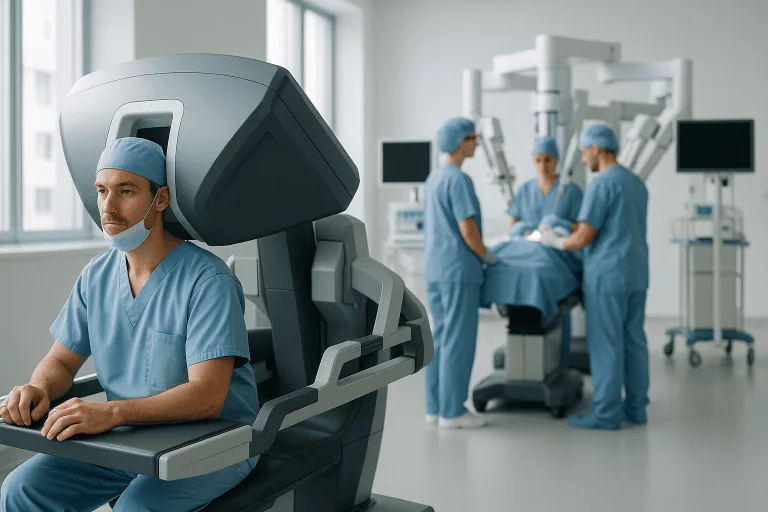
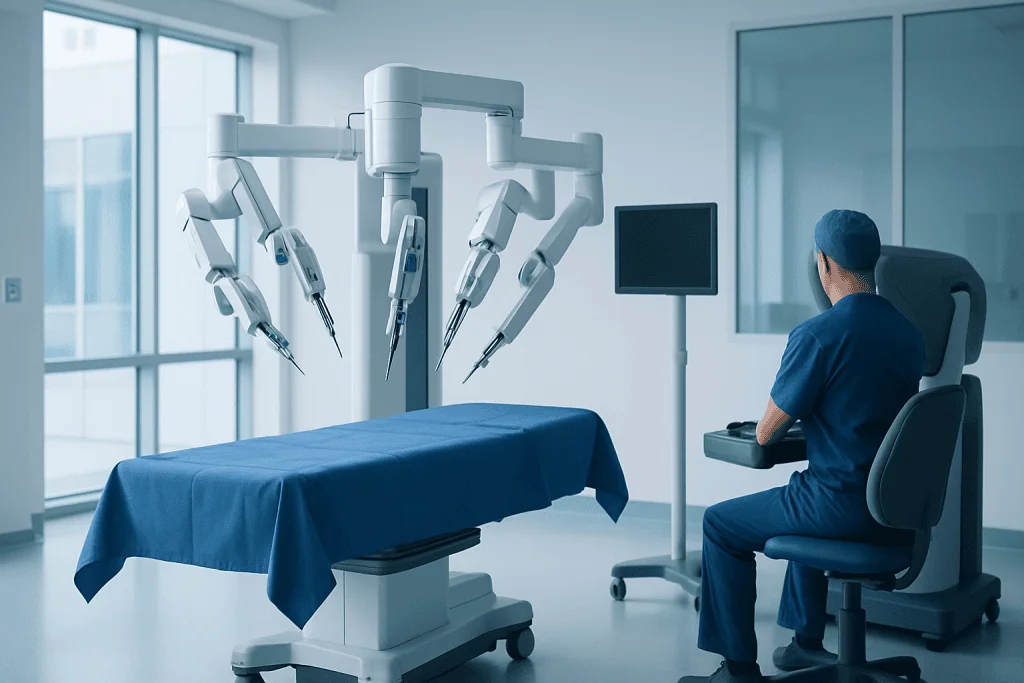
Robotic bariatric surgery is weight loss surgery performed with the help of a robotic surgical system. Bariatric surgery is the medical term for a group of operations on the stomach and, in some cases, the small intestine that help people with severe obesity lose weight and improve weight-related health problems. The word “robotic” can be misleading: the robot does not operate on its own. A trained surgeon sits at a console in the operating room and controls robotic arms that hold a camera and small instruments. Every movement is made by the surgeon; the system simply translates the surgeon’s hand movements into precise motions inside the body.
Like standard laparoscopic surgery (also called keyhole surgery), robotic weight loss surgery is minimally invasive. This means it is done through several small incisions rather than one large cut. The main differences are the magnified, three-dimensional view the surgeon sees and the wristed instruments, which can bend and rotate in ways that straight laparoscopic tools cannot. Whether these features lead to better outcomes for a given patient is still being studied, and many surgeons consider robotic and laparoscopic approaches to be two safe ways of performing the same operation.
The operations most often performed robotically are:
- Robotic gastric sleeve (sleeve gastrectomy): a large part of the stomach is removed so that what remains is a narrow tube, or “sleeve.” This limits how much you can eat and changes hunger-related hormones.
- Robotic gastric bypass (Roux-en-Y gastric bypass): a small stomach pouch is created and connected directly to a lower section of the small intestine, so food bypasses most of the stomach and the first part of the intestine.
- Revisional surgery: repairing, adjusting or converting a previous weight loss operation, which can be technically demanding because of scar tissue.
Bariatric surgery is used to treat severe obesity and the conditions that often accompany it, such as type 2 diabetes, high blood pressure, obstructive sleep apnea (pauses in breathing during sleep), fatty liver disease, high cholesterol and joint pain caused by excess weight. It is considered when diet, exercise and medication have not produced lasting results.
Who is a candidate
Candidacy for robotic bariatric surgery is based on the same criteria used for any weight loss operation. In general, surgery is considered for adults who have:
- A body mass index (BMI, a measure of weight relative to height) in the range that medical guidelines define as severe obesity, or a somewhat lower BMI combined with a serious weight-related condition such as type 2 diabetes.
- Tried supervised non-surgical weight loss without lasting success.
- A clear understanding of the lifelong changes in eating, supplements and follow-up that surgery requires.
- Been assessed by a team that usually includes a surgeon, a dietitian and often a mental health professional.
The robotic approach may be considered particularly useful in certain situations, for example in patients with a very high BMI, in revisional operations with scar tissue from earlier surgery, or when the surgeon expects that fine suturing will be needed. In other cases, the choice between robotic and laparoscopic surgery often depends on the surgeon’s training and the equipment available at the hospital.
Robotic bariatric surgery is generally not suitable when:
- A person has a medical condition that makes general anesthesia or a long operation unsafe, such as severe heart or lung disease that cannot be improved beforehand.
- There is an active, untreated eating disorder, alcohol or drug dependence, or a psychiatric condition that would make it difficult to follow the aftercare plan.
- A woman is pregnant or planning pregnancy in the near future; surgeons usually advise waiting until weight has stabilized after surgery.
- There is an untreated stomach condition, such as certain ulcers, that needs to be managed first.
- The person is not willing or able to commit to long-term follow-up and vitamin supplementation.
Age alone is not usually a barrier, but older adults and adolescents are assessed with extra care. Only a specialist team can determine whether surgery is appropriate for an individual.
How the procedure works
The exact steps depend on which operation is being performed, but the overall process is similar for a robotic gastric sleeve and a robotic gastric bypass.
Before the operation. You will meet the anesthesiologist (the doctor who manages anesthesia and monitors you during surgery). Once in the operating room, you receive general anesthesia, which means you are fully asleep and feel nothing. A breathing tube is placed, and your position on the table is secured because the table is often tilted during the procedure.
During the operation. The surgeon makes several small incisions in the abdomen, usually each under an inch long. Carbon dioxide gas is introduced to gently inflate the abdomen and create working space. Slim ports are inserted through the incisions, and the robotic arms are attached to them. One arm holds a high-definition camera; the others hold instruments such as graspers, scissors, staplers and needle holders. The surgeon then moves to the console, a few feet away from the patient, and views the inside of the abdomen in magnified 3D. A second surgeon or assistant remains at the bedside to change instruments and help as needed.
- In a robotic gastric sleeve, the surgeon divides the stomach along its length with a surgical stapler, removes the larger outer portion through one of the incisions and checks the staple line for bleeding or leaks.
- In a robotic gastric bypass, the surgeon staples off a small pouch at the top of the stomach, divides the small intestine and connects one end to the new pouch, then reconnects the remaining intestine further down so digestive juices can rejoin the food.
At the end, the surgeon may perform a leak test, in which dye or air is passed into the new stomach to confirm that the connections are sealed. The gas is released, the instruments are removed and the incisions are closed with stitches or surgical glue.
After the operation. You wake up in a recovery area where nurses monitor your breathing, pain and blood pressure. Most patients are encouraged to sit up and take short walks within hours, which helps prevent blood clots and breathing problems. Sips of clear liquid are usually started once the team is satisfied that you are recovering normally.
Preparation for robotic bariatric surgery
Preparation usually begins weeks or months before the operation and is an important part of a safe result. Your team may ask you to:
- Complete medical tests, which often include blood tests, an electrocardiogram (a recording of the heart’s electrical activity), a sleep study if sleep apnea is suspected, and sometimes an endoscopy (a camera examination of the stomach) or imaging of the abdomen.
- Attend nutritional counseling to learn how eating will change after surgery and to begin practicing smaller portions, slower eating and avoiding sugary drinks.
- Follow a pre-operative diet. Many programs recommend a low-calorie or liquid diet for one to two weeks before surgery, which can shrink the liver and make the operation technically easier.
- Stop smoking, ideally several weeks in advance, because smoking increases the risk of leaks, ulcers and wound problems.
- Review medications. Blood thinners, some diabetes medicines and certain supplements may need to be adjusted or paused; never stop a medicine without instructions from your doctor.
- Arrange practical support, including someone to take you home and help during the first days, and time away from work.
You will be told when to stop eating and drinking before surgery, typically the night before. Some hospitals also ask you to shower with an antiseptic wash and to remove jewelry, nail polish and contact lenses.
Recovery after robotic bariatric surgery
Robotic bariatric surgery recovery follows a broadly similar path to laparoscopic recovery. The timeline below is typical, but individual experiences vary.
- Hospital stay: many patients go home after one to two nights, though some stay longer, particularly after a bypass or revisional surgery.
- First week: you will be on clear liquids and then full liquids such as protein drinks and broth. Mild abdominal soreness, shoulder pain from the gas used during surgery, and fatigue are common. Short, frequent walks are encouraged.
- Weeks two to four: the diet usually progresses to pureed and then soft foods. Many people return to desk-based work within two to three weeks, depending on how they feel.
- Weeks four to six: most patients are cleared to resume regular solid foods in small portions and to begin more vigorous exercise. Heavy lifting is often restricted for about six weeks to protect the incisions.
- Long term: follow-up visits with the surgical team and dietitian continue for years. Blood tests check for vitamin and mineral deficiencies, and daily supplements (typically a multivitamin, calcium, vitamin D, vitamin B12 and often iron) are lifelong.
Aftercare also includes keeping the small incisions clean and dry, watching for signs of infection, taking prescribed pain relief and anti-nausea medicines as directed, and sipping fluids throughout the day to avoid dehydration, which is one of the most common reasons patients return to the hospital in the first weeks.
Risks and side effects
All bariatric operations carry risks, and robotic surgery does not remove them. Complications can occur during or soon after surgery, or months to years later.
Early risks include:
- Bleeding from the staple line or internal connections.
- Leak of stomach contents from the staple line or a connection, which is uncommon but serious and may need further surgery.
- Infection of the incisions or inside the abdomen.
- Blood clots in the legs or lungs.
- Reactions to anesthesia and breathing difficulties, especially in people with sleep apnea.
- Injury to nearby organs such as the spleen, liver or bowel.
- Conversion to open surgery through a larger incision if the surgeon cannot complete the operation safely with the robot.
Later risks and side effects include:
- Vitamin and mineral deficiencies, particularly after gastric bypass, which can lead to anemia, bone thinning or nerve problems if supplements are not taken.
- Dumping syndrome after bypass, in which sugary or fatty foods pass too quickly into the intestine, causing nausea, sweating, cramping and diarrhea.
- Gastroesophageal reflux (heartburn), which is more often reported after a gastric sleeve.
- Ulcers at the connection site after bypass, especially in smokers or people who take anti-inflammatory painkillers.
- Narrowing (stricture) of the new stomach or connection, which may need to be stretched with an endoscope.
- Gallstones, which can form during rapid weight loss.
- Internal hernias or bowel obstruction after bypass.
- Loose skin, hair thinning in the first months, and changes in mood or relationships as body and lifestyle change.
Risks specific to the robotic approach are rare but include mechanical problems with the system and, in some reports, slightly longer operating times, which lengthens exposure to anesthesia. Your surgeon should discuss the risks that apply to you personally.
Results and outlook
The evidence generally shows that bariatric surgery, whether performed laparoscopically or robotically, produces substantially greater and more durable weight loss than diet and exercise alone for people with severe obesity. Weight loss is usually fastest in the first six months and continues more slowly until it stabilizes, often around 12 to 18 months after surgery. Some weight regain over the following years is common and does not mean the operation has failed.
Many patients experience improvement or remission of type 2 diabetes, better blood pressure and cholesterol control, relief from sleep apnea and reduced joint pain. Gastric bypass tends to have a stronger effect on diabetes and reflux than the sleeve, while the sleeve is technically simpler and avoids some of the nutritional complications of bypass. Studies comparing robotic and laparoscopic bariatric surgery have so far shown broadly similar weight loss and complication rates; possible advantages of the robotic approach, such as lower leak rates in bypass or benefits in very complex cases, remain under investigation.
Long-term success depends heavily on lifestyle. People who follow the dietary plan, stay active, attend follow-up visits and take their supplements tend to maintain more of their weight loss. Surgery is a tool that changes the body; it does not replace the changes in habits that support health.
Cost considerations
The cost of robotic bariatric surgery varies widely between countries, hospitals and individual cases. Rather than quoting figures, it is more useful to understand what drives the price:
- Surgical technology. Robotic systems involve significant equipment and maintenance costs and use single-use instruments, so the robotic approach is often more expensive than laparoscopy for the same operation.
- Type of operation. Gastric bypass and revisional surgery usually take longer and require more staples, sutures and operating time than a gastric sleeve.
- Hospital stay. Each additional night, and any time in intensive care, adds to the total.
- Pre-operative assessment. Blood tests, imaging, endoscopy, sleep studies and specialist consultations may be billed separately.
- Follow-up care. Dietitian visits, lifelong vitamin supplements, regular blood tests and treatment of any complications continue for years.
- Insurance coverage. Many insurers cover bariatric surgery when medical criteria are met, but some do not cover the extra cost of the robotic approach.
Asking for an itemized estimate and clarifying what is and is not included helps avoid surprises.
Frequently asked questions
Is robotic bariatric surgery safer than laparoscopic surgery?
Current evidence suggests that both approaches are safe when performed by experienced surgeons, with broadly similar complication rates overall. Some studies suggest possible advantages of robotic surgery in complex cases such as gastric bypass or revisions, while others find no meaningful difference. The experience of the surgical team is generally considered more important than the specific technology used.
How long does robotic bariatric surgery recovery take?
Many patients leave the hospital within one to two nights and return to light activities or desk work within two to three weeks. Full recovery, including returning to regular solid foods and unrestricted exercise, typically takes four to six weeks. Recovery time is usually similar to laparoscopic surgery, since both use small incisions.
What is the difference between a robotic gastric sleeve and a robotic gastric bypass?
A robotic gastric sleeve removes most of the stomach, leaving a narrow tube, and does not change the intestine. A robotic gastric bypass creates a small stomach pouch and reroutes the small intestine so food bypasses most of the stomach. Bypass often has a stronger effect on diabetes and reflux but carries a higher risk of nutritional deficiencies; your surgeon can explain which suits your situation.
Does the robot perform the surgery by itself?
No. The robotic system is entirely controlled by the surgeon, who sits at a console in the operating room and directs every movement of the instruments. The robot cannot make decisions or move on its own. It is best understood as an advanced tool that extends the surgeon’s hands and eyes.
Will I have large scars after robotic weight loss surgery?
Robotic weight loss surgery uses several small incisions, usually each less than an inch long, rather than one large cut. Scars typically fade over months but do not disappear completely. In rare cases the surgeon may need to convert to open surgery, which leaves a larger scar.
Can robotic bariatric surgery be reversed?
A gastric sleeve cannot be reversed because part of the stomach is permanently removed, although it can sometimes be converted to a bypass. A gastric bypass is technically reversible but reversal is complex and rarely performed. Both operations should be considered permanent decisions.
Which department manages robotic bariatric surgery?
In many hospital groups, including Acibadem, these operations are performed by bariatric and general surgeons working within a dedicated robotic surgery program, in cooperation with dietitians, endocrinologists and anesthesiologists who manage the assessment and long-term follow-up.
When to see a doctor
You may wish to be assessed by a bariatric specialist if you have severe obesity that has not responded to supervised diet, exercise or medication, especially if you also have type 2 diabetes, high blood pressure, sleep apnea, fatty liver disease or joint problems made worse by weight. A specialist can explain whether surgery is an option and which approach may suit you.
After robotic bariatric surgery, seek urgent medical attention if you experience any of the following, as they may signal a leak, bleeding, blood clot or other serious complication:
- Fever above 100.4°F (38°C) or shaking chills.
- Rapid heartbeat, especially a resting pulse that stays above 120 beats per minute.
- Severe or worsening abdominal pain that is not relieved by prescribed medication.
- Shortness of breath, chest pain, or pain and swelling in one leg.
- Persistent vomiting or inability to keep down liquids for more than a few hours.
- Black or bloody stools, or vomiting blood.
- Redness, warmth, pus or increasing pain at an incision.
- Signs of dehydration such as very dark urine, dizziness or passing little urine.
In the months and years after surgery, tell your doctor about ongoing heartburn, difficulty swallowing, unexplained fatigue, numbness or tingling, hair loss that does not settle, low mood, or significant weight regain. Many of these issues can be managed with early attention.
Preparation
- Preparation usually includes blood tests, a heart tracing, sometimes a sleep study or stomach endoscopy, and meetings with a dietitian and often a psychologist. Many programs require a low-calorie or liquid diet for one to two weeks before surgery and ask you to stop smoking well in advance. Review all medications and supplements with your doctor, as some may need to be paused, and arrange someone to take you home and help during the first days.
Aftercare
- Expect a staged diet that moves from clear liquids to pureed and soft foods over about four to six weeks, with small portions and slow eating. Walk frequently, sip fluids throughout the day to avoid dehydration, keep incisions clean and dry, and avoid heavy lifting for about six weeks. Lifelong daily vitamin and mineral supplements and regular follow-up blood tests are essential, especially after gastric bypass.
Medically reviewed by the Acıbadem International Medical Board September 14, 2026
See our medical review board →
Update history
- PublishedSeptember 8, 2026
- Medical review approvedSeptember 14, 2026
- Last content updateSeptember 14, 2026