Strabismus Treatment
Strabismus treatment corrects eye misalignment to improve eye coordination, appearance, and in some cases binocular vision. Care may include glasses, exercises, injections, or eye muscle surgery.
Quick answer
Strabismus treatment corrects or manages misalignment of the eyes. Depending on the type and cause, it may involve glasses, patching for amblyopia, eye exercises, prism lenses, botulinum toxin injection or eye muscle surgery. In children, treatment protects visual development; in adults, it can reduce double vision and restore a more natural eye position. Both children and adults can be treated, at any age.
What Is Strabismus Treatment?
Strabismus treatment is the group of medical, optical, orthoptic and surgical approaches used to correct or manage misalignment of the eyes. In strabismus, the two eyes do not point at the same object at the same time: one eye may turn inward, outward, upward or downward, constantly or only some of the time. Treatment is used in infants, children and adults, and it is not a single procedure. It is a tailored plan that may involve glasses, patching, eye exercises, prism lenses, injection treatment or eye muscle surgery, alone or in combination, and often in a deliberate sequence.
Treatment matters because the eyes and brain work as one connected visual system. When the two eyes are not aligned, the brain receives two conflicting images. A child’s brain typically responds by suppressing the image from the turning eye. That suppression prevents double vision, but if it continues unchecked, vision in the suppressed eye may fail to develop properly: a condition called amblyopia. An adult brain has usually lost the ability to suppress, so adult-onset strabismus tends to cause persistent double vision instead. The same underlying problem therefore produces very different consequences at different ages, and the treatment plan changes accordingly.
The effects of strabismus also reach beyond the visual system. For a child, misalignment can interfere with reading, depth perception and classroom performance. For an adult, it may cause eye strain, headaches, difficulty driving, trouble with near work and a real loss of confidence in social and professional situations. In some people the misalignment is obvious all the time. In others it appears only with fatigue, illness, distance viewing or a particular direction of gaze. Both patterns deserve proper assessment.
At Acibadem, strabismus care is built around detailed eye examination, age-appropriate diagnostic testing and individualised planning. Some patients need glasses or amblyopia therapy. Some benefit from exercises, prisms or injection treatment. Others need eye muscle surgery. The right option depends on the type and cause of the misalignment, your age, your visual potential, the movement pattern of your eyes, and whether the goal is functional improvement, cosmetic alignment or both.
Strabismus, squint disease and cross-eyedness: one condition, several names
Strabismus, squint disease, cross-eyedness and being cross eyed all describe the same underlying problem: the two eyes are not directed at the same target. “Squint” is the everyday British term, while “crossed eyes” strictly describes an inward turn, although people use it loosely for any deviation. The medical vocabulary is more precise, because the direction and behaviour of the eye turn determine the treatment. Doctors describe whether the deviation is inward, outward or vertical, whether it is constant or intermittent, whether it affects one eye or alternates between the two, and whether it changes with focusing effort, distance or head position. That classification, not the label your family uses at home, is what drives the treatment plan.
What does strabismus treatment include?
A strabismus treatment plan is assembled from a defined set of tools. Depending on your diagnosis, it may include:
- Prescription glasses or contact lenses to correct refractive errors that contribute to misalignment, especially farsightedness in children with accommodative esotropia.
- Amblyopia treatment, such as patching the stronger eye or using atropine drops, to strengthen vision in the weaker eye when the brain favours the other eye.
- Orthoptic exercises to improve focusing and eye coordination in selected forms of intermittent or near-related misalignment.
- Prism lenses to reduce double vision or help the eyes work together in certain stable deviations, more often in adults.
- Injection treatment into selected eye muscles in carefully chosen cases, typically to temporarily weaken an overacting muscle and rebalance alignment.
- Eye muscle surgery to reposition, shorten or adjust the muscles that move the eye, improving alignment and coordination.
The primary goal is not simply to “straighten the eyes”. In children, treatment is tied to visual development, prevention of amblyopia and the possibility of binocular vision: the ability of the brain to combine two images into one three-dimensional view. In adults, treatment aims to reduce double vision, widen the field of single vision, restore a more natural eye position and make daily activities more comfortable. A good plan weighs your visual needs, your medical history, your neurological status where relevant, and your expectations.
Strabismus is more complex than it looks, because the visible eye turn is only part of the condition. The specialist also assesses how each eye sees, how the brain uses the two images, how the muscles move the eyes in every direction of gaze, and whether the deviation changes with focusing, fatigue or head posture. This is why a precise diagnosis always comes before a recommendation for surgery or any other intervention.
How do you fix strabismus?
You fix strabismus by treating its cause, not just its appearance. If the eye turn is driven by uncorrected farsightedness, the first step is the right glasses, and in some children glasses alone control the crossing. If the brain has started to neglect one eye, amblyopia therapy is added to protect vision. If the deviation is stable and small, prism lenses may relieve double vision without an operation. If a muscle is overacting or the deviation is large, injection treatment or eye muscle surgery physically rebalances the forces on the eye. Most patients move through this ladder in order, starting with the least invasive option that can realistically work. Some conditions, such as infantile esotropia, are known from the outset to need surgery; others never do.
Is strabismus the same as lazy eye?
No. Amblyopia, the medical name for lazy eye, is reduced vision in an eye that did not develop normal sight during childhood, even with the correct glasses. Strabismus is a misalignment of the eyes. The two are closely linked, because a constantly misaligned eye in a young child is one of the main causes of amblyopia: the brain suppresses the turning eye, and vision in that eye weakens. But a child can have strabismus without amblyopia, and amblyopia without any visible eye turn. The distinction matters for treatment. Surgery can align the eyes, but it does not by itself restore vision in an amblyopic eye: that requires patching, drops or other amblyopia therapy, usually planned alongside or before alignment treatment.
Who May Need Strabismus Treatment?
Strabismus treatment may be recommended for infants, children, teenagers or adults when the eyes do not align properly or when poor eye coordination causes symptoms. The decision depends on the pattern of the misalignment, its effect on vision, and whether the condition is stable, progressive or connected to another medical problem.
Signs and symptoms in children
In children, strabismus is often noticed first by parents, grandparents, teachers or a paediatrician, or picked up during routine eye screening. Warning signs include:
- One eye turning inward, outward, upward or downward, constantly or intermittently
- Closing or covering one eye, especially in bright sunlight
- Tilting or turning the head to look at objects
- Poor depth perception, clumsiness or difficulty judging distances
- Frequent blinking, squinting or rubbing of the eyes
- Difficulty with reading and other near work
Many children never complain, because the brain quietly suppresses the image from the misaligned eye. That silence can make the problem look less urgent than it is: the suppression itself is what places the child at risk of amblyopia. Newborns may show brief, occasional eye wandering in the first months of life while their visual system matures, but persistent misalignment is not normal at any age. A constant eye turn, particularly after early infancy, warrants a paediatric ophthalmology assessment. Early examination is also sensible when there is a family history of strabismus or amblyopia, premature birth, developmental delay, a neurological condition or a significant refractive error.
Symptoms in adults
Adults with strabismus fall broadly into two groups. Some have a childhood misalignment that was never treated, was partly treated, or has drifted back after earlier correction. Others develop strabismus for the first time in adulthood, through thyroid eye disease, often associated with Graves diseasediabetes-related nerve palsy, stroke, trauma, tumours, high myopia, previous eye surgery, or other neurological and orbital conditions. Common adult symptoms include double vision, eye fatigue, headaches, loss of depth perception, difficulty driving, trouble reading, and the need to close one eye to see comfortably.
Adult-onset double vision is assessed with particular care, because it can be the first visible sign of a problem in the nerves, muscles, orbit or brain, or of a systemic illness. This is one reason why new misalignment in an adult is investigated properly before any alignment treatment is planned: the eye turn is sometimes the messenger, not the disease.
What are the primary causes of strabismus?
The primary causes of strabismus are an imbalance in the control or strength of the six muscles that move each eye, uncorrected refractive error, and damage to the nerves that supply those muscles. In children, the most common patterns are infantile misalignment present from the first months of life and accommodative crossing driven by farsightedness. Genetics plays a role, strabismus and amblyopia often run in families, and premature birth, low birth weight and neurological or developmental conditions raise the risk. In adults, new strabismus usually reflects an acquired cause: thyroid eye disease, microvascular nerve palsy linked to diabetes or hypertension, stroke, head or orbital trauma, tumours, myasthenia, high myopia or scarring from previous surgery. In many childhood cases no single cause is ever identified; the classification of the deviation still guides effective treatment.
Does strabismus ever go away?
True strabismus rarely goes away on its own after early infancy. The brief, intermittent eye wandering seen in newborns usually settles within the first months of life, but a constant or persistent deviation does not correct itself and tends to become more entrenched with time. Accommodative crossing can be well controlled with the correct glasses, yet the underlying tendency persists and the prescription must be maintained and monitored. One genuine exception is some acquired nerve palsies in adults, which can recover gradually over months as the nerve heals, which is why surgeons often wait for measurements to stabilise before operating in these cases. For everyone else, “waiting for it to pass” mostly means losing time that could be used to protect vision.
How strabismus is diagnosed
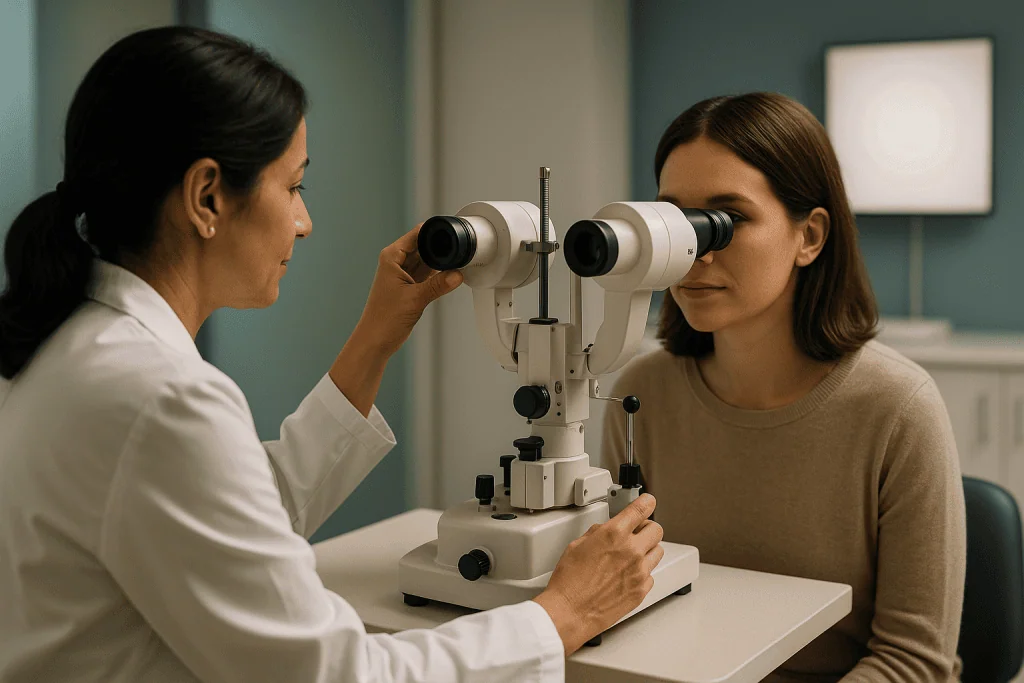
Diagnosis begins with a detailed history and a comprehensive eye examination. The ophthalmologist evaluates visual acuity in each eye separately, refractive error, eye alignment at near and at distance, eye movement in every direction of gaze, binocular function and the health of the eye structures. In children, age-appropriate methods are used so testing is reliable even before a child can read letters, matching games, picture charts and objective observation all have a place.
The core diagnostic elements include cover testing to reveal and characterise the deviation, prism measurement of its size, cycloplegic refraction using drops that relax the focusing system so the true prescription can be measured, assessment for amblyopia, and evaluation of how the eyes move together. The doctor also examines the retina and optic nerve to rule out structural causes of poor vision or abnormal eye position. When strabismus begins in adulthood, or when neurological signs are present, further testing may be arranged: blood work, orbital imaging, neuroimaging, or consultation with neurology, endocrinology or other specialties.
The decision to treat rests not only on the size of the eye turn but on its cause, frequency, stability, visual consequences and impact on daily life. A small but symptomatic deviation can matter a great deal, while a larger childhood deviation may call for a staged plan that addresses vision, focusing and alignment over time rather than a single intervention.
Conditions and Indications Strabismus Treatment Can Address
Strabismus treatment covers several distinct forms of eye misalignment. Each has different causes and different treatment priorities, which is why accurate classification sits at the centre of planning.
- Esotropia: one eye turns inward. It may be present in infancy, driven by focusing effort in farsighted children, or acquired later in life.
- Exotropia: one eye turns outward. It often appears intermittently, when looking into the distance, daydreaming or tired, and may become constant over time.
- Hypertropia and hypotropia: one eye sits higher or lower than the other. These vertical deviations may relate to nerve palsies, muscle imbalance, trauma or congenital patterns.
- Intermittent strabismus: the eyes are aligned part of the time but drift under certain conditions. Treatment depends on how well the deviation is controlled, the symptoms and any progression.
- Congenital or infantile strabismus: misalignment appearing in the first months of life, sometimes alongside other forms of congenital disease, which may need timely intervention to support visual development.
- Accommodative strabismus: crossing linked to focusing effort and farsightedness, usually treated first with glasses.
- Amblyopia associated with strabismus: reduced vision in one eye because the brain favours the better-aligned or stronger eye.
- Paralytic or restrictive strabismus: misalignment caused by nerve weakness, scarring, thyroid eye disease, trauma or mechanical restriction of eye movement.
- Recurrent or residual strabismus: misalignment that persists or returns after previous treatment, sometimes needing reassessment and further therapy.
- Adult strabismus with double vision: new or longstanding misalignment that interferes with comfort, mobility, reading, driving or work.
Some patients need treatment mainly to protect developing vision. Others need it because double vision compromises safety and function. Many have both functional and appearance-related concerns at once, and both are legitimate reasons to seek care. What is medically possible varies from case to case, and the degree of improvement that can reasonably be expected is not always the same as what a patient may hope for: an honest specialist will say so before treatment begins, not after.
How Strabismus Treatment Is Performed
Strabismus care follows a structured pathway: precise diagnosis first, then a plan matched to the type of misalignment. Not every patient needs surgery, and not every eye turn can be corrected with glasses alone. The process is designed to find the least invasive effective approach without delays that could harm vision or comfort.
Preparation and treatment planning
Planning starts with a comprehensive ophthalmic assessment. For children, the doctor typically uses dilating drops to measure the true prescription and examine the back of the eye. Parents are asked about pregnancy and birth history, developmental milestones, family history, when the eye turn first appeared, whether it is constant or intermittent, and whether it changes with fatigue or illness. Photographs and videos from home are genuinely useful, because some deviations fluctuate and may not show themselves fully during a single clinic visit.
For adults, the history covers the timing of onset, the presence of double vision, previous eye surgery, trauma, thyroid disease, diabetes, neurological conditions, medications, and whether symptoms are stable or changing. If the strabismus is new, worsening, painful or accompanied by other neurological signs, the ophthalmologist coordinates further evaluation before any alignment treatment proceeds.
Alignment is measured at distance and near, with and without glasses where relevant, and in different directions of gaze. If surgery is being considered, measurements are often repeated on separate visits to confirm they are stable, operating on a fluctuating deviation invites disappointment. The surgical plan identifies which muscles are overacting, underacting, tight, weak or positioned in a way that produces the deviation. In selected adults, and occasionally in older children, adjustable techniques may be planned so alignment can be refined shortly after the operation.
Non-surgical treatment options
Many patients begin, and some finish, with non-surgical care. Glasses are usually the first step when refractive error contributes to the eye turn; in accommodative esotropia, the correct prescription can substantially reduce or fully control the crossing in some children. If amblyopia is present, patching the stronger eye or using prescribed atropine drops encourages the weaker eye to develop better vision. Amblyopia therapy demands consistency and monitoring, because the regime is adjusted according to the child’s response, and it works best when families understand why each step matters.
Orthoptic exercises may be prescribed for specific coordination problems, most notably convergence insufficiency, where the eyes struggle to work together at near. These exercises are not a general remedy: they are unsuitable for most types of strabismus and should only follow specialist assessment. Prism lenses help some adults with stable, smaller deviations, and can serve as a temporary measure while a nerve palsy recovers. Injection treatment with botulinum toxin can temporarily weaken an overacting eye muscle, help rebalance alignment, or bridge the period while an evolving condition stabilises.
How do glasses work in the treatment of strabismus?
Glasses work by removing the focusing effort that drives certain types of eye crossing. Focusing and eye convergence are neurologically linked: when a significantly farsighted child strains to focus, the same reflex pulls the eyes inward. The correct glasses do the focusing work instead, the strain disappears, and in accommodative esotropia the crossing reduces or resolves while the glasses are worn. Glasses also help in a second, quieter way: by giving each eye a sharp image, they make it easier for the brain to use both eyes together, which supports binocular vision and amblyopia treatment. What glasses cannot do is mechanically straighten an eye whose deviation is unrelated to refractive error, which is why some children in perfectly correct glasses still need surgery, and why the two treatments are complements, not competitors.
Cross eye operation: what happens during eye muscle surgery
A cross eye operation, the everyday name for strabismus surgery, is performed on the muscles attached to the outside of the eyeball. Two reassurances are worth stating plainly: the eye is not removed from the socket, and the surgeon does not cut into the eye itself to change its focus. The operation adjusts the position or tension of specific muscles so the eyes align more appropriately. A typical procedure follows this sequence:
- Step 1: Anaesthesia: children receive general anaesthesia; adults may have general anaesthesia or local anaesthesia with sedation, depending on the case and the surgical plan.
- Step 2: Access: the surgeon makes a small opening in the conjunctiva, the thin membrane covering the white of the eye, to reach the muscle. There is no skin incision.
- Step 3: Adjustment: a muscle may be weakened by moving its attachment slightly backward, strengthened by shortening or advancing it, or repositioned to improve movement in specific directions.
- Step 4: Closure: the muscle is secured with fine sutures and the conjunctiva is closed. In selected adult cases, an adjustable suture allows the position to be fine-tuned after the operation while the patient is awake.
Surgery may involve one eye or both, and one muscle or several, depending on the pattern of the deviation. In complex cases, staging the correction across more than one procedure can be safer and more predictable than attempting everything at once. The operation itself usually takes well under a few hours, though duration varies with complexity, prior surgery, scarring and the number of muscles involved. Most patients go home the same day; children and complex cases may be monitored longer according to medical need.
Are there any new treatments for adult strabismus?
Yes, though the honest picture is one of refinement rather than revolution. Adjustable suture techniques let the surgeon fine-tune alignment after the operation, which is particularly useful in adults with complex, restrictive or re-operated deviations. Botulinum toxin injection has become an established option for temporarily rebalancing selected muscles, either as a treatment in its own right or as a diagnostic trial before surgery. Smaller conjunctival incision approaches and better preoperative measurement have made planning more precise. The most important development for many adults, however, is a change in thinking: the old belief that adult strabismus is “too late to treat” has been discarded. Adults can be evaluated and treated at any age, for functional symptoms, for appearance, or for both.
Technology used in evaluation and treatment
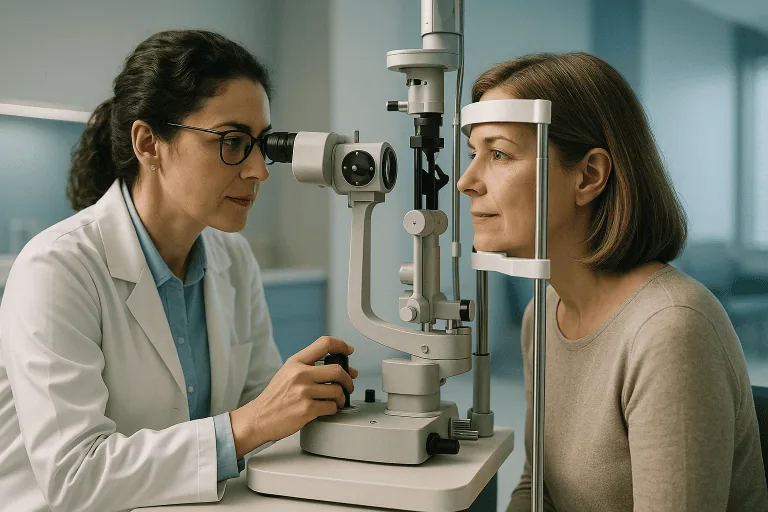
Modern strabismus care depends on precise measurement and careful visualisation. Diagnostic tools include digital visual acuity systems, objective refraction devices, slit-lamp and retinal examination equipment, prism-based alignment measurement, ocular motility assessment, and orbital or neurological imaging when the history points beyond the eye muscles themselves. These tools define the size and direction of the deviation, identify refractive errors, assess eye health, and distinguish ordinary muscle imbalance from conditions that need broader medical evaluation. In the operating theatre, magnification, fine microsurgical instruments, delicate suture materials and continuous anaesthesia monitoring allow accurate work on small muscles and the tissues around them. Technology supports clinical judgement here; it does not replace it.
After the procedure and early recovery
After strabismus surgery, redness, mild swelling, tearing, a scratchy or gritty sensation and light sensitivity are all common. The eye usually looks worse than it feels, and the redness can take several weeks to fade completely. Discomfort is generally manageable with the medications your surgeon recommends or prescribes. Antibiotic or anti-inflammatory drops or ointment are used as directed, and you will be given clear guidance on eye rubbing, bathing, swimming, school, work, screens and physical activity.
Some patients notice double vision immediately after surgery as the brain adapts to the new alignment. This is often temporary, but it should always be discussed with the care team rather than endured in silence. Follow-up visits matter because alignment continues to evolve as the muscles heal. In children, amblyopia therapy or glasses frequently continue after surgery: the operation aligns the eyes, but it does not correct refractive error or, on its own, reverse a developmental vision problem.
Recovery Timeline After Strabismus Treatment
Recovery depends on whether treatment is non-surgical or surgical, the complexity of the deviation, the patient’s age, and whether additional therapy such as patching or prisms continues afterwards. The pattern below describes a typical surgical recovery.
| Time Period | What Patients Can Expect |
|---|---|
| Day 1 | After surgery, the eye may be red, watery, scratchy and light-sensitive. Mild discomfort is common. Prescribed drops or ointment begin, and patients receive instructions about activity and eye care. |
| First week | Most patients gradually resume quiet daily activities. Children may return to school when comfortable and cleared by the doctor. Adults may return to work depending on symptoms, double vision and job demands. |
| First month | Redness and irritation continue to settle. Alignment is reassessed as swelling decreases and the muscles heal. Glasses, patching, prisms or exercises continue where they form part of the plan. |
| Longer term | Final alignment and visual adaptation are evaluated over follow-up visits. Some complex or longstanding cases need additional treatment, particularly if a residual or recurrent deviation remains. |
What is the recovery time for adult strabismus treatment?
Most adults resume desk-based work within days to a week or two of eye muscle surgery, once discomfort settles and any temporary double vision is manageable. Visible redness typically takes several weeks to clear, and the final alignment is judged over the following weeks to months as healing completes and the brain adapts to the new eye position. Jobs that involve driving, heavy physical work or dusty environments usually need a longer pause, agreed individually with the surgeon. Non-surgical treatments, prisms, injection therapy, exercises, carry little or no downtime, though injection effects evolve over days and are reviewed at follow-up. No two recoveries are identical, and your own timeline should come from your surgeon after examination, not from a general table.
Why Acting Early Matters
Timely evaluation matters because strabismus can interfere with a visual system that is still under construction. In children, the brain is actively learning to use both eyes together. If one eye is consistently misaligned, the brain suppresses it, and amblyopia can follow. The earlier amblyopia is detected and treated, the better the opportunity to improve visual development. Delay narrows the options: it may reduce the chance of achieving strong vision in the weaker eye or meaningful binocular function, even if the eyes are later straightened surgically.
Some childhood patterns are also simply easier to manage before they become established. Intermittent exotropia can progress from occasional drifting to more frequent loss of control. Accommodative esotropia often responds well to the correct glasses, but untreated crossing can feed amblyopia or erode binocular cooperation. Treatment remains possible later, that point deserves emphasis, but the goals and expected outcomes change as time passes.
In adults, early assessment matters for a different reason: new double vision can be the first sign of a nerve palsy, thyroid eye disease, a vascular problem, trauma-related injury, orbital disease or a neurological condition. Some of these improve with time; others need treatment of the underlying illness before the eyes can be addressed. Leaving new symptoms uninvestigated risks delaying the diagnosis of something medically important, and persistent double vision meanwhile affects driving, balance, reading, work and everyday safety.
Acting early does not automatically mean surgery. It means getting an accurate diagnosis and a clear plan. Sometimes the plan is watchful observation while a nerve palsy stabilises. Sometimes it is glasses, prisms or amblyopia therapy. Sometimes it is an operation. The purpose of early assessment is to replace uncertainty with a decision made on good information, particularly where a child’s visual development or an adult’s neurological health may be in play.
Benefits of Strabismus Treatment
What treatment can deliver depends on the type of strabismus, the patient’s age and the underlying cause, but the goals span both function and quality of life.
| Benefit | What It Means for You |
|---|---|
| Improved eye alignment | The eyes are positioned more symmetrically, which may improve appearance, social comfort and face-to-face communication. |
| Support for visual development in children | Early treatment can help reduce the risk of amblyopia and support the brain’s ability to use visual input from both eyes. |
| Reduced double vision in adults | When alignment is restored or supported with prisms, daily tasks such as reading, walking, driving and working may become more comfortable. |
| Better eye coordination | Some patients gain improved binocular cooperation, depth perception or control of intermittent drifting, depending on their condition. |
| Less eye strain and fatigue | Treatment may reduce the effort required to focus or hold alignment, especially during school, screen use, reading and detailed work. |
| A clearer long-term care plan | A structured diagnosis tells you whether you need glasses, exercises, amblyopia therapy, surgery, monitoring or evaluation for another condition. |
What Influences a Good Result?
Outcomes in strabismus treatment depend on several factors: the type of deviation, the age at treatment, the presence of amblyopia, the stability of the measurements, the underlying cause, any previous surgery, and how consistently non-surgical therapy is followed. A child with accommodative esotropia may do very well with the right glasses alone. A child with infantile esotropia is more likely to need surgery plus ongoing monitoring of binocular development. An adult with a stable small deviation may be well served by prism lenses, while another with restrictive disease needs coordinated medical and surgical planning.
A good result begins with the correct diagnosis. Misalignment caused by a refractive problem is managed quite differently from misalignment caused by a nerve palsy or a tight, scarred muscle. Treating the visible eye turn without understanding why it exists invites incomplete or unstable results: a risk that is highest in adult-onset strabismus, thyroid eye disease, trauma-related cases and patients who have already had eye surgery.
Timing matters most in children, because the visual system has sensitive developmental periods. If amblyopia is present, surgery alone will not restore vision in the weaker eye; patching, drops or other amblyopia therapy may need to come before or after the operation. Parents carry real responsibility here, helping children wear their glasses, complete patching schedules, attend follow-up visits and reporting changes in the eye turn. Treatment adherence at home is often the difference between a good plan and a good outcome.
In surgical cases, stable and repeatable preoperative measurements anchor the plan, and the surgeon may deliberately monitor a fluctuating deviation over time before operating. Prior surgery, scarring, unusual anatomy, neurological disease or restrictive conditions all add complexity. In such cases the goal may shift: improving the field of single vision, reducing an abnormal head posture, or achieving the best practical alignment rather than perfect movement in every direction of gaze. Realistic goals, agreed in advance, are part of good surgery.
Expectations shape satisfaction as much as millimetres do. Surgery can improve alignment, yet some patients still need glasses, prisms, amblyopia therapy or a further procedure afterwards. In longstanding adult strabismus, the brain may need time to adapt to the new eye position, and temporary postoperative double vision is a known part of that adaptation for some people. Follow-up is part of the treatment, not an afterthought: alignment can change with growth, healing, neurological recovery or progression of an underlying disease, so children may need monitoring as they grow, and adults with systemic conditions may need coordination with other specialists.
How successful is treatment for childhood strabismus?
Childhood strabismus generally responds well to timely, properly sequenced treatment, though “success” means different things in different cases. In accommodative esotropia, the right glasses can control the crossing for as long as they are worn. In amblyopia, earlier therapy gives the weaker eye a better chance of developing useful vision. In surgical cases, most children achieve substantially improved alignment, though some need more than one operation over the years, particularly with infantile-onset or intermittent deviations, and that possibility is discussed honestly at the outset. The strongest predictor of a good long-term result is not any single procedure but the combination of early diagnosis, consistent amblyopia treatment and reliable follow-up through the growing years. What no responsible clinician will promise is a single fix that ends the story on the day of surgery.
Are there effective treatments for adult strabismus?
Yes. The persistent myth that adult strabismus cannot be treated is wrong, and it keeps people living with double vision and misaligned eyes unnecessarily. Adults have the full range of options: prism lenses for stable, smaller deviations; botulinum toxin injection for selected muscle imbalances; and eye muscle surgery, including adjustable suture techniques, for larger or more complex deviations. Adults who have carried a misalignment since childhood can be treated decades later, for function, for appearance, or for both, and improvement in eye contact and social confidence is a recognised, legitimate goal of care. Where the strabismus stems from an active condition such as thyroid eye disease, treating and stabilising the underlying illness comes first, then alignment is corrected on stable ground.
What Are the Costs Associated with Strabismus Treatment?
The cost of strabismus treatment varies widely because the treatment itself varies widely. A child managed with glasses and a patching programme generates very different costs from an adult undergoing eye muscle surgery under general anaesthesia. For surgical care, the main cost drivers are the number of muscles operated on, whether one or both eyes are treated, the type of anaesthesia, whether adjustable techniques are used, the complexity added by previous surgery or restrictive disease, and whether the correction is planned as a single operation or staged procedures. Around the surgery itself sit the costs of diagnostic work-up, measurements, refraction, imaging where needed, plus medications, follow-up visits and any continuing optical treatment such as glasses or prisms. Because the plan is built individually after examination, a meaningful cost estimate can only follow an individual assessment; a figure quoted before anyone has measured your deviation is a guess, not a quote.
Moving Forward with a Clear Plan
Strabismus is distressing in different ways at different ages, for the parent watching a toddler’s eye drift, for the adult suddenly seeing double, for anyone whose eye contact has become a source of self-consciousness. The genuinely encouraging fact is that most forms of eye misalignment can be treated or meaningfully improved once they are accurately diagnosed. Sometimes the answer is as simple as the right glasses and scheduled monitoring. Sometimes it is amblyopia therapy, prisms, exercises or injections. Sometimes it is carefully planned eye muscle surgery, occasionally in stages. What every good outcome has in common is the same starting point: a precise diagnosis, honest goals agreed before treatment begins, and follow-up that continues until the result is stable. Understanding your own diagnosis, what type of strabismus you have, why it exists, and what each treatment can and cannot achieve, is the first real step toward protecting vision and choosing the path that fits your circumstances.
Preparation
- A detailed ophthalmologic examination assesses eye alignment, vision, refraction, and eye movement. Patients may need to stop certain blood-thinning medicines before surgery if advised by the doctor. Fasting is usually required before procedures performed under general anesthesia.
Aftercare
- Mild redness, irritation, or double vision can occur temporarily after surgery. Eye drops or ointments are used as prescribed, and rubbing the eyes should be avoided. Follow-up visits check healing and eye alignment, and glasses or additional therapy may still be needed.
Frequently Asked Questions
What affects the cost of strabismus treatment?
The final cost depends on the diagnosis, whether treatment is non-surgical or surgical, the need for eye measurements and additional tests, anaesthesia requirements, hospital services, surgeon expertise, and follow-up planning. Travel, accommodation, and interpreter support may also affect the total budget for international patients.
How can I get a personalised quote for strabismus treatment in Turkey?
You can request a free consultation by sharing recent eye examination records, photographs if available, previous prescriptions, and details of symptoms such as double vision. A specialist review is needed to recommend suitable options and prepare a personalised quotation.
Is surgery always required for strabismus?
No. Some patients may benefit from glasses, prisms, amblyopia therapy, exercises, or injections. Surgery is considered when these options are not suitable or when eye muscle adjustment is needed. The decision is made by a strabismus specialist after examination.
What is usually included in an international patient package?
Packages may include specialist consultation, diagnostic eye measurements, selected tests, procedure-related hospital services, care coordination, and interpreter support. Inclusions vary, so patients should ask which consultations, follow-up visits, medications, and travel-related services are covered.
Will I need follow-up after treatment?
Yes. Follow-up is important to assess eye alignment, vision, healing, and the need for glasses, exercises, or further treatment. International patients should discuss which follow-up visits are required in Turkey and which checks can be done after returning home.
Medically reviewed by the Acıbadem International Medical Board September 13, 2026
See our medical review board →
Update history
- PublishedJune 8, 2026
- Medical review approvedSeptember 13, 2026
- Last content updateSeptember 12, 2026
References1
- Strabismus (Crossed Eyes) my.clevelandclinic.org
Trusted care for international patients
From the Acibadem Blog

Questions to Ask Before Strabismus Surgery: Glasses First, Injections and What Surgery Adds
Before agreeing to strabismus surgery, ask why non-surgical steps such as glasses, patching, prisms or botulinum toxin injections are or are not enough for…
What a Squint (Strabismus) Is, and How It Is Treated
A squint, called strabismus in the US, is a condition in which the two eyes do not point in the same direction: one looks…
Strabismus Surgery Recovery: Red Eyes, Temporary Double Vision and Returning to School or Work
Strabismus surgery recovery is usually measured in days for comfort and weeks for appearance. Most people go home the same day; the operated eye…