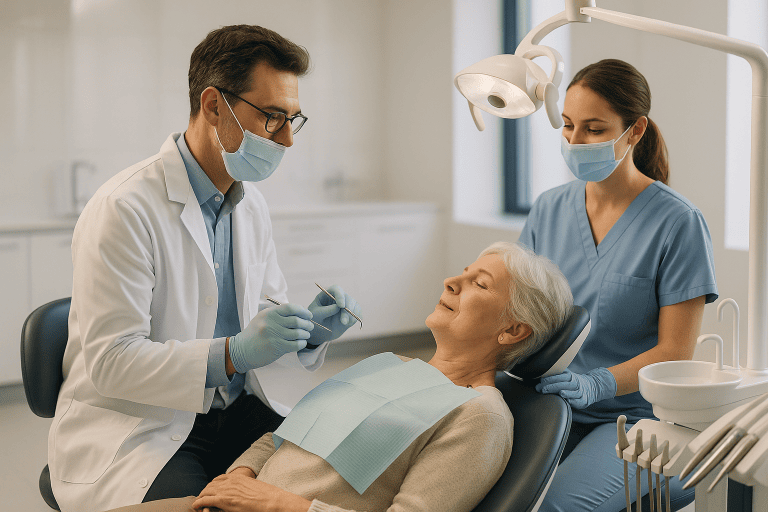
Teeth Veneers
Teeth veneers are thin porcelain or composite shells bonded to the front of teeth to improve color, shape, size, and alignment. They are part of aesthetic smile design.
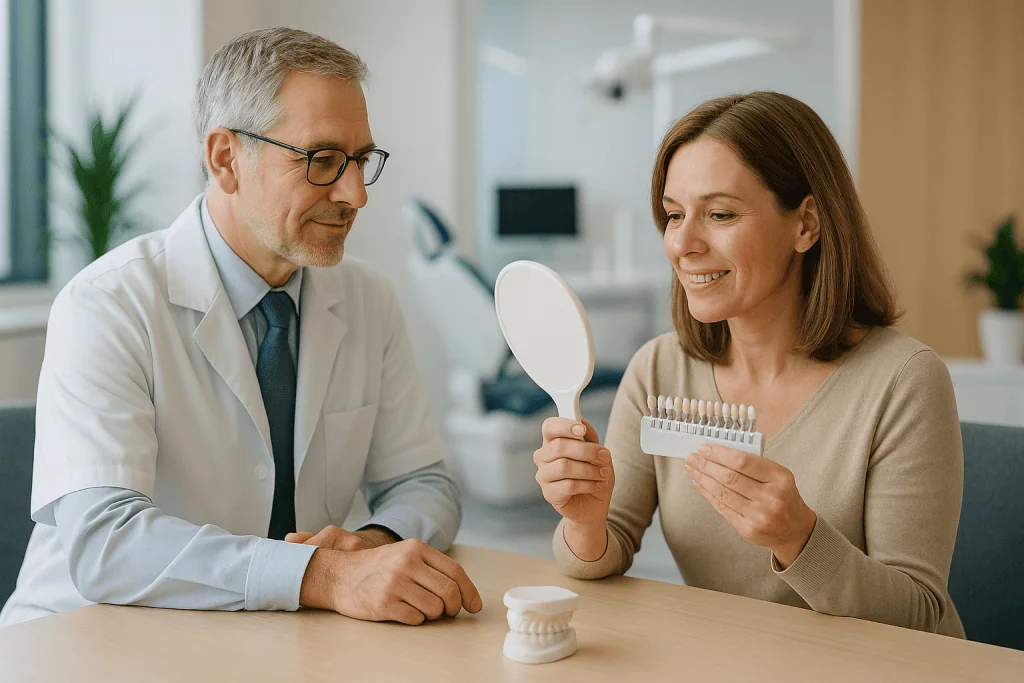
Quick answer
Teeth veneers are thin, custom-made shells bonded to the front surfaces of teeth to improve colour, shape, size and minor alignment. Porcelain veneers are made in a laboratory and bonded over at least two visits; composite veneers are sculpted directly onto the tooth. Treatment involves examination, smile planning, conservative tooth preparation and precise adhesive bonding, and suits adults with healthy teeth and gums.
Teeth Veneers: What This Treatment Is and Who It Helps
Teeth veneers are thin, custom-made shells bonded to the visible front surfaces of teeth to improve their colour, shape, size and symmetry. They are used to correct staining that whitening cannot fix, chipped or worn edges, small gaps between front teeth, and minor irregularities in shape or alignment. Veneers suit adults with healthy teeth and gums who want a lasting cosmetic change without covering the whole tooth. Many international patients now travel to Turkey for veneers, which makes it even more important to understand exactly what the treatment involves before you commit to a plan or a travel date.
The decision to have veneers is rarely just about wanting a brighter smile. Most patients arrive at it after years of feeling self-conscious about staining, small gaps, worn edges or teeth that never look balanced in photographs. If you are researching treatment abroad, the decision carries extra weight: you are weighing clinical quality, travel logistics and long-term maintenance at the same time. This page walks through all of it, including the parts that promotional pages tend to skip.
One point deserves stating early. Veneers are not simply covers for teeth. A well-designed veneer treatment considers how your teeth fit together, the proportions of your face, your lip line, your gum contours, your speech and how your smile looks in motion. The aim is a natural, balanced result that functions well when you chew and speak, not a uniform white template applied to every patient regardless of face or age.
It is normal to have questions. Will the veneers look natural? Do the teeth need to be shaved down? How long will the result last? What happens if a veneer chips years from now? A careful consultation should answer all of these honestly, including the limitations of the treatment and any dental problems that need fixing first. Veneers can produce a refined cosmetic change, but their success depends on diagnosis, planning, material selection, precise bonding and the way you care for them afterwards. At Acibadem, veneer treatment is approached as a personalised dental and aesthetic procedure that may involve aesthetic dentists, prosthodontic expertise and periodontal evaluation when gum health or gum-line aesthetics are involved, coordinated within the wider Dental & Oral Health unit.
What Are Teeth Veneers?
Teeth veneers are thin shells, individually made for each tooth, that bond to the front surface of the tooth and change what you see when you smile. They alter tooth colour, shape, length, width and surface texture, and they can visually improve minor alignment issues. Veneers are most commonly placed on the upper front teeth, because these dominate the smile, although they may also be used on lower teeth or additional visible teeth depending on how much of your dentition shows when you talk and laugh.
Because a veneer covers only the front of the tooth, it usually preserves more natural tooth structure than a crown, which wraps around the whole tooth. That conservatism is the main appeal of veneers for teeth that are fundamentally healthy but cosmetically compromised. It is also their main limitation: a veneer relies on a strong, largely intact tooth underneath it, so it cannot rescue a tooth that is structurally weak or heavily filled.
What are veneers made of?
Dental veneers are made from two main families of material: ceramic, usually called porcelain, and composite resin. The material determines how the veneer is made, how it handles light, how it resists staining, how it wears over time and how it is repaired if something goes wrong. Choosing between them is one of the central decisions in your treatment plan, and a responsible dentist will explain the trade-offs for your specific teeth rather than default to one option.
Porcelain veneers
Porcelain veneers are crafted outside the mouth, in a dental laboratory or through digital design and milling workflows, and then bonded to the prepared teeth. Porcelain is valued for its translucency, colour stability and resistance to staining: it reflects and transmits light in a way that closely resembles natural enamel, which is why well-made porcelain veneers are difficult to spot even at close range. Very thin ceramic versions, often called laminate veneers, allow minimal tooth preparation in suitable cases. If you are leaning towards ceramic, the dedicated porcelain veneers page covers the material and workflow in more depth.
Composite veneers
Composite veneers are made from tooth-coloured resin that is either applied directly to the tooth in the dental chair and sculpted by hand, or fabricated indirectly and then bonded. Composite treatment can often be completed faster and may require less tooth preparation, and it is easier to repair chair-side if a chip occurs. The trade-off is that composite is more prone to staining, surface wear and loss of polish over time compared with porcelain, so it generally needs more maintenance and earlier renewal. A practical comparison of the two approaches, including who each one suits, is set out in Porcelain vs Composite Veneers in Turkey: Which Should You Choose?
Whichever material is chosen, veneers remain a dental treatment, not a cosmetic accessory. The tooth surface must be suitable for bonding, the gums must be healthy, and the bite must allow the veneers to withstand normal chewing forces. In some cases, whitening, orthodontic treatment, gum contouring, replacement of old restorations or management of grinding is recommended before veneers. This is why a thorough assessment always comes before a final plan. It is also worth knowing that veneers can be designed to look very natural: subtle differences in shade, translucency, edge shape and surface texture make the teeth reflect light like real enamel. For some patients, the goal is a brighter, more uniform smile. For others, the best result is a discreet improvement that looks like their own teeth at their healthiest.
Who Is a Good Candidate for Veneers?
Veneers may be appropriate for adults who are unhappy with the visible appearance of their teeth and whose oral health can support cosmetic restorative treatment. Patients typically seek veneers because their teeth are stained, chipped, worn, uneven, slightly spaced or different in size. Veneers may also help when previous cosmetic bonding has discoloured, or when teeth do not respond well enough to whitening. Common triggers include deep discolouration from old dental trauma, medication-related staining, enamel defects, minor cracks, small gaps, shortened teeth from years of wear, naturally narrow lateral incisors and irregular tooth contours changed by clenching or grinding.
Assessment starts with a detailed examination. Your dentist evaluates the teeth, gums, existing fillings or crowns, bite relationship, jaw function and signs of clenching or grinding. Dental photographs are taken to assess smile proportions, tooth display, the midline, gum symmetry and how the smile relates to your lips and face. Digital scans or impressions create models of your teeth. X-rays check tooth roots, bone support, old restorations, cavities and hidden disease. None of this is bureaucracy; each finding can change the plan, the material or the number of teeth treated.
A good candidate generally has healthy gums, teeth free of active decay, enough enamel for reliable bonding, and realistic expectations. Patients who grind or clench may still be candidates, but the plan must address that risk, usually through material choice, careful bite design and a protective night guard worn after treatment. If gum disease, cavities, bite instability or severe enamel erosion is present, those problems are treated first. Placing veneers over untreated disease shortens the life of the result and invites discomfort and complications later.
Can veneers cover severely crooked teeth?
No, veneers cannot properly disguise severely crooked, crowded or rotated teeth, and attempting it usually means grinding away large amounts of healthy tooth. Veneers can visually improve mild irregularities: a slightly rotated tooth, a small step between neighbours, minor unevenness in edge position. When misalignment is significant, orthodontic treatment, braces or clear aligners, is the honest recommendation, sometimes followed by veneers afterwards for colour and shape. A dentist who proposes veneers as a shortcut around genuine orthodontic need is proposing a compromise you will live with for decades. Who is and is not suitable is explained in more detail in Porcelain Veneers in Turkey: Who Is Suitable and How Many Visits Are Needed?
What if a tooth is too damaged for a veneer?
A veneer is not the right restoration for a tooth that is structurally weak, heavily filled or missing substantial enamel. Veneers bond most predictably to enamel; when a tooth has lost too much of it, the bond becomes less reliable and the veneer offers too little protection. In that situation, a full-coverage restoration such as a dental crown is usually the more durable choice. A mixed plan is common: crowns on compromised teeth, veneers on healthy neighbours, all matched in shade and shape so the smile reads as one.
Cosmetic Problems Veneers Can Address
Veneers are most often used for cosmetic enhancement, but they can also restore the visible surface of teeth affected by wear or enamel irregularities. The indications range from a subtle correction of one or two teeth to a comprehensive smile design involving multiple teeth in the aesthetic zone.
- Discoloured teeth: veneers cover stains that do not improve adequately with whitening, including internal discolouration and old trauma-related darkening.
- Chipped or worn edges: veneers rebuild the visible shape of teeth with minor chips, uneven edges or worn tips.
- Small gaps: veneers can close limited spaces between front teeth when the bite and tooth proportions allow it.
- Uneven tooth size or shape: veneers create better harmony when teeth are naturally narrow, short, pointed or asymmetrical.
- Mild alignment concerns: veneers may visually improve slight crowding or rotation, though orthodontics remains the right tool for larger alignment problems.
- Enamel defects: surface defects, developmental irregularities and texture problems can be masked with veneers.
- Old cosmetic bonding: veneers can replace ageing composite bonding that has stained, chipped or lost its original finish.
Veneers are not appropriate for every cosmetic concern. Active gum disease, untreated cavities, insufficient enamel, severe tooth wear, uncontrolled bruxism or unrealistic expectations may all point towards another approach. Often a combination works best: whitening the natural teeth before selecting a veneer shade, aligning the teeth with clear aligners first, or reshaping gum contours so the new smile sits in a balanced frame.
How Teeth Veneer Treatment Is Performed
Consultation and smile analysis
The process begins with a conversation about your goals, not your teeth. You will be asked what you like and dislike about your current smile, whether you want a very natural result or a noticeably brighter one, and whether there are features you want to keep. This matters because an attractive veneer result is highly personal: a smile that suits one person can look wrong on another face, age or profession. The dentist then evaluates facial proportions, tooth display at rest and while smiling, gum levels, tooth colour and the relationship between upper and lower teeth. Digital photography and intraoral scanning document the starting point. In many cases a digital smile design or diagnostic wax-up previews the proposed changes in tooth length, width, shape and alignment, letting you see and discuss the design before any irreversible preparation happens.
Preparation before veneers
Before any veneer is placed, the mouth must be healthy. Cavities, leaking fillings, gum inflammation and infections are treated first. A professional cleaning is often recommended to settle the gums and improve the accuracy of shade selection. If whitening is part of the plan, it is completed before the veneers are made, because veneer colour cannot be whitened after bonding: the final shade is chosen to harmonise with the surrounding natural teeth as they will look long term.
Is teeth shaving necessary for traditional veneers?
Yes, traditional porcelain veneers usually require removing a thin layer of enamel from the front of the tooth, so the finished veneer sits flush and does not look or feel bulky. This preparation is conservative and planned in fractions of a millimetre, but it is permanent: a tooth prepared for a veneer will always need a veneer or another restoration on it. Some patients are suitable for minimal-preparation or no-preparation veneers, where very thin ceramic is bonded with little or no enamel removal. Whether that is realistic for you depends on your tooth position, enamel thickness and the change you want. Be cautious of any plan that promises no shaving before anyone has examined your teeth, and equally cautious of aggressive preparation that reduces teeth to small pegs: that is crown preparation, not veneer preparation, and it sacrifices healthy tooth structure unnecessarily.
Tooth preparation and impressions
On the preparation visit, the dentist reshapes the enamel according to the plan, using local anaesthesia to keep the appointment comfortable. The amount removed is decided tooth by tooth, with the aim of preserving as much healthy structure as possible. A digital scan or conventional impression then records the prepared teeth precisely. If final veneers will take days to produce, temporary veneers are usually placed to protect the teeth, keep you comfortable and give you a wearable preview of the planned shape and length. Temporaries are also a design tool: if something about them bothers you, too long, too square, too prominent, say so, because the final veneers can still be adjusted at this stage.
How porcelain veneers are made
Each porcelain veneer is designed to match the treatment plan and your individual smile. Modern dental ceramics can be layered by hand or milled digitally depending on the material and the clinical need. The dentist and technician consider how light will pass through the restoration, how the edges will look against the gum, how much opacity is needed to mask underlying discolouration, and what surface texture will make the veneer read as a real tooth in daylight, office lighting and photographs. Before bonding, every veneer is tried in: margins, contact points, colour, shape and how the set sits against your lips and opposing teeth are all checked, and small adjustments are made. You should be involved in approving the appearance at this stage, especially when several front teeth are being treated at once.
Bonding the veneer
Bonding is the step where each veneer becomes part of the tooth, and it is one of the most important determinants of how long the result lasts. The tooth surface and the inner surface of the veneer are chemically treated to create a strong adhesive connection. The veneer is seated with resin cement, positioned precisely, and the cement is hardened with a curing light. Excess material is removed, the margins are polished smooth, and the bite is checked carefully for high spots or contacts that would overload the ceramic during chewing or jaw movement. For composite veneers the sequence differs: direct composite is sculpted onto the tooth in layers, hardened, shaped and polished in the same appointment, while indirect composite is fabricated outside the mouth and bonded much like porcelain.
Technology used in planning and placement
Technology supports precision and communication at every stage. Digital photography helps analyse the smile and transmit detail to the laboratory. Intraoral scanners can produce accurate digital models without conventional impression trays in many cases. Digital smile design software shows how changes in tooth length, width and shape affect the overall appearance before anything is done. Radiographs or three-dimensional imaging are used when there are questions about roots, bone, old restorations or gum surgery. Computer-aided design and manufacturing can produce restorations with highly consistent fit. But none of this replaces clinical judgement: the final result depends on diagnosis, material selection, artistry, bonding technique and careful adjustment of the bite. Good technology in inexperienced hands still produces poor veneers.
How long does treatment take?
Porcelain veneers usually require at least two main clinical appointments, one for preparation and impressions or scanning, one for try-in and bonding, plus consultation and any preliminary care. Composite veneers may sometimes be completed in a single appointment or a short series of visits. The total timeline depends on the number of teeth, the type of veneer, the need for whitening, gum treatment or fillings first, and the laboratory workflow. Rushing cosmetic dentistry increases the risk of compromises in fit, shade or comfort, so a responsible schedule builds in time for design approval and final adjustment rather than compressing everything into the shortest possible window.
Recovery After Veneers
Recovery is usually straightforward. Some patients experience temporary sensitivity to cold or mild gum tenderness, particularly if enamel was prepared or the gum line was contoured; this typically settles as the teeth and gums adapt. While wearing temporary veneers, and in the first days after final bonding, you may be advised to avoid very hard or sticky foods. Once the final veneers are bonded, most people return to normal daily activities quickly. Eating and speaking can feel slightly different at first as your tongue and lips learn the new contours: this is normal and short-lived. A follow-up visit lets the dentist check the bite, polish any rough areas and confirm the gums are responding well.
| Time period | What to expect |
|---|---|
| Day 1 | Mild sensitivity, gum tenderness or awareness of the new tooth shape. Extra care with chewing if temporary veneers are in place. |
| First week | Speech, biting and lip movement start to feel natural. Temporary sensitivity usually improves. A bite adjustment may be performed if needed. |
| First month | Gums adapt to the veneer margins. Eating and smiling feel routine. Oral hygiene should be consistent and gentle around the new margins. |
| Longer term | Regular check-ups, professional cleanings and a night guard when recommended protect the veneers and the surrounding teeth. |
Long-term care is unglamorous and decisive. Brush twice daily, floss along the veneer margins, attend regular hygiene appointments, and wear a night guard if one has been recommended. Avoid biting pens, tearing packaging with your teeth and chewing ice. Veneers are strong, but they are not indestructible: they can chip, debond or need replacement over time, particularly when placed under excessive stress.
How Long Do Veneers Last?
How long veneers last depends far more on the material, the quality of the bonding, your bite and your daily habits than on where the veneers were made. Porcelain generally holds its colour and surface longer than composite, which stains and wears faster and typically needs earlier maintenance or renewal. A well-bonded veneer on sound enamel, protected from grinding and cleaned properly, can serve for many years; the same veneer on a clenching patient with no night guard will fail sooner. When a veneer eventually chips or debonds, it can often be rebonded or replaced individually without redoing the whole set.
Patients researching treatment abroad often ask how long veneers made in Turkey last. The honest answer is that the country does not determine longevity: the diagnosis, the material, the laboratory quality, the bonding protocol and your aftercare do. Reputable clinics in Turkey use the same ceramic systems and adhesive materials used elsewhere in the world. What varies between providers, in any country, is case selection and craftsmanship, which is why the questions in the planning sections above matter more than the destination.
Veneers Cost: What Determines Prices for Dental Veneers
Veneers cost varies widely from patient to patient, because the price reflects a set of individual clinical decisions rather than a fixed product. There is no single honest number that applies to everyone, and this page deliberately quotes none. What you can do is understand the drivers, so that any quotation you receive can be read intelligently.
How much do teeth veneers cost?
The cost of teeth veneers depends chiefly on how many teeth are treated, which material is used, and how much preliminary dentistry your mouth needs first. Prices for dental veneers are shaped by the following factors:
- Number of teeth: a single veneer to match one discoloured tooth is a different undertaking from a full aesthetic-zone smile design across many teeth.
- Material: porcelain generally costs more than composite because of laboratory work and material properties, but it also behaves differently over time.
- Laboratory and workflow: hand-layered ceramics, digital design and experienced technicians all influence the fee, and the result.
- Preliminary treatment: fillings, gum treatment, whitening, orthodontics or crowns needed before veneers add to the overall plan.
- Clinician experience and planning depth: diagnostic wax-ups, smile design and try-in stages take time that is reflected in pricing.
- Aftercare provisions: night guards, follow-up visits and documentation may or may not be included in a quoted figure.
When you compare quotations, compare like with like: confirm what material is specified, how many teeth are included, whether preliminary treatment is covered, and what happens if an adjustment is needed after bonding. A low headline figure that excludes essentials is not a low price. For a fuller breakdown of how veneer pricing is structured for international patients, see How Much Do Veneers Cost in Turkey?
Teeth Veneers in Turkey: Planning as an International Patient
Turkey has become one of the most searched destinations for cosmetic dentistry, and veneers are among the most requested treatments. If you are considering travelling for treatment, the planning matters as much as the dentistry, because your time in the country is finite and the veneers will live in your mouth long after you fly home.
Is it a good idea to go to Turkey for dental veneers?
It can be, provided you choose a provider on clinical grounds and plan realistically. The material science, digital workflows and laboratory techniques used in well-run Turkish clinics are the same as those used internationally. What separates a good outcome from a regrettable one is the same everywhere: honest case selection, conservative preparation, quality laboratory work and proper follow-up. The cautionary stories behind the phrase “Turkey teeth” almost always involve aggressive over-preparation, healthy teeth ground down for full crowns when minimal veneers or no treatment was appropriate, compressed into schedules too short for careful work. That is a provider problem, not a geography problem, and the protection against it is asking hard questions: how much enamel will be removed, whether crowns or veneers are actually planned, who makes the restorations, and what happens if adjustment is needed after you return home.
What does a typical care pathway cover?
A typical pathway for an international patient starts with a remote review of dental photographs, X-rays and treatment history, which allows the dental team to form an initial impression and estimate the number of visits required. The definitive plan is only confirmed after an in-person examination, because enamel thickness, gum health and bite forces must be assessed directly: a plan finalised entirely from photographs should be treated with suspicion. The in-country stage then follows the clinical sequence described above: examination and records, design, any preliminary treatment, preparation, laboratory fabrication, try-in and bonding. Porcelain veneers generally need enough days in the country for the laboratory stage and a proper try-in, and some plans are deliberately split across two trips when preliminary work such as gum treatment or whitening needs time to settle.
Travel and follow-up practicalities
Build slack into your travel window. If a veneer needs a shade correction or a bite refinement at try-in, you want the schedule to absorb it without pressure to bond a compromise. Before you fly home, you should leave with documentation: which teeth were treated, what materials and shades were used, and whether a night guard was made. This record is genuinely useful for your dentist at home, who will handle your routine cleanings and can monitor the veneer margins at check-ups. Agree in advance how remote follow-up works and how any future repair would be handled. The full journey, from first records to long-term maintenance, is described step by step in the suitability and visits guide linked earlier on this page.
Why Acting Early Matters
If you are considering veneers, early evaluation helps identify the most conservative and durable path. Many cosmetic concerns become more complicated when the underlying dental issues are left alone. Small chips enlarge. Minor wear progresses. Gum inflammation worsens. Old fillings weaken the visible tooth structure. Treating these problems before they advance preserves more natural tooth and keeps more options open.
Delay also affects the eventual aesthetic result. Untreated grinding keeps shortening teeth and places future veneers at higher risk. Gum disease can change the gum line and create recession that is harder to mask cosmetically. Cavities and cracks can progress until a veneer is no longer sufficient and a crown, root canal treatment or even extraction becomes necessary: a far bigger intervention than the one you originally researched.
Early consultation does not commit you to veneers. It gives you information: whether whitening, orthodontics, bonding, gum treatment or veneers is genuinely the right tool for your teeth, and what condition your mouth is in before you make travel plans. For anyone weighing treatment abroad, that knowledge reduces surprises and supports a realistic timeline.
Benefits of Teeth Veneers
When planned and maintained properly, veneers offer several aesthetic and functional advantages for suitable patients.
| Benefit | What it means for you |
|---|---|
| Improved tooth colour | Veneers cover discolouration that does not respond well to whitening and create a brighter, more consistent smile shade. |
| Enhanced shape and proportion | Teeth that appear short, narrow, chipped or uneven can be redesigned to match your facial features and smile line. |
| Natural-looking aesthetics | Porcelain and carefully polished composite can be designed with translucency, texture and contour that resemble natural enamel. |
| Conservative treatment in selected cases | Compared with full crowns, veneers may preserve more natural tooth structure when the teeth are healthy and suitable for bonding. |
| Stain resistance with porcelain | Porcelain is less prone to staining than natural enamel or composite resin, though good hygiene and regular care remain essential. |
| Personalised smile design | The treatment is planned around your lip movement, gum display, facial proportions and preferences, not a standard template. |
What Influences a Good Veneer Result?
A good veneer result depends on a combination of clinical, technical and personal factors, and it is worth understanding them before you commit anywhere. The most important is case selection. Veneers perform best when the underlying teeth are strong, the gums are healthy and the bite is stable. If a tooth is severely damaged or heavily restored, a veneer will not protect it. If the gums are inflamed, the veneer margins cannot be placed accurately and the appearance will shift as the swelling resolves.
The amount and quality of enamel matter just as much. Veneers bond most predictably to enamel; when erosion, old restorations or aggressive prior dentistry has removed too much of it, the plan must change. The goal is always a restoration that is both beautiful and appropriate for the tooth’s long-term health, never beauty purchased at the tooth’s expense.
Bite forces are the third major factor. Clenching and grinding put high stress on ceramic edges. This does not automatically exclude you from treatment, but it should influence material choice, veneer design, preparation and the decision to make a protective night guard. Veneer edges must be positioned so they do not take excessive force during chewing or jaw movement: a detail invisible in photographs and decisive over years.
Material selection shapes both appearance and durability. Porcelain is usually preferred when colour stability and a highly refined finish matter most. Composite may suit smaller corrections, younger patients, repair situations or cases where a less involved approach is sensible. Each material has genuine limitations, and a trustworthy consultation explains them plainly rather than selling one answer.
The skill of the dentist and the quality of the laboratory are central. Veneers demand precision at a small scale: margins must be smooth, contact points must allow flossing, the bite must be balanced, and the shapes must look natural from multiple angles and distances, on your face, not on a model. Finally, your own habits carry real weight after treatment. Brushing twice daily, flossing, keeping check-up appointments, wearing a night guard when advised and avoiding hard-biting habits all protect the result. Expectations should stay realistic too: veneers can transform the visible smile, but they cannot change everything about the mouth or face. The most satisfying outcomes happen when patient and dentist agree on a natural-looking goal, understand the limitations, and decide on the basis of both aesthetics and oral health.
Veneer Treatment at Acibadem
Veneer care at Acibadem is built around the individual patient rather than a standard smile package. The dental team assesses oral health, facial features, tooth proportions, gum condition, bite function and your preferred level of brightness or naturalness before proposing a design. When gum aesthetics, orthodontic considerations, implant history, jaw problems or wider restorative needs are involved, additional specialists within the dental and oral health team contribute to the plan, so that cosmetic decisions never come at the cost of long-term dental health.
Not every patient who asks about veneers leaves with a veneer plan. Some are better served by whitening and bonding, orthodontic alignment before any ceramics, gum contouring, or a combination of restorative options. A responsible consultation explains the alternatives, risks, expected maintenance and realistic timeline in clear terms, including, where relevant, the recommendation to do less. Diagnostic and planning work is supported by digital photography, intraoral scanning, digital smile design, radiographic imaging and computer-assisted restoration design, paired with the clinical judgement that gives those tools meaning. For patients travelling from abroad, appointment sequencing is planned around a defined travel window, with documentation of the materials used, the teeth treated and any protective devices recommended, so that ongoing maintenance can continue smoothly with a dentist at home.
Making a Confident Decision
Veneers can be an excellent way to improve the colour, shape and balance of your smile, when they are chosen for the right reasons, on suitable teeth, and planned with care. The best results begin with a complete understanding of your teeth, gums, bite and personal goals, and with a plan that names its limitations as clearly as its promises. A beautiful smile should feel natural, function comfortably and support your oral health for years. Take the time to understand the material options, the preparation involved, the maintenance required and the realistic timeline for travel before you commit. The decision to proceed belongs after a professional examination, a clear treatment plan and an honest discussion of benefits, limitations and alternatives, never before.
Preparation
- Your dentist evaluates oral health, bite, tooth color, and smile goals before planning veneers. X-rays or digital scans may be taken, and any gum disease or tooth decay should be treated first. A small amount of enamel may be prepared depending on the veneer type.
Aftercare
- Mild tooth sensitivity or gum tenderness can occur for a few days after veneer placement. Avoid very hard foods, biting nails, and using teeth as tools to protect the veneers. Maintain regular brushing, flossing, and dental check-ups for long-term results.
Frequently Asked Questions
What affects the cost of teeth veneers?
The final cost depends on the material used, the number of teeth treated, the complexity of smile design, laboratory work, dentist experience, diagnostic imaging, temporary restorations, and whether additional treatments such as whitening, gum care, or bite adjustment are needed.
How can I get a personalised veneer quote from Acibadem?
You can request a free consultation by sharing smile photos, dental records if available, and your aesthetic goals. A dental specialist reviews your case and the international patient team can explain the proposed plan, inclusions, timing, and travel related arrangements.
Are porcelain veneers more expensive than composite veneers?
Porcelain veneers generally involve custom laboratory fabrication and detailed bonding procedures, which can make them a higher investment than composite options. The best choice depends on your teeth, expectations, bite, and the specialist’s assessment.
What is usually included in a veneer treatment package?
A package may include consultation, dental imaging, smile design planning, shade selection, tooth preparation when required, temporary restorations when appropriate, final bonding, and coordination support. Inclusions vary, so they should be confirmed in the written treatment plan.
Can travel costs change the overall budget?
Yes. Flights, accommodation, transfers, translation support, time away from work, and possible follow up visits can affect the total patient budget. International patient coordinators can help clarify which services are included and which are arranged separately.
Is this information medical or financial advice?
No. This is general educational information only. A personalised clinical evaluation and written quote are needed to understand your suitability, treatment options, package details, and expected costs.
Medically reviewed by the Acıbadem International Medical Board August 30, 2026
See our medical review board →
Update history
- PublishedJune 8, 2026
- Medical review approvedAugust 30, 2026
- Last content updateAugust 30, 2026
Planning tools for this treatment
Indicative figures for orientation only: your written plan and quote follow a free medical review.
Trusted care for international patients
Veneer costsledger-based guide ranges, or browse the full Turkey Medical Price Index.
From the Acibadem Blog
Are Veneers Bad for Your Teeth? What Preparation Really Involves
Veneers are not inherently bad for teeth, but traditional porcelain veneers require permanently removing a thin layer of enamel, often around half a millimeter,…
How Teeth Veneers Are Placed: Smile Planning, Enamel Preparation, Temporaries and Bonding
A teeth veneers procedure usually runs across two or three visits. The dentist first examines the teeth and gums, plans the new shape and…
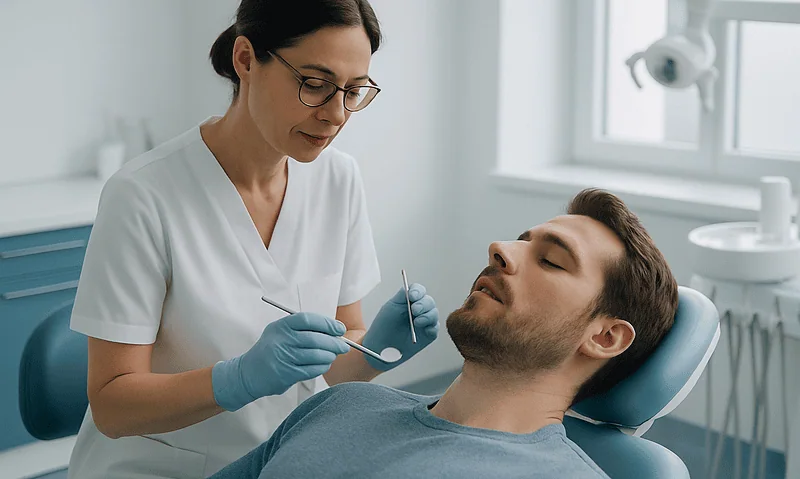
Porcelain vs Composite Teeth Veneers: Preparation, Repairability and Visit Count Compared
Porcelain veneers are thin ceramic shells made in a dental laboratory; they usually require light enamel removal and at least two visits, resist staining…

Lumineers Cost vs Veneers: What You Actually Pay For
Lumineers are a trade name for ultra-thin, minimal-preparation porcelain veneers, and they are usually priced per tooth in the same broad bracket as conventional…

How Long Do Veneers Last? Porcelain vs Composite Lifespans, Honestly
Porcelain veneers typically last 10 to 15 years, and well-maintained ones often reach 20 or more; composite veneers generally last 4 to 8 years…