

Gastrointestinal Bleeding
Gastrointestinal bleeding care focuses on finding the bleeding source, stabilizing the patient and stopping bleeding, often with urgent endoscopy and supportive hospital treatment.
Quick answer
Gastrointestinal bleeding is bleeding anywhere in the digestive tract, and treatment focuses on quickly locating the source, stabilizing the patient, and stopping the bleed. At Acibadem in Turkey, care typically includes hospital assessment, supportive treatment such as fluids or blood replacement when needed, and urgent endoscopic procedures, with surgery or interventional radiology used in selected cases.
When Gastrointestinal Bleeding Needs Expert, Timely Care
Gastrointestinal bleeding can be frightening. Some people notice bright red blood in the toilet or black, tar-like stools. Others vomit blood, feel faint, become unusually weak, or are told that their blood count has dropped without an obvious reason. Whether the bleeding appears suddenly or develops slowly over time, the central concern is the same: finding where the blood is coming from, understanding why it is happening, and stopping it safely.
The gastrointestinal tract includes the esophagus, stomach, small intestine, colon, rectum, and anus. Bleeding can occur anywhere along this pathway. In some cases, it is caused by a stomach ulcer or inflamed blood vessel. In others, it may be related to diverticular disease, hemorrhoids, inflammatory bowel disease, liver disease, medication use, polyps, or cancer. The visible amount of blood does not always reflect the seriousness of the condition. A small amount of ongoing bleeding may lead to significant anemia over weeks or months, while a sudden bleed can become urgent within hours.
For international patients and families, gastrointestinal bleeding adds another layer of anxiety. You may be trying to understand whether travel is safe, whether emergency care is needed, and what kind of evaluation is required. The most important principle is that active or suspected gastrointestinal bleeding should be assessed by experienced medical teams. Effective care is not only about performing a test; it involves stabilizing the patient, selecting the right diagnostic pathway, treating the bleeding source, and monitoring recovery carefully.
At Acibadem, gastrointestinal bleeding care is organized around rapid assessment, evidence-based protocols, advanced endoscopic and imaging techniques, and coordinated hospital support. Gastroenterologists, emergency physicians, surgeons, interventional radiologists, anesthesiology teams, intensive care specialists, and other experts may work together depending on the severity and cause of bleeding. This multidisciplinary approach is especially important because gastrointestinal bleeding is not one disease. It is a clinical sign that may arise from many different conditions, each requiring a tailored plan.
What Gastrointestinal Bleeding Care Is
Gastrointestinal bleeding care focuses on three priorities: stabilizing the patient, identifying the source of bleeding, and stopping or controlling the bleeding while treating the underlying cause. The approach may be urgent, planned, or somewhere in between depending on the patient’s symptoms, blood pressure, heart rate, hemoglobin level, medication history, and overall condition.
Bleeding is often described as upper gastrointestinal bleeding or lower gastrointestinal bleeding. Upper gastrointestinal bleeding usually comes from the esophagus, stomach, or first part of the small intestine. It may cause vomiting of blood, coffee-ground-like vomit, or black stools. Lower gastrointestinal bleeding usually comes from the colon, rectum, or anus and may cause bright red or maroon blood in the stool. Bleeding from the middle part of the small intestine is less common and can be more challenging to locate.
Treatment may involve endoscopy, colonoscopy, capsule endoscopy, imaging tests, medications, blood transfusion, minimally invasive radiology procedures, or surgery in selected cases. Endoscopy is often central because it can diagnose and treat many causes of bleeding during the same procedure. For example, the physician may apply clips, use heat therapy, inject medication, remove a bleeding polyp, or treat enlarged veins depending on what is found.
Supportive hospital treatment is equally important. Some patients need intravenous fluids, blood products, oxygen, monitoring in a high-dependency or intensive care setting, or medication to reduce acid or manage bleeding risk. Patients taking blood thinners, anti-inflammatory pain relievers, antiplatelet drugs, or certain supplements require careful medication review because these can influence both bleeding risk and treatment decisions.
Who May Need Evaluation and Treatment for Gastrointestinal Bleeding
Anyone with visible blood in vomit or stool should seek medical assessment. Some cases may be mild, but it is not possible to determine the cause reliably without proper evaluation. Urgent care is especially important if bleeding is heavy, recurrent, or accompanied by dizziness, fainting, shortness of breath, chest discomfort, confusion, severe abdominal pain, or a rapid heartbeat.
Common symptoms that may suggest gastrointestinal bleeding include black or tar-like stools, bright red blood after a bowel movement, maroon stools, vomiting blood, vomiting material that looks like coffee grounds, unexplained fatigue, pale skin, weakness, or reduced exercise tolerance. Some patients have no visible blood but are found to have iron deficiency anemia during routine blood tests. In these situations, the bleeding may be slow and hidden, sometimes called occult bleeding.
The diagnostic process usually begins with a clinical evaluation. Doctors ask about the timing and appearance of bleeding, abdominal symptoms, bowel habits, weight change, previous ulcers or liver disease, family history, medication use, and prior endoscopy or colonoscopy results. Vital signs are checked, and blood tests may measure hemoglobin, platelet count, clotting function, kidney and liver function, inflammation markers, and iron levels. Stool testing may be used in selected cases, particularly when bleeding is not visible.
Depending on the suspected location, patients may need upper endoscopy, colonoscopy, flexible sigmoidoscopy, cross-sectional imaging, angiographic imaging, or specialized small-bowel tests. If the patient is unstable or actively bleeding, diagnosis and treatment may proceed urgently. If the patient is stable with chronic anemia, the evaluation may be scheduled in a structured way, often beginning with endoscopy and colonoscopy.
Patients who have already been evaluated elsewhere may seek a second opinion when bleeding recurs, the source was not found, anemia continues, or surgery has been suggested. In these cases, reviewing previous reports, images, laboratory results, pathology findings, and medication history can help avoid unnecessary repetition and guide the next step more precisely.
Conditions and Indications Addressed by Gastrointestinal Bleeding Care
Gastrointestinal bleeding can arise from a broad range of disorders. In the upper gastrointestinal tract, common causes include peptic ulcers, gastritis, esophagitis, enlarged veins related to liver disease, Mallory-Weiss tears, vascular malformations, tumors, and complications related to medications. Peptic ulcers may be associated with Helicobacter pylori infection, aspirin or nonsteroidal anti-inflammatory drugs, or other medical conditions.
In the lower gastrointestinal tract, bleeding may be linked to diverticular disease, hemorrhoids, anal fissures, inflammatory bowel disease, ischemic colitis, infectious colitis, angiodysplasia, polyps, colorectal cancer, or radiation-related bowel changes. Bright red blood is often associated with a lower source, but brisk upper gastrointestinal bleeding can sometimes appear as red blood in the stool as well, which is why clinical evaluation matters.
Small-bowel bleeding may be suspected when standard upper endoscopy and colonoscopy do not reveal the cause, especially if anemia persists or bleeding recurs. Possible causes include small-bowel vascular lesions, ulcers, Crohn’s disease, tumors, medication-related injury, or less common inherited vascular conditions. Specialized diagnostic methods may be required because the small intestine is long and not fully accessible with standard endoscopy.
Gastrointestinal bleeding care also addresses patients with higher medical risk. This includes people taking anticoagulants or antiplatelet medication, patients with liver cirrhosis, individuals with kidney disease, older adults, patients with heart disease, and those who have had previous gastrointestinal bleeding. Treatment planning must balance bleeding control with the risk of blood clots, stroke, heart attack, or worsening chronic illness. This is one reason multidisciplinary decision-making is often valuable.
How Gastrointestinal Bleeding Is Evaluated and Treated
The exact pathway depends on how the patient presents. A person who arrives with active vomiting of blood or very low blood pressure needs immediate stabilization. A patient with mild but persistent iron deficiency may undergo planned outpatient or short-stay evaluation. In both situations, the goal is to move from uncertainty to a clear, medically sound plan.
Initial Assessment and Stabilization
Care begins with a focused but thorough assessment. Medical teams evaluate airway safety, breathing, circulation, vital signs, mental status, abdominal findings, and signs of ongoing blood loss. Intravenous access is usually established so fluids, medications, or blood products can be given if needed. Blood samples are taken to measure hemoglobin, clotting status, organ function, blood type, and other markers relevant to treatment.
If bleeding is significant, the patient may be monitored continuously. Blood transfusion may be recommended when anemia is severe, symptoms are concerning, or there is ongoing blood loss. The decision is individualized, taking into account cardiovascular risk, age, hemodynamic stability, and clinical guidelines. In patients on blood thinners, physicians assess whether medication should be paused, reversed, or adjusted. This decision is made carefully because stopping anticoagulation can increase the risk of clotting events in some patients.
Diagnostic Planning
Once the patient is stable enough for investigation, the team decides which test is most appropriate. For suspected upper gastrointestinal bleeding, upper endoscopy is often performed. A flexible camera is passed through the mouth to examine the esophagus, stomach, and duodenum. For suspected lower bleeding, colonoscopy may be used to examine the colon and rectum. Bowel preparation may be needed so the physician can see the lining clearly.
If bleeding is brisk or the patient cannot undergo immediate endoscopy, imaging may help identify active bleeding. Contrast-enhanced computed tomography can show bleeding patterns, vascular abnormalities, inflammation, masses, or complications. In selected cases, angiography allows interventional radiologists to locate and treat bleeding vessels by blocking the blood supply to a targeted area. If standard endoscopy and colonoscopy do not find the source, small-bowel evaluation may include capsule endoscopy, enteroscopy, or specialized imaging.
Endoscopic Treatment
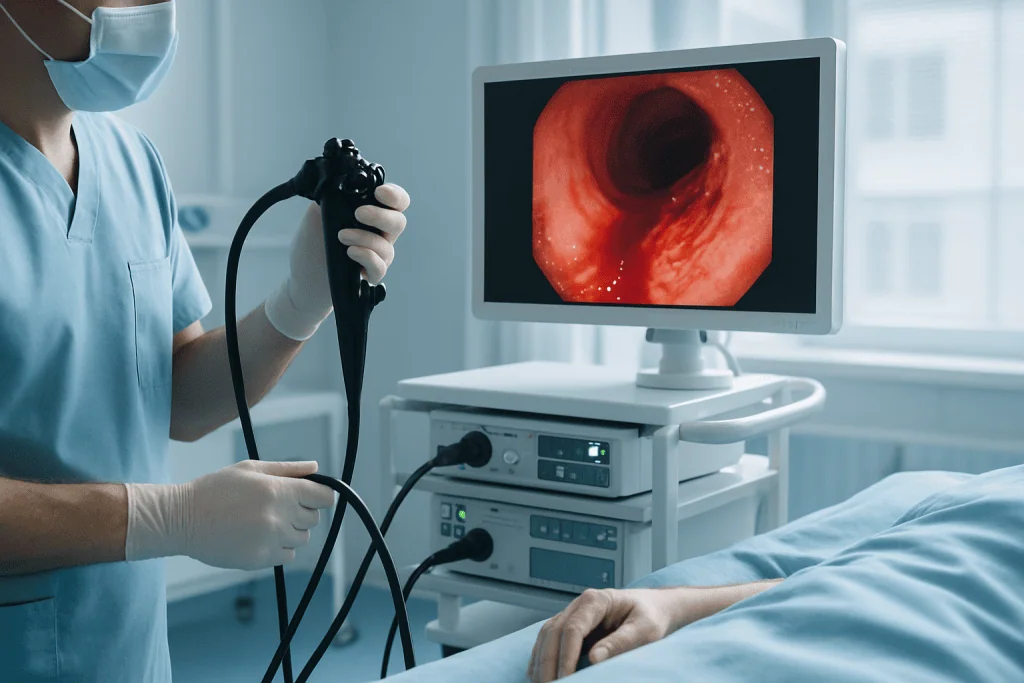
Endoscopy is valuable because it can be both diagnostic and therapeutic. During the procedure, the gastroenterologist can identify ulcers, visible vessels, active bleeding points, inflamed tissue, varices, polyps, vascular malformations, or tumors. Treatment may involve mechanical clips to close or compress a bleeding point, thermal methods to seal tissue, injection therapy, banding of varices, topical agents, or removal of certain bleeding lesions.
Patients usually receive sedation or anesthesia support, depending on the urgency, procedure type, medical condition, and anticipated duration. Monitoring continues throughout the procedure. For many causes of bleeding, endoscopic therapy can control the bleeding without the need for open surgery. However, some patients require repeat endoscopy if bleeding returns, if visibility was limited by blood or stool, or if the underlying condition requires staged treatment.
Medication and Supportive Treatment
Medication is often used alongside procedures. Acid-reducing therapy may be used for ulcer-related bleeding. Antibiotics and specific vasoactive medications may be used when variceal bleeding related to liver disease is suspected. If H. pylori infection is found, eradication therapy is important to reduce the risk of ulcer recurrence. Iron replacement may be needed after chronic blood loss, either orally or intravenously depending on severity and tolerance.
Medication review is a core part of care. Aspirin, anti-inflammatory pain medicines, anticoagulants, antiplatelet drugs, steroids, and some supplements can contribute to bleeding risk. The decision to stop, restart, or change these medicines depends on why they were prescribed and how high the bleeding and clotting risks are. This may involve input from cardiology, neurology, hematology, or the prescribing physician.
Interventional Radiology and Surgery
When bleeding cannot be controlled endoscopically, or when endoscopy is not possible, interventional radiology may be considered. Through a small puncture in a blood vessel, the radiologist can guide catheters to the suspected bleeding artery and deliver materials to reduce or stop blood flow to that precise area. This can be particularly useful for certain lower gastrointestinal bleeds or postoperative bleeding.
Surgery is less commonly needed than in the past because endoscopic and radiologic methods are effective for many patients. Still, surgery remains important for selected cases, such as uncontrolled bleeding, perforation, certain tumors, severe colitis, or recurrent bleeding from a source that cannot be managed otherwise. Surgical planning considers the patient’s overall health, the exact bleeding location, the likelihood of recurrence, and the least invasive effective approach.
Typical Duration and Hospital Recovery
The duration of care varies widely. An upper endoscopy may be completed in a short procedure time, but preparation, sedation recovery, monitoring, and treatment planning add to the total hospital stay. Colonoscopy requires bowel cleansing, which may take several hours or overnight. Patients with mild bleeding and stable blood counts may return home the same day or after brief observation. Those with major bleeding, severe anemia, liver disease, heart disease, or recurrent bleeding may need several days in the hospital.
Recovery focuses on preventing rebleeding, rebuilding blood levels, restoring strength, and treating the cause. Before discharge, patients typically receive instructions on diet, medications, warning signs, follow-up tests, and when to resume travel or normal activities. International patients may also need a fit-to-fly assessment, coordination of medical documents, and a clear plan for follow-up after returning home.
Why Acting Early Matters
Gastrointestinal bleeding can change quickly. A patient who seems stable may become weak, hypotensive, or severely anemic if bleeding continues. Early assessment allows medical teams to identify patients at higher risk and intervene before complications develop. It also helps distinguish minor anorectal bleeding from more serious causes that require urgent endoscopy or imaging.
Delaying care can increase the risk of blood loss, fainting, falls, heart strain, kidney injury, and the need for emergency transfusion. In people with coronary artery disease, severe anemia can reduce oxygen delivery to the heart. In older adults or patients with multiple medical conditions, the physiologic reserve may be limited, so bleeding can have a larger impact.
Delay can also postpone diagnosis of important underlying disease. Recurrent or hidden bleeding may be the first sign of colorectal cancer, inflammatory bowel disease, a bleeding ulcer, liver-related varices, or small-bowel pathology. Earlier investigation may allow treatment at a more manageable stage and reduce the chance of repeated hospital visits.
For patients planning international care, timing should be discussed with a physician. Active significant bleeding is usually not appropriate for routine travel and may require emergency treatment locally before transfer is considered. Stable patients with chronic anemia or recurrent bleeding may be suitable for planned evaluation abroad, provided records are reviewed and the travel plan is medically safe.
Benefits of Gastrointestinal Bleeding Treatment
Timely gastrointestinal bleeding care can protect health in several practical and meaningful ways.
| Benefit | What It Means for You |
|---|---|
| Rapid stabilization | Fluids, blood tests, monitoring, and transfusion when needed help reduce the immediate risks of significant blood loss. |
| Accurate identification of the bleeding source | Endoscopy, colonoscopy, imaging, and small-bowel tests help determine where the bleeding is coming from and why it is happening. |
| Treatment during diagnosis | Many bleeding points can be treated during endoscopy, avoiding additional procedures in appropriate cases. |
| Reduced risk of recurrent bleeding | Treating the underlying cause, adjusting medications, and planning follow-up can lower the chance of repeated episodes. |
| Detection of serious underlying conditions | Evaluation may identify ulcers, inflammatory disease, polyps, cancer, liver-related complications, or vascular lesions that need targeted care. |
| Personalized medical planning | Care can be adapted to your age, travel situation, medical history, blood thinner use, and overall risk profile. |
Recovery Timeline After Gastrointestinal Bleeding Care
Recovery depends on the cause and severity of bleeding, but many patients follow a general pattern after evaluation and treatment.
| Time Period | What Patients Can Expect |
|---|---|
| Day 1 | Assessment, blood tests, monitoring, stabilization, and often endoscopy or imaging if bleeding is active or the risk is significant. |
| First Week | Medication adjustments, diet guidance, iron or acid-suppressing therapy when appropriate, and observation for any signs of rebleeding. |
| First Month | Strength and blood counts may gradually improve. Follow-up visits or repeat tests may be planned depending on the diagnosis. |
| Longer Term | Ongoing management focuses on preventing recurrence, treating the underlying condition, and maintaining safe medication use. |
Factors That Influence Outcomes
The outcome of gastrointestinal bleeding care depends on several medical and practical factors. One of the most important is the severity of bleeding at presentation. Patients who arrive with very low blood pressure, rapid heart rate, severe anemia, or ongoing blood loss are at higher risk and may require more intensive treatment. Early stabilization and timely intervention can significantly influence the course of care.
The cause of bleeding also matters. A bleeding ulcer, for example, may respond well to endoscopic therapy and medication when managed promptly. Variceal bleeding related to liver disease can be more complex and may require coordinated liver-focused care. Bleeding from diverticular disease may stop on its own but can recur. Bleeding related to cancer or inflammatory bowel disease requires treatment of the underlying disease, not only the bleeding episode.
Medication use is another major factor. Blood thinners and antiplatelet drugs are essential for many patients with heart rhythm disorders, coronary stents, previous stroke, or clotting conditions. The challenge is to reduce bleeding risk without creating avoidable clotting risk. This requires individualized decision-making and, in many cases, communication among gastroenterology, cardiology, hematology, neurology, or surgery teams.
The quality of visualization during endoscopy can affect diagnosis and treatment. Blood, food, or stool in the gastrointestinal tract may limit the view, especially in urgent situations. Bowel preparation before colonoscopy improves the chance of identifying the bleeding source. Sometimes a repeat procedure is medically appropriate because the initial emergency evaluation occurred under difficult conditions.
Patient-related factors also influence recovery. Age, heart disease, kidney disease, liver disease, diabetes, immune status, nutritional condition, previous surgeries, and overall resilience all play a role. In chronic bleeding, the degree of iron deficiency and duration of anemia affect how quickly energy returns. Following discharge instructions, taking prescribed medications, avoiding harmful drugs when advised, and attending follow-up appointments can reduce the risk of recurrence.
A good result is not defined only by stopping visible bleeding on one day. It means understanding the cause, reducing the likelihood of another episode, preserving the patient’s broader health, and creating a clear plan for follow-up. For international patients, this also includes safe travel timing, translated medical reports when needed, and communication that supports continuity of care after returning home.
Why International Patients Choose Acibadem for Gastrointestinal Bleeding Care
International patients often seek care abroad when they need timely access to experienced specialists, advanced diagnostics, or a second opinion after an inconclusive evaluation. Gastrointestinal bleeding is an area where coordination matters. The right care pathway may involve emergency medicine, gastroenterology, anesthesiology, radiology, interventional radiology, surgery, intensive care, pathology, hematology, hepatology, or oncology depending on the case.
Acibadem’s hospitals are JCI-accredited and structured to support complex hospital-based care. For gastrointestinal bleeding, this means patients can be evaluated through modern diagnostic pathways that may include endoscopy, colonoscopy, laboratory medicine, cross-sectional imaging, interventional radiology, and intensive monitoring when needed. Technology is used not as a standalone promise, but as part of clinical decision-making: high-resolution endoscopic imaging helps physicians inspect the lining of the digestive tract; therapeutic endoscopic tools can control many bleeding sources; advanced imaging can help locate active bleeding; and hospital monitoring systems support safe observation in higher-risk situations.
Multidisciplinary collaboration is particularly important when bleeding is linked to cancer, inflammatory bowel disease, liver disease, complex medication use, or recurrent unexplained anemia. Specialist boards and multidisciplinary discussions allow the team to review diagnostic findings and align treatment decisions with international and evidence-based protocols. For example, a patient with bleeding from a suspected tumor may need gastroenterology, surgery, oncology, radiology, and pathology input. A patient with variceal bleeding may need gastroenterology, hepatology, interventional radiology, intensive care, and nutrition planning.
Experienced physicians also understand that gastrointestinal bleeding care must be individualized. Two patients with the same symptom may need very different pathways. A young patient with a painful anal fissure, an older patient with iron deficiency anemia, a traveler taking anticoagulation, and a patient with cirrhosis who vomits blood are not managed in the same way. Personalization includes risk assessment, timing of endoscopy, sedation planning, medication adjustment, transfusion decisions, and follow-up strategy.
For patients traveling from the United States, Europe, the Middle East, Africa, or other regions, the practical side of care is often just as important as the medical plan. Acibadem International provides dedicated support for international patients in more than 20 languages. This may include appointment coordination, medical record transfer, translation support, hospital admission planning, communication with physicians, assistance for accompanying family members, and guidance on local logistics. When a condition is potentially urgent, clear pre-travel medical review is essential so that patients understand whether they should travel, when they should be seen, and what records are needed.
Many international patients also value the ability to request a second opinion. If bleeding has recurred, if previous endoscopy was inconclusive, or if a major procedure has been proposed, a structured review can clarify the diagnosis and options. The most useful second opinions include prior endoscopy images and reports, colonoscopy findings, pathology results, CT or MRI images, laboratory trends, medication lists, and discharge summaries. With these details, specialists can provide more meaningful recommendations and decide whether additional testing is needed.
Choosing where to receive gastrointestinal bleeding care is not simply a matter of finding a hospital with an endoscopy unit. It requires confidence that urgent issues can be managed, complex findings can be interpreted, and follow-up will be organized. Acibadem’s model combines hospital infrastructure, specialist expertise, multidisciplinary evaluation, and international patient coordination in a way that supports both the medical and personal needs of patients traveling for care.
Moving Forward With Clarity and Confidence
Gastrointestinal bleeding should never be ignored, even when symptoms seem to improve. Some bleeding stops temporarily and returns later. Some causes are minor, while others require urgent treatment or careful long-term management. The safest next step is a professional assessment that considers your symptoms, medical history, medications, test results, and overall risk.
If you have active bleeding, black stools, vomiting blood, fainting, severe weakness, chest discomfort, or shortness of breath, seek urgent medical attention immediately. If you have chronic anemia, recurrent blood in the stool, an unclear previous diagnosis, or concerns about a recommended treatment plan, requesting a consultation or second opinion can help define the most appropriate pathway.
Acibadem’s teams can review your medical information, help determine the level of urgency, and guide you toward the right evaluation and treatment options. For international patients, early communication is especially valuable because it allows the medical and coordination teams to plan safely around travel, hospital admission, language needs, and follow-up care.
This information is general and is not a substitute for professional medical advice, diagnosis, or treatment. Always consult a qualified healthcare professional about your individual condition and seek emergency care if symptoms suggest active or severe bleeding.
Preparation
- Gastrointestinal bleeding may require urgent assessment, blood tests, vital sign monitoring and imaging or endoscopy planning. Patients are usually asked to fast before endoscopy, and blood thinners or other medications are reviewed. In severe cases, IV fluids, blood transfusion and intensive monitoring may be started before the procedure.
Aftercare
- After treatment, patients are monitored for recurrent bleeding, blood pressure changes and anemia. Diet is usually restarted gradually, and medications such as acid reducers may be prescribed depending on the cause. Follow-up endoscopy, colonoscopy or specialist review may be recommended to prevent recurrence.
Turkey vs UK, Germany & USA
Gastrointestinal bleeding care is usually urgent and focuses on stabilising the patient, identifying the bleeding source and stopping the bleed. For international patients, comparison should consider not only hospital fees, but also emergency readiness, endoscopy access, inpatient support and safe travel planning.
The overall cost and experience can vary by country, hospital setting and the urgency of the bleeding episode.
| Factor | Turkey | UK | Germany | USA |
|---|---|---|---|---|
| Care setting | Private hospitals with coordinated emergency, gastroenterology, endoscopy and intensive care access | Public and private pathways; urgent care is prioritised, while elective private pathways vary | Public and private hospital systems with structured specialist referral and inpatient pathways | Highly specialised hospital care available; billing structures can be complex |
| Price drivers | Endoscopy type, inpatient stay, blood support, imaging, intensive care need and specialist involvement | Public versus private route, diagnostic tests, inpatient stay and specialist fees | Insurance status, hospital category, diagnostics, procedure complexity and length of admission | Facility fees, physician fees, emergency care, anaesthesia, imaging, transfusion support and admission level |
| Hospital and specialist factors | Experience of gastroenterology, interventional radiology, surgery, anaesthesia and intensive care teams affects planning | Specialist availability and hospital pathway influence timing and coordination | Strong specialist networks; access depends on referral route and hospital capacity | Wide variation between hospitals; specialist centre choice can significantly affect logistics and billing |
| Accreditation and quality | International patients may choose JCI-accredited hospitals with multilingual coordination | Quality oversight is established; private facilities may have additional service coordination | Quality standards are well regulated; international coordination varies by provider | Accreditation and quality programmes are common, with variation by institution |
| Waiting and urgency | Urgent cases are assessed rapidly when clinically appropriate; travel is considered only when safe | Emergency bleeding is treated urgently; non-emergency access may depend on pathway | Urgent care is prioritised; planned diagnostics depend on scheduling and referral | Emergency access is rapid in many centres; planned care depends on provider and insurance arrangements |
| Travel and language logistics | International patient teams may assist with translation, appointments, reports and discharge planning | English-language environment; travel support depends on provider | Translation may be needed; international desks are available in some hospitals | English-language care; travel distance, insurance coordination and billing navigation may be significant |
| Typical package scope | May include consultation, diagnostics, endoscopy planning, hospital coordination, interpreter support and follow-up guidance | Package scope varies; emergency care is commonly billed separately from planned private services | Packages may be less standardised for urgent bleeding and depend on hospital policy | Bundled packages are less common for urgent bleeding; separate billing is typical |
What affects your final cost
- Whether the bleeding is active, severe or recurrent
- Need for emergency admission, intensive care or close monitoring
- Type of endoscopy or other diagnostic tests required
- Need for blood products, medications or repeat procedures
- Whether interventional radiology or surgery is needed
- Length of hospital stay and level of nursing care
- Specialist consultations, anaesthesia and pathology testing
- Translation, travel support and post-discharge follow-up needs
Compare your options
Gastrointestinal bleeding treatment depends on the suspected source, severity and the patient’s overall condition. Suitability for any option is decided by a gastroenterology specialist and the wider clinical team.
| Option | What it is | Typical use | Key considerations |
|---|---|---|---|
| Stabilisation and monitoring | Hospital assessment with fluids, medicines, blood support when needed and vital sign monitoring | Used when bleeding is active, suspected to be significant or the patient is unwell | Often the initial priority before definitive diagnosis or treatment; may require close inpatient care |
| Upper gastrointestinal endoscopy | A flexible camera examination of the oesophagus, stomach and upper small bowel | Used when bleeding may come from ulcers, varices, gastritis, tumours or other upper digestive tract causes | Can diagnose and treat some bleeding during the same procedure; sedation and anaesthesia planning may be needed |
| Colonoscopy | A flexible camera examination of the colon and lower digestive tract | Used when bleeding appears to come from the lower bowel, such as diverticular bleeding, polyps, inflammation or vascular lesions | Bowel preparation may be required when clinically safe; timing depends on stability and bleeding pattern |
| Capsule or small bowel evaluation | Specialised tests to assess areas not easily seen with standard endoscopy | Used when standard endoscopy does not identify the source and small bowel bleeding is suspected | Not always suitable in urgent instability; additional imaging or therapeutic endoscopy may be required |
| Interventional radiology | Image-guided treatment to locate and block a bleeding vessel | Used when bleeding is ongoing, hard to reach by endoscopy or not controlled endoscopically | Requires specialist imaging and interventional expertise; suitability depends on bleeding location and patient stability |
| Surgery | Operative treatment to control bleeding or treat the underlying cause | Used when bleeding cannot be controlled by less invasive methods or when another surgical condition is present | Usually reserved for selected situations; recovery time and hospital stay may be longer |
Trusted care for international patients
General information only — not medical or financial advice. Final costs depend on the factors above and your individual case; request a free, personalised quote.
Doctors Performing This Treatment

Prof. Dr. Ahmet Karaman
Gastroenterology
Prof. Dr. Arzu Tiftikçi
Gastroenterology
Prof. Dr. Atakan Yeşil
Gastroenterology
Prof. Dr. Bahattin Çiçek
Gastroenterology
Prof. Dr. Bülent Değertekin
Gastroenterology
Prof. Dr. Can Gönen
Gastroenterology
Prof. Dr. Cem Aygün
Gastroenterology
Prof. Dr. Ebubekir Şenateş
Gastroenterology
Prof. Dr. Erkin Öztaş
Gastroenterology
Prof. Dr. Ethem Tankurt
Gastroenterology
Prof. Dr. Fatih Oğuz Önder
Gastroenterology
Prof. Dr. Ferdane Pirinççi Sapmaz
Gastroenterology
Prof. Dr. Filiz Akyüz (m)
Gastroenterology
Prof. Dr. Güngör Boztaş
Gastroenterology
Prof. Dr. Hakan Yildiz
Gastroenterology
Prof. Dr. Hakan Ümit Ünal
Gastroenterology
Prof. Dr. Hülya Hamzaoğlu
Gastroenterology
Prof. Dr. Murat Saruç
Gastroenterology
Prof. Dr. Nadir Kaya
Gastroenterology
Prof. Dr. Nesliar Eser Kutsal
Gastroenterology
Prof. Dr. Nurdan Tözü̇n
Gastroenterology
Prof. Dr. Oya Yönal
Gastroenterology
Prof. Dr. Sabahattin Kaymakoğlu
Gastroenterology
Prof. Dr. Yaşar Çolak
GastroenterologyMedical Units
Available at These Hospitals












Frequently Asked Questions
What affects the cost of gastrointestinal bleeding care?
Cost depends on urgency, hospital admission level, diagnostic tests, endoscopy type, anaesthesia, blood support, medications, specialist consultations and whether interventional radiology or surgery is required.
Can I receive a fixed quote before travelling?
A preliminary estimate may be possible after reviewing medical reports, endoscopy findings, blood tests and imaging. Because gastrointestinal bleeding can change quickly, the final plan and cost may change after in-person assessment.
Is gastrointestinal bleeding suitable for medical travel?
Active or severe bleeding should be treated as an emergency in the nearest appropriate hospital. International care is considered only when the patient is stable enough to travel safely or needs planned evaluation after an acute episode.
What is usually included in an international patient care plan?
Depending on the case, coordination may include specialist review, diagnostic planning, endoscopy scheduling, inpatient arrangements, interpreter support, medical report translation and follow-up guidance after discharge.
How can I get a personalised quote from Acibadem?
You can request a free consultation and share current medical reports, medication details, laboratory results, endoscopy reports and imaging if available. The team can then guide you on the appropriate pathway and provide a personalised estimate.