Robotic Hernia Surgery
Robotic hernia surgery is a minimally invasive procedure used to repair inguinal, ventral, incisional, umbilical and hiatal hernias. The surgeon works through small incisions using robotic instruments and a magnified three-dimensional camera,…
Quick answer
Robotic hernia surgery is a minimally invasive operation in which a surgeon repairs a hernia through several small incisions using robotic arms controlled from a console. It is used for inguinal, ventral, incisional, umbilical and hiatal hernias, usually with mesh reinforcement. It is performed under general anesthesia, and many patients go home the same day.
What is robotic hernia surgery?
A hernia is a bulge that forms when an organ or a piece of fatty tissue pushes through a weak spot in the muscle or connective tissue that normally holds it in place. Hernias are common in the groin and in the abdominal wall, and they usually do not heal on their own. Surgery is the only way to repair a hernia permanently.
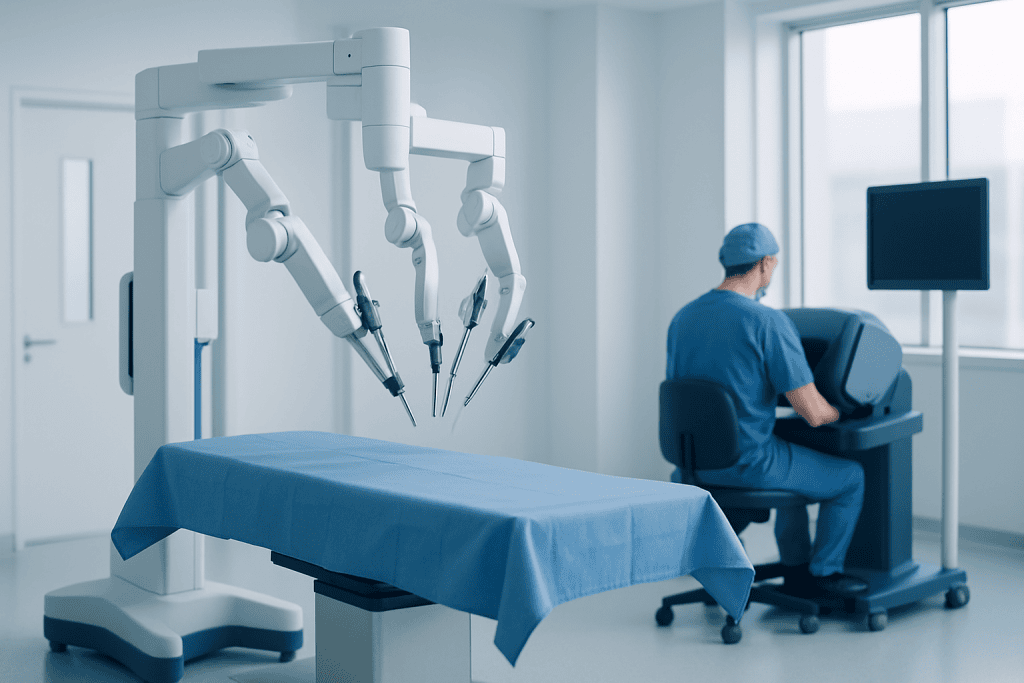
Robotic hernia surgery is a form of minimally invasive surgery, sometimes called keyhole surgery. Instead of one long cut, the surgeon works through several small incisions, usually less than a centimeter each. Thin instruments and a high-definition camera are inserted through these openings. The surgeon sits at a console a few feet from the patient and controls robotic arms that hold and move the instruments. The robot does not operate on its own; every movement is made by the surgeon. The system translates the surgeon’s hand movements into very precise, small motions and provides a magnified three-dimensional view of the inside of the body.
Robotic hernia repair is used for several types of hernia:
- Inguinal hernia (groin hernia), the most common type, where tissue pushes through the lower abdominal wall near the groin.
- Ventral hernia, a bulge through the front abdominal wall, including incisional hernias that develop at the site of a previous surgical scar and umbilical hernias around the belly button.
- Hiatal hernia, where part of the stomach slides up through the diaphragm (the breathing muscle) into the chest.
In most robotic hernia repairs the surgeon strengthens the weakened area with a piece of surgical mesh, a thin sheet of synthetic or biological material that supports the tissue as it heals. Robotic hernia surgery is one of several procedures performed within a hospital’s robotic surgery program; at Acibadem, for example, it is managed by the general surgery team working with the robotic surgery unit.
Who is a candidate
Robotic hernia repair is considered for many adults with a hernia that causes discomfort, is growing, or interferes with daily life. Your surgeon may suggest a robotic approach if you have:
- An inguinal hernia on one or both sides. Repairing both sides through the same small incisions is one situation where a minimally invasive approach is often favored.
- A recurrent hernia, meaning one that has returned after an earlier repair, especially if the first operation was done with an open incision.
- A ventral or incisional hernia of moderate size where the surgeon wants to place mesh behind the muscle layer with fine suturing.
- A hiatal hernia causing reflux or swallowing problems that has not improved with medication.
The robotic approach is not suitable for everyone. It may not be recommended, or an open operation may be safer, when:
- The hernia is very large or a great deal of bowel is trapped outside the abdominal wall, sometimes called loss of domain.
- The hernia is strangulated, meaning the blood supply to the trapped tissue is cut off. This is an emergency and usually requires immediate open surgery.
- Extensive scarring from previous abdominal operations makes it unsafe to place the camera and instruments.
- Severe heart or lung disease makes general anesthesia and the inflation of the abdomen with gas risky.
- You are pregnant, or you have an active infection at the surgical site.
Children with hernias are usually treated with other techniques. A surgeon will weigh your overall health, hernia type and previous surgeries before recommending a method.
How the procedure works
Before surgery. You will have a consultation and physical examination. Imaging such as an ultrasound or CT scan (a detailed X-ray that creates cross-sectional pictures) may be ordered for larger or unclear hernias. Blood tests and an assessment by the anesthesia team are usually arranged. You will be asked to stop eating and drinking for a set number of hours before the operation.
During surgery. Robotic hernia surgery is performed under general anesthesia, so you are fully asleep and feel nothing. The steps typically include:
- The surgical team makes three or four small incisions in the abdomen.
- Carbon dioxide gas is gently pumped into the abdomen to create working space and improve the view.
- The camera and instruments are placed through the incisions and attached to the robotic arms.
- From the console, the surgeon identifies the hernia, gently pulls the protruding tissue back into its normal position, and inspects the surrounding area.
- The weak spot is closed with sutures where appropriate, and a piece of mesh is positioned to reinforce the abdominal wall. In many robotic repairs the mesh is placed between muscle layers and covered with the body’s own tissue, so it does not sit directly against the bowel.
- The gas is released, the instruments are removed and the small incisions are closed with dissolvable stitches, surgical glue or small strips.
The operation usually takes about one to three hours, depending on the type of hernia, whether both sides are repaired and how complex the anatomy is.
After surgery. You wake up in a recovery area where nurses monitor your breathing, heart rate and pain. Many patients with an uncomplicated inguinal or small ventral hernia repair go home the same day. Larger or more complex repairs may require one or more nights in hospital.
Preparation for robotic hernia surgery
Good preparation can lower the chance of complications and make recovery smoother. Your care team will give you specific instructions, which often include the following:
- Medication review. Tell your surgeon about every medicine and supplement you take. Blood thinners, aspirin and some herbal products may need to be paused for a set period before surgery. Never stop a prescribed medication without medical advice.
- Fasting. You will usually be asked not to eat for at least six hours and to stop clear fluids a few hours before the procedure.
- Smoking. Smoking slows wound healing and increases the risk of the hernia coming back. Stopping several weeks beforehand is often advised.
- Weight and blood sugar. If you have diabetes, keeping blood sugar well controlled helps healing. Your surgeon may also discuss weight if it increases surgical risk.
- Skin and hygiene. You may be asked to shower with a special antiseptic wash the night before or the morning of surgery and to avoid shaving the surgical area yourself.
- Practical arrangements. Arrange for an adult to take you home and stay with you the first night. Prepare loose, comfortable clothing and place everyday items within easy reach so you do not have to bend or stretch.
Ask what to expect regarding your hospital stay, pain relief and follow-up appointments so that you can plan time off work or other duties in advance.
Recovery and aftercare
Robotic hernia surgery recovery time is often shorter than after open surgery, mainly because the incisions are small and less tissue is disturbed. Recovery still varies from person to person, and your surgeon’s instructions should always take priority over general timelines.
- First 24 to 48 hours. Mild to moderate soreness around the incisions and in the abdomen is expected. Shoulder pain from the gas used during surgery is common and usually fades within a day or two. Walking short distances soon after surgery is encouraged to reduce the risk of blood clots and help the bowel start working.
- First week. Many patients are able to return to desk work and light daily activities within about one week. Pain is typically managed with over-the-counter medicines, and stronger prescriptions are needed only briefly, if at all.
- Two to four weeks. Most people gradually resume normal routines. Lifting heavy objects, vigorous exercise and straining should generally be avoided for about four to six weeks, or as long as your surgeon advises, so the repair can heal.
- Six weeks and beyond. By this point many patients feel back to normal, although the internal tissues continue to strengthen for several months.
Practical aftercare points include:
- Keep the incisions clean and dry. You can usually shower after a day or two, but avoid soaking in a bath or pool until the wounds are fully closed.
- Expect some bruising and swelling, which typically improves over two to three weeks. A firm ridge under the incision line is common early on.
- Prevent constipation by drinking fluids, eating fiber and, if needed, using a stool softener recommended by your team. Straining can stress the repair.
- Do not drive until you have stopped taking prescription pain medication and can move comfortably and brake suddenly without pain.
- Attend your follow-up visit so the surgeon can check the wounds and confirm healing is on track.
Risks and side effects
All surgery carries some risk, and it is important to have a balanced picture. Side effects after robotic hernia surgery are usually mild and temporary, but more serious complications can occur.
Common, usually short-lived effects include:
- Pain and tenderness at the incision sites and in the operated area.
- Bruising and swelling, including swelling of the scrotum after robotic inguinal hernia repair in men.
- Shoulder or upper abdominal discomfort from the carbon dioxide gas.
- Nausea, tiredness and a sore throat from the breathing tube used during general anesthesia.
- Difficulty passing urine in the first day, more often in older men.
- A collection of fluid (seroma) under the skin where the hernia used to be, which usually resolves on its own over several weeks.
Less common but more serious risks include:
- Bleeding or a collection of blood (hematoma) that may need treatment.
- Wound or mesh infection, which in rare cases requires removal of the mesh.
- Injury to nearby structures such as the bowel, bladder, blood vessels or, in groin repairs, the nerves or the tubes that carry sperm.
- Chronic groin or abdominal pain lasting more than three months, which affects a minority of patients after any type of hernia repair.
- Recurrence, meaning the hernia comes back.
- Blood clots in the legs or lungs, and general risks of anesthesia.
- The need to convert to an open operation during surgery if it is not safe to continue with the robotic approach.
Your surgeon will discuss which risks are most relevant to your situation. Factors such as smoking, obesity, diabetes and previous surgeries can raise the chance of complications.
Results and outlook
The available evidence suggests that robotic hernia repair achieves repair success and recurrence rates broadly comparable to conventional laparoscopic (keyhole) surgery when performed by experienced surgeons. Compared with traditional open surgery, minimally invasive approaches, including robotic ones, are generally associated with less early pain, smaller scars and a quicker return to normal activities, particularly for inguinal hernias repaired on both sides and for recurrent hernias.
The robotic platform offers surgeons a stable, magnified three-dimensional view and wristed instruments that can bend more than standard laparoscopic tools. Many surgeons find this helpful for fine suturing and for placing mesh behind the abdominal muscles. Whether these technical advantages translate into better long-term outcomes for every patient is still being studied, and research findings vary. It is fair to say that the skill and experience of the surgical team matter at least as much as the technology used.
For most patients the long-term outlook after hernia repair is good. Pain from the hernia usually resolves, and the majority of people return to full activity, including work and sport. A small number will experience recurrence or persistent discomfort, and the risk of recurrence is higher in people who smoke, have a high body weight, have chronic coughing or heavy lifting demands, or have had several previous repairs.
Cost considerations
The cost of robotic hernia surgery varies widely between countries, hospitals and individual cases, so no general figure can be given here. Several factors typically drive the overall price:
- Use of the robotic system. Robotic instruments are specialized and often single-use, so robotic procedures generally cost more than laparoscopic or open repairs of the same hernia.
- Type and complexity of the hernia. A small inguinal hernia repaired on one side involves less operating time than a large incisional hernia or a repair on both sides.
- Mesh and consumables. The size and type of mesh, along with sutures, fixation devices and other disposables, contribute to the total.
- Anesthesia and operating room time. Longer procedures increase these charges.
- Hospital stay. Same-day discharge costs less than one or more nights of inpatient care.
- Pre-operative tests and follow-up. Imaging, blood tests, consultations and post-operative visits are often billed separately.
Insurance coverage for the robotic approach differs by insurer and plan. Before scheduling surgery, it is reasonable to ask the hospital for an itemized estimate and to check with your insurer what portion, if any, will be covered.
Frequently asked questions
How long is robotic hernia surgery recovery time?
Recovery varies, but many patients return to light activities and desk work within about a week and to most normal routines within two to four weeks. Heavy lifting and strenuous exercise are typically restricted for around four to six weeks so the repair can heal. Larger or more complex hernias generally require a longer recovery, and your surgeon will give you a timeline tailored to your operation.
What are the most common side effects after robotic hernia surgery?
The most common side effects are pain and bruising around the incisions, shoulder discomfort from the gas used during the operation, tiredness, and mild nausea related to anesthesia. Some people develop a temporary fluid collection where the hernia was. These effects are usually mild and settle within days to a few weeks. Persistent or worsening symptoms should be reviewed by your care team.
Is robotic inguinal hernia repair better than laparoscopic or open surgery?
Current evidence generally shows that robotic inguinal hernia repair produces outcomes similar to laparoscopic repair, and both minimally invasive approaches are associated with less early pain and a faster return to activity than open surgery for many patients. The robotic approach may offer technical advantages for the surgeon, but it also tends to cost more and take slightly longer. The best method depends on your hernia, your health and your surgeon’s expertise.
Does robotic hernia repair use mesh?
In most cases, yes. Mesh is used in the majority of adult hernia repairs because it lowers the chance of the hernia returning compared with stitching the tissue alone. In robotic surgery the mesh is often placed between the muscle layers so it is covered by the body’s own tissue. Some small hernias may be repaired with sutures only. Your surgeon will explain whether mesh is recommended for you and what type would be used.
Will I stay overnight after robotic hernia surgery?
Many patients having a straightforward robotic inguinal or small ventral hernia repair go home the same day, once they are awake, comfortable and able to walk and pass urine. People with larger incisional hernias, hiatal hernias or significant other health conditions may stay one or more nights so the team can monitor them. The plan for discharge is usually discussed before surgery.
Can a hernia come back after robotic hernia repair?
Yes, although recurrence after mesh repair is uncommon. The risk is higher in people who smoke, are overweight, have chronic cough or constipation, return to heavy lifting too early, or have had multiple previous repairs. Following activity restrictions and managing these factors can help protect the repair. If you notice a new bulge or pain at the site months or years later, it should be assessed.
When to see a doctor
You should be assessed by a doctor, and possibly referred to a surgeon, if you notice a new bulge in the groin or abdominal wall, especially if it becomes more noticeable when you stand, cough or strain, or if it causes aching, pressure or discomfort. A hernia that can no longer be pushed back in, that is growing, or that limits your work, exercise or daily life also warrants specialist review. Even a painless hernia is worth discussing, because it will not go away on its own and planned surgery is generally safer than emergency surgery.
Seek emergency care immediately, before surgery or after, if a hernia bulge becomes suddenly painful, firm, red or purple, or cannot be pushed back, particularly if you also have nausea, vomiting, fever or cannot pass gas or stool. These can be signs of a strangulated hernia, where the blood supply is cut off, and this needs urgent treatment.
After robotic hernia surgery, contact your surgical team or go to an emergency department if you experience:
- Fever above 38 °C (100.4 °F) or chills.
- Increasing redness, warmth, swelling or pus at any incision, or a wound that opens.
- Severe or worsening abdominal pain that is not relieved by prescribed medication.
- Persistent vomiting, a swollen tight abdomen, or inability to pass gas or stool for more than a day or two.
- Inability to urinate for more than eight hours after surgery.
- Bleeding that soaks through a dressing.
- Calf pain or swelling, chest pain or shortness of breath, which may indicate a blood clot.
- A new bulge at the operation site.
Routine follow-up is also important. Keep your scheduled appointment so the surgeon can confirm the wounds are healing and answer questions about returning to activities.
Preparation
- Tell your surgeon about all medicines and supplements, as blood thinners may need to be paused under medical guidance. Fast from food and fluids as instructed, usually from the night before. Stop smoking several weeks beforehand if possible, keep blood sugar controlled if you have diabetes, and arrange for an adult to take you home and stay with you the first night.
Aftercare
- Walk short distances soon after surgery and increase activity gradually, avoiding heavy lifting and straining for about four to six weeks or as advised. Keep incisions clean and dry, watch for signs of infection, and prevent constipation with fluids and fiber. Do not drive while taking prescription pain medication, and attend your follow-up appointment.
Medically reviewed by the Acıbadem International Medical Board — September 8, 2026
See our medical review board →
Update history
- PublishedSeptember 8, 2026
- Medical review approvedSeptember 8, 2026
- Last content updateSeptember 8, 2026
References2
Patient Guides for This Treatment
Doctors Performing This Treatment

Prof. Dr. Metin Çakmakçı
General Surgery
Prof. Dr. M. Sinan Ersin
General Surgery
Prof. Dr. Cihan Uras
General Surgery
Prof. Dr. Nihat Yavuz
General Surgery
Prof. Dr. İsmail Hamzaoğlu
General Surgery
Prof. Dr. İbrahim Berber
General Surgery
Prof. Dr. Aykut Soyder
General Surgery
Prof. Dr. İlgin Özden
General Surgery
Prof. Dr. Mert Erkan
General Surgery
Prof. Dr. Bilgi Baca
General Surgery
Prof. Dr. Murat Kemal Atahan
General Surgery
Prof. Dr. Özgür Fırat
General Surgery
Prof. Dr. Fatih Aydoğan
General Surgery
Prof. Dr. Güralp Onur Ceyhan
General Surgery
Prof. Dr. Özgen Işık
General Surgery
Prof. Dr. Ali Akyüz
General Surgery
Prof. Dr. Metin Ertem
General Surgery
Prof. Dr. Şükrü Aktan
General Surgery
Prof. Dr. Abdullah Zorluoğlu
General Surgery
Prof. Dr. Cihan Yıldırır
General Surgery
Prof. Dr. Fatih Ata Genç
General Surgery
Prof. Dr. Özgür Yağmur
General Surgery
Prof. Dr. Ahmet Alponat
General Surgery
Prof. Dr. Orhan Demircan
General SurgeryMedical Units
Available at These Hospitals