

Adenomyosis and IVF: Diagnosis, Transfer Planning, and Pregnancy Outlook

Adenomyosis occurs when endometrial-like tissue grows within the muscle wall of the uterus, which may enlarge or irritate the uterus. Transvaginal ultrasound is often the first diagnostic test, while pelvic MRI can help clarify uncertain or complex cases.
Key Takeaways
- Adenomyosis occurs when endometrial-like tissue grows within the muscle wall of the uterus, which may enlarge or irritate the uterus.
- Transvaginal ultrasound is often the first diagnostic test, while pelvic MRI can help clarify uncertain or complex cases.
- Adenomyosis may be associated with lower implantation rates and higher miscarriage risk, but outcomes vary widely by age, embryo quality, disease pattern, and other fertility factors.
- Embryo transfer planning may include frozen embryo transfer, hormonal preparation, or a period of medical suppression before transfer in selected patients.
- Pregnancy after adenomyosis usually requires routine obstetric care plus individualized monitoring for symptoms, uterine health, and pregnancy complications.
Adenomyosis is a uterine condition that can affect comfort, bleeding patterns, implantation, and pregnancy outcomes, but many people with adenomyosis can still conceive with the right fertility plan. In IVF care, careful diagnosis, treatment before embryo transfer, and coordinated pregnancy follow-up can help personalize the approach.
Overview: What Adenomyosis Means for IVF
Adenomyosis is a benign condition in which tissue similar to the uterine lining is found within the muscular wall of the uterus. This can make the uterus thicker, more sensitive, and sometimes enlarged. Some people have heavy or painful periods, while others have few symptoms and only learn about the condition during fertility testing.
For patients considering IVF treatment, adenomyosis matters because the uterus is the place where the embryo must implant and the pregnancy must develop. Research suggests that adenomyosis can be linked with reduced implantation, increased miscarriage risk, or lower live birth rates in some groups. However, it does not affect every patient in the same way, and many people with adenomyosis do achieve successful pregnancies.
The most helpful approach is individualized care. A fertility specialist considers the patient’s age, ovarian reserve, embryo quality, symptoms, uterine imaging findings, previous IVF outcomes, and whether other conditions such as endometriosis or fibroids are present. The goal is not only to create embryos, but also to prepare the uterus as safely and effectively as possible for transfer.
Symptoms and Clues That May Suggest Adenomyosis

Adenomyosis can be difficult to recognize because its symptoms overlap with other gynecologic conditions. Some patients have no obvious signs. Others may describe menstrual pain that has become stronger over time, prolonged bleeding, spotting before periods, pelvic heaviness, or discomfort during intercourse.
Common features that may prompt evaluation include:
- Heavy menstrual bleeding or passing clots
- Severe cramping, especially if it worsens with age
- Chronic pelvic pain or a sensation of pressure
- An enlarged or tender uterus on pelvic examination
- Repeated implantation failure or pregnancy loss when other causes are unclear
Symptoms alone cannot confirm adenomyosis. Heavy bleeding may also occur with fibroids, polyps, hormone imbalance, or bleeding disorders. Pelvic pain may be related to endometriosis, pelvic infection, bowel conditions, or bladder pain syndromes. This is why imaging and specialist assessment are important before making fertility decisions.
Causes, Patterns, and Fertility Risk Factors
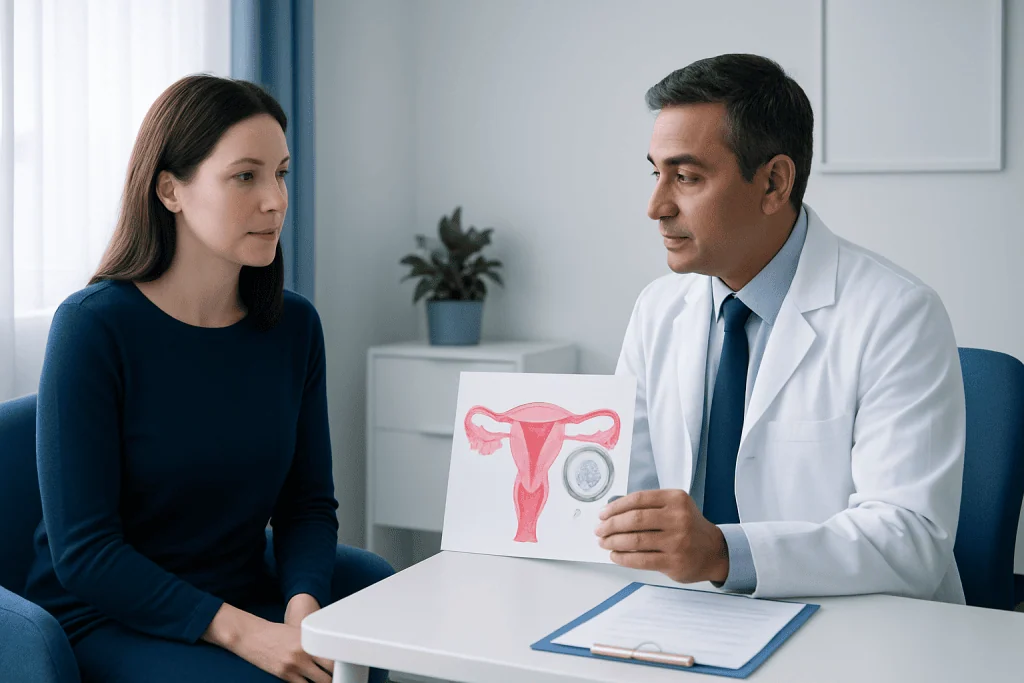
The exact cause of adenomyosis is not fully understood. Several mechanisms have been proposed, including inward growth of lining tissue into the uterine muscle, inflammation at the boundary between the lining and muscle, changes after uterine surgery, and hormone-sensitive tissue behavior. Adenomyosis is influenced by estrogen and other reproductive hormones, which may explain why symptoms often occur during reproductive years and may improve after menopause.
Adenomyosis may be diffuse, affecting much of the uterine muscle, or focal, forming a localized area sometimes called an adenomyoma. It may also be superficial or deep. These differences matter because a small focal area may have a different fertility impact than widespread disease that changes the shape, contractility, or blood flow of the uterus.
Risk factors and associated findings can include previous pregnancy, prior uterine procedures, increasing reproductive age, endometriosis, fibroids, and chronic pelvic inflammation. In fertility care, adenomyosis is often assessed alongside broader causes of female infertility, such as ovulation disorders, tubal disease, diminished ovarian reserve, male factor infertility, or genetic factors affecting embryos.
Diagnosis Before IVF or Embryo Transfer
Diagnosis usually begins with a detailed history, pelvic examination, and transvaginal ultrasound. On ultrasound, the specialist may look for a bulky uterus, asymmetry of the uterine walls, small cystic spaces within the muscle, fan-shaped shadowing, an irregular junctional zone, or increased blood flow in certain areas. The quality of the ultrasound and the experience of the examiner can influence how confidently adenomyosis is identified.
Pelvic MRI is often useful when ultrasound findings are uncertain, when surgery is being considered, or when other conditions such as fibroids must be mapped carefully. MRI can show the junctional zone, the depth and distribution of disease, and whether adenomyosis is focal or diffuse. It is not always required for every patient, but it can be valuable in complex IVF planning.
Historically, adenomyosis was definitively diagnosed by examining the uterus after hysterectomy, but that approach is not relevant for patients seeking pregnancy. Today, fertility specialists rely on clinical assessment and imaging. They may also evaluate the uterine cavity with saline ultrasound or hysteroscopy if polyps, fibroids, adhesions, or cavity distortion are suspected, because these can independently affect implantation.
How Adenomyosis May Affect IVF Outcomes
Adenomyosis may influence IVF through several possible pathways. The uterine muscle may contract differently, which could affect embryo placement or implantation. Inflammation and altered immune signaling may change how receptive the lining is at the time of transfer. Changes in blood flow, hormone response, and the junctional zone may also play a role.
It is important to separate uterine factors from embryo factors. A high-quality or chromosomally normal embryo can still fail to implant for reasons related to the uterine environment, but many failed transfers are due to embryo genetics, especially with increasing maternal age. A careful review of prior IVF cycles, embryo development, genetic testing if used, transfer technique, lining thickness, and luteal support helps avoid blaming adenomyosis for every unsuccessful outcome.
Some studies suggest that adenomyosis is associated with increased miscarriage and lower clinical pregnancy rates, particularly when disease is diffuse or severe. Still, the evidence is mixed because patients often have coexisting endometriosis, fibroids, or age-related fertility challenges. For this reason, counseling should be balanced: adenomyosis can be an important factor, but it is usually one part of a larger fertility picture.
Transfer Planning: Timing, Preparation, and Treatment Options
Embryo transfer planning is tailored to the patient. In some cases, doctors may recommend creating embryos first and freezing them, then preparing the uterus in a later cycle. This freeze-all strategy can be useful when the uterus needs additional assessment, when hormone levels are not ideal after stimulation, or when a period of medical treatment is planned before transfer.
Medical preparation may include hormonal suppression before frozen embryo transfer in selected patients, especially when adenomyosis is symptomatic or diffuse. Options vary by patient and may include medicines that temporarily reduce ovarian hormone activity or progestin-based treatments. These approaches are intended to calm the uterine environment, but they are not necessary for everyone and should be balanced against time, age, side effects, and the number of embryos available.
Surgery is not the standard treatment for all patients with adenomyosis who want pregnancy. In carefully selected cases, removal of a focal adenomyoma may be discussed, particularly if it distorts the uterine cavity or causes severe symptoms. However, surgery on the uterine muscle can create scarring and may affect pregnancy management later, including decisions about delivery. This is why surgical decisions should be made by specialists experienced in fertility-preserving uterine care.
During transfer planning, the fertility team may also address other contributors to infertility, including sperm quality, ovarian response, thyroid or prolactin disorders, metabolic health, and embryo development. A well-planned embryo transfer considers the whole reproductive system, not adenomyosis alone.
Pregnancy Outlook and Monitoring
Many patients with adenomyosis have healthy pregnancies, including after IVF. The outlook depends on several factors, such as age, embryo quality, the severity and pattern of adenomyosis, previous miscarriage history, and other medical conditions. Patients should be reassured that adenomyosis is a risk factor, not a prediction of failure.
Once pregnancy is confirmed, the care plan may include early ultrasound to confirm location and heartbeat, review of medications used for luteal support, and monitoring for pain or bleeding. As pregnancy progresses, the obstetrician may consider individualized surveillance for issues that have been reported more often in some patients with adenomyosis, such as miscarriage, preterm birth, abnormal placental attachment, fetal growth concerns, or hypertensive disorders. Most monitoring is noninvasive and is adjusted to the patient’s actual pregnancy course.
Patients should avoid changing prescribed fertility or pregnancy medications without medical advice. They should also tell their obstetric team about any prior uterine surgery, adenomyomectomy, fibroid surgery, cesarean section, or complications in earlier pregnancies. This information helps guide safe monitoring and delivery planning.
Self-Care, Support, and When to See a Doctor
Self-care cannot cure adenomyosis, but it can support overall reproductive health and comfort. Helpful steps include tracking menstrual symptoms, maintaining a healthy weight, stopping smoking, limiting alcohol, managing sleep and stress, and seeking care for anemia if periods are heavy. Regular, moderate physical activity and an anti-inflammatory eating pattern may support general health, although they should not replace medical treatment.
A patient should consult a gynecologist or fertility specialist if periods are very heavy, pain interferes with daily life, pelvic pressure is increasing, pregnancy has not occurred after an appropriate time trying, or there have been repeated miscarriages or failed embryo transfers. Urgent assessment is needed for severe pelvic pain, fainting, very heavy bleeding, fever, or a positive pregnancy test with pain or bleeding.
For international patients, Acibadem International’s multidisciplinary specialists and JCI-accredited hospitals can evaluate adenomyosis, infertility factors, and IVF planning in a coordinated setting. Patients may benefit from bringing previous ultrasound images, MRI reports, IVF cycle summaries, embryo reports, operative notes, and medication lists to help the team make informed recommendations.
Frequently asked questions
Can someone with adenomyosis still get pregnant with IVF?
Yes. Many people with adenomyosis can become pregnant with IVF, although the condition may reduce implantation chances or increase miscarriage risk in some patients. Success depends on age, embryo quality, adenomyosis severity, and other fertility factors.
Is MRI always needed before embryo transfer?
MRI is not always required. Transvaginal ultrasound is often the first and most practical test. MRI may be recommended when ultrasound findings are unclear, the uterus is enlarged, fibroids are present, or a detailed map of adenomyosis would change treatment planning.
Should adenomyosis be treated before IVF?
Not every patient needs treatment before IVF or embryo transfer. Treatment may be considered when adenomyosis is symptomatic, diffuse, associated with previous failed transfers or miscarriages, or significantly changes the uterus. The decision should be individualized with a fertility specialist.
Is frozen embryo transfer better for adenomyosis?
Frozen embryo transfer may be helpful for some patients because it allows time to prepare the uterine environment after ovarian stimulation. It can also allow medical suppression before transfer when appropriate. However, the best transfer strategy depends on the patient’s full IVF history and uterine assessment.
Does adenomyosis affect egg quality?
Adenomyosis is primarily a uterine condition, so it does not directly affect egg quality in the same way that age or ovarian reserve does. However, it can coexist with endometriosis or other conditions that may influence fertility. A full evaluation helps separate ovarian, uterine, tubal, and sperm-related factors.
Is pregnancy with adenomyosis considered high risk?
Some pregnancies after adenomyosis may need closer observation, especially if the disease is severe or there has been uterine surgery. This does not mean complications will occur. It means the obstetric team may monitor growth, placental position, symptoms, and blood pressure more carefully.
This article is for general information only and is not a substitute for professional medical advice. Please consult a qualified doctor about your individual situation.
IVF & fertility treatment in Turkey — success rates and costs
JCI-accredited · board-certified surgeons · reply within 24h
Add us as a Preferred Source to see more of our trusted health content across Google Search, AI Overviews and Discover.
Check your numbers in seconds
BMI, calories, due date, blood pressure and 30+ more clinical calculators — free, instant, doctor-reviewed ranges.

Related Treatments
Related Conditions
More from the Health Library

Infertility in Women: Common Causes and How It Is Diagnosed

Assisted Hatching in IVF: Evidence, Candidates, and Limitations

Intrauterine Insemination: IUI Candidates, Process, and Outcomes

IVF for Male Factor Infertility: Testing, ICSI, and Treatment Planning

IVF With Adenomyosis: Diagnosis, Treatment Planning, and Success Factors

High FSH and IVF: What Hormone Results Mean for Your Options
Gynecology & Obstetrics Specialists at Acibadem

Dr. Alihan Özcan
Gynecology & Obstetrics
Assoc. Prof. Dr. Alpay Yılmaz
Gynecologic Oncology
Dr. Alper Koçak
Gynecology & Obstetrics
Assoc. Prof. Dr. Arzu Yurci
Gynecology & Obstetrics