Female Fertility Testing: What AMH, FSH, and Ultrasound Mean

AMH, FSH, and ultrasound are commonly used to assess ovarian reserve and reproductive health. No single fertility test can fully predict the chance of pregnancy.
Key Takeaways
- AMH, FSH, and ultrasound are commonly used to assess ovarian reserve and reproductive health.
- No single fertility test can fully predict the chance of pregnancy.
- Results are most useful when interpreted together with age, menstrual history, symptoms, and partner factors.
- Ultrasound can help identify conditions such as fibroids, ovarian cysts, or structural uterine differences.
- Abnormal results do not always mean infertility, and normal results do not guarantee pregnancy.
- A fertility specialist can explain whether monitoring, treatment, or assisted reproduction is appropriate.
Female fertility testing often includes AMH, FSH, and pelvic ultrasound to assess ovarian reserve and look for conditions that may affect conception. These tests do not predict fertility on their own, but together they help doctors understand reproductive health and plan next steps.
Overview of Female Fertility Testing
Female fertility testing is a group of evaluations used to understand how the ovaries, uterus, and hormones may affect the chance of conception. Many people first hear about AMH, FSH, and ultrasound when they are trying to become pregnant, planning to delay pregnancy, or investigating irregular periods. These tests are commonly part of a broader fertility work-up, not a final answer by themselves.
AMH and FSH are blood tests that provide information about ovarian reserve, which refers to the estimated number of eggs remaining in the ovaries. A pelvic ultrasound, often done transvaginally, allows a doctor to look at the ovaries and uterus directly. It may also include an antral follicle count, which is another way to estimate ovarian reserve.
It is important to understand what these tests can and cannot do. They may help show how the ovaries are likely to respond to fertility treatment and whether there may be an underlying reproductive condition. However, they cannot measure egg quality directly, and they cannot predict with certainty whether pregnancy will happen naturally.
Doctors usually interpret fertility testing in the context of age, cycle pattern, medical history, symptoms, and how long a person has been trying to conceive. In a full infertility evaluation, the partner’s reproductive health is also considered, because fertility depends on more than one factor.
What AMH Means
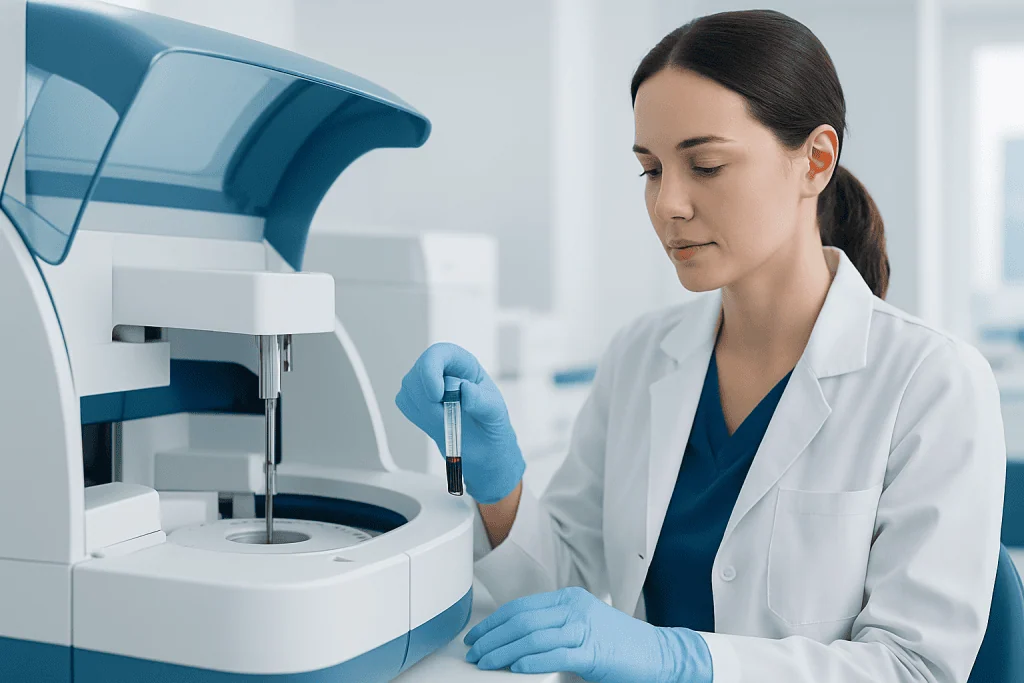
AMH stands for anti-Müllerian hormone. It is produced by small follicles in the ovaries and is commonly used as a marker of ovarian reserve. In general, a higher AMH level suggests that more follicles are present, while a lower level may suggest a reduced ovarian reserve.
One reason AMH is widely used is that it can usually be measured on any day of the menstrual cycle. This makes it more convenient than some other hormone tests. Doctors often use AMH to help estimate how the ovaries may respond during fertility treatments such as IVF treatment or other forms of assisted reproduction.
Even so, AMH has limits. It does not directly measure egg quality, and it does not tell whether a person can or cannot become pregnant naturally. A person with low AMH may still conceive, while a person with high AMH may still have difficulty if other issues are present.
AMH can also be influenced by certain conditions. For example, it may be higher in people with polycystic ovary syndrome because the ovaries often contain a larger number of small follicles. For this reason, the result must always be interpreted alongside symptoms, cycle history, and ultrasound findings.
What FSH Means

FSH stands for follicle-stimulating hormone. It is made by the pituitary gland and helps stimulate the ovaries to develop follicles. In fertility testing, FSH is often measured early in the menstrual cycle, commonly on day 2 or 3, because timing affects how the result is interpreted.
When ovarian reserve declines, the body may produce more FSH in an effort to stimulate the ovaries. For that reason, a higher early-cycle FSH can suggest reduced ovarian reserve. However, FSH levels can vary from cycle to cycle, so one result does not always give the full picture.
Doctors often look at FSH together with estradiol, another hormone that may influence interpretation. If estradiol is elevated early in the cycle, it can sometimes make FSH appear more normal than expected. This is one reason why fertility specialists rarely rely on FSH alone.
Like AMH, FSH does not provide a complete prediction of fertility. It is one useful piece of information in a broader female infertility assessment. A person with an abnormal FSH can still achieve pregnancy, while a person with a normal FSH may still need further evaluation if conception is not happening.
What Ultrasound Shows
Pelvic ultrasound is an important part of female fertility testing because it provides direct imaging of the reproductive organs. A transvaginal ultrasound is most commonly used, as it gives clearer views of the ovaries and uterus. It is usually well tolerated and does not involve radiation.
One key part of the scan may be the antral follicle count. This is the number of small fluid-filled follicles seen in the ovaries at the start of the menstrual cycle. Along with AMH, this count helps estimate ovarian reserve and may help guide treatment planning.
Ultrasound can also identify structural or gynecologic issues that may affect fertility. These may include ovarian cysts, fibroids, endometrial polyps, or features suggestive of a uterine septum. Depending on the findings, the doctor may recommend further imaging or a procedure to better assess the uterine cavity.
In addition, ultrasound may offer clues about ovulation. Doctors can sometimes see whether follicles are developing normally or whether the ovaries have an appearance consistent with polycystic ovaries. This makes ultrasound useful not just for ovarian reserve, but for a wider picture of reproductive health.
How Doctors Interpret the Results Together
AMH, FSH, and ultrasound each provide different information, and they are strongest when interpreted together. AMH and antral follicle count often reflect ovarian reserve, while FSH helps show how hard the body is working to stimulate the ovaries. Ultrasound adds valuable information about anatomy and possible causes of infertility beyond hormone levels.
Age remains one of the most important factors in fertility. Even if ovarian reserve tests are reassuring, fertility still naturally changes over time because egg quality tends to decline with age. This is why doctors consider test results alongside age rather than treating the numbers as a simple yes-or-no answer.
Cycle pattern and symptoms also matter. Irregular periods, missed periods, heavy bleeding, pelvic pain, acne, or excess hair growth can suggest ovulation problems or hormonal conditions. For example, absent or infrequent periods may lead a doctor to evaluate for amenorrhea or other endocrine issues.
A complete fertility assessment may include additional blood tests, ovulation tracking, tubal evaluation, and semen analysis for the partner. This broader approach is often necessary because fertility challenges may involve more than one cause, and some people with normal ovarian reserve still have other barriers to conception.
When Testing Is Recommended
Fertility testing may be recommended for people who have been trying to conceive without success, those with irregular or absent periods, or those with a history suggesting reduced ovarian reserve. It may also be considered before fertility preservation, before certain medical treatments, or when planning pregnancy at an older reproductive age.
General timing depends on age and individual circumstances. Many doctors suggest evaluation after 12 months of trying if a person is under 35, or after 6 months if 35 or older. Earlier assessment may be advised when there are known risk factors, such as endometriosis, prior pelvic surgery, chemotherapy, or a family history of early menopause.
Testing can also be helpful when symptoms point to a possible reproductive condition. Examples include persistent irregular cycles, pelvic pain, repeated pregnancy loss, or a history of pelvic infection. In some cases, doctors may assess for premature ovarian insufficiency if periods become infrequent or stop unexpectedly.
People sometimes request AMH testing simply to understand their fertility timeline. While this can be useful in some situations, results are best discussed with a qualified doctor who can explain what the test means and what it does not mean for future pregnancy planning.
Treatment Options and Next Steps
Treatment depends on the reason for testing and what the results show. Some people need only reassurance, cycle tracking, or lifestyle guidance, while others may benefit from medication to support ovulation or treatment for an underlying gynecologic condition. If structural abnormalities are found, further procedures or surgery may sometimes be considered.
When ovarian reserve appears lower than expected, the doctor may discuss timing and fertility planning in a more proactive way. This does not automatically mean pregnancy is impossible. Instead, it may influence how quickly treatment is considered and which options are most appropriate.
If pregnancy is not occurring after evaluation, assisted reproductive methods may be discussed. Depending on the diagnosis, options may include insemination or more advanced approaches such as IVF. The choice depends on age, ovarian reserve, tubal status, sperm factors, and personal preferences.
Near the end of the evaluation process, some people are referred to multidisciplinary fertility centers for coordinated care. Acibadem International’s specialists in reproductive medicine, working in JCI-accredited hospitals, diagnose and treat fertility conditions for international patients when further assessment or treatment is needed.
Self-care, Preparation, and When to See a Doctor
Before fertility testing, it can help to track menstrual cycles, note symptoms, and gather records of past pregnancies, surgeries, or hormone tests. Knowing the first day of the menstrual period is especially helpful because some fertility blood tests and ultrasound exams are timed to the early part of the cycle. Patients should also mention any medicines, supplements, or major weight changes.
General health measures may support reproductive health, even though they cannot replace medical evaluation. Helpful steps include maintaining a healthy weight, avoiding smoking, limiting alcohol, managing long-term conditions, and seeking advice before trying to conceive if there is a known medical history. Stress reduction is also worthwhile, although stress alone is not usually the main cause of infertility.
A doctor should be consulted if periods are very irregular, absent, unusually painful, or very heavy, or if pregnancy has not happened within the expected timeframe. Earlier review is important after recurrent miscarriages, prior pelvic infection, cancer treatment, or known reproductive conditions. Prompt evaluation can clarify whether more testing or treatment is needed.
Fertility testing results can feel emotionally charged, but they are best seen as tools for planning rather than fixed predictions. A specialist can explain the meaning of the numbers, answer questions clearly, and help build a practical next-step plan based on the whole clinical picture.
Frequently asked questions
Can AMH tell if someone can get pregnant naturally?
No. AMH mainly reflects ovarian reserve, not the ability to conceive naturally in a specific month. A low AMH does not rule out natural pregnancy, and a normal or high AMH does not guarantee it.
Is a high FSH level always a sign of infertility?
Not always. A high early-cycle FSH can suggest reduced ovarian reserve, but it must be interpreted with age, estradiol, AMH, and ultrasound findings. Some people with elevated FSH still conceive, while others may need more evaluation.
What is the best day to do fertility hormone tests?
It depends on the test. FSH is often measured early in the menstrual cycle, commonly on day 2 or 3, while AMH can usually be checked on any day. A doctor will decide the best timing based on cycle pattern and the question being evaluated.
What does an antral follicle count mean?
An antral follicle count is the number of small follicles seen on ultrasound, usually early in the cycle. It helps estimate ovarian reserve and may give an idea of how the ovaries could respond to fertility treatment. It is most useful when considered together with AMH and the overall clinical picture.
Can ultrasound find the cause of infertility?
Ultrasound can find some important causes, but not all. It may identify ovarian cysts, fibroids, polyps, or uterine abnormalities, and it can provide clues about ovulation. However, additional tests may still be needed to assess the fallopian tubes, hormones, or partner factors.
Do normal fertility test results mean there is no problem?
No. Normal AMH, FSH, and ultrasound findings are reassuring, but they do not exclude all causes of infertility. Tubal blockage, endometriosis, sperm issues, and timing of ovulation may still affect conception.
This article is for general information only and is not a substitute for professional medical advice. Please consult a qualified doctor about your individual situation.
Ultrasound in Turkey — costs, top hospitals & a free quote
JCI-accredited · board-certified surgeons · reply within 24h
Add us as a Preferred Source to see more of our trusted health content across Google Search, AI Overviews and Discover.

Check-up & Preventive Medicine
Comprehensive health screenings designed for early detection and prevention.
1 specialists in this unitRelated Treatments
Related Conditions
More from the Health Library

Endometrial Thickness and IVF: Why the Uterine Lining Matters

IVF for Tubal Factor Infertility: When It Is Recommended

Egg Freezing: Candidates, Process, Success Factors, and Risks

Intrauterine Insemination (IUI): Who It Helps and What to Expect

IVF With Adenomyosis: How It Can Affect Fertility Treatment

When Are You Most Fertile? Understanding the Fertile Window
Gynecology & Obstetrics Specialists at Acibadem

Dr. Birgül Karakoç
Gynecology & Obstetrics
Prof. Dr. Bülent Özçelik
Gynecology & Obstetrics
Prof. Dr. Bülent Tıraş
Gynecology & Obstetrics
Dr. Burak Güler
Gynecology & Obstetrics