Moyamoya Disease: Stroke Risk, Diagnosis, and Treatment Options

Moyamoya disease causes progressive narrowing of blood vessels at the base of the brain. It can lead to transient ischemic attacks, ischemic stroke, or brain bleeding.
Key Takeaways
- Moyamoya disease causes progressive narrowing of blood vessels at the base of the brain.
- It can lead to transient ischemic attacks, ischemic stroke, or brain bleeding.
- Symptoms may include weakness, speech changes, headaches, seizures, or brief neurologic episodes.
- Diagnosis usually relies on brain imaging and detailed blood vessel studies.
- Treatment often focuses on stroke prevention and may include revascularization surgery.
Moyamoya disease is a rare condition in which the main arteries supplying the brain become narrowed, reducing blood flow and increasing the risk of stroke or bleeding. With timely diagnosis, careful monitoring, and appropriate treatment, many people can lower complications and protect brain function.
Overview of Moyamoya Disease
Moyamoya disease is a rare cerebrovascular disorder that affects the arteries at the base of the brain, especially the internal carotid arteries and their branches. Over time, these vessels become progressively narrowed, which limits blood flow to important brain tissue. In response, the body forms a network of tiny collateral vessels to try to compensate. On angiography, these small vessels can look like a hazy cloud, which led to the name “moyamoya,” a Japanese word describing a puff of smoke.
The condition can affect both children and adults, but it may present differently depending on age. Children are more likely to have symptoms caused by reduced blood flow, such as transient ischemic attacks or ischemic stroke. Adults may also have ischemic events, but they can sometimes present with bleeding in or around the brain from fragile collateral vessels.
Moyamoya disease is distinct from “moyamoya syndrome.” Moyamoya disease refers to the condition when no associated cause is identified. Moyamoya syndrome describes a similar pattern of blood vessel narrowing that occurs in association with another medical condition, such as sickle cell disease, certain genetic syndromes, prior radiation treatment, or autoimmune disease.
Although the diagnosis can feel overwhelming, early recognition is important because treatment can reduce the risk of future brain injury. A specialist team in neurology, neurosurgery, and advanced imaging often works together to assess disease severity and plan care.
Symptoms and Warning Signs
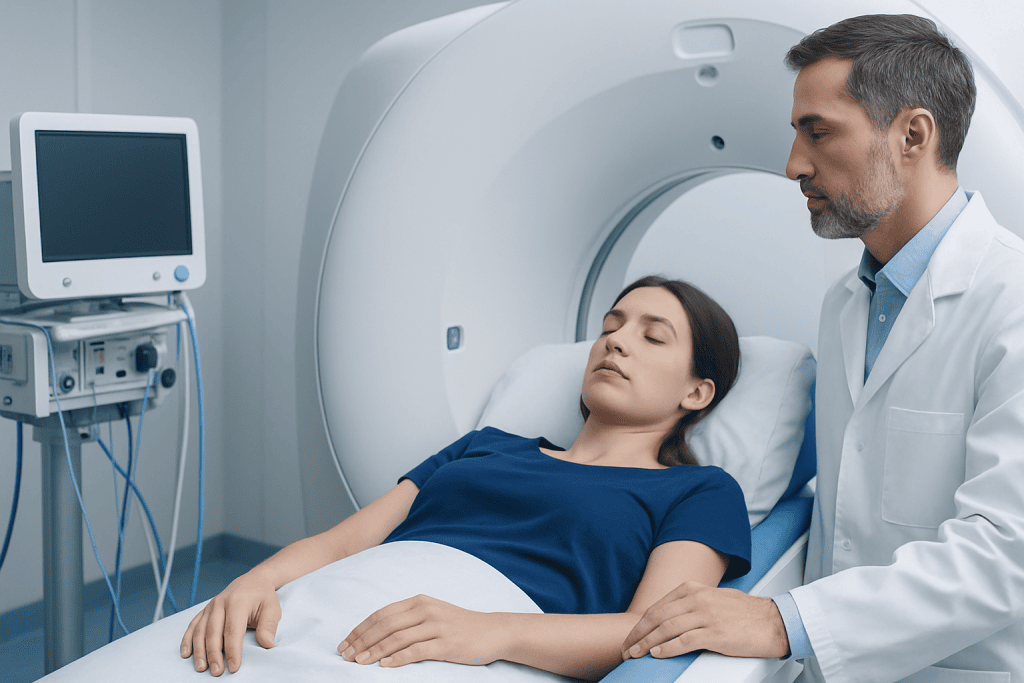
Symptoms of moyamoya disease happen because the brain is not receiving enough blood or because fragile abnormal vessels bleed. Some people develop symptoms gradually, while others notice sudden neurologic changes. Episodes may be brief and fully reversible, or they may signal a stroke that needs urgent medical care.
Common symptoms can include weakness or numbness on one side of the body, facial drooping, trouble speaking, confusion, vision changes, headaches, dizziness, and seizures. In children, spells may sometimes be triggered by crying, fever, dehydration, or hyperventilation, all of which can temporarily reduce effective blood flow to the brain.
Some people first experience transient ischemic attacks, sometimes called “mini-strokes,” which are temporary episodes of stroke-like symptoms. Others may present with a completed stroke or a transient ischemic attack. Adults with bleeding may have a sudden severe headache, vomiting, drowsiness, or new neurologic deficits.
- Brief weakness, numbness, or clumsiness
- Speech or language difficulties
- Recurring headaches
- Seizures
- Visual disturbances
- Sudden severe headache or collapse, which may suggest bleeding
Any sudden stroke-like symptom should be treated as a medical emergency. Even if symptoms improve quickly, prompt assessment is important because early care may help prevent a more serious event.
Causes and Risk Factors
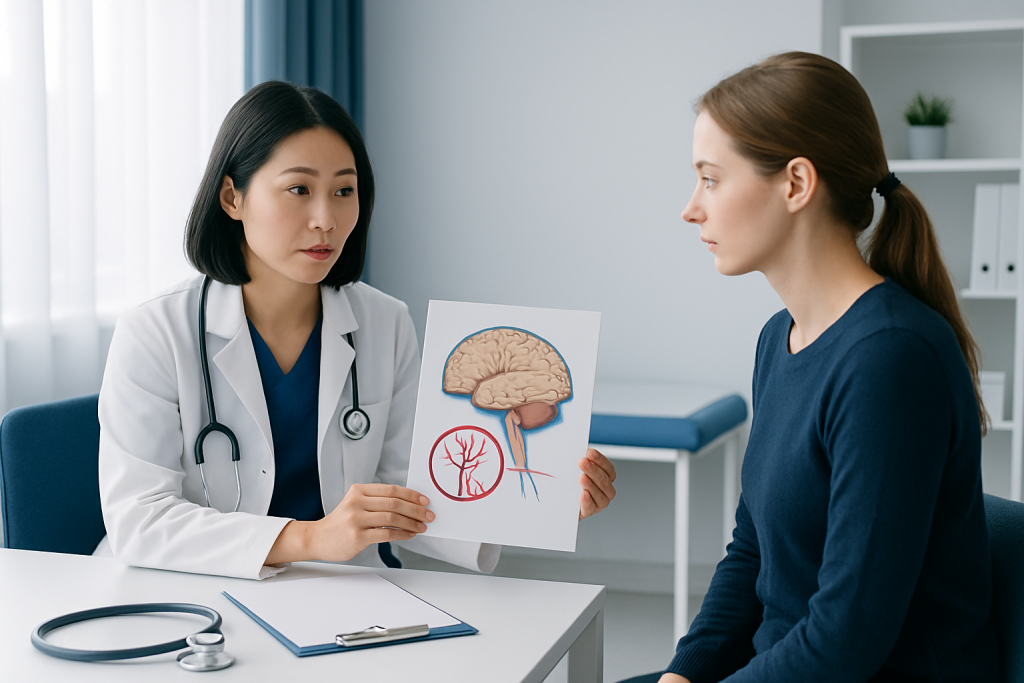
The exact cause of moyamoya disease is not fully understood. In many people, especially those with “true” moyamoya disease, no single trigger can be identified. Researchers believe genetic factors play an important role, and the condition can run in families. Certain gene variants have been linked to increased risk, although not everyone with these variants develops the disease.
Moyamoya is seen more often in some populations and can occur at any age, with peaks in childhood and mid-adulthood. A family history of the disease raises concern, and screening may be considered in select situations when recommended by a specialist. The disease may affect both sides of the brain, though one side can become involved earlier than the other.
When similar vessel changes happen alongside another medical condition, the term moyamoya syndrome is used. Conditions associated with this pattern can include sickle cell disease, Down syndrome, neurofibromatosis type 1, thyroid disease, autoimmune disorders, and prior radiation to the head or neck. Other vascular conditions, such as carotid artery stenosis, may also reduce blood flow to the brain, but they are different disorders and require different evaluation.
Risk factors do not guarantee that someone will develop moyamoya, and the absence of risk factors does not rule it out. That is why symptom pattern, age, medical history, and imaging findings are all important when making the diagnosis.
How Moyamoya Disease Is Diagnosed
Diagnosis usually begins with a careful medical history and neurologic examination. A doctor will ask about stroke-like episodes, headaches, seizures, developmental concerns in children, family history, and any associated medical conditions. Because symptoms can overlap with other neurologic disorders, imaging is essential.
Brain MRI can show signs of prior strokes, reduced blood flow, or bleeding. Magnetic resonance angiography and CT angiography can help visualize the narrowed arteries and the collateral vessel network. In many cases, catheter cerebral angiography remains the most detailed test for confirming moyamoya and understanding which vessels are involved. Advanced imaging through neuroradiology evaluation is often central to diagnosis and treatment planning.
Doctors may also use perfusion studies to assess how well blood is reaching different parts of the brain, especially when deciding whether surgery may help. Additional tests can look for causes of moyamoya syndrome, such as blood disorders, inflammatory disease, or thyroid problems. In children or complex cases, teams may also use specialized neurologic testing and developmental assessment through services such as neuropediatric care when appropriate.
Because moyamoya can progress over time, follow-up imaging is often recommended even after diagnosis. Regular monitoring helps the care team track changes, estimate stroke risk, and adjust the treatment plan if symptoms or blood flow patterns change.
Treatment Options
Treatment aims to lower the risk of stroke, preserve brain function, and relieve symptoms. The best approach depends on age, symptoms, imaging findings, whether one or both sides are affected, and whether the person has had ischemic events or bleeding. Management often combines medical care, lifestyle measures, and in many cases surgery.
Medication may be used to reduce stroke risk or help manage symptoms, but medicines do not reverse the narrowed arteries. Doctors may recommend antiplatelet therapy for some patients, depending on individual circumstances. Seizures, headaches, and associated conditions may also need treatment. Careful blood pressure management, hydration, and avoidance of triggers that reduce brain blood flow can also be important.
For many symptomatic patients, revascularization surgery is a key treatment. These procedures improve blood supply to the brain either by directly connecting an external scalp artery to a brain artery, indirectly placing well-vascularized tissue onto the brain surface to encourage new vessel growth, or using a combination approach. Planning and follow-up may involve interventional neuroradiology and other imaging specialists to evaluate circulation before and after surgery.
Surgical treatment does not cure the underlying tendency for vessel narrowing, but it can significantly improve blood flow and lower the risk of future ischemic events in many patients. Recovery and long-term results vary, so close follow-up with an experienced team is essential.
Prevention, Self-care, and Living With Moyamoya
There is no known way to prevent moyamoya disease itself, but good self-care may help reduce the chance of complications. People living with moyamoya are often advised to stay well hydrated, avoid smoking, and manage other vascular risk factors such as high blood pressure, diabetes, and high cholesterol if these are present. The goal is to support stable blood flow to the brain and overall vascular health.
Families should learn the early signs of stroke and know when to seek urgent help. Children may need support at school if they have had neurologic symptoms, learning difficulties, or fatigue. Adults may need guidance about work, driving, physical activity, pregnancy planning, or travel depending on symptom severity and treatment history.
It can also help to avoid sudden situations that may trigger hyperventilation or dehydration, especially in children with previous episodes. Headaches are common, but not every headache is caused by moyamoya. If headaches are frequent or changing, a specialist review may be useful; some patients benefit from coordinated assessment through services such as headache medicine.
Long-term care usually includes regular visits with neurology and, when relevant, neurosurgery. Near the end of the care pathway, some international patients may seek evaluation at centers such as Acibadem International, where multidisciplinary specialists in JCI-accredited hospitals diagnose and treat complex neurologic and cerebrovascular conditions.
When to See a Doctor
Any sudden neurologic symptom requires urgent medical attention. This includes weakness, numbness, difficulty speaking, facial drooping, loss of balance, severe sudden headache, seizure, or sudden confusion. Even short-lasting symptoms should not be ignored because they may be warning signs before a larger stroke.
A non-emergency medical appointment is appropriate for recurring headaches, repeated brief episodes of weakness or speech difficulty, unexplained seizures, or developmental or learning concerns in a child. People with a family history of moyamoya or an associated condition may also benefit from specialist advice if symptoms appear.
After diagnosis, regular follow-up is important even when a person feels well. Moyamoya can change over time, and monitoring helps guide decisions about imaging, medication, surgery, and recovery support. Prompt communication with the care team can make a meaningful difference if symptoms return or worsen.
If a person has already been treated, new symptoms still need medical review. They may reflect reduced blood flow, a new stroke, bleeding, or another condition that needs attention.
Frequently asked questions
Is moyamoya disease a type of stroke?
No. Moyamoya disease is a blood vessel disorder that increases the risk of stroke, but it is not itself a stroke. It causes narrowing of important brain arteries, which can lead to reduced blood flow or bleeding.
Can children get moyamoya disease?
Yes. Moyamoya disease can occur in both children and adults. In children, it often causes transient ischemic attacks, weakness, seizures, or learning and developmental concerns related to reduced blood flow.
Is moyamoya disease hereditary?
It can be. Some people have a family history, and certain genetic factors are linked with higher risk. However, not every case is inherited, and many people diagnosed have no known family history.
Does everyone with moyamoya need surgery?
Not everyone, but many symptomatic patients are evaluated for revascularization surgery because it can improve blood flow and reduce future stroke risk. The decision depends on symptoms, age, imaging findings, and overall health.
Can moyamoya disease be cured?
There is no simple cure that reverses the underlying vessel changes. However, treatment can lower the risk of stroke, improve circulation, and help many people live more safely with the condition.
What tests are used to diagnose moyamoya disease?
Doctors usually use brain imaging such as MRI, MRA, CT angiography, and sometimes catheter cerebral angiography. These tests show narrowed arteries, collateral vessels, and signs of reduced blood flow, stroke, or bleeding.
References
- National Institute of Neurological Disorders and Stroke
- American Stroke Association
- National Organization for Rare Disorders
- National Health Service
- Mayo Clinic
This article is for general information only and is not a substitute for professional medical advice. Please consult a qualified doctor about your individual situation.
Explore treatments in Turkey — costs, top hospitals & a free quote
JCI-accredited · board-certified surgeons · reply within 24h
Add us as a Preferred Source to see more of our trusted health content across Google Search, AI Overviews and Discover.

Neurology
Diagnosis and treatment of disorders of the brain, spinal cord, nerves and muscles.
51 specialists in this unit