LASIK Vision Institute vs Hospital Eye Centers

Hospital eye centers usually provide broader eye testing and access to multiple subspecialists in one place. A standalone LASIK center may be convenient for routine refractive surgery, but not every patient is an ideal LASIK candidate.
Key Takeaways
- Hospital eye centers usually provide broader eye testing and access to multiple subspecialists in one place.
- A standalone LASIK center may be convenient for routine refractive surgery, but not every patient is an ideal LASIK candidate.
- The best choice depends on eye health, age, prescription stability, corneal thickness, and personal preferences.
- A careful preoperative examination is more important than marketing claims or promotional pricing.
- Patients should ask about surgeon experience, available alternatives, complication management, and long-term follow-up.
Choosing where to have laser vision correction involves more than comparing prices or brand names. Patients often benefit from understanding how standalone LASIK providers and hospital-based eye centers differ in evaluation, technology, follow-up care, and access to specialists.
Overview
The question of LASIK Vision Institute vs Hospital Eye Centers is really a question about care models. Both can evaluate and treat refractive errors such as nearsightedness, farsightedness, and astigmatism, but they may differ in scope, staffing, and the range of services available if a patient needs something beyond standard laser correction.
Standalone LASIK centers often focus mainly on refractive surgery. This can make the process feel streamlined, with consultations, surgery scheduling, and routine follow-up designed around laser vision correction. For healthy adults with stable prescriptions and no significant eye disease, this may be a practical path.
Hospital eye centers usually provide refractive surgery within a larger ophthalmology service. In addition to LASIK, they may offer alternatives such as PRK, LASEK, lens-based options, and broader medical and surgical eye care. This can be especially valuable for patients with dry eye, thin corneas, cataracts, glaucoma risk, retinal concerns, or complex medical histories.
Neither setting is automatically better for every person. The most important issue is whether the center can accurately determine candidacy, explain options clearly, and provide safe treatment and follow-up tailored to the individual patient.
How the Two Settings Commonly Differ
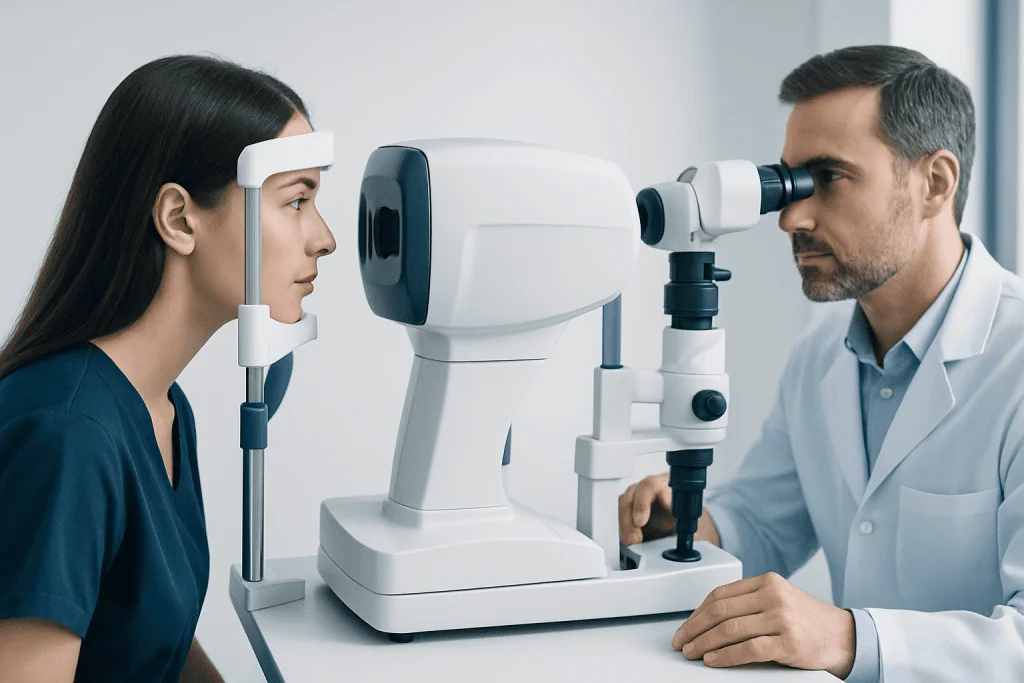
A dedicated LASIK provider is often designed for efficiency. Patients may find easier access to consultations, standardized pathways, and a strong emphasis on refractive surgery education. Some people appreciate the focused experience and the sense that the whole center is built around one procedure.
Hospital eye centers tend to work within a broader clinical system. They commonly include cornea specialists, retina specialists, glaucoma experts, neuro-ophthalmology, cataract services, and emergency support. If an eye condition is discovered during screening, the patient may be able to transition smoothly to the right specialist without seeking care elsewhere.
Another difference is case complexity. Patients with prior eye surgery, irregular corneas, autoimmune disease, diabetes-related eye concerns, early cataracts, or uncertain visual symptoms may need a more comprehensive assessment than a routine LASIK screening. A hospital setting can be helpful when the answer is not simply yes or no, but which treatment is safest and most effective.
Technology can be excellent in either setting, but the way it is used matters. Advanced lasers, corneal mapping, and dry-eye testing are useful only when paired with careful interpretation by experienced ophthalmologists and a thorough informed-consent process.
Who May Benefit More From a Hospital Eye Center
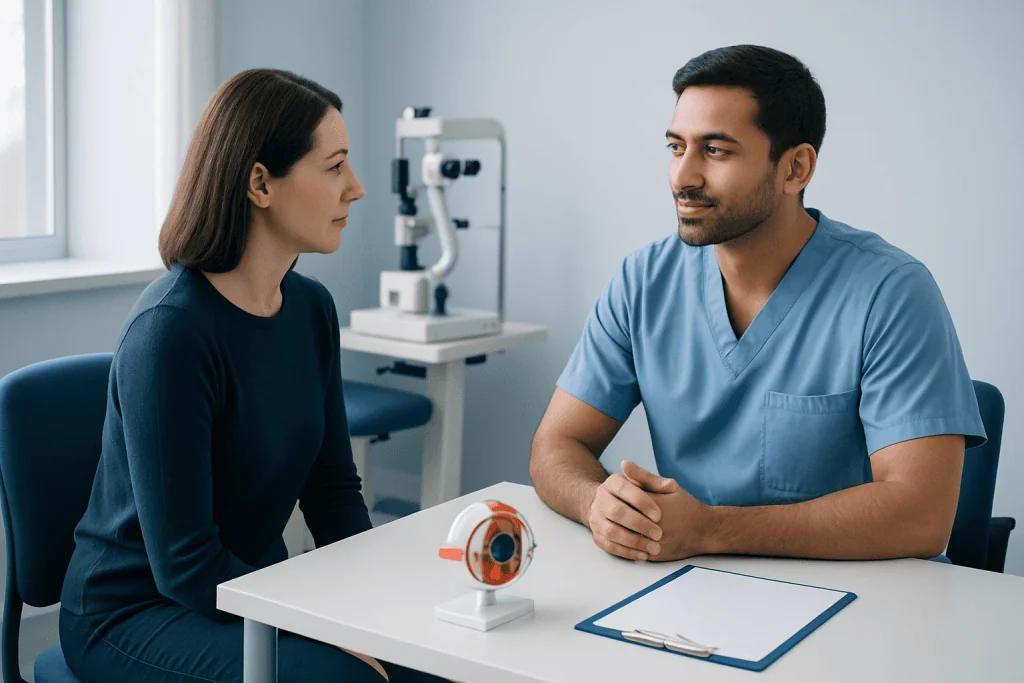
Many patients considering laser vision correction are healthy candidates for standard LASIK. However, some people benefit from the wider expertise of a hospital eye center. This includes adults with high prescriptions, mixed refractive errors, dry eye symptoms, contact lens intolerance, previous eye trauma, or a family history of eye disease.
Age also matters. As people get older, blurry vision is not always caused only by refractive error. Early cataracts, presbyopia, ocular surface disease, and other age-related changes can affect which treatment makes the most sense. In these situations, a broad ophthalmic evaluation may identify options beyond LASIK, such as lens-based vision correction or treatment for cataracts.
Patients with suspicious findings on screening may need a more detailed workup before any laser procedure. Examples include thin or irregular corneas, possible keratoconus, elevated eye pressure, unexplained reduced vision, or signs of retinal disease. A hospital eye center is often better equipped to investigate these issues before recommending surgery.
There is also the question of unexpected needs after treatment. Most LASIK recoveries are straightforward, but if a patient develops unusual symptoms or has a pre-existing condition that affects healing, access to comprehensive ophthalmology and related specialties can add reassurance and continuity of care.
Preoperative Evaluation: What Really Matters
The quality of the preoperative assessment is one of the most important factors in a good outcome. A thorough evaluation should review visual goals, occupation, nighttime driving needs, pregnancy status, medications, general health, and any history of dry eyes, allergies, or prior eye problems. Patients should feel free to ask questions and should not feel rushed into a decision.
Testing usually includes refraction, corneal thickness measurement, corneal topography or tomography, pupil assessment, tear film evaluation, and a dilated eye examination when appropriate. The aim is not just to confirm a prescription, but to identify whether the cornea and the rest of the eye are suitable for surgery.
Good screening also means identifying when LASIK is not the best option. Some patients are better served by custom laser vision correction, surface procedures such as PRK, or no surgery at all. Others may need treatment for dry eye or another eye condition before surgery can be considered safely.
Patients comparing providers should ask practical questions:
- Who performs the examination and explains the results?
- Will an ophthalmologist review candidacy personally?
- What alternatives are offered if LASIK is unsuitable?
- How are side effects and complications managed?
- What follow-up schedule is included?
Treatment Options Beyond Standard LASIK
Many comparisons focus only on LASIK itself, but the best refractive center is often one that offers appropriate alternatives. LASIK is widely used and effective for many people, yet not every eye is suited to creating a corneal flap or removing tissue in the same way. A center that offers several evidence-based options can tailor treatment to the patient rather than fitting the patient to a single procedure.
Surface ablation techniques such as PRK or LASEK may be considered for some patients with thinner corneas, certain occupational exposures, or other factors that make flap-based surgery less ideal. Some centers also provide femtosecond-laser approaches such as bladeless LASIK techniques, depending on the individual case and local practice.
For older adults, lens-based procedures may deserve discussion, especially if presbyopia or early cataracts are already affecting visual quality. Hospital eye centers may be more likely to offer a full comparison between corneal laser procedures, cataract surgery, and refractive lens options in one setting.
This broader menu can reduce the pressure to choose LASIK simply because it is the main procedure a center performs. The best recommendation is one based on eye anatomy, safety, visual expectations, and long-term eye health.
Safety, Follow-Up, and Continuity of Care
LASIK is generally considered safe for properly selected patients, but every procedure has potential risks and side effects. Temporary dryness, glare, halos, fluctuating vision, under-correction, over-correction, and the possible need for enhancement are part of informed decision-making. Rare complications can also occur, which is why follow-up matters.
A standalone LASIK center may provide structured postoperative visits focused on healing and visual recovery. This is often sufficient for uncomplicated cases. Patients should still ask what happens if they develop significant pain, a sudden drop in vision, or symptoms outside normal office hours.
Hospital eye centers may offer an advantage when follow-up needs become more complex. If corneal healing is slower than expected, if dry eye becomes persistent, or if another eye problem is identified during recovery, integrated access to general ophthalmology and subspecialty care may simplify treatment.
Patients who value long-term continuity often prefer a setting where they can continue routine eye care as their needs change over time. This can be particularly relevant as age-related eye issues develop later in life, even after successful refractive surgery.
How to Choose the Right Provider
When deciding between a LASIK-focused institute and a hospital eye center, patients may benefit from looking beyond advertising language. Important considerations include surgeon qualifications, the thoroughness of screening, whether alternatives are discussed honestly, and how clearly risks and expected results are explained.
It can help to compare centers using the same questions. Patients may ask whether the surgeon has experience with their prescription range, what technology is available, how candidacy is determined, and whether the provider routinely treats patients with dry eye, irregular corneas, or other complicating factors. A trustworthy center should be comfortable explaining why a patient is or is not a good candidate.
Practical details matter too. Travel distance, scheduling, cost transparency, access to urgent advice after surgery, and comfort with the care team all play a role. A highly polished consultation is less important than careful clinical judgment and clear communication.
For international patients or those seeking broad ophthalmic expertise, a hospital-based service may feel more reassuring because multiple specialists and diagnostic resources are available under one umbrella. Acibadem International’s multidisciplinary eye specialists and JCI-accredited hospitals diagnose and treat refractive and other eye conditions for international patients.
When to Seek Specialist Advice Before LASIK
A refractive surgery consultation should be delayed or expanded if a patient has symptoms that are not typical of simple glasses dependence. Warning signs include unexplained vision loss, double vision, eye pain, light flashes, many new floaters, marked redness, or a major difference in vision between the two eyes. These symptoms need proper diagnosis before elective laser surgery is considered.
Patients should also seek specialist advice if they have autoimmune disease, uncontrolled diabetes, recurrent eye infections, severe allergies affecting the eyes, or a history of corneal disease. Pregnancy and breastfeeding can temporarily affect refraction and tear film stability, so timing of surgery may need reconsideration.
If a patient has been told they are not a LASIK candidate at one center, that does not always mean surgery is impossible. It may mean another procedure is more suitable, or that treatment should wait until the eyes are healthier or the prescription is more stable. A second opinion from comprehensive ophthalmology can be useful.
The safest approach is to treat LASIK as a medical decision, not just a retail purchase. The right provider is one that puts eye health first, even if that means recommending a different procedure or advising against surgery altogether.
Frequently asked questions
Is a hospital eye center better than a LASIK institute?
Not always. A hospital eye center often offers broader testing, more treatment options, and access to subspecialists, which can be especially helpful for complex cases. A dedicated LASIK institute may still be appropriate for healthy patients with straightforward refractive errors.
What should patients ask during a LASIK consultation?
Patients should ask whether they are truly a good candidate, what alternatives exist, who will perform the surgery, and how complications are handled. It is also reasonable to ask about expected side effects, enhancement policies, and the schedule for follow-up visits.
Why might someone be declined for LASIK?
Common reasons include unstable prescription, thin or irregular corneas, severe dry eye, pregnancy, certain medical conditions, or signs of other eye disease. Being declined can protect long-term eye health and may lead to a safer alternative treatment.
Are hospital eye centers more likely to offer alternatives to LASIK?
Often yes. Because they usually provide comprehensive ophthalmology services, hospital eye centers may offer PRK, LASEK, lens-based procedures, cataract care, and management for underlying eye disease. This can help match the treatment to the patient's anatomy and visual needs.
Does more technology mean better LASIK results?
Advanced technology can improve assessment and treatment planning, but it does not replace careful patient selection and surgical judgment. The skill of the ophthalmologist and the quality of the preoperative evaluation are just as important as the equipment used.
Should patients get a second opinion before LASIK?
A second opinion can be very helpful, especially if the recommendation is unclear or if one center says the patient is unsuitable. It may confirm the plan, identify a safer alternative, or uncover an eye condition that needs treatment first.
This article is for general information only and is not a substitute for professional medical advice. Please consult a qualified doctor about your individual situation.
LASIK in Turkey — costs, top hospitals & a free quote
JCI-accredited · board-certified surgeons · reply within 24h
Add us as a Preferred Source to see more of our trusted health content across Google Search, AI Overviews and Discover.

Related Treatments
More from the Health Library

Keratoconus: Blurred Vision from Corneal Thinning

Contact Lenses vs Glasses: How to Choose What Fits Your Vision Needs

PRK Recovery Timeline: Healing Stages, Aftercare, and Side Effects

Contact Lenses for Dry Eyes: Are They Still an Option?

Laser Eye Surgery: What It Treats and How It Works