

VASER Lipo: How Ultrasound-Assisted Fat Removal Works

VASER lipo uses ultrasound energy to break up fat cells before suction removal. It is mainly a body contouring procedure, not a treatment for obesity or a substitute for healthy lifestyle habits.
Key Takeaways
- VASER lipo uses ultrasound energy to break up fat cells before suction removal.
- It is mainly a body contouring procedure, not a treatment for obesity or a substitute for healthy lifestyle habits.
- Good candidates are usually close to a stable, healthy weight and have localized fat deposits with reasonably firm skin.
- Recovery varies by treatment area and extent of surgery, but swelling, bruising, and temporary soreness are common.
- Choosing a qualified plastic surgeon and following aftercare instructions are important for safety and results.
VASER lipo is a type of liposuction that uses ultrasound energy to loosen fat before it is removed. It is designed for body contouring rather than weight loss and may help shape areas with stubborn fat that do not respond to diet and exercise.
Overview of VASER Lipo
VASER lipo is a form of liposuction that uses ultrasound energy to help separate fat cells from surrounding tissues before they are removed with suction. The name VASER refers to vibration amplification of sound energy at resonance. In practical terms, this means the technique is designed to target fat while aiming to reduce trauma to nearby blood vessels, nerves, and connective tissue compared with more traditional approaches.
The procedure is most often used to improve body contours in areas where fat tends to persist despite healthy eating and regular physical activity. Common treatment areas include the abdomen, waist, flanks, thighs, back, arms, chest, and under the chin. Some people choose VASER lipo as part of a broader body contouring plan, while others use it to refine one specific area.
It is important to understand that VASER lipo is not a weight-loss procedure. It does not treat obesity and should not be viewed as a replacement for nutrition, exercise, or medically supervised weight management. Instead, it is best thought of as a contouring technique for selected patients who want to reshape localized fat deposits.
How Ultrasound-Assisted Fat Removal Works
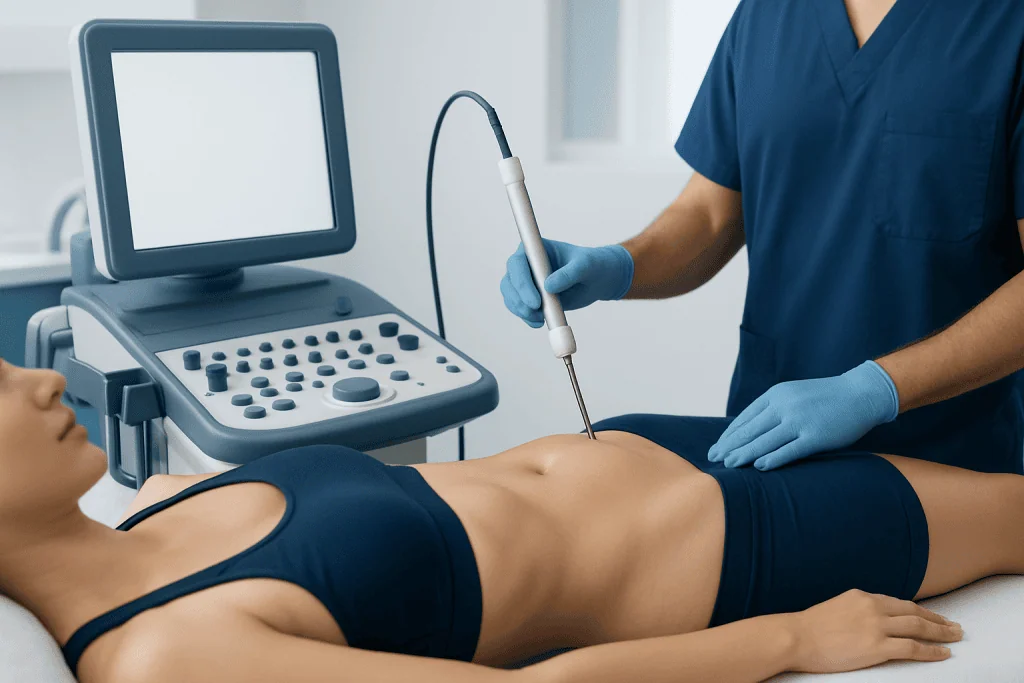
During VASER lipo, the surgeon first makes small incisions in the treatment area. A fluid solution is typically placed into the tissue to help reduce bleeding, improve comfort, and prepare the fat for removal. A thin probe then delivers ultrasound energy into the fatty layer, where it helps loosen and emulsify fat cells.
Once the fat has been broken up, it is removed with a cannula, which is a narrow suction tube. Because the fat has already been loosened, the surgeon may be able to remove it more precisely and sculpt the area in a controlled way. This can be especially useful when defining contours around the waistline, arms, chest, or neck, and it may also complement procedures such as arm liposuction or neck contouring when a personalized approach is needed.
Depending on the amount of fat being treated and the body areas involved, VASER lipo may be performed under local anesthesia with sedation or under general anesthesia. The exact technique, number of areas treated, and recovery plan vary from one person to another, so the surgeon’s assessment is an important part of planning safe care.
Who May Be a Good Candidate

Good candidates for VASER lipo are usually adults in generally good health who are close to their target weight but have areas of stubborn fat. They often have realistic expectations and understand that the procedure can improve shape and proportion, but it cannot create perfection or stop future weight gain.
Skin quality matters too. People with mild to moderate skin elasticity often see the best contouring effect because the skin can adapt more easily after fat removal. If skin is very loose, another procedure may sometimes be recommended along with or instead of liposuction. In patients who have had major weight changes, post-weight-loss contouring procedures may be more appropriate in selected areas.
Not everyone is an ideal candidate. People with certain medical conditions, poor wound healing, active infections, or unrealistic goals may be advised to postpone or avoid the procedure. A surgeon may also discuss other options, such as classic liposuction, if that approach better suits the person’s anatomy and goals.
- Best suited for localized fat deposits rather than overall weight reduction
- Works best when weight has been stable for some time
- Requires understanding of benefits, limits, and recovery
- Smoking and some medications may increase risks and affect healing
Benefits, Limits, and Possible Risks
Many patients are interested in VASER lipo because it can allow detailed shaping of certain body areas. Potential benefits may include improved contour, the ability to treat fibrous areas more effectively, and a technique that may be gentler on nearby tissues than some older methods. In the right patient, this may support a smoother sculpting process and a more defined result.
Even so, the procedure has clear limits. VASER lipo cannot treat cellulite reliably, remove significant excess skin, or replace a healthy lifestyle. Results also depend on factors such as skin elasticity, body composition, surgical technique, and healing. Some areas may improve more than others, and subtle asymmetry can occur naturally in the body.
As with any surgery, risks are possible. These can include swelling, bruising, pain, fluid buildup, contour irregularities, numbness, infection, bleeding, burns, scarring, and reactions related to anesthesia. Rare but serious complications can occur with liposuction in general, which is why proper patient selection, sterile technique, and an experienced surgical team matter. People prone to problematic scar formation may wish to discuss concerns such as keloid scars during consultation.
Consultation and Diagnosis Before the Procedure
Before VASER lipo, the surgeon carries out a detailed assessment to decide whether the procedure is appropriate and safe. This usually includes a review of medical history, current medications, allergies, previous surgeries, smoking status, and any chronic conditions. A physical examination helps the surgeon evaluate fat distribution, skin tone, body proportions, and the areas the patient wants to change.
The consultation is also when treatment goals are discussed. The surgeon may take photographs, explain what can realistically be achieved, and describe where incisions are likely to be placed. If another issue is contributing to the body contour concern, a different treatment plan may be advised. For example, in some men, enlarged chest appearance may be related not only to fat but also to glandular tissue, which may require evaluation for gynecomastia.
Patients may be asked to undergo routine preoperative tests depending on their age, medical background, and the planned extent of surgery. Instructions often include stopping smoking, avoiding certain supplements or medicines that increase bleeding risk if approved by a doctor, and arranging support for the first day or two after the procedure.
What Recovery Is Usually Like
After VASER lipo, some swelling, bruising, drainage from incision sites, and soreness are expected. Many surgeons recommend a compression garment to help support healing and reduce swelling. The exact recovery timeline depends on how much fat was removed, which body areas were treated, and whether other procedures were performed at the same time.
Light walking is usually encouraged early to support circulation, but strenuous exercise and heavy lifting are often limited for a period advised by the surgeon. Some people return to desk-based work within several days, while others need more time. It is common for the body to look swollen at first, so final contour changes may take weeks to months to become clearer.
Follow-up appointments are important because they allow the surgical team to monitor healing and address concerns such as persistent swelling, uneven firmness, or signs of infection. Patients should report symptoms such as fever, increasing redness, shortness of breath, severe pain, or sudden swelling promptly, as these need medical review.
Results, Self-Care, and When to Seek Medical Advice
When recovery goes well, the fat cells removed during VASER lipo do not come back in the same way. However, remaining fat cells can still enlarge if a person gains weight. For that reason, long-term results are best maintained with balanced nutrition, regular exercise, hydration, sleep, and stable weight habits. These steps help preserve body shape and support general health.
Patients should also protect healing skin, wear garments as instructed, and avoid returning to intense activity too quickly. It is helpful to keep expectations practical: the goal is improvement in contour, not a completely different body type. If excess skin, muscle laxity, or other structural issues are present, additional procedures may sometimes be discussed as part of a wider cosmetic surgery plan.
A doctor should be consulted if there is unusual pain, increasing swelling on one side, drainage with a bad odor, significant warmth or redness, chest pain, or breathing difficulty. These symptoms do not always mean a serious problem, but they should not be ignored. For people seeking specialist evaluation, Acibadem International’s multidisciplinary teams in JCI-accredited hospitals assess and treat body contouring concerns for international patients.
Frequently asked questions
Is VASER lipo the same as regular liposuction?
Both procedures remove fat with suction, but VASER lipo uses ultrasound energy first to loosen fat cells. This may help with precision in selected areas, but the best option depends on a person’s anatomy, goals, and surgeon’s recommendation.
Can VASER lipo help with weight loss?
VASER lipo is not intended as a weight-loss treatment. It is mainly used to shape specific areas of stubborn fat in people who are already near a stable, healthy weight.
How long does it take to recover from VASER lipo?
Recovery time varies depending on the treatment area and how much fat is removed. Many people can resume light daily activities within a few days, but swelling can last for weeks and final results may take several months to settle.
Does VASER lipo tighten loose skin?
VASER lipo may offer some improvement in contour, but it is not a reliable treatment for significant loose or hanging skin. If skin laxity is a major concern, the surgeon may discuss other procedures that better address skin tightening or removal.
Are the results of VASER lipo permanent?
The removed fat cells are permanently taken out of the treated area. However, remaining fat cells can still enlarge if weight is gained, so healthy habits are important for maintaining results.
Who should avoid or postpone VASER lipo?
People with uncontrolled medical conditions, active infections, poor healing, or unrealistic expectations may need to avoid or delay the procedure. A surgeon will review overall health, medications, and risk factors to decide whether it is appropriate.
References
- American Society of Plastic Surgeons
- International Society of Aesthetic Plastic Surgery
- National Health Service
- U.S. Food and Drug Administration
- Mayo Clinic
This article is for general information only and is not a substitute for professional medical advice. Please consult a qualified doctor about your individual situation.
Ultrasound in Turkey — costs, top hospitals & a free quote
JCI-accredited · board-certified surgeons · reply within 24h
Add us as a Preferred Source to see more of our trusted health content across Google Search, AI Overviews and Discover.

Check-up & Preventive Medicine
Comprehensive health screenings designed for early detection and prevention.
1 specialists in this unitRelated Treatments
Related Conditions
More from the Health Library



Related Specialists
Assoc. Prof. Dr. Erdem Güven (m)
Aesthetic Plastic & Reconstructive Surgery
Prof. Dr. Şükrü Yazar
Aesthetic Plastic & Reconstructive Surgery
Prof. Dr. Hakan Ağır
Aesthetic Plastic & Reconstructive Surgery
Prof. Dr. Bülent Saçak
Aesthetic Plastic & Reconstructive Surgery