Amaurosis Fugax: Symptoms, Causes, and Treatment Options

A brief, painless loss or dimming of vision in one eye that then recovers can signal reduced blood flow to the retina, often from carotid artery disease or a heart source. Because the same problem can lead to stroke, seek medical assessment promptly, even if vision has fully returned.
Key Takeaways
- Amaurosis fugax usually causes sudden, temporary vision loss or dimming in one eye.
- It is often linked to reduced blood flow from carotid artery disease, heart-related emboli, or other vascular conditions.
- Even when symptoms resolve quickly, urgent medical evaluation is important because the episode may signal stroke risk.
- Diagnosis focuses on finding the underlying cause through eye, neurological, and vascular assessment.
- Treatment aims to prevent future events and may include medicines, risk-factor control, or procedures for narrowed arteries.
Amaurosis fugax is a temporary loss or dimming of vision in one eye, usually caused by a short interruption of blood flow to the retina or optic nerve. Although vision often returns within minutes, it can be a warning sign of vascular disease and should be assessed promptly.
Overview
Amaurosis fugax refers to a brief episode of vision loss, dimming, or shadowing in one eye. People often describe it as a curtain, shade, or gray film coming down over the eye and then lifting again. The symptom is temporary, but it is medically important because it can reflect a short-lived reduction in blood flow to the retina or optic nerve.
Rather than being a disease on its own, amaurosis fugax is a symptom with several possible causes. In many cases, the concern is that a small clot or plaque fragment has briefly blocked blood flow, then moved on before causing permanent damage. Because the same circulation problems can also affect the brain, this symptom may be considered a warning sign for transient ischemic attack or stroke.
Episodes often last from a few seconds to several minutes, though some can persist longer. Vision typically returns fully, which may lead some people to delay care. However, temporary recovery does not rule out a serious underlying problem, so prompt evaluation is still recommended.
What amaurosis fugax feels like
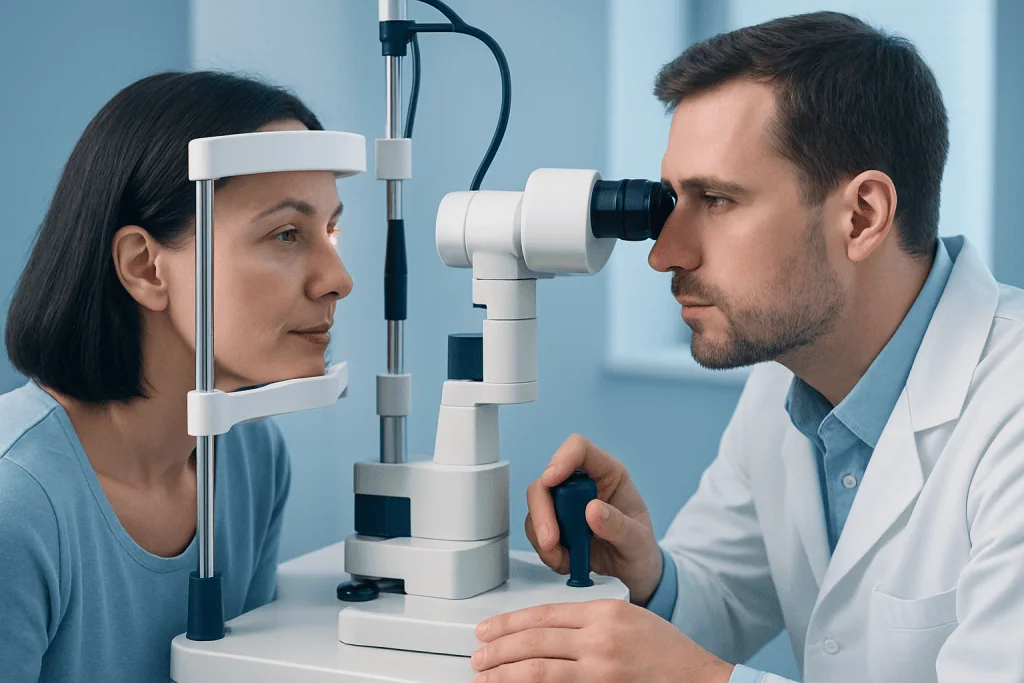
The most common symptom is sudden, painless, temporary vision loss in one eye. The change may affect all of the vision in that eye or only part of the visual field. Some people notice blurring, graying, or a dark area rather than complete loss of sight.
The episode usually begins abruptly and resolves on its own. Vision often returns to normal within minutes. The event may happen only once, or it may recur if the underlying cause is not addressed.
Features that people frequently report include:
- A curtain or veil coming over one eye
- Sudden dimming or blackout of vision
- Blurred or patchy vision in one eye
- No pain during the episode
- Full recovery of vision afterward
Other conditions can look similar. Migraine aura, for instance, may cause flashing lights, zigzag lines, or changes in both eyes, while retinal conditions can sometimes cause persistent loss rather than a brief, fully reversible episode. The symptoms overlap enough that you need a professional to sort it out.
Causes and risk factors

The most important cause of amaurosis fugax is temporary blockage of blood flow to the retina or optic nerve. This can happen when a small embolus, often made of cholesterol, platelet material, or blood clot, travels through the bloodstream and briefly obstructs a retinal artery. A common source is plaque in the carotid arteries in the neck. Narrowing in these arteries is known as carotid artery disease.
Heart conditions can also send emboli to the eye. Irregular heart rhythms such as atrial fibrillation, valve disease, or other structural heart problems may increase this risk. In some people, the issue is not an embolus but reduced overall blood flow related to low blood pressure, severe anemia, inflammation of blood vessels, or spasm of the retinal circulation.
In older adults, doctors think hard about giant cell arteritis, because it can threaten permanent vision loss if it isn’t treated quickly. This inflammatory condition may also cause headache, scalp tenderness, jaw pain while chewing, fever, or body aches. Eye specialists and physicians assess urgently for this possibility when the history suggests it.
Risk factors for amaurosis fugax often overlap with risk factors for stroke and vascular disease:
- Older age
- High blood pressure
- Diabetes
- High cholesterol
- Smoking
- Cardiovascular disease
- Atrial fibrillation or other heart rhythm disorders
- History of stroke or transient ischemic attack
Why prompt diagnosis matters
Because amaurosis fugax can reflect a circulation problem affecting the eye and brain, evaluation focuses on both vision and vascular health. Clinicians begin by asking detailed questions about the timing, pattern, duration, and whether one or both eyes were affected. A careful medical history can help separate retinal ischemia from migraine, retinal detachment, optic nerve disease, or other causes of sudden visual symptoms.
The eye examination may include visual acuity testing, pupil assessment, retinal examination, and measurement of eye pressure. Depending on the situation, doctors may look for signs of emboli in the retinal vessels or evidence of other eye conditions that can mimic this symptom. Sometimes the retina looks normal because the blockage has already cleared by the time of the exam.
Testing often extends beyond the eye. Blood pressure measurement, blood tests, heart rhythm assessment, carotid ultrasound, and brain or vascular imaging may be recommended. If stroke risk is a concern, doctors may also evaluate for stroke or transient ischemic attack, and some patients may need urgent hospital-based assessment depending on their symptoms and overall risk profile.
The point isn’t just to explain what happened — it’s to stop it happening again. Once the cause is clear, treatment can follow, whether the issue is carotid narrowing, a cardiac source of emboli, inflammation such as giant cell arteritis, or another eye-related disorder.
Treatment options
Amaurosis fugax treatment depends on the underlying cause. If doctors suspect that the episode was caused by reduced blood flow from a clot or plaque fragment, treatment often focuses on lowering the risk of stroke and protecting vision. This may include antiplatelet medicines, cholesterol-lowering therapy, and careful management of blood pressure, diabetes, and other vascular risk factors. Some people may require anticoagulation if a heart rhythm problem such as atrial fibrillation is identified.
When significant carotid artery narrowing is found, doctors may recommend a procedure to restore safer blood flow. In selected cases, this can include carotid endarterectomy or a less invasive vascular approach such as carotid angioplasty and stent. The choice depends on the degree of narrowing, symptoms, overall health, and specialist assessment.
If an eye condition is contributing, treatment is tailored to that diagnosis. For example, retinal vascular disorders may need evaluation by a retina specialist, and inflammatory causes such as giant cell arteritis need urgent medical therapy. In some patients, clinicians may also use retinal laser photocoagulation for specific retinal conditions, though this is not a routine treatment for amaurosis fugax itself.
Since the symptom overlaps with several neurological and eye disorders, your care may involve ophthalmologists, neurologists, cardiologists, and vascular specialists working together. Multidisciplinary teams such as those at Acibadem International, including JCI-accredited hospitals caring for international patients, can coordinate diagnosis and treatment when complex vascular or eye-related causes are suspected.
Prevention and self-care
Prevention centers on reducing vascular risk and following through with medical advice after even a single episode. The most effective steps are often the same ones used to reduce stroke and heart disease risk: controlling blood pressure, managing diabetes, lowering cholesterol, stopping smoking, and staying physically active within a doctor’s guidance.
Take your medicines as prescribed — every day, not just on the days you remember the episode. If a doctor recommends antiplatelet therapy, cholesterol treatment, or medication for an underlying heart rhythm disorder, consistent use can help lower the chance of another event. Follow-up visits also matter, especially if carotid disease or a heart source of emboli has been identified.
You can help your doctor a great deal by keeping track of what happens. Note when episodes occur, how long they last, whether the left or right eye is involved, and whether anything else comes with them, such as weakness, speech difficulty, headache, or jaw pain. Details like these can make the diagnosis more accurate.
General self-care measures include:
- Do not ignore temporary vision loss, even if it resolves quickly
- Avoid smoking and secondhand smoke exposure
- Attend regular checkups for blood pressure, cholesterol, and blood sugar
- Seek advice promptly if episodes recur
- Ask a doctor before making changes to any prescribed medicine
When to seek medical care
Treat amaurosis fugax as urgent, not as a passing eye nuisance. Anyone who experiences sudden vision loss in one eye, even if it lasts only a minute or two and then clears, should seek prompt medical evaluation the same day whenever possible. This is especially important for older adults and for people with vascular risk factors.
Emergency care is needed right away if temporary vision loss occurs with other possible stroke symptoms, such as facial drooping, arm or leg weakness, numbness, trouble speaking, severe dizziness, or confusion. Immediate assessment is also important if there is a new severe headache, scalp tenderness, jaw pain while chewing, or repeated episodes of vision loss, because these features may point to urgent causes requiring rapid treatment.
Medical review is also appropriate if the symptoms are not clearly limited to one eye, if the vision does not return fully, or if there is eye pain. A clinician can help determine whether the cause is vascular, neurological, or related to another eye problem that needs prompt care.
Frequently asked questions
Is amaurosis fugax a medical emergency?
It should be treated as an urgent warning symptom because it may reflect reduced blood flow to the eye and a higher risk of stroke. Even if vision returns quickly, prompt medical assessment is important to identify the cause and reduce future risk.
How long does amaurosis fugax usually last?
Many episodes last from a few seconds to several minutes, though the exact duration can vary. The defining feature is that the vision change is temporary and usually resolves completely, but this does not make it harmless.
Can amaurosis fugax happen more than once?
Yes, it can recur if the underlying problem remains untreated. Repeated episodes may suggest ongoing emboli or persistent vascular disease and should be discussed with a doctor as soon as possible.
Does amaurosis fugax always mean a stroke is coming?
Not always, but it can be a warning sign of the same circulation problems that cause stroke. That is why clinicians take it seriously and often evaluate the carotid arteries, heart, and other vascular risk factors.
What kind of doctor treats amaurosis fugax?
Assessment may involve an ophthalmologist, neurologist, cardiologist, or vascular specialist, depending on the suspected cause. Many patients benefit from coordinated care because the symptom may involve the eye, blood vessels, and heart together.
Can younger people get amaurosis fugax?
Yes, although it is more common in older adults with vascular risk factors. In younger people, doctors may consider other causes such as migraine-related visual symptoms, clotting disorders, inflammation, or less common vascular problems.
This article is for general information only and is not a substitute for professional medical advice. Please consult a qualified doctor about your individual situation.
Explore treatments in Turkey — costs, top hospitals & a free quote
7 JCI-accredited hospitals · board-certified surgeons · reply within 24h
Add us as a Preferred Source to see more of our trusted health content across Google Search, AI Overviews and Discover.
Check your numbers in seconds
BMI, calories, due date, blood pressure and 30+ more clinical calculators — free, instant, doctor-reviewed ranges.

Medically reviewed by the Acıbadem International Medical Board — August 24, 2026
See our medical review board →
Update history
- PublishedJuly 29, 2026
- Medical review approvedAugust 24, 2026
- Last content updateAugust 24, 2026
References2
- Carotid Artery Disease - MedlinePlus — medlineplus.gov
- Vision Impairment and Blindness - MedlinePlus — medlineplus.gov
Neurology
Diagnosis and treatment of disorders of the brain, spinal cord, nerves and muscles.
51 specialists in this unitNeurology Specialists at Acibadem





Related Treatments
Related Conditions
More from the Health Library

Highway Hypnosis Is a Warning Sign of Fatigue at the Wheel

Magnetoencephalography Cost: What Patients Really Pay

Diabetes Diabetic Neuropathy: Early Signs, Risk Factors, and How It Is Treated

Louis Body Dementia Is a Misspelling of Lewy Body Dementia

Wernicke’s Aphasia Affects Understanding More Than Speech