Double Vision: Neurological Causes and Why It Happens

Double vision occurs when the eyes do not align properly or when visual processing is disrupted. Neurological causes can include nerve palsies, migraine, myasthenia gravis, multiple sclerosis, stroke, and brain injury.
Key Takeaways
- Double vision occurs when the eyes do not align properly or when visual processing is disrupted.
- Neurological causes can include nerve palsies, migraine, myasthenia gravis, multiple sclerosis, stroke, and brain injury.
- Sudden double vision, especially with weakness, trouble speaking, severe headache, or imbalance, needs urgent medical attention.
- Diagnosis usually involves an eye and neurological exam, and may include blood tests and imaging.
- Treatment depends on the cause and may involve prisms, medication, patching, or care for an underlying neurological condition.
Double vision, also called diplopia, is a symptom rather than a disease. When it has a neurological cause, it may reflect a problem in the nerves, brainstem, or brain pathways that coordinate eye movement and visual alignment.
Overview
Double vision means seeing two images of one object. Doctors call this diplopia. The images may appear side by side, one above the other, or slightly tilted. Some people notice it all the time, while others experience it only when looking in certain directions or when they are tired.
There are two broad types of double vision. Monocular double vision continues when one eye is covered and is more often linked to an eye problem such as cataract or an irregular cornea. Binocular double vision disappears when either eye is covered and usually happens because the eyes are not pointing at the same target. Neurological causes are most often associated with binocular double vision.
The brain depends on precise teamwork between the eye muscles, the nerves that control those muscles, and the brain centers that coordinate movement. If any part of this system is affected, the eyes may become misaligned and the brain receives two different images. This can lead to double vision, blurred vision, eye strain, dizziness, or difficulty with balance.
Although double vision is sometimes temporary and manageable, it should not be ignored. A careful medical assessment helps determine whether it is related to a common treatable issue, a nerve disorder, a migraine pattern, or a more urgent condition such as stroke.
Symptoms and What Double Vision May Feel Like
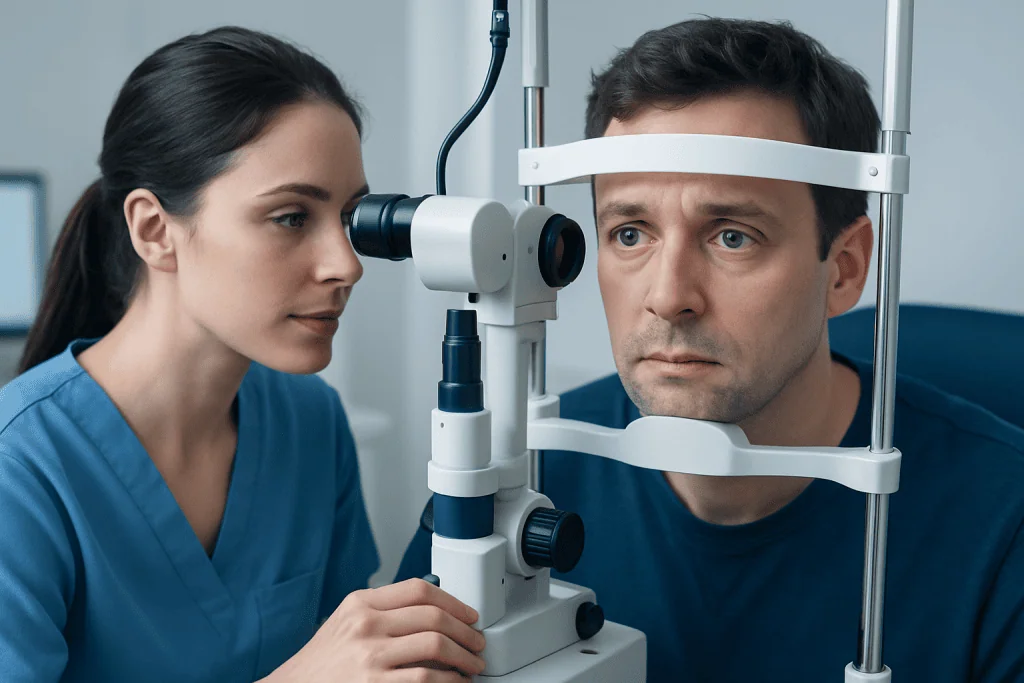
The main symptom is seeing two images instead of one. The separation between the images may be horizontal, vertical, or diagonal. Some people can describe exactly when it happens, such as when reading, looking to the side, or focusing on distant objects. Others simply notice that vision feels “off” or that one eye seems not to move normally.
Double vision can come with other symptoms that offer clues about the cause. These may include drooping of one eyelid, eye pain, headache, nausea, dizziness, imbalance, facial numbness, or weakness. If the double vision gets worse later in the day or after repeated use of the eyes, muscle fatigue may be part of the pattern.
Symptoms associated with the nervous system are especially important. These can include trouble speaking, difficulty swallowing, numbness, unsteady walking, new confusion, or weakness in the face, arm, or leg. In some cases, double vision may occur with attacks of headache, including migraine care, or after head trauma such as traumatic brain injury evaluation.
Because symptoms vary widely, doctors often ask whether the double vision is constant or intermittent, whether it disappears when one eye is covered, and whether it began suddenly or gradually. These details help guide the next steps in testing and treatment.
Neurological Causes and Risk Factors

Neurological double vision usually happens when one or more of the cranial nerves that move the eyes are affected. These are the third, fourth, and sixth cranial nerves. If a nerve is inflamed, compressed, poorly supplied with blood, or injured, the eye muscles may not move together. This can cause the eyes to drift out of alignment and create two images.
Several neurological conditions can lead to diplopia. Examples include stroke or transient ischemic attack, multiple sclerosis, myasthenia gravis, brainstem disorders, diabetic nerve palsy, aneurysm, infection, inflammation, and head injury. Less commonly, masses such as meningioma or conditions affecting the neuromuscular junction may be involved. Eye movement problems can also appear in disorders that affect the broader nervous system, sometimes requiring assessment in services such as neuro-ophthalmology.
Migraine can also cause temporary visual symptoms, including double vision in some cases, particularly when brainstem pathways are involved. In addition, raised pressure inside the skull, severe infections, and autoimmune neurological diseases may interfere with eye movement control. Fatigue-related fluctuation may suggest myasthenia gravis, while symptoms that come and go over days or weeks may raise concern for demyelinating disease.
Risk factors depend on the underlying condition but may include older age, diabetes, high blood pressure, vascular disease, smoking, autoimmune disease, recent infection, and head trauma. Sometimes no serious neurological disease is found, but because some causes require urgent treatment, new double vision should always be taken seriously.
How Doctors Diagnose Double Vision
Diagnosis begins with a detailed history and physical examination. A doctor will ask when the symptom began, whether it is sudden or gradual, if it goes away when one eye is covered, and whether there are associated symptoms such as headache, weakness, speech change, or drooping eyelids. The timing and pattern often provide important clues.
The examination usually includes testing eye movements, pupil responses, eyelid position, visual acuity, and the alignment of the eyes in different directions of gaze. A neurological exam checks strength, reflexes, sensation, coordination, and balance. Sometimes simple office tests can identify which eye muscle or nerve is not working as expected.
Further tests depend on the suspected cause. These may include blood tests for diabetes, thyroid disease, inflammation, or myasthenia gravis. Brain imaging such as MRI or CT can look for stroke, bleeding, inflammation, tumors, or other structural causes. In selected cases, specialists may use advanced neuroradiology imaging or neurophysiological studies to evaluate the nerves and muscles more closely.
Because double vision can arise from both eye disorders and neurological disorders, care may involve collaboration between ophthalmology and neurology. This team approach helps distinguish whether the problem lies in the eye itself, the muscles around it, the nerves, or the brain pathways that coordinate vision.
Treatment Options
Treatment for double vision depends entirely on the cause. In some cases, the underlying problem is temporary and improves over weeks or months, such as a small nerve palsy related to diabetes or blood vessel disease. In other cases, treatment needs to begin quickly, especially if the diplopia is linked to stroke, infection, aneurysm, inflammation, or rapidly progressive weakness.
Short-term symptom relief may include covering one eye, using a temporary prism on glasses, or adjusting activities such as driving or reading until vision is more stable. These steps do not cure the cause, but they can improve comfort and safety while evaluation and treatment are underway.
Specific treatments vary. They may include medicines for inflammation or autoimmune disease, therapies for myasthenia gravis, migraine management, control of diabetes and blood pressure, or treatment for infection. If a structural problem is found, such as a vascular abnormality or compression of a nerve, treatment may involve targeted neurological or neurosurgical care, including interventional neurology in selected situations.
Some people benefit from later correction of persistent eye misalignment with prisms, botulinum toxin in certain eye movement disorders, or eye muscle surgery guided by specialist assessment. When expert, coordinated care is needed, Acibadem International’s multidisciplinary specialists in JCI-accredited hospitals evaluate and treat patients with neurological and visual symptoms, including double vision.
Prevention and Self-care
Not every cause of double vision can be prevented, but overall neurological and vascular health can lower risk in some people. Managing blood pressure, diabetes, and cholesterol, avoiding smoking, staying physically active, and following treatment plans for chronic medical conditions can help reduce the chance of nerve and blood vessel problems that affect eye movement.
Protecting the head is also important. Wearing seat belts, using helmets when appropriate, and reducing fall risk can help prevent injuries that may lead to visual and neurological symptoms. Regular medical follow-up is especially helpful for people with diabetes, autoimmune disorders, or prior neurological disease.
At home, a person with active double vision should take sensible safety steps. These may include avoiding driving until a doctor says it is safe, improving lighting, using handrails on stairs, and covering one eye temporarily if recommended by a clinician. Reading and screen use may need to be broken into shorter periods if symptoms worsen with fatigue.
Self-care should not replace medical assessment. Double vision is a symptom with many possible causes, and the safest approach is to have new or changing symptoms evaluated by a qualified professional.
When to See a Doctor
Any new double vision should be assessed by a doctor, especially if it starts suddenly. While some causes are not emergencies, it is not possible to tell the reason based on symptoms alone. Prompt evaluation helps identify whether the problem is related to the eyes, nerves, or brain.
Urgent or emergency care is important if double vision appears with severe headache, facial droop, slurred speech, weakness, numbness, fainting, confusion, trouble walking, eye pain, or recent head injury. These symptoms may signal a serious neurological event that needs rapid treatment, including a transient ischemic attack or stroke.
A person should also seek timely care if double vision is persistent, worsening, accompanied by a drooping eyelid, or associated with unusual fatigue that affects speaking or swallowing. These patterns can be seen in conditions that require specific treatment and monitoring.
Even when symptoms come and go, it is worth arranging a medical review. Early diagnosis often makes treatment more effective and can provide reassurance when the cause is benign or manageable.
Frequently asked questions
Is double vision always a neurological problem?
No. Double vision can come from eye-related causes, such as cataract or corneal problems, as well as neurological causes that affect eye movement control. A doctor can help determine whether the problem is monocular or binocular and what that suggests.
When is double vision an emergency?
Double vision needs urgent attention if it starts suddenly or occurs with weakness, difficulty speaking, severe headache, imbalance, confusion, or recent head injury. These symptoms can indicate a serious neurological condition that requires prompt treatment.
Can stress or tiredness cause double vision?
Fatigue can make existing eye alignment problems more noticeable, and some neuromuscular conditions worsen with tiredness. However, new double vision should not be assumed to be caused by stress alone and should be evaluated.
Will double vision go away on its own?
Sometimes it does, depending on the cause. Some nerve palsies improve gradually, but other causes need medical treatment, so it is important not to wait too long for assessment.
How do doctors test double vision?
Doctors usually begin with an eye exam and a neurological examination. They may also order blood tests, MRI or CT scans, and other specialized tests based on the suspected cause.
Can migraine cause double vision?
Yes, migraine can sometimes cause temporary visual symptoms, including double vision in certain situations. Because other neurological conditions can look similar, a clinician should confirm whether migraine is truly the cause.
References
- National Eye Institute
- American Academy of Ophthalmology
- National Institute of Neurological Disorders and Stroke
- Mayo Clinic
- Merck Manual Consumer Version
This article is for general information only and is not a substitute for professional medical advice. Please consult a qualified doctor about your individual situation.
Explore treatments in Turkey — costs, top hospitals & a free quote
JCI-accredited · board-certified surgeons · reply within 24h
Add us as a Preferred Source to see more of our trusted health content across Google Search, AI Overviews and Discover.
Check your numbers in seconds
BMI, calories, due date, blood pressure and 30+ more clinical calculators — free, instant, doctor-reviewed ranges.

Neurology
Diagnosis and treatment of disorders of the brain, spinal cord, nerves and muscles.
51 specialists in this unit