

IVF for Tubal Factor Infertility: When It Is Recommended

Tubal factor infertility happens when the fallopian tubes are blocked, scarred, damaged, or missing. IVF is often recommended because it bypasses the fallopian tubes entirely.
Key Takeaways
- Tubal factor infertility happens when the fallopian tubes are blocked, scarred, damaged, or missing.
- IVF is often recommended because it bypasses the fallopian tubes entirely.
- Testing may include ultrasound, hysterosalpingography, and sometimes laparoscopy to understand tubal health.
- The best treatment depends on age, ovarian reserve, sperm factors, the extent of tubal damage, and pregnancy goals.
- Some people may need treatment for hydrosalpinx or other pelvic conditions before IVF.
IVF for tubal factor infertility is often recommended when the fallopian tubes are blocked, severely damaged, absent, or unlikely to function well enough for natural conception. Because IVF bypasses the tubes, it can offer an effective path to pregnancy for many people after careful evaluation by a fertility specialist.
Overview: What Tubal Factor Infertility Means
Tubal factor infertility refers to difficulty becoming pregnant because one or both fallopian tubes are blocked, scarred, damaged, or absent. The fallopian tubes play an essential role in natural conception: they pick up the egg after ovulation, provide the usual place where fertilization occurs, and help move the embryo toward the uterus. If the tubes cannot do this job properly, pregnancy may be harder to achieve.
This type of infertility may affect people in different ways. Some have complete blockage in both tubes, while others have partial blockage, scarring, swelling, or reduced tube function. In some cases, one tube works and the other does not. Even when a tube is open, prior infection or scarring can sometimes interfere with the movement of the egg or embryo.
IVF for tubal factor infertility is commonly recommended because it bypasses the fallopian tubes. During IVF treatment, eggs are collected from the ovaries and fertilized with sperm in a laboratory. The resulting embryo is then placed directly into the uterus, so the tubes are not needed for fertilization or embryo transport.
When IVF Is Usually Recommended

IVF is often recommended when both fallopian tubes are blocked, when the tubes are severely damaged, or when the tubes have been removed. It may also be advised after an ectopic pregnancy that caused tubal damage, especially if the remaining tube is not healthy. In these situations, trying to conceive naturally may be very difficult or may carry additional risk.
Doctors may also suggest IVF when surgery to repair the tubes is unlikely to work well or when previous tubal surgery has not led to pregnancy. For some patients, choosing IVF may help avoid further delays, particularly if age or reduced ovarian reserve is also a concern. The decision is individual and usually considers the whole fertility picture rather than the tubes alone.
Another common reason to recommend IVF is hydrosalpinx, a condition in which a fallopian tube is blocked and filled with fluid. This fluid can reduce the chance of embryo implantation and pregnancy. In many cases, the tube is treated or removed before IVF to improve outcomes. A history of ectopic pregnancy or pelvic inflammatory disease may also raise suspicion for tubal damage and support the use of IVF.
Common Causes and Risk Factors
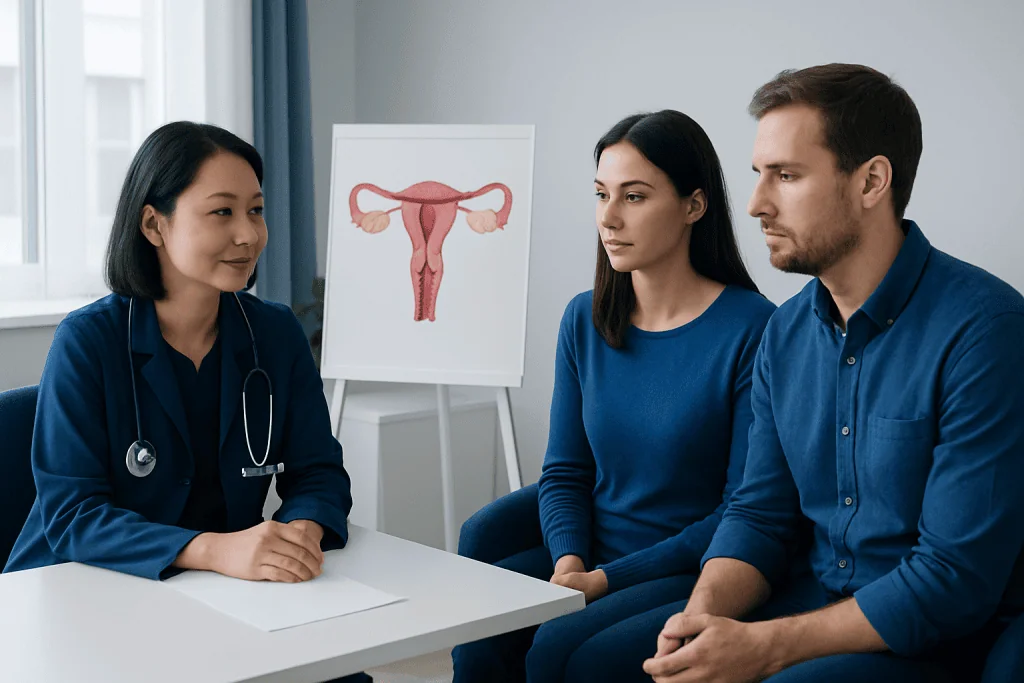
Fallopian tube problems can develop for several reasons. One of the most common is pelvic infection, particularly sexually transmitted infections that may lead to scarring over time. Some people have had an infection in the past without clear symptoms, so tubal damage may only become apparent during fertility testing. Pelvic inflammatory disease is a well-known cause.
Endometriosis, prior abdominal or pelvic surgery, and previous ectopic pregnancy can also affect the tubes. Scar tissue may form around the tubes or ovaries and interfere with the egg’s movement. In other cases, the inside of the tube is damaged, which can prevent fertilization or make embryo transport less reliable.
Some people have tubal damage after appendicitis, complicated pelvic surgery, or procedures involving the reproductive organs. Tubes may also be intentionally blocked or removed in the past for sterilization, and later pregnancy may be desired. Tubal factor infertility can sometimes occur alongside other fertility issues, such as ovulation disorders, uterine conditions like uterine septum, or male factor infertility, which is why a complete fertility evaluation is important.
How Tubal Factor Infertility Is Diagnosed
Diagnosis usually begins with a detailed medical history and fertility evaluation. A doctor may ask about menstrual cycles, prior pregnancies, pelvic pain, infections, surgeries, and any history of ectopic pregnancy. The fertility work-up usually includes testing for both partners, because infertility often has more than one contributing factor.
One common test is hysterosalpingography, or HSG. This is an X-ray procedure in which dye is placed into the uterus to show whether the fallopian tubes are open. Ultrasound can also help detect issues such as hydrosalpinx or ovarian problems. Sometimes additional imaging or hysterosalpingo-contrast sonography may be used, depending on the clinic and the patient’s needs.
In selected cases, laparoscopy may be recommended. This is a minimally invasive surgical procedure that allows doctors to look directly at the pelvis, tubes, ovaries, and signs of endometriosis or scar tissue. The final treatment plan often combines findings from imaging, age, ovarian reserve testing, semen analysis, and the overall duration of infertility. This broader assessment helps determine whether female infertility treatment should focus on surgery, IVF, or another approach.
Treatment Options Beyond and Including IVF
Not every tubal problem automatically leads to IVF. In some situations, tubal surgery may be considered, especially if the damage is limited and the patient is younger with good ovarian reserve. For example, minor adhesions around the tube may sometimes be treated surgically. However, surgery does not always restore normal tube function, and in more severe cases it may not offer the best chance of pregnancy.
IVF is often preferred when the tubes are badly damaged, both tubes are blocked, hydrosalpinx is present, or time is an important factor. Because IVF bypasses the fallopian tubes, it can be more direct than trying to repair them first. Depending on the sperm findings, standard IVF or ICSI may be recommended as part of the treatment plan. Some couples may also be evaluated within a broader infertility treatment program that addresses multiple factors at once.
Before IVF, doctors may advise treatment for hydrosalpinx, removal of severely damaged tubes, or management of coexisting conditions such as endometriosis. The choice between surgery and IVF is individualized. Important considerations include the person’s age, ovarian reserve, medical history, prior fertility treatments, and whether there are additional factors affecting conception.
What to Expect From IVF in Tubal Factor Infertility
The IVF process usually starts with ovarian stimulation, during which medications help several eggs mature in the ovaries. The eggs are then collected in a short procedure, fertilized in the laboratory, and monitored as embryos develop. One embryo, or sometimes more depending on medical guidance and local practice, is then transferred into the uterus. Because the embryo is placed directly into the uterus, damaged tubes do not need to function for pregnancy to occur.
Patients often want to know whether tubal factor infertility is one of the clearer reasons for IVF. In general, IVF can be especially helpful when the main barrier is the fallopian tubes and the uterus and ovaries are otherwise suitable for treatment. Success still varies from person to person and is influenced by age, egg quality, sperm quality, embryo development, and overall reproductive health.
Although IVF can reduce the barrier created by tubal disease, good preparation still matters. The care team may assess the uterine cavity, hormone profile, ovarian reserve, and any other gynecologic conditions before treatment begins. At experienced centers, multidisciplinary specialists guide patients through each stage and explain realistic expectations, timing, and follow-up care.
Self-care, Planning, and When to See a Doctor
Healthy habits cannot reopen blocked tubes, but they can support overall reproductive health and prepare the body for treatment. It is generally helpful to avoid smoking, limit alcohol, maintain a balanced weight, manage chronic conditions, and discuss all medications with a doctor. Emotional support is also important, since infertility evaluation and treatment can feel stressful even when the plan is clear.
A person should consider seeing a fertility specialist if pregnancy has not happened after 12 months of regular unprotected intercourse, or after 6 months if age is 35 or older. Earlier evaluation is appropriate when there is a history of pelvic inflammatory disease, ectopic pregnancy, endometriosis, tubal surgery, severe pelvic pain, or known blocked tubes. Prompt assessment can help avoid unnecessary delays and identify the most suitable treatment path.
Questions to ask may include whether both tubes are affected, whether surgery could help, whether hydrosalpinx needs treatment first, and whether IVF is the most efficient option. Near the end of the care journey, some patients choose centers with coordinated fertility, imaging, and surgical expertise. Acibadem International’s multidisciplinary specialists and JCI-accredited hospitals diagnose and treat tubal factor infertility for international patients.
Frequently asked questions
Can a person get pregnant naturally with one blocked fallopian tube?
Yes, natural pregnancy may still be possible if the other tube is open and functioning well, and if ovulation, sperm, and uterine factors are normal. However, the chance depends on the exact cause of the blockage and the overall fertility picture. A fertility evaluation can clarify whether trying naturally, surgery, or IVF is the better option.
Is IVF always needed for blocked fallopian tubes?
Not always. Some people with limited tubal damage may be candidates for surgery or may still conceive naturally if one healthy tube remains. IVF is more often recommended when both tubes are blocked, the tubes are severely damaged, hydrosalpinx is present, or other fertility factors make time especially important.
Why is hydrosalpinx important before IVF?
Hydrosalpinx is a fluid-filled blocked fallopian tube, and the fluid may lower the chance that an embryo will implant successfully. Because of this, doctors often recommend treating or removing the affected tube before IVF. This step can improve the treatment environment inside the pelvis and uterus.
Can fallopian tubes be repaired instead of using IVF?
Sometimes, yes. Surgical repair may be considered when damage is mild or localized, especially in younger patients with good ovarian reserve and no major additional fertility issues. If damage is extensive, surgery may not restore normal function well enough, and IVF may offer a more direct path to pregnancy.
Does IVF remove the risk of ectopic pregnancy?
IVF lowers the need for the fallopian tubes, but it does not completely eliminate the possibility of ectopic pregnancy. Rarely, an embryo can still implant outside the uterus. Early monitoring after embryo transfer helps doctors confirm that the pregnancy is developing in the correct location.
What tests are commonly done before recommending IVF for tubal factor infertility?
Doctors commonly use a medical history, pelvic ultrasound, and an HSG test to check whether the tubes are open. Ovarian reserve testing and semen analysis are also usually part of the assessment. In some cases, laparoscopy or additional imaging may be needed to clarify the extent of damage.
This article is for general information only and is not a substitute for professional medical advice. Please consult a qualified doctor about your individual situation.
Infertility in Turkey — costs, top hospitals & a free quote
JCI-accredited · board-certified surgeons · reply within 24h
Add us as a Preferred Source to see more of our trusted health content across Google Search, AI Overviews and Discover.
Check your numbers in seconds
BMI, calories, due date, blood pressure and 30+ more clinical calculators — free, instant, doctor-reviewed ranges.

IVF & Reproductive Health
Assisted reproduction and fertility treatments tailored to each couple.
Related Treatments
Related Conditions
More from the Health Library

Failed Fertilization in IVF: Common Causes and What Can Be Tried Next

Recurrent Implantation Failure in IVF: Possible Causes and Next Tests

When Are You Most Fertile? Understanding the Fertile Window

Assisted Hatching in IVF: Evidence, Candidates, and Limitations

Egg Freezing vs Embryo Freezing: How to Choose Before IVF

Can You Get Pregnant Naturally With PCOS?
Gynecology & Obstetrics Specialists at Acibadem
Dr. Edıs Kahraman
Gynecology & Obstetrics
Dr. Elif Avşaroğlu
Gynecology & Obstetrics
Dr. Elif Demir
Gynecology & Obstetrics
Assoc. Prof. Dr. Elif Ganime Aygün
Gynecology & Obstetrics