

Male Pattern Baldness: Early Signs and Medical Treatments

Male pattern baldness is usually related to genetics and sensitivity of hair follicles to androgens, especially dihydrotestosterone. Early signs include a receding hairline, thinning at the crown, widening part lines, and increased scalp visibility.
Key Takeaways
- Male pattern baldness is usually related to genetics and sensitivity of hair follicles to androgens, especially dihydrotestosterone.
- Early signs include a receding hairline, thinning at the crown, widening part lines, and increased scalp visibility.
- Diagnosis is usually clinical, but blood tests or scalp evaluation may be needed if another cause of hair loss is suspected.
- Medical treatments can help slow progression, but results take time and ongoing use is often needed to maintain benefit.
- A dermatologist can help distinguish male pattern baldness from other conditions and recommend safe, individualized options.
Male pattern baldness is the most common type of hair loss in men and often begins gradually with a receding hairline or thinning at the crown. Early assessment can help identify the cause and allow a doctor to discuss evidence-based treatments that may slow hair loss and improve hair density.
Overview
Male pattern baldness, medically called androgenetic alopecia, is a gradual form of hair loss that affects many men as they age. It occurs when genetically sensitive hair follicles respond to normal androgen hormones by becoming smaller over time. As the follicles miniaturize, they produce hairs that are shorter, finer, and less pigmented until growth becomes very limited.
The condition typically follows a recognizable pattern. Hair may recede at the temples, thin at the crown, or progress in both areas. Some men notice only mild changes for many years, while others experience more visible thinning earlier in adulthood. The pace is different for each person and is influenced by family history, age, hormones, and individual biology.
Male pattern baldness is not dangerous to physical health, but it can affect self-confidence, body image, and emotional well-being. Because several other conditions can also cause hair shedding or thinning, a proper medical evaluation is helpful, especially when hair loss is sudden, patchy, itchy, painful, or associated with other symptoms.
Early Signs and Symptoms
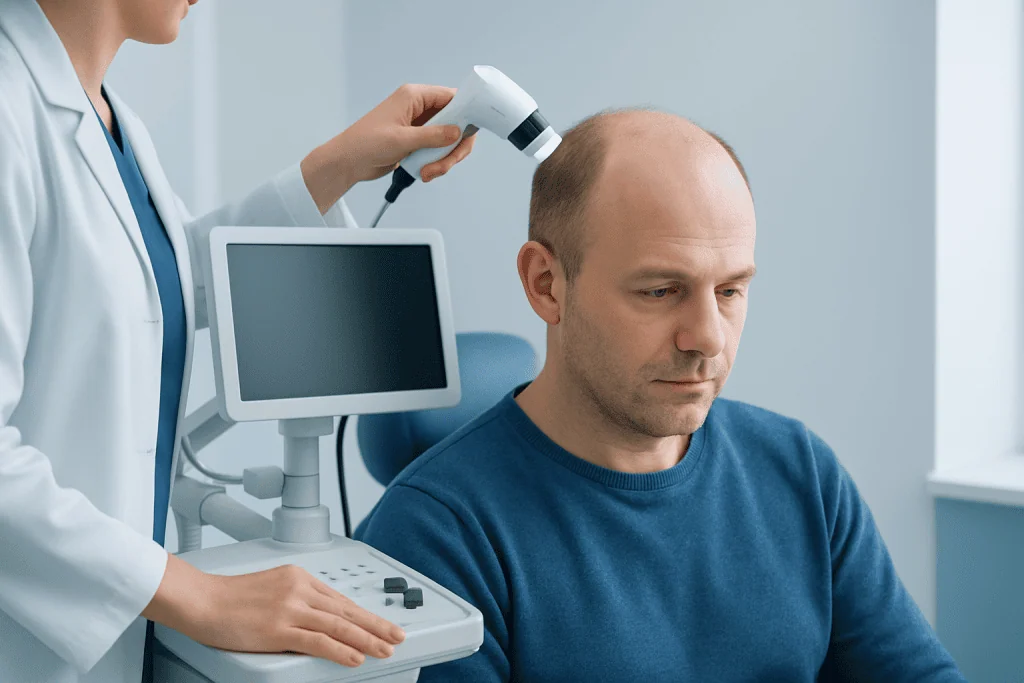
The earliest signs of male pattern baldness are often subtle. A man may notice that the hairline is moving back at the temples, creating a more angular or M-shaped hairline. Others first notice thinning at the crown, where the scalp becomes easier to see under bright light or in photographs.
Hair miniaturization is another important sign. Instead of losing large amounts of hair at once, the affected areas gradually contain finer, softer hairs that do not grow as long as surrounding hair. Styling may become more difficult, hair may appear less dense after washing, and the scalp may become more visible when hair is wet.
Common early features include:
- Receding hairline at the temples or forehead
- Thinning at the crown or top of the scalp
- Widening part line or reduced overall density
- More scalp visibility in bright light
- Family history of similar hair loss in male relatives
Male pattern baldness usually develops slowly. Rapid shedding, circular bald patches, scaling, redness, burning, or broken hairs may suggest another condition such as alopecia areata, fungal infection, seborrheic dermatitis, psoriasis, traction alopecia, or telogen effluvium. These symptoms should be assessed by a healthcare professional.
Causes and Risk Factors

The main cause of male pattern baldness is a combination of genetic predisposition and androgen hormone activity. In susceptible follicles, dihydrotestosterone, a hormone derived from testosterone, shortens the growth phase of the hair cycle. Over repeated cycles, the follicle becomes smaller and produces thinner hair.
Genetics can come from either side of the family. Having a father, mother, grandparents, or siblings with pattern hair loss may increase the likelihood, but inheritance is complex. Some men with a strong family history experience only mild thinning, while others with limited known family history may develop visible hair loss.
Risk factors that can influence hair appearance or contribute to additional shedding include aging, certain medical conditions, major illness, significant stress, nutritional deficiencies, crash dieting, some medications, thyroid disorders, and scalp inflammation. These factors do not always cause male pattern baldness directly, but they may worsen overall density or make inherited thinning more noticeable.
Lifestyle alone does not usually cause androgenetic alopecia. Frequent shampooing, wearing hats, or using ordinary hair products generally does not create male pattern baldness. However, harsh chemical treatments, tight hairstyles, and repeated heat damage can weaken hair shafts and should be minimized if hair is already thinning.
Diagnosis
A dermatologist or qualified doctor can often diagnose male pattern baldness by reviewing the pattern of hair loss, medical history, family history, and scalp findings. The doctor may ask when thinning began, how quickly it is progressing, whether shedding is increased, and whether there are symptoms such as itching, scaling, pain, or redness.
Scalp examination may include dermoscopy or trichoscopy, a noninvasive magnified evaluation of the scalp and hair shafts. This can show variation in hair diameter, miniaturized hairs, and follicle patterns that support the diagnosis of androgenetic alopecia. Photographs may be taken to compare changes over time and monitor treatment response.
Blood tests are not always necessary for typical male pattern baldness. They may be recommended if hair loss is diffuse, sudden, or associated with fatigue, weight changes, nutritional concerns, or other symptoms. Tests may evaluate thyroid function, iron stores, vitamin levels, or other medical issues depending on the clinical picture.
In uncommon cases, a scalp biopsy may be performed to distinguish androgenetic alopecia from inflammatory or scarring forms of hair loss. Early diagnosis matters because treatments are generally more effective at preserving existing follicles than restoring areas where follicles have been inactive for a long time.
Medical Treatment Options
Treatment for male pattern baldness depends on the stage of hair loss, medical history, preferences, and expectations. The goal is often to slow progression, improve thickness where follicles remain active, and maintain existing hair. Most treatments require several months before visible improvement, because hair grows in cycles.
Topical minoxidil is a commonly used nonprescription treatment that may help stimulate hair growth and prolong the growth phase of follicles. It is applied to the scalp and works best with consistent long-term use. Some people experience scalp irritation, dryness, or unwanted hair growth in nearby areas, so instructions should be followed carefully and a doctor or pharmacist can provide guidance.
Oral finasteride is a prescription medicine that reduces the conversion of testosterone to dihydrotestosterone. It may slow hair loss and improve density in many men, particularly at the crown. It is not suitable for everyone and can have side effects, including sexual, breast, mood, or other symptoms in a small number of users. A doctor should review risks, benefits, contraindications, and monitoring before treatment begins.
Other options may be considered in selected cases. These include prescription topical combinations, low-level laser devices, platelet-rich plasma injections, and hair transplantation. Hair transplantation moves follicles from donor areas, usually the back or sides of the scalp, to thinning areas. It can provide a natural appearance when carefully planned, but it does not stop ongoing genetic hair loss, so medical maintenance may still be advised.
Self-Care and Lifestyle Support
Self-care cannot change genetic sensitivity to hormones, but it can support scalp health and reduce preventable hair breakage. Gentle hair care is useful for men with thinning hair because finer strands are more fragile. Using mild shampoo, avoiding aggressive towel drying, limiting high heat, and choosing styles that do not pull on the hair can help maintain the hair that is present.
Nutrition also supports healthy hair growth. A balanced diet with adequate protein, iron, zinc, essential fatty acids, and vitamins is important, particularly for people with restrictive diets or recent weight loss. Supplements should not be taken in high doses unless a deficiency is confirmed or a clinician recommends them, because excessive supplementation may be ineffective or harmful.
Camouflaging strategies can improve comfort while medical treatment is taking effect. These may include shorter hairstyles, volumizing products, scalp concealers, or hair fibers. Sunscreen or hats can protect exposed scalp from sunburn. Men who shave their heads should still protect the scalp with sun-safe habits.
Stress management, regular sleep, and treatment of scalp conditions such as dandruff or dermatitis may improve overall hair and scalp comfort. While stress alone is not the usual cause of male pattern baldness, severe stress can trigger temporary shedding that may make thinning look worse.
What to Expect From Treatment
Hair loss treatments require patience. Many people do not see meaningful changes for at least three to six months, and full assessment may take longer. In some cases, early shedding can occur after starting a growth-stimulating treatment as older hairs are replaced by new growth-cycle hairs. A doctor can help determine whether this is expected or needs evaluation.
Maintenance is an important part of treatment planning. If a treatment is helping and is stopped, the benefits may gradually diminish and hair loss may return to its natural course. This does not mean the treatment failed; it reflects the chronic nature of androgenetic alopecia.
Realistic expectations are essential. Medical treatments may thicken miniaturized hairs and slow further loss, but they may not fully restore a mature hairline or areas with long-standing baldness. Combining treatments may be appropriate for some patients, but decisions should be individualized to avoid unnecessary cost, irritation, or side effects.
Follow-up visits allow the clinician to review progress using standardized photos, adjust the plan, and check for side effects. Men considering hair transplantation should ideally be evaluated by a specialist who can assess donor hair quality, future hair loss risk, and whether medical stabilization is recommended before surgery.
When to See a Doctor
A medical consultation is recommended when hair loss begins early, progresses quickly, causes concern, or does not follow the typical pattern of male pattern baldness. Men should also seek evaluation if there is patchy hair loss, scalp pain, scaling, redness, pustules, heavy shedding, or hair loss in the beard, eyebrows, or body hair.
It is also important to see a doctor before starting prescription treatments or combining multiple products. Some medicines and supplements can interact with health conditions or other treatments. A clinician can confirm the diagnosis and explain which options are most appropriate for the individual situation.
Men who feel distressed by hair loss should not hesitate to discuss this with a healthcare professional. Emotional impact is valid, and support may include medical treatment, cosmetic strategies, counseling, or a combination of approaches. Early guidance can make the process feel more manageable.
For international patients seeking evaluation, Acibadem International offers access to multidisciplinary specialists and JCI-accredited hospitals that diagnose and treat hair and scalp conditions, including male pattern baldness. As with any medical decision, patients should receive an individualized assessment and discuss expected benefits, limitations, and risks before treatment.
Frequently asked questions
Can male pattern baldness start in the 20s?
Yes. Male pattern baldness can begin after puberty and may become noticeable in the late teens or 20s for some men. Early onset often has a genetic component, but a doctor can confirm whether the pattern is typical or if another cause is contributing.
Is hair shedding always a sign of male pattern baldness?
Not always. Everyone sheds some hair daily as part of the normal hair cycle, and temporary shedding can occur after illness, stress, weight loss, or nutritional deficiency. Male pattern baldness usually causes gradual thinning in a recognizable pattern rather than sudden widespread shedding.
Can male pattern baldness be cured permanently?
There is no permanent cure that changes the genetic tendency for androgenetic alopecia. However, medical treatments can slow progression and improve density in many men when used consistently. Hair transplantation can restore hair to selected areas, but ongoing thinning may still need management.
How long does it take for treatment to work?
Most treatments need several months before results can be judged. Some men notice reduced shedding first, followed by gradual thickening or improved coverage. Follow-up photographs are useful because small changes may be difficult to see day by day.
Are natural oils or supplements enough to treat male pattern baldness?
Natural oils may improve scalp comfort or hair shine, but they have not been shown to reliably reverse androgenetic alopecia. Supplements may help only when a true deficiency exists. Men with ongoing thinning should seek medical advice before relying on nonprescription products alone.
Does washing hair frequently make baldness worse?
No. Regular shampooing does not cause male pattern baldness. Hairs seen in the shower are usually hairs that had already entered the shedding phase. Gentle washing can help keep the scalp healthy, especially if dandruff or oiliness is present.
When should hair transplantation be considered?
Hair transplantation may be considered when hair loss is stable enough, donor hair is adequate, and expectations are realistic. It is usually best discussed with a specialist after a full diagnosis and review of medical treatment options. The procedure should be planned with future hair loss in mind.
References
- American Academy of Dermatology Association
- British Association of Dermatologists
- European Dermatology Forum
- National Institute for Health and Care Excellence
- Mayo Clinic
This article is for general information only and is not a substitute for professional medical advice. Please consult a qualified doctor about your individual situation.
Hair transplant in Turkey — costs, graft counts & a free assessment
JCI-accredited · board-certified surgeons · reply within 24h
Add us as a Preferred Source to see more of our trusted health content across Google Search, AI Overviews and Discover.

Related Treatments
Related Conditions
More from the Health Library



Related Specialists

Prof. Dr. Sedef Şahin
Dermatology
Prof. Dr. Şükrü Yazar
Aesthetic Plastic & Reconstructive Surgery
Prof. Dr. Emel Öztürk Durmaz
Dermatology
Prof. Dr. Özlem Dicle
Dermatology